Email: [email protected]
Email: [email protected]

Blog
 2026.11.03
 Blog
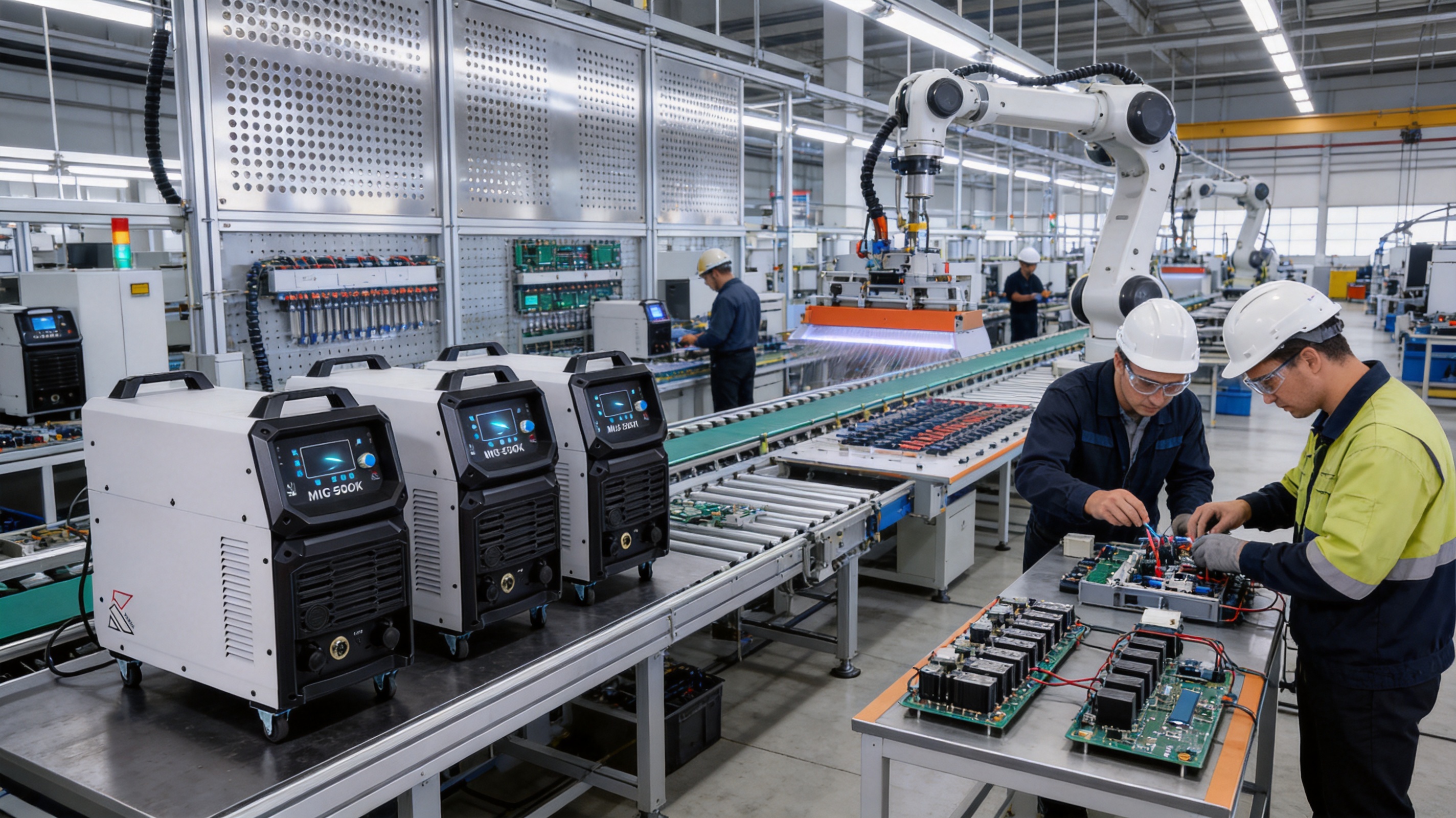
Modern metal fabrication requires welding equipment that can combine high output, precise control, operational flexibility, and dependable protection in one practical platform. The 350A/500A Industrial MIG Welder is designed for demanding workshops, production lines, repair facilities, structural fabrication operations, and heavy-duty maintenance work. Available in MIG-350K and MIG-500K configurations, this industrial welding platform provides powerful current output, digital process control, pulse welding capability, flux-cored welding, and MMA operation.
Unlike a basic single-process welder, this machine is designed to support several welding methods without requiring separate power sources for every application. Operators can use Pulse MIG, conventional DC MIG/MAG, no-gas shielded flux wire welding, and manual metal arc welding. This versatility allows one machine to work with carbon steel, alloy steel, stainless steel, aluminum, magnesium, aluminum-silicon materials, and other compatible metals when the correct wire, electrode, shielding gas, torch, and welding parameters are selected.
The equipment combines an advanced microprocessor control unit with IGBT inverter technology. The result is a compact and efficient industrial power source with stable arc performance, adjustable welding parameters, high duty cycle, and strong resistance to power supply variation. Its LCD interface and encoder adjustment system are intended to simplify setup while giving skilled operators detailed control over current, voltage, wire feed speed, plate thickness, arc length, and induction.
For users comparing industrial welding machines, the principal value of this platform lies in its balance of output power and control. It is not merely a high-amperage power source. It is a digitally managed multi-process system manufactured by a company with large-scale production capability, extensive research resources, automated manufacturing equipment, and experience exporting welding equipment to international markets.
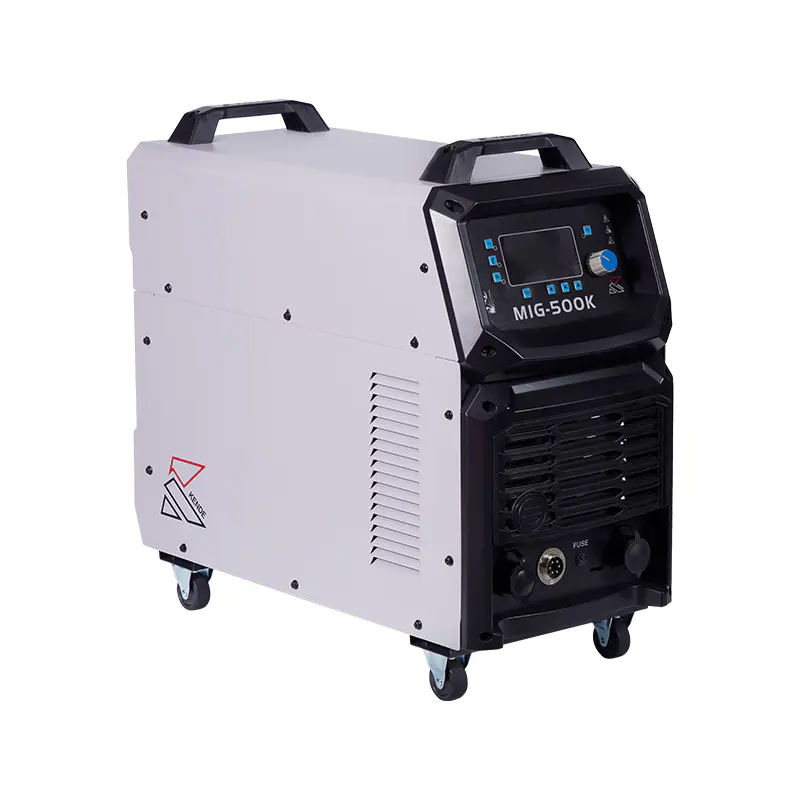
350A/500A INDUSTRIAL MIG WELDER, Full digital control. Can weld ordinary carbon steel, stainless steel, aluminum magnesium, aluminum silicon and other materials, MIG/MIG/MAG/No gas shielded Flux wire welding
The MIG-350K and MIG-500K models are designed for applications where a stable and powerful welding arc is essential. The 350A model provides a MIG welding current range of 40 to 350A, while the 500A version extends the MIG range from 60 to 500A. Both models can also be used for MMA welding, making them suitable for fabrication environments that alternate between wire welding and electrode welding.
The high current output is useful for medium- and heavy-gauge materials, structural assemblies, machinery components, frames, brackets, pressure-related fabrication where the applicable welding procedure permits it, agricultural equipment, industrial repair, and general steel construction. The exact suitability of the machine depends on the material thickness, joint design, wire diameter, electrode type, shielding gas, ambient conditions, and applicable welding standards.
A major practical advantage is that the equipment can handle both gas-shielded and no-gas flux-cored wire welding. Gas-shielded MIG/MAG welding is often preferred when a clean arc, low spatter, and controlled weld appearance are required. Flux-cored welding can be valuable outdoors or in locations where shielding gas management is inconvenient. The ability to switch between these methods gives workshops greater flexibility when production conditions change.
Pulse MIG further expands the application range. Pulsed transfer can help control heat input, reduce short-circuiting instability, and improve the handling of certain materials and joint positions. It can be especially useful when welding stainless steel or aluminum alloys, provided the correct wire, gas mixture, torch liner, contact tip, polarity, and parameter settings are used. Pulse control may also help reduce spatter and improve the visual consistency of finished welds.
MMA operation provides an additional option for field repair, heavy steel work, maintenance, and situations where a wire feeder or shielding gas cylinder is not convenient. The MMA current range of the MIG-350K is 20 to 350A, while the MIG-500K supports 20 to 480A in MMA mode. This gives users a broad operating range for different coated electrodes and material thicknesses.
The machine uses an advanced microprocessor control unit to manage welding output and process behavior. A digital control system can coordinate several operating parameters more accurately than a simple analog control circuit. It can monitor the selected process, regulate output response, support stored or calculated parameter relationships, and help maintain a stable arc as welding conditions change.
Microprocessor control is particularly important in a multi-process machine because MIG, pulse MIG, flux-cored welding, and MMA require different electrical responses. Wire welding requires coordinated control of welding current, wire feed speed, voltage, arc dynamics, and inductance. MMA welding requires a different output characteristic and may benefit from functions such as controlled arc force and improved ignition behavior. Digital management allows the power source to adapt its output according to the selected process.
IGBT inverter technology contributes to the machine’s compact structure, high efficiency, and fast electrical response. Compared with older transformer-based designs, an inverter power source can provide high welding output from a smaller and lighter enclosure. The reduced size is especially valuable in workshops where equipment must be moved between workstations or transported to repair locations.
The inverter architecture also supports rapid regulation of the welding arc. Fast switching and electronic control can help the machine respond quickly to changes in arc length, wire transfer, and workpiece conditions. This contributes to more stable operation and can help reduce unnecessary spatter. The actual result always depends on correct setup, but the electronic platform provides the control capability required for professional applications.
Another benefit is energy efficiency. The listed efficiency is 85 percent for both models, with a power factor of 0.9. These values indicate that the machine is designed to use input power effectively while delivering substantial welding output. Higher efficiency can help reduce energy waste, support more economical operation, and limit unnecessary thermal stress within the power source.
The front control system includes an LCD screen, touch buttons, and an encoder for parameter adjustment. This arrangement is intended to provide a clear and direct operating experience. Instead of relying solely on multiple analog knobs, the operator can select the welding process and adjust the required parameters through a digitally managed interface.
The LCD screen can make machine status and selected settings easier to review. This is useful when several operators share one machine or when welding procedures must be repeated throughout a production shift. A visible digital display can also reduce guesswork during setup and help operators confirm whether the machine is configured for MIG, pulse MIG, flux-cored welding, or MMA.
The encoder allows parameters to be adjusted smoothly. Depending on the selected process, users can work with current, wire feed speed, welding voltage, plate thickness, arc length, and inductance. These settings provide practical control over the welding arc and the final bead profile.
For less experienced operators, plate-thickness selection can provide a more accessible starting point than manually calculating every value. For experienced welders, direct adjustment of voltage, wire speed, arc length, and inductance offers greater control. This combination supports both production efficiency and professional process refinement.
Digital control also improves repeatability. Once a suitable parameter combination has been identified for a particular material, wire size, shielding gas, and joint, operators can reproduce the settings more consistently than with a basic machine that offers limited visual feedback. Repeatability is important in production because it can reduce setup variation and support more uniform weld quality.
The product information identifies five welding processes or process selections, including Pulse MIG, DC MIG/MAG, no-gas shielded flux wire welding under the MIG/MAG function, and MMA methods. The exact process count may reflect different operating modes within the digital control system, but the central advantage is clear: the machine supports multiple welding approaches on one power platform.
Pulse MIG alternates between peak and background current in a controlled pattern. This can support a more controlled metal transfer process and may help reduce short-circuiting, spatter, and excessive heat accumulation. It is commonly considered for stainless steel, aluminum alloys, and applications where bead appearance and heat management are important.
When using pulse MIG, the operator must select suitable wire, shielding gas, torch components, and polarity. Aluminum welding, for example, generally requires appropriate aluminum wire handling equipment, a suitable liner or spool arrangement, proper contact tips, and shielding gas selected for the alloy and procedure. The machine provides the control platform, while successful results depend on the complete welding setup.
Conventional DC MIG/MAG welding is widely used in industrial fabrication. It can deliver productive deposition rates and is suitable for many carbon steel, low-alloy steel, and stainless steel applications. The operator can adjust wire feed speed and voltage to control current, arc length, penetration, and bead shape.
For workshops producing frames, enclosures, machine parts, brackets, structural assemblies, and general fabricated components, DC MIG/MAG is often a highly productive process. It is also relatively easy to automate or integrate into repeatable production procedures.
No-gas shielded flux-cored wire welding is useful where an external shielding gas supply is impractical. The flux inside the wire generates shielding during welding. This can be advantageous for outdoor maintenance, mobile repairs, construction-related work, and situations where wind may disturb an external gas shield.
Flux-cored welding may produce more fumes and slag than gas-shielded MIG/MAG welding, so suitable ventilation, extraction, personal protective equipment, and post-weld cleaning are necessary. Even so, the process provides valuable flexibility and can be selected when portability and field practicality are more important than a gas-shielded finish.
MMA welding uses coated electrodes and does not require a wire feeder or shielding gas cylinder. It is a reliable process for repair work, outdoor operations, heavy steel, and locations where the workpiece or welding position changes frequently.
The machine’s MMA capability allows a workshop to use one industrial power source for both wire-based production welding and electrode-based repair welding. This can reduce the need to purchase, maintain, and move separate machines for different tasks.
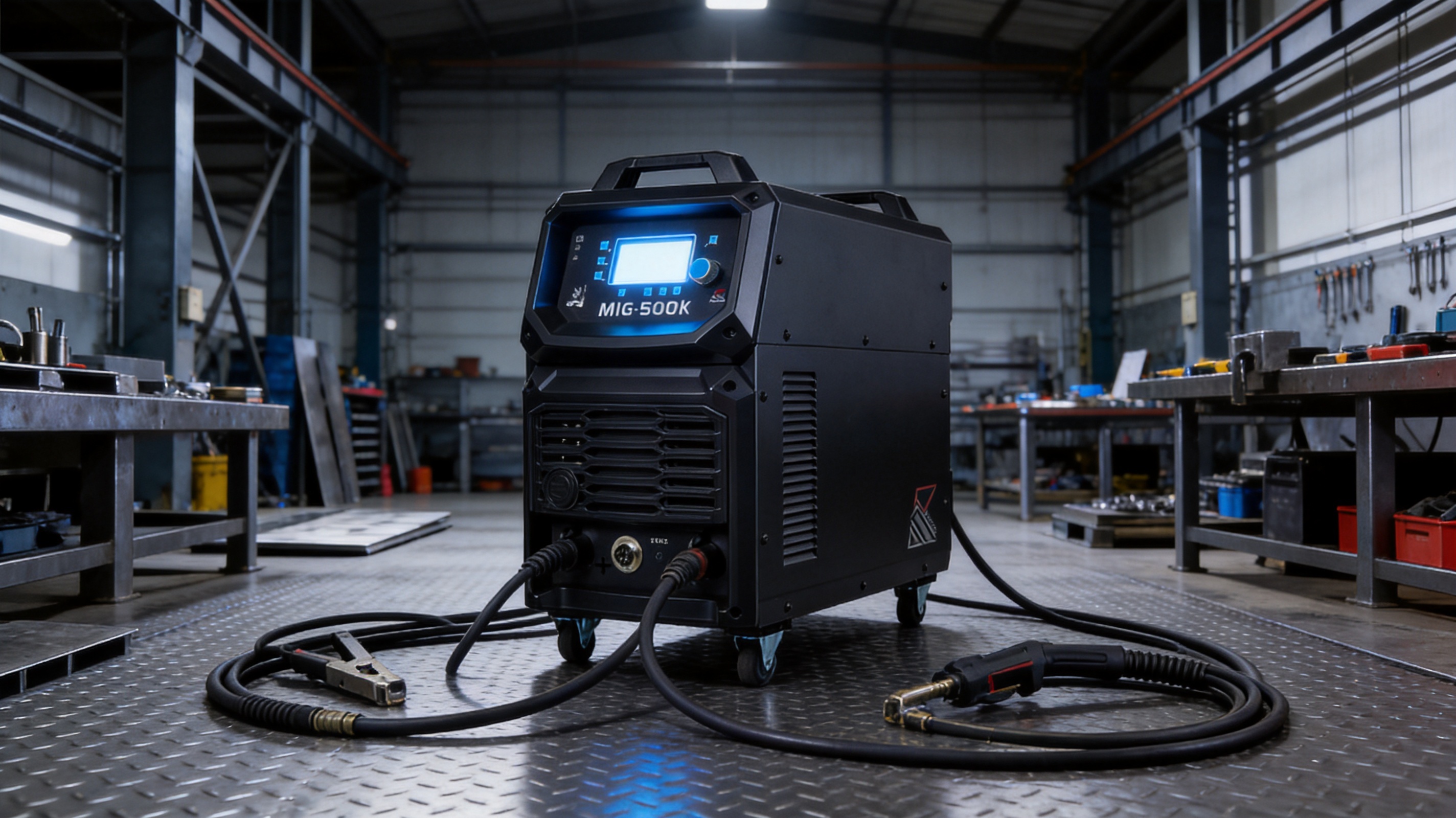
The machine can be used for carbon steel, alloy steel, stainless steel, aluminum, magnesium, aluminum-silicon, and other materials when the appropriate consumables and process settings are selected. This broad material range is a significant advantage over a basic machine designed only for ordinary carbon steel.
Carbon steel remains one of the most common materials in fabrication and repair. The machine’s MIG/MAG and MMA functions can support many carbon steel applications, from general workshop assemblies to heavy-duty components. The high-current versions are suitable for thicker sections when the welding procedure, joint preparation, and duty cycle are properly considered.
Alloy steel applications may require greater control over heat input, preheating, interpass temperature, consumable selection, and cooling conditions. The digital parameter system can help operators make controlled adjustments, but the welding procedure must still be established according to the material grade and applicable technical requirements.
Stainless steel welding benefits from stable arc control and accurate parameter selection. Pulse MIG may help manage heat input and improve bead appearance in suitable applications. Operators should use compatible stainless wire, appropriate shielding gas, clean joint preparation, and dedicated or properly managed tools to reduce contamination.
Aluminum and aluminum-silicon welding place additional demands on wire feeding and torch setup. Aluminum wire is softer than steel wire and may require a suitable liner, drive roll, contact tip, and torch configuration. Cleaning, joint preparation, gas coverage, and correct polarity are also essential. The machine’s pulse capability can provide useful control, but it does not eliminate the need for correct equipment setup and operator skill.
Magnesium alloys require specialized procedures and strict safety controls because of their material characteristics and potential fire risks. Users should follow approved welding procedures, manufacturer guidance, workplace safety rules, and applicable standards before attempting magnesium welding.
Stable arc behavior is one of the most important qualities in an industrial welding machine. An unstable arc can cause irregular transfer, excessive spatter, poor fusion, inconsistent penetration, and additional grinding or rework. The machine’s MCU-based control system is designed to manage the welding process accurately and support a stable arc across the selected operating modes.
The listed technical characteristics emphasize small spatter, good welding performance, and high quality. In practical terms, reduced spatter can improve productivity by lowering the time required for cleaning and finishing. It can also help protect nearby surfaces and reduce the risk of spatter-related defects.
Inductance and arc-length adjustment provide additional control over the feel and behavior of the arc. These parameters can influence short-circuit transfer, bead wetting, arc softness, and spatter behavior. Skilled operators can use them to adapt the machine to wire type, joint design, welding position, and material condition.
Stable performance is also important for automated or semi-automated welding. A consistent power source can provide a stronger foundation for mechanized torch movement, fixture-based production, and robotic integration. Although the machine is not described as a complete robot welding system, its digital control characteristics can be valuable in production environments that use repeatable welding procedures.
High weld quality requires more than the power source alone. Joint preparation, surface cleanliness, correct consumables, shielding gas flow, torch angle, travel speed, stick-out, work clamp connection, and operator training all affect the result. The machine’s contribution is to provide a controllable, stable, and sufficiently powerful arc for the selected process.
The following table summarizes the principal specifications supplied for the MIG-350K and MIG-500K models.
| Specification | MIG-350K | MIG-500K |
|---|---|---|
| Rated supply voltage | 380 V | 380 V |
| Supply frequency | 50 Hz | 50 Hz |
| Rated input capacity | 15 kVA | 30 kVA |
| Rated supply current | 23 A | 46 A |
| No-load voltage | 56 V | 80 V |
| MIG welding current range | 40–350 A | 60–500 A |
| MMA welding current range | 20–350 A | 20–480 A |
| MIG rated welding voltage | 16–31.5 V | 17–39 V |
| MMA rated welding voltage | 20.8–34 V | 20.8–39.2 V |
| Rated duty cycle | 60% | 60% |
| Efficiency | 85% | 85% |
| Power factor | 0.9 | 0.9 |
| Degree of protection | IP21S | IP21S |
| Insulation class | H | H |
| Net weight | 23 kg | 41 kg |
| Machine size | 625 × 275 × 580 mm | 710 × 330 × 650 mm |
The two models serve different production requirements. The MIG-350K is more compact and lighter, which can make it easier to move around a workshop or use for general industrial fabrication. The MIG-500K provides a higher maximum output and greater input capacity for heavier-duty applications and larger welding workloads.
The 60 percent duty cycle indicates that the machine can weld for a specified portion of a standard duty-cycle test period before requiring a cooling period. Operators should always follow the applicable rating conditions and allow sufficient cooling. Actual duty cycle can be influenced by ambient temperature, welding current, ventilation, extension cables, maintenance condition, and operating environment.
The IP21S protection rating is intended for suitable indoor working conditions and does not mean the machine is waterproof. It should be protected from rain, standing water, excessive dust, corrosive atmospheres, and unauthorized access. Proper installation and ventilation are essential for safe and reliable operation.
One important advantage over conventional transformer-based welders is the combination of reduced size, lower weight, digital control, and high output. The 350A model weighs 23 kilograms, while the 500A model weighs 41 kilograms. These weights are practical for industrial machines with their respective output capabilities, although lifting and transport procedures should always be followed.
A second advantage is multi-process functionality. A single-process MIG machine may be efficient for wire welding but cannot provide the same flexibility for MMA or no-gas flux-cored work. A basic MMA machine may be useful for electrode welding but cannot provide wire feed control or pulse MIG. This platform combines several commonly required processes in one system.
A third advantage is parameter visibility and repeatability. Analog machines can be effective, but their settings may be more difficult to reproduce accurately between operators. The LCD display, touch buttons, and encoder help provide a more consistent setup process.
A fourth advantage is the ability to work with a wider selection of materials. The machine is not limited to ordinary carbon steel. With suitable accessories and procedures, it can be configured for stainless steel, aluminum, aluminum-silicon, magnesium, and alloy steel work.
A fifth advantage is energy-conscious inverter design. The 85 percent efficiency and 0.9 power factor support productive operation without the bulk and energy characteristics associated with many older welding power sources. Lower equipment weight can also reduce handling effort and make workstation changes easier.
Finally, the machine incorporates multiple protective measures and is described as having strong resistance to power supply voltage changes. This is valuable in industrial environments where supply conditions may not remain perfectly stable. Protection systems help safeguard the power source, but users should still provide correct grounding, suitable circuit protection, appropriate cable sizing, and professional installation.
The equipment is manufactured by Zhejiang Kende Mechanical & Electrical Co., Ltd., a Chinese producer of welding machines, battery chargers, and heaters. The company operates in Taizhou, Zhejiang Province, and has a facility covering approximately 120,000 square meters with around 600 employees.
The company reports annual exports of nearly 1.5 million units and annual production capacity of approximately 2 million units. This scale indicates experience in organized production, supply-chain management, quality control, packaging, export logistics, and large-volume customer support.
Large-scale manufacturing can provide advantages for buyers seeking continuity of supply. It may also support more standardized assembly procedures, better access to production tooling, consistent component sourcing, and the ability to serve distributors, industrial customers, and regional markets at the same time.
The company’s product range includes MMA and stick welding machines, MIG/MAG machines, no-gas flux wire welders, TIG welding machines, plasma cutters, stud welding machines, submerged arc welding systems, battery chargers, and electric, gas, and oil heaters. This broad portfolio gives the manufacturer experience across multiple categories of industrial and workshop equipment.
A diversified product portfolio can support component knowledge and cross-functional engineering. For example, experience in inverter power supplies, thermal management, control systems, transformers, protective circuits, metal enclosures, and user interfaces can be applied across different equipment categories. It also enables customers to source several types of workshop equipment from one established manufacturer.
The company reports having a Zhejiang Provincial Research and Development Center, an Enterprise Technology Center, and an Intelligent Welding Technology Research Institute. These facilities indicate a focus on continued product development rather than relying only on established designs.
The reported research team includes 98 R&D personnel. The company has also obtained invention patents, utility model patents, appearance patents, and software copyrights. Such intellectual property activity can reflect ongoing work in circuit design, welding process control, mechanical structure, thermal management, product appearance, user interface systems, and manufacturing methods.
Research capability is especially important for digital welding products. A modern multi-process machine requires coordinated development of hardware and software. The control program must manage power switching, output regulation, wire feed behavior, process transitions, fault protection, and user-interface functions. Engineering teams must also consider electromagnetic compatibility, heat dissipation, insulation, vibration, component aging, and serviceability.
The company has participated in the drafting, formulation, and revision of multiple national standards and is identified as a national standard drafting unit of the National Welding Machine Standardization Committee. Participation in standards-related work can provide valuable knowledge of technical requirements, test methods, safety expectations, and performance criteria.
Customers should still confirm the specific certification documents applicable to the exact model and destination market. Product certifications can vary by voltage version, configuration, production revision, and country. However, the company reports experience with GS, CE, EMC, ERP, US ETL, UKCA, and China CCC requirements.
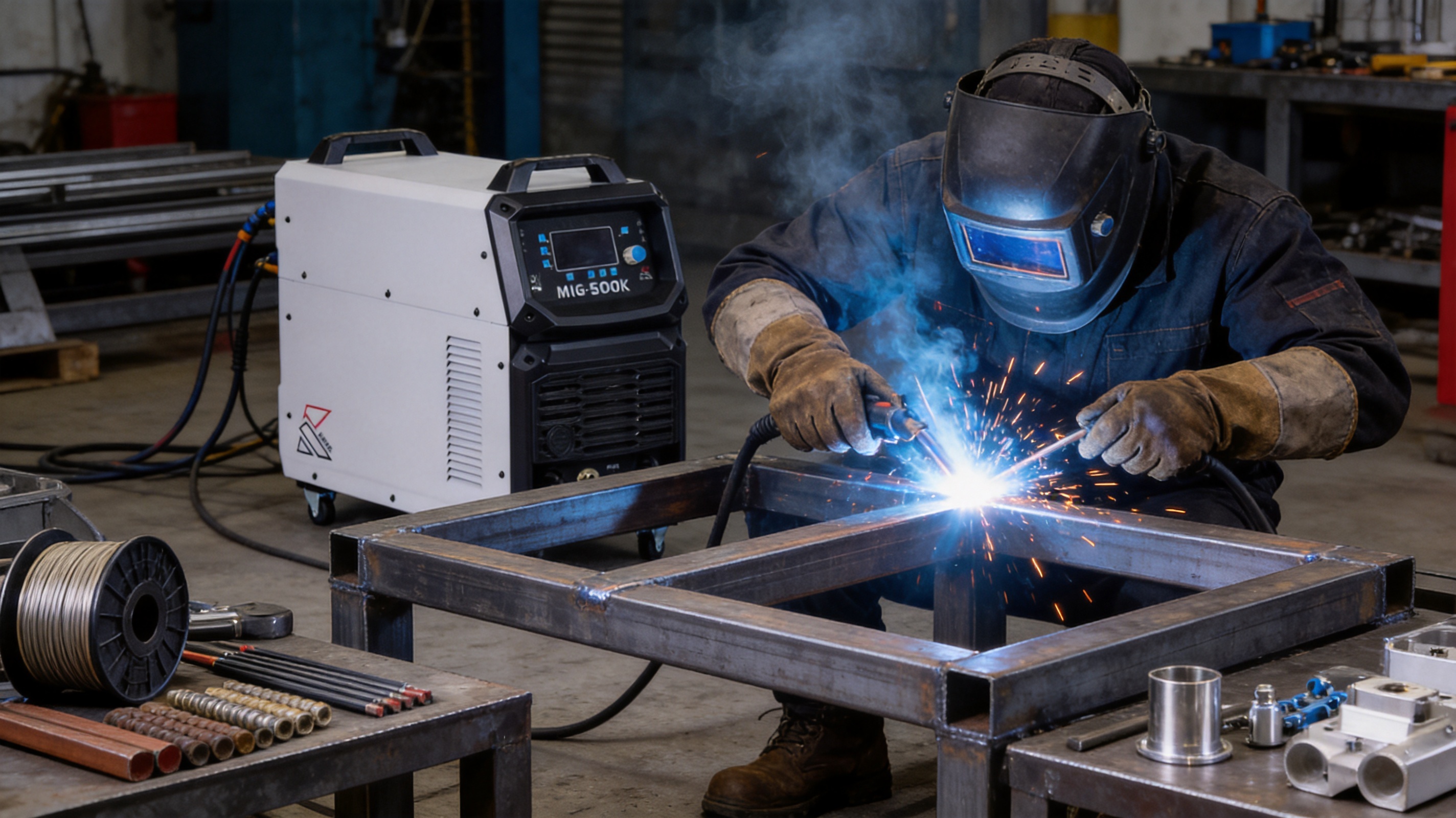
The company uses several advanced manufacturing and management systems, including office automation, Toyota Production System methods, ERP K3, and MES management systems. These systems can help coordinate purchasing, production planning, inventory, process tracking, quality records, and delivery schedules.
MES, or Manufacturing Execution System, technology can provide visibility into production activities on the factory floor. It may help connect work orders with assembly stations, record process information, monitor production status, and improve traceability. For industrial buyers, traceability can be important when evaluating product consistency and managing after-sales service.
The reported manufacturing equipment includes automatic patching, plug-in and welding systems, robot processing, laser cutting, and other automated technologies. Automatic component placement and soldering can improve repeatability in electronic control boards. Robotic or automated processing can provide consistent handling of selected mechanical parts. Laser cutting can produce accurate sheet-metal components with clean and repeatable profiles.
Automated laser cutting is particularly useful for welding machine enclosures, brackets, panels, mounting parts, and internal supports. Accurate parts can improve assembly fit and reduce variation. Consistent enclosure geometry also supports reliable panel installation, cable routing, ventilation, and protection of internal components.
Robot processing and automated welding-related operations can reduce variation in repetitive manufacturing steps. Automation does not replace engineering judgment or quality inspection, but it can improve process stability when correctly programmed and maintained.
Production quality also depends on inspection. Appropriate inspection may include incoming component checks, printed circuit board testing, insulation testing, no-load voltage verification, output current checks, thermal protection verification, enclosure inspection, cable and connector checks, and final functional testing. Buyers can request the manufacturer’s quality documentation and inspection procedures for the intended procurement program.
The MIG-350K is suitable for workshops requiring a powerful but relatively mobile machine for medium- and heavy-duty fabrication. It can be used for steel frames, machine bases, agricultural implements, vehicle and trailer repairs, industrial maintenance, metal furniture, gates, railings, brackets, and general manufacturing.
The MIG-500K is intended for higher-output applications where increased current capacity and a larger duty workload are valuable. It can be considered for heavy fabrication, structural components, large machinery repair, thick steel assemblies, production lines, and demanding maintenance operations.
Both models may be useful in maintenance departments because they support several welding processes. A repair team may use MIG/MAG for productive workshop welding, flux-cored wire when shielding gas is inconvenient, and MMA for outdoor or difficult-access work. This reduces the need to transport several separate power sources.
Fabrication companies can also benefit from the ability to select process settings according to material and production stage. Pulse MIG may be used for appearance-sensitive stainless or aluminum work, conventional MIG/MAG for general steel production, flux-cored welding for field repairs, and MMA for heavy repair or intermittent work.
Training and procedure control remain important. The machine’s broad capability should be supported by qualified operators, approved welding procedures where required, suitable personal protective equipment, adequate ventilation, and regular inspection of torches, cables, grounds, wire feeders, regulators, and consumables.
The machine should be installed on a stable, dry, and well-ventilated surface. Air inlets and outlets must remain unobstructed so that internal cooling systems can operate correctly. The power supply must match the rated voltage, frequency, and electrical requirements of the selected model.
Because the listed machines use a 380V, 50Hz supply, buyers should confirm compatibility with the local electrical system before ordering. A qualified electrician should install appropriate circuit protection, grounding, isolating equipment, and cable sizes. The rated input capacity and supply current should be considered when designing the installation.
Before welding, users should inspect the work lead, electrode holder, MIG torch, gas hose, regulator, wire feeder, connectors, and earth clamp. Damaged insulation, loose connectors, leaking hoses, blocked gas passages, or worn drive rolls can reduce performance and create safety risks.
For MIG/MAG operation, the correct wire diameter and drive-roll profile should be selected. Wire tension should be sufficient for smooth feeding but not so high that the wire is deformed. Contact tips and liners should match the wire size and material. Aluminum wire may require specialized feeding arrangements.
Shielding gas flow should be set according to the torch, nozzle, material, joint, and working environment. Excessive flow can create turbulence and draw air into the weld area, while insufficient flow can lead to porosity and oxidation. Outdoor welding requires particular attention to wind protection.
During MMA operation, the electrode type, diameter, polarity, current, and arc length must be selected according to the welding procedure. Electrodes should be stored and handled according to their technical requirements. Slag must be removed between passes when applicable.
Routine maintenance may include cleaning dust from ventilation paths, inspecting fans, checking cables and connectors, tightening accessible electrical and mechanical connections, examining the wire-feeding system, and verifying the condition of the torch and work clamp. Internal servicing should be performed by qualified personnel after the machine is disconnected from the power supply.
Welding creates ultraviolet radiation, visible light, heat, fumes, sparks, molten metal, and electrical hazards. Operators must wear an appropriate welding helmet, flame-resistant clothing, gloves, protective footwear, and other required personal protective equipment.
Ventilation and fume extraction are essential, particularly when using flux-cored wire or welding coated, painted, galvanized, or contaminated materials. Hazardous coatings should be identified and removed or managed according to workplace safety procedures before welding.
Combustible materials should be removed from the welding area. Fire extinguishing equipment should be available, and hot-work permits may be required in industrial or commercial environments. The machine should not be used in wet conditions or exposed to rain unless the complete installation is specifically designed and approved for such use.
Users should observe the manufacturer’s instructions and applicable electrical, occupational, and welding standards. The machine’s protective features improve reliability but do not eliminate the need for proper installation, operator training, inspection, and safe working practices.
The 350A/500A Industrial MIG Welder offers a practical combination of output power, digital control, multi-process capability, compact inverter construction, and industrial manufacturing support. Its main advantage is not a single specification but the way several capabilities work together.
For a production workshop, the machine provides high current, repeatable digital settings, MIG/MAG productivity, pulse functionality, flux-cored flexibility, and MMA backup capability. For a maintenance department, it provides process choice and portability compared with multiple traditional power sources. For distributors and industrial buyers, it is supported by a manufacturer with broad product experience, established production capacity, engineering resources, and international certification experience.
The MIG-350K and MIG-500K versions allow users to select a capacity that matches their workload. The 350A model offers a lighter and more compact solution, while the 500A model provides greater output for heavier applications. Both models retain the benefits of digital control, IGBT inverter technology, 60 percent duty cycle, 85 percent efficiency, and 0.9 power factor.
Compared with a basic conventional welder, this platform offers more control and more process options. Compared with purchasing several single-process machines, it can reduce equipment duplication and simplify workshop organization. Compared with lower-output machines, it provides greater capacity for heavy-duty fabrication when correctly installed and operated.
The machine supports Pulse MIG, conventional DC MIG/MAG, no-gas shielded flux wire welding, and MMA or stick welding modes. The digital control system manages the selected process and allows the operator to adjust suitable welding parameters.
The MIG-350K provides a MIG current range of 40 to 350A and an MMA range of 20 to 350A. The MIG-500K provides a MIG range of 60 to 500A and an MMA range of 20 to 480A. The 350A model is lighter at 23 kilograms, while the 500A model weighs 41 kilograms and has a larger rated input capacity.
Yes, the product is designed for carbon steel, alloy steel, stainless steel, aluminum, magnesium, aluminum-silicon, and other materials when compatible consumables and welding procedures are used. Aluminum welding requires suitable wire-feeding components, shielding gas, torch setup, polarity, and parameter selection.
Yes. The machine supports no-gas shielded flux-cored wire welding. This can be useful for outdoor work, mobile repairs, and applications where a shielding gas cylinder is inconvenient. Proper ventilation and personal protective equipment are especially important because flux-cored welding may produce additional fumes and slag.
Pulse MIG can provide more controlled metal transfer and may help reduce spatter and manage heat input. It can be useful for suitable stainless steel, aluminum, and appearance-sensitive applications. Correct wire, gas, torch setup, and parameter selection remain essential.
The high current output, 60 percent duty cycle, digital control, and industrial construction make the machine suitable for many demanding fabrication and repair applications. The final suitability depends on material thickness, welding procedure, production schedule, electrical installation, ventilation, and operating conditions.
The listed specifications identify a rated supply voltage of 380V and a supply frequency of 50Hz. Buyers should verify local electrical compatibility and have the installation completed by qualified personnel with appropriate protection and grounding.
A 60 percent duty cycle means the machine can operate at its rated test conditions for a specified portion of the duty-cycle period before cooling is required. Operators must follow the applicable rating conditions and allow cooling as necessary, especially in high-temperature environments.
The machine includes an LCD display, touch-button operation, and an encoder for parameter adjustment. Depending on the selected process, the operator can adjust current, wire feed speed, plate thickness, voltage, arc length, and inductance.
Routine maintenance includes keeping ventilation passages clean, checking cables and connectors, inspecting the work clamp and torch, maintaining the wire-feeding system, checking gas hoses and regulators, and arranging qualified service when internal inspection is required.
The digital control system and repeatable parameter adjustment can support production environments that use fixtures, mechanized torch movement, or other forms of automation. Any automated installation should be engineered and tested according to the required welding procedure and production safety standards.
The manufacturer reports large-scale production, a workforce of approximately 600 employees, annual production capacity of about 2 million units, dedicated research facilities, a substantial R&D team, automated electronic and mechanical manufacturing equipment, ERP and MES systems, and experience with international certifications.
The 350A/500A Industrial MIG Welder is a versatile digital welding platform for professional workshops, industrial fabrication, repair departments, and demanding maintenance operations. Its combination of Pulse MIG, DC MIG/MAG, no-gas flux-cored welding, and MMA capability allows one machine to address a broad range of welding tasks.
Advanced microprocessor control and IGBT inverter technology provide the foundation for stable arc performance, efficient operation, compact construction, and adjustable process behavior. The LCD interface, touch buttons, and encoder make parameter selection more accessible while supporting the repeatability required in professional production.
The two available capacity levels allow buyers to select between a lighter 350A solution and a higher-output 500A model. Both provide a 60 percent duty cycle, 85 percent efficiency, 0.9 power factor, high current output, and protective features designed for industrial use.
The manufacturer’s strengths further support the product. Large-scale production, research and development facilities, automated manufacturing technologies, standards participation, international certification experience, and a broad industrial product range demonstrate the company’s ability to develop and manufacture welding equipment for different markets.
When correctly installed, configured, maintained, and operated by trained personnel, this welding platform can help improve workshop flexibility, reduce the need for multiple single-process machines, support consistent welding parameters, and provide the power required for a wide variety of industrial metalworking applications.
1. Product technical specification sheet for the 350A/500A Industrial MIG Welder, including MIG-350K and MIG-500K model data.
2. Manufacturer-provided product information covering Pulse MIG, DC MIG/MAG, flux-cored wire welding, and MMA operation.
3. Manufacturer-provided corporate information concerning production capacity, research facilities, certifications, patents, and manufacturing systems.
4. General principles of gas metal arc welding, pulsed metal transfer, flux-cored arc welding, and shielded metal arc welding.
5. General industrial guidance concerning welding equipment installation, electrical protection, ventilation, maintenance, and personal protective equipment.
Recommended Products

Contact Us
No.2299, Luqiao Section, Shugang Avenue, Luqiao District, Taizhou, 318057 Zhejiang, PR China.
+86-576-82431568
 Privacy
China Welding Machine Factory
 English
 中文简体
 русский
 Español
 عربى
 Français
 Português
 Deutsch
 Український