Email: [email protected]
Email: [email protected]

Blog
 2026.11.05
 Blog
Reliable heat is essential in workshops, warehouses, construction areas, agricultural buildings, garages, service facilities, and temporary workspaces. When temperatures fall, a heating system must do more than produce warmth. It must start easily, maintain a stable environment, use fuel efficiently, protect the operator, and remain practical to transport and service. The MARS-20B and MARS-30B fuel heaters are designed around these requirements, combining high-volume heated-air delivery with automatic temperature control, safety functions, robust construction, and a mobile wheeled frame.
These two models provide rated heat outputs of 20 kW and 30 kW respectively. They are intended for applications where fast heating, dependable operation, and flexible placement are more important than the permanently installed format of a central heating system. Their compact structure allows users to move the heater to different areas as working conditions change, while the integrated fuel tank and automatic ignition simplify operation.
The heater range is manufactured by Zhejiang Kende Mechanical & Electrical Co., Ltd., an established producer of welding equipment, battery chargers, and electric, gas, and fuel heaters. The company combines large-scale manufacturing capacity with product development, automated production equipment, quality systems, and international certification experience. As a result, the product is supported not only by a practical design but also by a manufacturing organization capable of consistent volume production and continued technical improvement.

MARS-20/30B Fuel heater
A portable fuel heater is particularly useful where electrical heating alone may be insufficient or where a large volume of air must be heated quickly. Workshops with high ceilings, warehouses with frequently opened doors, building sites, agricultural structures, and maintenance areas can lose heat rapidly. In such environments, a heating unit must deliver a strong flow of warm air rather than relying only on slow radiant heating.
The MARS-20B produces a rated heat output of 20 kW, equivalent to approximately 17,200 kcal per hour. The MARS-30B produces 30 kW, equivalent to approximately 25,800 kcal per hour. Their heated-air outputs are 750 cubic meters per hour and 1,050 cubic meters per hour respectively. This combination of heat capacity and airflow enables the machines to distribute warmth throughout a working area efficiently.
The two capacities allow users to choose a heater that better matches the size, insulation level, air leakage, and operating requirements of a space. The 20 kW model is suitable when a compact and comparatively lighter unit is preferred. The 30 kW model is appropriate when a larger air volume or faster temperature recovery is needed. Selecting the correct capacity helps reduce unnecessary fuel consumption and avoids operating a smaller heater continuously at its maximum output.
These heaters can support many temporary and semi-mobile applications. Construction contractors may use them to improve working conditions in unfinished buildings. Workshops can use them during winter maintenance operations. Warehouses may use them in loading or storage areas where doors are opened regularly. Agricultural users may require heating for equipment rooms, storage buildings, or other approved spaces. Event and rental operators can also benefit from the portable design, provided the installation and fuel requirements are observed.
One of the most important operating benefits is the stepless temperature setting from 5 to 55 degrees Celsius. Instead of limiting the operator to a small number of preset temperature positions, the heater allows the desired temperature to be selected across the full adjustment range. This provides greater flexibility for different work environments, materials, processes, and comfort requirements.
Stepless control is useful when a room requires a moderate background temperature rather than maximum heat. It also allows users to make small adjustments as outdoor weather, door openings, occupancy, or ventilation conditions change. A stable target temperature can improve comfort and help prevent unnecessary overheating, which may reduce wasted fuel.
The automatic constant-temperature function is designed to regulate operation after the selected target is reached. The control system can respond to changes in ambient temperature, helping the heater maintain a more consistent environment. This is more convenient than manually switching the machine on and off throughout the day, and it can reduce operating interruptions in a busy workplace.
The double-screen digital display presents the set temperature and ambient temperature separately. This arrangement allows the operator to compare the desired condition with the actual surrounding temperature at a glance. Clear information is especially valuable in workshops and industrial areas where the heater may be positioned some distance from the operator.
Many basic heaters provide limited feedback, requiring the user to estimate room conditions or repeatedly adjust the control. The dual-display design improves visibility and makes the operating status easier to understand. It also supports more accurate temperature management when the machine is used in enclosed or partially enclosed areas.
The machine is designed to ignite automatically when switched on. This eliminates the need for a complicated manual lighting procedure and makes the heater more convenient for routine use. A simple start-up sequence can reduce training requirements for operators and support faster deployment when heat is needed immediately.
Automatic ignition is particularly helpful in mobile applications. The heater may be moved from one work zone to another, and operators can start it without preparing a separate ignition source. The control arrangement is intended to be practical for daily use, while the built-in protection functions help support safe operation when the machine is operated according to the instructions.
The power-failure memory function stores the temperature setting so that the operator does not need to repeatedly re-enter the desired value after a power interruption. This is a small but meaningful convenience in workplaces where temporary electrical interruptions may occur.
For rental fleets, production facilities, maintenance teams, and construction projects, reducing repeated setup work saves time. It also helps preserve consistent operating habits between shifts. Operators should still inspect the heater after a power interruption and confirm that fuel, ventilation, and surrounding conditions remain suitable before restarting.
Safety is a central part of the design. The heater incorporates overheating protection to help prevent abnormal temperature conditions from damaging the equipment or creating an unsafe operating situation. If the system detects excessive heat, the protective function can interrupt operation according to the machine’s control logic.
The heater also includes an automatic shutdown function when the fuel level becomes too low. This helps prevent the machine from continuing to operate without a stable fuel supply. Low-fuel protection can reduce the risk of irregular combustion and makes it easier for operators to identify when refueling is required.
Protective features do not replace responsible operation. The heater should be installed on a stable surface, kept away from combustible materials, supplied with the correct fuel, and used with adequate ventilation. The operator should also observe all local safety regulations and the instructions supplied with the machine.
After the heating cycle ends, the machine provides delayed blowing and cooling. Instead of stopping every internal function immediately, the cooling phase allows residual heat to be removed in a controlled way. This can reduce thermal stress on internal components and support longer service life.
The delayed cooling function is especially useful after extended operation at high output. A controlled cooldown helps protect the combustion chamber and surrounding components, while also reducing the likelihood that heat will remain concentrated in one area after shutdown. Operators should allow the complete cooling cycle to finish before disconnecting or moving the heater.
The fuel system uses filtration during both refueling and fuel suction. Filtering the fuel before it reaches the combustion system helps reduce the entry of dirt and other contaminants. Cleaner fuel supports more stable combustion, protects fuel-system components, and may help reduce maintenance caused by blocked passages or contaminated components.
Fuel quality remains important even with filtration. Users should store fuel in clean, approved containers and avoid introducing water, dust, metal particles, or other foreign material into the tank. Filters should be inspected and replaced or cleaned according to the maintenance schedule and the actual operating environment.
The combustion cylinder is made from 439 stainless steel. This material is selected for its ability to withstand elevated temperatures and resist corrosion in demanding operating conditions. The combustion chamber is exposed to repeated heating and cooling cycles, so material durability is essential for dependable long-term use.
High-temperature resistance supports stable operation when the heater is running at significant output. Corrosion resistance is also beneficial in workshops, storage areas, and construction environments where humidity, dust, and changing temperatures may be present. The use of a stainless-steel combustion component reflects an emphasis on service life rather than only initial purchase price.
The tubular frame integrates wheels and creates a compact mobile structure. A fuel heater can be heavy and awkward to move if it lacks a suitable chassis. The wheeled design allows one operator to reposition the machine across a level surface more easily, reducing the need for lifting equipment in many routine situations.
The frame also provides a practical separation between the heater body and the ground. Its compact arrangement helps users place the unit in workshops, temporary work areas, and storage locations where space may be limited. Handles and wheel assemblies should be checked regularly, especially when the heater is used on uneven surfaces or transported frequently.
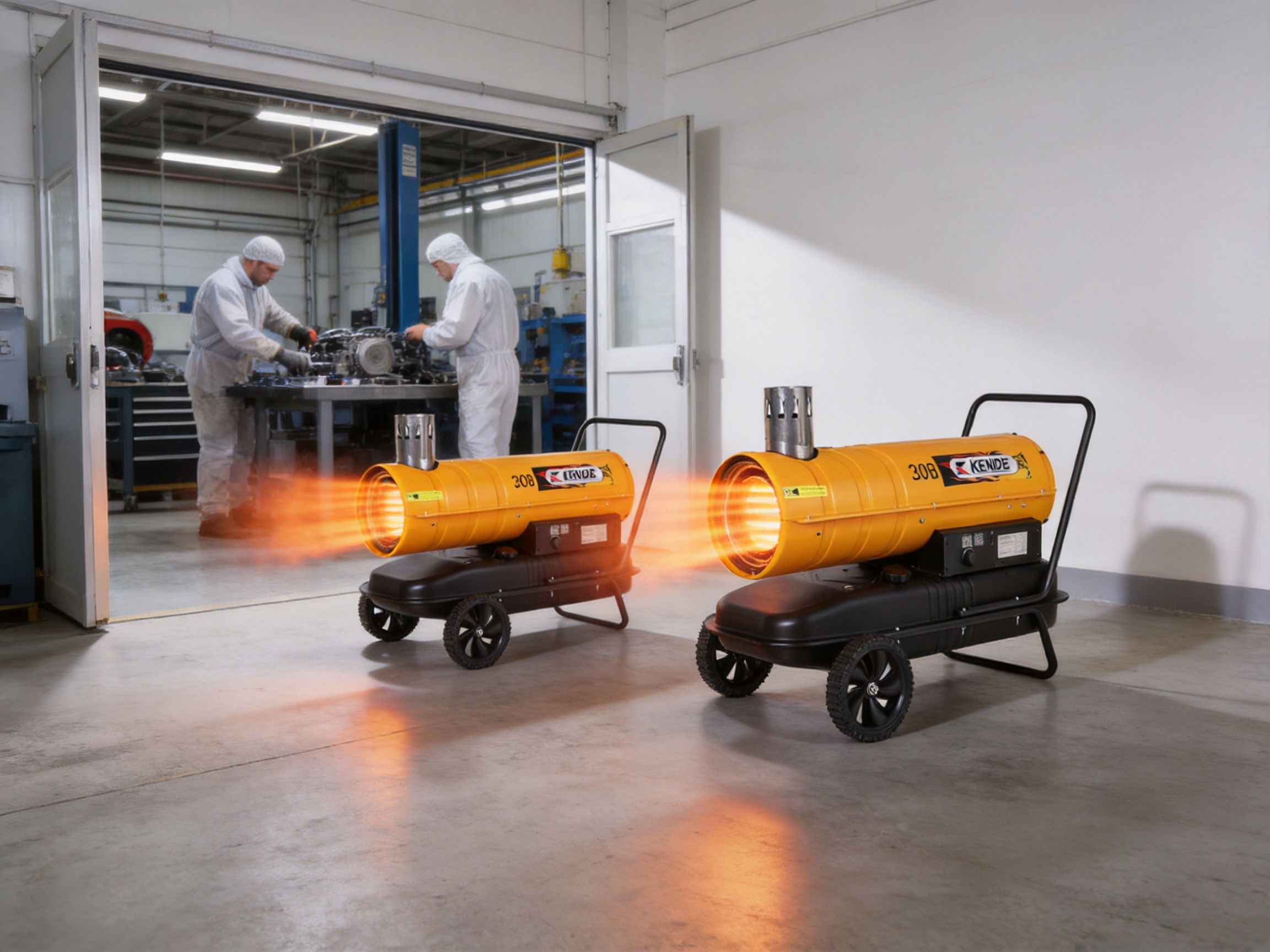
The following table summarizes the principal specifications of the two available models. The figures provide a basis for comparing output, fuel requirements, portability, and installation planning.
| Specification | MARS-20B | MARS-30B |
|---|---|---|
| Heat output | 17,200 kcal/h | 25,800 kcal/h |
| Rated heat output | 20 kW | 30 kW |
| Rated input voltage | AC 220–240 V, 50 Hz, single phase | AC 220–240 V, 50 Hz, single phase |
| Heated-air output | 750 m³/h | 1,050 m³/h |
| Fuel consumption | 1.6 kg/h | 2.4 kg/h |
| Fuel tank capacity | 36 L | 56 L |
| Net weight | 22.2 kg | 30.4 kg |
| Dimensions | 895 × 455 × 600 mm | 1,020 × 495 × 620 mm |
| Temperature setting range | 5–55°C | 5–55°C |
The MARS-30B provides 50 percent more rated heat output than the MARS-20B and delivers 40 percent more heated air. It also has a larger fuel tank, which is appropriate for its higher consumption rate. The MARS-20B has a lower total weight and smaller footprint, which may be advantageous where the heater must be moved frequently or placed in a tighter area.
Actual operating duration depends on fuel type, environmental conditions, thermostat cycling, ventilation, ambient temperature, and the operating load. If both models were to operate continuously at their stated fuel-consumption rates, the approximate theoretical tank endurance would be calculated from tank capacity divided by consumption. In real use, automatic temperature control may reduce burner operation when the target temperature is reached. Operators should use the manufacturer’s operating guidance rather than treating theoretical calculations as a guaranteed runtime.
The MARS-20B is the more compact choice for users who need strong heating performance without the additional size and weight of a larger unit. Its 20 kW output and 750 cubic meters per hour of heated air can support many workshops, garages, service areas, and moderate-size temporary spaces. It is also easier to transport when equipment is moved between locations frequently.
The MARS-30B is intended for users who require greater thermal capacity. Its 30 kW output and 1,050 cubic meters per hour air delivery can help compensate for larger spaces, higher ceilings, more frequent door opening, or colder operating conditions. The larger 56-liter tank provides more fuel capacity, although the model also consumes fuel at a higher rate when operating continuously.
Room volume alone should not determine the selection. Insulation, wall and roof materials, outside temperature, air exchange, door size, and the desired temperature increase all affect heating demand. A building with good insulation may require less capacity than a smaller structure with open doors and substantial air leakage. Professional heating calculations should be used for permanent or critical installations.
Oversizing can lead to short cycling, in which the heater reaches the target temperature quickly and repeatedly starts and stops. Undersizing can cause continuous operation without achieving comfortable conditions. The best choice balances the required heat output, expected duty cycle, portability, tank capacity, and available installation space.
Compared with a basic heater that offers only manual operation, the MARS series provides a broader combination of control and protection functions. The 5–55°C stepless setting gives more precise temperature selection than simple low, medium, and high switches. The dual display provides better information than a single indicator light. Automatic ignition and power-failure memory reduce routine operating effort.
The design also addresses durability. A stainless-steel combustion cylinder, dual fuel filtration, and delayed cooling are valuable features for users who expect frequent operation. Some low-cost units may focus primarily on initial purchase price and provide fewer protections or less detailed temperature feedback. For professional users, downtime, maintenance, and operator convenience can have a larger financial impact than the original equipment cost.
Portability is another practical advantage. A fixed heating system may offer high capacity, but it requires permanent installation and may not be suitable for changing work locations. Electric resistance heaters are clean at the point of use, but high-output models may require significant electrical capacity. A portable liquid-fuel heater offers another option for areas where rapid warm-air delivery and mobility are priorities.
Product selection should always consider the specific application. A liquid-fuel heater requires responsible fuel handling and suitable ventilation. It may not be appropriate in every enclosed environment, particularly where combustion products could affect people, materials, or processes. The correct solution is the one that meets the heating requirement while complying with local safety and environmental rules.
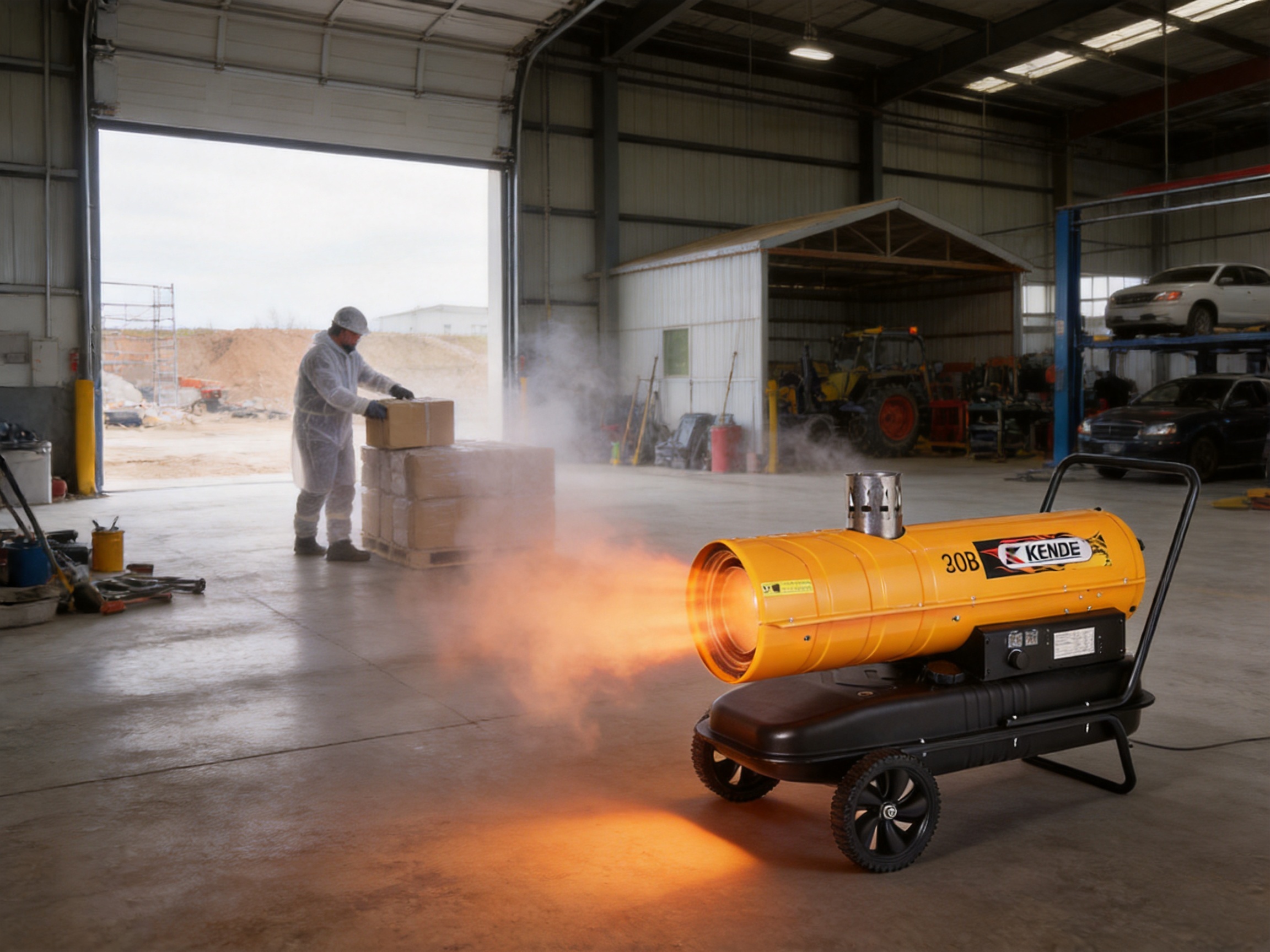
Workshops often contain large doors, metal structures, concrete floors, and equipment that make winter heating challenging. The MARS heaters can provide a rapid increase in air temperature for mechanics, fabricators, service technicians, and other workers. Their wheeled chassis allows the unit to be directed toward the active work zone rather than heating only one fixed location.
The adjustable temperature range is helpful when the workshop contains materials or equipment that should not be exposed to excessive heat. The operator can select a moderate target temperature and allow the control system to regulate the heating cycle. The digital display makes it easier to confirm both the target and ambient conditions during a shift.
Warehouses can lose substantial heat whenever loading doors are opened. A high-volume warm-air heater can help recover the temperature in areas where workers handle goods, package orders, or operate equipment. The 30 kW model may be suitable for larger loading zones, while the 20 kW model can be used in smaller storage or dispatch areas.
Because fuel heaters produce combustion gases, warehouse operators must evaluate ventilation and local regulations carefully. The unit should not be positioned where exhaust can be directed toward employees, stored goods, combustible packaging, or air intakes. A qualified person should determine whether the application requires additional ventilation or a different heating configuration.
Unfinished buildings often lack permanent heating, doors, insulation, or completed utility systems. A portable heater can support worker comfort and help maintain workable conditions during construction and renovation. The compact frame allows the unit to move as the project progresses from one area to another.
Construction environments contain dust, debris, wet surfaces, and temporary electrical connections. Operators should protect the heater from direct water exposure, keep air inlets clear, and inspect the wheels, fuel lines, power cable, and filters regularly. The machine should be placed on a stable surface away from construction materials and solvents.
Farm buildings, machinery sheds, and equipment maintenance areas may require temporary heating during cold weather. A mobile heater can be useful when the heating requirement changes from one building to another. The large tank capacity of the two models can reduce the frequency of refueling during longer work periods.
Agricultural users must pay special attention to combustible materials such as hay, straw, wood, feed, packaging, and fuel containers. Adequate separation, ventilation, fire prevention, and supervision are essential. The heater should only be used in locations where its combustion system and fuel type are approved for the intended conditions.
Equipment rental companies can benefit from a heater that is easy to explain, transport, and operate. Automatic ignition, digital temperature displays, safety shutdown functions, and a wheeled frame help simplify customer use. The two output levels also allow rental operators to serve different space sizes with a compact product family.
Before each rental, the supplier should inspect the heater, verify the condition of filters and hoses, check the fuel tank, test controls, and provide clear operating instructions. A written handover should address fuel selection, ventilation, minimum clearances, movement, shutdown, and emergency procedures. Good service practices protect both the customer and the equipment.
The product is supported by the manufacturing capabilities of Zhejiang Kende Mechanical & Electrical Co., Ltd. The company operates from a large production base in Taizhou, Zhejiang Province, covering approximately 120,000 square meters and employing about 600 people. This scale provides resources for engineering, purchasing, production planning, testing, quality control, warehousing, and export logistics.
The company reports annual exports of nearly 1.5 million units and an annual production capacity of approximately 2 million units. High-volume production experience is important for distributors and professional buyers because it supports supply continuity, standardized processes, and the ability to handle repeat orders. It also provides a broad installed base from which manufacturing feedback can be collected and used for product improvement.
Manufacturing is supported by modern management and production systems, including office automation, enterprise resource planning, manufacturing execution management, and Toyota-style production practices. These systems can help coordinate material purchasing, production schedules, work instructions, inventory, traceability, and quality records. Effective coordination is especially important when a manufacturer supplies many product categories and regional specifications.
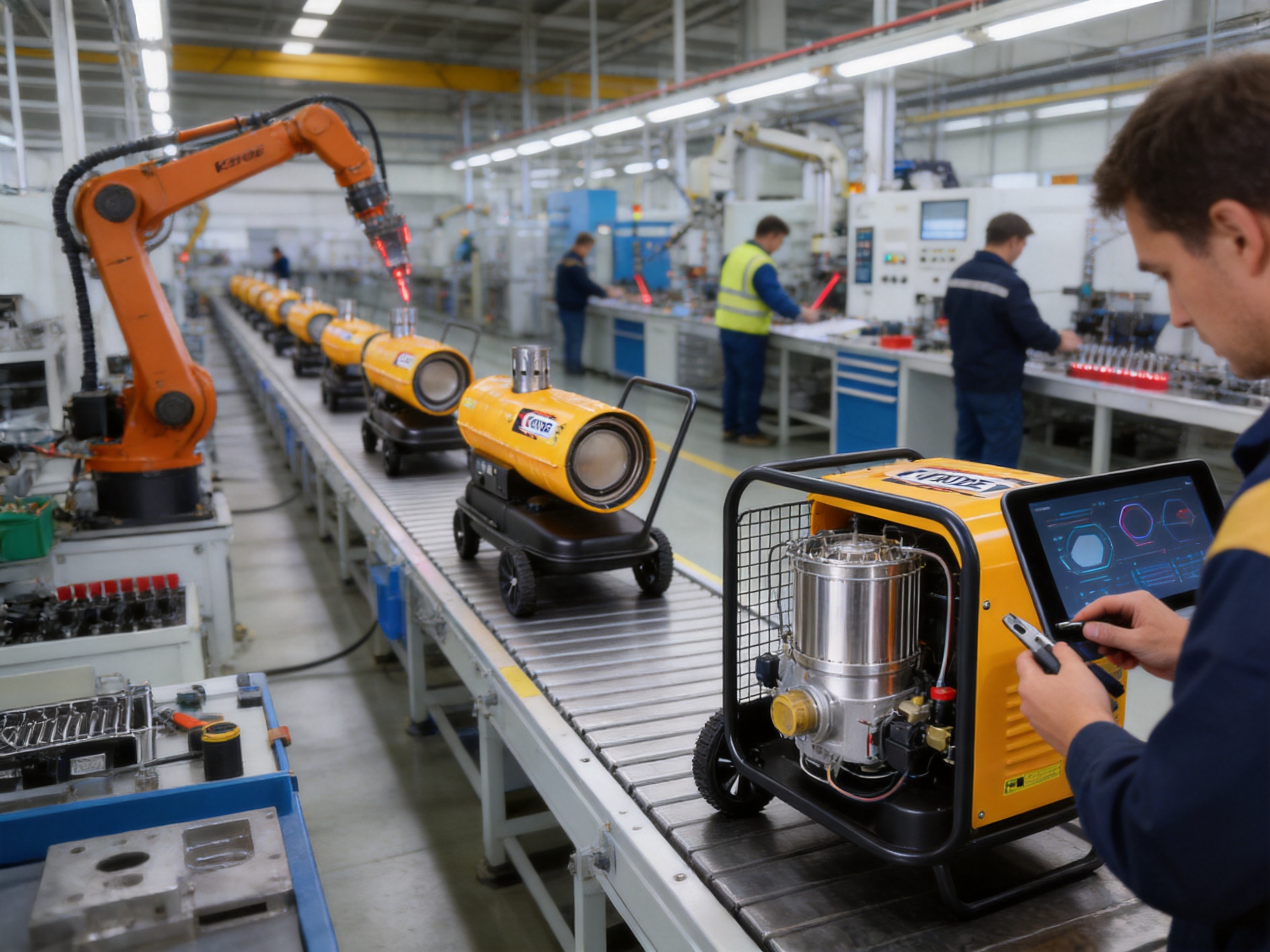
The company uses automatic placement, plug-in, welding, robotic processing, and laser-cutting technologies. These processes can improve repeatability and production efficiency when properly controlled. Automated equipment helps maintain consistent component positioning and joining quality, while laser cutting can produce precise sheet-metal parts and repeatable openings, brackets, and housings.
Automation does not eliminate the need for skilled personnel. Product quality depends on the complete manufacturing system, including design verification, incoming inspection, process control, assembly discipline, functional testing, final inspection, and corrective action. The combination of automated processes and experienced technical staff helps create a more consistent product than a purely manual assembly approach.
The manufacturer maintains a Zhejiang provincial research and development center, an enterprise technology center, and an intelligent welding technology research institute. Its reported research and development team includes 98 personnel. Although the company is widely associated with welding equipment, its engineering experience also supports the development of chargers and heating products.
The company reports extensive intellectual property, including invention patents, utility model patents, appearance patents, and software copyrights. It also states that it has participated in the drafting, formulation, and revision of 20 national standards and led the drafting of one group standard. Such activities indicate familiarity with technical requirements, product safety considerations, and the need for consistent industry terminology and testing methods.
Research capability is valuable for heater development because performance depends on the interaction of combustion, airflow, electrical control, temperature sensing, fuel delivery, materials, and safety protection. A change to one subsystem can affect the others. For example, increasing airflow may influence heat transfer, noise, combustion stability, and outlet temperature. A structured engineering process helps manage these relationships.
The company reports experience with international product certifications and approvals, including GS, CE, EMC, ERP, US ETL, UKCA, and China CCC. The exact certification applicable to a particular heater model, market, voltage version, and fuel configuration should be confirmed in the technical documentation supplied for that product.
Certification experience can benefit export customers because it reflects familiarity with documentation, laboratory testing, electrical safety, electromagnetic compatibility, energy requirements, and regional compliance procedures. Buyers should still verify current certificates, test reports, markings, manuals, and national installation requirements before importing or selling the equipment.
For distributors, compliance support is an important part of supplier evaluation. Product reliability is necessary, but so are correct labels, spare-parts availability, technical documentation, packaging, warranty procedures, and communication. A manufacturer with established export operations is better positioned to support these requirements than a supplier focused only on local or small-batch sales.
The heater should be positioned on a firm, level, and noncombustible surface. Air intake and warm-air outlets must remain unobstructed. The unit should have sufficient clearance from walls, stored goods, curtains, packaging, wood, solvents, fuel containers, and other combustible materials. The required clearances should always follow the product manual and local regulations.
Ventilation is a fundamental requirement for combustion equipment. Even when a heater is used for warm-air delivery, combustion products must be managed correctly. The suitability of the heater depends on the building volume, ventilation rate, occupancy, exhaust arrangement, and applicable regulations. It should not be used in a confined space without an approved ventilation and exhaust plan.
Before operation, the user should inspect the fuel tank, fuel lines, filters, power cord, plug, wheels, housing, and controls. Any fuel leakage, damaged insulation, unusual odor, loose component, or visible deformation should be addressed before starting the unit. Fuel should be the type approved by the manufacturer and local authorities for the specific model.
The heater should be started according to the operating instructions. Once the desired temperature is selected, the operator should monitor the first operating cycle and confirm that ignition, airflow, temperature display, and shutdown functions work normally. If abnormal smoke, repeated ignition failure, unusual noise, or overheating occurs, the machine should be switched off and inspected by qualified personnel.
When heating is complete, the normal shutdown procedure should be used. The delayed cooling cycle should be allowed to finish. The unit should not be unplugged immediately unless an emergency requires it, because interrupting the cooling sequence may increase thermal stress or prevent the fan from removing residual heat.
Regular maintenance helps preserve heating performance and reduce unexpected downtime. The frequency of maintenance depends on operating hours, fuel quality, dust concentration, transport frequency, and the environment. Construction and agricultural sites may require more frequent inspection than a relatively clean workshop.
Filters should be checked for contamination and serviced according to the recommended schedule. Dirty filters can restrict fuel flow or reduce combustion stability. The combustion chamber and air passages should be kept free from excessive soot, dust, and debris. Air inlets should be cleaned carefully without damaging sensors, wiring, or protective grilles.
Electrical connections should be inspected for looseness, overheating, corrosion, or damage. The power cord and plug should remain in good condition and should not be exposed to standing water, sharp edges, vehicle traffic, or excessive heat. Temperature sensors and display functions should be checked if the indicated ambient temperature appears inconsistent with actual conditions.
The fuel tank should be drained or managed according to the storage instructions when the heater will not be used for an extended period. Old or contaminated fuel can create starting and combustion problems. Before seasonal operation, the operator should carry out a complete inspection, test the automatic ignition, confirm the safety shutdown functions, and verify that the wheels and frame are secure.
Maintenance should be performed by trained personnel when it involves combustion adjustment, electrical controls, safety devices, or internal components. Unauthorized modifications can affect performance, invalidate approvals, and create safety risks. Replacement components should meet the manufacturer’s specifications.
For commercial buyers, the value of a fuel heater includes more than its rated output. A practical purchase decision should consider initial cost, fuel consumption, expected utilization, service intervals, transport requirements, warranty support, spare parts, documentation, and compliance obligations. A heater with useful automation and protection functions may reduce labor and service costs over its working life.
The two-model structure simplifies product selection and inventory management. A distributor can offer a compact 20 kW model and a higher-capacity 30 kW model without maintaining an excessively broad range of similar products. Common control concepts and construction features can also make operator training and service procedures more consistent across the range.
The integrated fuel tank reduces the need for a separate day tank in many mobile applications. The wheeled frame reduces handling effort, while the digital display helps users operate the machine with less guesswork. These factors can improve customer satisfaction, particularly for contractors and rental companies that value equipment mobility and straightforward operation.
For overseas buyers, the manufacturer’s export experience and reported certification capabilities may simplify cooperation. Importers should request the latest product data sheet, user manual, packaging details, spare-parts list, warranty terms, production lead time, and applicable conformity documents. They should also confirm voltage, frequency, plug configuration, fuel specification, language requirements, and labeling requirements before placing an order.
The MARS-20B has a rated heat output of 20 kW, while the MARS-30B has a rated heat output of 30 kW. Their approximate heat outputs are 17,200 kcal per hour and 25,800 kcal per hour respectively.
The MARS-20B provides a stated heated-air output of 750 cubic meters per hour. The MARS-30B provides 1,050 cubic meters per hour. Actual results depend on room layout, insulation, air leakage, outside temperature, and ventilation.
The temperature setting range is 5 to 55 degrees Celsius. The adjustment is stepless, allowing the user to select a target without being restricted to a small number of fixed positions.
Yes. The heater includes an automatic constant-temperature function intended to regulate operation around the selected target. The dual digital display shows the set temperature and ambient temperature separately.
The power-failure memory function is designed to retain the previous temperature setting, reducing the need to repeat the setup process after power is restored. The operator should still inspect the unit and surrounding conditions before restarting.
The heater includes overheating protection and automatic shutdown when the fuel level becomes too low. It also includes a delayed blowing and cooling function after shutdown. These features support safer operation but do not replace ventilation, proper clearances, inspection, and compliance with local requirements.
The MARS-20B is lighter at 22.2 kilograms and has smaller dimensions than the MARS-30B, which weighs 30.4 kilograms. Both models use a wheeled tubular frame for mobile operation.
There is no single area rating that applies to every building. Required capacity depends on ceiling height, insulation, construction materials, outdoor temperature, door openings, ventilation, and the desired temperature increase. A qualified heating calculation should be used for a precise selection.
No. Suitability depends on the combustion arrangement, ventilation, exhaust requirements, occupancy, fuel, and local regulations. The heater must be used only in an approved environment and in accordance with the manufacturer’s instructions.
The correct fuel must be confirmed from the model-specific manual and local requirements. The product is described as a fuel heater, while the broader product range includes diesel, kerosene, and fuel-oil heaters. Users should never assume that an alternative fuel is acceptable without written confirmation.
The combustion cylinder uses 439 stainless steel, a material selected for high-temperature performance and corrosion resistance. This supports durability during repeated heating and cooling cycles, provided the machine is maintained and operated correctly.
The manufacturer operates a large production facility, has reported annual production capacity of approximately 2 million units, and uses automated placement, plug-in, welding, robotic processing, and laser-cutting technologies. It also maintains research and development centers and reports experience with international certifications.
The MARS-20B and MARS-30B fuel heaters combine practical mobility with high-output warm-air delivery and automatic operating functions. Their main advantages include 20 kW and 30 kW heating capacities, stepless temperature control from 5 to 55°C, dual digital displays, automatic ignition, power-failure memory, overheating protection, low-fuel shutdown, delayed cooling, dual fuel filtration, and 439 stainless steel combustion cylinders.
The 20 kW model emphasizes compactness and lower weight, while the 30 kW model provides greater airflow and heating capacity for larger or more demanding areas. Both models are designed for professional users who need a flexible heating solution that can be moved as work requirements change.
The product is further supported by the manufacturer’s large-scale production capability, engineering resources, automated manufacturing processes, export experience, and certification background. These strengths can be valuable to contractors, industrial users, rental companies, distributors, and importers seeking a dependable portable heater range.
Correct application remains essential. Users must select the appropriate capacity, provide adequate ventilation, use approved fuel, maintain safe clearances, follow the operating manual, and arrange qualified servicing when necessary. When these requirements are met, the heaters can provide a practical and efficient source of warmth for workshops, warehouses, construction areas, agricultural buildings, and other approved professional environments.
1. Product technical information for the MARS-20B and MARS-30B fuel heaters, including rated output, airflow, fuel consumption, tank capacity, dimensions, and weight.
2. Manufacturer-provided product feature information covering temperature control, digital display, automatic ignition, protection functions, fuel filtration, combustion-cylinder material, and mobile frame design.
3. Manufacturer company profile describing production capacity, facility scale, research and development resources, manufacturing technologies, export activity, and management systems.
4. General principles of portable combustion-heater installation, ventilation, fuel handling, fire prevention, and operator safety.
5. General guidance for thermal equipment maintenance, including filter inspection, combustion-system servicing, electrical inspection, seasonal storage, and preventive maintenance.
Recommended Products

Contact Us
No.2299, Luqiao Section, Shugang Avenue, Luqiao District, Taizhou, 318057 Zhejiang, PR China.
+86-576-82431568
 Privacy
China Welding Machine Factory
 English
 中文简体
 русский
 Español
 عربى
 Français
 Português
 Deutsch
 Український