Email: [email protected]
Email: [email protected]

Blog
 2026.11.07
 Blog
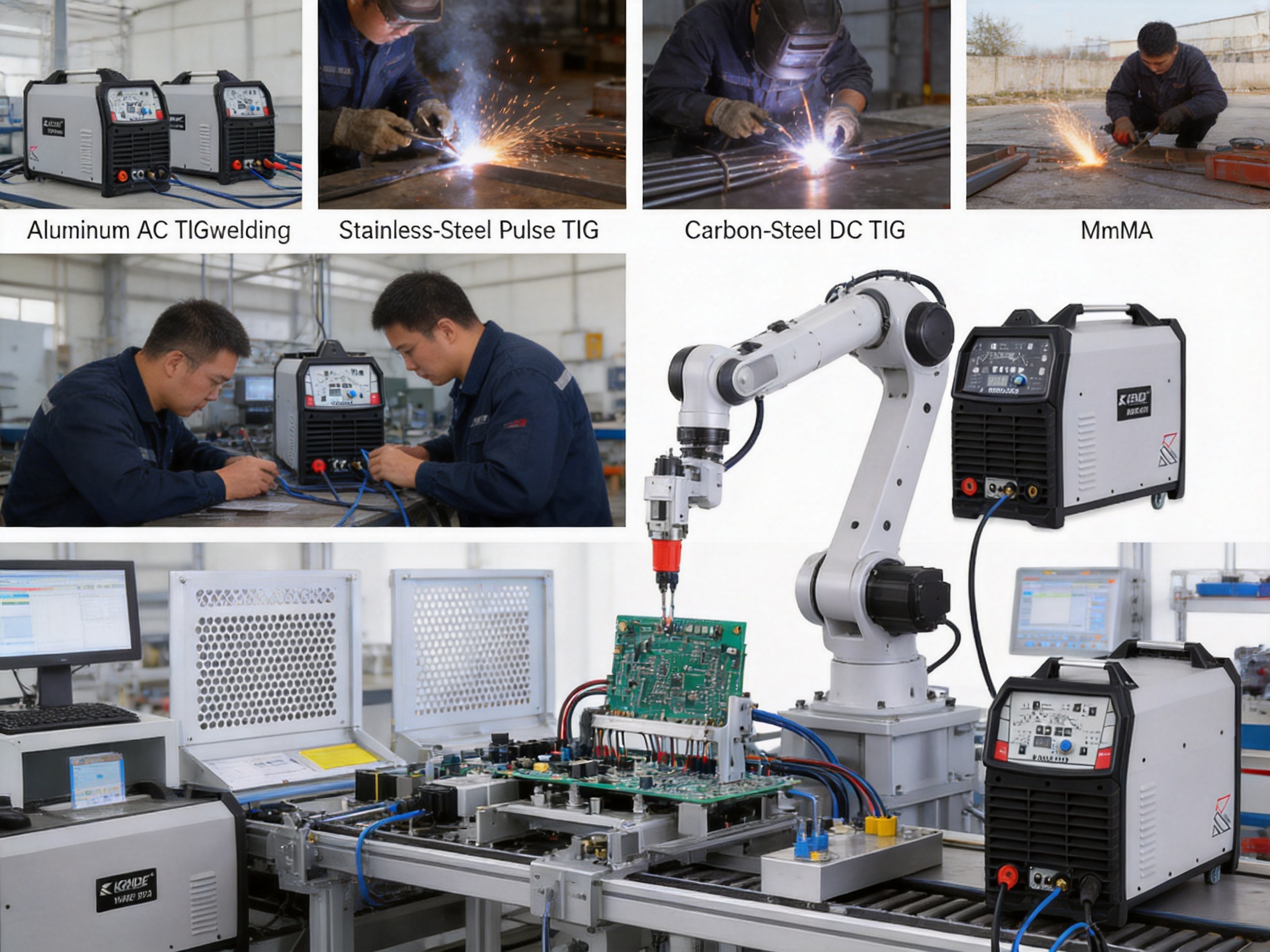
Modern fabrication requires welding equipment that can handle different metals, joint designs, production environments, and operator preferences without sacrificing arc quality. A machine used in a workshop, maintenance department, construction site, or light industrial production line must be more than a basic power source. It must deliver stable current, predictable arc behavior, convenient adjustment, protection against operating faults, and sufficient portability for practical daily use.
The WSME-200D and WSME-315G inverter welding machines are designed to meet these requirements through a combination of AC TIG, DC pulse TIG, DC TIG, and MMA welding functions. The 200A version is intended for single-phase operation and portable use, while the higher-capacity 315-class version is designed for three-phase industrial applications. Both versions use IGBT inverter technology, pulse-width modulation control, constant-current output control, digital control technology, and automatic protection functions.
This combination gives users a versatile welding platform for carbon steel, alloy steel, stainless steel, aluminum, aluminum alloy, cast iron, and other conductive metals. Instead of purchasing separate power sources for different welding processes, users can select the required mode directly from one machine. This reduces equipment duplication, simplifies workshop organization, and makes it easier to move between repair work, fabrication, precision welding, and general electrode welding.
The product is manufactured by Zhejiang Kende Mechanical & Electrical Co., Ltd., an experienced Chinese producer and exporter of welding machines, battery chargers, heaters, and related electrical equipment. Its manufacturing capabilities, research resources, production systems, certifications, and international market experience support the development of machines designed for both domestic and export applications.
The WSME-200D is a 230V, 200A portable AC/DC TIG and MMA inverter welding machine. It uses a metal case with a plastic frame and includes a digital display for operating information and adjustment. The machine supports AC TIG, DC pulse TIG, DC TIG, and MMA welding, making it suitable for users who need one compact power source for multiple processes.
The technical table also identifies a higher-capacity model, the WSME-315G. This version uses a three-phase 380V supply and is intended for more demanding workshop and industrial applications. Its rated welding current range is listed as 25–260A, with a rated duty cycle of 60 percent. Because the supplied product information uses both the 315D designation in the title and the 315G designation in the technical data, purchasers should confirm the exact model suffix, input configuration, accessories, and regional specification before placing an order.
The two model configurations share the same fundamental design philosophy: controlled inverter power, stable constant-current welding output, digital operation, multiple welding modes, and protective functions. The principal difference is the intended electrical installation and output class. The single-phase 200A model is more suitable for portable work and facilities with standard single-phase power. The three-phase model is better suited to industrial environments where higher input capacity and three-phase electrical infrastructure are available.
| Specification | WSME-200D | WSME-315G |
|---|---|---|
| Rated supply voltage | Single-phase 220/230V | Three-phase 380V |
| Supply frequency | 50/60Hz | 50/60Hz |
| Rated input capacity | 9.2kVA | 11kVA |
| Rated supply current | 42A | 16.7A |
| No-load voltage | 76V | 75V |
| Welding current range | 20–200A | 25–260A |
| Rated welding voltage | 18V | 20.4V |
| Rated duty cycle | 60% | 60% |
| Usable electrode diameter | 1.6–5.0mm | 1.6–5.0mm |
| Efficiency | 85% | 85% |
| Power factor | 0.9 | 0.9 |
| Protection degree | IP21S | IP21S |
| Insulation class | H | H |
| Net weight | 21kg | 44.4kg |
| Machine dimensions | 550 × 270 × 440mm | 625 × 340 × 616mm |
The listed values provide a useful basis for equipment selection, but they should not be interpreted as a substitute for the final technical datasheet supplied with a specific order. Input voltage, plug configuration, included accessories, control panel details, and local compliance requirements may vary according to the destination market.
AC TIG welding is particularly valuable when working with aluminum and aluminum alloys. Aluminum oxide has a higher melting point than the base metal, so an alternating current waveform is commonly used to support oxide cleaning while maintaining controlled heat input. The AC TIG function in this machine extends its application range beyond ordinary steel welding.
For fabrication shops, this means the same power source can be used for aluminum frames, tanks, covers, brackets, bicycle or motorcycle components, heat-transfer parts, and general repair work. The exact results depend on torch selection, shielding gas flow, tungsten preparation, joint cleanliness, filler metal, and operator technique. Nevertheless, the availability of AC TIG in a compact inverter platform is a significant advantage over basic DC-only welding machines.
DC pulse TIG alternates between a higher peak current and a lower background current. This helps control average heat input, which can reduce distortion and make it easier to manage thin materials or heat-sensitive assemblies. Pulse operation can also support a controlled visual bead pattern when the operator selects suitable pulse frequency, current, and timing parameters.
Pulse TIG is useful in stainless steel fabrication, precision repair, small components, thin sheet work, and joints where excessive heat could produce discoloration, distortion, or burn-through. It does not eliminate the need for correct preparation and technique, but it gives the operator another method of managing the thermal behavior of the weld.
DC TIG is widely used for carbon steel, alloy steel, stainless steel, cast iron, and many other metals. It provides precise arc control and is suitable for applications where appearance, penetration control, and low spatter are important. Compared with conventional stick welding, TIG allows the operator to control the arc and filler addition separately, which can be beneficial for visible welds and accurately fitted joints.
The product information specifies high-frequency arc starting. High-frequency starting allows the arc to begin without physically touching the tungsten electrode to the workpiece. This can help reduce tungsten contamination and support a cleaner start, especially when welding stainless steel, aluminum, or other materials where surface cleanliness matters.
MMA welding provides a practical solution for outdoor work, maintenance, construction, agricultural equipment, steel fabrication, and repair operations. Stick electrodes are relatively easy to transport and do not require a separate shielding gas cylinder, making the process useful in windy or remote locations.
The machine includes anti-stick, hot start, and arc force functions. Anti-stick can help reduce the chance of an electrode remaining fused to the workpiece during an unstable start. Hot start provides an increased current at ignition to help initiate the arc. Arc force can support arc stability when the electrode is close to the work surface or when welding conditions change. These functions make the MMA mode more accessible to less experienced operators while also giving experienced welders additional control.
The central technical feature of the machine is its IGBT inverter architecture. IGBT power devices allow the welding power source to operate at a high switching frequency compared with traditional transformer-based equipment. The result is a smaller and lighter power source with more responsive electronic control.
A conventional transformer machine can be robust, but it is often large and heavy because it depends on a substantial low-frequency transformer. An inverter machine transfers and regulates energy more efficiently through electronic switching. This helps explain why the WSME-200D can provide a 200A welding output in a 21kg package while retaining a metal case and a broad process range.
The machine uses pulse-width modulation control and constant-current output control. Constant-current control is important for TIG and MMA welding because it helps maintain a more consistent welding current as arc length and load conditions change. Stable current supports a more predictable arc, which can improve bead appearance and reduce the amount of corrective work required after welding.
The listed efficiency is 85 percent, and the power factor is 0.9. These figures indicate an electrical design intended to use input power effectively. The company’s product information also describes energy savings of up to 30 percent compared with less efficient welding equipment. Actual savings depend on duty cycle, operating current, welding process, input supply, electrode type, and the performance of the surrounding electrical installation.
High efficiency can have several practical benefits. It may reduce energy consumption over a long production period, lower the heat generated inside the machine, and reduce the demand placed on facility electrical systems. A power factor of 0.9 also indicates that the equipment is designed to use incoming electrical power in a relatively effective manner, although users should still observe local requirements for circuit protection and cable sizing.
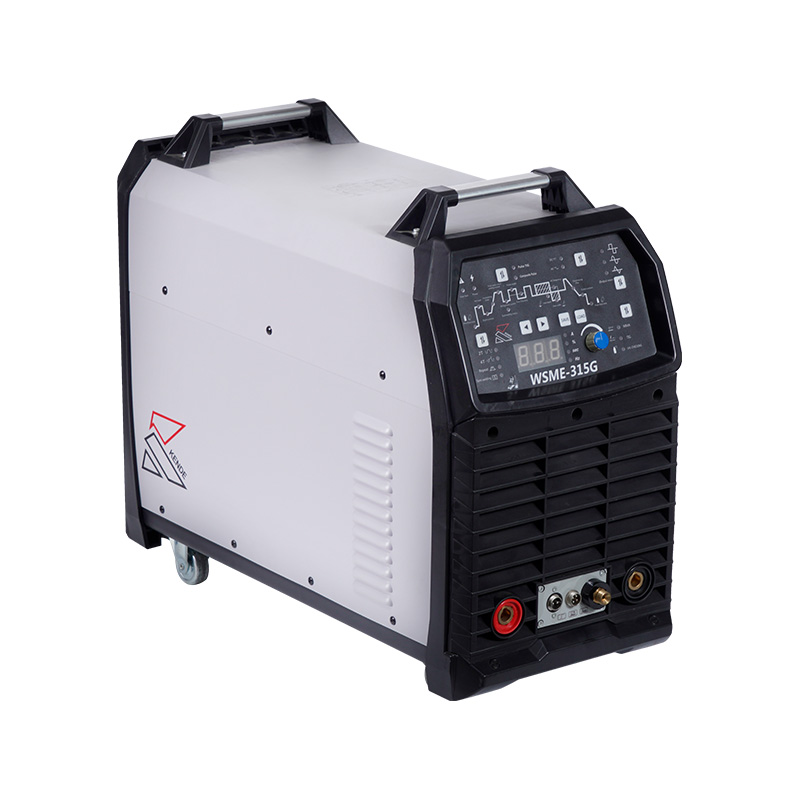
WSME-200D/315D IGBT Inverter TIG/MMA Welding machine(TIG DC-LIFT), Metal case with plastic frame Portable , AC TIG, DC PULSE TIG, DC TIG and MMA, Digital Display, 230V 200A
Arc quality is one of the most important differences between an ordinary welding machine and a well-designed inverter system. A stable arc allows the operator to concentrate on travel speed, torch angle, filler addition, joint alignment, and penetration instead of constantly compensating for irregular power delivery.
The WSME series is described as having exceptional arc characteristics in both TIG and stick modes. In TIG operation, stable current and high-frequency starting help provide controlled ignition and a more consistent arc. In MMA operation, hot start, anti-stick, and arc force adjustments help the user adapt the machine to different electrodes and welding positions.
The digital control system is intended to simplify operation. The product description states that users can set the welding current and achieve good welding results through an easy-to-use interface. This is valuable in workshops where machines may be operated by different workers or moved between applications. Clear adjustment and repeatable settings can reduce setup time and make production practices more consistent.
A digital display also helps the operator monitor the selected welding current. While a display does not replace proper weld inspection, it provides a more precise reference than a purely mechanical dial. When a job requires repeated settings, the operator can return to a known current range more easily.
For professional use, the most useful control system is not necessarily the one with the greatest number of parameters. Excessively complex interfaces can slow production and increase setup errors. The stated design objective of advanced functions with a simple interface therefore offers a practical balance: the machine provides several welding processes and important adjustments while keeping basic current selection straightforward.
The machine is specified for welding carbon steel, alloy steel, cast iron, stainless steel, aluminum, and aluminum alloy. This broad material range is made possible by the combination of AC TIG, DC TIG, pulse TIG, and MMA functions.
Carbon steel is commonly welded with DC TIG or MMA. Alloy steel may require closer control of heat input and suitable filler metal, particularly when the component is exposed to mechanical stress or elevated temperature. Stainless steel benefits from controlled TIG welding because excessive heat can affect appearance, corrosion resistance, and dimensional accuracy.
Aluminum and aluminum alloys require suitable AC TIG settings, proper cleaning, correct tungsten preparation, and appropriate shielding gas coverage. Cast iron can be challenging because of its brittleness, carbon content, and sensitivity to thermal shock. MMA electrodes designed for cast iron or nickel-based repair work may be selected according to the component and the repair procedure.
The machine can therefore serve several types of users. A maintenance department may use MMA for structural repairs and DC TIG for precision work. A metal fabrication shop may use AC TIG for aluminum and DC TIG for stainless steel. A small manufacturer may use pulse TIG for thin sheet assemblies and MMA for fixtures or heavier repair tasks. A training center may use the platform to teach several welding processes without maintaining multiple unrelated power sources.
Actual material capability depends on more than the power source. The operator must select compatible electrodes, filler metals, shielding gas, tungsten type, polarity, joint preparation, and current settings. Material thickness, joint design, preheating, interpass temperature, and post-weld treatment must also be considered where required by the application.
The WSME-200D is designed as a portable machine, with a listed net weight of 21kg and dimensions of 550 by 270 by 440mm. Its metal case and plastic frame are intended to combine structural protection with manageable handling. In mobile repair work, the ability to transport the machine to the workpiece can save time and reduce the need to disassemble large components.
Portability is also valuable in workshops where floor space is limited. The machine can be moved between welding bays, maintenance areas, storage rooms, and installation sites. Its compact format makes it easier to integrate into a workbench or mobile welding cart, provided adequate ventilation and clearance are maintained.
The larger three-phase model is listed at 44.4kg and measures 625 by 340 by 616mm. It is less portable than the 200A version but is appropriate for a workshop or production environment where the machine can remain in a designated location. The larger housing provides space for higher-capacity components and supports the requirements of a more industrial power source.
Mechanical protection is particularly important in welding environments because machines may be exposed to metal dust, grinding particles, vibration, accidental impact, and changing temperatures. The product information identifies moisture-proof, anti-corrosion, anti-vibration, and anti-conductive-dust design characteristics. These features are intended to improve durability, but users should still keep the equipment clean, dry, properly ventilated, and protected from direct rain or conductive contamination.
Both listed models have a rated duty cycle of 60 percent. Duty cycle is commonly expressed over a defined testing period, often ten minutes, although the applicable standard and test conditions should be confirmed in the official documentation. A 60 percent rating generally means the machine can weld for six minutes within the test period and then requires cooling time under the specified rated conditions.
Duty cycle should not be viewed as a simple measure of how many welds can be completed in a day. Actual performance depends on welding current, ambient temperature, ventilation, cable length, process selection, electrode size, and the pattern of intermittent work. At lower current settings, many inverter machines can operate for longer periods than at maximum output, but users should follow the machine’s rated data and thermal indicators.
For production planning, a 60 percent duty cycle can be suitable for fabrication, maintenance, repair, and intermittent assembly. It allows the operator to weld, reposition the workpiece, change electrodes, inspect the joint, and prepare the next weld during natural pauses. If the application involves continuous high-current welding, the three-phase model or a higher-rated power source may be more appropriate.
Automatic over-temperature protection helps protect internal components when the machine is operated beyond its thermal limits. When a protection function activates, the operator should allow the machine to cool and investigate ventilation, ambient temperature, input supply, cable selection, and workload before continuing.
The machine includes automatic protection against over-current and over-temperature conditions. Over-current protection can help reduce the risk of damage caused by abnormal electrical loads or unsuitable operating conditions. Over-temperature protection can help prevent excessive thermal stress on power components, transformers, control boards, and internal connections.
The listed protection degree is IP21S. This indicates a level of protection against solid objects and vertically falling water under the relevant classification system, but it does not mean the machine is waterproof or suitable for exposure to rain. Welding equipment should be installed in a dry, sheltered location with adequate airflow.
Insulation class H is listed for both models. Insulation class is associated with the thermal endurance of insulating materials used in electrical equipment. It is one part of the machine’s electrical design and should be considered together with grounding, input protection, cable condition, ventilation, and safe operating procedures.
Users should connect the machine to a properly rated power supply and ensure that the input cable, circuit breaker, plug, extension cable, and grounding arrangement are suitable for the model. The 200A single-phase model has a listed rated supply current of 42A, while the three-phase model has a listed rated supply current of 16.7A. These values demonstrate why electrical installation planning is important, particularly for the single-phase version operating near its maximum rating.
Welding safety also includes eye and face protection, flame-resistant clothing, suitable gloves, respiratory protection where required, fire prevention, shielding gas handling, and safe workpiece grounding. The machine’s protection functions are valuable, but they do not replace operator training or workplace safety procedures.
A basic MMA machine may be economical for electrode welding but cannot provide AC TIG or precision pulse TIG. A DC-only TIG machine may handle steel and stainless steel but may not be suitable for aluminum AC welding. The WSME platform combines four processes, reducing the need to purchase and maintain separate machines.
Traditional transformer-based machines can be heavy and difficult to move. The inverter architecture allows a smaller package for the 200A model, which is helpful for contractors, mobile repair teams, agricultural service providers, and workshops that regularly change work locations.
Pulse TIG gives the operator an additional way to manage heat input. This is an advantage when welding thin sections, stainless steel, and components where distortion must be minimized. The availability of AC TIG also helps users work with aluminum instead of being restricted to ferrous metals.
Hot start, arc force, and anti-stick functions improve the usability of the MMA mode. High-frequency starting improves TIG ignition convenience, while digital control helps make current settings more repeatable. These features can provide a more controlled experience than a simple fixed-output welding power source.
The listed 85 percent efficiency and 0.9 power factor indicate an inverter platform designed for effective energy use. Lower energy consumption can be important for businesses that operate several welding machines over long shifts. Efficient operation may also reduce unnecessary heat generation inside the equipment.
Over-current and over-temperature protection, together with a metal housing and stated resistance to moisture, corrosion, vibration, and conductive dust, support dependable use in practical workshop environments. These features do not make the machine maintenance-free, but they help it withstand normal operating challenges when properly installed and serviced.
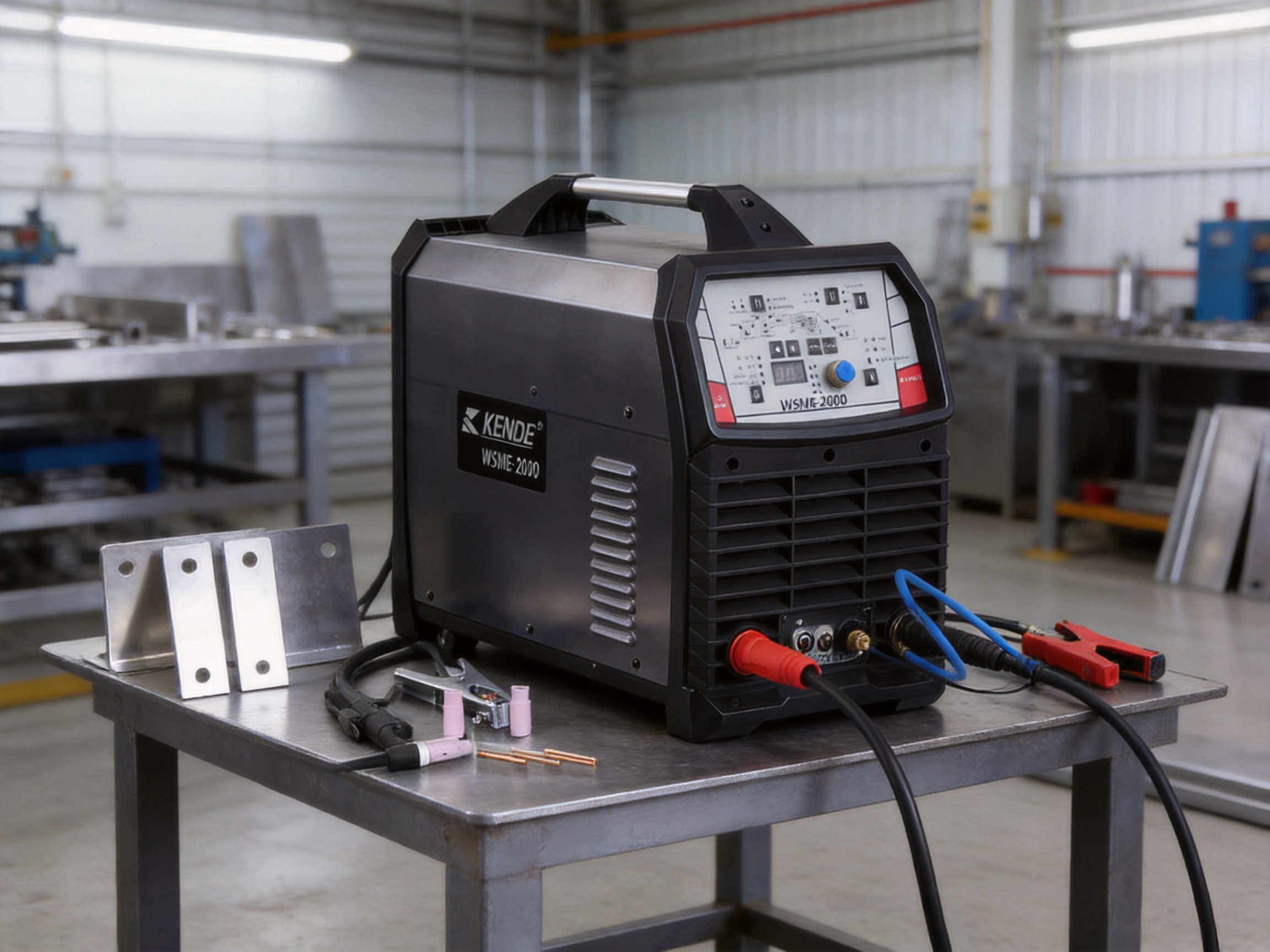
The manufacturer, Zhejiang Kende Mechanical & Electrical Co., Ltd., operates from Taizhou City in Zhejiang Province, China. The company reports a site area of approximately 120,000 square meters and a workforce of around 600 employees. It has an annual production capacity of approximately two million units and exports nearly 1.5 million units each year.
This scale is important for buyers seeking stable supply. A large manufacturing base can support component procurement, production scheduling, quality control, engineering development, packaging, and after-sales coordination. It can also help the manufacturer respond to different voltage standards, certification requirements, packaging regulations, and market preferences.
The company’s product range includes MMA welding machines, MIG and MAG welding machines, flux-cored welding machines, TIG welding machines, plasma cutting machines, stud welding machines, submerged arc welding machines, battery chargers, and electric, gas, and oil heaters. This broad portfolio gives its engineering and production teams experience across several categories of power electronics, thermal equipment, electrical controls, and metal housings.
For the WSME machine, the ability to manufacture related welding products can support common design practices and shared component knowledge. Inverter control, cooling, protection circuits, cable connections, metal fabrication, and product testing are relevant across multiple welding product families.
The company reports a Zhejiang Provincial Research and Development Center, an Enterprise Technology Center, and an Intelligent Welding Technology Research Institute. It also reports 98 research and development personnel. These resources indicate that product development is supported by dedicated engineering teams rather than relying only on basic assembly operations.
Research and development capability is important in inverter welding because performance depends on the interaction of power semiconductors, control software, sensors, cooling systems, electromagnetic compatibility, current feedback, and mechanical construction. Improving one part of the system can affect the others. For example, a change in switching frequency may influence efficiency, heat generation, electromagnetic noise, and control response.
The company also reports numerous invention patents, utility model patents, appearance patents, and software copyrights. Intellectual property does not by itself guarantee product quality, but it can demonstrate ongoing investment in product design and process improvement.
The company states that it uses automatic patching, plug-in and welding systems, robot processing, laser cutting, and other advanced manufacturing technologies. Automated surface-mount placement can improve the repeatability of electronic component assembly. Automated insertion and soldering can support consistent board production when components and process parameters are properly controlled.
Robot processing can improve repeatability in mechanical operations, while laser cutting can produce accurate metal panels and openings. Accurate housing manufacture is important for welding equipment because ventilation openings, mounting points, control-panel fit, and internal clearances all affect final reliability.
The company also identifies the use of OA office automation, Toyota production system management, ERP K3, and MES management systems. These systems can support production planning, material tracking, process control, inventory management, and manufacturing data collection. A connected manufacturing system makes it easier to identify production batches, monitor work orders, and coordinate engineering changes.
When these systems are effectively implemented, they can reduce variation between units and improve traceability. Consistent assembly is particularly important for welding machines because a small difference in soldering quality, connector installation, insulation, or cooling assembly can affect long-term performance.
The manufacturer reports international certifications and approvals including GS, CE, EMC, ERP, US ETL, UKCA, and China CCC across its product portfolio. The exact certification applicable to a particular WSME model, voltage version, and destination should be confirmed before purchase. Certification markings should always be supported by the correct technical file, test report, declaration, and model identification.
Compliance with electrical safety and electromagnetic compatibility requirements is essential for inverter welding equipment. A welding machine contains high-speed switching circuits that can generate electromagnetic disturbances if not properly designed. EMC testing and design controls help reduce the risk of interference with nearby equipment and support compliance with destination-market requirements.
International certification experience can also help a manufacturer understand the documentation expectations of importers, distributors, industrial users, and regulatory agencies. This is valuable for buyers who need equipment for export projects, contract manufacturing, public infrastructure, or organized procurement programs.
The company states that it has participated in the drafting, formulation, and revision of 20 national standards and has led the drafting of one group standard. Participation in technical standardization can provide valuable insight into safety, performance, testing, and terminology requirements. It also suggests that the manufacturer is engaged with the broader development of the welding equipment industry.
Fabrication workshops often work with different metals and thicknesses. The combination of AC TIG, DC TIG, pulse TIG, and MMA allows one machine to support aluminum fabrication, stainless steel work, carbon steel frames, and general repair operations.
Maintenance teams may encounter unexpected materials and joint conditions. MMA is useful for robust field repair, while TIG is useful for smaller or more precise work. A versatile inverter machine reduces the need to search for a specialized power source whenever a different repair task appears.
The portable 200A model can be useful for installation work where equipment must be moved around a jobsite. MMA operation is particularly practical when shielding gas handling is inconvenient. Users must, however, protect the machine from rain, excessive dust, impact, and unsuitable power connections.
TIG welding can support controlled repair of brackets, frames, exhaust-related components, stainless parts, and aluminum components when suitable procedures are followed. Pulse capability may help with thin sections, although the machine must be used with proper clamps, filler metal, shielding gas, and preparation.
Because the machine includes several welding processes, it can help training centers demonstrate the differences between AC TIG, DC TIG, pulse TIG, and MMA. Students can learn how current control, arc starting, electrode selection, polarity, and heat input affect the weld.
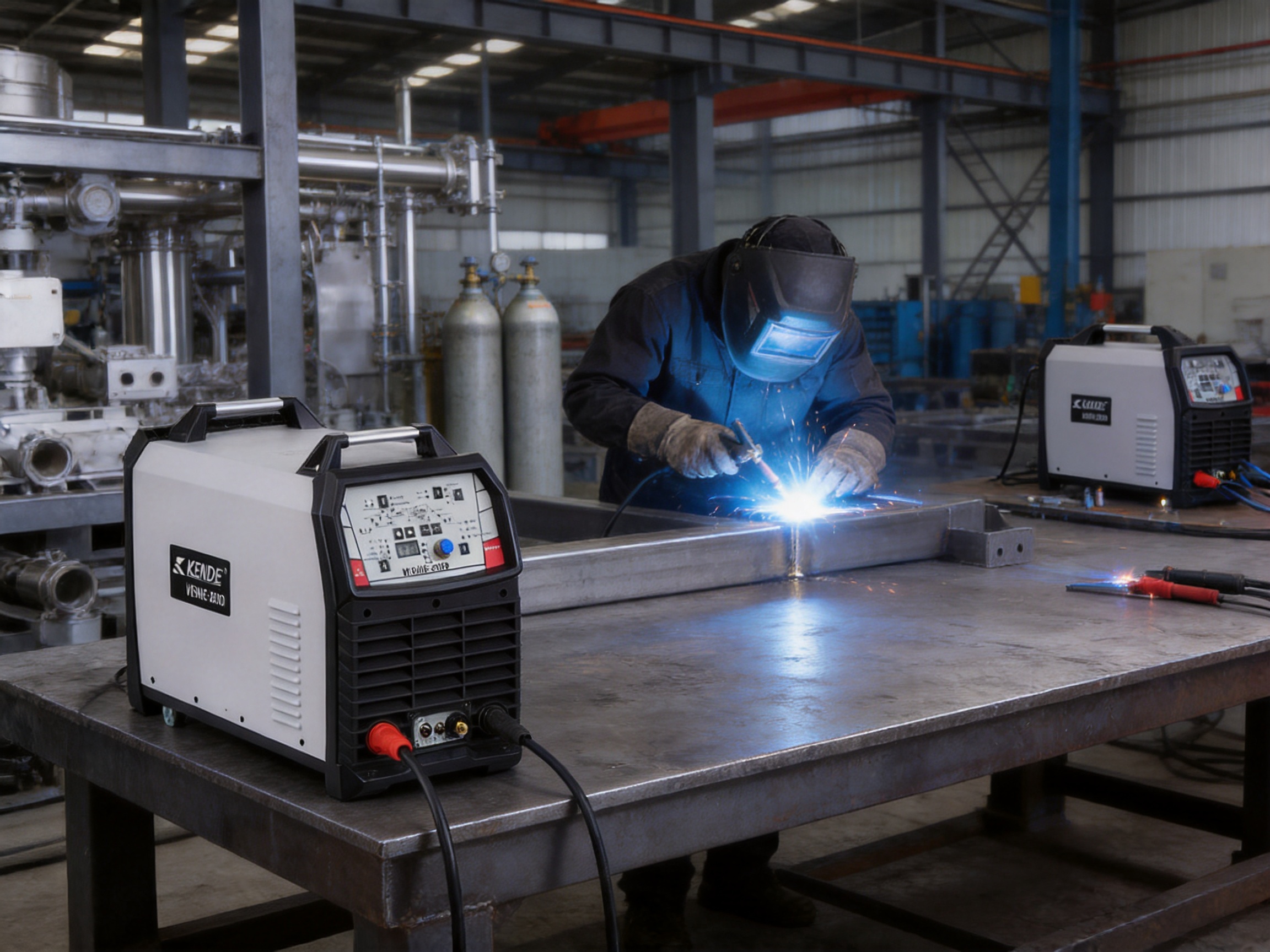
Before operation, users should inspect the machine, welding leads, torch, electrode holder, earth clamp, gas hose, regulator, input cable, and connectors. Damaged insulation, loose connections, blocked ventilation openings, or contaminated fittings should be corrected before welding begins.
The machine should be positioned on a stable surface with adequate clearance around air inlets and outlets. Ventilation openings must not be covered by tools, clothing, packaging, or other equipment. The unit should be kept away from direct water spray and from locations where grinding dust or conductive particles can enter the housing in excessive quantities.
For TIG welding, the operator should select an appropriate tungsten electrode, shielding gas, gas flow rate, torch consumables, polarity, and filler metal. For AC aluminum welding, surface cleaning and correct torch technique are especially important. For MMA welding, the electrode type, diameter, polarity, storage condition, and current range should match the job requirements.
After use, the operator should allow the machine to cool when necessary, switch off the power supply, close the shielding gas cylinder, and store leads and accessories in a dry location. Periodic maintenance may include cleaning accumulated dust, checking fan operation, inspecting terminals, tightening connections, and verifying that cooling paths are clear.
Only qualified personnel should open the housing or service internal electrical components. Inverter machines may contain dangerous voltages even after the power supply has been disconnected. Service work should follow the manufacturer’s instructions and applicable electrical safety regulations.
Buyers should first identify the required welding processes, material range, maximum thickness, expected duty cycle, available input voltage, and portability needs. The WSME-200D is appropriate where single-phase 220/230V power and a 200A output class meet the application. The three-phase model is more suitable for facilities with three-phase 380V power and higher industrial usage requirements.
Purchasers should confirm the exact model name because the supplied information refers to WSME-200D, WSME-315D, and WSME-315G in different sections. The final quotation should clearly state the model suffix, input voltage, frequency, rated current, included torch and cable set, accessories, plug type, packaging, certification, warranty, and delivery configuration.
It is also important to clarify whether the listed current range refers to TIG, MMA, or both processes, and whether any controls shown in product images are included on every model. Buyers should request the final instruction manual and technical datasheet for the exact version intended for their market.
For distributors, additional considerations include private labeling, minimum order quantity, spare parts, packaging language, service documentation, container loading, production lead time, and after-sales support. The manufacturer’s experience with international exports and multiple product categories may be useful for businesses developing a broader welding equipment range.
The machine supports AC TIG, DC pulse TIG, DC TIG, and MMA or stick welding. This allows it to work with aluminum and aluminum alloys through AC TIG and with many ferrous and non-ferrous applications through DC TIG, pulse TIG, and MMA.
Yes. The WSME-200D is listed at 21kg and uses a compact metal-case and plastic-frame construction. It is designed for movement between work areas, workshops, maintenance locations, and suitable jobsites.
The WSME-200D is listed for single-phase 220/230V operation with a welding current range of 20–200A. The WSME-315G is listed for three-phase 380V operation with a current range of 25–260A. The higher-capacity model is larger and heavier and is intended for more demanding workshop or industrial use.
Yes. The AC TIG function is intended to support aluminum and aluminum alloy welding. Correct cleaning, tungsten preparation, shielding gas, current settings, torch movement, and filler metal remain essential for successful results.
Pulse TIG alternates between peak and background current to help control average heat input. It can be useful for thin materials, stainless steel, precision fabrication, and joints where distortion or excessive heat must be minimized.
The product information specifies high-frequency arc starting. This allows TIG ignition without requiring the tungsten electrode to touch the workpiece, helping reduce contamination and improving starting convenience.
The machine includes anti-stick, hot start, and arc force functions. These features can help with electrode ignition, arc stability, and the prevention of the electrode becoming fused to the workpiece.
A 60 percent duty cycle indicates that the machine can operate for a specified proportion of a standard test period at its rated conditions before cooling is required. Actual operating time depends on current, ambient temperature, ventilation, and the welding process. Users should follow the official manual and thermal protection indicators.
No. The listed IP21S protection degree does not mean that the machine can be used in rain or exposed to water spray. It should be operated in a dry, sheltered, and adequately ventilated location.
The stated material range includes carbon steel, alloy steel, cast iron, stainless steel, aluminum, and aluminum alloy. The correct process, consumables, preparation, and procedure must be selected for each material and application.
The listed efficiency is 85 percent, and the listed power factor is 0.9. These values indicate an inverter design intended to use electrical power effectively. Actual energy consumption depends on the selected current, duty cycle, welding process, and operating conditions.
The buyer should confirm the exact model suffix, input voltage, output range, duty cycle, included accessories, plug type, certification, warranty terms, packaging, delivery schedule, and technical documentation. This is especially important because the supplied material uses both 315D and 315G references for the larger model.
The WSME-200D and WSME-315G represent versatile AC/DC TIG and MMA inverter welding platforms for users who need more than a single-purpose power source. Their combination of AC TIG, DC pulse TIG, DC TIG, and MMA functions supports a wide range of metals and applications. High-frequency starting, digital control, constant-current output, hot start, arc force, anti-stick, inverter efficiency, and automatic protection contribute to practical operating performance.
The 200A single-phase model offers a strong balance between output capability and portability, while the three-phase model provides a larger industrial configuration for facilities with suitable electrical infrastructure. The listed 60 percent duty cycle, 85 percent efficiency, 0.9 power factor, IP21S protection, and class H insulation provide useful technical indicators for equipment selection.
The product’s value is also supported by the manufacturer’s broader capabilities. Zhejiang Kende Mechanical & Electrical Co., Ltd. reports substantial production capacity, international export experience, research and development resources, automated manufacturing equipment, digital management systems, and participation in national welding standards. These strengths can help support consistent production, product development, certification, and international supply.
For the best purchasing decision, users should match the machine to the available electrical supply, required welding processes, working environment, material range, and expected workload. They should also confirm the exact model configuration and documentation before ordering. When correctly selected, installed, operated, and maintained, this multi-process inverter platform can serve as a flexible and efficient solution for fabrication, repair, maintenance, construction, and industrial welding.
1. Product technical information for WSME-200D and WSME-315G AC/DC TIG and MMA inverter welding machines, supplied manufacturer materials.
2. Manufacturer-published product descriptions covering IGBT inverter technology, pulse-width modulation, constant-current control, arc starting, and protection functions.
3. Manufacturer-published corporate information concerning production capacity, research and development resources, manufacturing systems, certifications, and export operations.
4. General principles of gas tungsten arc welding, shielded metal arc welding, welding current control, duty cycle, and electrical safety.
5. General guidance on welding equipment protection ratings, insulation classes, electromagnetic compatibility, and safe industrial equipment installation.
Recommended Products

Contact Us
No.2299, Luqiao Section, Shugang Avenue, Luqiao District, Taizhou, 318057 Zhejiang, PR China.
+86-576-82431568
 Privacy
China Welding Machine Factory
 English
 中文简体
 русский
 Español
 عربى
 Français
 Português
 Deutsch
 Український