Email: [email protected]
Email: [email protected]

Blog
 2026.09.08
 Blog
Modern welding work increasingly demands equipment that combines dependable arc performance, portability, energy efficiency, and practical protection features. The TOP-275N is designed to meet these requirements in a compact DC single-phase MMA welding platform. With a rated supply voltage of 220V, a welding current range of 20–120A, and a lightweight metal case, it is suitable for maintenance work, fabrication, installation, repair operations, workshops, farms, construction sites, and household metalworking.
This mini IGBT inverter welding machine is engineered around advanced inverter control technology rather than the bulky transformer architecture found in many traditional welding machines. The result is a smaller and lighter unit that can provide a stable direct-current output, a useful operating range, and reliable protection in a wide variety of working conditions. Its design supports welding with electrodes from 1.6mm to 3.2mm, making it practical for thin and medium metal plates and for many general-purpose repair applications.
Although compact in size, the machine incorporates several functions normally associated with more sophisticated welding power sources. Hot Start assists ignition at the beginning of a weld. Arc Force helps maintain arc stability when the arc length changes or the electrode approaches the workpiece. Anti-Stick technology helps the operator separate an accidentally stuck electrode from the metal. Thermal overload protection and an indicator light provide additional operating security.
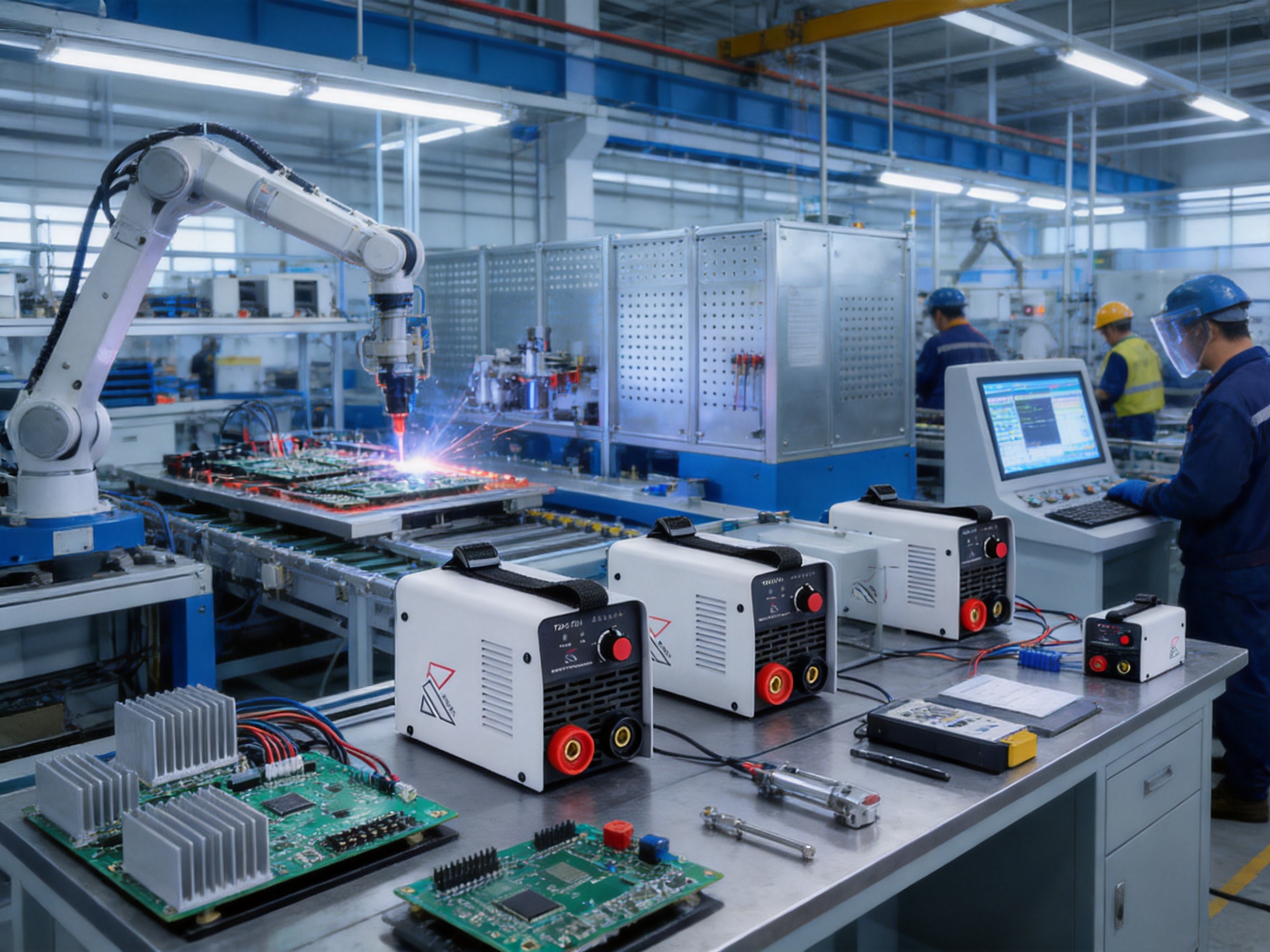
The machine is also developed by a manufacturer with extensive experience in welding equipment, battery chargers, heaters, and related electrical products. Its manufacturing capability includes automated electronic assembly, robot processing, laser cutting, digital production management, product research and development, and international certification experience. These strengths support consistent production quality and allow the company to develop equipment for different regional voltage standards, market requirements, and customer applications.
The TOP-275N is a direct-current manual metal arc welding machine based on insulated-gate bipolar transistor, or IGBT, inverter technology. MMA welding is also known as stick welding and is widely used because it requires relatively simple equipment, can work outdoors, and does not depend on a continuous shielding-gas supply. The electrode itself provides the flux and shielding required during welding.
The machine accepts a single-phase 220V input and operates at either 50Hz or 60Hz. Its welding current can be adjusted from 20A to 120A, allowing the operator to select a setting appropriate for the electrode diameter, material thickness, joint design, and welding position. The rated welding voltage is 24.8V, while the no-load voltage is 62V, supporting electrode ignition and arc starting.
A rated duty cycle of 60 percent provides a practical balance between working time and thermal management. At the specified operating conditions, the machine can weld for an appropriate portion of a ten-minute cycle before requiring a cooling period. Actual duty cycle performance depends on ambient temperature, output current, ventilation, cable length, electrode type, and the condition of the power supply.
The machine has a rated input capacity of 5.5kVA and a rated supply current of 25A. Its efficiency is listed at 85 percent, with a power factor of 0.9. These specifications demonstrate the advantage of an inverter-based design, which converts electrical power efficiently and regulates the welding current electronically.
| Specification | TOP-275N Value |
|---|---|
| Welding process | DC MMA or stick welding |
| Input supply | Single-phase 220V |
| Supply frequency | 50/60Hz |
| Rated input capacity | 5.5kVA |
| Rated supply current | 25A |
| No-load voltage | 62V |
| Welding current range | 20–120A |
| Rated welding voltage | 24.8V |
| Rated duty cycle | 60% |
| Usable electrode diameter | 1.6–3.2mm |
| Efficiency | 85% |
| Power factor | 0.9 |
| Protection degree | IP21S |
| Insulation class | H |
| Net weight | 2.05kg |
| Machine dimensions | 215 × 100 × 125mm |
One of the most important advantages of the TOP-275N is its exceptionally compact form. Measuring approximately 215mm long, 100mm wide, and 125mm high, the unit occupies little storage space and can be transported easily between work areas. With a net weight of approximately 2.05kg, it is substantially easier to carry than many conventional transformer-based welding machines of a similar output range.
This low weight is valuable for contractors, service technicians, agricultural users, maintenance teams, and installers who need to move equipment frequently. A portable machine can be carried up ladders, into restricted spaces, across construction sites, or between separate workstations without requiring a trolley or lifting equipment.
The metal case provides a practical protective enclosure for the internal electronic components. It also gives the machine a professional appearance and supports use in workshops and field environments. Compact construction does not eliminate the need for proper care. The equipment should be protected from rain, excessive dust, conductive contamination, impact, and conditions outside its specified operating environment. Adequate ventilation should always be maintained around the air inlets and outlets.
Compared with conventional heavy welding power sources, the inverter structure offers a significant portability advantage. Traditional machines often depend on large iron and copper transformer assemblies. Inverter machines first rectify and electronically switch the input power at high frequency, making it possible to use smaller magnetic components and a more compact enclosure. This design approach reduces material volume while retaining the ability to regulate output current accurately.
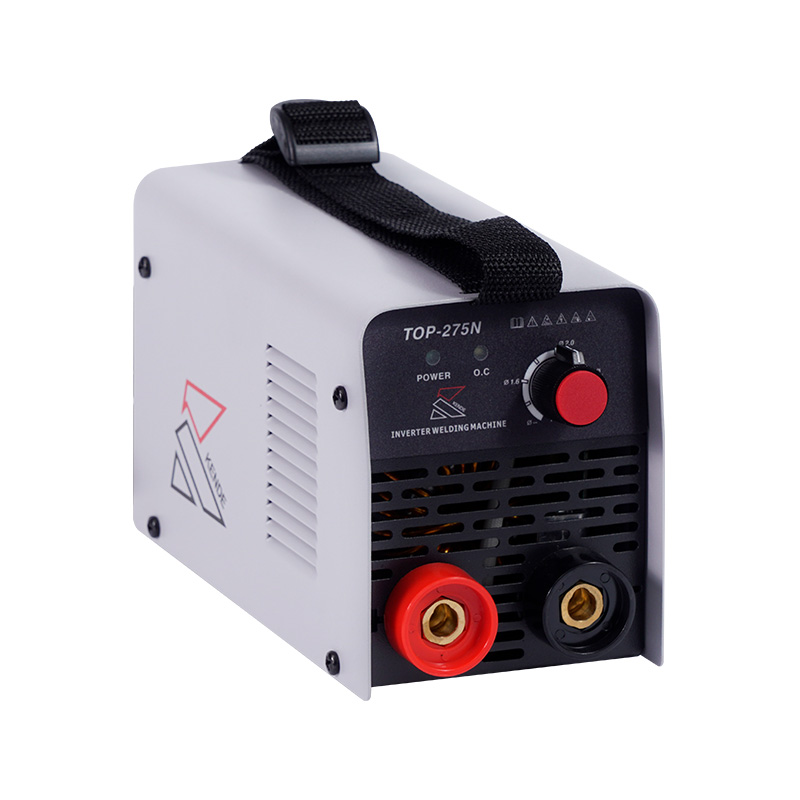
TOP-275N Metal case, easy to carry DC Single Phase 220V-230V 120A Mini IGBT Inverter Welding machine (MMA)
The machine uses powerful IGBT switches together with advanced inverter control technology. IGBTs are semiconductor devices capable of switching electrical power rapidly and efficiently. In a welding power source, the switching stage works with electronic control circuits to transform and regulate incoming electrical energy before delivering a controlled welding current.
The product information identifies digital proportional-integral control and pulse-width modulation technology as key parts of the control system. Constant-current control helps maintain a stable welding output even when the arc length changes. In practical welding, the electrode is continuously consumed and the operator’s hand movement inevitably causes small variations in arc distance. A responsive control circuit helps compensate for these changes and supports a smoother welding experience.
Stable direct-current output is particularly useful for general fabrication and repair work. DC MMA welding can provide a consistent arc and good penetration when the correct electrode and current setting are selected. The product is intended for welding carbon steel, stainless steel, alloy steel, and other compatible metals using appropriate electrodes and procedures.
Electronic current regulation also helps the operator adjust the machine to different workpieces. Lower current settings can be used for smaller electrodes and thinner material, while higher settings can support larger electrodes and thicker sections within the capabilities of the machine. Correct settings remain essential because excessive current can cause burn-through, undercut, excessive spatter, or unnecessary electrode consumption.
The stated ability to operate with input fluctuations from approximately 130V to 270V is another practical feature. This broad input tolerance can be valuable in areas where utility voltage is unstable or where long extension cables cause voltage drop. The machine is designed to continue providing welding output within the stated operating conditions. Users should still select properly rated power supplies and cables, because severe voltage fluctuation, undersized wiring, or inadequate generators can affect performance.
Arc ignition is one of the first challenges faced by a welder, particularly when using electrodes that are difficult to start or when the workpiece surface is not perfectly prepared. The Hot Start function provides additional current for a short period when the electrode is initially lifted from the workpiece. This helps establish the arc more quickly and reduces the need for repeated striking.
Easy ignition improves productivity because the operator can begin the weld with fewer interruptions. It also helps reduce electrode sticking during the starting phase. For repair technicians and occasional users, Hot Start can make the machine more forgiving and easier to operate.
Successful ignition still depends on several factors, including electrode type, storage condition, surface cleanliness, grounding, current selection, and the operator’s technique. Moisture-affected electrodes, paint, oil, rust, or a poor earth connection can interfere with starting. The Hot Start function is therefore a useful assistance feature rather than a substitute for correct preparation.
Arc Force monitors the welding voltage and provides additional current when needed. During manual welding, the arc can become shorter as the operator moves the electrode closer to the workpiece. Without an appropriate response, the arc may become unstable or extinguish. Arc Force helps maintain the arc by increasing current under short-arc conditions.
This function can improve the feel of the weld, particularly when working in difficult positions or when using electrodes that require responsive arc control. It may help reduce sticking and contribute to a more consistent molten pool. The result is improved control for fillet welds, butt joints, tack welds, repair work, and general fabrication.
Arc Force also supports operators when joint access is restricted. In a workshop or on a construction site, it is not always possible to maintain a perfectly uniform arc length. Electronic assistance provides a margin of tolerance and helps the machine respond more quickly than a basic uncontrolled power source.
Electrode sticking is a common occurrence in manual arc welding. It can happen during arc starting, when the operator moves too slowly, when the current is set too low, or when the electrode approaches the workpiece too closely. If the electrode remains attached, it can become hot and difficult to remove.
The Anti-Stick function helps the operator separate the electrode from the workpiece by reducing or interrupting the welding current when a sticking condition is detected. This protects the electrode holder from unnecessary heating and makes the welding process more convenient.
Anti-Stick technology is particularly useful for beginners, maintenance personnel, and users working in awkward positions. It also reduces interruptions during production because a stuck electrode can be released more quickly. As with all electronic assistance functions, proper electrode selection and current adjustment remain important for achieving the best results.
Welding machines generate heat during operation, especially when used at higher currents or for extended periods. The TOP-275N includes automatic protection against overcurrent and overheating. A thermal overload indicator light informs the operator when the protection system has activated.
When the machine reaches an excessive internal temperature, the protection function can interrupt output and allow the internal components to cool. This helps reduce the risk of damage caused by excessive thermal stress. The operator should stop welding and allow the machine to cool naturally rather than repeatedly switching it on and off.
Proper ventilation remains essential. The machine should not be operated with its cooling openings blocked, placed directly against a wall, covered with materials, or exposed to heavy conductive dust. The rated duty cycle should also be respected. Extending the welding period beyond the specified duty cycle may activate protection more frequently and can reduce component life.
In addition to thermal protection, the machine’s electrical design includes measures intended to protect against abnormal operating conditions. The IP21S protection classification indicates a basic level of enclosure protection suitable for controlled working environments. It does not mean the machine is waterproof or suitable for direct exposure to rain.
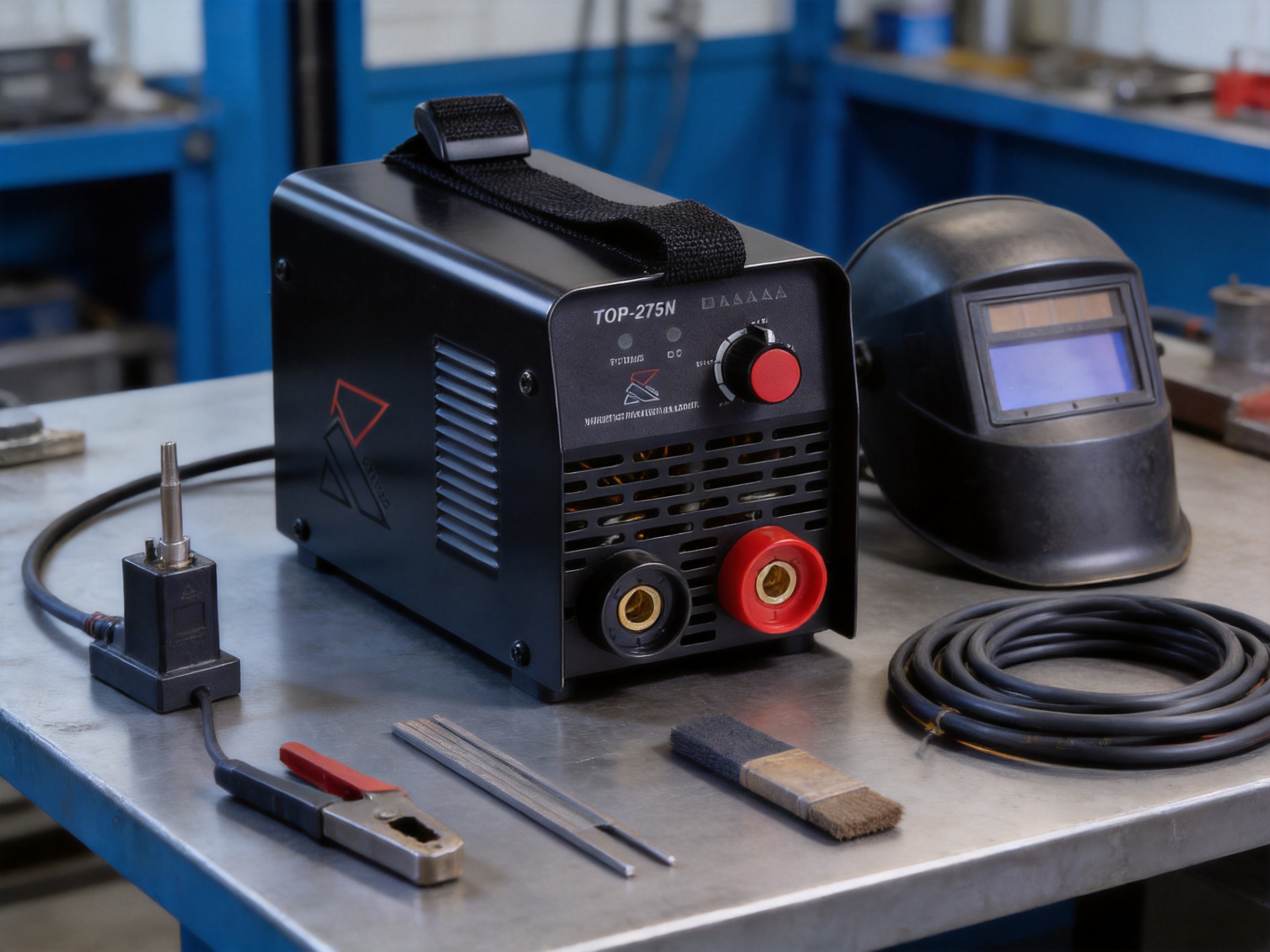
The 20–120A output range is suited to a broad selection of light and medium-duty MMA tasks. Electrodes from 1.6mm to 3.2mm can be used within the stated operating range. Smaller electrodes are appropriate for thinner materials and lower current settings, while larger electrodes can be selected for stronger joints and thicker sections when the material, joint design, and machine duty cycle permit.
Typical applications include gates, brackets, frames, supports, agricultural equipment, metal furniture, handrails, repair components, maintenance structures, and general fabrication. The machine can also be useful for installation work where a compact welding source is required at the job site.
Carbon steel is a common material for MMA welding and is generally well suited to the machine’s output range. Stainless steel and alloy steel may also be welded when compatible electrodes, correct polarity, suitable current, and proper preparation are used. Welding procedures should be selected according to the base metal, thickness, joint requirements, applicable standards, and the electrode manufacturer’s instructions.
The machine’s DC output can support stable arcs and good penetration. Penetration depends on current, travel speed, electrode angle, arc length, joint preparation, polarity, and material thickness. Operators should not assume that a higher current automatically produces a stronger weld. Excessive heat can distort thin material or create defects, while insufficient heat can result in incomplete fusion.
The standard accessory configuration includes an electrode holder, earth clamp, welding cable, brush or hammer, and protective mask. The product description specifies a 2m welding cable with a dual-angle electrode holder and a 1.5m ground cable with clamp.
A 2m electrode cable provides useful working reach while keeping the machine relatively easy to position. The dual-angle electrode holder is intended to support different electrode positions and improve operator access around the joint. The 1.5m ground cable allows the earth clamp to be placed securely on a suitable location near the welding area.
All connections should be inspected before welding. Cable insulation should be free from cuts, burns, severe abrasion, and exposed conductors. The electrode holder must grip the electrode securely, and the earth clamp should make clean, firm contact with the workpiece or an appropriate work table. Paint, rust, scale, and contamination at the grounding point should be removed where necessary.
The included brush or hammer can be used to remove slag after the weld has cooled sufficiently. A protective mask is supplied as part of the accessory package, but users should verify that the lens shade and protective equipment are suitable for the selected welding current and work environment. Welding gloves, flame-resistant clothing, safety footwear, and appropriate ventilation are also essential.
The most visible advantage over traditional transformer welding machines is the reduction in size and weight. At approximately 2.05kg, the TOP-275N can be carried by one person and stored in a small vehicle, toolbox area, workshop cabinet, or service compartment. This portability can reduce setup time and make welding possible in locations where a heavier machine would be inconvenient.
Inverter technology also offers more precise current control. A conventional machine may provide a relatively simple output adjustment, while a digitally controlled inverter can respond rapidly to changes in arc conditions. Hot Start, Arc Force, and Anti-Stick features further distinguish the product from basic manual welding sources.
Energy efficiency is another important benefit. The machine has a listed efficiency of 85 percent and a power factor of 0.9. Reduced electrical losses can support lower operating costs and more efficient use of available power. The product information also states that energy savings can reach up to 30 percent compared with less efficient designs, although actual savings depend on operating conditions, workload, input voltage, and the equipment being compared.
The broad input tolerance is beneficial in regions with unstable electricity. A machine that can continue to weld under a range of input voltage conditions is more practical than a unit that frequently stops or delivers inconsistent output when the supply changes. Nevertheless, the machine should always be connected to a properly rated circuit, and generator compatibility should be confirmed before use.
Compared with larger industrial power sources, the TOP-275N is not intended to replace high-amperage equipment for heavy continuous production, thick structural sections, or large electrodes. Its advantage is efficiency and convenience in the compact general-purpose category. It is most valuable when mobility, quick setup, and a moderate welding range are more important than maximum output.
The product is manufactured by Zhejiang Kende Mechanical & Electrical Co., Ltd., an established Chinese producer of welding machines, battery chargers, heaters, and related electrical equipment. The company operates from a large manufacturing base in Taizhou, Zhejiang Province, and has developed a substantial production, engineering, and export infrastructure.
The company’s reported facilities cover approximately 120,000 square meters and employ around 600 people. Annual exports are stated at nearly 1.5 million units, with an annual production capacity of approximately 2 million units. This scale provides several potential advantages for buyers, including established procurement channels, organized production planning, experience with international packaging and logistics, and the ability to support both standard and customized products.
A large manufacturing organization can also support stronger quality control than a small assembly operation. Production can be divided into controlled stages, including incoming component inspection, printed circuit board assembly, mechanical case production, wiring, final assembly, performance testing, safety inspection, and packaging verification.
The company applies automated patching, plug-in assembly, welding systems, robot processing, laser cutting, and other advanced manufacturing technologies. Automated electronic assembly can improve component placement consistency and reduce manual variation. Robot processing can provide repeatable mechanical operations, while laser cutting can produce accurate sheet-metal components with clean edges and consistent dimensions.
Digital management systems are also identified as part of the company’s manufacturing infrastructure. These include office automation, enterprise resource planning, Toyota Production System methods, and manufacturing execution systems. Such tools can help coordinate materials, production schedules, process records, inventory, quality data, and delivery planning.
For an inverter welding machine, manufacturing discipline is especially important. The product depends on power semiconductor switches, control boards, sensors, heat dissipation components, terminals, cables, and protective circuits working together correctly. Consistent soldering, component placement, insulation, grounding, and final testing are all necessary to produce a reliable welding power source.
The manufacturer reports a dedicated Zhejiang Provincial research and development center, an enterprise technology center, and an intelligent welding technology research institute. It also reports a team of 98 research and development personnel. These resources support ongoing development in inverter power electronics, welding control, thermal management, mechanical design, user interfaces, and product compliance.
The company has obtained invention patents, utility model patents, appearance patents, and software copyrights. Such intellectual property activity indicates continuing investment in product improvement and technical development. For importers and distributors, this can be valuable because product platforms can be adapted for different market conditions without relying entirely on third-party designs.
The company states that it can develop new products according to the requirements of different countries, regions, and customers. Potential customization areas may include input voltage, frequency, plugs, cable specifications, enclosure markings, packaging, labeling, accessories, language requirements, and compliance documentation. Any customization should be confirmed through a technical specification and sample approval process.
Product development for welding equipment requires more than changing the exterior appearance. A regional version may require modifications to the input circuit, protection system, electromagnetic compatibility performance, cooling arrangement, or certification documentation. An experienced manufacturer can evaluate these requirements as part of a structured engineering process.
Customization can also support private-label programs, distributor-specific packaging, project procurement, and market segmentation. However, the core electrical ratings should remain clearly documented. Buyers should request product drawings, test reports, user manuals, packaging specifications, spare-parts information, and quality-control procedures before approving a large order.
The company reports experience with several international product certification systems, including GS, CE, EMC, ERP, US ETL, UKCA, and China CCC. Certification requirements vary according to product type, market, voltage, application, and the latest applicable regulations. Buyers should verify that the exact TOP-275N version being supplied carries the documentation required in the destination market.
Electromagnetic compatibility is particularly relevant to inverter welding machines because high-frequency switching circuits can generate electrical noise. Proper circuit design, grounding, filtering, enclosure construction, and production testing help control electromagnetic emissions and improve immunity to external disturbances.
Safety certification and regulatory compliance do not replace correct installation or safe operation. The user remains responsible for following the instruction manual, using suitable protective equipment, maintaining proper ventilation, and connecting the machine to a compliant power supply. Importers should also ensure that manuals, labels, declarations, and packaging meet local requirements.
The company’s participation in national welding machine standardization work is another indication of technical engagement. It reports involvement in drafting, formulating, and revising numerous national standards, as well as leading the drafting of a group standard. This type of participation can provide broader awareness of performance, safety, testing, and terminology requirements within the welding industry.
A reliable inverter welding machine depends on the quality of both electronic and mechanical components. Power switches must be correctly specified for voltage, current, switching frequency, and thermal conditions. Heat sinks and cooling paths must remove heat efficiently. Printed circuit boards must be assembled with consistent solder quality and adequate insulation clearance.
Mechanical parts also influence product life. The metal case must be formed accurately, ventilation openings must remain clear, terminals must be securely mounted, and cable connections must withstand normal handling. A compact machine experiences frequent movement, so cable strain relief and enclosure fastening are important details.
Production testing should include visual inspection, input and output electrical tests, no-load voltage verification, welding-current verification, thermal protection checks, insulation testing, grounding checks, and functional tests of the indicator lights and control system. Batch traceability can help manufacturers identify component lots and production dates if corrective action becomes necessary.
The manufacturer’s combination of automated production, digital management systems, engineering resources, and international market experience creates a foundation for consistent product delivery. Buyers should still establish their own incoming inspection procedures, especially for large orders or private-label programs. A clear quality agreement can define acceptable tolerances, packaging standards, sampling methods, and corrective-action procedures.
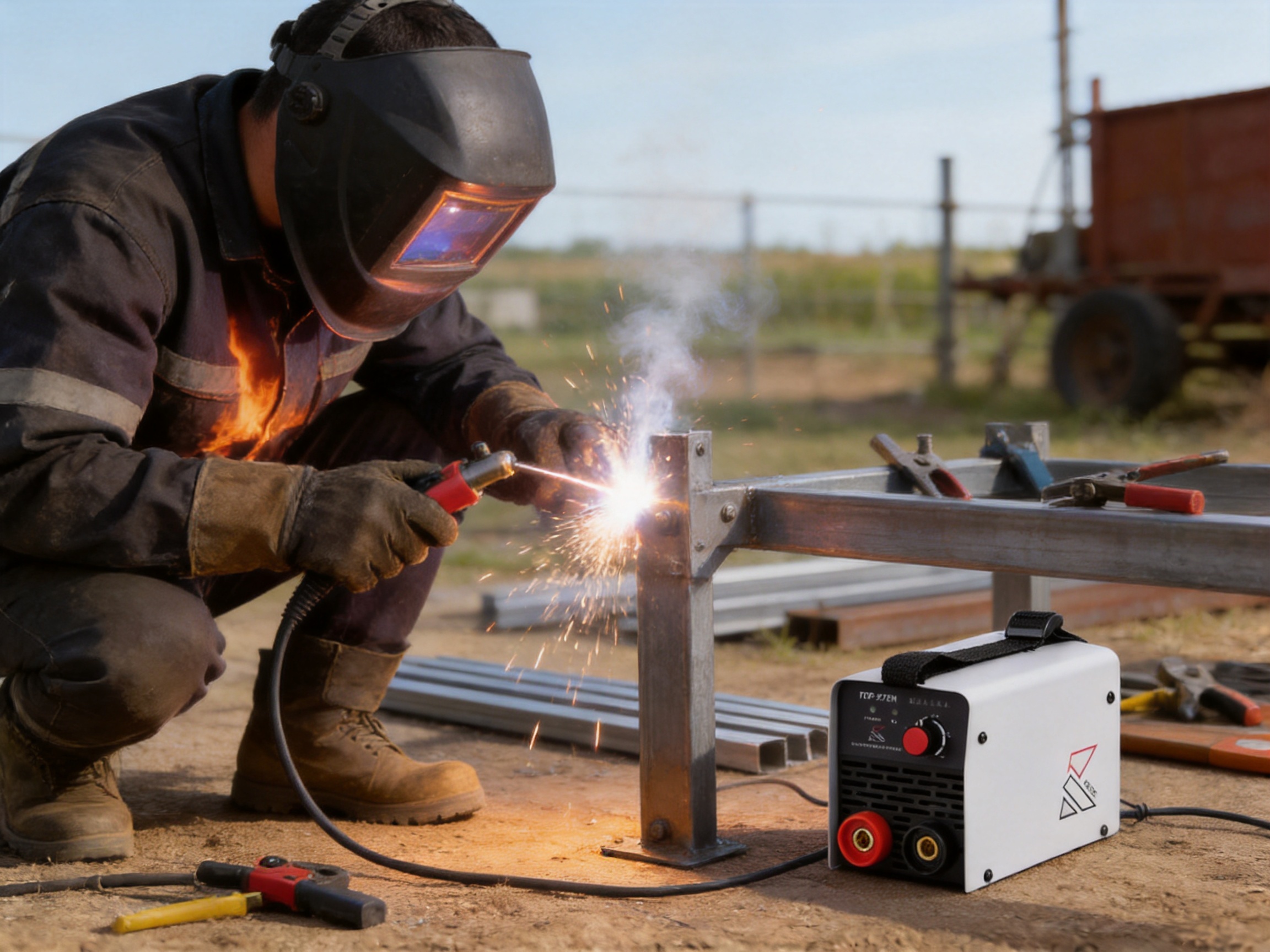
The TOP-275N is well suited to mobile maintenance and repair. A technician can carry the machine to a damaged bracket, frame, gate, agricultural implement, or support structure instead of transporting the entire workpiece to a fixed welding station.
It is also practical for light fabrication workshops. The machine can handle many common tasks involving carbon-steel frames, shelves, stands, brackets, small machine components, and general repair assemblies. The 120A maximum output is appropriate for moderate work when the correct electrodes and procedures are selected.
Construction and installation teams may use a portable MMA machine for temporary repairs, fastening supports, and completing small fabrication tasks at the job site. The absence of shielding gas makes MMA convenient in outdoor conditions where wind could disturb a gas shield. The operator still needs to manage fumes, sparks, hot metal, and fire hazards carefully.
Farm and agricultural users can benefit from a machine that is compact enough for storage in a workshop or service vehicle. Repairing gates, brackets, trailers, frames, and equipment supports often requires a flexible welding tool that can be moved easily.
Training centers and vocational workshops may also find the unit useful for introductory MMA instruction. The Hot Start, Arc Force, and Anti-Stick functions can assist learners while they develop electrode control, arc length, travel speed, and joint preparation skills.
Before welding, inspect the machine, cables, electrode holder, earth clamp, plug, and enclosure. Confirm that the input supply matches the machine rating. Position the unit on a stable, dry surface with enough space around the cooling openings.
Select an electrode suitable for the base metal and joint. Keep electrodes dry and follow the electrode manufacturer’s storage and baking recommendations where applicable. Remove oil, paint, heavy rust, moisture, and other contaminants from the welding area.
Connect the electrode holder and earth cable with the polarity recommended for the selected electrode. Secure the earth clamp on clean metal as close as practical to the welding area. Set the current according to electrode diameter and material thickness, then make a test weld on scrap material if conditions are uncertain.
During welding, maintain an appropriate arc length and travel speed. Watch the molten pool, electrode angle, and slag coverage. Avoid touching the electrode or bare conductors with unprotected skin. Keep combustible materials away from sparks and hot workpieces.
After welding, allow the machine and workpiece to cool as necessary. Remove slag with the supplied brush or hammer while wearing eye protection. Inspect the weld for visible defects such as cracks, excessive porosity, undercut, incomplete fusion, or uneven profile.
When the thermal protection indicator activates, stop welding and allow the machine to cool. Do not block the fan or ventilation openings. Regularly remove accumulated dust from the exterior and inspect cables for damage. Internal servicing should be performed by qualified personnel after the machine has been disconnected from the power supply.
Arc welding produces intense ultraviolet and infrared radiation, visible light, hot metal, fumes, and sparks. Operators must wear a suitable welding helmet, flame-resistant clothing, welding gloves, safety footwear, and eye protection for chipping and cleaning.
Welding fumes should not be inhaled. Use adequate natural or mechanical ventilation, and apply local exhaust ventilation where required. Special care is necessary when welding coated, painted, galvanized, or contaminated materials because hazardous fumes may be produced.
The machine must not be used in wet conditions or where water can enter the enclosure. It should not be operated near explosive atmospheres, flammable liquids, or combustible dust. Welding on sealed containers, tanks, or vessels can be dangerous unless they have been properly cleaned, ventilated, and declared safe.
Electrical safety is equally important. Do not use damaged cables, loose terminals, or an unsuitable extension cord. The power circuit must be correctly rated and properly grounded according to local electrical requirements. Disconnect the machine before opening the enclosure or carrying out maintenance.
The TOP-275N combines the key benefits expected from a modern portable MMA welder: compact dimensions, low weight, direct-current output, useful current adjustment, electronic arc assistance, input-voltage tolerance, and automatic protection. It is small enough for mobile use but includes features that support stable and manageable welding performance.
Its main advantages over basic transformer machines are portability, electronic control, reduced energy loss, and improved operator assistance. Its metal case, accessory package, and straightforward single-phase input make it suitable for many workshops and field users. The product is not designed as a replacement for high-output industrial equipment, but it offers a strong solution for light and medium-duty welding where mobility and convenience are priorities.
The manufacturing organization behind the product adds further value. Large-scale production, automated assembly, laser and robotic processing, digital management systems, research facilities, engineering personnel, certification experience, and international export capability provide a broad foundation for product consistency and supply support.
For distributors, contractors, service companies, and professional users, this combination of product performance and manufacturing capability can simplify equipment selection. The machine can serve as a compact general-purpose welding source for maintenance, repair, installation, fabrication, training, and mobile service applications.
The machine uses DC manual metal arc welding, commonly called MMA or stick welding. It does not require a continuous shielding-gas supply because the flux coating on the electrode provides shielding during welding.
The adjustable welding current range is 20–120A. The appropriate setting depends on electrode diameter, base-metal thickness, material type, welding position, and joint design.
The specified usable electrode range is 1.6–3.2mm. The selected electrode must also be compatible with the material and the welding procedure.
It can be used for compatible stainless-steel electrodes and suitable stainless-steel workpieces. The operator must select the correct electrode, polarity, current, cleaning method, and welding procedure.
The machine can weld thin and medium plate when a suitable small-diameter electrode and controlled current are selected. Excessive current or slow travel can cause distortion or burn-through, so testing on scrap material is recommended.
Hot Start provides additional current during arc initiation. This helps the electrode ignite more easily and reduces repeated striking at the beginning of the weld.
Arc Force supplies additional current when the welding voltage falls, such as when the arc becomes short. It helps maintain arc stability and can reduce sticking during manual welding.
Anti-Stick reduces or interrupts the welding current when the electrode remains stuck to the workpiece. This makes it easier to remove the electrode and helps reduce overheating of the electrode holder.
The product information states that the machine can provide welding output within an input range of approximately 130V to 270V. The actual installation must still use a properly rated power circuit, and severe voltage conditions may affect performance.
A 60 percent duty cycle means that, under the specified test conditions, the machine can weld for six minutes in a ten-minute cycle before a cooling period is required. Actual performance varies with current, ambient temperature, ventilation, and workload.
No. The IP21S classification provides limited enclosure protection but does not make the machine waterproof. It should be kept dry and protected from rain, splashing water, and conductive contamination.
The listed accessories include an electrode holder, earth clamp, welding cable, brush or hammer, and protective mask. The specified cable arrangement includes a 2m welding cable and a 1.5m ground cable.
It is suitable for maintenance technicians, small fabrication workshops, farmers, contractors, installers, repair teams, vocational training users, and anyone who needs a lightweight general-purpose MMA welding machine for 220V operation.
The manufacturer reports the ability to develop products for different regions and customer requirements. Potential changes may involve voltage, frequency, accessories, packaging, labels, cables, and documentation. Custom specifications should be confirmed before ordering.
The TOP-275N is a compact and capable DC MMA welding machine designed for users who value portability, stable output, and practical operating assistance. Its 20–120A range, 1.6–3.2mm electrode capability, 220V single-phase input, digital inverter control, and 2.05kg net weight make it a convenient option for general maintenance and light-to-medium fabrication work.
Hot Start, Arc Force, Anti-Stick, thermal overload protection, and stable DC current output improve usability compared with a basic uncontrolled welding source. The metal case and complete accessory package further support mobile and workshop applications.
Behind the product is a manufacturer with large-scale production, automated manufacturing equipment, research and development resources, digital management systems, certification experience, and a broad international customer base. These strengths support both standard product supply and potential regional or customer-specific development.
When used with suitable electrodes, correct electrical connections, proper ventilation, and appropriate personal protective equipment, this portable inverter welding machine can provide a practical and efficient solution for a wide range of metalworking tasks.
1. Product technical specifications and application information supplied for the TOP-275N DC IGBT inverter MMA welding machine.
2. General principles of manual metal arc welding, electrode selection, arc control, and welding safety.
3. General guidance on inverter welding power sources, IGBT switching technology, pulse-width modulation, and constant-current control.
4. General guidance on welding machine duty cycle, thermal protection, electrical installation, and ventilation.
5. Manufacturer information concerning production capacity, research and development facilities, manufacturing systems, certifications, and product categories.
Recommended Products

Contact Us
No.2299, Luqiao Section, Shugang Avenue, Luqiao District, Taizhou, 318057 Zhejiang, PR China.
+86-576-82431568
 Privacy
China Welding Machine Factory
 English
 中文简体
 русский
 Español
 عربى
 Français
 Português
 Deutsch
 Український