Email: [email protected]
Email: [email protected]

Blog
 2026.11.19
 Blog
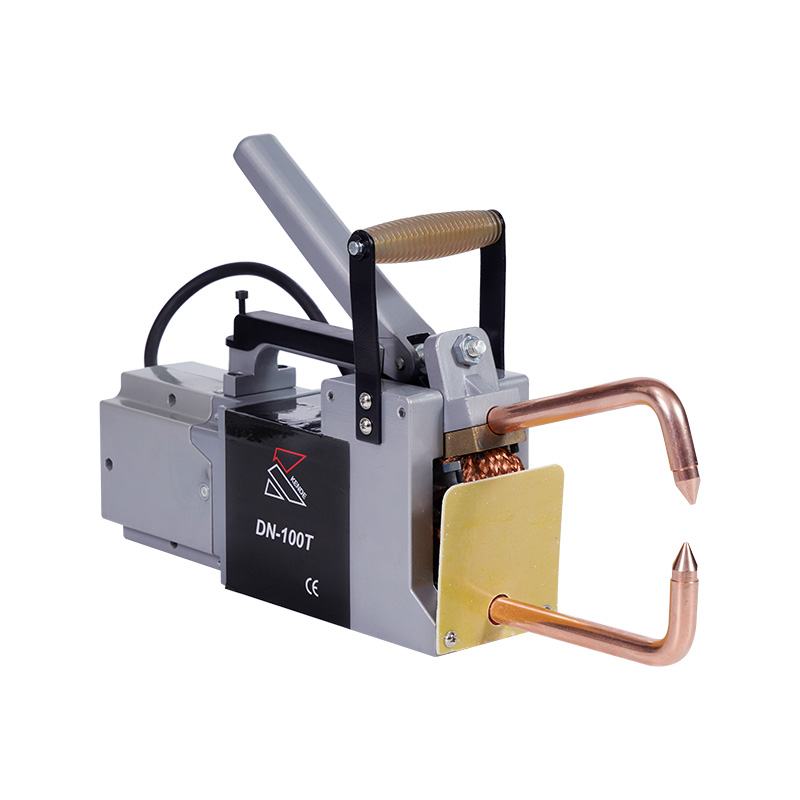
Spot welding remains one of the most practical methods for joining overlapping metal sheets. It is fast, repeatable, comparatively economical, and suitable for a wide range of fabrication, repair, maintenance, and light industrial applications. The DN-100T Series Spot Welding Machine is designed to provide these advantages in a compact single-phase platform that combines portability, high duty cycle performance, simple adjustment, and dependable electrical control.
With an 8 kVA rated input capacity, a 50% duty cycle, a 1.8 V no-load voltage, and a specified welding capability of 1.5 mm plus 1.5 mm, the DN-100T is intended for spot welding mild steel, stainless steel, and many non-ferrous metals. Its portable form makes it suitable for workshops and production environments where equipment must be moved between workstations. At the same time, its microprocessor-based control and two-way thyristor technology provide a higher level of control than basic manually operated spot welding equipment.
The machine is particularly appropriate for users who require a balance between productivity and ease of use. It does not depend on complex programming or extensive operator training. LED indicators help guide operation, while the machine’s accessible construction supports straightforward adjustment and maintenance. Its transformer windings are made from aluminium wire, helping reduce weight and contributing to a practical, cost-conscious design.
The DN-100T is a single-phase portable resistance spot welding machine. It creates a weld by pressing two or more overlapping metal sheets between electrodes and passing a controlled electrical current through the contact area. The resistance of the metal produces localized heat, forming a weld nugget without requiring filler metal, shielding gas, or a continuous arc.
This operating principle gives spot welding several advantages. The process is fast, the finished joint is clean, and there is no need to manage welding wire or gas cylinders. For suitable sheet-metal applications, the machine can produce consistent joints with limited material distortion. The absence of filler metal also makes the process efficient for repeated joining of similar or compatible sheet materials.
The DN-100T is configured for 230 V supply operation at 50 or 60 Hz. Its 13 kg net weight and machine dimensions of 550 × 155 × 355 mm make it substantially easier to transport than large industrial spot welding systems. It can be placed on a workbench, moved between production areas, or used in locations where floor space is limited.
The equipment is supplied with complete basic accessories, including electrode tips and a carton box. These accessories allow the purchaser to begin preparing the machine for operation without immediately sourcing essential consumable components separately.
| Parameter | Specification |
|---|---|
| Product series | DN-100T Series |
| Model | DN-100T |
| Product category | Spot welding machine |
| Rated supply voltage | 230 V |
| Supply frequency | 50/60 Hz |
| No-load voltage | 1.8 V |
| Rated input capacity | 8 kVA |
| Rated duty cycle | 50% |
| Insulation class | H |
| Specified welding thickness | 1.5 mm + 1.5 mm |
| Net weight | 13 kg |
| Machine size | 550 × 155 × 355 mm |
These specifications position the DN-100T between basic low-capacity spot welders and larger fixed production machines. The 8 kVA input capacity supports demanding sheet-metal joining within the stated material range, while the 50% duty cycle provides a useful operating balance for workshops and production tasks that require repeated welding.
Portability is one of the machine’s most important practical advantages. At 13 kg, the DN-100T can be carried and repositioned without the lifting equipment typically required for larger resistance welding systems. Its relatively narrow body also allows it to fit into compact work areas, service departments, small fabrication shops, and mobile repair environments.
A portable machine can reduce unnecessary material handling. Instead of transporting large sheets or partially assembled components to one fixed welding station, an operator may move the welding machine closer to the workpiece. This is especially useful for repair work, custom fabrication, maintenance operations, and low-volume production where the workpiece dimensions and positions vary from job to job.
The compact format does not eliminate the need for safe positioning. The operator should place the machine on a stable surface, maintain adequate ventilation, keep the electrical connections protected, and make sure the electrode arms can move freely. The working area should also provide sufficient clearance for the operator to position sheet metal accurately between the electrodes.
The updated external design contributes to a more professional appearance and supports a higher IP protection class than older or more basic designs. The precise protection rating should be confirmed in the applicable product documentation, but the stated design improvement indicates greater attention to enclosure protection and resistance to the conditions normally found in workshop environments.
DN-100T Series Spot Welding Machines DN-100T
Duty cycle is a significant performance factor in resistance welding. A 50% rated duty cycle means that, under the relevant test conditions, the machine is designed to operate for half of a defined cycle period and remain available for the remaining half for cooling or non-welding activity. The exact operating pattern depends on the application, ambient temperature, material thickness, welding current, and electrode pressure.
For practical users, a 50% duty cycle represents a strong balance between capacity and equipment size. Basic portable welders may be limited by short operating periods, causing frequent pauses during repetitive work. The DN-100T is designed to support more continuous activity, helping operators complete a greater number of welds before thermal limitations require a break.
Higher usable duty cycle can improve productivity in several ways. It can reduce waiting time, help maintain a more consistent work rhythm, and support larger batches of components. It also gives the operator more flexibility when a job includes a mixture of short and long work sequences.
Duty cycle should not be interpreted as permission to operate the machine continuously under every condition. Excessive electrode force, thick materials beyond the specified range, poor ventilation, high ambient temperature, or repeated maximum-power welding can increase thermal stress. Operators should follow the recommended working limits and allow appropriate cooling time whenever required.
The DN-100T uses advanced microprocessor control technology. In a resistance spot welder, control of the welding period is essential because a small difference in current duration can change the size and strength of the weld nugget. Microprocessor-based control allows the machine to manage the welding sequence more systematically than a simple mechanical switch or less precise manual control.
The control system is designed to support consistent operation from one weld to the next. Consistency is particularly important when multiple spot welds are used to assemble a panel, bracket, enclosure, frame, or other sheet-metal component. Uniform weld timing helps reduce variation in joint appearance and mechanical performance.
Microprocessor control also simplifies the relationship between the operator and the machine. Rather than requiring the user to manage a complicated sequence manually, the system can coordinate the relevant control functions in a more repeatable way. LED indicators provide visible information and help users select or monitor the operating condition.
For new operators, visible indicators can reduce confusion during setup. For experienced operators, they provide a quick confirmation that the machine is energized and configured for the intended operation. This can support faster training and reduce avoidable operating errors, although proper welding procedure training remains essential.
The DN-100T incorporates two-way thyristor control technology. Thyristors are solid-state switching components that can regulate electrical power without relying on the mechanical contacts found in older control arrangements. In a spot welding machine, this technology can contribute to more responsive and repeatable control of the welding current.
Compared with purely mechanical switching, solid-state control can reduce contact wear and improve the reliability of repeated switching operations. It also supports a more compact control architecture and helps the machine coordinate electrical output with the selected welding sequence.
The use of two-way thyristor control is particularly relevant to a machine intended for frequent spot welding. Each weld requires a controlled energy pulse. By managing this pulse electronically, the machine can help produce stable heating at the joint while minimizing unnecessary electrical consumption outside the welding period.
Electronic control does not remove the importance of correct electrode condition, sheet cleanliness, material positioning, or welding pressure. These mechanical and preparation factors remain essential. However, when they are properly managed, the control system provides a strong technical foundation for repeatable results.
The product information identifies the machine as having less no-load current and lower power consumption. No-load current is the current drawn while the equipment is energized but not actively performing a weld. Reducing unnecessary no-load consumption can make the machine more economical during normal workshop use, particularly when the operator leaves the equipment powered while positioning several workpieces.
Lower power consumption can also help reduce the operating burden placed on the electrical supply. This is important in small workshops where several tools may share the same distribution system. Nevertheless, the DN-100T should be connected to an appropriate circuit with suitable protection, cable sizing, grounding, and electrical installation practices.
The welding transformer windings are made of aluminium wire. Aluminium can provide a useful weight and cost advantage in transformer construction. In a portable machine, reduced transformer weight contributes directly to easier handling. The design also supports the product’s objective of delivering useful spot welding performance in a compact format.
Transformer construction must always be considered together with insulation quality, thermal management, electrical design, and manufacturing control. The DN-100T uses Class H insulation, which is associated with a high temperature rating for electrical insulation systems. This supports the machine’s suitability for demanding operating conditions when used within its specified limits.
The DN-100T can be widely used for spot welding mild steel, stainless steel, and most non-ferrous metals, provided that the material combination, thickness, surface condition, and electrical properties are suitable for the machine. The specified welding thickness is 1.5 mm plus 1.5 mm, meaning that the stated application involves joining two overlapping sheets, each up to approximately 1.5 mm under the relevant conditions.
Mild steel is one of the most common materials for resistance spot welding. It is used in sheet-metal cabinets, brackets, frames, light vehicle components, storage products, furniture parts, agricultural equipment, and general fabrication. The DN-100T can provide a practical joining solution for these applications when the workpiece thickness remains within the recommended range.
Stainless steel can also be spot welded, although its electrical resistance, heat conduction, surface condition, and alloy composition may require different settings and preparation practices. Operators should establish suitable parameters through sample welds before beginning production work. Excessive heat can affect appearance, distortion, and corrosion resistance around the weld zone.
Many non-ferrous metals can be resistance welded, but their conductivity and thermal characteristics vary widely. Aluminium alloys, for example, may require carefully controlled current, electrode condition, contact pressure, and surface preparation. The phrase “most non-ferrous metal” should therefore be interpreted as application-dependent rather than universal. A trial weld and inspection process is recommended for every new material combination.
Potential applications include sheet-metal assembly, appliance components, metal boxes, ducting, workshop fabrication, light automotive repair, hardware products, small enclosures, wire and sheet assemblies, and maintenance work. The machine is especially useful where fast discrete welds are preferable to continuous arc welds.
The DN-100T offers several advantages over simpler spot welding equipment. First, its 50% duty cycle is intended to support more productive repeated operation. A basic machine with a lower duty cycle may require more frequent cooling pauses, which can interrupt production and increase labor time.
Second, microprocessor control and two-way thyristor technology provide a more modern control platform. Basic welders may depend heavily on mechanical switches or less refined control arrangements. Electronic timing and power control can improve repeatability and reduce variation when the operator uses consistent electrode pressure and workpiece preparation.
Third, the product combines a high 8 kVA input capacity with a portable 13 kg format. Larger fixed machines may provide greater production capacity, but they require more space and are less convenient to relocate. Smaller entry-level machines may be easier to carry but may not provide the same balance of duty cycle and rated input capacity.
Fourth, the machine includes LED indicators and is described as easier to adjust, operate, and maintain. These features can reduce the learning curve for workshop personnel and make everyday use more straightforward.
Fifth, the transformer winding design and reduced no-load current support a practical energy and weight profile. This helps distinguish the machine from older, heavier, or less efficient transformer spot welders.
These advantages should not be understood as a claim that one portable machine can replace every industrial resistance welding system. Large automated production lines may require multi-gun systems, water cooling, programmable weld schedules, automated part handling, and integrated quality monitoring. The strength of the DN-100T lies in its balance: it delivers controlled and productive spot welding in a compact, accessible, and comparatively mobile package.
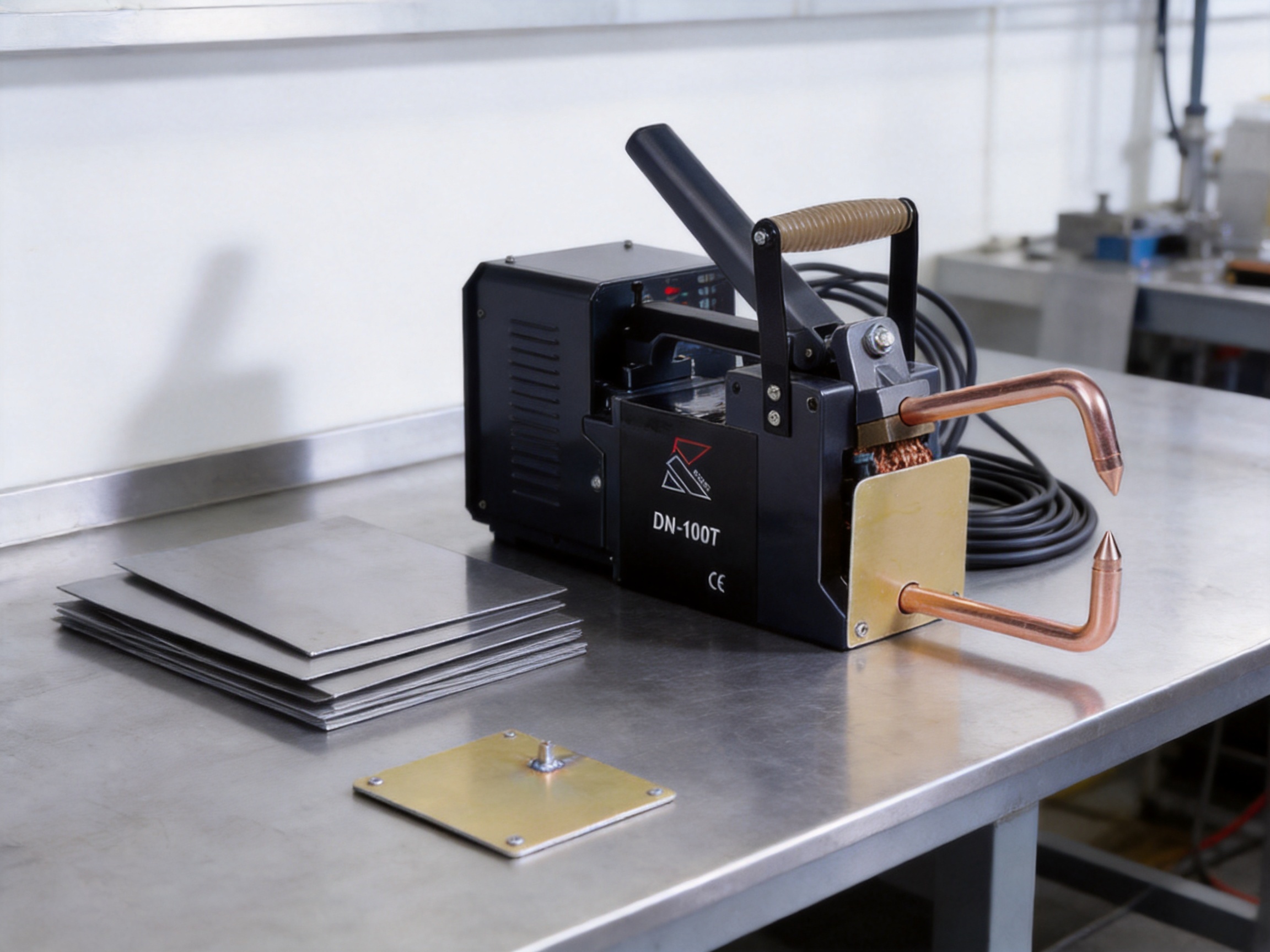
The product information emphasizes long electrode life. Electrode life is important because electrode tips are consumable components that gradually deform, become contaminated, or lose the geometry needed to produce a consistent contact area. Longer service life can reduce consumable costs and decrease interruptions for dressing or replacement.
Several operating practices influence electrode life. Correct electrode pressure helps prevent excessive arcing and deformation. Clean sheet surfaces reduce contamination transfer. Correct welding time and current prevent unnecessary overheating. Proper alignment keeps the electrode faces parallel and distributes force evenly across the intended weld area.
Operators should inspect electrode tips regularly. Flattened, damaged, contaminated, or asymmetrical tips can affect current density and weld quality. If dressing is permitted for the installed electrode type, it should be carried out using an appropriate tool and procedure. When the tips can no longer be restored to a suitable shape, they should be replaced.
The DN-100T is designed for easy adjustment, operation, and maintenance. This is valuable for small and medium-sized workshops where the operator may also be responsible for routine equipment care. Accessible maintenance procedures can reduce dependence on specialized service personnel and help keep the machine available for work.
Routine maintenance should include checking electrical cables, plugs, terminals, electrode holders, cooling openings, enclosure condition, and control indicators. The machine should be disconnected from the electrical supply before internal inspection or service. Any abnormal noise, overheating, burning odor, unstable operation, or visible electrical damage should be investigated by qualified personnel.
Spot weld quality depends on four principal variables: welding current, welding time, electrode force, and material condition. The DN-100T’s electronic control supports management of the electrical portion of this process, but the operator must still control the mechanical and material-related factors.
Welding current determines how much heat is generated at the joint. Welding time determines how long the heat is applied. Electrode force influences contact resistance, mechanical stability, and the distribution of current. If the force is too low, arcing or excessive surface heating may occur. If it is too high, the contact resistance may be reduced excessively, limiting heat generation at the weld interface.
Clean surfaces are essential. Oil, paint, heavy oxidation, scale, and dirt can interfere with current flow and produce inconsistent welds. The appropriate preparation method depends on the material and production requirements. Operators should avoid introducing contaminants that could damage the electrodes or create unsafe fumes.
Weld spacing is also important. If spot welds are placed too close together, current may pass through an existing weld rather than producing the intended heat at the new location. This phenomenon, often called current shunting, can reduce the size or strength of subsequent welds. A suitable weld layout should be established for each assembly.
Quality inspection may include visual examination, dimensional checks, destructive sample testing, peel testing, chisel testing, or other procedures appropriate to the application. The inspection method should reflect the required joint performance. For critical structures, users should establish documented welding procedures and acceptance criteria.
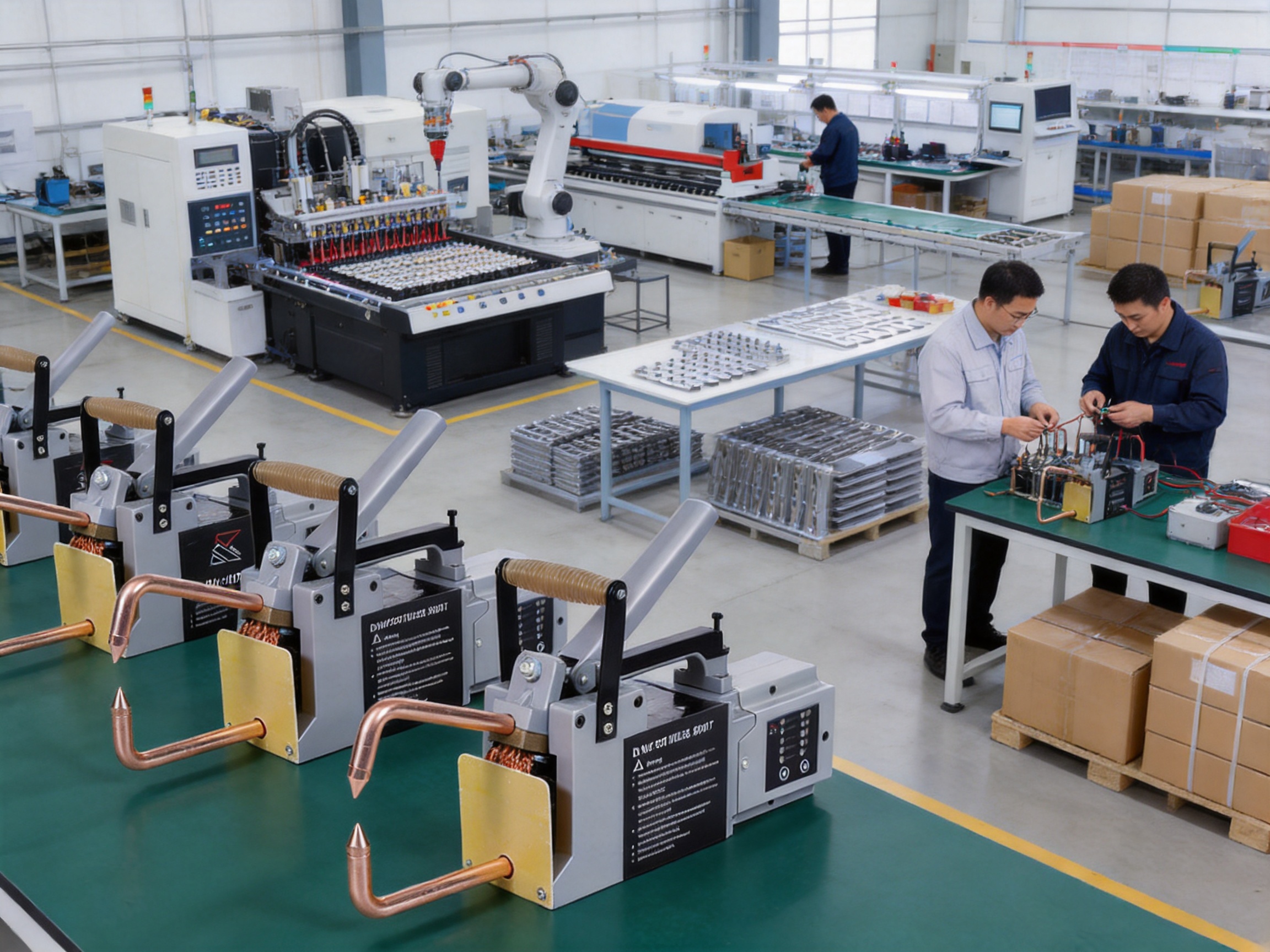
The manufacturer behind the DN-100T operates a large-scale production and research organization specializing in electric welding machines, chargers, and heaters. Its manufacturing site covers approximately 120,000 square meters and employs around 600 people. This scale supports dedicated functions for engineering, procurement, assembly, testing, quality control, logistics, and after-sales service.
The company reports annual exports of nearly 1.5 million units and annual production capacity of approximately 2 million units. A production capability of this size can support stable supply for distributors, importers, private-label customers, and industrial users. It also provides experience in managing varied regional requirements, electrical standards, packaging specifications, and product configurations.
Large-scale production is valuable only when supported by controlled processes. The manufacturer uses automatic surface-mount technology, plug-in production, automatic welding systems, robot processing, laser cutting, and other advanced manufacturing methods. These technologies can improve repeatability, dimensional accuracy, assembly consistency, and production efficiency.
Automatic component placement helps maintain consistency in control-board assembly. Controlled plug-in and soldering processes can reduce variation in electrical connections. Robotic processing can improve repeatability in operations that require stable positioning and consistent force. Laser cutting supports accurate fabrication of metal parts and enclosures.
These processes are relevant to the DN-100T because a spot welding machine must provide reliable electrical control, robust mechanical construction, and secure enclosure assembly. Consistency in the manufacturing process helps reduce variation between units and supports dependable performance in the field.
The company also applies several management and production systems, including office automation, Toyota-style production management, ERP, and MES systems. These systems can connect purchasing, production planning, inventory, assembly, testing, quality records, and shipment management. Better information flow supports traceability and helps production teams identify process deviations more quickly.
Manufacturing quality is further supported by research and development resources. The organization has a provincial research and development center, an enterprise technology center, and an intelligent welding technology research institute. It reports a research and development team of approximately 98 personnel and has obtained invention patents, utility model patents, appearance patents, and software copyrights.
The manufacturer reports holding a range of international and regional product certifications, including GS, CE, EMC, ERP, United States ETL, UKCA, and China CCC certifications. The exact certification applicable to a particular DN-100T configuration should be confirmed from the product’s current technical file, nameplate, declaration, and shipment documentation.
Certifications are important because welding equipment combines high electrical power, heat, mechanical pressure, and conductive workpieces. Compliance assessment may cover electrical safety, electromagnetic compatibility, energy-related requirements, manufacturing quality, and regional market access.
The company also participates in national welding machine standardization activities and has contributed to the drafting, formulation, and revision of multiple national standards. Such participation indicates familiarity with technical requirements and industry practices beyond the assembly of individual products.
For purchasers, certification information should be reviewed together with the intended market. Importers may need specific declarations, test reports, labels, user manuals, and plug or cable configurations. Professional buyers should request the documentation required for their country or region before placing a large order.
Before using the DN-100T, the operator should verify that the available electrical supply corresponds to the machine’s rated 230 V, 50/60 Hz specification. The supply circuit should have suitable overcurrent protection and grounding. Electrical installation should be performed or checked by a qualified person.
The machine should be placed on a stable, dry, and nonflammable surface. Ventilation openings must remain unobstructed. The work area should be free from combustible materials, excessive moisture, conductive dust, and unnecessary obstructions. Although spot welding does not create an arc in the same way as MIG, TIG, or MMA welding, it still produces heat, sparks, and hot metal under certain conditions.
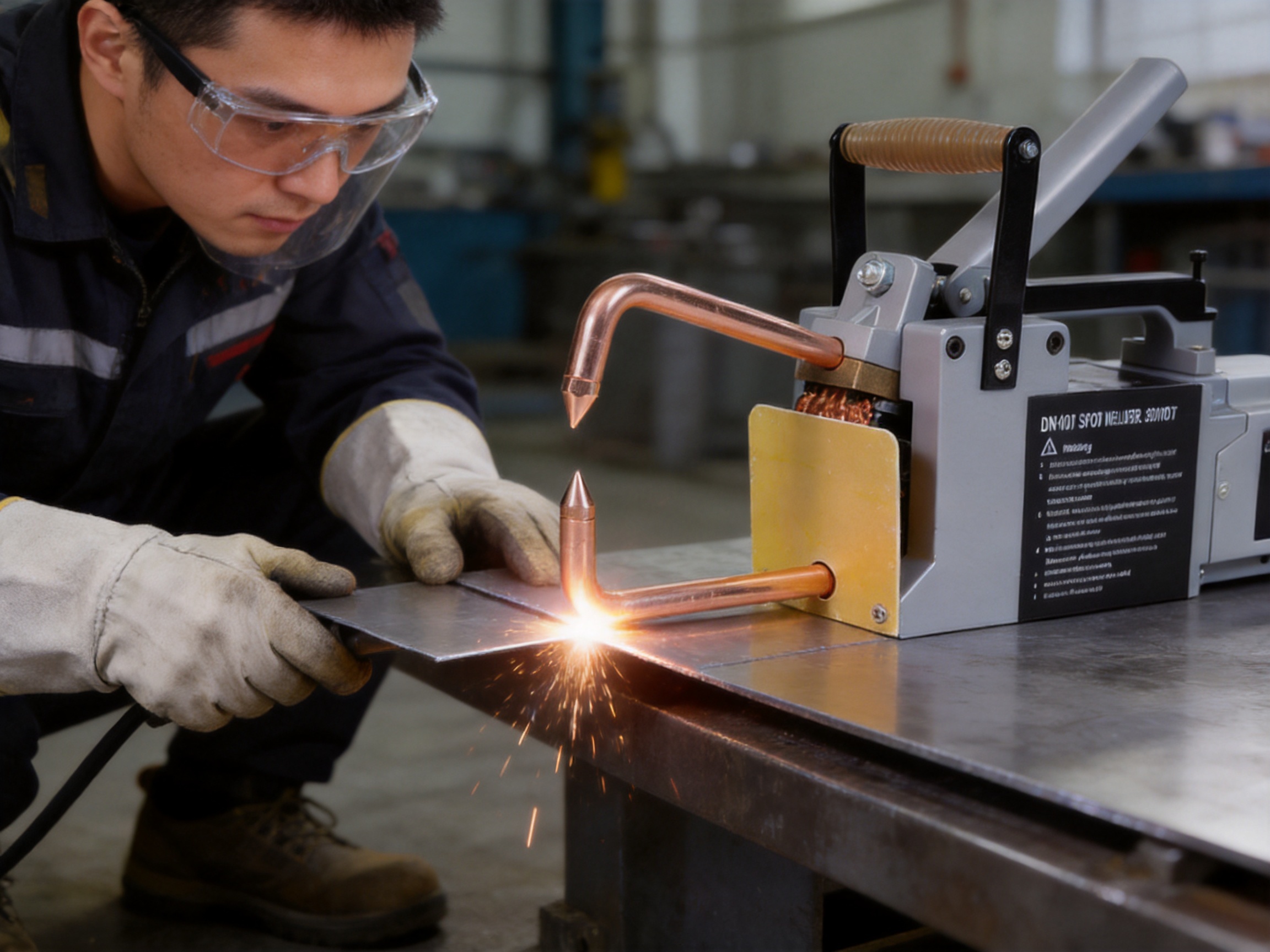
Operators should wear suitable personal protective equipment, including eye protection, heat-resistant gloves, protective clothing, and appropriate footwear. Loose clothing, jewelry, and long hair should be kept away from moving electrode arms and the workpiece. Bystanders should be protected from sparks and hot surfaces.
Before welding production parts, the operator should carry out sample welds using the same material type, thickness, surface condition, and joint arrangement. The sample should be inspected to confirm that the welding parameters produce an acceptable joint. If the material changes, the machine setup should be reviewed rather than assuming that the previous setting will remain suitable.
Workpieces should be positioned accurately so that the electrodes contact the intended weld location. The sheets should be held firmly together without large gaps. Uneven or contaminated surfaces can cause inconsistent current flow and reduce joint quality.
Clean the areas to be joined and remove oil, heavy oxidation, paint, and other contaminants where appropriate. Confirm that the sheets overlap sufficiently and that their combined thickness is within the machine’s recommended range.
Check the power cable, plug, electrode tips, arms, enclosure, and control indicators. Confirm that the equipment is stable and that no visible damage is present.
Use representative sample pieces to establish a suitable welding time, current setting, and electrode pressure. The correct values depend on material type, thickness, surface condition, electrode geometry, and required joint strength.
Place the workpiece between the electrode tips at the selected weld location. Ensure that the electrodes are aligned and that the sheet surfaces are in firm contact.
Apply the required electrode pressure and activate the welding sequence according to the machine’s operating instructions. Avoid moving the workpiece while the weld is being formed or while the metal remains hot.
Check the weld appearance and, when required, perform a suitable strength or destructive test. Look for excessive indentation, expulsion, incomplete joining, burn-through, surface contamination, or irregular weld placement.
Continue monitoring electrode condition, workpiece cleanliness, weld spacing, and machine temperature. Consistent preparation is essential for obtaining consistent production results.
Many workshops require equipment that can handle more than occasional repair work but does not occupy the space or demand the infrastructure of a fully automated production cell. The DN-100T addresses this need through a combination of portable construction, useful rated input capacity, electronic control, and a 50% duty cycle.
It is sufficiently compact for small work areas, yet its specifications support repeated joining of sheet-metal components. It can be used by general fabrication businesses, maintenance departments, educational workshops, equipment repair facilities, and small manufacturers. The machine can also serve as a supplementary welding station in a larger facility when a mobile or backup unit is needed.
Its single-phase configuration is another practical advantage for many users. Three-phase industrial equipment may require specialized electrical infrastructure that is unavailable in smaller facilities. A 230 V single-phase machine can be easier to install, although the circuit must still be correctly rated for the equipment’s input requirements.
The included electrode tips and packaging further support convenient delivery. Distributors can offer the machine as a complete basic package, while end users can begin application testing without waiting for every accessory to arrive separately.
Purchasers should evaluate the DN-100T according to the materials, thicknesses, production volume, electrical supply, and quality requirements of the intended application. The stated 1.5 mm plus 1.5 mm welding thickness should be treated as a key reference point. Applications involving thicker or highly conductive materials may require a different model or an engineering assessment.
Buyers should also confirm the exact product configuration before ordering. Important details may include electrode arm design, plug type, control functions, enclosure protection rating, packaging, certification documents, spare parts availability, and user manual language.
For distributors, the product’s broad application range and compact size can make it suitable for several market segments. It may appeal to automotive repair shops, sheet-metal workshops, general hardware manufacturers, agricultural repair businesses, and professional home workshops. Product demonstrations and sample welds can be effective when introducing the machine to customers who need to understand the difference between spot welding and arc welding.
Industrial buyers should consider total ownership cost rather than only purchase price. Factors include electrode life, power consumption, maintenance time, availability of replacement tips, production interruptions, operator training, and service support. A machine that is easy to operate and maintain can produce savings over its working life even when a lower-cost alternative appears attractive initially.
Compared with MMA or stick welding, spot welding does not require flux-coated electrodes or continuous arc control. It is faster for overlapping sheet assemblies and generally produces less visible weld spatter when correctly adjusted. However, it is not intended for every joint design, especially open butt joints or long continuous seams.
Compared with MIG or MAG welding, spot welding eliminates the need for shielding gas and welding wire. It can reduce consumable handling and simplify repetitive sheet-metal joining. MIG or MAG remains more versatile for longer seams, variable joint geometries, thicker structures, and applications where the operator needs to build a continuous bead.
Compared with TIG welding, spot welding is generally faster and less dependent on fine manual torch control for discrete sheet joints. TIG may provide superior visual control and cleaner results for specialized materials or visible seams, but it requires greater operator skill and typically takes longer.
Compared with laser welding, the DN-100T is more accessible in terms of equipment complexity, installation, and capital cost. Laser systems can offer exceptional speed, precision, and low-distortion joining for advanced applications, but they require specialized safety systems, optics, training, and maintenance. A portable resistance spot welder remains a practical choice for many conventional sheet-metal tasks.
Reliable welding equipment must perform consistently over many operating cycles. The DN-100T’s electronic control, Class H insulation, solid-state power management, robust transformer construction, and 50% duty cycle are intended to support this requirement.
Reliability also depends on how the machine is used. Operators should avoid exceeding the specified material capability, forcing the electrode arms, blocking ventilation, or continuing operation when the machine shows signs of overheating. Good training and preventive maintenance protect both the equipment and the finished product.
A manufacturer with broad experience in welding machines can provide valuable support when customers need product selection assistance, spare parts, application guidance, or regional documentation. The manufacturer’s extensive product range includes manual arc welding machines, gas-shielded welding systems, flux-cored welding equipment, TIG machines, plasma cutters, stud welders, submerged arc equipment, battery chargers, and heaters. This product breadth reflects substantial familiarity with electrical heating, power conversion, thermal management, and metalworking equipment.
Its reported export experience also suggests familiarity with international packaging, logistics, technical documentation, and customer requirements. For importers and distributors, these capabilities can simplify product introduction and ongoing supply planning.
The DN-100T is a single-phase portable resistance spot welding machine. It joins overlapping metal sheets by applying pressure and a controlled electrical current through electrode tips.
The rated supply voltage is 230 V, and the machine is designed for 50 or 60 Hz supply frequency.
The listed welding thickness is 1.5 mm plus 1.5 mm. This indicates a reference application involving two overlapping sheets, each up to approximately 1.5 mm, subject to material type, surface condition, electrode condition, and operating parameters.
Yes. The product information identifies stainless steel as one of the suitable materials. Because stainless alloys vary, users should perform sample welds and establish suitable parameters before production.
The machine can be used for most non-ferrous metals when the material combination and thickness are suitable. Conductive materials may require carefully controlled current, pressure, surface preparation, and electrode selection.
A 50% duty cycle indicates that the machine is designed to weld for approximately half of a defined operating cycle under specified test conditions, with the remaining time available for cooling or non-welding activity. Actual performance depends on the application and environment.
Microprocessor control supports more repeatable timing and operating sequences. It can help reduce variation between welds and make the machine easier to operate through visible LED indicators.
Two-way thyristors provide solid-state switching and control of electrical power. They can support responsive, repeatable welding-current management and reduce dependence on mechanical switching components.
Yes. The machine has a net weight of approximately 13 kg and dimensions of 550 × 155 × 355 mm, making it suitable for movement between workstations and use in compact workshops.
The product is supplied with basic accessories including electrode tips and a carton box. Buyers should confirm the exact accessory package for the selected shipment configuration.
Electrode life can be improved by keeping sheet surfaces clean, using suitable pressure, avoiding excessive welding heat, maintaining alignment, inspecting the tips regularly, and replacing or dressing them when necessary.
No. Resistance spot welding does not require shielding gas, welding wire, or stick electrodes. The process uses pressure and electrical resistance heating at the joint.
The DN-100T is primarily a portable machine. It may be suitable for manual or semi-manual workshop production, while fully automated lines generally require dedicated integrated resistance welding systems with automated handling and programmable controls.
Buyers should confirm the material and thickness requirements, supply voltage, duty cycle, machine dimensions, electrode configuration, certification documentation, spare parts, warranty terms, and availability of technical support.
The DN-100T Series Spot Welding Machine is a practical solution for users who need portable, efficient, and repeatable joining of sheet metal. Its 8 kVA rated input capacity, 50% duty cycle, microprocessor control, two-way thyristor technology, Class H insulation, and 1.5 mm plus 1.5 mm welding specification provide a strong combination of capability and convenience.
Its advantages over basic spot welders include more advanced control, improved operating efficiency, a useful duty cycle, reduced no-load current, long electrode life, easy adjustment, and a compact 13 kg format. These features make it appropriate for workshops, repair operations, small manufacturers, maintenance departments, and mobile fabrication tasks.
The manufacturer’s large production base, automated manufacturing technologies, research and development resources, international certifications, standards experience, and broad export capability add further value. Advanced surface-mount assembly, robotic processing, laser cutting, ERP and MES management, and dedicated engineering resources support the consistency expected from a modern welding equipment supplier.
For best results, users should keep the application within the specified material range, prepare surfaces carefully, establish parameters through trial welds, maintain electrode condition, and follow appropriate electrical and safety procedures. When used correctly, the DN-100T can provide dependable spot welding performance while occupying less space and requiring less infrastructure than many larger alternatives.
1. Product technical information for the DN-100T Series Spot Welding Machines, including rated electrical characteristics, duty cycle, welding thickness, dimensions, and weight.
2. Manufacturer-provided product descriptions concerning microprocessor control, two-way thyristor technology, electrode life, transformer construction, and operating features.
3. General principles of resistance spot welding, including current, welding time, electrode force, material preparation, and weld quality inspection.
4. General guidance on electrical safety, grounding, overcurrent protection, thermal management, and personal protective equipment for welding equipment.
5. Manufacturer information concerning production capacity, research and development facilities, manufacturing systems, certifications, patents, and standards participation.
Recommended Products

Contact Us
No.2299, Luqiao Section, Shugang Avenue, Luqiao District, Taizhou, 318057 Zhejiang, PR China.
+86-576-82431568
 Privacy
China Welding Machine Factory
 English
 中文简体
 русский
 Español
 عربى
 Français
 Português
 Deutsch
 Український