Email: [email protected]
Email: [email protected]

Blog
 2026.11.21
 Blog
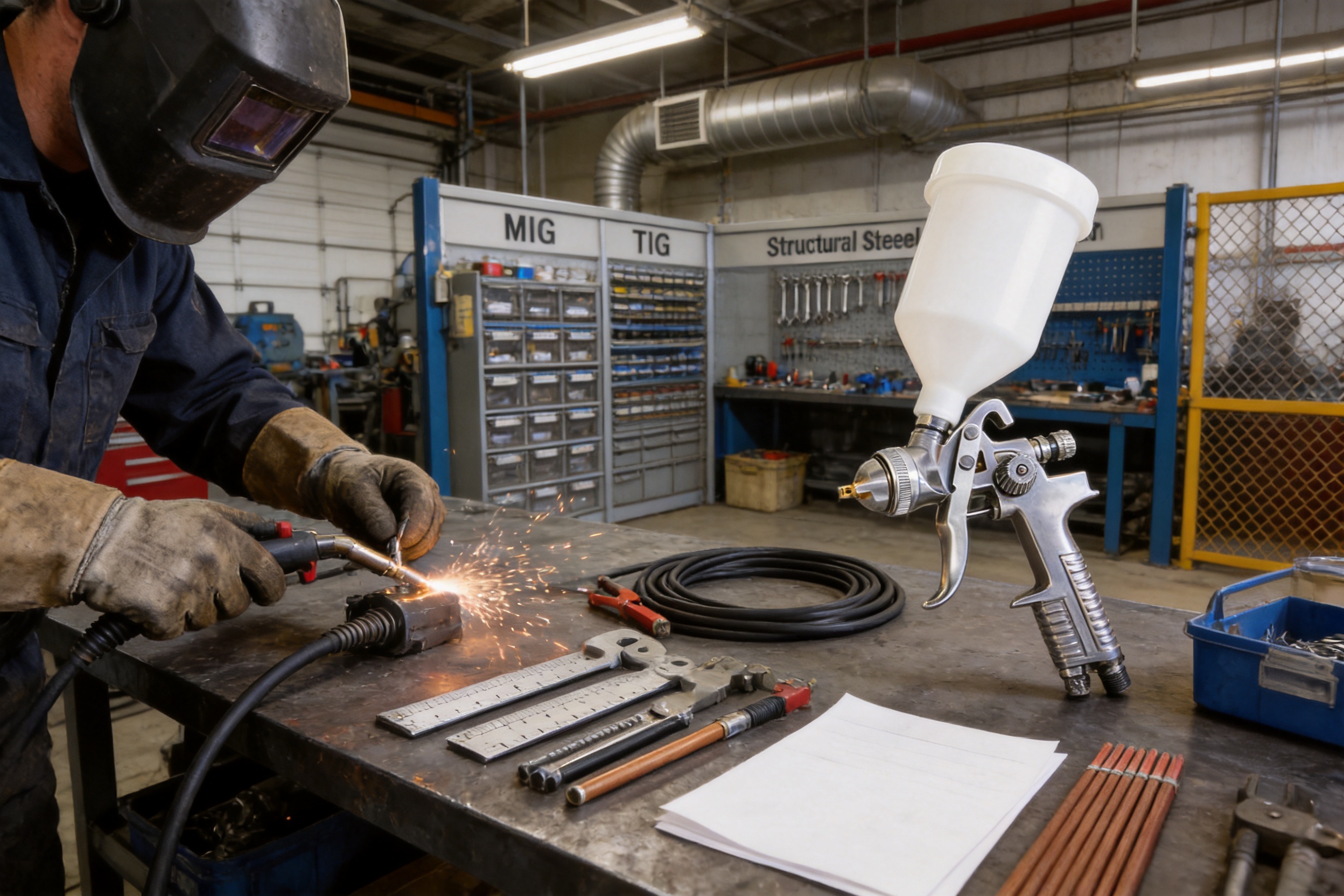
Welding equipment is only as dependable as the parts that support its operation. A high-quality welding machine may contain advanced inverter technology, precise control systems, and powerful output capabilities, but worn, damaged, incompatible, or poorly manufactured components can reduce productivity and compromise welding quality. For this reason, professional users, distributors, repair centers, and industrial maintenance teams require reliable welding machine parts and accessories that are compatible, durable, safe, and easy to replace.
The parts product category serves this essential requirement. It supports a broad range of welding and cutting equipment, including manual metal arc welding machines, MIG/MAG machines, TIG welding machines, plasma cutters, resistance spot welding equipment, submerged arc welding systems, battery chargers, heaters, and related industrial products. Properly selected parts help extend equipment service life, maintain stable operating performance, reduce unexpected downtime, and support safe working conditions.
Zhejiang Kende Mechanical & Electrical Co., Ltd. is an experienced manufacturer and exporter of welding machines, battery chargers, heaters, and associated equipment. Its manufacturing capabilities, research resources, quality systems, and international certifications provide a strong foundation for producing dependable replacement parts and accessories. Through integrated product development and modern production management, the company is able to support both standard product requirements and customized customer needs.
Welding machines operate in demanding environments. They are exposed to high electrical currents, heat, vibration, metal dust, spatter, mechanical impact, and frequent changes in load. Internal and external parts must therefore withstand continuous use without causing instability or unnecessary maintenance.
Parts influence nearly every aspect of equipment performance. Electrical components affect current regulation, arc stability, energy efficiency, and protection functions. Mechanical parts influence cooling, installation, adjustment, and physical durability. Welding accessories influence the transfer of current, delivery of shielding gas, positioning of the workpiece, and protection of the operator.
When replacement parts are correctly matched to the equipment, the original performance of the machine can be restored more effectively. A compatible component can help maintain the designed electrical characteristics and reduce the risk of secondary damage. By contrast, an unsuitable part may create excessive heat, poor contact, unstable output, inaccurate control, or premature failure.
Industrial users also benefit from standardized parts management. When a supplier can provide parts for several categories of welding equipment, purchasing becomes simpler and maintenance teams can reduce the number of suppliers they need to manage. This can improve inventory control, shorten procurement cycles, and make technical support more efficient.
The product category described as parts is therefore more than a collection of individual replacement items. It represents a support system for the complete life cycle of welding equipment. It helps customers maintain production assets from initial installation through routine maintenance, repair, refurbishment, and long-term operation.
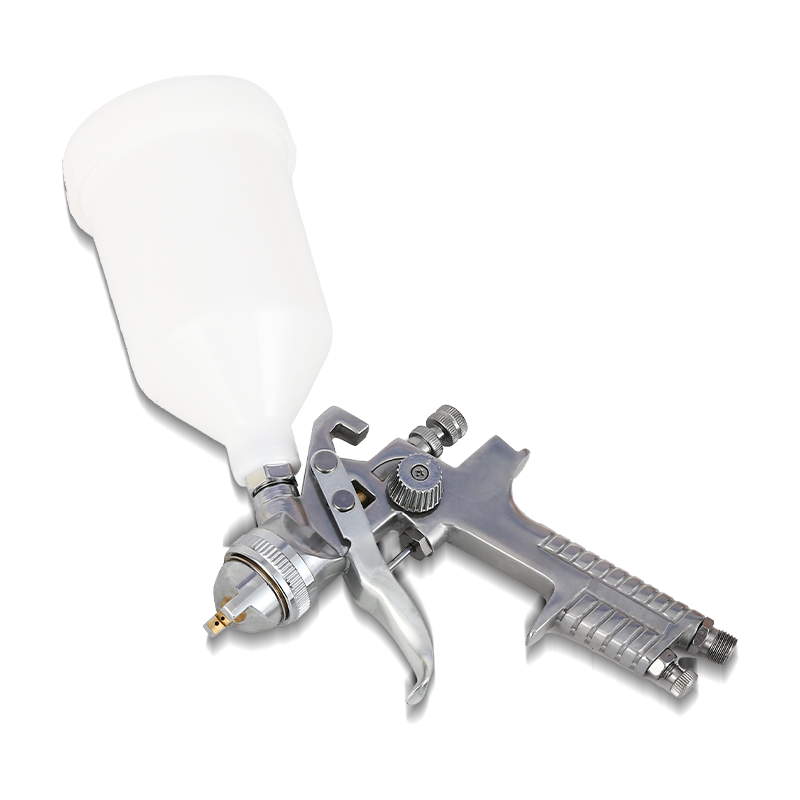
Parts
Different welding processes require different electrical, mechanical, and consumable support components. A parts supplier with broad experience across welding technologies can better understand these differences and provide more appropriate solutions.
Manual metal arc welding, also known as MMA or stick welding, is widely used in construction, repair, fabrication, agriculture, and general maintenance. The equipment is valued for its flexibility and ability to operate in locations where shielding gas is not practical.
Parts for MMA equipment may relate to output connections, current control, cooling, protection, housing, and user operation. The welding holder and work clamp must provide secure electrical contact. Cables must be appropriately sized and properly insulated. Internal electronic parts must tolerate the high-current switching conditions associated with inverter welding technology.
Reliable parts help ensure that the machine delivers a stable arc over a suitable operating range. They also support safe handling during repeated welding operations. For users working in difficult environments, durable housings, strong cable connections, and effective cooling-related components can be especially important.
MIG and MAG welding machines use continuously fed wire and shielding gas. These systems are often selected for productivity because the operator can weld continuously without repeatedly stopping to replace an electrode.
The wire-feeding system is central to MIG/MAG performance. Feed rollers, guide components, liners, torch connections, and drive mechanisms must work together smoothly. Irregular wire movement can produce inconsistent arc length, unstable penetration, excessive spatter, and poor bead appearance.
Parts designed for MIG/MAG applications should be selected according to wire diameter, welding current, material type, and machine configuration. Gas-related components must also support stable shielding. Even a small leak or poor connection can allow atmospheric contamination to enter the weld zone.
Well-designed parts can improve wire feeding, reduce adjustment requirements, and support more consistent production. This is particularly valuable for workshops that perform long welding cycles or rely on semi-automatic and automated welding processes.
TIG welding, also called GTAW, is known for precise heat control and high-quality weld appearance. It is commonly used for stainless steel, aluminum, thin materials, pressure-related components, and applications requiring careful control of the welding arc.
TIG-related parts may include torch components, current-carrying connections, gas delivery elements, control switches, and protective items. The quality of these parts affects arc initiation, shielding gas consistency, operator control, and welding comfort.
Because TIG welding often involves lower currents and more precise manual control than some other processes, small defects can become visible in the finished weld. A reliable torch connection, stable gas flow, and responsive control arrangement can help the operator maintain a consistent welding technique.
Air plasma cutting machines use an electrical arc and compressed air to cut electrically conductive materials. These machines are used in workshops, fabrication facilities, construction sites, vehicle repair, and metal processing applications.
Plasma cutting parts are exposed to intense heat, electrical energy, and high-velocity gas. Torch components, electrodes, nozzles, cable assemblies, air connections, and protective parts must be selected carefully. Parts that wear too quickly can increase operating costs and reduce cut quality.
Correct parts help maintain a concentrated plasma arc, stable air delivery, and reliable ignition. They can also help reduce excessive dross, uneven cutting, and unnecessary damage to the torch. For high-use applications, the availability of replacement parts is an important factor when selecting a plasma cutting equipment supplier.
Resistance spot welding uses electrical resistance and pressure to join overlapping metal sheets. It is widely used in sheet metal fabrication, appliance manufacturing, automotive production, and metal assembly operations.
Spot welding parts must manage heat, current, pressure, and repeated mechanical movement. Electrodes and electrode holders require suitable conductivity and wear resistance. Mechanical components must maintain alignment and pressure during repeated cycles.
Reliable components can help create repeatable weld nuggets and reduce variation between workpieces. This is particularly important in production environments where many similar joints must be completed efficiently.
Submerged arc welding is used for high-productivity welding of larger components. The process uses a continuously fed electrode and granular flux to protect the arc and weld pool.
Parts for submerged arc welding systems may support wire feeding, flux delivery, travel movement, electrical connection, and control. Because the process is often applied to long welds and heavy materials, component durability and process stability are essential.
Proper parts selection can help maintain uninterrupted operation and reduce stoppages during long production cycles. This can be especially valuable for pressure vessels, structural steel, heavy machinery, shipbuilding, and other industrial fabrication applications.
The most important advantage of a suitable replacement part is compatibility. A component must match the electrical ratings, mechanical dimensions, connection method, and operating conditions of the machine. Compatibility helps prevent installation problems and reduces the risk of malfunction.
A manufacturer with experience across multiple welding product categories can evaluate parts in relation to complete machine systems. This is more effective than treating each component as an isolated item. The supplier can consider the relationship between control boards, power modules, cooling systems, cables, torches, and protective structures.
Reliable parts support stable operation over extended periods. They are designed or selected to withstand the temperature, current, vibration, and mechanical stress associated with welding equipment.
In production environments, reliability has a direct financial effect. An unexpected machine stoppage can delay orders, interrupt assembly lines, require emergency labor, and create additional logistics costs. A dependable parts supply can reduce these risks by enabling planned maintenance and faster repairs.
Replacing a worn component does not always require replacing the entire machine. When the main structure and core systems remain serviceable, a suitable part can help restore operation and extend the useful life of the equipment.
This approach can reduce capital expenditure and support more sustainable equipment management. It also allows customers to continue using familiar machines and established welding procedures while addressing specific areas of wear or damage.
The quality of a welded joint depends on many variables, including current, voltage, wire speed, shielding, travel speed, electrode condition, and workpiece preparation. Parts that support stable electrical output and material delivery help operators maintain these variables more consistently.
Stable welding quality reduces rework and improves the repeatability of production. It can also help customers meet internal quality standards and industry-specific requirements.
Welding equipment carries electrical and thermal hazards. Damaged cables, loose connections, poor insulation, blocked cooling paths, and defective protection components may create unsafe conditions.
High-quality parts help preserve the safety design of the equipment. They can support insulation, grounding, overload protection, thermal management, and secure mechanical assembly. Replacement work should always be completed by qualified personnel according to appropriate technical instructions.
Low-quality components may appear inexpensive at the time of purchase, but their short service life can create repeated replacement costs. They may also cause damage to neighboring components or increase troubleshooting time.
Durable parts can provide better value over the complete service period. Their benefits may include fewer interruptions, simpler maintenance planning, reduced labor, and less waste from repeated failures.
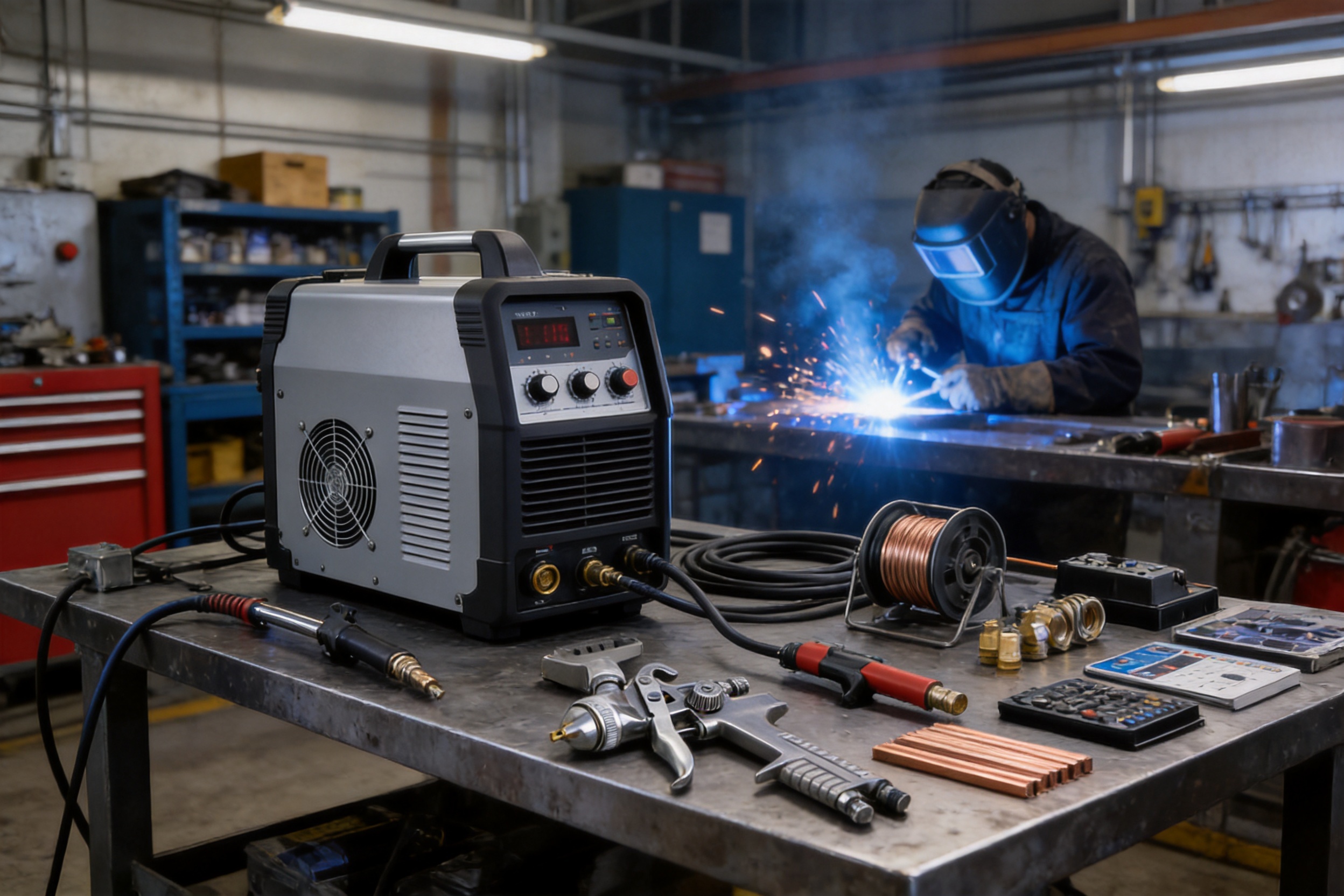
Zhejiang Kende Mechanical & Electrical Co., Ltd. operates as a large-scale manufacturer of welding equipment, chargers, heaters, and related products. The company covers approximately 120,000 square meters and employs about 600 people. Its size provides the resources required for product development, manufacturing, testing, quality control, and international logistics.
The company has an annual production capacity of approximately two million units and exports nearly 1.5 million units annually. This level of production experience supports the development of repeatable manufacturing processes. It also provides practical knowledge about the requirements of different markets, climates, electrical standards, and customer applications.
Large-scale manufacturing is valuable for parts production because consistency is essential. Parts must be produced according to defined specifications rather than depending on informal adjustment or individual workmanship. Controlled processes support repeatability from one production batch to another.
The company maintains a Zhejiang Provincial Research and Development Center, an Enterprise Technology Center, and an Intelligent Welding Technology Research Institute. These facilities support research into welding technologies, equipment structures, electronic systems, production methods, and product improvement.
The company has approximately 98 research and development personnel. Its intellectual property portfolio includes invention patents, utility model patents, appearance patents, and software copyrights. The company also reports nearly 200 patents in connection with its technical and product development activities.
This research capability supports parts development in several ways. Engineers can study failure modes, improve component layouts, refine cooling structures, optimize electrical connections, and develop more practical replacement solutions. Parts can be evaluated as elements within complete machine systems rather than as unrelated items.
The manufacturing operation uses automatic patching, plug-in assembly, welding systems, robotic processing, laser cutting, and other advanced technologies. These methods can improve production consistency and reduce variation caused by manual operations.
Automatic electronic assembly is particularly important for inverter welding machines and other products containing control boards and power electronics. Accurate component placement and controlled soldering help support reliable electrical performance.
Robotic processing can improve repeatability in operations that require consistent movement, pressure, or positioning. Laser cutting can produce precise metal components and clean edges, which supports accurate assembly and improved structural quality.
Modern production technology also improves manufacturing efficiency. Efficient production helps a supplier respond to larger orders, maintain stable delivery schedules, and support customers who require recurring parts supply.
The company applies several management systems, including OA office automation, Toyota TPS management, ERP K3, and MES management systems. These systems support coordination between product development, purchasing, production, inventory, quality management, and delivery.
Toyota TPS management principles emphasize process organization, waste reduction, efficiency, and continuous improvement. ERP systems help manage material requirements, inventory, orders, and production planning. MES systems provide more detailed control and visibility at the manufacturing level.
For parts customers, integrated management can improve order accuracy and traceability. It can also help coordinate different specifications, packaging requirements, production schedules, and delivery destinations. These capabilities are important for distributors and industrial users that purchase multiple product types.
The company holds or works with international product certifications and compliance systems including GS, CE, EMC, ERP, US ETL, UKCA, and China CCC. Certification requirements differ by product and market, but experience with international standards demonstrates familiarity with electrical safety, electromagnetic compatibility, energy efficiency, and market access requirements.
Parts used in welding equipment should be manufactured and selected with safety and compatibility in mind. A supplier experienced in certified equipment is better positioned to understand the effect that a component can have on the overall compliance status of a product.
Customers should confirm the exact certification requirements for their application and destination market. Certification of a complete machine does not automatically mean that every separately supplied replacement part has independent certification. Technical documentation and product-specific confirmation should therefore be requested where necessary.
The process begins with understanding the intended application. A parts requirement may involve a specific welding machine model, output range, connection type, working environment, or replacement objective. Accurate information helps the manufacturer identify the appropriate design and production route.
For customized orders, technical discussions may include drawings, samples, photographs, electrical data, mechanical dimensions, packaging instructions, and target markets. This information helps reduce the risk of selecting a part that appears similar but is not functionally compatible.
Engineering teams review the structure, materials, dimensions, electrical characteristics, and installation method of the part. If the part is related to a complete machine, engineers can also consider the interaction between the component and the machine’s control, cooling, protection, and power systems.
Design verification may include dimensional checks, electrical testing, heat-related evaluation, mechanical assessment, and trial installation. These steps help identify issues before large-scale production begins.
Material selection has a direct influence on durability and performance. Conductive components require suitable electrical properties. Insulating materials must tolerate the required temperature and voltage. Mechanical parts must provide appropriate strength, dimensional stability, and resistance to wear.
Effective supplier management and incoming inspection help ensure that materials meet defined requirements. Consistent incoming materials support stable production and reduce variation in finished parts.
Assembly quality affects both performance and service life. Loose connections, incorrect torque, poor soldering, damaged insulation, and misaligned components can cause failure even when the individual materials are suitable.
Automatic and semi-automatic production methods help control repeatable operations. Trained personnel remain important for inspection, adjustment, and handling of products that require specialized assembly.
Finished parts and related products may be inspected for appearance, dimensions, continuity, insulation, connection quality, operation, and packaging condition. The precise test plan depends on the type of part and its intended use.
Testing provides a final opportunity to identify defects before shipment. It also generates information that can support process improvement and customer service. For industrial customers, the availability of inspection records or technical documentation may be an important part of supplier evaluation.
Parts must be protected during storage and transportation. Packaging should help prevent moisture, impact, deformation, dust contamination, and loss of small items. Clear identification is also important when products have similar shapes but different specifications.
Efficient warehouse and order management systems can help ensure that the correct part, quantity, and packaging format are supplied. This is particularly important for international shipments involving multiple models or destinations.
Welding machine parts are sometimes purchased solely according to price. While cost is an important commercial consideration, the lowest purchase price does not always represent the lowest total cost.
Unverified parts may have uncertain materials, inconsistent dimensions, incomplete testing, or unclear compatibility. They may fit physically but fail electrically or mechanically during operation. In some cases, a low-quality part can cause damage to more expensive components.
A professional manufacturer offers advantages through documented development, controlled production, technical experience, and product support. The value of these capabilities becomes especially clear in industrial environments where equipment downtime is expensive.
Another advantage is the possibility of obtaining parts from a supplier that also manufactures complete welding machines. Such a supplier is more likely to understand the operating relationships between accessories, electrical systems, cooling assemblies, controls, and protective structures.
Customers should evaluate suppliers using several criteria: product compatibility, material quality, production capability, certification experience, inspection procedures, order flexibility, delivery reliability, and after-sales support. A balanced evaluation provides a better basis for long-term purchasing decisions than price comparison alone.
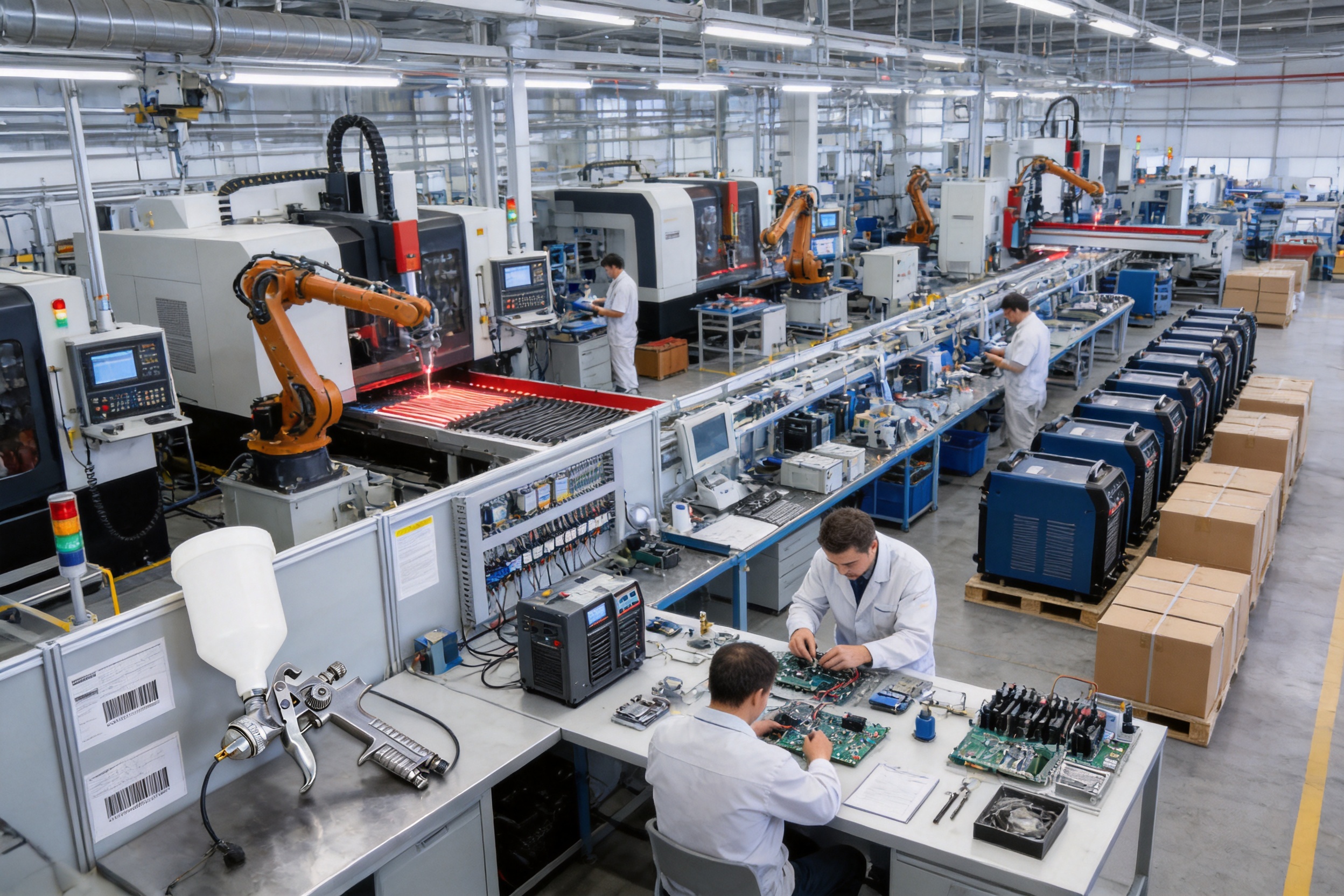
Welding parts and accessories serve a wide range of users. Small repair shops may require replacement holders, clamps, cables, torch components, and connectors. Fabrication plants may need regular supplies for MIG/MAG, TIG, plasma cutting, and automated equipment.
Construction companies use welding equipment for structural assembly, pipeline work, installation, maintenance, and repair. Agricultural equipment manufacturers and repair centers depend on welding machines to maintain machinery and fabricate components.
Automotive and transportation-related operations may require spot welding parts, MIG/MAG accessories, plasma cutting components, and specialized fixtures. Heavy equipment manufacturers and steel-processing companies may need durable parts for high-current and long-cycle welding systems.
Distributors and importers also benefit from a broad product range. They can offer customers a more complete service by supplying welding machines together with replacement parts, accessories, chargers, heaters, and related equipment. This can strengthen customer relationships and create recurring business opportunities.
Selecting the right part requires more information than a product name alone. Users should identify the machine type, model, rated output, connection arrangement, application, and operating environment.
| Selection factor | Information to confirm | Why it matters |
|---|---|---|
| Machine type | MMA, MIG/MAG, TIG, plasma, spot, submerged arc, charger, or heater | Different equipment categories require different electrical and mechanical parts |
| Machine model | Exact model number and production version | Similar machines may use different connections or internal components |
| Electrical rating | Input voltage, output current, duty cycle, and frequency | Prevents overheating, instability, and electrical incompatibility |
| Physical dimensions | Length, width, mounting points, thread type, and connector size | Ensures correct installation and alignment |
| Working environment | Indoor, outdoor, dusty, humid, hot, cold, or mobile use | Helps determine suitable protection and durability requirements |
| Material and process | Steel, stainless steel, aluminum, thickness, and welding method | Supports proper selection of torches, cables, rollers, electrodes, and consumables |
| Quantity and delivery | Sample quantity, regular order volume, packaging, and destination | Helps establish an efficient supply and production plan |
Photographs can be useful, but they should not replace technical identification. Two parts may look similar while having different ratings or internal structures. Customers should provide model labels, dimensions, electrical data, and application details whenever possible.
For customized parts, the manufacturer may request samples or technical drawings. A sample can help verify shape and installation, while drawings and electrical specifications provide information that may not be visible from the outside.
Different countries and industries may use different electrical standards, machine configurations, accessories, and packaging requirements. A flexible manufacturer should be able to review these differences and develop suitable products or parts where necessary.
Kende’s experience in product development allows it to support new product work according to regional, national, and customer-specific requirements. Customization may involve dimensions, labels, colors, packaging, connectors, input voltage, operating frequency, accessory combinations, or product functions.
Custom development should follow a controlled process. The customer and manufacturer should first define the technical requirements. Engineering teams can then prepare a preliminary design or adaptation plan. Samples may be produced for testing and approval before regular production begins.
This approach is useful for importers that require private labeling, distributors that serve a particular market, or industrial users with specialized equipment. It can also help customers replace obsolete components when original parts are no longer readily available.
Even high-quality parts require proper use and maintenance. Welding machines should be operated within their rated current, duty cycle, and environmental conditions. Exceeding the rated duty cycle can produce excessive heat and shorten the life of electrical and mechanical components.
Cooling paths should be kept clean and unobstructed. Dust and metal particles can restrict airflow, reduce heat dissipation, and contaminate electronic assemblies. In demanding environments, regular inspection and cleaning should be part of the maintenance schedule.
Cables, plugs, clamps, torches, gas connections, and work leads should be checked for damage, looseness, overheating, or unusual wear. Damaged components should be replaced rather than temporarily repaired in a way that creates additional risk.
Welding accessories should be stored in dry, clean conditions. Moisture, oil, chemicals, and excessive mechanical pressure can damage insulation, connectors, and protective materials. Small parts should be labeled and organized to prevent incorrect installation.
When replacing an internal component, power must be disconnected and appropriate safety procedures must be followed. Only qualified technicians should service electrical equipment. After installation, the machine should be tested before being returned to full production.
Extending the life of welding equipment can reduce material waste and lower the environmental impact associated with replacing complete machines. A repair using a suitable part may preserve valuable housings, transformers, electronic assemblies, cooling systems, and control structures.
Efficient welding operation can also reduce energy waste. Stable electrical performance and properly maintained components help the machine work closer to its intended operating condition. This can support more efficient use of power and reduce avoidable rework.
Durable packaging, accurate order preparation, and consolidated shipments can further improve supply chain efficiency. These benefits are especially relevant to distributors and industrial customers managing regular international purchases.
A supplier’s manufacturing experience influences more than production capacity. It affects technical communication, quality consistency, problem-solving ability, and the speed at which new requirements can be evaluated.
A company that manufactures multiple categories of welding equipment develops knowledge of different processes and applications. This knowledge can help customers identify the root cause of a performance issue rather than simply replacing parts without diagnosis.
Manufacturing experience also improves communication between sales, engineering, production, quality control, and logistics departments. When these functions work together, customers are more likely to receive accurate quotations, suitable samples, correct documentation, and consistent shipments.
For long-term customers, the supplier’s ability to maintain stable specifications is particularly important. Uncontrolled changes to materials or dimensions can create installation problems and affect machine performance. Documented manufacturing systems help limit these risks.
The parts category can include replacement components and accessories used with welding machines, plasma cutters, battery chargers, heaters, and related equipment. The exact product range depends on the machine type and customer requirement. Customers should confirm the specific component, model, dimensions, and ratings before ordering.
Yes. Parts may be required for MMA, MIG/MAG, TIG, plasma cutting, resistance spot welding, submerged arc welding, and other equipment. Each process has different technical requirements, so compatibility must be verified for the intended machine.
The customer should provide the machine model, production version, electrical rating, photographs, dimensions, connection details, and application information. A sample or technical drawing may be required for customized or difficult-to-identify parts.
Replacement parts can help extend the life of older machines when the main structure and essential systems remain serviceable. However, the availability and compatibility of a part must be assessed individually. In some cases, a modified or customized solution may be possible.
Customized development may be available for customers with special dimensions, electrical specifications, connectors, labels, packaging, or regional requirements. The feasibility depends on the technical information, expected quantity, testing requirements, and production conditions.
A complete equipment manufacturer understands how individual parts interact with the full machine. This can improve compatibility assessment, technical support, quality control, and problem diagnosis. It may also simplify purchasing by allowing customers to source machines, accessories, and replacement parts from one supplier.
An inquiry should include the required product name, machine type, exact model, quantity, technical specifications, dimensions, photographs, destination market, packaging requirements, and desired delivery schedule. Clear information helps the supplier provide a more accurate response.
Certification requirements depend on the product, market, and intended application. A certification applying to a complete machine may not automatically apply to a separately supplied replacement component. Customers should request product-specific compliance information when required.
Users should operate equipment within its rated limits, maintain proper cooling and ventilation, keep connections clean and secure, inspect cables and accessories regularly, and replace worn parts promptly. Installation should be completed by qualified personnel.
Order quantities depend on the part, production status, inventory, customization level, and customer requirements. Standard items may be available in smaller quantities, while customized products may require a minimum order. Customers should confirm availability directly with the supplier.
Reliable welding machine parts are essential to equipment performance, production continuity, operator safety, and long-term ownership value. They support a wide range of welding and cutting technologies, from MMA and MIG/MAG to TIG, plasma cutting, resistance spot welding, and submerged arc welding.
The main advantages of dependable parts include compatibility, stable welding quality, longer equipment service life, reduced downtime, safer operation, and lower total maintenance cost. These benefits are especially important for industrial users whose productivity depends on continuous and predictable equipment performance.
Zhejiang Kende Mechanical & Electrical Co., Ltd. combines large-scale manufacturing, research and development resources, advanced production technologies, international certification experience, and integrated management systems. Its use of automatic assembly, robotic processing, laser cutting, ERP management, MES control, and Toyota TPS principles supports consistent production and continuous improvement.
With experience in welding machines, chargers, heaters, and related equipment, the company is positioned to provide both standard and customized parts solutions. Customers can improve the results of their procurement decisions by supplying accurate technical information, confirming compatibility, and evaluating suppliers according to quality, reliability, service, and long-term value rather than purchase price alone.
For workshops, distributors, repair centers, construction companies, and industrial manufacturers, a dependable parts supply is an important part of effective equipment management. The correct component, produced under controlled conditions and supported by technical experience, can help keep welding equipment working safely and efficiently for many years.
1. International Electrotechnical Commission, standards and technical guidance relating to arc welding equipment and electrical safety.
2. International Organization for Standardization, quality management principles for manufacturing organizations.
3. International Organization for Standardization, guidance relating to welding quality requirements and quality assurance.
4. National Welding Machine Standardization Committee, technical principles for welding machine design and manufacturing.
5. Toyota Production System, principles of process efficiency, waste reduction, and continuous improvement.
6. Manufacturer-provided technical information concerning welding machines, plasma cutting equipment, battery chargers, heaters, production capabilities, certifications, and research resources.
Recommended Products

Contact Us
No.2299, Luqiao Section, Shugang Avenue, Luqiao District, Taizhou, 318057 Zhejiang, PR China.
+86-576-82431568
 Privacy
China Welding Machine Factory
 English
 中文简体
 русский
 Español
 عربى
 Français
 Português
 Deutsch
 Український