Email: [email protected]
Email: [email protected]

Blog
 2026.09.20
 Blog
Stud welding is a specialized joining process used to attach threaded studs, pins, fasteners, and other metal projections to a workpiece without drilling holes or using separate mechanical fasteners. In industrial fabrication, automotive repair, shipbuilding, construction, electrical cabinet production, metal furniture manufacturing, and equipment assembly, the quality of each welded stud directly affects the strength, alignment, appearance, and service life of the finished product.
The RSN-1000/2000 Stud Welder is designed for fast, controlled, and repeatable stud welding on a wide range of metallic materials. It combines microprocessor-based control, an LCD interface, high welding current, adjustable welding time, protective monitoring, and a compact mobile structure. The published technical data for the RSN-1000 model specifies a welding current range of 100 to 1,000 amperes, a maximum output current of 1,000 amperes, a three-phase 380-volt power supply, and compatibility with studs from 3 to 10 millimeters in diameter.
The product family is identified as RSN-1000/2000, while the supplied technical table refers specifically to the RSN-1000 model. The product information also mentions a larger stud capacity of up to 12 millimeters for a related model designation. Buyers should therefore confirm the exact model, output rating, stud range, torch configuration, and electrical specification before placing an order.
Manufactured by Zhejiang Kende Mechanical & Electrical Co., Ltd., the machine reflects the company’s experience in welding equipment, battery chargers, heaters, and related electrical products. Kende operates large-scale manufacturing, research, testing, and export systems, allowing the stud welder to be supported by established production processes rather than by a limited workshop assembly model.
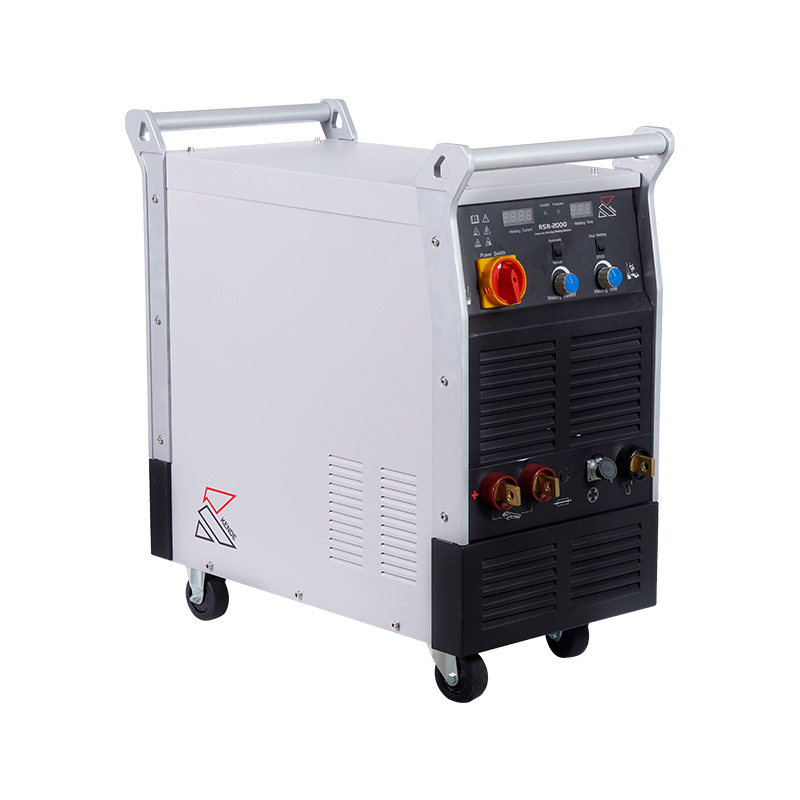
RSN-1000/2000 STUD WELDER
Stud welding creates a permanent connection between a metal stud and a base material. During the welding cycle, the end of the stud and a small area of the workpiece are brought into a molten or plasticized state. The stud is then pressed into the prepared weld zone, forming a strong joint after cooling. The entire operation can be completed in a fraction of the time required for drilling, tapping, bolting, or manual fusion welding.
The process offers several practical advantages. It can reduce the number of operations required to install fasteners, limit damage to the reverse side of a panel, and maintain a clean external surface. It is especially valuable when the rear side of a workpiece is inaccessible or when a visible surface must remain free of bolt heads and drilled holes.
Stud welding is used for insulation pins, threaded fastening points, brackets, electrical grounding points, heat shields, pipe supports, mounting pins, decorative components, and structural attachments. It can be applied to flat sheets, plates, tanks, steel structures, vehicle components, and many other fabricated assemblies.
However, stud welding is sensitive to current, welding time, stud geometry, surface condition, material type, contact pressure, and equipment setup. Excessive heat can cause unnecessary distortion or burn-through, while insufficient energy can produce an incomplete or weak joint. A machine with accurate electronic control is therefore essential for reliable production.
The RSN-1000/2000 Stud Welder is an electronically controlled resistance and arc stud welding solution developed for professional fabrication environments. Its design emphasizes controllability, rapid operation, inspection functions, and ease of movement around the workplace.
The principal model data supplied for the RSN-1000 includes a 380-volt supply voltage with a tolerance of plus or minus 15 percent, a frequency of 50 or 60 hertz, a rated input power of 40, an instantaneous maximum input power of 44 kVA, and a rated no-load voltage of 85 volts. The welding current can be adjusted from 100 to 1,000 amperes.
The machine has a rated duty cycle of 15 percent, an efficiency of 80 percent, and a power factor of 0.95. It is specified with IP21S protection, Class F insulation, a listed weight of 45 kilograms, and dimensions of approximately 650 by 550 by 600 millimeters.
The machine is intended for studs with diameters from 3 to 10 millimeters and stud lengths up to 400 millimeters, according to the supplied specification table. The broader product description refers to carbon steel, stainless steel, copper, aluminum, and their alloys. Actual performance depends on stud design, base material thickness, surface preparation, joint configuration, and the selected welding parameters.
| Specification | Published RSN-1000 Data |
|---|---|
| Product type | Stud welding machine |
| Supply voltage | 380 V ±15% |
| Frequency | 50/60 Hz |
| Rated input power | 40 |
| Instantaneous maximum input power | 44 kVA |
| Rated no-load voltage | 85 V |
| Welding current adjustment range | 100–1,000 A |
| Maximum output current | 1,000 A |
| Rated duty cycle | 15% |
| Weldable stud diameter | 3–10 mm |
| Weldable stud length | Up to 400 mm |
| Efficiency | 80% |
| Power factor | 0.95 |
| Protection class | IP21S |
| Insulation class | F |
| Weight | 45 kg |
| Dimensions | 650 × 550 × 600 mm |
One of the machine’s most important advantages is its advanced microprocessor and LCD display control system. Traditional equipment may require operators to estimate settings using analog dials, handwritten production notes, or repeated trial welds. A digital control interface provides a more structured way to select, display, and adjust operating parameters.
The LCD display helps the operator understand the selected settings before welding begins. Clear digital information can reduce confusion between production batches and make it easier to reproduce a proven welding procedure. This is particularly useful where different stud diameters, material grades, or sheet thicknesses are processed on the same machine.
Microprocessor control also supports more precise timing. The welding time can be set between zero and three seconds, allowing the operator to match the energy input to the application. Short welding times are a central benefit of stud welding, and electronic timing helps reduce variation that might otherwise arise from manual switching or inconsistent operator response.
Digital control does not eliminate the need for operator training. The correct current and time still depend on the stud, workpiece, surface condition, and welding method. Nevertheless, a controlled electronic platform provides a better foundation for standard operating procedures, parameter records, quality checks, and production repeatability.
Compared with basic machines that offer only broad mechanical adjustment, the RSN design allows more informed parameter management. This can be a competitive advantage in professional workshops where consistent weld quality matters more than the lowest initial equipment price.
The product information identifies contactless point control technology in the main circuit. Contactless electronic switching avoids some of the wear associated with mechanical switching components. In a production environment, reducing mechanical contact movement can contribute to improved operating reliability and more stable switching behavior.
Electronic control is especially beneficial when the machine must perform repeated welding cycles. Every cycle involves a rapid transition between standby, energy delivery, and welding completion. A well-designed electronic switching system can help maintain consistent timing while reducing the effects of contact erosion, mechanical bounce, and switching variation.
The stated purpose of this design is high reliability and a high duty cycle within the machine’s specified operating limits. The published RSN-1000 duty cycle is 15 percent. Duty cycle should always be interpreted together with the welding current, ambient temperature, ventilation, and rest periods. Operating continuously at maximum current without observing the rated duty cycle can cause thermal stress and shorten equipment life.
For production managers, electronic switching also supports predictable maintenance planning. Instead of treating the machine as a collection of frequently adjusted mechanical switching parts, maintenance can focus on cooling, cable condition, torch components, grounding, electrical connections, and the manufacturer’s recommended inspection schedule.
Heat control is central to successful stud welding. The machine’s welding time range of zero to three seconds gives the operator a broad adjustment window for different applications. A short, correctly selected cycle can form a strong joint while keeping the heat-affected zone small.
A small heat-affected zone has several advantages. It can reduce distortion in thin sheet materials, limit discoloration, help preserve dimensional accuracy, and minimize the need for post-weld correction. This is particularly important in visible panels, enclosures, vehicle parts, appliance components, and assemblies where the opposite side of the workpiece must remain clean.
The correct setting is not necessarily the shortest possible time. The weld must receive enough energy to create adequate fusion between the stud and the base material. Operators should develop a procedure using test pieces and verify the result through visual examination and, where necessary, destructive or nondestructive testing.
The adjustable current range of 100 to 1,000 amperes allows the machine to cover a variety of stud sizes and material conditions. Lower settings may be appropriate for smaller studs or thinner materials, while larger studs and heavier sections may require greater energy. The selected parameters should be based on approved welding procedures, stud manufacturer recommendations, and actual test results.
Because the machine separates current and time as controllable variables, the operator can optimize the cycle rather than relying on a single fixed output. This flexibility gives the RSN system an advantage over simpler equipment with limited adjustment capability.
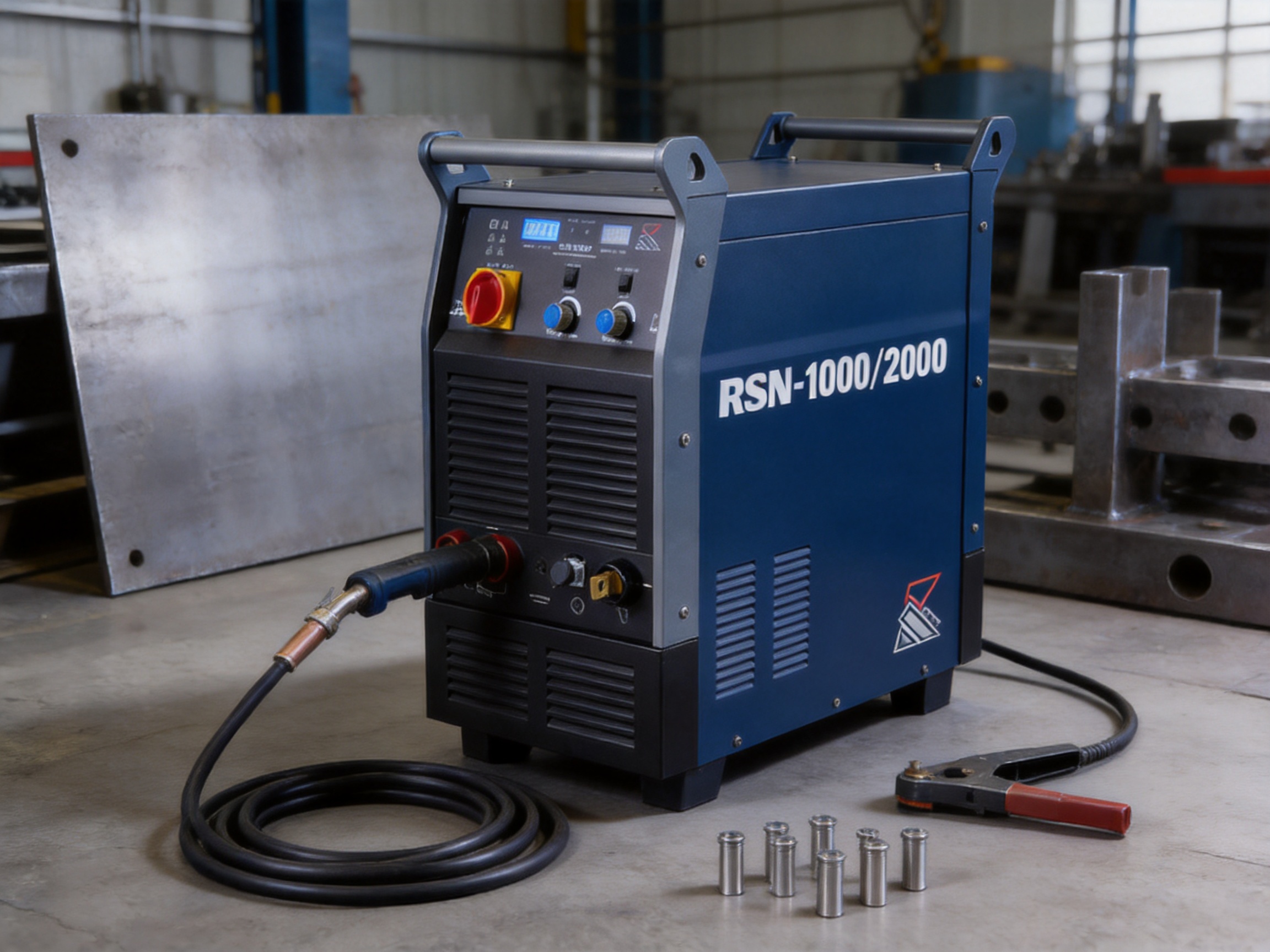
The machine can test several important operating conditions before or during the welding process. These include the welding torch switch, the contact relationship between the workpiece and welding torch, protective gas, and temperature control.
Monitoring the torch switch helps confirm that the command signal is functioning correctly. This is important because an unreliable trigger can interrupt production, produce incomplete welds, or create an unsafe unexpected start condition. A controlled switch test can help technicians identify faults before they affect a large production batch.
Workpiece and torch contact are also critical. Poor contact may result from contamination, insufficient pressure, an unsuitable work angle, damaged torch components, or an improperly prepared surface. A system capable of checking the contact situation can help the operator detect setup problems earlier.
Where gas protection is used, verification of the protective gas condition helps reduce the risk of atmospheric contamination. The product description states that either a porcelain ring or gas protection can be selected. The appropriate choice depends on the welding method, stud type, material, surface condition, and process requirements.
Temperature control provides another layer of protection. Welding equipment generates significant electrical and thermal loads, especially during repeated high-current operation. Thermal monitoring helps prevent continued operation when internal temperatures exceed safe limits. This supports equipment durability and protects the operator from avoidable equipment failures.
These testing functions distinguish the machine from basic welding power sources that simply deliver current after the operator presses a trigger. An integrated checking approach can improve troubleshooting, reduce wasted studs, and support more disciplined production control.
The RSN product information lists carbon steel, stainless steel, copper, aluminum, and their alloys among the materials suitable for stud welding. Each material presents different electrical, thermal, and metallurgical characteristics, so parameter selection must be adapted accordingly.
Carbon steel is widely used in structural fabrication, equipment frames, brackets, automotive parts, and general metalwork. It is usually compatible with a broad range of stud welding applications and can provide a stable production base when surfaces are clean and correctly prepared.
Stainless steel is frequently selected for corrosion resistance, hygiene, and appearance. Welding stainless components requires attention to surface contamination, heat input, stud compatibility, and discoloration. Good process control helps reduce unnecessary thermal impact and supports a clean finished assembly.
Copper has high electrical and thermal conductivity, which can affect the energy required for welding. Aluminum and aluminum alloys are lightweight and widely used in transportation, enclosures, and equipment structures, but their oxide layer and thermal behavior require careful preparation and suitable process parameters.
Material compatibility should not be assumed solely from a general product statement. Before production, users should confirm the appropriate stud material, base material thickness, polarity, surface preparation, protective method, and parameter range. Sample welding and joint testing are especially important when joining dissimilar materials.
The published RSN-1000 specification covers stud diameters from 3 to 10 millimeters. This range is suitable for many light and medium industrial fastening applications, including threaded studs, insulation pins, mounting pins, and small structural attachments.
The general product description also refers to a related capacity of up to 12 millimeters under a different model designation. Since the available table lists the RSN-1000 rather than a fully detailed RSN-2000 specification, customers should verify which model is required for larger studs.
Stud length can reach up to 400 millimeters according to the supplied table. Long studs may be used for specialized fixtures, insulation systems, supports, and custom fabrication. However, long or slender studs require suitable torch handling and alignment to avoid bending, instability, or inaccurate placement.
The combination of current adjustment, time adjustment, and material compatibility enables the machine to serve multiple product lines. A fabrication company may use the same platform for small mounting pins in one department and larger threaded studs in another, provided the selected application remains within the approved operating range.
Fast welding speed is one of the key reasons manufacturers choose stud welding. A properly prepared stud can be welded in a short cycle, allowing operators to complete large numbers of attachment points efficiently. The process eliminates several steps associated with conventional fastening methods.
Compared with drilling and bolting, stud welding can reduce marking, drilling, deburring, hardware handling, and tightening operations. Compared with manual arc welding of brackets, it can reduce filler metal use, heat input, grinding, and finishing work. These savings can be significant when thousands of attachment points are required.
Short cycle times also improve line balancing. A manufacturer can design fixtures and workstations around predictable welding operations. When settings are documented and inspection procedures are consistent, the machine can contribute to more stable production output.
Productivity should not be measured only by the number of welds per hour. A useful calculation includes setup time, consumables, rework, inspection, maintenance, operator movement, and the cost of failed joints. A machine that produces slightly more consistent welds may deliver better total productivity than a lower-cost unit that causes frequent rework.
The RSN machine’s LCD controls, monitoring functions, and high-current output are intended to support this broader definition of productivity. Faster operation is valuable only when the resulting joints meet the required quality standard.
The machine is designed to produce fast welding with a high-quality joint. Weld quality depends on the interaction of equipment settings, stud design, base material, surface condition, torch alignment, grounding, and operator technique.
The short welding cycle can keep the heat-affected zone small. This is valuable when working with thin panels or components that must retain their original shape. Reduced distortion can lower the need for straightening, refinishing, or dimensional correction after welding.
A quality stud weld should have correct positioning, adequate fusion, a consistent weld collar where applicable, and no visible signs of severe undercutting, cracking, excessive spatter, or incomplete attachment. The exact acceptance criteria depend on the application standard and joint design.
Operators should inspect the first pieces of every new batch. They should also recheck weld quality after changing stud suppliers, material thickness, surface treatment, torch components, grounding arrangements, or welding parameters. A stable machine cannot compensate for unsuitable consumables or poor preparation.
In demanding applications, testing may include torque testing, tensile testing, bend testing, metallographic examination, or other methods required by the customer or applicable standard. Quality records can include machine model, current, time, material, stud type, operator, date, and inspection result.
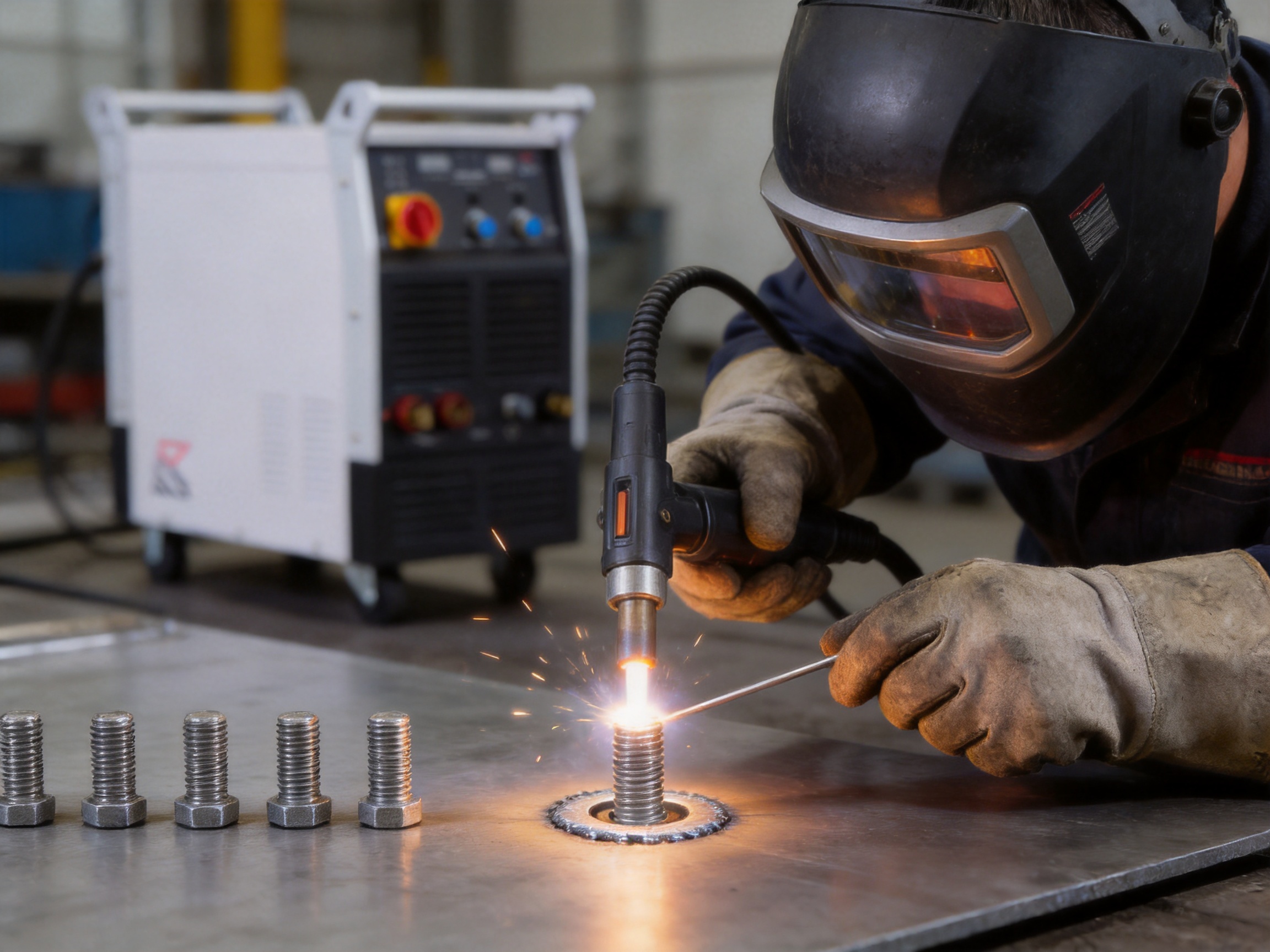
The product is described as having a small volume, light weight, easy mobility, and an attractive appearance. At approximately 45 kilograms, the RSN-1000 is not a handheld power source, but it is mobile enough for many workshop and site-based applications when moved with appropriate handling equipment.
Mobility is useful when large workpieces cannot be transported to a central welding station. The machine can be positioned near a structural assembly, fabrication table, vehicle body, tank, or equipment frame. Shorter movement distances can reduce handling time and make it easier to access different sides of a workpiece.
The compact dimensions of approximately 650 by 550 by 600 millimeters help conserve floor space. A well-organized workshop can position the machine near a fixture, consumable storage area, and inspection station without dedicating a large production footprint.
Operators should still follow safe lifting and moving procedures. The machine should be placed on a stable surface with sufficient ventilation and clear access to its controls. Cables should be routed to avoid trip hazards, sharp edges, heat sources, and vehicle traffic.
The three-phase 380-volt power supply is suitable for many industrial electrical systems, particularly in regions where this voltage is standard. The listed tolerance of plus or minus 15 percent provides a defined operating range, although users should verify that the local supply is stable and that the installation complies with electrical regulations.
The rated no-load voltage is listed as 85 volts. The high-current output is supported by an instantaneous maximum input power of 44 kVA and a rated input power of 40. These figures indicate that the machine should be installed on an adequately sized circuit with appropriate protection.
A power factor of 0.95 is favorable for an industrial welding power source because it indicates efficient use of supplied electrical power. An efficiency rating of 80 percent means that a substantial portion of the input power is converted into useful welding output, while the remainder is dissipated as heat and must be managed through the machine’s cooling system.
Electrical installation should be performed by qualified personnel. The correct cable size, circuit protection, grounding, isolation, phase arrangement, and emergency stop provisions must be determined according to local codes and the manufacturer’s installation instructions.
The RSN-1000 is listed with a 15 percent rated duty cycle. Duty cycle represents the proportion of a defined period during which the machine can weld at a specified output before requiring a cooling interval. It is not a universal statement that the machine can weld for 15 percent of every working day; the precise interpretation depends on the applicable testing standard and rated current.
At higher current levels, heat generation increases. Operators should allow the machine to cool when required and should not block ventilation openings. Dust, metal particles, oil, and moisture should be kept away from internal airflow paths and electrical components.
Production planners should consider duty cycle when estimating output. If a job requires a high number of large studs, the machine may need planned pauses, multiple workstations, or a larger model. If the work consists of intermittent small-stud attachment, the rated capacity may be more than sufficient.
Thermal protection and temperature monitoring support safe operation, but they do not replace correct production planning. Repeated thermal shutdowns may indicate excessive workload, restricted ventilation, unsuitable settings, high ambient temperature, or a maintenance problem.
The manufacturer, Zhejiang Kende Mechanical & Electrical Co., Ltd., is described as a large producer and exporter of welding machines, chargers, and heaters. The company’s stated facility covers approximately 120,000 square meters and employs around 600 people. Its reported annual production capacity is approximately two million units, with exports of nearly 1.5 million units per year.
A manufacturing base of this scale can provide advantages in component sourcing, production planning, quality control, technical support, and product standardization. It also allows engineering teams to gather feedback from a broad range of markets and applications.
The company’s product range includes MMA and stick welding machines, MIG/MAG welding machines, flux-cored welding systems, TIG machines, plasma cutters, stud welders, submerged arc welding equipment, battery chargers, and electric, gas, and oil heaters. This range gives the manufacturer experience across different power electronics, thermal systems, control interfaces, and industrial applications.
The company states that it operates a Zhejiang Provincial R&D Center, an Enterprise Technology Center, and an Intelligent Welding Technology Research Institute. It also reports having 98 research and development personnel. These resources support continuing work in inverter technology, welding control, product safety, process improvement, and customer-specific development.
For buyers, the benefit of an established manufacturer is not limited to the machine’s initial performance. It may also include better access to documentation, replacement parts, engineering communication, product revisions, compliance support, and long-term technical assistance.
The company information identifies several manufacturing and management systems, including office automation, Toyota TPS management, ERP K3, and MES management systems. These systems are intended to connect planning, material control, production scheduling, process execution, inspection, and product traceability.
Lean production principles can help reduce unnecessary movement, excess inventory, waiting time, and process variation. An ERP system can support purchasing, inventory, order management, and production planning. MES software can provide more direct visibility into manufacturing operations and production records.
The company also reports using automatic patching, plug-in and welding systems, robot processing, laser cutting, and other advanced technologies. Automated electronics assembly can improve consistency in the placement of components on circuit boards. Robotic processing can support repeatability in mechanical operations. Laser cutting can provide precise sheet-metal parts with clean profiles and consistent dimensions.
These processes are relevant to the stud welder because a reliable welding machine requires more than a strong transformer or inverter module. The enclosure, control panel, circuit boards, wiring, cooling system, connection points, internal supports, and protective components must work together. Consistent manufacturing helps reduce variation between units.
Advanced production does not remove the need for final inspection. Each completed machine should be checked for electrical safety, output behavior, control response, display operation, thermal protection, mechanical integrity, and packaging condition. Buyers may request inspection records or quality documentation according to their procurement requirements.
The manufacturer reports holding international product certificates including GS, CE, EMC, ERP, US ETL, UKCA, and China CCC across its product portfolio. The exact certification applicable to a particular stud welder depends on the model, target market, electrical configuration, and current certificate scope.
Customers should request the relevant declaration of conformity, test reports, and certificate information for the exact model being purchased. Certification marks should not be assumed to apply automatically to every product or every market version.
The company is also described as a national standard drafting unit associated with the National Welding Machine Standardization Committee. It reportedly participates in the drafting, formulation, and revision of 20 national standards and leads the drafting of one group standard.
Participation in standardization can improve a manufacturer’s understanding of safety requirements, performance terminology, testing methods, and industry development. It also indicates engagement beyond simple product assembly. For industrial buyers, this background may provide additional confidence when evaluating technical documentation and product compliance.
The RSN-1000/2000 design offers several advantages over basic stud welding equipment with limited controls. The first is parameter visibility. An LCD interface provides a clearer reference than an unlabeled or imprecise adjustment system.
The second is electronic timing. A selectable welding time from zero to three seconds can help operators match the process to the stud and material. This is preferable to relying on manual timing or a fixed cycle for every application.
The third is operational testing. Checking the torch switch, contact condition, protective gas, and temperature can make troubleshooting more systematic. This can reduce downtime and help prevent defective welds caused by simple setup problems.
The fourth is application range. With current adjustment from 100 to 1,000 amperes and compatibility with several common metals, the machine can serve a broad range of workshop tasks.
The fifth is manufacturing support. A product backed by established research, automated production, quality systems, and international market experience may offer a stronger long-term value proposition than an anonymous machine with limited documentation or uncertain parts availability.
These advantages should be evaluated together with the buyer’s actual needs. A small repair shop requiring occasional low-current work may not need the full capacity of the RSN-1000. A high-volume manufacturer, however, may benefit from its control functions, output range, and industrial construction.
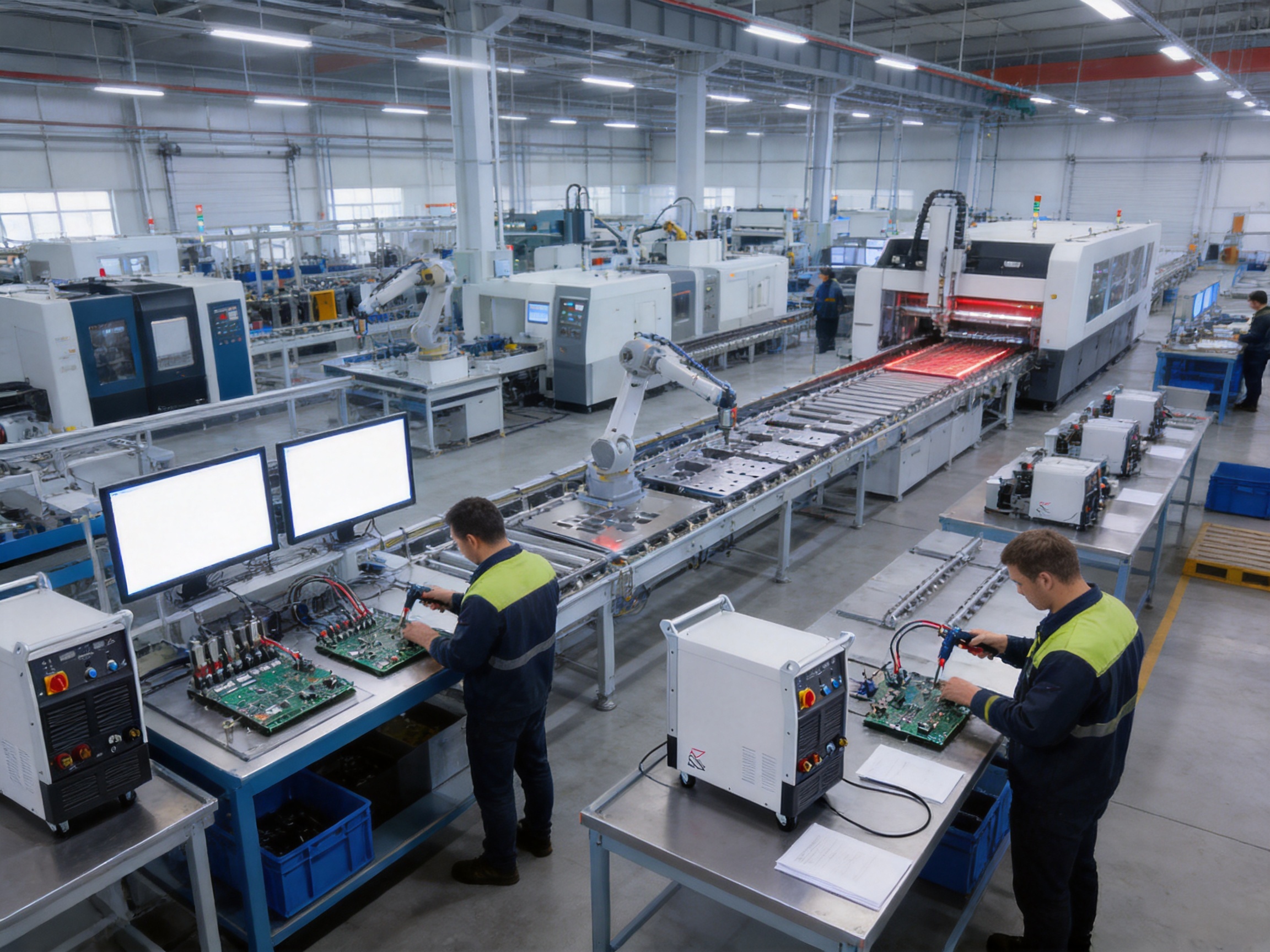
The machine is suitable for metal fabrication workshops, industrial equipment manufacturers, vehicle component producers, construction contractors, electrical enclosure manufacturers, insulation system installers, and maintenance departments.
In construction and structural fabrication, studs can be used to attach supports, brackets, insulation materials, cable management components, and secondary fixtures. In vehicle production and repair, stud welding can provide mounting points without creating visible holes in selected panels.
In electrical cabinets and control enclosures, welded studs can support internal components, grounding points, cable channels, and protective covers. In HVAC and insulation work, pins and studs can be used to secure insulation layers, cladding, and related components.
In general machinery production, stud welding is useful for attaching covers, sensors, brackets, guards, pipe supports, and service components. The process is particularly attractive where a clean external surface and rapid internal attachment are required.
Before installation, confirm the machine model, supply voltage, frequency, phase arrangement, rated current, available circuit capacity, and grounding method. The installation area should be dry, clean, adequately ventilated, and protected from excessive dust, corrosive vapors, rain, and mechanical impact.
Inspect the power cable, welding cable, torch, grounding cable, connectors, and control switch before energizing the machine. Damaged insulation, loose terminals, overheated connectors, or exposed conductors must be corrected by qualified service personnel.
After connection, verify the direction and stability of the electrical supply, inspect the display, and test the torch switch and contact functions. A commissioning test should be performed on representative scrap material before production begins.
The workpiece surface should be clean and free from heavy rust, oil, paint, scale, moisture, and other contamination unless the selected procedure specifically allows otherwise. The grounding connection should be secure and positioned to provide a reliable electrical path.
Operators should begin with conservative test settings and adjust current and time based on the stud diameter, material, and joint result. Production parameters should be recorded once an acceptable weld has been established.
Stud welding involves high electrical current, heat, sparks, ultraviolet radiation, molten metal, fumes, and mechanical hazards. Operators should use appropriate welding helmets or eye protection, flame-resistant clothing, gloves, safety footwear, and hearing protection where necessary.
Work areas should be screened to protect nearby personnel from arc radiation and sparks. Flammable materials must be removed or shielded. Adequate ventilation or local exhaust should be provided, particularly when coatings, paints, oils, or plated surfaces may generate fumes.
The machine should be switched off and isolated before maintenance, internal inspection, cable replacement, or electrical repair. Only qualified technicians should open the enclosure or work on high-voltage circuits.
Correct handling of long studs is also important. Long components can create a striking or entanglement hazard if they are not supported. Workpieces should be secured, and the operator should maintain a stable stance while positioning the torch.
Safety procedures should be integrated into the company’s training program, risk assessment, emergency plan, and preventive maintenance schedule.
Routine maintenance begins with visual inspection. Check the enclosure, ventilation openings, control panel, cables, torch, ground connection, connectors, and external fasteners. Look for discoloration, overheating, loose parts, damaged insulation, unusual noise, or abnormal odor.
The torch and stud holder are wear components. They should be kept clean and replaced when damaged or when their condition begins to affect alignment, contact, or repeatability. Welding cables should not be sharply bent, crushed, dragged over abrasive surfaces, or exposed to unnecessary heat.
Cooling passages should remain unobstructed. In dusty environments, cleaning intervals may need to be shortened. Internal cleaning should follow the manufacturer’s instructions and should be performed only after electrical isolation.
Maintenance records should identify the date, machine hours or production quantity, observed condition, corrective action, and replacement parts. These records can help identify recurring problems and support warranty or service claims.
Because the machine contains electronic control components, unauthorized modifications should be avoided. Replacement parts should meet the required electrical and thermal ratings. The use of unsuitable components can affect safety, certification, output stability, and warranty coverage.
When purchasing the RSN-1000/2000 Stud Welder, the buyer should request a complete technical quotation. The quotation should identify the exact model, current capacity, supply voltage, frequency, stud diameter range, stud length range, welding method, torch type, grounding arrangement, included accessories, packaging, warranty, and delivery terms.
The supplied materials contain both RSN-1000 and RSN-2000 references, while the detailed table is for RSN-1000 and one descriptive sentence refers to RSN-1200. This should be clarified before purchase. A correct model comparison should include output current, duty cycle, input requirements, physical dimensions, weight, and supported stud range.
Customers should also ask whether the listed rated input power is expressed in kilowatts or another manufacturer-specific format, and whether the machine is configured for the local electrical standard. Documentation should be supplied in the language required by the end user and regulatory authority.
For large projects, buyers may request a sample welding trial. The trial can confirm compatibility with the customer’s stud type, base material, thickness, surface treatment, and production method. It can also help determine whether additional tooling, protective gas equipment, or special consumables are required.
The purchase price is only one part of the economic evaluation. Total cost of ownership includes energy consumption, consumables, torch components, maintenance, downtime, training, inspection, rework, and service support.
A machine with accurate timing and monitoring can reduce the number of failed welds and rejected components. Lower rework can offset a higher initial investment, especially in high-volume production. Efficient operation can also reduce the time required to attach each stud and decrease labor cost per finished assembly.
The machine’s power factor and efficiency are relevant to operating cost, although actual energy consumption depends on the welding current, duty cycle, job mix, and local electricity price. Buyers should evaluate the expected workload rather than relying only on nameplate figures.
Availability of technical support and replacement parts is another important factor. A supplier that can provide documentation, troubleshooting assistance, and compatible components may reduce the cost of extended downtime.
A professional stud welding program should include documented procedures. These procedures should define material preparation, stud identification, machine settings, grounding, torch positioning, inspection frequency, acceptance criteria, and corrective actions.
Operators should be trained to recognize common defects. Incomplete fusion may result from insufficient energy, poor contact, contamination, incorrect stud movement, or unsuitable material combinations. Excessive penetration, burn-through, or distortion may result from excessive current or welding time.
Misalignment can occur when the torch is not held perpendicular to the workpiece or when the stud holder is worn. Spatter and irregular collars may indicate unsuitable parameters, surface contamination, or an incorrect protective method.
Statistical process control can be used in high-volume production. Recording weld results, parameter changes, and defect rates helps managers identify trends before they become major quality problems. A digitally controlled machine is well suited to this approach because its settings can be documented more consistently.
Stud welding can reduce the need for drilled holes, bolts, nuts, brackets, and filler materials in suitable applications. This may lower material consumption and simplify assembly logistics. The short welding cycle can also reduce the time that a workpiece is exposed to heat.
Reduced distortion can lower the need for post-weld straightening, grinding, refinishing, or replacement. A cleaner production process can improve workplace organization and reduce secondary operations.
Environmental performance depends on the entire process, including electricity generation, consumable production, ventilation, coating removal, maintenance, and end-of-life recycling. Users should manage metal waste, packaging, damaged electronic components, and used consumables according to local regulations.
Energy-saving practices include selecting appropriate current and time, avoiding unnecessary idle operation, maintaining ventilation systems, and following the rated duty cycle. Proper maintenance can also prevent inefficient operation caused by loose connections, damaged cables, or blocked cooling paths.
Welding equipment combines power electronics, thermal management, mechanical design, software or microprocessor control, electrical safety, and user interface engineering. Experience in only one of these areas is not enough to produce a dependable industrial machine.
Kende’s stated history in welding equipment, chargers, and heaters provides experience with power conversion, current delivery, control circuits, heat management, enclosure production, and international compliance. Its broad product portfolio also supports shared engineering knowledge across related product categories.
The reported use of automated assembly, laser cutting, robotic processing, ERP, and MES systems suggests that the company has invested in repeatable manufacturing rather than relying entirely on manual assembly. Its research centers and technical personnel further support product development and continuous improvement.
For distributors and industrial customers, this background can make product selection more secure. A well-established manufacturer is more likely to maintain product documentation, respond to technical questions, and develop models for different regional requirements.
The machine is used to weld metal studs, pins, and similar fasteners to a metal workpiece. Applications include construction, vehicle components, electrical enclosures, insulation systems, machinery, brackets, supports, and general fabrication.
The supplied technical table lists a welding current adjustment range of 100 to 1,000 amperes and a maximum output current of 1,000 amperes.
The published table specifies weldable stud diameters from 3 to 10 millimeters. The broader product description refers to a related model with capacity up to 12 millimeters. The exact model should be confirmed with the supplier before purchase.
The product information lists carbon steel, stainless steel, copper, aluminum, and their alloys. Successful welding requires suitable studs, correct surface preparation, and application-specific current and time settings.
The welding time can be set between zero and three seconds according to the supplied product description. The correct time depends on the material, stud size, workpiece thickness, and selected procedure.
Yes. The machine uses microprocessor control technology and an LCD display. The interface supports parameter selection and adjustment and provides operating information to the user.
The product description states that the torch switch, torch-to-workpiece contact, protective gas, and temperature control can be tested. These functions help identify operating and setup problems.
The published RSN-1000 specification requires a three-phase 380-volt supply with a tolerance of plus or minus 15 percent and a frequency of 50 or 60 hertz. Electrical installation should be checked by qualified personnel.
The machine has a listed rated duty cycle of 15 percent. It is intended to operate within that rating, with appropriate cooling intervals and ventilation. Continuous operation at maximum output beyond the rated duty cycle is not recommended.
The supplied technical table lists a weight of 45 kilograms. This makes the unit suitable for workshop mobility, although safe handling equipment may be needed when relocating it.
Check the supply, grounding, cable condition, torch, stud holder, workpiece surface, contact condition, parameter settings, ventilation, and protective equipment. A test weld should be completed on representative material before production starts.
Its main advantages include microprocessor control, LCD operation, adjustable welding time, a wide current range, contactless main-circuit control, operating-condition testing, and support from an established manufacturer with advanced production and research capabilities.
Yes. The supplied information includes RSN-1000/2000, RSN-1000, and a reference to RSN-1200. Buyers should obtain a formal datasheet for the exact model, especially when the required stud diameter exceeds 10 millimeters.
The machine is manufactured by Zhejiang Kende Mechanical & Electrical Co., Ltd., a Chinese producer of welding machines, chargers, heaters, and related electrical equipment.
The RSN-1000/2000 Stud Welder is designed for manufacturers and professional workshops that need fast, repeatable, and controlled stud attachment. Its principal strengths include high-current output, microprocessor control, LCD operation, adjustable welding time, testing of key operating conditions, compatibility with several common metals, and a compact industrial structure.
The published RSN-1000 data supports applications involving studs from 3 to 10 millimeters, with a current range of 100 to 1,000 amperes and a three-phase 380-volt supply. Its 15 percent rated duty cycle, 80 percent efficiency, 0.95 power factor, Class F insulation, and IP21S protection classification provide important information for installation and production planning.
Compared with simpler stud welding equipment, the machine offers better parameter visibility, more controlled timing, and more systematic operating feedback. These features can reduce setup errors, improve repeatability, and limit rework when used with suitable procedures and trained operators.
The manufacturer’s reported research centers, technical personnel, automated production equipment, laser cutting, robotic processing, ERP and MES systems, international certifications, and standardization involvement further strengthen the product’s industrial position. These capabilities support not only the initial manufacture of the machine but also engineering development, quality management, export compliance, and after-sales service.
Prospective users should confirm the exact model, electrical configuration, stud range, duty cycle conditions, accessories, certification documents, and sample-welding requirements before ordering. When properly selected, installed, maintained, and operated, the RSN-1000/2000 can provide an efficient alternative to drilling, bolting, and slower manual attachment methods in a wide range of metal fabrication applications.
1. Zhejiang Kende Mechanical & Electrical Co., Ltd. Product information for the RSN-1000/2000 Stud Welder.
2. Zhejiang Kende Mechanical & Electrical Co., Ltd. Technical specification data for the RSN-1000 Stud Welder.
3. International Organization for Standardization. General principles and terminology related to welding processes and welding quality.
4. International Electrotechnical Commission. Safety and performance considerations for arc welding equipment.
5. American Welding Society. Technical guidance on stud welding processes, equipment, consumables, and inspection.
6. Manufacturer information concerning Kende research and development facilities, production systems, certifications, and industrial product portfolio.
Recommended Products

Contact Us
No.2299, Luqiao Section, Shugang Avenue, Luqiao District, Taizhou, 318057 Zhejiang, PR China.
+86-576-82431568
 Privacy
China Welding Machine Factory
 English
 中文简体
 русский
 Español
 عربى
 Français
 Português
 Deutsch
 Український