Email: [email protected]
Email: [email protected]

Blog
 2026.09.22
 Blog
Welding equipment performs under demanding conditions. High electrical currents, heat, vibration, dust, metal spatter, compressed gases, and repeated mechanical movement all place stress on the components inside and around a machine. Even a well-designed welding system eventually requires inspection, maintenance, adjustment, or replacement of individual parts. Reliable welding machine parts are therefore essential for maintaining output quality, operator safety, equipment service life, and production continuity.
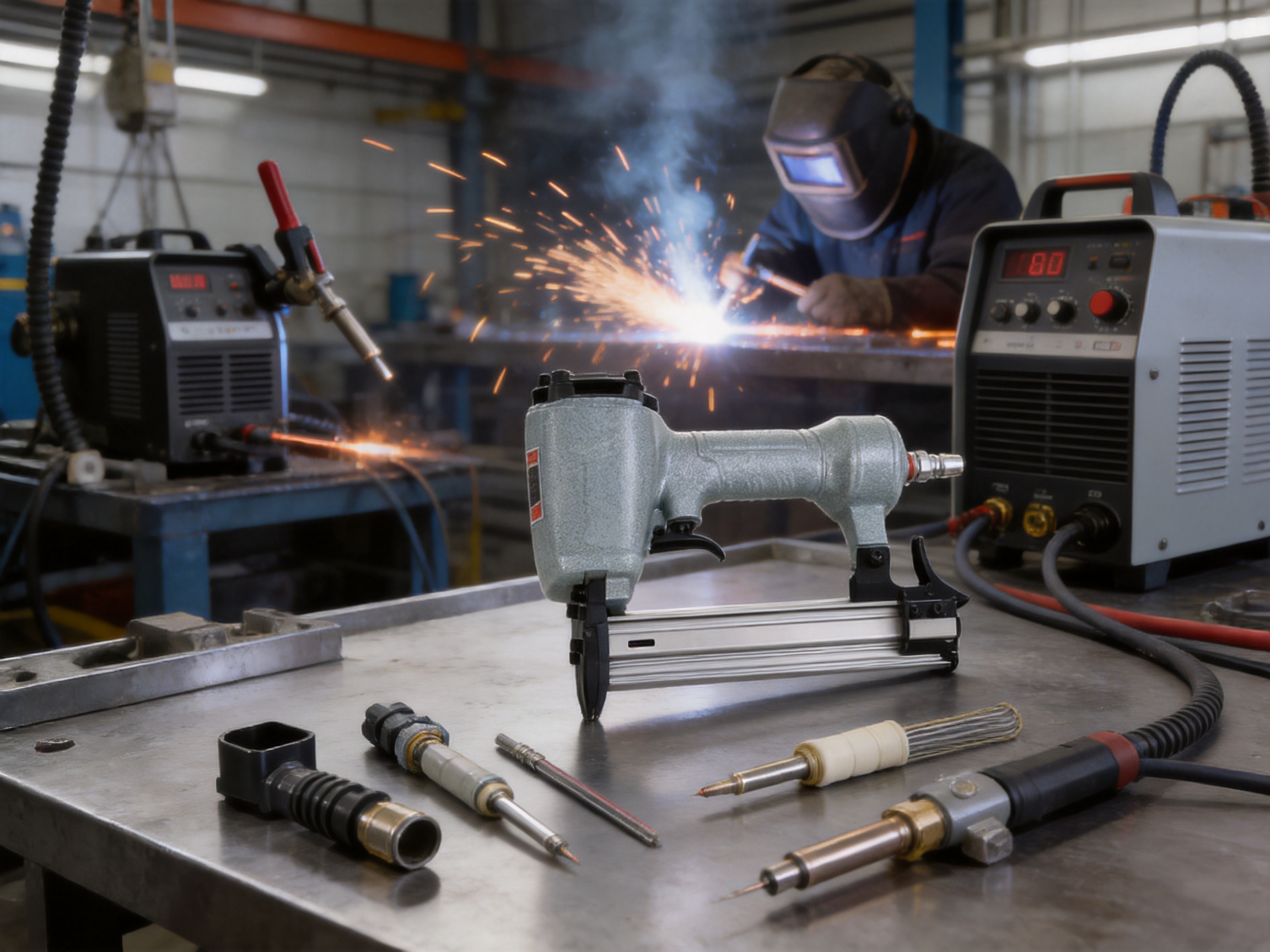
The parts supplied for modern welding equipment are used across a broad range of applications, including manual metal arc welding, MIG/MAG welding, flux-cored welding, TIG welding, plasma cutting, submerged arc welding, resistance spot welding, battery charging, and heating equipment. These parts may support power conversion, current transmission, gas delivery, cooling, wire feeding, mechanical movement, control functions, or external protection.
For industrial users, the value of a replacement part is not determined only by its purchase price. The more important considerations include compatibility, dimensional accuracy, electrical performance, thermal stability, resistance to wear, ease of installation, and availability over the complete service life of the equipment. A correctly selected part can help reduce unplanned downtime, maintain stable welding parameters, and prevent secondary damage to more expensive assemblies.
Zhejiang Kende Mechanical & Electrical Co., Ltd. supplies welding equipment and related accessories for industrial and domestic users. Its product range covers MMA or stick welding machines, MIG/MAG welding machines, no-gas flux-cored machines, TIG welding machines, plasma cutting equipment, stud welding machines, submerged arc welding systems, battery chargers, and electric, gas, and oil heaters. Within this product environment, parts are important because they connect machine design with practical maintenance and long-term field operation.
A welding machine is not a single isolated device. It is a coordinated system made up of electrical, electronic, mechanical, thermal, and user-interface elements. The welding power source must convert and regulate electrical energy. The torch or electrode holder must transfer current to the workpiece. Cables must carry current safely. Gas or air must reach the correct point at a stable flow rate. Cooling systems must control temperature. Switches, connectors, control boards, and protective devices must work together to support safe operation.
When one of these elements deteriorates, welding quality may decline even if the primary power unit remains functional. A damaged cable can create voltage drop and excessive heating. A worn torch component can cause unstable arc initiation. A blocked cooling passage can raise internal temperature and activate protection systems. A loose connector can produce intermittent operation or localized arcing. A worn wire-feeding component can create inconsistent deposition and poor bead appearance.
Parts provide a practical way to restore equipment performance without replacing an entire machine. This is especially important for workshops, fabrication plants, construction contractors, agricultural repair operations, and distributors that need to control maintenance costs. Properly selected accessories also make it possible to adapt one power source to different welding processes or applications.
For example, an operator may use a machine for manual electrode welding in one situation and require a TIG torch, earth clamp, or different cable configuration in another. A production line may need replacement wire-feed components after extended operation. A service center may need electrical or mechanical parts for several machine models. A complete and well-organized parts supply system supports these requirements more efficiently than emergency sourcing from multiple unrelated suppliers.

Parts
Manual metal arc welding, commonly called MMA or stick welding, uses a coated electrode held in an electrode holder. The process is valued for its simplicity, portability, and ability to operate in outdoor or difficult conditions. Common supporting parts include electrode holders, earth clamps, welding cables, cable connectors, control knobs, carrying handles, cooling fans, switches, and protective panels.
The electrode holder must grip the electrode securely while maintaining reliable electrical contact. Its insulation must also protect the operator from accidental contact with conductive surfaces. The earth clamp must attach firmly to the workpiece or welding table and maintain a stable return path. If the clamp is weak, contaminated, or mechanically damaged, arc stability may suffer and the connection may become hot.
Welding cables for MMA equipment must be selected according to current rating, length, flexibility, insulation quality, and working environment. A cable that is too small for the required current may overheat. A cable that is unnecessarily long may increase electrical resistance and reduce practical performance. Flexible construction is important because manual welding often requires repeated movement, bending, and repositioning.
Other MMA parts may include front-panel controls, potentiometers, indicator lamps, thermal protection components, fan assemblies, and inverter-related electronic modules. Because inverter welding machines operate at high switching frequencies and contain sensitive electronic components, correct replacement and careful installation are essential.
MIG and MAG welding machines use a continuously fed wire electrode and shielding gas. MIG generally uses an inert gas or gas mixture, while MAG uses active gas components. The process offers high productivity and is widely used for steel, stainless steel, aluminum, vehicle repair, structural fabrication, and general manufacturing.
Important MIG/MAG parts include welding torches, contact tips, nozzles, liners, diffuser components, trigger assemblies, torch cables, wire-feed rollers, drive motors, pressure arms, guide tubes, gas hoses, connectors, and control components. Each part contributes to stable wire delivery and consistent arc behavior.
The contact tip transfers current to the continuously moving wire. Its internal diameter must match the wire size and application. Excessive wear can create poor electrical contact, irregular wire feeding, and unstable arc performance. The nozzle directs shielding gas around the arc and weld pool. Spatter accumulation or physical damage can disturb gas coverage and increase the risk of porosity.
The liner guides the wire from the feeder to the contact tip. It must be suitable for the wire material and diameter. Steel wire, stainless steel wire, aluminum wire, and special alloy wires can impose different requirements on the liner material and internal surface. A contaminated or kinked liner can increase feeding resistance and cause bird-nesting, inconsistent deposition, or frequent wire stoppage.
Wire-feed rollers must match the wire profile. V-groove rollers are commonly associated with solid wire, while U-groove configurations may be used for softer wire materials. Incorrect roller pressure can deform the wire or cause slippage. Properly designed replacement rollers and pressure assemblies help preserve steady feed speed and reduce interruptions.
TIG or GTAW welding uses a non-consumable tungsten electrode and a shielding gas, usually argon or an argon-based mixture. It is known for precise heat control, clean welds, and suitability for stainless steel, aluminum, thin materials, and applications where appearance and weld quality are important.
TIG-related parts may include torches, torch heads, collets, collet bodies, back caps, ceramic gas nozzles, tungsten electrodes, gas hoses, switches, remote controls, foot pedals, connectors, and cable assemblies. The gas path must remain clean and leak-free because TIG welding is highly sensitive to shielding quality.
The collet holds the tungsten electrode and transfers current through the torch assembly. The collet body helps distribute shielding gas around the electrode. The ceramic nozzle shapes the gas flow and provides electrical insulation. Selection should be based on electrode diameter, welding current, torch design, and the required access to the joint.
TIG torches may be air-cooled or water-cooled. Air-cooled torches are convenient for lower and moderate current applications because they are simple and portable. Water-cooled torches are useful for higher-duty-cycle work because circulating coolant helps manage heat. Replacement parts must be compatible with the cooling arrangement and torch series.
Air plasma cutting equipment uses an electrical arc and compressed air or another suitable gas to cut electrically conductive materials. Consumable parts are exposed to intense heat and must be replaced periodically. Typical plasma cutting parts include electrodes, nozzles, swirl rings, shield caps, torch heads, trigger switches, air hoses, and cable assemblies.
The electrode transfers current to the plasma arc, while the nozzle constricts the arc and controls the shape of the cutting jet. The swirl ring helps distribute gas around the electrode and stabilize the plasma. The shield cap protects the front of the torch and may help maintain the correct stand-off distance.
Worn plasma consumables can produce a rough cut, excessive bevel, increased dross, irregular pierce performance, or difficulty initiating the arc. Using a matched set of consumables is generally more effective than replacing only one visibly damaged component. Correct air pressure, clean compressed air, proper torch height, and suitable cutting current are also necessary for long part life.
Submerged arc welding systems use a continuously fed wire and granular flux to create high deposition rates and deep penetration. Related parts may include wire-feed assemblies, contact components, flux delivery systems, recovery components, welding heads, travel mechanisms, cables, and control elements. Because submerged arc equipment is often used in long production cycles, mechanical durability and reliable alignment are particularly important.
Resistance spot welding machines use pressure and electrical current to create localized welds between overlapping sheets or components. Parts may include electrodes, electrode holders, arms, cables, transformers, switches, pressure mechanisms, cooling lines, and control units. Electrode geometry and condition directly influence current concentration, nugget formation, indentation, and repeatability.
Replacement components for resistance welding should be selected according to machine capacity, material type, electrode dimensions, cooling requirements, and operating cycle. In automated systems, alignment and repeatable movement are as important as electrical conductivity.
One major advantage of professionally manufactured parts is controlled compatibility. A part must fit mechanically, connect electrically, and operate correctly within the intended system. Small differences in thread size, connector shape, cable length, mounting hole position, or control signal can create installation problems.
Manufacturers with experience across multiple welding technologies understand the relationship between accessories and complete machines. This knowledge helps support the development of parts that are suitable for particular power ratings, process types, and user environments. It also helps distributors offer more practical guidance when customers are uncertain about the correct replacement.
Welding involves high current and, in many cases, rapid changes in voltage and current. Conductive parts must provide a stable path with low and predictable resistance. Poor connections can generate localized heat, energy loss, and arc instability. Properly designed cables, connectors, electrode holders, clamps, contact tips, and torch assemblies help maintain the intended electrical performance of the machine.
Stable electrical performance is especially important for inverter equipment. An inverter power source may include high-frequency switching, electronic regulation, protection circuits, and feedback control. The external welding circuit must work with the characteristics of the power source. Incompatible or low-quality accessories can make it harder to achieve the performance expected from the inverter design.
Parts used near the arc are exposed to heat, ultraviolet radiation, molten spatter, mechanical impact, and repeated thermal cycling. Professional manufacturing takes these conditions into account when selecting insulation, conductive materials, plastics, ceramics, seals, and mechanical structures.
Wear resistance is also important for components that move continuously. Wire-feed rollers, liners, trigger assemblies, hinges, pressure arms, and travel mechanisms may operate thousands of times during their service life. Accurate dimensions and appropriate surface finish can reduce friction and help maintain predictable movement.
Replacing a specific worn component is often more economical than replacing a complete welding machine. It also reduces waste and avoids the disruption associated with transferring production to new equipment. A structured parts program allows service teams to keep commonly used items in stock and schedule replacements during planned maintenance periods.
For an exporter or distributor, standardized parts can simplify inventory management. Parts shared across related machine families may reduce the number of separate stock-keeping units required. Clear product identification, packaging, and technical information further reduce the risk of ordering errors.
Welding equipment is used in many countries with different electrical systems, standards, working conditions, and application preferences. A manufacturer that develops multiple classes of welding and heating products is more familiar with regional requirements and product adaptation.
The supplied product range includes equipment for industrial and domestic users, as well as products designed for different welding processes. This broad experience can help support parts selection for different voltage requirements, machine configurations, accessories, and user expectations. It also provides a foundation for developing new products according to regional or customer needs.
Reliable parts begin with product development rather than final assembly alone. A component must be considered in relation to the complete machine, the welding process, the duty cycle, the operator, and the environment. Engineering teams can evaluate electrical loading, heat generation, mechanical stress, assembly requirements, service access, and expected wear.
Zhejiang Kende Mechanical & Electrical Co., Ltd. maintains a Zhejiang Provincial Research and Development Center, an Enterprise Technology Center, and an Intelligent Welding Technology Research Institute. The company reports having 98 research and development personnel and holding invention patents, utility model patents, appearance patents, and software copyrights. These resources support the development and refinement of welding equipment and associated parts.
Research capability is valuable for parts because many failures originate at the interface between components. A torch, cable, connector, control board, cooling fan, or mechanical bracket must function as part of a system. Design experience across several product categories makes it easier to identify these interfaces and improve them through testing and engineering revision.
The company uses several management and manufacturing systems, including OA office automation, Toyota Production System methods, ERP K3, and MES management systems. These systems can support production planning, material control, process traceability, manufacturing coordination, and quality information management.
For parts production, process control is particularly important because small components often require consistent dimensions and repeatable assembly. An organized production system helps coordinate raw materials, tooling, work instructions, inspection points, packaging, and shipment. It also assists manufacturers in managing many product variants without losing control of identification and configuration.
MES-based production management can connect manufacturing activities with production information and quality records. ERP systems help coordinate purchasing, inventory, orders, and production requirements. When these systems operate together, they can improve responsiveness for both standard products and customer-specific requirements.
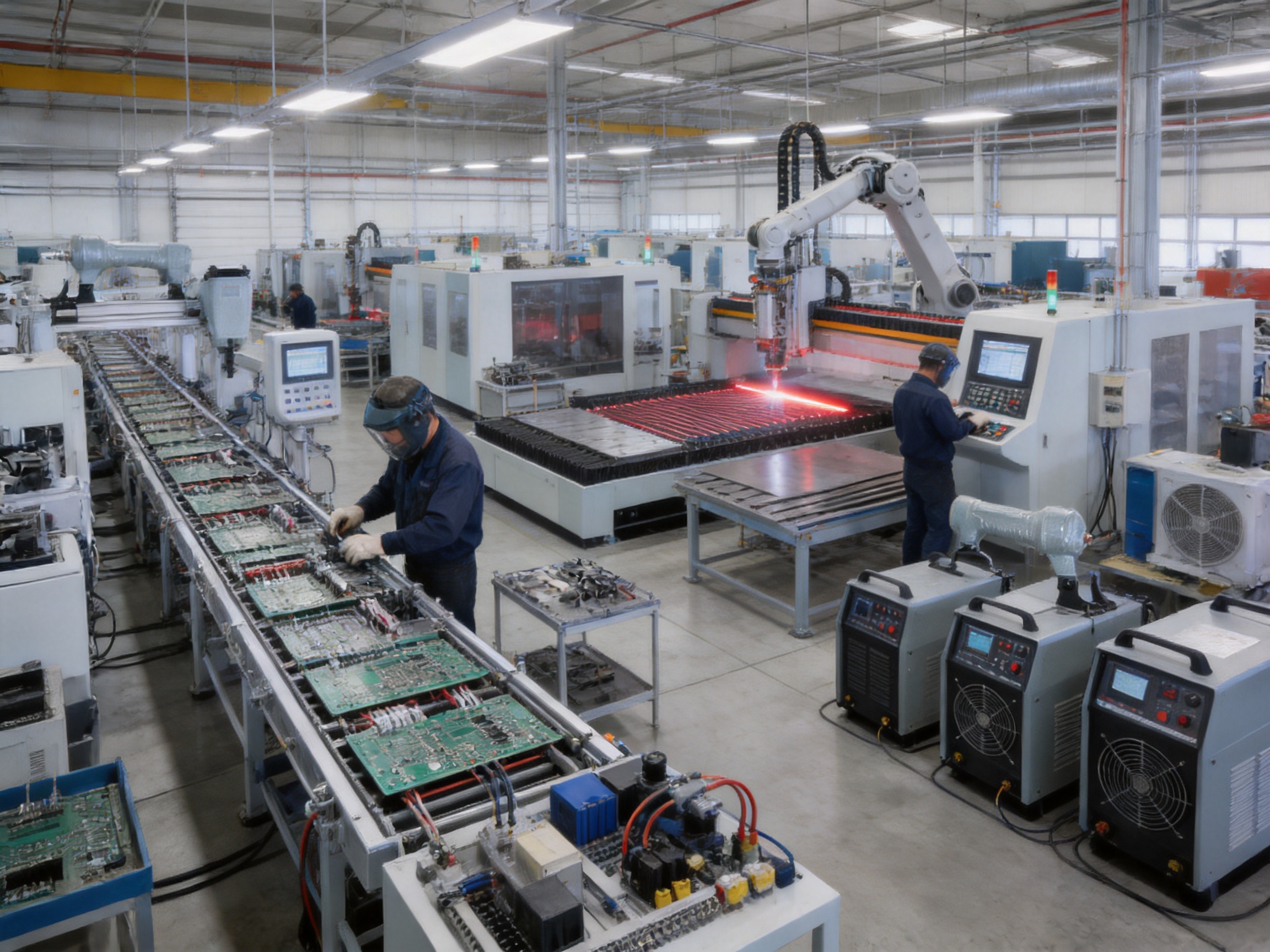
The manufacturing facilities use advanced automatic patching, plug-in and welding systems, robot processing, laser cutting, and other technologies. Automated patching and insertion processes are important for electronic control boards, where consistent component placement and solder quality affect reliability.
Robotic processing can improve repeatability for selected mechanical or welding operations. Laser cutting can create accurate sheet-metal parts, covers, brackets, panels, and other components with clean profiles and consistent dimensions. These methods can support the production of machine housings, internal structures, protective parts, and accessory components.
Automation does not eliminate the need for engineering and inspection. Instead, it provides a more controlled foundation for repetitive work. Skilled personnel remain necessary for process setup, equipment maintenance, quality evaluation, troubleshooting, and product improvement.
The company covers approximately 120,000 square meters and employs about 600 people. It reports annual exports of nearly 1.5 million units and annual production capacity of approximately 2 million units. This scale indicates experience in managing substantial production volumes, international distribution, and multiple equipment categories.
Large-scale manufacturing can provide several advantages for parts customers. Production resources may be easier to allocate, common materials may be sourced more efficiently, and quality processes can be applied across wider product families. Manufacturing volume also creates practical experience with recurring field requirements and common service issues.
At the same time, scale must be combined with flexibility. Welding distributors and industrial users may require different cable lengths, connectors, voltage configurations, packaging formats, or accessory combinations. The ability to develop new products according to different regional, national, or customer needs is therefore important.
Welding machine parts are directly related to electrical safety, thermal management, operator protection, and process reliability. The applicable requirements depend on the part, the complete machine, the destination market, and the intended use. Customers should evaluate replacement parts within the compliance framework of the equipment in which they will be installed.
Zhejiang Kende Mechanical & Electrical Co., Ltd. holds or works with international product certifications that include GS, CE, EMC, ERP, US ETL, UKCA, and China CCC. These certifications cover different regulatory or market requirements and may apply to specific product families rather than every individual accessory. Buyers should request the relevant documentation for the exact product and configuration.
Electromagnetic compatibility is important for inverter welding equipment because switching circuits can generate electrical noise. Properly designed internal layouts, wiring, grounding, shielding, filtering, and control components help reduce interference. External accessories must also be installed correctly to avoid creating additional noise or safety problems.
Thermal safety is another important consideration. Fans, heat sinks, thermal sensors, insulation, protective covers, and ventilation components must function correctly. A replacement part that appears mechanically similar may not provide the required thermal performance. For this reason, original specifications, machine manuals, and authorized technical guidance should be consulted whenever possible.
The company is also described as one of the national standard drafting units of the National Welding Machine Standardization Committee. It has participated in drafting, formulating, and revising 20 national standards and has led the drafting of one group standard. Participation in standardization work can provide useful insight into performance expectations, terminology, safety considerations, and industry development.
The first step is to identify the machine type and welding process. A part for an MMA inverter is not automatically suitable for a MIG/MAG machine, even if the electrical ratings appear similar. TIG, plasma, submerged arc, and resistance welding equipment each use different accessory structures and operating conditions.
Record the machine model, rated output, input voltage, frequency, duty cycle, process mode, and production year if available. Photographs of the existing part, connector, mounting position, and nameplate can also help confirm the configuration.
Electrical components and current-carrying accessories must be selected according to the actual operating range. Important information may include maximum welding current, cable cross-section, insulation rating, connector capacity, voltage rating, polarity, and duty cycle.
A part that is adequate for short intermittent use may not be suitable for continuous industrial operation. Similarly, the maximum current printed on a component may depend on ambient temperature, cable length, cooling conditions, and duty cycle. Technical data should therefore be reviewed as a complete set rather than relying on one rating alone.
Mechanical compatibility includes more than overall size. Confirm thread dimensions, mounting holes, shaft diameter, contact-tip length, nozzle fit, torch connection, cable entry, handle design, and the direction of assembly. For moving mechanisms, also check alignment, travel distance, tension adjustment, and clearance.
Precise dimensions are especially important for wire-feed parts and plasma consumables. A small mismatch can lead to wire slippage, gas leakage, poor arc concentration, or accelerated wear.
Workshop, construction, outdoor, marine, automotive, and automated production environments place different demands on parts. Outdoor work may involve dust, moisture, impact, and long cable runs. A fabrication plant may require high duty cycles and frequent movement. A robotic cell may require repeatable positioning and resistance to continuous flexing.
Consider temperature, humidity, dust, corrosive substances, vibration, spatter, and accessibility. The correct part should be selected for actual conditions rather than only for nominal machine compatibility.
In many applications, parts perform best when used as a matched set. A MIG/MAG torch, liner, contact tip, nozzle, diffuser, and wire-feed system must work together. Plasma cutting electrodes, nozzles, swirl rings, and shields should be selected as a compatible group. TIG torch components must match the electrode diameter, gas flow, and cooling method.
Mixing unrelated components may create hidden problems. A contact tip may fit physically but have an unsuitable bore size. A plasma nozzle may install correctly but produce poor arc constriction. A cable may connect to the machine but lack the required current capacity. Matching reduces these risks.
Before installing a replacement part, disconnect the equipment from the power supply and follow the applicable safety procedures. For gas-cooled or water-cooled torches, isolate gas and coolant sources as required. Allow hot components to cool before handling them.
Inspect the surrounding parts at the same time. Replacing a contact tip without checking the liner may provide only temporary improvement. Installing a new cable while leaving a damaged connector in service may create another failure point. A complete inspection often identifies the root cause more effectively than replacing the first visibly worn item.
Keep contact surfaces clean and tight. Oxidation, spatter, dirt, and loose fasteners increase resistance and heat. Cable connections should be secured according to the equipment design. Do not bypass protective devices, thermal sensors, fuses, or interlocks in order to keep a machine operating.
For MIG/MAG systems, inspect the wire path regularly. Remove contamination from the feeder, check roller pressure, examine the liner, and replace contact tips when the opening becomes excessively worn. Maintain correct gas flow and protect hoses from sharp edges, heat, and crushing.
For TIG systems, inspect the gas nozzle, collet, collet body, electrode, torch switch, and cable. A contaminated tungsten electrode may cause arc instability. A cracked ceramic nozzle can disturb gas coverage. A leaking gas hose can produce porosity and waste shielding gas.
For plasma cutters, inspect consumables after each significant cutting period. Excessive nozzle wear, electrode pitting, or damage to the shield cap indicates that replacement may be necessary. Clean, dry compressed air is important because oil and moisture can damage consumables and reduce cutting quality.
For MMA equipment, inspect the electrode holder, earth clamp, cable insulation, and connectors. Do not use cables with exposed conductors or damaged insulation. The work return connection should be attached to a clean, suitable surface whenever the application permits.
Maintenance records are useful for industrial users. Record the machine, part number, installation date, operating hours if available, failure mode, and replacement reason. This information can identify recurring problems and help optimize inventory.
Distributors need more than a broad product list. They need dependable supply, clear identification, consistent packaging, technical assistance, and products that can serve different customer segments. A manufacturer with welding machines, chargers, heaters, and accessories under one technical structure may provide a more coordinated sourcing solution.
Industrial buyers benefit from reducing the number of suppliers involved in routine maintenance. Consolidated sourcing can simplify purchasing, quality approval, documentation, and after-sales communication. It may also make it easier to standardize accessories across a fleet of related machines.
For original equipment manufacturers and private-label customers, product development capability is particularly important. New product requirements may involve a special enclosure, modified control panel, different connector arrangement, regional electrical configuration, or custom accessory package. A manufacturer with research personnel, production engineering, automated processing, and established management systems is better positioned to evaluate such requirements.
The company states that it can develop new products according to the needs of different regions, countries, and customers. This capability is relevant to parts as well as complete machines. A customer may require a specific cable length, connector type, torch configuration, replacement kit, or packaging format to match an existing sales channel or service program.
The cost of a welding part should be evaluated over its service life. A low initial price may become expensive if the part fails quickly, causes poor weld quality, creates rework, or damages connected components. Conversely, a reliable part can support consistent production and reduce maintenance interruptions.
Stable accessories help operators maintain welding parameters. Consistent wire feeding reduces stoppages. Proper gas delivery reduces porosity and rework. Effective cooling prevents unnecessary thermal shutdowns. Durable cables and connectors reduce electrical losses and safety risks. These effects can be more significant than the purchase price difference between two similar-looking components.
Parts also influence operator efficiency. A well-designed torch handle, flexible cable, reliable trigger, and balanced accessory can reduce fatigue during manual work. In production environments, easy replacement and clear installation procedures shorten maintenance time. In automated systems, repeatable dimensions and stable interfaces support predictable machine behavior.
Environmental performance should also be considered. Repairing a machine with a replacement part can extend its useful life and reduce the need to discard a complete power source or accessory assembly. Efficient manufacturing, responsible material use, and proper end-of-life handling can contribute to a more sustainable maintenance strategy.
Welding parts support many industries because welding equipment is used in nearly every sector involving metal fabrication or repair. Construction companies use MMA and gas-shielded welding equipment for structural work, installation, maintenance, and field repairs. Automotive repair centers use MIG/MAG, TIG, plasma cutting, and resistance welding systems for bodywork and component repair.
Metal furniture and light fabrication businesses depend on reliable torches, cables, contact tips, wire-feed components, and cutting accessories for repeated daily production. Agricultural machinery workshops use portable welding equipment and replacement parts to repair frames, implements, trailers, and equipment components.
Manufacturers of pressure vessels, storage tanks, steel structures, machinery, and pipelines may use MIG/MAG, TIG, submerged arc, or specialized automated welding systems. These operations often place high demands on duty cycle, repeatability, and maintenance planning.
Small workshops and domestic users also require dependable accessories. Although their operating hours may be lower, ease of use, safety, portability, and straightforward replacement remain important. A broad accessory range allows users to maintain equipment without investing in a complete new machine for every task.
Parts are sometimes treated as simple commodities, but their performance depends on engineering details and production discipline. Electrical contact pressure, insulation thickness, material hardness, thermal resistance, connector geometry, gas-path design, and mechanical tolerances all influence actual service behavior.
A manufacturer with experience in complete welding machines can evaluate parts in real operating conditions. Its engineers can observe how an accessory affects arc initiation, current delivery, cooling, wire feeding, gas coverage, cutting performance, and operator handling. This system-level perspective is a competitive advantage compared with suppliers that only distribute generic components.
Manufacturing depth also supports faster problem solving. If a customer reports overheating, poor wire feeding, unstable plasma cutting, or premature cable wear, the manufacturer can investigate the entire interface instead of considering the part in isolation. Product design, production, testing, and field feedback can then be connected through a structured improvement process.
| Evaluation Area | Questions to Consider | Why It Matters |
|---|---|---|
| Machine compatibility | Does the part match the machine model, process, connector, and mounting arrangement? | Prevents installation errors and incompatible operation. |
| Electrical capacity | Are the current, voltage, insulation, and duty-cycle ratings suitable? | Reduces overheating, voltage loss, and electrical risk. |
| Mechanical accuracy | Do dimensions, threads, shafts, holes, and interfaces match the original configuration? | Supports secure assembly and correct movement. |
| Thermal resistance | Can the material withstand the heat and duty cycle of the application? | Improves service life near the arc and other hot areas. |
| Consumable matching | Are related components designed to work together? | Helps maintain stable gas flow, wire feeding, and arc performance. |
| Documentation | Are installation instructions, specifications, and safety information available? | Supports correct maintenance and reduces service errors. |
| Supply capability | Can the supplier provide repeat orders and related product families? | Helps distributors and factories maintain inventory continuity. |
| Compliance | Does the product belong to a certified or documented equipment configuration? | Supports market access, safety review, and customer confidence. |
Welding machine parts are replacement, maintenance, or accessory components used with welding and cutting equipment. They may include cables, clamps, electrode holders, torches, contact tips, nozzles, liners, rollers, connectors, switches, fans, control components, cooling parts, and protective structures.
No. MMA, MIG/MAG, TIG, plasma, submerged arc, and resistance welding systems operate differently and use different accessories. A part must be matched to the machine type, current range, process, dimensions, and operating conditions.
Start with the machine model and nameplate information. Confirm the welding process, rated current, voltage, duty cycle, connector, dimensions, and original part number if available. Photographs and measurements can help suppliers verify the configuration.
The contact tip transfers welding current to the continuously fed wire. If it is worn, blocked, oversized, or incorrectly matched to the wire, electrical contact and wire feeding may become unstable. This can lead to inconsistent arcs, poor bead appearance, and more spatter.
Replacement may be needed when the electrode is deeply pitted, the nozzle opening is enlarged or irregular, cutting quality declines, arc initiation becomes unreliable, or dross and bevel increase. Consumable life also depends on current, material thickness, air quality, torch height, and cutting technique.
Air-cooled torches release heat through their body and surrounding air and are generally simpler for lower or moderate current work. Water-cooled torches circulate coolant and are better suited to higher current or longer duty cycles. Their replacement parts must match the correct cooling system.
Cables carry substantial current and may be exposed to bending, abrasion, heat, and spatter. The correct cable must have suitable current capacity, insulation, flexibility, length, and connectors. An undersized or damaged cable can overheat, reduce performance, and create a safety hazard.
Yes. Timely replacement of worn or damaged parts can restore electrical contact, cooling, wire feeding, gas delivery, and mechanical function. Routine maintenance may prevent secondary damage and allow the main power source to remain in service longer.
Certification normally applies to a specified product, model, or equipment configuration. Customers should confirm which certifications and technical documents apply to the exact part or complete machine being purchased. The requirements may differ by destination market and product category.
The manufacturer has broad welding and heating product experience, research and development facilities, approximately 98 research personnel, automated electronic assembly, robot processing, laser cutting, ERP and MES management systems, and international production and export experience. These capabilities support design consistency, process control, and product development.
The company states that it can develop new products according to the needs of different regions, countries, and customers. Custom requirements should be reviewed with the technical and sales teams, including dimensions, electrical specifications, connectors, packaging, certifications, and expected order volume.
Reliable parts are essential to the performance and service life of welding machines, plasma cutters, battery chargers, and related equipment. They maintain the electrical path, guide wire or gas, control heat, protect operators, and support the mechanical functions required for consistent work. The correct part can reduce downtime, improve weld quality, simplify maintenance, and lower the total cost of ownership.
The welding accessory and parts range associated with Zhejiang Kende Mechanical & Electrical Co., Ltd. is supported by broad experience in MMA, MIG/MAG, TIG, plasma, submerged arc, resistance welding, charging, and heating equipment. The company’s research centers, technical personnel, manufacturing systems, automated production technologies, certifications, and large-scale export capability provide a strong foundation for developing and supplying dependable products.
For buyers, the best results come from treating parts selection as an engineering and maintenance decision rather than a simple price comparison. Machine compatibility, electrical capacity, mechanical accuracy, thermal resistance, working environment, certification, documentation, and supply continuity should all be considered. With the right parts and a planned maintenance program, welding equipment can deliver more stable performance and longer productive service.
1. Manufacturer-provided company information concerning product categories, production capacity, research and development facilities, certifications, and manufacturing systems.
2. Manufacturer-provided product classification for welding accessories and parts.
3. General principles of manual metal arc, MIG/MAG, TIG, plasma cutting, submerged arc, and resistance welding equipment operation.
4. General welding equipment maintenance practices covering cables, torches, electrode holders, contact tips, liners, consumables, cooling systems, and connectors.
5. General industrial guidance on electrical safety, electromagnetic compatibility, thermal management, equipment inspection, and replacement-part selection.
Recommended Products

Contact Us
No.2299, Luqiao Section, Shugang Avenue, Luqiao District, Taizhou, 318057 Zhejiang, PR China.
+86-576-82431568
 Privacy
China Welding Machine Factory
 English
 中文简体
 русский
 Español
 عربى
 Français
 Português
 Deutsch
 Український