Email: [email protected]
Email: [email protected]

Blog
 2026.09.24
 Blog
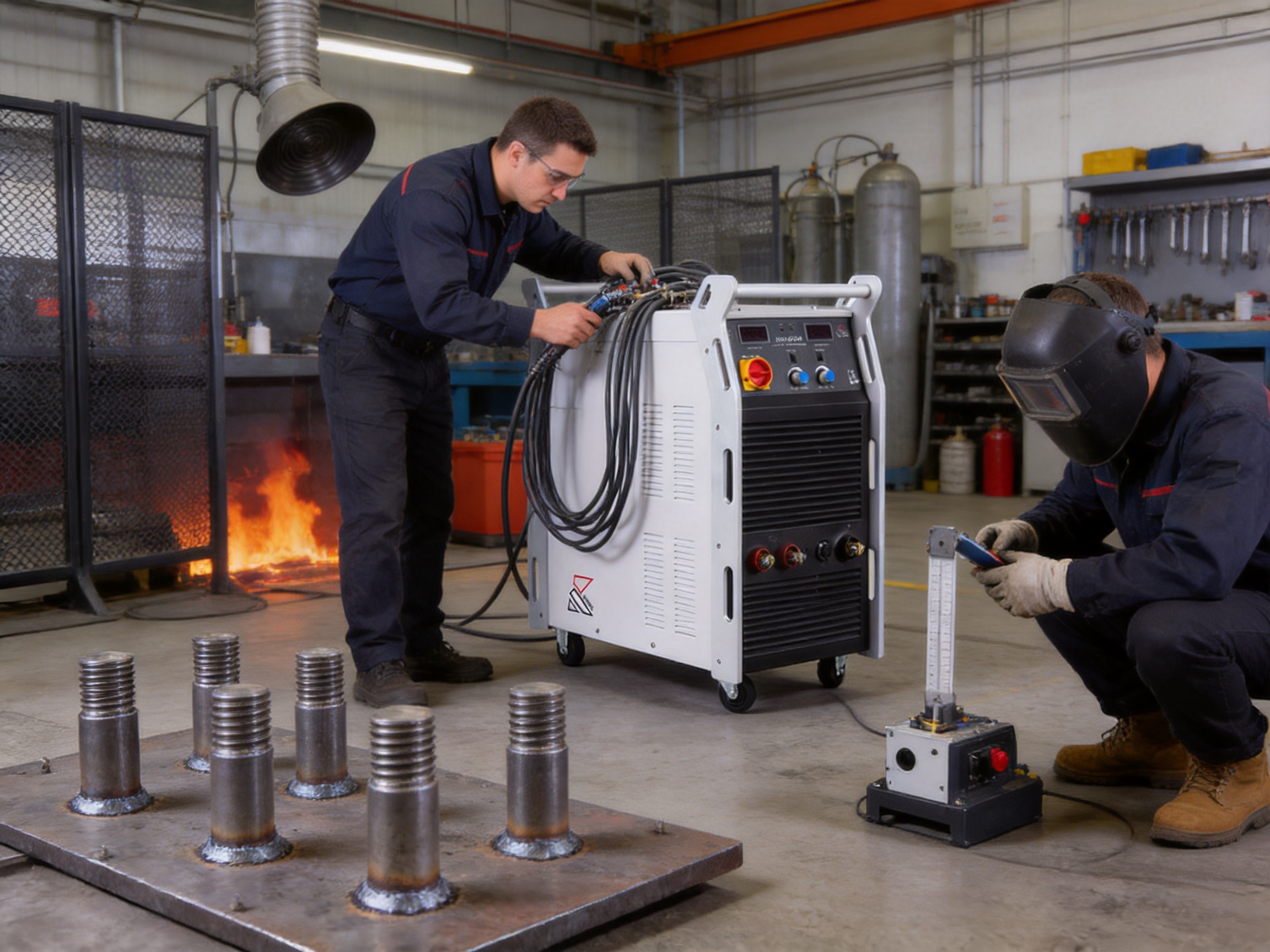
Stud welding is a specialized joining process used to attach threaded studs, pins, anchors, and other fasteners to a metal surface. It is widely applied in construction, shipbuilding, vehicle manufacturing, boilers, pressure vessels, structural steelwork, electrical equipment, machinery, and general fabrication. Compared with conventional fastening methods, stud welding can create a strong connection quickly while preserving the appearance and integrity of the opposite side of the workpiece.
The RSN-2500/3200 stud welder is designed for demanding industrial applications that require high welding current, stable arc control, reliable duty performance, and compatibility with a broad range of metal studs. It combines advanced electronic control, high output capacity, adjustable welding parameters, thermal protection, and a practical industrial structure. The equipment can be used for stud welding and manual metal arc welding, giving workshops greater flexibility than a machine restricted to one process.
Available in high-capacity configurations, the equipment is suitable for welding carbon steel, stainless steel, copper, aluminum, and related alloy studs. The RSN-2500 model can handle stud diameters in the approximate range of 16 to 25 millimeters, while the RSN-3200 version supports studs up to approximately 32 millimeters, subject to the selected process, material, stud geometry, and application conditions.
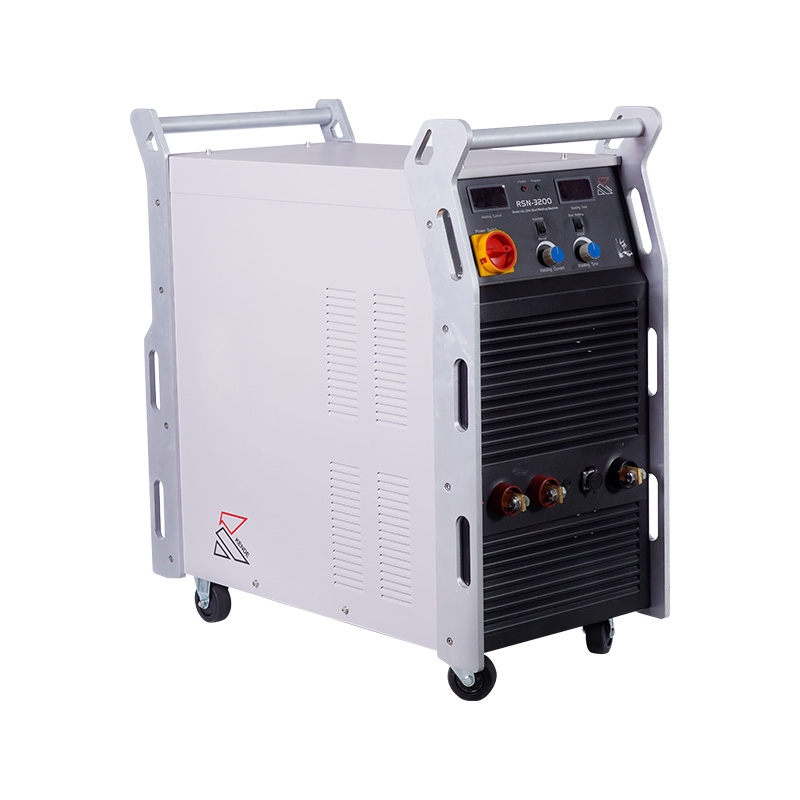
RSN-2500/3200 STUD WELDER
Stud welding creates a permanent connection by placing a metal stud against a prepared workpiece and applying a controlled electrical arc. The end of the stud and a small area of the base material are rapidly melted. The stud is then pressed into the molten region, where the materials solidify and form a strong weld joint. Because the process is highly concentrated, the heat-affected zone is generally small compared with many conventional welding operations.
This localized heating offers several practical benefits. The workpiece is less likely to suffer from distortion, discoloration, or damage on its reverse side. In many applications, there is no need to drill holes, use bolts and nuts, or perform extensive finishing work after joining. A welded stud can provide a secure anchor for insulation, cladding, brackets, pipes, panels, reinforcing components, and other parts.
Stud welding also improves productivity. Once the machine, welding gun, grounding system, and parameters have been correctly configured, operators can complete many connections in a short period. The process is especially attractive for repetitive production because the welding current and welding time can be adjusted and maintained consistently. This supports uniform results across large batches and reduces the labor associated with mechanical fastening.
In industrial manufacturing, productivity must be balanced with process control. Excessive current or welding time may produce spatter, distortion, or an oversized weld collar, while insufficient energy can result in incomplete fusion. A suitable stud welder therefore needs accurate control, dependable power delivery, clear parameter indication, and protection against overheating. These are central design features of the RSN-2500/3200 series.
The RSN-2500/3200 series is a three-phase industrial stud welding system designed for high-current applications. It operates from a 380-volt supply with a permitted variation of approximately plus or minus 15 percent. The equipment is intended for industrial workshops and production environments where a stable electrical supply and a properly rated installation are available.
The series includes high-output models with maximum welding currents of approximately 2,500 amperes and 3,200 amperes. These capacities provide the energy required for larger studs and demanding joints. The machines have a rated load duration of approximately 15 percent for the RSN-2500 and RSN-3200 configurations. The precise operating cycle should be selected according to the material, stud size, welding current, ambient temperature, and instructions supplied with the equipment.
The machine uses contactless control technology in the main circuit. This design reduces the dependence on conventional mechanical switching contacts, which can wear, arc, or require frequent maintenance under heavy current conditions. Contactless control contributes to operational reliability and supports repeatable adjustment of welding parameters.
Welding current and welding time can be set by the operator. The welding time may be adjusted between zero and approximately three seconds, depending on the application. The current and time values are displayed on the control system, allowing operators to verify settings before production begins. An over-temperature protection LED provides a clear indication when the machine has reached a thermal protection condition.
Another important feature is the ability to select stud welding or manual metal arc welding. This dual-function design increases equipment utilization. A fabrication shop may use the machine for stud attachment during one operation and for suitable manual arc welding work during another. This flexibility can reduce the need to purchase and maintain separate power sources for every process.
| Item | RSN-2500 | RSN-3200 |
|---|---|---|
| Supply voltage | 380 V ±15% | 380 V ±15% |
| Supply frequency | 50/60 Hz | 50/60 Hz |
| Instantaneous maximum input power | Approximately 95 kVA | Approximately 122 kVA |
| Rated no-load voltage | Approximately 110 V | Approximately 140.8 V |
| Maximum output current | Approximately 2,500 A | Approximately 3,200 A |
| Rated load duration | Approximately 15% | Approximately 15% |
| Weldable stud diameter | Approximately 16–25 mm | Approximately 16–32 mm |
| Maximum weldable stud length | Up to approximately 400 mm | Up to approximately 400 mm |
| Efficiency | Approximately 80% | Approximately 80% |
| Power factor | Approximately 0.95 | Approximately 0.95 |
| Protection class | IP21S | IP21S |
| Insulation class | F | F |
| Approximate weight | 105 kg | 105 kg |
| Approximate dimensions | 850 × 420 × 900 mm | 850 × 420 × 900 mm |
Specifications may vary according to production configuration, regional requirements, and technical updates. Users should confirm the final nameplate data and operating instructions before installation.
The high maximum current of the RSN-2500 and RSN-3200 provides the electrical power required for large-diameter studs and high-strength joints. A larger stud generally requires more energy to melt the stud end and the corresponding area of the base material. The available current reserve helps the machine maintain a suitable welding arc when working with demanding materials and dimensions.
Welding time is a major factor in stud welding quality. The adjustable time range enables operators to adapt the process to stud diameter, material type, surface condition, and joint requirements. A short, controlled welding period minimizes heat input, while a longer setting can be used when the application requires additional energy. Parameter adjustment should always be verified through test welds and suitable inspection procedures.
The display of welding current and welding time helps operators establish a repeatable process. Instead of relying only on visual judgment or manual timing, the operator can read the selected values directly from the control panel. The over-temperature indicator provides an additional safeguard by informing the user when the machine requires cooling or when the operating cycle has exceeded an appropriate thermal limit.
The IP21S protection classification is intended for indoor industrial use under suitable environmental conditions. The equipment should be protected from rain, water spray, excessive dust, corrosive chemicals, and condensation unless a suitable enclosure or additional protection has been provided. Class F insulation supports operation in an industrial electrical environment when the machine is installed and maintained correctly.
Traditional attachment methods may require drilling holes, installing bolts, tightening nuts, and checking fastener torque. These steps can be time-consuming, particularly when access to the reverse side of a panel is limited. Stud welding allows a fastener to be attached directly to the accessible surface, reducing the number of separate components and operations.
Eliminating drilled holes can also preserve the structural continuity of the workpiece. In certain designs, every hole represents a potential stress concentration, corrosion point, or leakage path. A welded stud can provide an attachment point without passing through the entire panel. The final design must still be evaluated by a qualified engineer, especially for pressure, structural, fatigue, and safety-critical applications.
The RSN-2500/3200 is designed for short welding times. This concentrates heat around the joint and helps limit the heat-affected zone. Lower surrounding heat can reduce distortion and preserve the appearance of painted, coated, or finished surfaces, although coatings near the welding point normally need to be removed or otherwise managed before welding.
Lower distortion is valuable when joining studs to thin sheet, large panels, precision assemblies, or components that must retain accurate dimensions. It can reduce the need for straightening and post-welding correction. The final result still depends on proper grounding, surface preparation, gun alignment, stud quality, and parameter selection.
Stud welding is well suited to repetitive production. Once the workpiece is positioned and the process has been qualified, an operator can complete successive welds with limited preparation between joints. The high current capability and short process duration support a productive workflow in manufacturing, construction, and repair environments.
The equipment is suitable for carbon steel, stainless steel, copper, aluminum, and selected alloys when compatible studs, tooling, and process parameters are used. Material compatibility should not be assumed solely from the machine rating. Each combination of base metal, stud material, diameter, surface condition, and welding method should be tested before full production.
A machine that supports both stud welding and manual metal arc welding may deliver greater value than a dedicated unit with only one operating mode. It can support fabrication, repair, tack welding, reinforcement, and general maintenance tasks. This is particularly useful for workshops that have varied production requirements and need to maximize the use of each installed power source.
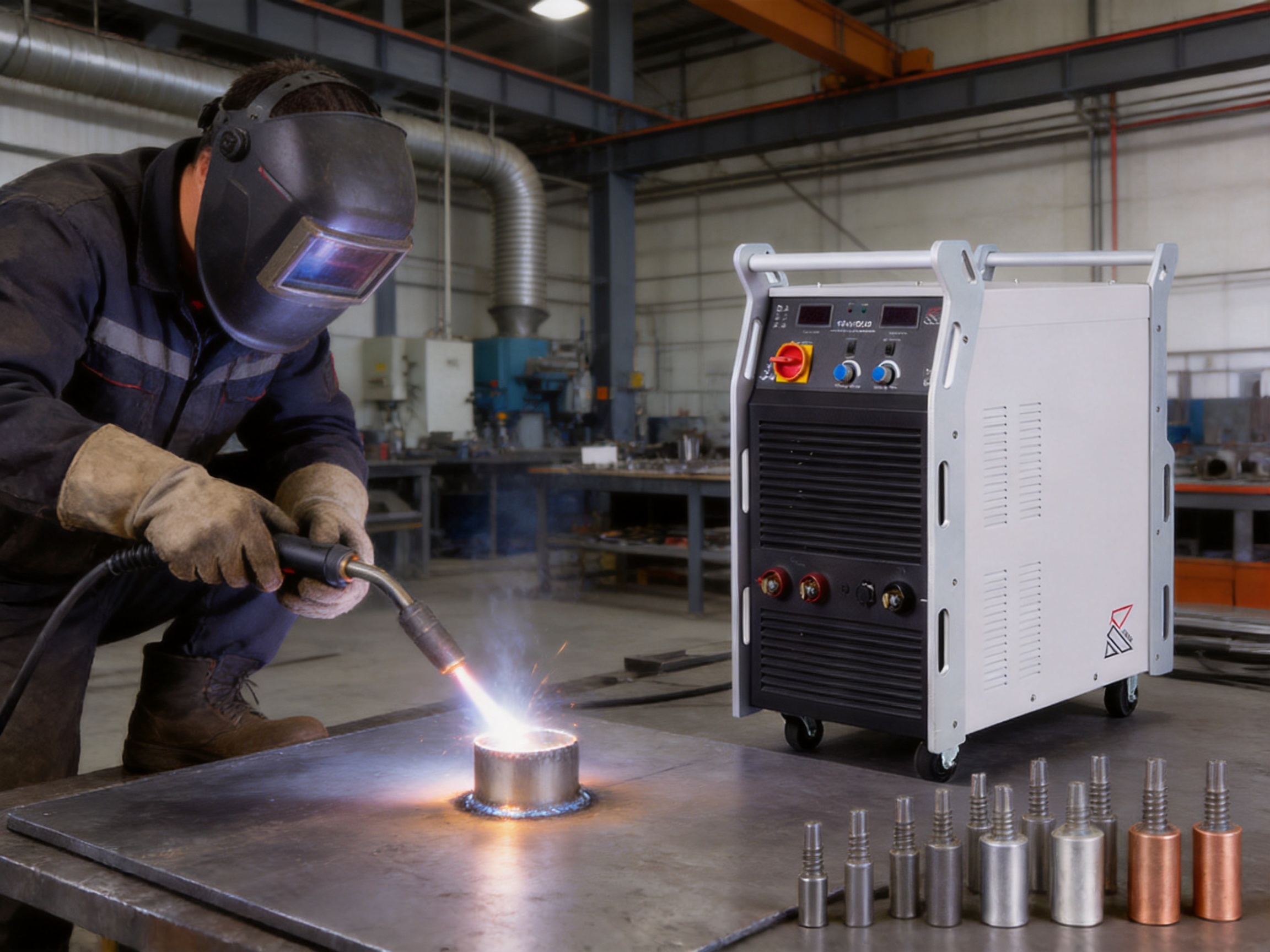
Welding quality begins with a stable and repeatable energy supply. The control system must deliver sufficient current for the selected stud while maintaining the selected time accurately. The RSN-2500/3200 series combines high-output electrical components with contactless main-circuit control to support this requirement.
The power factor is specified at approximately 0.95, indicating efficient use of supplied electrical power under rated conditions. The listed efficiency is approximately 80 percent. These values are important in industrial planning because they influence power distribution, input current, operating cost, and heat generated within the equipment.
A strong weld joint also depends on the welding gun and ground connection. The gun should hold the stud perpendicular to the base material and allow the stud to move correctly during the welding cycle. Ground cables should be connected to clean, secure points close to the welding area whenever possible. Poor grounding can lead to unstable arc behavior, excessive heating, inconsistent weld collars, and reduced joint strength.
Surface preparation is equally important. Rust, oil, paint, scale, moisture, and heavy oxidation can interfere with electrical contact and fusion. The area beneath the stud and the area used for the ground connection should be clean and free from contaminants. When the base material is coated, the effect of removing or damaging the coating should be considered as part of the production procedure.
Operators should use test welds to establish the correct combination of current, time, stud design, and surface condition. Visual inspection can identify some problems, including incomplete weld collars, excessive spatter, visible undercut, misalignment, or inadequate contact. For critical applications, bend tests, torque tests, tensile tests, macro examination, or other inspection methods may be required.
The product is manufactured by Zhejiang Kende Mechanical & Electrical Co., Ltd., an established Chinese manufacturer of welding machines, battery chargers, heaters, and related electrical equipment. The company operates from Taizhou in Zhejiang Province and has developed a large-scale manufacturing and product development structure.
The company’s stated manufacturing site covers approximately 120,000 square meters and employs around 600 people. Its production capability is reported at approximately two million units annually, with exports approaching 1.5 million units per year. Such scale can support organized procurement, standardized assembly, production planning, quality management, and international logistics.
Large-scale production is valuable only when supported by process control. The company uses a combination of automated and semi-automated manufacturing technologies, including automatic component placement, plug-in assembly, welding systems, robotic processing, and laser cutting. These technologies can improve repeatability in areas such as circuit-board assembly, metal fabrication, enclosure production, and component positioning.
Laser cutting is particularly useful for producing accurate sheet-metal components and clean openings in machine enclosures. Robotic processing can improve consistency in repetitive operations and reduce variation between production batches. Automated electronic assembly can help control component placement and soldering quality when supported by appropriate inspection and testing.
The company also reports the use of Toyota-style production management, enterprise resource planning, manufacturing execution systems, and office automation. These systems can connect purchasing, production scheduling, inventory, quality tracking, and shipment management. When properly implemented, integrated information systems make it easier to trace production information and identify process deviations.
Research and development is another important strength. The manufacturer operates a provincial research and development center, an enterprise technology center, and an intelligent welding technology research institute. It reports having approximately 98 research and development personnel, together with invention patents, utility model patents, design patents, and software copyrights.
These capabilities support product development in power electronics, thermal management, welding control, mechanical design, user interfaces, and industrial safety. They also provide a foundation for adapting products to different regional voltage systems, certification requirements, operating environments, and customer applications.
Industrial welding equipment must satisfy more than performance expectations. It must also be designed with electrical safety, electromagnetic compatibility, thermal protection, mechanical safety, labeling, documentation, and regional compliance in mind. The manufacturer reports product certifications and approvals that include CE, EMC, ERP, GS, ETL, UKCA, and China CCC for applicable product categories.
The exact certification applicable to a particular RSN-2500/3200 configuration should be confirmed before purchase. Certification may depend on the product version, destination market, electrical configuration, accessories, and test scope. Importers and end users should request current declarations, test reports, user manuals, and nameplate information where required.
The company also reports participation in national welding machine standardization activities and involvement in the drafting, formulation, and revision of numerous national standards. Participation in technical standard work can help a manufacturer understand evolving safety expectations, performance terminology, and testing methods.
For international customers, manufacturing experience across different markets is an important advantage. Export-oriented production generally requires attention to packaging, voltage configurations, documentation, spare parts, labeling, customs requirements, and customer support. These factors can affect the total ownership experience as much as the machine’s electrical specifications.
Stud welding can be used to attach brackets, anchors, supports, and other components to structural steel. The high-current capacity of the RSN-2500/3200 is suitable for applications involving larger studs, provided that the joint design and structural calculations are appropriate.
Shipyards use welded studs for insulation retainers, interior panels, cable supports, pipe supports, and equipment mounting. The ability to work from one accessible side can be helpful in confined or enclosed areas. Marine applications require careful control of corrosion protection, surface preparation, ventilation, grounding, and fire prevention.
In vehicle bodies, trailers, rail equipment, and specialized transport structures, studs may be used to attach trim, insulation, brackets, and internal fixtures. Low distortion is especially beneficial when working with panels that must maintain their shape and fit accurately.
Studs can be used for internal supports, insulation attachments, refractory systems, and service components. However, pressure-containing applications require engineering approval, qualified welding procedures, traceability, and inspection appropriate to the applicable code. The machine’s current rating alone does not qualify a joint for pressure service.
Heavy equipment manufacturers and repair workshops can use stud welding to install mounting points, guards, brackets, wear components, and service attachments. The dual stud-welding and manual-arc capability can be valuable when a workshop performs both component assembly and repair work.
Welded studs are commonly used to secure insulation, cladding, ductwork components, and thermal barriers. A short welding cycle can reduce deformation of sheet-metal surfaces. Operators must consider the flammability of nearby insulation and remove combustible materials from the work area before welding.
Because the RSN-2500/3200 is a high-capacity three-phase machine, installation should be performed by qualified electrical personnel. The supply system must be correctly rated for the machine’s input requirements, instantaneous power demand, grounding arrangement, protective devices, and local electrical regulations.
The machine should be positioned on a stable, level surface with adequate ventilation. Air openings must remain unobstructed, and the surrounding area should be kept free of flammable materials, excessive dust, water, and corrosive vapors. Sufficient clearance should be provided for operation, inspection, cable routing, and maintenance.
Before welding, the operator should inspect the power cable, welding cable, ground cable, connectors, control panel, welding gun, stud holder, and protective equipment. Damaged cables or loose connections should not be used. A secure ground connection is essential for both safety and welding quality.
Personal protective equipment should include a suitable welding helmet or face shield, protective clothing, welding gloves, safety footwear, and hearing protection where necessary. Ventilation or local exhaust should be used to control fumes. The operator must also evaluate the risks associated with ultraviolet radiation, hot metal, sparks, molten particles, compressed gas, coatings, and nearby combustible materials.
The workpiece should be positioned securely to prevent movement during welding. Studs should be clean, correctly sized, and compatible with the selected welding process. The welding gun should be held square to the surface unless the approved procedure specifies another angle. A consistent sequence and clamping method can help reduce distortion in large assemblies.
At the beginning of a production run, several sample welds should be completed and inspected. The process should be adjusted if the weld collar is irregular, the stud is misaligned, the joint shows insufficient fusion, or excessive spatter is present. Production should not begin until the selected settings have been verified.
Regular maintenance helps preserve electrical safety, welding performance, and service life. Operators should remove dust and debris from accessible surfaces and ventilation areas according to the manufacturer’s instructions. Accumulated dust can restrict airflow and contribute to overheating, particularly in demanding production environments.
Cables and connectors should be checked for cuts, exposed conductors, loose terminals, overheating marks, and mechanical damage. The welding gun should be inspected for worn holders, damaged insulation, poor alignment, and contamination. Ground clamps should maintain firm contact with the workpiece and should be cleaned when oxidation or residue develops.
The control panel and displays should be kept clean and protected from impact. If the over-temperature LED illuminates, the operator should stop or reduce the operating cycle and allow the machine to cool. Repeated thermal protection may indicate excessive duty demand, blocked ventilation, an unsuitable ambient environment, or an internal fault that requires qualified service.
Internal repairs should be performed only by trained technicians. High-voltage components may remain energized after the machine has been switched off. Before opening the enclosure, the equipment must be isolated according to an approved lockout and verification procedure.
Maintenance records can improve reliability in production environments. A record may include inspection dates, cable replacement, cleaning, parameter verification, fault indications, repair activity, and periodic electrical safety tests. Tracking this information helps identify recurring issues before they interrupt production.
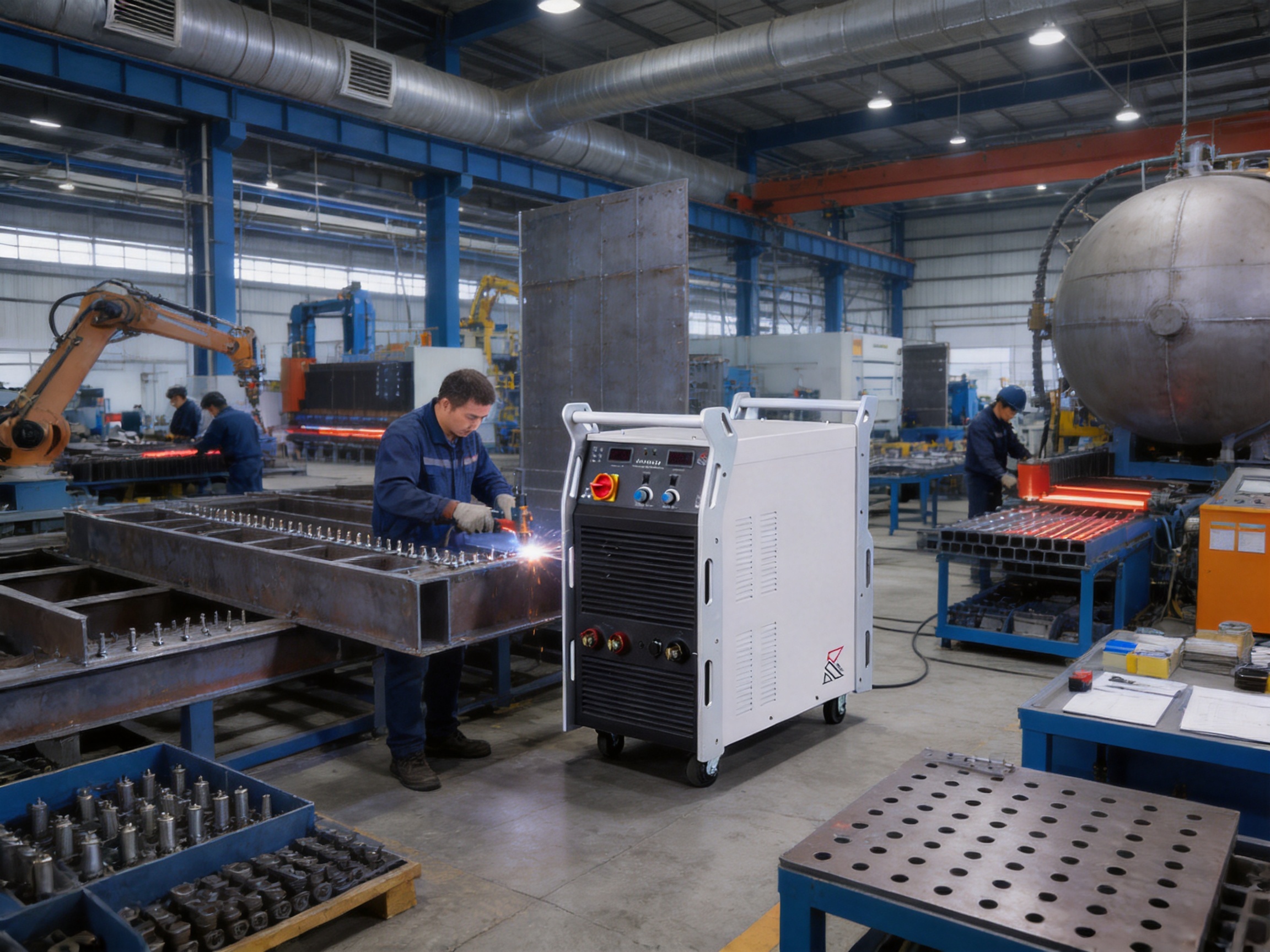
The first major advantage is output capacity. With maximum currents of approximately 2,500 and 3,200 amperes, the machines are positioned for larger studs and industrial joints that exceed the practical range of many smaller workshop welders. The RSN-3200 extends the usable stud diameter range to approximately 32 millimeters, providing additional capability for heavy fabrication.
The second advantage is process flexibility. The ability to select stud welding or manual metal arc welding means the equipment can support more than a single operation. Competing products may be limited to dedicated stud welding, while a dual-purpose machine can be used for supplementary fabrication and repair work. This can improve equipment utilization and reduce the number of separate power sources required.
The third advantage is control visibility. Adjustable welding current and time, together with direct display of the selected parameters, make it easier to standardize the process. The operator can record settings for different stud diameters and materials, making production procedures easier to repeat and train.
The fourth advantage is contactless main-circuit control. Reducing mechanical switching components can improve reliability under heavy electrical loads and reduce wear associated with repeated switching. While all electronic systems require appropriate maintenance and protection, contactless control is a meaningful design feature in high-current equipment.
The fifth advantage is compact industrial packaging relative to the machine’s output class. The listed dimensions are approximately 850 by 420 by 900 millimeters, with an approximate weight of 105 kilograms for the high-capacity models. The equipment is not a lightweight portable welder, but its form factor is practical for workshop installation and relocation using suitable handling equipment.
The sixth advantage is manufacturing depth. The producer has experience across welding machines, chargers, heaters, and other electrical products, supported by research facilities, production systems, automation, and international certification experience. This broader capability can support product consistency, technical development, customization, and after-sales service.
Performance should always be compared using the complete specification rather than current alone. Buyers should evaluate duty cycle, input power, operating voltage, available accessories, warranty terms, service support, replacement parts, documentation, certification, and compatibility with their actual stud sizes and materials.
The RSN-2500 may be suitable when the required stud diameter is generally within approximately 16 to 25 millimeters and the production workload matches its rated capacity. It offers substantial current for industrial work while maintaining the same general enclosure dimensions and operating concept as the larger configuration.
The RSN-3200 is appropriate when larger studs, higher energy demand, or additional current reserve is required. Its maximum output of approximately 3,200 amperes and listed stud diameter range up to approximately 32 millimeters make it more suitable for heavy-duty joints. The higher input power requirement should be considered during electrical planning.
Buyers should examine the largest stud used regularly, not only the average stud size. They should also consider production frequency, material thickness, expected weld time, ambient conditions, and the availability of a suitable three-phase supply. Selecting a machine that is too small may limit productivity, while selecting a larger machine than necessary may increase installation cost without providing a practical benefit.
Where future product development is expected, additional capacity may provide useful flexibility. However, the decision should be based on a documented application review, sample welds, and a realistic assessment of total ownership cost.
Consistent stud welding requires a controlled procedure. The procedure should identify the base material, stud material, stud diameter, surface preparation, machine model, welding current, welding time, gun configuration, grounding method, inspection method, and acceptance criteria.
Operator training should cover machine controls, parameter selection, surface preparation, gun alignment, ground placement, visual inspection, personal protective equipment, emergency procedures, and fault reporting. Trained operators are more likely to identify problems before defective joints enter the next production stage.
Where joint strength is important, sample testing should be performed at an interval established by the quality plan. Depending on the application, tests may include bend testing, torque testing, tensile pull testing, peel testing, macro examination, or non-destructive examination. The selected test must be appropriate to the joint design and governing standard.
Traceability can be improved by recording the machine identification, date, operator, material batch, stud batch, settings, test results, and any deviations. Such information is particularly valuable for export products, regulated industries, structural fabrication, and customer audits.
It is a high-current industrial stud welder designed to attach metal studs to a workpiece using a controlled electrical welding cycle. It can also be configured for manual metal arc welding, providing additional workshop flexibility.
The principal difference is maximum output current and the corresponding stud capacity. The RSN-2500 is listed at approximately 2,500 amperes and is suitable for studs up to approximately 25 millimeters in the stated range. The RSN-3200 is listed at approximately 3,200 amperes and supports studs up to approximately 32 millimeters, subject to process conditions and qualification.
The listed supply is three-phase 380 volts with a tolerance of approximately plus or minus 15 percent and a frequency of 50 or 60 hertz. A qualified electrician should verify the supply capacity, protective devices, grounding, cable size, and local code requirements before installation.
The product information identifies carbon steel, stainless steel, copper, aluminum, and their alloys as suitable material categories. The actual result depends on the selected stud, base material, surface condition, parameter settings, and approved welding procedure. Test welds should be completed before production.
The stated welding time can be set from zero to approximately three seconds. The correct setting depends on stud size, material, joint design, and the required weld quality. Operators should not assume that a longer time always produces a stronger joint.
The over-temperature LED indicates that the machine has reached a thermal protection condition or requires additional cooling. The operator should stop or reduce operation, verify ventilation, and allow the machine to cool. If the condition happens repeatedly under normal use, qualified service should investigate the cause.
The machine has a practical industrial form factor, but the high-capacity models weigh approximately 105 kilograms. It can be moved within a workshop using suitable handling equipment, but it should not be treated as a lightweight handheld welder.
Yes. Rust, paint, oil, scale, moisture, and heavy oxidation can interfere with electrical contact and fusion. The welding area and ground connection should be clean and suitable for the selected procedure.
The listed IP21S protection classification is generally intended for indoor industrial use under controlled conditions. Outdoor use requires protection from rain, water, condensation, excessive dust, and other environmental hazards. The user should consult the technical documentation before outdoor installation.
Installation and servicing should be performed by qualified personnel. Operators should use welding helmets, gloves, protective clothing, safety footwear, and suitable ventilation. The work area must be free of combustible materials, and cables, grounding connections, and the welding gun should be inspected before use.
Comparison should include maximum current, duty cycle, stud diameter range, input power, parameter control, display functions, protection features, dual-process capability, service support, certification, spare parts, and total ownership cost. The highest current rating is not automatically the best choice for every application.
The RSN-2500/3200 stud welder is designed for industrial users that require high-current performance, controlled welding time, reliable parameter adjustment, and broad material compatibility. Its ability to weld large studs, support manual metal arc operation, display welding parameters, and provide thermal protection makes it a versatile addition to fabrication and production environments.
The series offers practical advantages over slower mechanical fastening methods and lower-capacity welding equipment. Short welding times can help limit heat-affected areas and distortion, while high output supports larger studs and demanding joints. Contactless control technology, industrial insulation, efficient power characteristics, and a robust enclosure support dependable operation when the machine is correctly installed and maintained.
The manufacturer strengthens the product offering through large-scale production, automated manufacturing, research and development facilities, enterprise management systems, international certification experience, and a broad portfolio of electrical equipment. These capabilities can support consistent production and long-term product development.
Successful use still depends on correct engineering, surface preparation, parameter qualification, grounding, operator training, inspection, and maintenance. When these factors are properly managed, the RSN-2500/3200 can provide a productive and flexible solution for heavy-duty stud welding in construction, shipbuilding, transport equipment, machinery, energy-related fabrication, and general industrial manufacturing.
1. Product technical information for the RSN-2500/3200 stud welding machine, including stated electrical ratings, output capacity, dimensions, duty cycle, control functions, and material applications.
2. General principles of arc stud welding, including electrical arc formation, stud projection, heat input, surface preparation, grounding, and weld quality evaluation.
3. Industrial welding equipment safety practices covering electrical installation, personal protective equipment, ventilation, hot-work control, lockout procedures, and equipment maintenance.
4. Manufacturer-provided information concerning production capacity, research and development facilities, automated manufacturing systems, quality management, certification experience, and international export operations.
5. Welding procedure qualification principles for stud welding, including parameter verification, sample testing, visual inspection, mechanical testing, and production traceability.
6. General guidance on the selection and use of three-phase industrial welding power sources in fabrication, construction, machinery, transport, and structural metalworking applications.
Recommended Products

Contact Us
No.2299, Luqiao Section, Shugang Avenue, Luqiao District, Taizhou, 318057 Zhejiang, PR China.
+86-576-82431568
 Privacy
China Welding Machine Factory
 English
 中文简体
 русский
 Español
 عربى
 Français
 Português
 Deutsch
 Український