Email: [email protected]
Email: [email protected]

Blog
 2026.09.16
 Blog
Reliable temporary heating is essential in workshops, warehouses, construction areas, agricultural buildings, maintenance facilities, and other locations where permanent heating systems are unavailable or insufficient. A modern fuel-fired heater must do more than produce high heat. It must deliver stable temperature control, dependable ignition, efficient combustion, safe operation, convenient mobility, and practical maintenance. The MARS-50B fuel heater has been developed around these requirements, combining a 50 kW heat output with a compact wheeled structure and a series of control and protection functions intended for demanding working environments.
Designed and manufactured by Zhejiang Kende Mechanical & Electrical Co., Ltd., the MARS-50B is a high-output heater for users who need rapid warm-air delivery and flexible site operation. Its 43,000 kcal/h heat output, 1,750 m³/h air delivery, 69-liter fuel tank, and adjustable temperature range of 5°C to 98°C make it suitable for many industrial, commercial, agricultural, and service applications. The heater is designed to use liquid fuel while operating on AC220V–240V, 50 Hz electrical power for its control system, fan, ignition, and fuel delivery components.
What distinguishes this model is the way its individual functions work together. Stepless temperature adjustment eliminates unnecessary preset steps. A double-screen digital display allows the user to view the selected temperature and ambient temperature simultaneously. Automatic ignition simplifies startup, while overheating protection and automatic shutdown when fuel is insufficient improve operating safety. A delayed cooling airflow function helps remove residual heat after shutdown, protecting internal components and supporting longer service life.
This article examines the product’s design, specifications, operating principles, applications, safety features, maintenance needs, and the manufacturing strengths behind it. It also explains why the MARS-50B can be a practical alternative to less flexible or less integrated heating solutions.
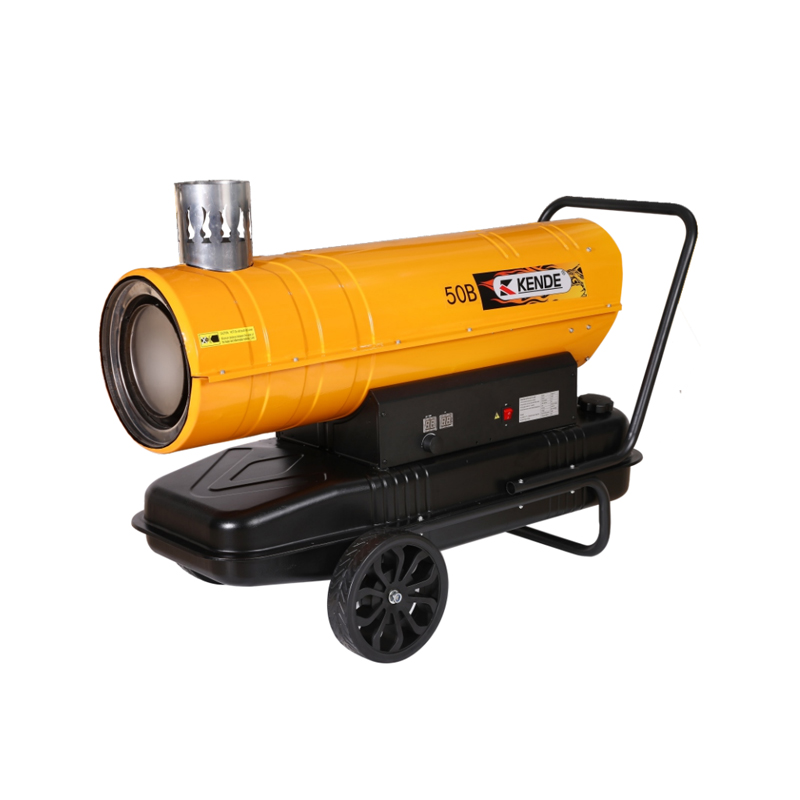
MARS-50B Fuel heater
The MARS-50B is a mobile fuel-fired warm-air heater with a rated heat output of 50 kW. It is intended to heat enclosed or semi-enclosed spaces by generating warm air and distributing it through a powerful fan. Unlike electric heaters, which convert electrical energy directly into heat, a fuel heater obtains most of its thermal energy from combustion. This allows the unit to produce substantial heat without requiring an extremely high electrical supply.
The heater operates from a single-phase AC220V–240V, 50 Hz power source. Electrical power is used for the fan, electronic controls, ignition system, fuel pump, and safety monitoring. Fuel consumption is listed at approximately 4 kg/h, and the integrated fuel tank has a capacity of 69 liters. The combination of a high-capacity tank and fuel-fired heating makes the unit suitable for locations where continuous heating is required for extended periods.
The product has a rated heat output of 50 kW and a heat output of 43,000 kcal/h. These figures indicate a powerful heating capability for workshops, storage buildings, construction sites, agricultural areas, and emergency heating situations. Its rated warm-air output is 1,750 m³/h, allowing heated air to circulate quickly through a working area when the heater is positioned correctly.
A pipe rack wheel design supports the heater’s mobility. The frame protects the main body while also providing a practical structure for moving the machine. Its listed dimensions are 1,220 × 580 × 715 mm, and its net weight is approximately 44.6 kg. This is substantial enough to support a powerful burner, tank, fan, and protective structure, yet compact enough for transport between work areas.
| Specification | Value | Practical Meaning |
|---|---|---|
| Model | MARS-50B | High-output mobile fuel heater |
| Heat output | 50 kW | Suitable for demanding temporary heating |
| Thermal output | 43,000 kcal/h | High combustion-based heat generation |
| Power supply | AC220V–240V, 50 Hz, single phase | Compatible with common industrial and commercial power supplies |
| Warm-air output | 1,750 m³/h | Rapid distribution of heated air |
| Fuel consumption | Approximately 4 kg/h | Useful for estimating operating costs and runtime |
| Fuel tank capacity | 69 L | Supports extended operation between refueling intervals |
| Temperature setting | 5°C–98°C | Stepless temperature adjustment |
| Weight | 44.6 kg | Portable with the integrated wheel frame |
| Dimensions | 1,220 × 580 × 715 mm | Compact footprint for a 50 kW heater |
The main advantage of the MARS-50B is its ability to deliver a large amount of heat in a relatively compact machine. A 50 kW output is appropriate where small electric heaters would warm an area too slowly or where multiple low-capacity heaters would be inconvenient. High-output heating can reduce the number of units needed on a site, simplify placement, and make overall temperature management easier.
The heater’s 1,750 m³/h warm-air output is equally important. Heat generation alone does not guarantee effective heating. The heated air must be moved through the space so that warm air does not remain concentrated around the machine. The powerful air delivery helps distribute heat more rapidly, supporting faster temperature recovery after doors are opened or cold materials enter the work area.
In a workshop, the heater can help improve worker comfort during cold periods. In a warehouse, it can reduce the effects of low temperatures on people, packaging, tools, and temperature-sensitive processes. On a construction site, it can assist with temporary heating during building work, subject to appropriate ventilation and fuel-heater safety procedures. In agriculture, it may be used in suitable service areas, barns, or agricultural buildings where the installation environment meets the requirements for combustion equipment.
Actual heating performance depends on many external factors, including room volume, insulation, outdoor temperature, air leakage, ceiling height, door opening frequency, fuel quality, and heater positioning. The 50 kW rating should therefore be treated as a key capacity indicator rather than a guarantee of a specific indoor temperature in every building.
Compared with small portable heaters, the MARS-50B can provide significantly greater heat delivery from one machine. This may reduce the need for extension cables, multiple control points, and several separate appliances. A single heater can also create a more centralized and manageable heating strategy.
Compared with electric resistance heaters of similar thermal capacity, a fuel-fired heater can reduce dependence on high electrical current for heat generation. This may be valuable at temporary sites where electrical infrastructure is limited. The heater still requires electrical power for its operating systems, but its primary thermal energy comes from fuel combustion rather than from the electrical supply.
Compared with basic fuel heaters without digital controls, the MARS-50B offers more precise temperature setting, visible ambient-temperature feedback, automatic ignition, and additional protective functions. These features can improve convenience and reduce the amount of manual monitoring required during normal operation.
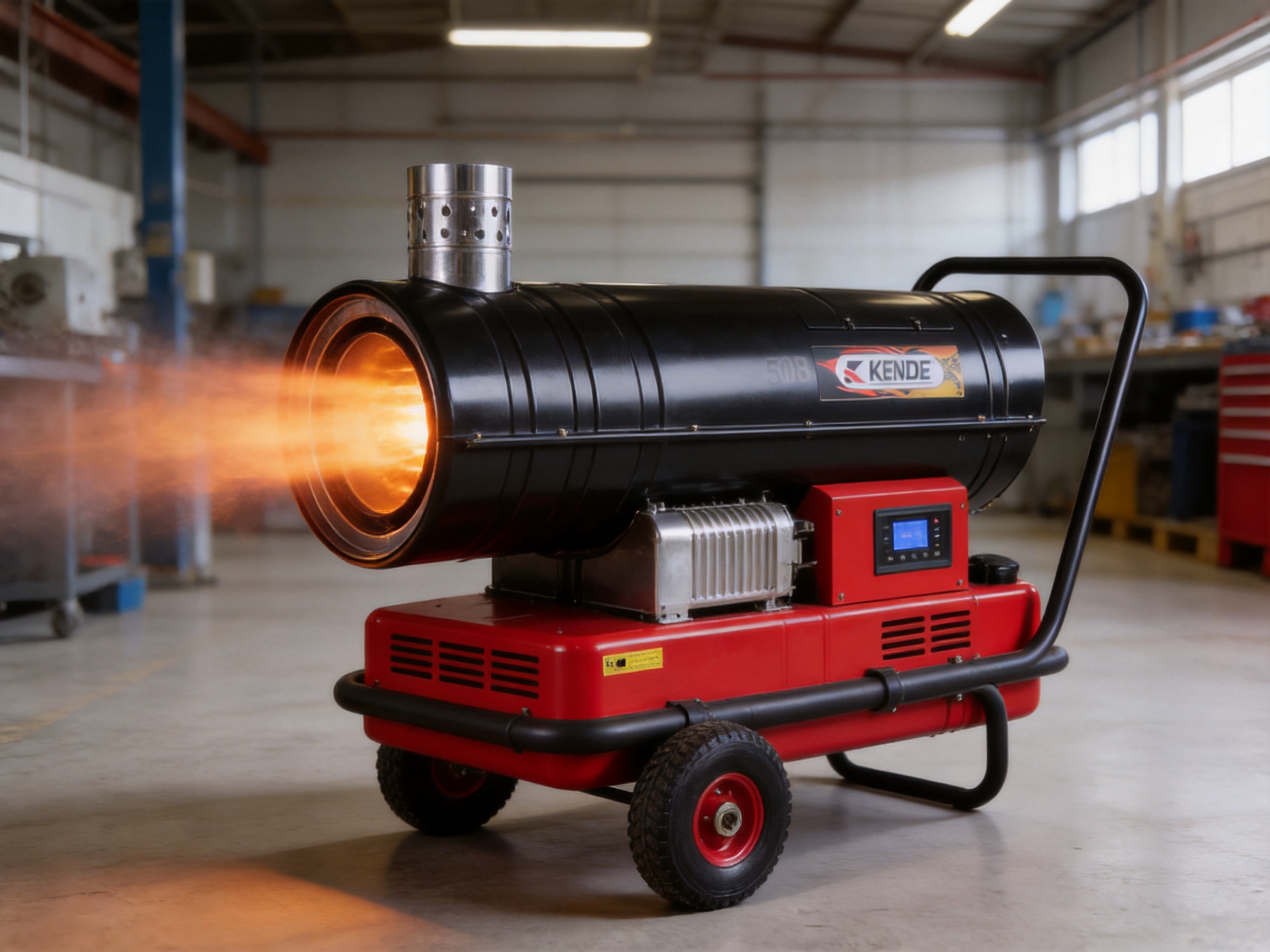
The MARS-50B provides a temperature setting range from 5°C to 98°C. The control system is described as stepless, meaning that the operator is not limited to a small number of fixed temperature positions. Instead of selecting only low, medium, or high settings, the user can set a target temperature more precisely according to the working environment.
Stepless adjustment is valuable in applications where excessive heating can be wasteful or uncomfortable. A storage area may need frost protection rather than maximum heat. A workshop may require a moderate temperature for workers. A maintenance area may need stronger heating for a short period before being reduced to a lower holding temperature. The broad adjustment range gives the user more control over these different operating conditions.
Automatic constant-temperature operation further improves practicality. Once the desired setting is selected, the control system can regulate heater operation according to the sensed temperature. This helps prevent continuous full-power operation when the area has already reached the required level. It can also reduce the need for repeated manual adjustment throughout the working day.
Temperature regulation should always be considered together with room conditions. If doors remain open, if the building has poor insulation, or if the outside temperature is extremely low, the heater may operate for longer periods to maintain the selected temperature. Proper positioning, improved sealing, and adequate airflow can help the unit work more efficiently.
The double-screen digital display shows the set temperature and ambient temperature at a glance. This arrangement provides two important pieces of information without requiring the operator to move between separate menus or measuring instruments. The selected temperature indicates the control target, while the ambient-temperature reading shows the approximate current condition around the heater’s sensing area.
This information can help users determine whether the heater is still raising the temperature, has reached the target, or is operating in a maintaining cycle. It also makes the heater easier to supervise in busy workplaces, where operators may not have time to interpret complex controls.
Digital display technology can improve repeatability. When several work areas need similar heating conditions, operators can set the machine to a known value rather than relying on a mechanical dial position. This is particularly useful for businesses that use the heater regularly and want more consistent operating procedures.
Combustion quality directly affects heating performance, fuel consumption, odor, emissions, and component cleanliness. The MARS-50B uses a branded fuel pump and nozzle intended to produce more uniform fuel atomization. When liquid fuel is divided into a fine and consistent spray, it can mix more effectively with combustion air. Better mixing supports more complete combustion and can improve the stability of the flame.
The product description also identifies double filtration in both refueling and fuel suction. Filtration is important because dirt, sediment, moisture, or other contaminants can interfere with the pump and nozzle. A blocked or contaminated nozzle may produce an uneven flame, delayed ignition, smoke, unstable operation, or reduced heat output. Filtering fuel before it enters the system helps protect sensitive components and supports consistent burner performance.
Fuel quality remains important even when a heater includes filtration. Operators should use fuel that is suitable for the specific model and local operating conditions. Fuel should be stored in clean, approved containers and protected from water contamination. The fuel tank should not be filled near open flames, hot surfaces, or running electrical equipment that could create an ignition source.
The 69-liter tank provides a useful operating reserve. Based on the stated consumption of approximately 4 kg/h, actual runtime will depend on fuel density, operating load, temperature cycling, and the amount of fuel that can be practically used before refilling. In continuous high-output operation, consumption will be higher than during a cycle in which the heater periodically reduces or stops combustion after reaching the selected temperature.
The combustion cylinder is made from 439 stainless steel. This material is selected for its resistance to high-temperature service and corrosion. The combustion chamber experiences repeated heating and cooling cycles, exposure to combustion gases, and contact with elevated temperatures. A suitable stainless-steel construction can help the chamber withstand these conditions over a long operating period.
High-temperature resistance is especially valuable in a heater designed for frequent use. A combustion chamber that maintains its structural integrity can support stable burner alignment and reliable heat transfer. Corrosion resistance can also help preserve the chamber in environments where humidity, dust, and temperature fluctuations are present.
Material selection is only one part of durability. Welding quality, dimensional accuracy, burner assembly, sealing, insulation, airflow design, and final testing all influence service life. The value of the MARS-50B therefore comes from the combination of stainless-steel construction and controlled manufacturing processes rather than from material choice alone.
The MARS-50B is designed with separation between the heated air and the combustion exhaust gas. This design is important because it allows the machine to transfer heat while keeping the combustion products from being mixed directly with the air delivered into the space.
In a direct-fired heater, combustion gases are typically discharged with the warm air, and the application must have sufficient ventilation to manage those gases. In a separated-air design, the heating airflow and combustion exhaust follow different paths. This can make the heater suitable for a broader range of applications, provided that the heater is installed and operated according to the manufacturer’s instructions and all applicable local safety requirements.
Separated airflow can be beneficial in workshops, storage areas, service facilities, and other spaces where cleaner warm air is preferred. However, no fuel-fired heater should be treated as automatically suitable for every enclosed room. Combustion equipment requires correct ventilation, safe exhaust management, and proper clearance from combustible materials. Carbon monoxide risks must always be taken seriously.
Users should inspect the exhaust path before operation, keep openings unobstructed, and ensure that any required exhaust ducting is correctly installed. The heater should not be operated in a sleeping area, a poorly ventilated room, or any location where exhaust gases could accumulate. Carbon monoxide detectors and local regulations should be considered wherever fuel-fired heating is used indoors.
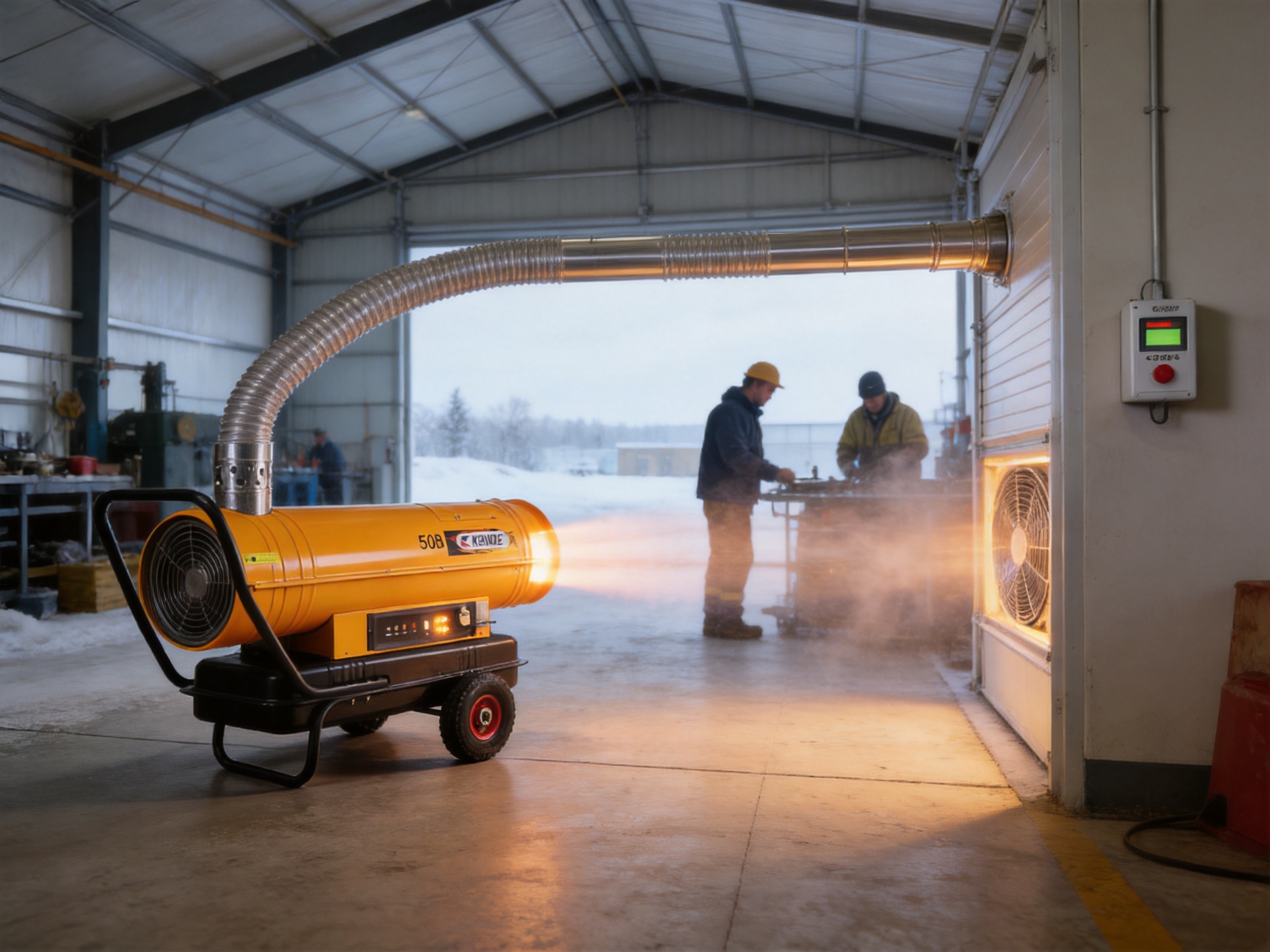
Safety is a central consideration for any fuel-fired appliance. The MARS-50B includes several automatic functions intended to reduce operating risks and protect the heater from abnormal conditions. These include overheating protection, automatic shutdown when fuel is insufficient, automatic ignition, power-failure memory, and delayed cooling airflow.
Overheating protection monitors the heater and helps prevent operation when internal temperatures rise beyond an acceptable level. Excessive temperature may result from blocked airflow, a fan problem, a dirty filter, incorrect installation, a malfunctioning control component, or another abnormal condition.
If overheating protection activates, the operator should not repeatedly restart the unit without investigating the cause. The air inlet and outlet should be checked for obstructions, the heater should be allowed to cool, and qualified service personnel should inspect the unit if the problem continues. Safety protection is most effective when it is supported by regular inspection and responsible operation.
The automatic shutdown function for insufficient fuel helps prevent the burner from operating under conditions where the fuel supply is inadequate. Running a fuel pump or burner with an unstable supply can lead to ignition problems, flame failure, smoke, or component stress. Automatic shutdown provides an additional layer of protection when the fuel level becomes too low.
Operators should refill the tank before it reaches an excessively low level and should follow safe refueling procedures. The heater must be turned off and allowed to cool before fuel is added. Spilled fuel should be cleaned immediately, and the machine should not be restarted until the area is safe.
Automatic ignition simplifies operation by allowing the heater to start when the power is switched on and the operating controls are set correctly. This eliminates the need for manual flame lighting and reduces the risk associated with introducing an ignition source by hand.
Automatic ignition does not remove the need for inspection. Before startup, the operator should check fuel connections, electrical cables, air passages, exhaust paths, and the surrounding area. If ignition fails, the machine should be switched off and the cause investigated according to the operating instructions. Repeated ignition attempts can allow unburned fuel to accumulate and should be avoided.
After the burner is switched off, the heater continues to blow air for a period to cool internal components. This delayed cooling function helps remove residual heat from the combustion chamber and other hot parts. It can reduce thermal stress caused by abrupt shutdown and support longer component life.
Users should not disconnect the electrical supply immediately after switching off the burner unless an emergency requires it. Allowing the cooling cycle to finish is an important part of normal operation. The fan may continue running even though active heating has stopped; this is expected behavior for a heater equipped with delayed cooling.
The power-failure memory function helps reduce repeated temperature setting after an interruption. Temporary sites may experience power fluctuations, generator changes, circuit trips, or accidental disconnection. Without memory, the operator may need to re-enter the preferred temperature every time the unit restarts.
By retaining the previous setting, the heater can be returned to regular operation more quickly. This is especially useful for facilities that use the heater on a recurring schedule. It also improves convenience for operators who need consistent temperature control across several work shifts.
Memory functions should not be confused with automatic restart guarantees. The exact behavior after a power interruption depends on the control system and operating conditions. Operators should follow the manufacturer’s instructions and verify that the heater is safe before allowing it to resume operation.
The combination of automatic ignition, digital display, stepless temperature control, and power-failure memory gives the MARS-50B a more user-oriented interface than a basic manual fuel heater. These features can reduce training requirements and make daily operation more predictable.
The MARS-50B has a pipe rack wheel design that combines a protective frame with transport capability. A 50 kW heater contains a substantial burner, fuel system, fan assembly, tank, controls, and combustion chamber. Moving such a machine without wheels would be inconvenient and could increase the risk of lifting injuries or accidental damage.
The wheel frame allows the machine to be repositioned according to changing work requirements. It can be moved closer to a cold zone, relocated when a work area changes, or stored after seasonal use. The compact width of approximately 580 mm can be helpful when the heater must pass through practical workplace access points, although users should always check doorways, ramps, and floor conditions before moving it.
Mobility should be combined with stable placement. The heater should stand on a firm, level surface that can support its weight and resist vibration. Wheels should be secured where appropriate, and the unit should not be positioned where it could be struck by vehicles, equipment, or falling materials.
The frame also provides space around the heater body, helping protect key components during ordinary movement. Even so, the heater should not be dragged by its power cable, fuel line, or control components. Transport should be carried out using the structural handles or frame areas intended for that purpose.
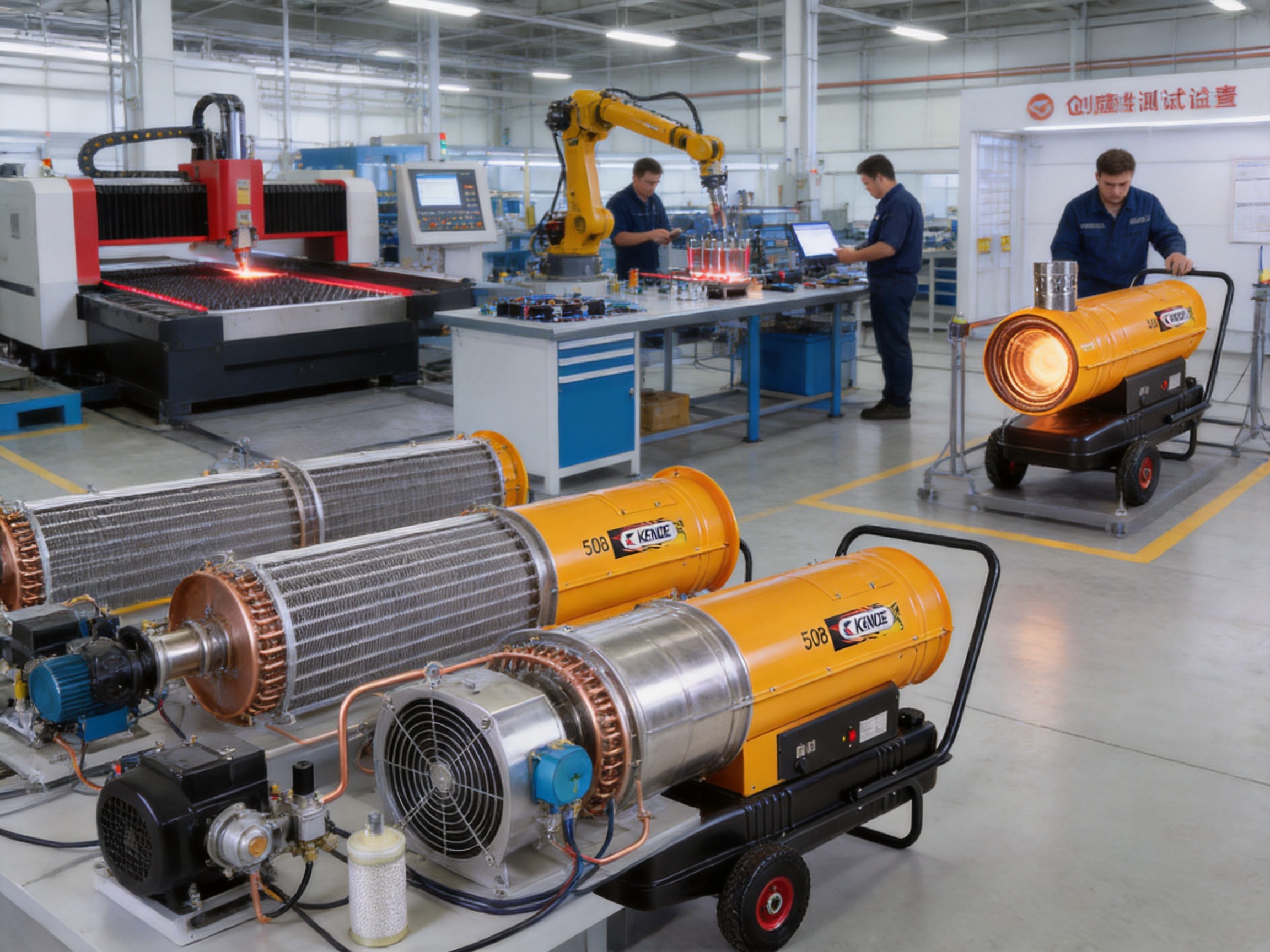
Workshops often have large doors, high ceilings, and frequent air exchange. During cold weather, these conditions can make it difficult to maintain a comfortable temperature. A 50 kW heater can provide rapid warm-air delivery during working hours and can be moved to the area where technicians are performing tasks.
The heater can support general worker comfort, equipment maintenance, vehicle service, fabrication, and repair work. It should be positioned so that the airflow reaches the occupied area without blowing directly onto flammable liquids, loose dust, or sensitive components.
Warehouses may require temperature control for employees, packaging materials, stored products, or equipment. The MARS-50B’s high airflow helps distribute warm air through the facility, while its adjustable temperature range allows operators to select a moderate setting rather than always operating at maximum output.
Warehouse operators must consider the location of combustible inventory, fuel storage, ventilation, and forklift traffic. The heater should have adequate clearance, and its hot surfaces and exhaust system should be protected from contact with stored materials.
During construction or renovation, permanent heating systems may not yet be installed. A mobile heater can provide temporary warmth for workers and help improve conditions for certain building activities. It may also assist with drying or maintaining suitable temperatures for materials, subject to the instructions of material suppliers and site safety managers.
Construction sites present special hazards, including dust, unstable surfaces, changing ventilation, temporary wiring, and fuel handling. The heater should be inspected frequently and protected from rain, falling objects, excessive dust, and unauthorized access.
Suitable agricultural and service buildings may benefit from temporary heating during cold periods. The heater can be moved between areas when required, reducing the need for a permanent heating installation in every building.
However, agricultural environments can contain dust, hay, straw, animal bedding, and other combustible materials. Safe clearance, ventilation, cleaning, and supervision are essential. The heater should never be used in an environment where its operating conditions conflict with local fire, animal welfare, or occupational safety requirements.
Fuel heaters are also valuable for emergency heating when a permanent system fails or when temporary facilities are established. The MARS-50B can provide a high level of heat without relying entirely on large electrical heating capacity. Its integrated fuel tank and mobile frame support rapid deployment.
Emergency operation should not mean reduced safety. Fuel, exhaust, electrical supply, ventilation, and fire protection must be assessed before the machine is started. A qualified person should determine whether the location is appropriate.
Correct installation is necessary for safe and effective operation. The heater should be placed on a stable surface with sufficient clearance around the air inlet, warm-air outlet, fuel tank, and exhaust components. The operator should consult the official manual for minimum clearances and any requirements related to ducting or exhaust connections.
The warm-air outlet should not be blocked. Restricted airflow can cause overheating and reduce heating performance. Air should be directed toward the area that needs heat, but the outlet should not face combustible materials, flammable liquids, pressurized containers, or people at an unnecessarily close distance.
The exhaust path should be installed and maintained according to the product instructions. Exhaust gases must not be directed into occupied areas, enclosed cavities, ventilation intakes, or neighboring buildings. Where required, suitable exhaust ducting and carbon monoxide monitoring should be used.
Before startup, operators should verify that the correct fuel is available, the tank and connections are secure, filters are in good condition, the power supply matches AC220V–240V, and the surrounding area is free of obvious hazards. Electrical connections should be protected from water and mechanical damage. Extension cables, if used, must be correctly rated for the heater’s electrical demand and site conditions.
During operation, the heater should be observed for unusual noise, smoke, odor, vibration, fuel leakage, unstable combustion, or repeated safety shutdowns. Any abnormal condition should be investigated before continued use. The machine should never be modified with unauthorized components or bypassed safety devices.
At shutdown, the burner should be switched off using the normal control procedure. The operator should allow the delayed cooling cycle to finish. Power should not be disconnected prematurely unless there is an immediate emergency.
Regular maintenance helps preserve combustion efficiency, safety, and service life. Maintenance intervals depend on operating hours, fuel quality, dust levels, and environmental conditions. A heater used in a clean workshop may require less frequent cleaning than one used on a dusty construction site.
The air inlet and outlet should be kept clean and free from obstruction. Dust accumulation can reduce airflow, increase operating temperature, and place additional load on the fan. The fuel filter should be checked and replaced or cleaned according to the maintenance instructions. The fuel nozzle and pump should be inspected if the flame becomes unstable, ignition becomes difficult, or fuel consumption changes significantly.
The combustion chamber should be checked for deposits, corrosion, or damage. Although 439 stainless steel offers high-temperature and corrosion resistance, no material is immune to unsuitable fuel, excessive contamination, mechanical damage, or prolonged neglect.
Electrical cables, plugs, switches, sensors, and control panels should be inspected for damage. Any loose connection, exposed conductor, or damaged insulation should be repaired by qualified personnel. The digital display and temperature sensing system should also be checked if the displayed temperature appears inconsistent with actual conditions.
Fuel leaks require immediate attention. The heater should be shut down, the fuel supply isolated if possible, and the area ventilated. Ignition sources must be kept away until the spill has been cleaned and the equipment has been assessed.
The performance of a heater is closely related to the capabilities of its manufacturer. Zhejiang Kende Mechanical & Electrical Co., Ltd. is based in Taizhou, Zhejiang Province, China, and operates a large manufacturing and research organization. The company covers approximately 120,000 square meters and employs around 600 people.
Kende has extensive experience in electric welding machines, battery chargers, and electric, gas, and oil heaters. Its broad product portfolio gives the company experience across power electronics, electrical controls, motors, combustion systems, metal fabrication, thermal management, and product certification. This cross-category capability can support the development of integrated equipment such as the MARS-50B.
The company reports annual exports of nearly 1.5 million units and an annual production capacity of approximately 2 million units. Large-scale production can provide advantages in component sourcing, process standardization, quality control, production planning, and after-sales support. It also indicates experience in meeting the packaging, documentation, voltage, certification, and market requirements of different regions.
Kende operates a Zhejiang Provincial Research and Development Center, an Enterprise Technology Center, and an Intelligent Welding Technology Research Institute. It also has approximately 98 research and development personnel. Although the MARS-50B is a heater rather than a welding machine, the company’s broader engineering resources are relevant to product development, electronic control, mechanical design, manufacturing automation, and reliability testing.
The company has obtained invention patents, utility model patents, appearance patents, and software copyrights. Intellectual property development can reflect continued investment in product improvement and engineering solutions. For a modern heater, software and control logic are important because functions such as temperature regulation, fault protection, memory, automatic ignition, and delayed cooling depend on coordinated electronic control.
Kende applies several management and manufacturing systems, including OA office automation, Toyota TPS management, ERP K3, and MES management systems. These systems can support communication, production scheduling, material traceability, process monitoring, inventory control, and quality documentation.
Manufacturing technologies reported by the company include automatic patching, plug-in and welding systems, robot processing, laser cutting, and other automated processes. Automated production can improve consistency when it is correctly programmed, maintained, and monitored. In a heater, consistent metal dimensions, repeatable electrical assembly, accurate welding, and reliable component placement are important for airflow, combustion alignment, insulation, and control performance.
Laser cutting can produce precise sheet-metal components and repeatable openings for air passages, mounting points, and protective panels. Robot processing can support consistent handling or welding operations. Automated electronic assembly can improve the placement and soldering of control-board components. These processes do not replace inspection; instead, they work together with incoming-material checks, in-process controls, functional testing, and final inspection.
Kende reports product certifications and compliance experience including GS, CE, EMC, ERP, US ETL, UKCA, and China CCC across its product range. The exact certification status of a specific heater should always be confirmed from the product documentation and the target-market certificate. Nevertheless, experience with international certification systems is an important manufacturing strength.
Heating equipment may be subject to requirements related to electrical safety, electromagnetic compatibility, energy performance, combustion safety, materials, labeling, and user instructions. A manufacturer familiar with different regulatory systems is better positioned to prepare technical files, conduct required testing, and adapt products for regional markets.
Kende is also identified as a national standard drafting unit associated with China’s National Welding Machine Standardization Committee. The company has participated in the drafting, formulation, and revision of 20 national standards and has led the drafting of one group standard. This activity demonstrates technical engagement with industry standards and manufacturing practices, even though the standards may apply primarily to welding products.
For distributors and professional buyers, manufacturing scale and compliance experience can be as important as individual product specifications. They may require stable supply, documentation, spare parts, packaging customization, regional voltage versions, and technical support. A company with established export experience is generally better prepared to address these requirements.
The MARS-50B offers several practical advantages over simpler fuel heaters. First, its stepless temperature setting provides finer control than basic models with only a few output levels. This can support more comfortable operation and better adaptation to changing conditions.
Second, the double digital display gives immediate access to both the target and ambient temperatures. A basic heater may rely on a simple dial or indicator, requiring the operator to use a separate thermometer to assess the room condition.
Third, automatic ignition and power-failure memory reduce manual intervention. These features are valuable for businesses that need repeatable daily operation or for sites where staff members have different levels of technical experience.
Fourth, overheating protection, low-fuel shutdown, and delayed cooling provide a more complete protection system than a heater with only a manual on/off switch. These functions do not eliminate the need for supervision, but they help the machine respond to common abnormal conditions.
Fifth, the branded pump and nozzle, fuel filtration, and 439 stainless-steel combustion cylinder address key areas that influence combustion stability and durability. The separation of heating air and combustion exhaust can also expand the range of suitable applications when the installation is correctly designed.
Finally, the integrated wheel frame and 69-liter fuel tank combine mobility with extended operating capability. Users can move the heater where it is needed while avoiding excessively frequent refueling in normal conditions.
Before purchasing or deploying the MARS-50B, users should evaluate the size and structure of the intended space. Room volume, ceiling height, insulation, door openings, outdoor temperature, and desired temperature increase all influence the required heating capacity.
The 50 kW rating makes the unit suitable for many medium and large temporary heating applications, but the correct quantity and placement of heaters should be determined through a heating-load assessment. A poorly insulated building may require more capacity than a well-insulated building of the same floor area.
Fuel availability is another consideration. Buyers should confirm that the recommended fuel is readily available, can be stored safely, and is permitted by local regulations. Operating cost should be estimated from fuel price, expected consumption, operating hours, and temperature cycling.
Electrical supply should also be checked. The heater requires AC220V–240V, 50 Hz, single-phase power. Users in regions with different voltage or frequency standards should not connect the heater without confirming compatibility and obtaining the appropriate version or approved electrical solution.
Ventilation and exhaust arrangements must be assessed before installation. Even when heating air and combustion exhaust are separated, a fuel-fired appliance requires careful management of combustion gases. Workplace rules, fire codes, building requirements, and insurance conditions should be reviewed.
The MARS-50B is a mobile fuel-fired warm-air heater with a rated heat output of 50 kW. It uses liquid fuel for combustion and AC220V–240V electrical power for its fan, controls, ignition, and fuel delivery system.
The rated output is 50 kW, equivalent to approximately 43,000 kcal/h. The heater delivers up to approximately 1,750 m³/h of warm air under the stated product specifications.
The temperature setting range is 5°C to 98°C. The control is stepless, allowing the operator to select a value without being restricted to a small number of fixed gear positions.
Yes. The heater is designed to ignite automatically when switched on under normal operating conditions and when the fuel, electrical supply, and safety requirements are correct.
It includes overheating protection, automatic shutdown when fuel is insufficient, automatic ignition, delayed cooling airflow, and other control functions. These features supplement, but do not replace, proper ventilation, inspection, maintenance, and supervision.
The double-screen digital display shows the selected temperature and ambient temperature. The displayed ambient value reflects the temperature detected by the heater’s sensor and may differ from temperatures measured elsewhere in a large or unevenly heated room.
The integrated fuel tank has a listed capacity of 69 liters. Actual operating time depends on fuel density, fuel consumption, output level, room conditions, and temperature cycling.
The listed fuel consumption is approximately 4 kg/h. Actual consumption may vary depending on operating load, fuel characteristics, maintenance condition, and how often the thermostat cycles the burner.
Use in enclosed or semi-enclosed spaces depends on the installation design, ventilation, exhaust arrangement, local regulations, and the specific model instructions. Fuel-fired equipment must not be used where combustion gases can accumulate. Carbon monoxide prevention and monitoring are essential.
439 stainless steel offers resistance to high-temperature service and corrosion. It is intended to help the combustion cylinder withstand repeated heating cycles and exposure to combustion conditions.
The delayed cooling function keeps the fan operating for a period after active heating stops. This removes residual heat and helps protect internal components. Users should allow the cooling cycle to finish before disconnecting power.
Yes. It has a pipe rack wheel design that supports movement around a workplace. Because the machine weighs approximately 44.6 kg, it should be moved carefully on suitable surfaces and secured against unintended movement during operation.
The heater is manufactured by Zhejiang Kende Mechanical & Electrical Co., Ltd., a Chinese producer of welding machines, battery chargers, and electric, gas, and oil heaters. The company operates large-scale production, research and development, and international export activities.
The company states that it can develop new products according to the requirements of different regions, countries, and customers. Specific customization options, minimum order quantities, certifications, packaging, and technical conditions should be confirmed directly with the manufacturer.
The MARS-50B is a high-output mobile fuel heater designed for users who need powerful, controllable, and convenient temporary heating. Its 50 kW output and 1,750 m³/h warm-air delivery make it suitable for a wide range of demanding applications. The 69-liter fuel tank supports extended operation, while the integrated wheel frame allows the unit to be repositioned as work conditions change.
Its main functional advantages include stepless temperature adjustment from 5°C to 98°C, dual digital temperature display, automatic constant-temperature operation, automatic ignition, power-failure memory, overheating protection, low-fuel shutdown, delayed cooling, double fuel filtration, and a branded pump and nozzle. The 439 stainless-steel combustion cylinder and separation between heating air and combustion exhaust further support durability and application flexibility.
These product features are reinforced by the manufacturer’s broad engineering background, large production capacity, research facilities, automated manufacturing technologies, international certification experience, and export capabilities. The company’s use of digital management, ERP, MES, automated electronic assembly, robot processing, and laser cutting provides a strong foundation for repeatable production and product development.
As with all combustion equipment, safe performance depends on correct fuel, proper ventilation, suitable exhaust management, regular maintenance, and responsible operation. When these requirements are met, the MARS-50B provides a practical solution for workshops, warehouses, construction projects, agricultural buildings, service facilities, and temporary heating situations that demand substantial heat from a mobile machine.
1. MARS-50B Fuel Heater Product Specification Sheet, Zhejiang Kende Mechanical & Electrical Co., Ltd.
2. MARS-50B Fuel Heater Operating and Safety Information, Zhejiang Kende Mechanical & Electrical Co., Ltd.
3. General Principles of Industrial Warm-Air Heating Equipment and Combustion Safety.
4. Guidance on Carbon Monoxide Prevention and Ventilation for Fuel-Fired Heating Appliances.
5. Industrial Fuel Storage, Handling, and Fire-Prevention Practices.
6. Manufacturing and Quality-Control Principles for Portable Heating Equipment.
7. International Electrical Safety, Electromagnetic Compatibility, and Product Certification Practices.
Recommended Products

Contact Us
No.2299, Luqiao Section, Shugang Avenue, Luqiao District, Taizhou, 318057 Zhejiang, PR China.
+86-576-82431568
 Privacy
China Welding Machine Factory
 English
 中文简体
 русский
 Español
 عربى
 Français
 Português
 Deutsch
 Український