Email: [email protected]
Email: [email protected]

Blog
 2026.06.28
 Blog
Blog
Industrial workshops, warehouses, temporary job sites, maintenance bays, agricultural buildings, and large commercial rooms all share one practical requirement: dependable heat that can be delivered quickly, safely, and evenly. The HOT-90T, HOT-150T, HOT-240T, and HOT-300T industrial electric air heaters are designed for exactly this type of demanding environment. Built around high-output electric heating, strong air delivery, adjustable operation, and a durable metal structure, this heater series provides a clean, convenient, and efficient solution for users who need warmth without fuel storage, combustion exhaust, or complicated installation.
Unlike many small consumer heaters that are intended only for limited personal comfort, these industrial electric air heaters are developed for wider space heating. The series covers output levels from 9 kW to 30 kW, allowing users to select the right model for different heating volumes, room sizes, and site conditions. Whether the goal is to warm a repair workshop, maintain a suitable temperature for manufacturing work, dry a work area, support seasonal construction, or provide comfortable air circulation during colder months, the heater series offers practical flexibility.
The product is simple to operate, convenient to move, and reliable in daily use. Its three power settings allow cold air ventilation, half-range heating, and full-range heating. This means the heater is not limited to winter use; it can also circulate natural air when heating is not needed. With a powerful motor, long air throw, adjustable outlet angle, stainless steel finned heating tubes, overheating protection, and a portable tube-frame handle, the series focuses on what industrial users value most: performance, safety, durability, and ease of use.
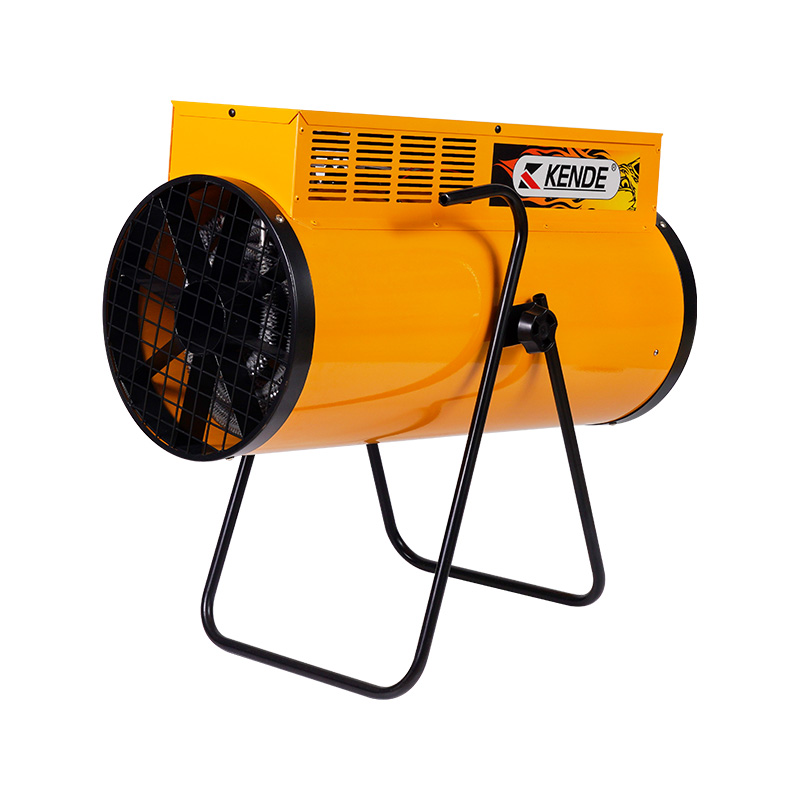
HOT-90/150/240/300T Industrial electric air Heater
The HOT-90T, HOT-150T, HOT-240T, and HOT-300T models form a complete industrial electric air heater range. Each model uses three-phase AC380-400V 50Hz power and is designed to provide high heating capacity with strong air movement. The main differences between the models are output power, heat output, air volume, heat space coverage, weight, and housing dimensions. This gives distributors, contractors, factory managers, maintenance teams, and equipment buyers a clear selection path depending on the scale of their application.
The 9 kW HOT-90T is suitable for smaller industrial rooms, local heating areas, service bays, and workstations where reliable electric heat is needed without excessive power consumption. The 15 kW HOT-150T increases heating capacity for larger areas and is a balanced choice for many workshops and warehouse sections. The 24 kW HOT-240T is built for wider spaces where stronger heat delivery and higher air volume are required. The 30 kW HOT-300T is the highest-output option in the series and is suitable for large-volume industrial environments where rapid temperature improvement is important.
Because the entire range is electric, it eliminates many of the handling challenges associated with fuel heaters. Users do not need to store LPG cylinders, diesel, kerosene, or fuel oil. There is no open flame, no fuel leakage risk, and no direct combustion by-products in the heating area. For enclosed or semi-enclosed spaces where ventilation, cleanliness, and operational convenience are important, electric air heating can be a preferred option.
At the same time, the product remains easy to deploy. The tube-frame carrying handle and compact structural design allow the heater to be moved when necessary. This mobility is especially important in industrial environments where heating needs change from one area to another. A repair team may need heat near a vehicle bay in the morning, a production line may require temporary warming in the afternoon, and a storage area may need temperature support overnight. A portable industrial heater gives users the ability to respond quickly.
Industrial heating equipment is often judged by output capacity alone, but real field performance depends on a combination of heating element quality, airflow, body design, safety controls, power flexibility, and ease of operation. The HOT industrial electric air heater series stands out because it addresses these factors together rather than focusing on a single specification.
First, the heater offers three functional modes: cold wind, half-range heating, and full-range heating. Many competing heaters provide only basic on/off heating or limited heat adjustment. This series gives the user more control. Cold wind mode is useful for ventilation and air circulation in warmer seasons. Half-range heating can reduce energy use when full output is unnecessary. Full-range heating delivers maximum performance during cold conditions or when rapid warm-up is required.
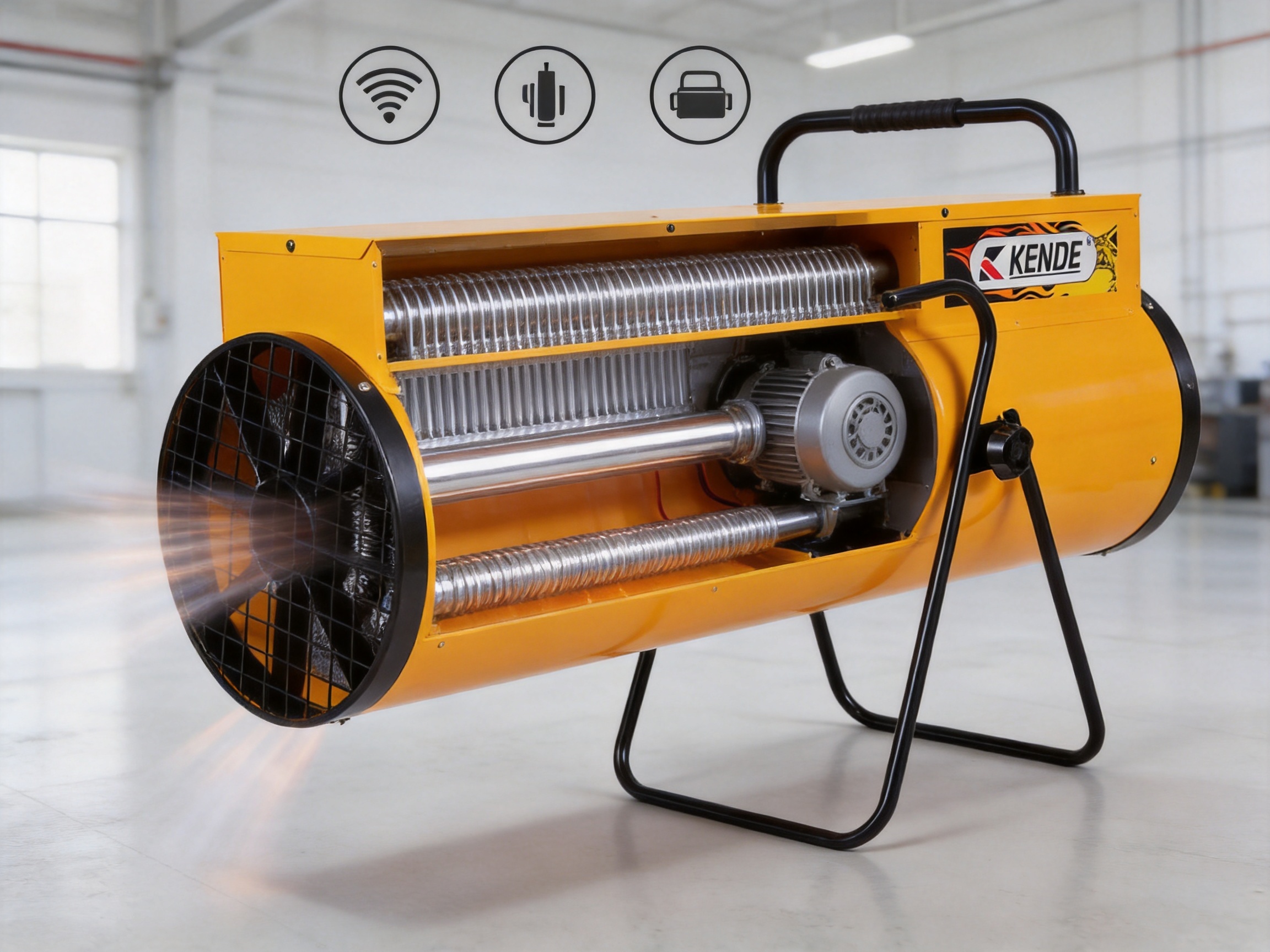
Second, the series uses 304 stainless steel finned heating tubes. The finned design increases the heat exchange area, improving the transfer of heat from the tube to the moving air. Stainless steel also resists corrosion and rust, supporting longer service life in industrial environments where humidity, dust, and temperature variation may be present. Ordinary low-grade heating elements may degrade more quickly, leading to reduced heating efficiency, uneven temperature output, or increased maintenance.
Third, the powerful motor drives air farther into the room, helping indoor temperature become more even. In a large space, heating output means little if warm air remains concentrated near the machine. Strong airflow helps distribute heat across the working area, reducing cold spots and making the environment more comfortable and productive. This is a key competitive advantage for workshops and warehouses where workers move across wide areas.
Fourth, the outlet angle can be adjusted up and down. Adjustable air direction allows the user to aim warm airflow toward the area that needs it most. In practical use, this can improve comfort, reduce unnecessary heat loss, and help support specific tasks such as drying surfaces, warming equipment, or maintaining working conditions near assembly zones. Fixed-angle heaters often require awkward placement or additional repositioning to achieve the same result.
Fifth, the metal body and overheating protection device improve safety and reliability. Industrial users need equipment that can work under daily operating conditions without creating unnecessary risk. The overheating protection system helps prevent abnormal temperature rise, while the robust body protects the internal structure from ordinary handling and job-site movement.
Sixth, the portable tube-frame carrying handle is a practical advantage. Many industrial heaters are either too small and weak or too bulky and inconvenient. This series balances heavy-duty heating with mobility. The frame helps protect the unit and provides a convenient way to move it, which is valuable for contractors, maintenance teams, agricultural users, and temporary heating applications.
The following table summarizes the key specifications of the HOT-90T, HOT-150T, HOT-240T, and HOT-300T industrial electric air heater models. These specifications help buyers compare capacity and choose the proper model for their operating environment.
| Model | HOT-90T | HOT-150T | HOT-240T | HOT-300T |
| Heat Output | 7,740 kcal/h | 12,900 kcal/h | 20,640 kcal/h | 25,800 kcal/h |
| Rated Input Voltage | 3-phase AC380-400V 50Hz | 3-phase AC380-400V 50Hz | 3-phase AC380-400V 50Hz | 3-phase AC380-400V 50Hz |
| Output Power | 9 kW | 15 kW | 24 kW | 30 kW |
| Hot Air Output | 1,100 m³/h | 1,100 m³/h | 1,300 m³/h | 1,300 m³/h |
| Recommended Heat Space | 225 m³ | 360 m³ | 570 m³ | 690 m³ |
| Weight | 15.2 kg | 16.6 kg | 21 kg | 21 kg |
| Dimensions | 605 x 430 x 630 mm | 605 x 430 x 630 mm | 725 x 430 x 630 mm | 725 x 430 x 630 mm |
The table shows that the range is structured logically. The two smaller models share a compact housing size and are lighter, while the two larger models use a longer body to support higher output. Airflow increases from 1,100 m³/h in the 9 kW and 15 kW models to 1,300 m³/h in the 24 kW and 30 kW models. This combination of stronger heat and higher air volume enables the larger units to serve spaces up to 570 m³ and 690 m³ respectively.
Effective industrial heating is not only about producing heat; it is about moving heat where people and processes need it. The HOT series is designed with this principle in mind. Its motor power supports a strong air stream, allowing warm air to travel farther from the machine. In large rooms, this reduces temperature layering and helps prevent heat from being trapped only around the heater.
For example, in a warehouse, doors may open frequently, allowing cold air to enter. A weak heater may warm only the immediate area while workers farther away remain uncomfortable. A strong air-output heater can push heated air deeper into the room and support more balanced heating. Similarly, in a workshop with metal equipment, concrete floors, or high ceilings, powerful airflow helps overcome cold surfaces and improves perceived warmth.
The adjustable outlet angle adds another layer of control. When the outlet is directed slightly upward, warm air can travel across a wider area and mix with room air. When directed toward a workstation, it can provide focused heating where staff are performing tasks. When used for drying or process support, the outlet can be aimed toward a specific object or zone. This makes the heater more adaptable than units with fixed air direction.
Because the product has cold wind, half heating, and full heating settings, users can manage output according to actual requirements. During early winter or mild weather, half-range heating may be enough to maintain comfort. During very cold conditions, full-range heating can be selected. During non-heating seasons, cold wind mode can circulate air without activating the heating elements, extending the heater’s usefulness across the year.
One of the most important features of the heater series is the use of 304 stainless steel finned heating tubes. The heating tube is the heart of an electric air heater. Its material quality, surface area, corrosion resistance, and heat transfer capability directly affect performance and reliability.
304 stainless steel is widely recognized for corrosion resistance, oxidation resistance, and mechanical stability. In industrial environments, heaters may be exposed to humidity, dust, temperature cycles, and airborne particles. A heating element made from inferior material may rust, deform, or lose efficiency over time. By using stainless steel, the heater series improves long-term durability and reduces the risk of premature failure.
The finned structure is equally important. Fins increase the contact surface between the heating element and moving air. This means heat can be transferred more efficiently to the air stream. Higher heat conversion helps the machine deliver strong heating while making better use of electrical input. It also helps air temperature rise quickly as it passes through the heater.
In comparison with ordinary straight heating elements, finned heating tubes often provide better heat exchange and more stable output. For users, this can mean faster warm-up, more consistent comfort, and better energy utilization. The design is especially valuable in high-airflow equipment, where large volumes of air must be heated continuously.
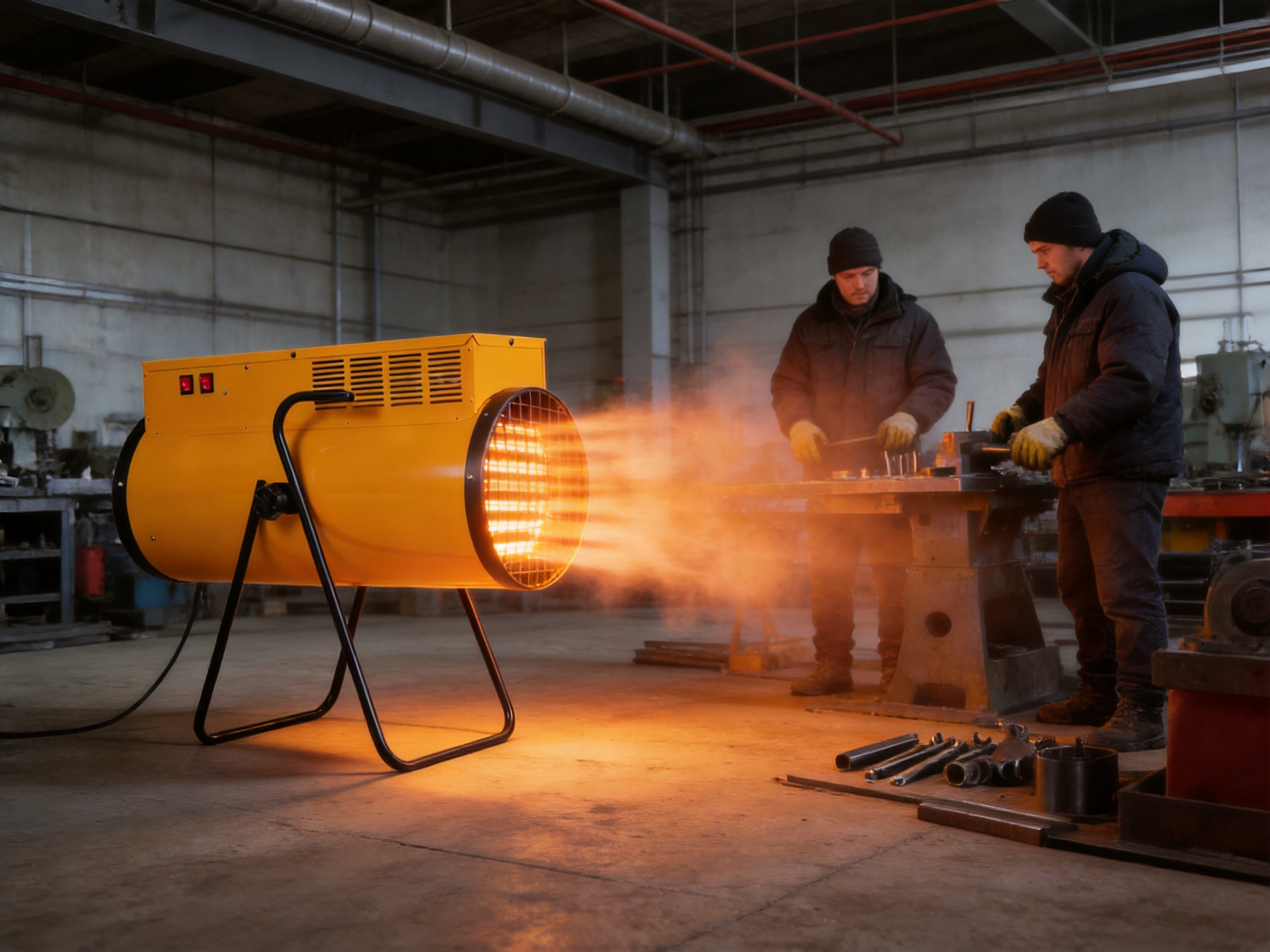
Industrial equipment must be safe as well as powerful. The HOT industrial electric air heater series includes an overheating protection device to help guard against abnormal operating conditions. If internal temperature rises beyond a safe level, protection helps reduce the risk of damage. This is important in environments where heaters may operate for extended periods or where air intake conditions can change due to dust, nearby objects, or job-site movement.
The metal body adds another layer of reliability. A durable housing is essential for equipment that may be moved, stored, transported, and used in busy industrial spaces. Plastic housings may be lighter, but they are often less suitable for high-power industrial heating. A metal structure improves resistance to heat and ordinary impact, helping the unit remain dependable over long service periods.
Safety also benefits from the absence of combustion. Fuel heaters can be effective, but they require attention to ventilation, exhaust, fuel quality, ignition systems, and storage safety. Electric heaters avoid many of these concerns. They produce no direct flame and no local combustion gases. For indoor operations, this can simplify site management and make heating cleaner and more convenient.
Users should still follow proper electrical safety practices. Because the units operate on three-phase AC380-400V power, installation and connection should be handled by qualified personnel according to local regulations. The power supply must match the model requirements, and extension cables or distribution systems should be properly rated. Air inlets and outlets should remain unobstructed, and the unit should be placed on a stable surface during operation.
Electric heaters convert electrical energy directly into heat, and the effectiveness of the overall system depends on how well that heat is delivered into the working area. The HOT series supports practical efficiency through several design choices. The stainless steel finned heating tube improves heat transfer. The strong motor moves hot air through the space. The adjustable outlet angle allows directed heating. The three power settings help avoid unnecessary full-power operation when reduced output is enough.
Energy saving in industrial heating is not always about using the smallest heater. A heater that is too small may run continuously at maximum power and still fail to warm the space adequately. A properly sized heater can raise temperature more effectively and then operate in a lower setting when conditions stabilize. The availability of 9 kW, 15 kW, 24 kW, and 30 kW models helps buyers select a capacity that matches actual room volume and heat demand.
The recommended heat space values provide a useful starting point. HOT-90T is suitable for around 225 m³, HOT-150T for around 360 m³, HOT-240T for around 570 m³, and HOT-300T for around 690 m³. Actual performance will depend on insulation, outdoor temperature, air leakage, ceiling height, door opening frequency, and the type of materials stored or processed in the area. For poorly insulated spaces or environments with frequent door opening, selecting a larger model may be appropriate.
The half-range heating mode is especially helpful in energy management. Once the space reaches an acceptable temperature, users may switch from full-range heating to half-range heating to maintain comfort with lower power draw. Cold wind mode can be used for circulation without heat. This operational flexibility helps reduce unnecessary energy consumption and improves user control.
The heater series can be used in many environments where clean and mobile heating is required. In manufacturing workshops, it can support worker comfort and help maintain stable working conditions. Cold metal parts, tools, and machinery can make winter production uncomfortable; a strong electric air heater helps improve the working environment and can reduce cold-related delays.
In automotive service shops and repair bays, the heater can warm areas where technicians work around vehicles, equipment, and concrete floors. Because it does not require fuel combustion, it can be easier to manage indoors than many fuel-fired options, provided electrical power is available.
In warehouses and logistics areas, the heater can provide supplemental heating for packing zones, loading areas, inspection points, or storage rooms. The adjustable outlet helps direct air toward active work zones rather than heating unused corners unnecessarily.
In construction and renovation, portable electric air heaters can help create more comfortable indoor conditions after a building is enclosed and power is available. They can also support drying tasks, surface preparation, and temporary heating during finishing work. Unlike fuel heaters, electric units do not introduce moisture from combustion, which can be useful for certain drying and finishing applications.
In agricultural and horticultural environments, the heater can be used in equipment rooms, storage areas, workshops, and temporary shelters where clean heat is preferred. In some cases, electric heat can be easier to control and cleaner than fuel-based heating, especially in spaces where air quality matters.
In public service and institutional facilities, such as maintenance departments, utility rooms, emergency shelters, and event support areas, the heater can provide dependable temporary or supplemental warmth. Its portable design helps staff move it as conditions change.
Fuel heaters, including LPG, diesel, kerosene, and fuel oil heaters, have strong roles in many outdoor or highly ventilated applications. However, electric industrial air heaters offer distinct advantages in environments where cleanliness, simple operation, and indoor usability are priorities.
Electric heating does not require fuel tanks, gas cylinders, fuel pumps, or burner maintenance. This reduces logistical complexity. There is no need to schedule fuel deliveries or manage fuel storage areas. For facilities with stable electrical infrastructure, electric heating can be more convenient for regular use.
Electric heaters also avoid direct combustion emissions inside the heated space. This can improve air quality management and reduce concerns related to fumes, odors, and moisture generated by combustion. In workshops where painting, assembly, inspection, packaging, or precision work occurs, cleaner air can be an important benefit.
Operational startup is another advantage. Electric heaters can usually begin working quickly after being connected and switched on. There is no ignition process, no fuel priming, and no flame adjustment. This simplicity reduces training requirements and makes the equipment more user-friendly for multiple operators.
Noise and maintenance may also be lower compared with many combustion systems. While the motor and airflow produce sound, there are no burner components, no fuel nozzles, and no combustion chamber maintenance in the same sense as fuel heaters. For buyers who want lower routine service complexity, this is a meaningful advantage.
Selecting the right model starts with the size of the space. The HOT-90T, with 9 kW output and 225 m³ recommended heat space, is appropriate for smaller industrial rooms and localized heating. It is also the lightest model, making it convenient for frequent repositioning.
The HOT-150T provides 15 kW output and supports around 360 m³ of heating space. This model is a strong middle choice for many workshops, larger garages, small warehouses, and production rooms. It offers higher heating power while maintaining the same compact dimensions as the HOT-90T.
The HOT-240T raises output to 24 kW and increases air delivery to 1,300 m³/h. It is suitable for larger rooms, industrial halls, and spaces where cold air infiltration is more significant. Its 570 m³ recommended heat space makes it a practical option when smaller heaters would be insufficient.
The HOT-300T is the highest-capacity model in the range, delivering 30 kW output and 25,800 kcal/h heat output. It is intended for large industrial areas where rapid and powerful heating is required. With a recommended heat space of 690 m³, it is the best choice for demanding applications in the series.
Users should also consider insulation and environmental conditions. A well-insulated 500 m³ room may be effectively served by a lower-output model than a poorly sealed 400 m³ space with frequent door opening. Ceiling height matters as well; tall spaces may require stronger airflow and strategic placement to avoid heat accumulation above the working zone. In some cases, using multiple heaters in different locations can provide better temperature distribution than one large heater.
The quality of an industrial heater depends not only on its design but also on the manufacturing system behind it. Zhejiang Kende Mechanical and Electrical Co., Ltd. is located in Taizhou City, Zhejiang Province, China, and operates from a large modern production base covering approximately 120,000 square meters. With about 600 employees and an annual production capacity of around 2 million units, the company has the scale and organization required to manufacture equipment consistently for domestic and international markets.
The company is internationally known as a manufacturer and exporter of electric welding machines, chargers, and heaters. Its broad product structure includes MMA or STICK manual arc welding machines, MIG/MAG gas-shielded welding machines, no-gas shielded flux wire welding machines, TIG arc welding machines, CUT plasma arc cutting machines, stud welding machines, automatic submerged arc welding machines, battery chargers, and electric, gas, and oil heaters. This wide technical background supports strong knowledge in power electronics, thermal equipment, sheet metal structures, electrical safety, and industrial product assembly.
For the HOT industrial electric air heater series, this manufacturing foundation matters. High-power electric heaters require reliable electrical components, safe wiring, stable mechanical structure, and carefully controlled assembly. A company experienced in welding machines and power equipment is well positioned to manage these requirements. The ability to manufacture both welding equipment and heaters also reflects competence in handling high-current products, heat management, metal fabrication, and quality inspection.
The company uses advanced management and manufacturing systems, including OA office automation, Japan Toyota TPS management principles, ERP K3, and MES management systems. These systems help coordinate production planning, material flow, quality tracking, and process efficiency. In modern manufacturing, product quality depends heavily on process control. Digital and standardized systems reduce variation and improve traceability, allowing problems to be identified and corrected more effectively.
Advanced automatic patching, plug-in and welding systems, robot processing, laser cutting, and other technologies are used in production. These capabilities contribute to accurate parts, stable assembly, improved consistency, and higher production efficiency. For a heater, precise sheet metal forming, stable welding, proper component placement, and clean assembly all contribute to durability and appearance. For electrical products, consistent wiring and controlled assembly are especially important for safety and reliability.
Strong product performance is supported by research and development. The company has established a Zhejiang Provincial R&D Center, an Enterprise Technology Center, and an Intelligent Welding Technology Research Institute. It has a team of 98 R&D personnel and has obtained multiple invention patents, utility model patents, appearance patents, and software copyrights. This technical foundation helps the company improve products, develop new models, and respond to changing market needs.
Although the HOT heater series is mechanically straightforward from a user perspective, the development of reliable industrial heating equipment requires careful engineering. The airflow path, heating element layout, body structure, motor capacity, safety protection, power switching, thermal insulation, and portability must work together. Good R&D capability helps optimize these areas so the final product is both effective and user-friendly.
The company’s participation in national standards work further reflects technical credibility. It is one of the national standard drafting units of the National Welding Machine Standardization Committee and has participated in drafting, formulating, and revising 20 national standards while leading the drafting of one group standard. Standards participation indicates familiarity with safety, performance, testing, and industry requirements. This culture of standardization benefits all industrial equipment development, including heaters.
International product certificates held by the company include GS, CE, EMC, ERP, US ETL, UKCA, and China CCC for relevant product lines. Certification experience is valuable because different markets require strict attention to electrical safety, electromagnetic compatibility, efficiency, labeling, and documentation. A manufacturer familiar with these requirements is better able to design and produce equipment that meets global customer expectations.
Industrial buyers want products that perform consistently from one batch to another. Quality control begins with material selection and continues through component inspection, processing, assembly, testing, packaging, and shipment. The HOT industrial electric air heater series benefits from a manufacturing environment that emphasizes process management and modern production methods.
Material quality is particularly important for heating tubes, metal housings, wiring, switches, motors, and protective devices. Stainless steel heating elements must meet the required specifications. Metal body parts must be formed accurately. Electrical components must be suitable for the current and voltage requirements. A structured supply chain and inspection process help ensure that each unit is built from reliable materials.
Precision manufacturing also matters. Laser cutting and robot processing can improve dimensional accuracy and repeatability. Accurate body components fit better, reduce assembly stress, and improve product appearance. Consistent component placement supports efficient airflow and safe operation. In high-power electrical equipment, small assembly differences can affect performance and safety, so repeatability is valuable.
Testing is another essential element. Industrial electric heaters should be checked for electrical safety, functional operation, heating performance, fan operation, switch function, and protective behavior. A mature manufacturer can apply standardized testing procedures to help ensure the product leaving the factory meets expectations. This reduces risk for distributors and end users.
Packaging and logistics are also part of product quality. The heater’s metal body and frame are durable, but proper packaging helps prevent damage during transport. An exporter with high annual shipment volume has experience preparing products for international distribution and supporting customers in different regions.
Many industrial products are judged in the first days of use by practical details. The HOT heater series is designed to be simple and convenient. The user can select the operating mode, position the machine, adjust the outlet direction, and begin heating without complex procedures. This matters because industrial equipment is often used by different operators, not only by a single trained specialist.
The compact structure helps the unit fit into work areas where space is limited. Workshops and warehouses are often crowded with machines, tools, pallets, vehicles, and materials. A heater that occupies less floor space is easier to place safely. The tube-frame handle helps with movement and also gives the unit a more protected, job-site-ready form.
The weight range from 15.2 kg to 21 kg is manageable for an industrial heater of this power class. While proper lifting practices should always be followed, the design allows the heater to be relocated more easily than fixed heating systems or bulky fuel-fired equipment. This is valuable for users who need temporary or targeted heating rather than permanent HVAC installation.
The three power settings improve daily usability. In many real situations, heating demand changes throughout the day. A cold morning may require full heat, but afternoon operation may require only half heat. During cleaning or ventilation, cold wind mode can move air without adding heat. This flexibility makes the heater more useful and reduces the need for multiple types of equipment.
The industrial heater market includes many options: small portable electric heaters, large fixed electric heaters, direct-fired fuel heaters, indirect-fired fuel heaters, infrared heaters, and HVAC systems. The HOT series occupies an important position as a portable, high-output electric air heater for users who want clean heat, strong airflow, and simple operation.
Compared with small consumer-grade heaters, it offers much higher power, stronger airflow, metal construction, and industrial voltage compatibility. This makes it suitable for environments where consumer products would be inadequate or unsafe.
Compared with fixed heating systems, it offers portability and lower installation complexity. A fixed system may be ideal for permanent climate control, but it can be expensive and inflexible. A portable industrial electric heater can be deployed only where needed and stored when not in use.
Compared with fuel heaters, it offers cleaner operation and easier indoor management. There is no fuel handling, no combustion exhaust at the heating point, and no flame. This can be a major advantage in enclosed workshops, manufacturing areas, and temporary indoor spaces.
Compared with simple electric fan heaters, the HOT series provides stronger industrial design features: stainless steel finned heating tubes, high air output, adjustable outlet angle, overheating protection, and a durable portable frame. These elements make it more suitable for repeated professional use.
Before using any model in the series, users should confirm that the electrical supply matches the rated input voltage of three-phase AC380-400V 50Hz. The circuit should be properly rated for the selected model’s power level. A 30 kW heater requires significantly more electrical capacity than a 9 kW heater, so correct planning is essential.
The heater should be placed on a stable, level surface. Air intake and outlet areas should remain clear. Blocking airflow can reduce performance and may cause overheating. Operators should keep combustible materials at a safe distance from the outlet, especially during full-power heating. Although the heater does not use open flame, hot air and hot surfaces still require sensible safety precautions.
The adjustable outlet should be directed according to the heating objective. For general room heating, directing airflow across the space can improve distribution. For localized heating, aim the outlet toward the work area while avoiding direct exposure too close to personnel or heat-sensitive materials. For drying, airflow should be directed evenly across the target surface.
Routine inspection should include checking the power cable, plug or connection, switches, fan operation, and air openings. Dust accumulation should be removed according to safe maintenance procedures after power is disconnected. Industrial environments can be dusty, and clean airflow paths help maintain performance.
The simplicity of electric heating offers maintenance advantages. There are no fuel filters, burners, ignition electrodes, combustion chambers, or exhaust pipes. Maintenance mainly focuses on keeping the unit clean, checking electrical connections, ensuring the fan operates correctly, and confirming that protective systems remain functional.
The stainless steel heating tubes support long service life, especially compared with materials that are more vulnerable to corrosion. The metal housing and frame support durability during storage and relocation. When handled properly, the heater can provide dependable seasonal service year after year.
For fleet users, rental companies, and maintenance departments, ease of maintenance is particularly important. Equipment that is simple to inspect and prepare for use reduces downtime. The ability to move the heater between areas also improves utilization, meaning one heater can serve multiple temporary needs rather than remaining fixed in one place.
Zhejiang Kende Mechanical and Electrical Co., Ltd. exports nearly 1.5 million units annually and has built a reputation in electric welding machines, chargers, and heaters. This export scale indicates experience with international logistics, packaging requirements, documentation, and market adaptation. For overseas buyers, choosing a manufacturer with established export capability can reduce purchasing risk.
The company can develop new products according to the needs of different regions, countries, and customers. This flexibility is valuable because heating requirements vary by climate, power supply standards, safety regulations, and user habits. A strong manufacturer does not simply produce one design for every market; it can adjust product development to match customer needs.
The company’s modern joint-stock system, efficient management, and capable middle and senior management team support stable development. In practical terms, buyers benefit from a supplier that can maintain production schedules, control quality, and support long-term cooperation.
The company’s strong technical background in power equipment also gives confidence in electrical product manufacturing. Industrial electric heaters require high-current handling and thermal safety, and these fields are closely related to the company’s established expertise in welding machines and electrical equipment.
Heating is not only about comfort; it can directly affect productivity. Cold working environments can slow workers, reduce dexterity, increase fatigue, and make tasks more difficult. Materials may also behave differently at low temperatures. Paints, adhesives, sealants, lubricants, batteries, and certain mechanical components may require moderate temperatures for proper handling or performance.
By providing rapid and directed warm airflow, the HOT heater series helps create a more stable work environment. Workers can focus on their tasks rather than cold discomfort. Maintenance activities can proceed more efficiently. Drying and preparation tasks may be supported. In warehouse or logistics settings, packing and inspection teams can operate more comfortably during winter.
The mobility of the heater further supports productivity. Instead of heating an entire facility continuously, users can place heat where work is happening. This targeted approach can be more practical for large facilities with changing work zones. It also supports temporary operations, repairs, and seasonal heating needs.
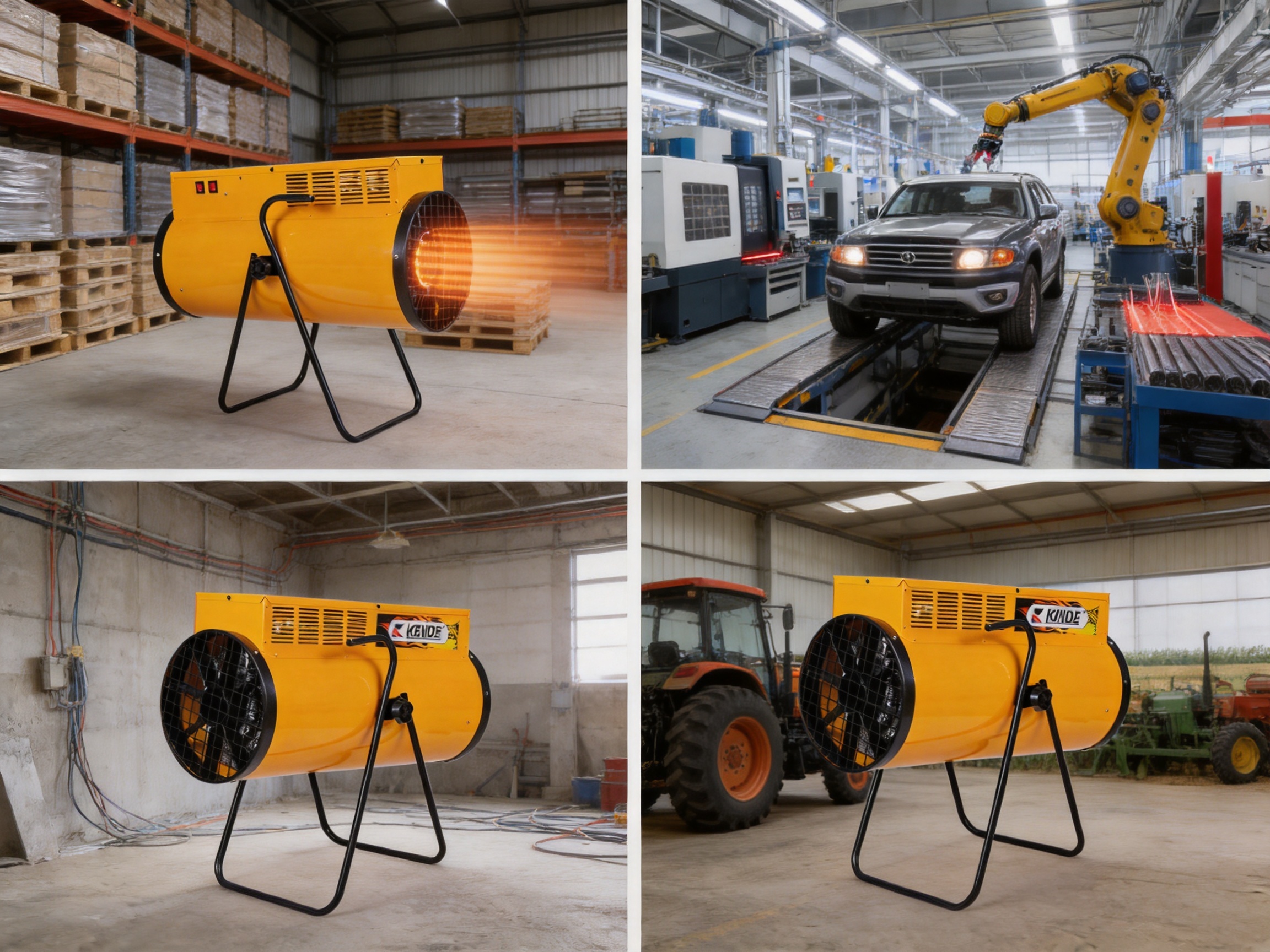
The series is designed to provide clean, powerful, and portable warm air for industrial and commercial spaces. It is suitable for workshops, warehouses, repair bays, construction interiors, agricultural work areas, storage rooms, and other environments that require high-volume heating.
The available models are HOT-90T, HOT-150T, HOT-240T, and HOT-300T. They provide output power levels of 9 kW, 15 kW, 24 kW, and 30 kW respectively.
All four models use three-phase AC380-400V 50Hz input power. Users should ensure the electrical supply and circuit capacity match the selected model.
Yes. The heater includes a cold wind setting, allowing it to blow natural air without heating. This makes it useful for air circulation outside the heating season.
The heater offers cold wind, half-range heating, and full-range heating. These settings allow users to select ventilation, reduced heating, or maximum heating according to real conditions.
304 stainless steel provides corrosion resistance and durability, while the finned design increases heat exchange surface area. Together, they support efficient heat transfer, reliable operation, and longer service life.
The outlet can be adjusted up and down, allowing users to direct warm air toward a work zone, across a room, or toward a drying area. This improves heating flexibility and practical efficiency.
For larger spaces, the HOT-240T or HOT-300T is usually more suitable. The HOT-240T is recommended for around 570 m³, while the HOT-300T is recommended for around 690 m³, depending on insulation and site conditions.
Electric heaters avoid open flame and direct combustion emissions at the heating point. This can make them cleaner and easier to manage indoors. However, users must still follow electrical safety requirements and keep airflow unobstructed.
The product is supported by a manufacturer with a 120,000-square-meter production base, approximately 600 employees, advanced production systems, R&D centers, automated manufacturing equipment, certification experience, and large-scale export capability.
The HOT-90T, HOT-150T, HOT-240T, and HOT-300T industrial electric air heaters provide a strong combination of power, practicality, and reliability. With output levels from 9 kW to 30 kW, the series covers a wide range of heating needs. Its three operating settings, strong airflow, adjustable outlet, stainless steel finned heating tubes, overheating protection, metal body, and portable frame make it a competitive solution for industrial users who need clean and effective warm air.
Compared with ordinary heaters, the series offers better industrial suitability, more flexible operation, stronger construction, and improved heat distribution. Compared with fuel heaters, it reduces fuel handling and avoids direct combustion emissions. Compared with fixed systems, it offers mobility and simple deployment. These advantages make it a valuable choice for workshops, warehouses, service centers, construction interiors, and many other professional environments.
The product is also backed by the manufacturing strength of Zhejiang Kende Mechanical and Electrical Co., Ltd., a large-scale manufacturer with advanced production systems, strong R&D resources, international certification experience, and a broad background in electrical and thermal equipment. This combination of product design and manufacturing capability gives buyers confidence in quality, consistency, and long-term supply.
For users seeking dependable industrial heating that is clean, portable, and easy to operate, this electric air heater series offers a practical and competitive solution. It is built not only to produce heat, but to deliver usable warmth efficiently and safely in demanding working environments.
Industrial Heating Equipment Handbook, Engineering Practice Series.
Principles of Electric Resistance Heating, Applied Thermal Engineering Reference.
Industrial Ventilation and Air Distribution Guide, Facility Engineering Manual.
Electrical Safety for Industrial Equipment, Maintenance and Operation Standard Reference.
Stainless Steel Materials in Thermal Equipment, Materials Engineering Review.
Quality Management in Modern Manufacturing, Production Systems and Process Control.
Recommended Products

Contact Us
No.2299, Luqiao Section, Shugang Avenue, Luqiao District, Taizhou, 318057 Zhejiang, PR China.
+86-576-82431568
 Privacy
China Welding Machine Factory
 English
 中文简体
中文简体
 русский
 Español
 عربى
عربى
 Français
 Português
 Deutsch
 Український