Email: [email protected]
Email: [email protected]

Blog
 2026.06.30
 Blog
Blog
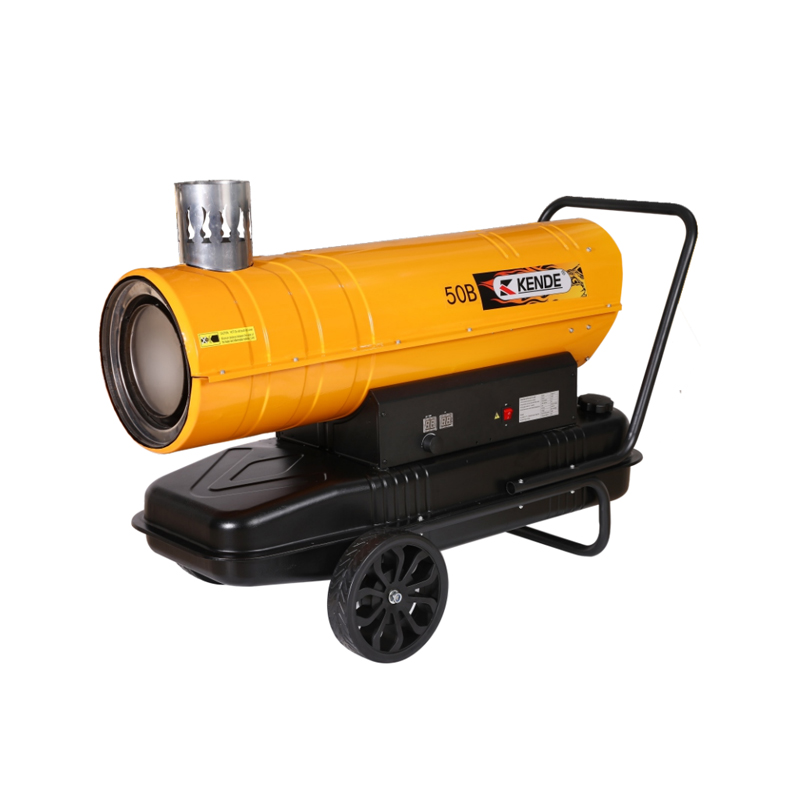
In demanding work environments, heat is not merely a comfort feature; it is often a condition for productivity, safety, material performance, and efficient operation. The MARS-50B fuel heater is designed for users who need powerful, controllable, and mobile heating for workshops, warehouses, construction sites, farms, maintenance areas, industrial facilities, and other large spaces where ordinary heaters cannot deliver enough warm air quickly. With a 50 kW heat output, 43,000 kcal/h heating capacity, 1,750 m³/h hot air output, and a 69 L fuel tank, this model is built to provide strong thermal performance while remaining practical to move, operate, and maintain.
The product belongs to the heaters category and reflects the engineering experience of Zhejiang Kende Mechanical & Electrical Co., Ltd., an established manufacturer of welding machines, chargers, heaters, and related electromechanical products. The company’s background in power electronics, metal fabrication, automated production, and international certification supports the development of heating equipment that is reliable, consistent, and suitable for professional markets. Unlike basic fuel heaters that focus only on high-temperature output, the MARS-50B combines digital temperature control, automatic ignition, protection functions, fuel filtration, delayed cooling, and separated heating-air and exhaust-gas design to provide a more complete heating solution.
The MARS-50B fuel heater is a high-output oil-fired air heater designed to deliver fast and stable heat in large indoor or semi-open working environments where ventilation conditions and application requirements are properly considered. It is powered by AC220V-240V 50Hz single-phase input and uses fuel combustion to generate heat, distributing warm air through a strong airflow system. Its 50 kW output makes it suitable for users who need stronger performance than smaller portable heaters but still require a compact, wheeled unit that can be moved to different work areas.
One of the most important strengths of the heater is its stepless temperature setting range from 5 °C to 98 °C. Instead of forcing users to choose from a few fixed gears or rough heating levels, the machine allows flexible temperature selection across a wide range. This helps operators adapt the heater to changing conditions, such as cold morning startup, moderate daytime heating, drying assistance, storage area temperature maintenance, or temporary worksite heating. The automatic constant-temperature function helps reduce unnecessary manual adjustment and supports more stable thermal comfort and process consistency.
The double-screen digital display is another user-focused feature. It shows the set temperature and ambient temperature clearly, allowing operators to understand both the target and the actual condition at a glance. This is particularly useful in larger spaces where temperature changes may not be immediately noticeable. By providing visible feedback, the heater helps users manage fuel consumption, avoid overheating, and make better decisions about placement and operating time.
Safety and durability are central to the design. The MARS-50B includes overheating protection and a low-oil automatic shutdown function. These systems help prevent unsafe operation when the machine is under abnormal thermal stress or when fuel is insufficient. The heater also includes delayed blowing cooling, which allows the internal system to cool more gradually after shutdown. This helps protect the combustion chamber and other components from heat shock, extending the product’s service life.
| Model | MARS-50B |
| Heat Output | 43,000 kcal/h |
| Rated Input Voltage | AC220V-240V 50Hz, single phase |
| Output Power | 50 kW |
| Hot Air Output | 1,750 m³/h |
| Fuel Consumption | 4 kg/h |
| Fuel Tank Capacity | 69 L |
| Weight | 44.6 kg |
| Dimensions | 1220 × 580 × 715 mm |
These specifications show that the heater is positioned as a professional-grade mobile heating unit. The 50 kW output is substantial for temporary or supplementary heating, while the 69 L tank supports extended operation before refueling is required. At 44.6 kg, the unit is not a lightweight household heater, but it remains movable because of its pipe rack wheel design. This balance between capacity and mobility is one of the core advantages of the product.
A major reason to choose the MARS-50B is its powerful heat output. In industrial and commercial environments, heat loss can be significant because of large door openings, high ceilings, poor insulation, or frequent movement of goods and vehicles. A low-output heater may run continuously without achieving the desired effect, consuming energy while failing to improve working conditions. With 50 kW of output and 1,750 m³/h of hot air movement, the MARS-50B is capable of pushing warm air through larger spaces more effectively than many smaller portable units.
The 43,000 kcal/h rating provides a practical indication of thermal capacity. For workshops, garages, warehouses, construction areas, agricultural buildings, and maintenance facilities, this level of output can help raise the ambient temperature quickly and maintain a more usable working environment. Faster heat-up can be especially valuable at the beginning of a workday, after doors have been opened for deliveries, or during cold weather when machinery, materials, and workers are affected by low temperatures.
The heater is also useful for temperature-sensitive tasks. Some materials become more difficult to handle in cold environments. Paints, adhesives, sealants, lubricants, resins, plastics, and construction materials may perform poorly if they are too cold. By providing strong warm air, the MARS-50B can support more stable working conditions for maintenance, assembly, curing, drying, storage, and repair tasks, provided that ventilation and safety requirements are followed.
Many conventional fuel heaters use simple switches, manual controls, or a small number of output levels. This can result in temperature fluctuation, excessive heat, or repeated manual adjustment. The MARS-50B improves usability through stepless temperature setting from 5 °C to 98 °C. The operator can select the desired temperature without being limited to fixed gear positions, which makes the machine more adaptable for different environments and tasks.
The automatic constant-temperature function is valuable because professional users often need stable heat rather than uncontrolled maximum output. For example, a warehouse may only need to stay above a certain temperature to protect stored materials. A workshop may need a comfortable working range rather than intense heat. A drying or maintenance task may require steady warmth without overheating the surrounding area. Automatic temperature control helps the heater operate more intelligently and reduces the burden on the user.
This feature also supports fuel efficiency. When a heater runs without control, it may generate more heat than needed and consume fuel unnecessarily. By enabling users to define a target temperature and allowing the machine to regulate operation automatically, the MARS-50B helps avoid waste. In real-world use, the exact fuel savings depend on ambient temperature, insulation, ventilation, space size, and operating habits, but the principle is clear: controlled heating is generally more efficient than uncontrolled heating.
The double-screen digital display shows both set temperature and ambient temperature. This design may seem simple, but it significantly improves operator confidence. In large or busy working spaces, users need to make quick decisions. If the display only shows a setting, the operator may not know whether the environment is actually reaching the target. If the display only shows current temperature, the operator may not remember the selected target. Showing both values at the same time makes operation clearer.
This feature helps reduce errors. A worker can quickly check whether the heater is set appropriately, whether the room is warming up, and whether adjustment is required. It is also useful when multiple people operate the same heater during different shifts. The display provides direct information, reducing reliance on guesswork or handwritten notes.
Compared with low-cost heaters that use only mechanical knobs or indicator lights, the digital display gives the MARS-50B a more professional operating experience. For distributors and end users, this is a visible quality advantage. It makes the product easier to demonstrate, easier to train, and easier to use in daily operation.
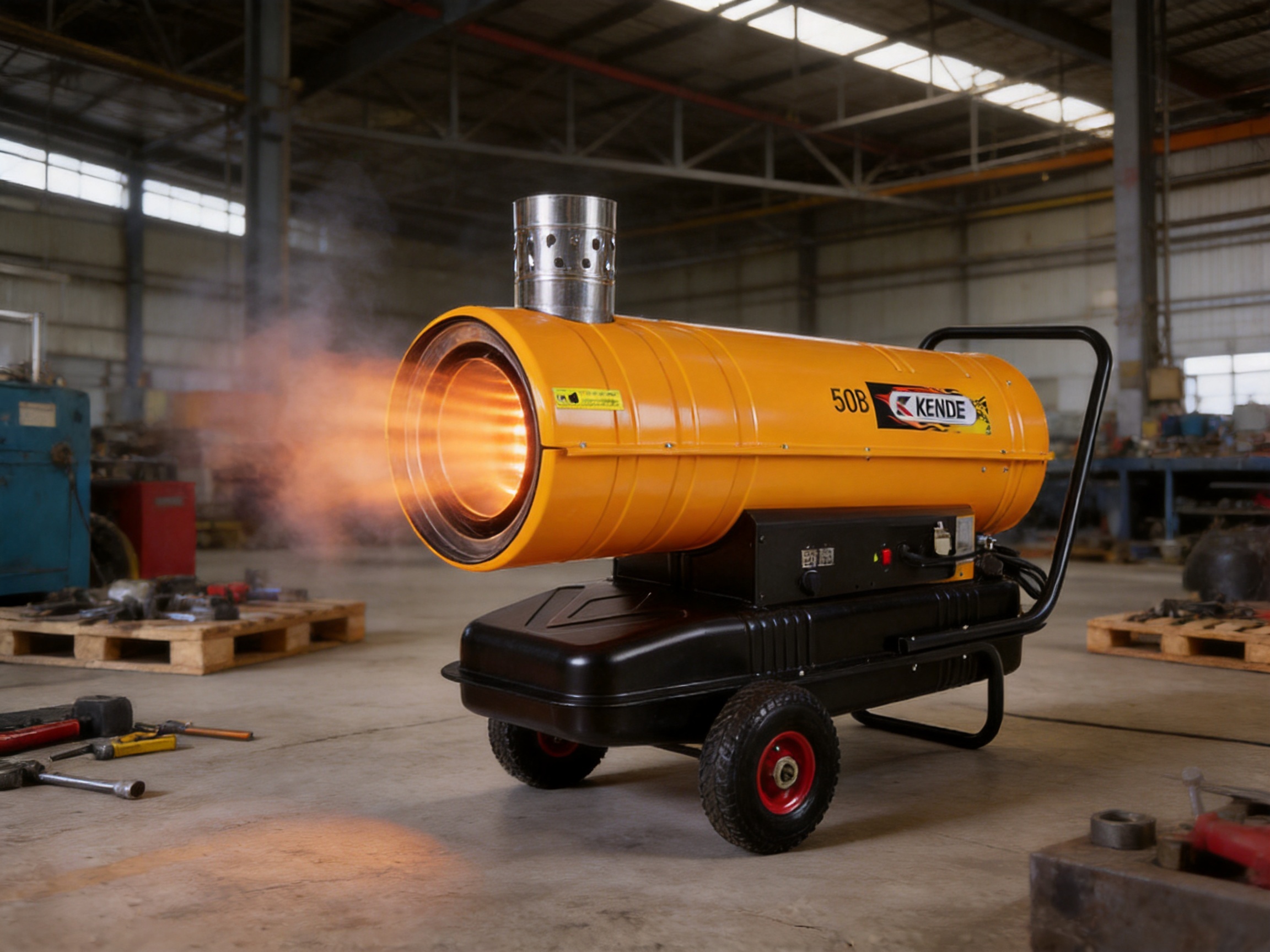
The MARS-50B is designed with automatic ignition when the machine is switched on. This improves convenience because the operator does not need to perform complicated manual ignition steps. In cold environments, users often wear gloves or work under time pressure. A heater that starts easily reduces frustration and downtime.
Automatic ignition also contributes to operational consistency. Manual ignition procedures can vary from person to person, and incorrect startup can cause delays or unsafe attempts. With automatic ignition, the machine provides a more standardized startup process. This is especially beneficial for commercial users who may have different operators using the heater throughout the season.
In comparison with older or simpler fuel heaters, automatic ignition is a strong selling point. It matches modern expectations for professional equipment: turn on the machine, set the temperature, and allow the system to begin working. The MARS-50B is therefore not only powerful but also easy to operate.
Fuel combustion quality depends heavily on fuel delivery and atomization. The MARS-50B uses a brand fuel pump and nozzle to support more uniform fuel atomization and more adequate combustion. Uniform atomization allows fuel to mix more effectively with air, helping the combustion process become more stable and complete. Better combustion can improve heat output consistency, reduce unnecessary smoke or residue, and support overall operating reliability.
This is an important advantage over low-quality heaters that may use inconsistent fuel pumps or poorly matched nozzles. Weak atomization can lead to unstable flame, incomplete combustion, odor, poor efficiency, and maintenance problems. By focusing on fuel delivery quality, the MARS-50B addresses one of the most critical areas in oil-fired heater performance.
For users, the benefit is practical. A heater that burns more steadily is easier to trust in daily operation. It can provide more consistent heat and reduce interruptions. For distributors, the use of quality fuel delivery components helps reduce after-sales complaints and supports a stronger reputation in the market.
The product includes refueling and suction oil double filtration. Fuel quality can vary depending on storage conditions, local supply, container cleanliness, and user handling. Dust, particles, or contamination can affect the fuel system, nozzle, and combustion stability. Double filtration helps protect the heater by reducing the risk that impurities enter sensitive fuel delivery components.
Cleaner fuel flow supports fuller combustion and longer component life. It can also reduce maintenance frequency and help preserve heating performance over time. In industrial environments, equipment is often used intensively during cold seasons, and downtime can be costly. A filtration-focused design helps the heater remain dependable under practical working conditions.
Compared with heaters that rely on minimal filtration, the MARS-50B offers a stronger protective approach. This does not eliminate the need for proper fuel handling and regular maintenance, but it gives the product an additional advantage in real-world reliability.
The MARS-50B is designed so that heating air and combustion exhaust gas are separated. This feature increases the range of applicable occasions because it helps prevent combustion gases from mixing directly with the heated air stream. In many professional applications, air quality and safety are major concerns, and separation is an important design consideration.
Users should always follow installation, ventilation, and safety instructions for fuel-burning equipment. However, the separated design gives the heater a more refined structure than basic direct-fired units. It supports cleaner warm-air delivery and makes the heater more suitable for environments where operators need heat without direct exposure to combustion exhaust in the airflow.
This is one of the product’s strongest advantages over many simple fuel heaters. Competitors may advertise high output, but if their design mixes combustion exhaust with warm air, the range of practical applications can be more limited. The MARS-50B combines high heat output with a more application-conscious airflow design.
The combustion cylinder is exposed to high temperature, thermal cycling, and combustion by-products. Material selection is therefore critical. The MARS-50B uses a 439 stainless steel combustion cylinder, which offers high-temperature combustion resistance and corrosion resistance. This contributes to durability and long service life.
In lower-grade heaters, combustion chambers may deform, corrode, or degrade faster under repeated high-temperature operation. Once the combustion chamber is compromised, performance and safety can be affected. By using stainless steel suitable for high-temperature environments, the MARS-50B strengthens one of the core structural components of the heater.
For users who operate heaters season after season, durability matters as much as initial heat output. A cheaper heater may appear attractive at purchase, but if the combustion chamber deteriorates quickly, repair costs and downtime reduce its value. The MARS-50B is positioned as a longer-term equipment choice, not merely a low-cost temporary device.
When a heater is switched off, internal components can remain very hot. If airflow stops immediately, residual heat may stay concentrated in the combustion chamber and nearby parts. The MARS-50B includes delayed blowing cooling, allowing the machine to continue cooling after shutdown. This helps reduce thermal stress and supports longer component life.
Delayed cooling is a practical engineering detail that reflects attention to durability. It helps protect internal parts from abrupt temperature changes and heat accumulation. In professional use, where the heater may be started and stopped repeatedly, this feature becomes especially valuable.
Compared with heaters that shut down airflow instantly, delayed cooling can reduce the risk of premature wear. It is a good example of how the MARS-50B goes beyond basic heating and focuses on reliable operation over time.
Safety protection is essential for fuel heaters. The MARS-50B includes overheating protection and less-oil automatic shutdown. Overheating protection helps prevent operation under abnormal high-temperature conditions, while low-oil shutdown helps stop the machine when fuel is insufficient. These features contribute to safe and reliable use.
In busy work environments, operators may not constantly monitor fuel level or internal temperature. Automatic protective functions act as a safeguard against neglect, mistakes, or unexpected operating changes. While users must still operate the machine responsibly, built-in protection provides an additional layer of security.
This is a key difference between professional heaters and very basic models. A heater used in a workshop, warehouse, or construction site must be able to respond to abnormal conditions. The MARS-50B is designed with this expectation in mind.
The MARS-50B includes a power failure memory function, reducing the need for repeated temperature setting. This is useful in areas where power interruptions may occur or where equipment is switched off and restarted frequently. Instead of requiring the operator to reset the temperature every time, the machine can remember previous settings, improving convenience and continuity.
For professional users, small time-saving features become meaningful when equipment is used every day. The memory function helps maintain consistent operation across shifts and reduces the chance of incorrect settings after restart. It also improves the user experience by making the machine feel more intelligent and better adapted to real working conditions.
The heater measures 1220 × 580 × 715 mm and weighs 44.6 kg. It is built with a pipe rack wheel design, giving it a compact structure that is easier to move. Mobility is essential because heating needs often change throughout a facility. One day the heater may be needed near a loading area; another day it may be required in a repair zone, drying area, temporary shelter, or agricultural building.
The wheeled design allows operators to reposition the unit without specialized lifting equipment. The pipe rack structure also provides protection and handling convenience. This makes the heater more practical than fixed heating systems for users who need flexible temporary or supplementary heating.
Compared with stationary heaters, the MARS-50B offers deployment flexibility. Compared with smaller portable heaters, it provides much stronger output and a larger fuel tank. This combination makes it suitable for users who need both heating power and movement capability.
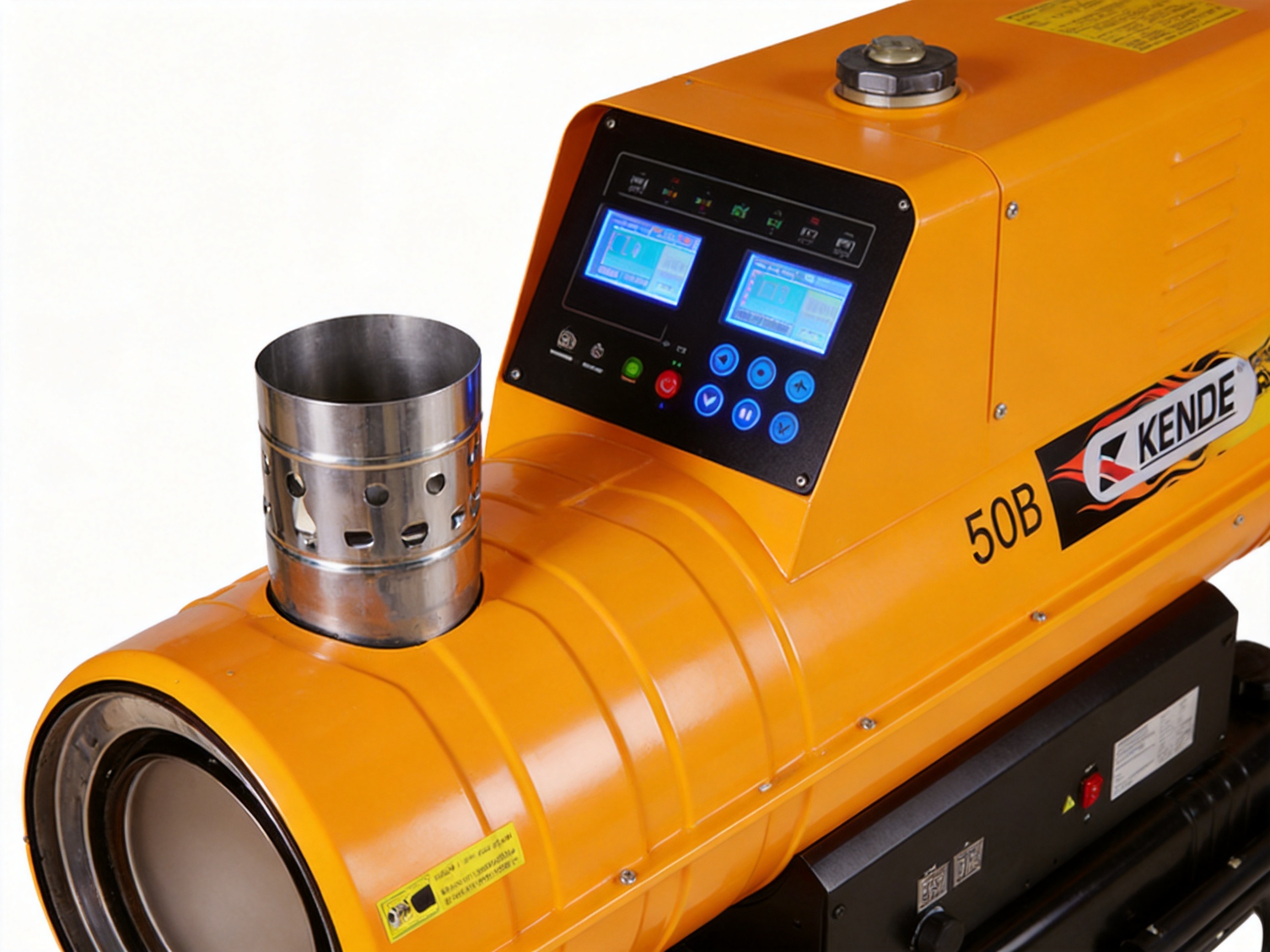
The MARS-50B offers several advantages over competing fuel heaters in the same general class. First, it combines high heating power with precise temperature management. Many competitors provide strong output but limited control. The stepless 5 °C to 98 °C temperature setting and automatic constant-temperature function make the MARS-50B more flexible for different applications.
Second, the double digital display improves usability. Some competing heaters still rely on simple switches or analog controls, which may be less clear for operators. The ability to view both set temperature and ambient temperature gives the MARS-50B a modern and professional interface.
Third, the machine focuses on fuel system reliability through quality fuel pump and nozzle components, as well as double filtration. These details matter because poor fuel atomization and contamination are common causes of performance problems in fuel-fired equipment. By strengthening the fuel delivery system, the product offers better combustion stability and easier maintenance.
Fourth, the separated heating air and combustion exhaust gas design provides an application advantage. While users must always ensure proper ventilation and follow safety rules, separating the heating airflow from combustion exhaust makes the unit more suitable for a wider range of professional environments than simple direct-fired designs.
Fifth, the 439 stainless steel combustion cylinder, delayed blowing cooling, overheating protection, and low-oil shutdown all contribute to durability and safety. A competitor may be less expensive at first purchase, but if it lacks protective systems or uses lower-quality combustion materials, the long-term cost of ownership can be higher.
Finally, the 69 L fuel tank supports longer operating periods. For users heating large spaces, frequent refueling interrupts work and increases labor. A larger tank improves practical productivity and reduces downtime.
Industrial workshops often have large open areas, metal structures, high ceilings, and frequent door openings. Workers may perform welding, assembly, cutting, mechanical repair, fabrication, or packing tasks. Cold temperatures can reduce comfort, slow manual work, and affect material behavior. The MARS-50B can provide strong warm air to improve working conditions during colder seasons.
Warehouses need flexible heating because goods may be stored in different zones and doors may open frequently for loading and unloading. A mobile fuel heater allows operators to direct heat where it is needed most. The MARS-50B’s 1,750 m³/h hot air output helps warm larger zones more efficiently than small heaters.
Construction sites often lack permanent heating systems. Temporary heat may be needed for worker comfort, drying, curing, equipment maintenance, or material preparation. The MARS-50B’s mobility, high output, and large fuel capacity make it useful for temporary heating when safe ventilation and operating conditions are ensured.
Farms, greenhouses, storage sheds, repair barns, and livestock-related facilities may require supplementary heat. The heater’s mobility allows it to be moved between locations according to seasonal needs. Its temperature control function helps avoid excessive heating when only moderate warmth is required.
Garages and service areas may need heat for mechanics, tools, vehicles, and parts. Cold metal components can be difficult to handle, and low temperatures may affect lubricants and maintenance operations. A powerful mobile heater can help create a more workable environment.
The quality of a heater depends not only on its design but also on the manufacturing system behind it. Zhejiang Kende Mechanical & Electrical Co., Ltd. is located in Taizhou, Zhejiang Province, China, and operates on a large manufacturing base covering approximately 120,000 square meters. With about 600 employees and an annual production capacity of about 2 million units, the company has the scale required to support stable supply, quality consistency, and broad market service.
The company is internationally known for manufacturing and exporting electric welding machines, chargers, and heaters. It exports nearly 1.5 million units annually, demonstrating strong global market experience. This export background is important because products supplied to international markets must meet diverse customer expectations, regulatory requirements, climate conditions, and usage habits.
Kende’s product range includes MMA or stick welding machines, MIG/MAG gas-shielded welding machines, flux wire welding machines, TIG arc welding machines, plasma cutting machines, stud welding machines, submerged arc welding machines, battery chargers, and electric, gas, and oil heaters. This broad electromechanical manufacturing experience supports the development of products like the MARS-50B because heater production requires expertise in metal structure, electrical control, airflow design, safety protection, and durable assembly.
The company applies advanced management and manufacturing systems, including OA office automation, Toyota TPS management principles, ERP K3, and MES management systems. These systems help organize production, improve efficiency, manage materials, track processes, and support consistent quality. For customers, this means the product is not produced in a casual or uncontrolled workshop environment; it is supported by modern manufacturing organization.
Advanced production technologies used by the company include automatic patching, plug-in and welding systems, robot processing, laser cutting, and other modern manufacturing methods. These processes improve precision, consistency, and production efficiency. For a fuel heater, consistent metal fabrication is important because airflow channels, combustion chamber alignment, structural frame strength, and assembly accuracy all influence final product performance.
Robot processing and laser cutting help produce parts with repeatable accuracy. Automatic assembly-related systems reduce variation and improve production flow. MES management helps monitor manufacturing information and supports traceability. Together, these capabilities strengthen the reliability of finished products and help the company maintain stable quality at large production scale.
The company has strong research, development, and innovation capabilities. It operates a provincial R&D center, an enterprise technology center, and an intelligent welding technology research institute. With 98 R&D personnel and numerous patents, utility models, appearance patents, and software copyrights, the company has the technical foundation to improve product design and respond to market needs.
Although the company is highly recognized in the welding machine industry, this technical culture also benefits heater development. Heating equipment increasingly requires better control systems, safer protection functions, efficient fuel usage, stronger materials, and improved user interfaces. The MARS-50B’s digital display, temperature memory, automatic constant temperature, delayed cooling, and protection functions reflect this kind of product development mindset.
A company with R&D capability can also adapt products for different regions and customer requirements. Different markets may require different voltage configurations, safety standards, labels, packaging, accessories, or application preferences. Strong engineering support helps make these adaptations possible while maintaining product quality.
Kende holds many international product certificates, including GS, CE, EMC, ERP, US ETL, UKCA, and China CCC for various products. The company is also one of the national standard drafting units of the National Welding Machine Standardization Committee and has participated in drafting, formulation, and revision of multiple national standards. While certification details vary by product and market, this background shows that the company has long experience with compliance, testing, documentation, and technical standards.
For customers buying heating equipment, this matters because reliable suppliers must understand more than mechanical assembly. They must understand electrical safety, electromagnetic compatibility, efficiency requirements, production consistency, documentation, and market access. A supplier with standardization experience is generally better positioned to support distributors, importers, and professional buyers.
For distributors, the MARS-50B offers a strong combination of visible features and practical selling points. The digital double display, wheel frame, large tank, stainless steel combustion cylinder, automatic ignition, and protection functions are easy to explain to customers. The product has a clear role in the heater market: a powerful, mobile, professional fuel heater for large spaces.
For end users, the value is even more direct. They receive a heater that can deliver strong heat, maintain selected temperature, move between work areas, reduce repeated setting, protect itself from abnormal conditions, and support long operation with a large fuel tank. These qualities reduce inconvenience and improve day-to-day usability.
The total value of the product should be considered beyond purchase price. A heater that is easier to operate, safer to use, more durable, and more stable in combustion can reduce downtime and maintenance pressure. In professional environments, reliability often matters more than the lowest initial cost.
To obtain the best performance from the MARS-50B, users should operate it according to the product manual and local safety regulations. Fuel-burning equipment requires appropriate ventilation, correct fuel selection, stable power supply, and safe placement away from flammable materials. Operators should ensure that the heater is positioned on a stable surface and that air intake and outlet areas are not blocked.
Fuel should be stored properly and kept clean. Although the heater includes double filtration, contaminated fuel can still reduce performance and increase maintenance needs. Regular inspection of filters, nozzle condition, fuel lines, and combustion components helps maintain reliable operation. The heater should also be allowed to complete its delayed cooling cycle rather than being disconnected abruptly whenever possible.
Routine cleaning is important in dusty environments. Construction sites, workshops, and agricultural buildings may contain airborne dust, fibers, or debris. Keeping the heater clean supports airflow efficiency and reduces the risk of overheating. Operators should also periodically check wheels, frame, power cable, display, and controls for damage.
The MARS-50B stands out because it is not simply a high-output fuel heater. It is a balanced professional heating solution that combines heating power, operating control, safety protection, durability, fuel system quality, and mobility. Its 50 kW output gives it the strength needed for large areas, while its stepless digital temperature setting gives it the control needed for varied applications.
The product’s competitive strength comes from details that users notice during daily operation. Automatic ignition makes startup easier. The double display makes monitoring clearer. Power failure memory reduces repeated adjustment. Delayed cooling protects components. Low-oil shutdown and overheating protection improve safety. Dual filtration and quality fuel atomization support combustion reliability. The stainless steel combustion cylinder provides a stronger foundation for long-term use.
Many competing heaters may offer one or two of these advantages, but the MARS-50B combines them in one practical mobile unit. This combination makes it a strong choice for buyers who need dependable heating equipment from a manufacturer with large-scale production capability and technical experience.
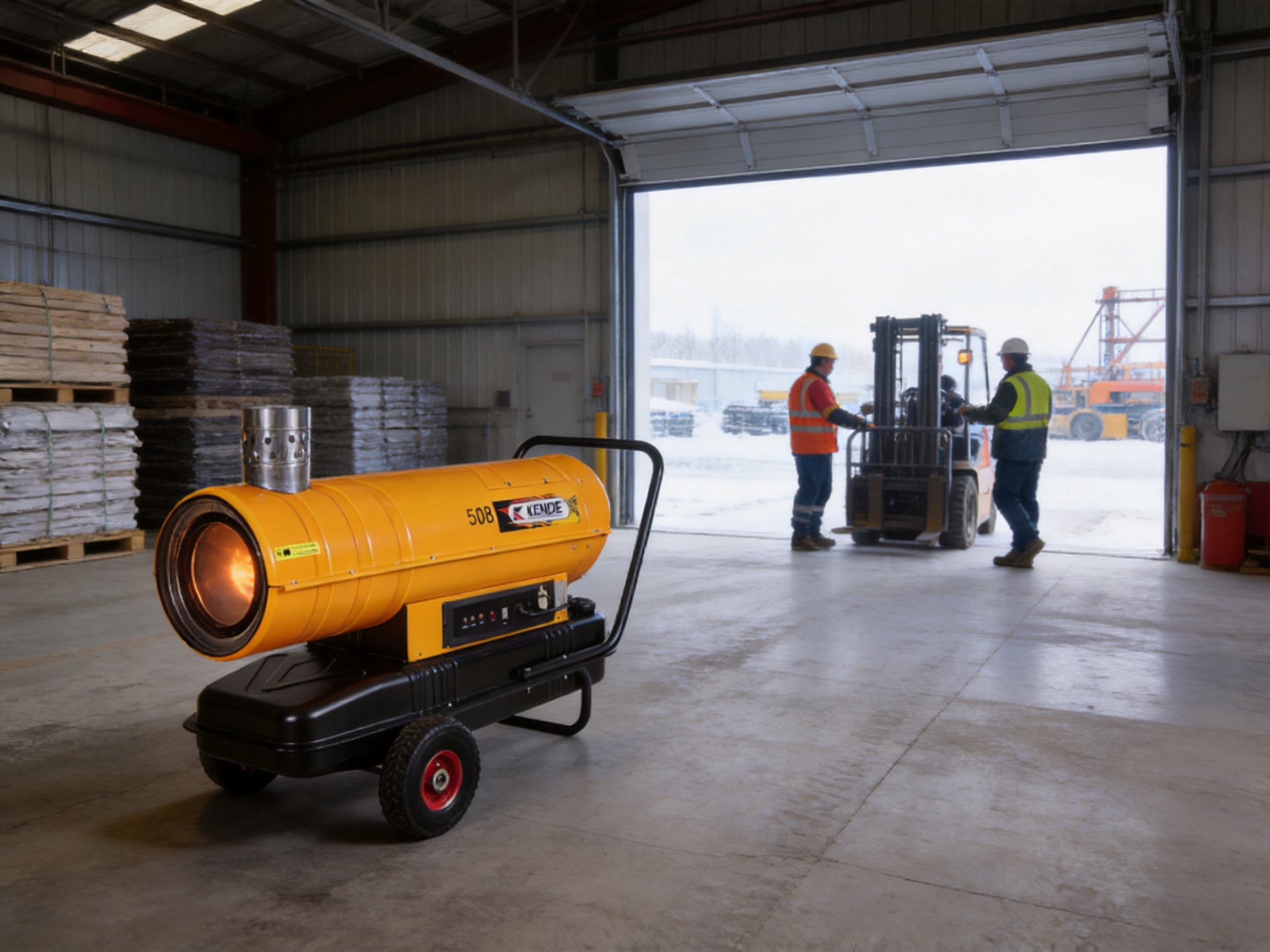
It is designed for industrial, commercial, agricultural, construction, warehouse, workshop, and maintenance users who need powerful mobile heating. It is especially suitable for large spaces where small heaters cannot provide enough warm air.
The heater provides 50 kW output power and 43,000 kcal/h heat output, with a hot air output of 1,750 m³/h.
It uses single-phase AC220V-240V 50Hz input voltage.
The fuel tank capacity is 69 L, which supports longer operating periods and reduces the need for frequent refueling.
Yes. It supports stepless temperature setting from 5 °C to 98 °C and has an automatic constant-temperature function.
The double digital display shows both the set temperature and the ambient temperature, allowing users to monitor operation clearly and adjust settings more accurately.
Yes. It includes overheating protection and low-oil automatic shutdown, helping improve safe and reliable operation.
Delayed blowing cooling helps remove residual heat after shutdown, reducing thermal stress on internal components and supporting longer service life.
The combustion cylinder must withstand high temperature and combustion conditions. 439 stainless steel provides high-temperature resistance and corrosion resistance, improving durability.
Compared with basic heaters, it offers stronger control, clearer digital display, automatic ignition, better fuel filtration, separated heating air and exhaust gas, safety protection, delayed cooling, and a durable stainless steel combustion cylinder.
Yes. Although it weighs 44.6 kg, it uses a pipe rack wheel design that makes it easier to move between work areas.
The product is supported by a large-scale manufacturer with advanced production systems, automated manufacturing technologies, R&D centers, international market experience, and extensive electromechanical production capability.
The MARS-50B fuel heater is a powerful and practical heating solution for professional users who need high heat output, clear control, durability, and mobility. With 50 kW output, 1,750 m³/h hot air delivery, stepless temperature setting, automatic constant temperature, double digital display, automatic ignition, safety protection, double fuel filtration, delayed cooling, and a 439 stainless steel combustion cylinder, it is designed to deliver dependable performance in demanding environments.
Its advantages over many competitors are found not only in its specifications but also in its engineering details. The product addresses real user needs: fast heating, easier operation, safer performance, fewer interruptions, longer service life, and better adaptability. The large 69 L fuel tank and wheel frame make it suitable for long and flexible use, while the separated heating air and combustion exhaust gas design expands its practical application range when used according to safety requirements.
Behind the heater is the manufacturing strength of Zhejiang Kende Mechanical & Electrical Co., Ltd., a large and experienced electromechanical manufacturer with advanced production systems, R&D capability, automation equipment, quality management, and international market experience. This background helps ensure that the product is not only well designed but also consistently manufactured.
For workshops, warehouses, construction sites, agricultural buildings, logistics areas, and maintenance environments, the MARS-50B offers a strong balance of power, control, safety, durability, and value. It is a professional heater for users who expect more than simple heat output and want a machine built for reliable daily operation.
Product technical data for MARS-50B fuel heater, Zhejiang Kende Mechanical & Electrical Co., Ltd.
Company profile and manufacturing capability information, Zhejiang Kende Mechanical & Electrical Co., Ltd.
General industrial heating equipment operation and maintenance principles.
Fuel-fired air heater safety and ventilation best-practice guidelines.
Industrial equipment quality management and production process control references.
Recommended Products

Contact Us
No.2299, Luqiao Section, Shugang Avenue, Luqiao District, Taizhou, 318057 Zhejiang, PR China.
+86-576-82431568
 Privacy
China Welding Machine Factory
 English
 中文简体
中文简体
 русский
 Español
 عربى
عربى
 Français
 Português
 Deutsch
 Український