Email: [email protected]
Email: [email protected]

Blog
 2026.07.02
 Blog
Blog
Electric fan heaters have become essential equipment for workshops, garages, offices, small commercial rooms, repair stations, and temporary heating areas where fast, clean, and controllable warmth is required. The PTC-02C, PTC-02CT, and PTC-03CT electric fan heater series is designed for users who need practical heating performance in a compact body, with stable warm air delivery, easy portability, and dependable electric operation. Built around positive temperature coefficient heating technology, this heater series offers a balanced combination of safety, efficiency, convenience, and durability for daily use.
Unlike traditional resistance-wire heaters that may produce uneven temperature rise or require more careful handling, PTC heating elements are known for their self-regulating characteristics. As the element temperature increases, electrical resistance rises, which helps limit excessive temperature growth. This makes PTC technology a strong choice for compact fan heaters where stable heat output and reliable operation are important. For users who want a heater that warms a defined space quickly without open flame, fuel storage, exhaust gas, or complicated installation, this product series provides an accessible and efficient solution.
The PTC-02C series is especially suitable for heating areas of approximately 20 square meters, depending on insulation, ceiling height, ambient temperature, and airflow conditions. With a rated output power of 2 kW and heat air output of 140 cubic meters per hour, the unit is intended to deliver steady warm airflow in small to medium indoor areas. Its lightweight structure, compact dimensions, and simple electric connection make it convenient for both professional and household environments.
PTC-02C PTC-02CT PTC-03CT Electric fan heaters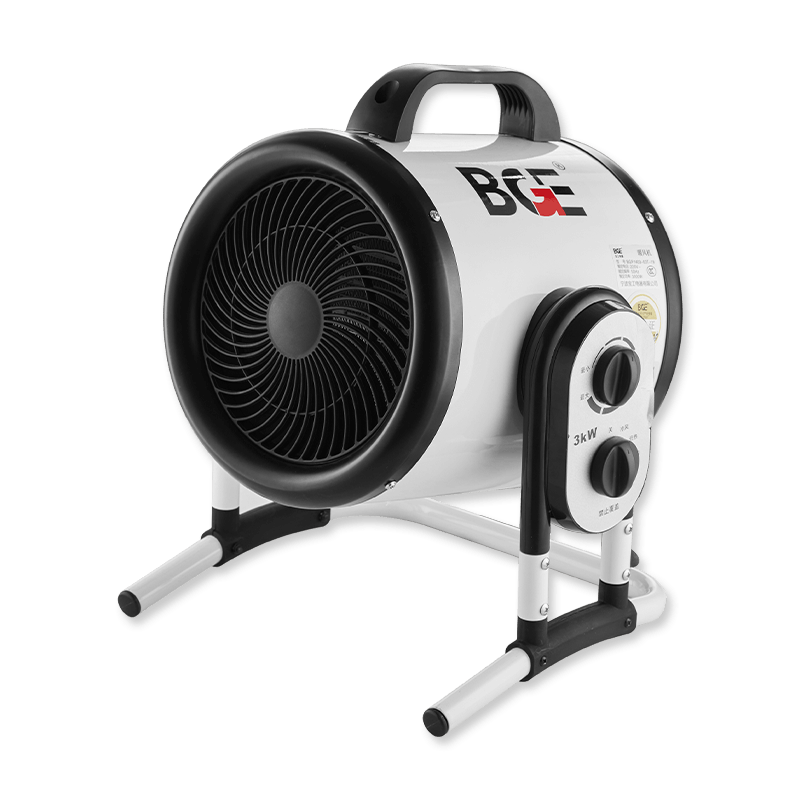
The PTC-02C, PTC-02CT, and PTC-03CT electric fan heaters belong to the electric heater category and are designed to offer clean heat through a powered fan and PTC heating element. The product combines an electric heating core with forced air circulation, allowing warm air to spread more evenly than passive radiant heaters. This design is particularly useful in workspaces where people need heat distributed across a room rather than concentrated only near the heater.
The listed model data for PTC-020C shows a heat output of 1720 kcal/h, rated input voltage of AC220V-240V 50Hz, output power of 2 kW, heat air output of 140 m3/h, heating area of 20 m2, weight of 1.4 kg, IP20 protection class, and dimensions of 200 x 140 x 215 mm. These specifications define the heater as a compact portable product intended for indoor use where quick spot heating and room comfort are required.
The heater’s small size does not reduce its value. In many daily heating situations, users do not need a large industrial heater. They need a unit that can be placed near a workstation, storage room, counter, service bench, small office, reception area, or home utility space. A compact 2 kW fan heater can often provide the right level of comfort while remaining easy to move, store, and operate.
Electric operation is also a major advantage. Fuel heaters may be powerful, but they require fuel supply, ventilation, and careful exhaust management. Gas and oil heaters may not be suitable for enclosed or sensitive indoor areas. An electric fan heater avoids combustion, making it more convenient for many indoor applications. Users simply connect the unit to a suitable electrical supply and operate it according to instructions.
| Item | Specification | User Benefit |
| Model | PTC-020C, related to PTC-02C series | Compact electric fan heater platform for practical heating needs |
| Heat Output | 1720 kcal/h | Provides effective warmth for small indoor areas |
| Rated Input Voltage | AC220V-240V 50Hz, single phase | Compatible with common electrical supply conditions in many markets |
| Output Power | 2 kW | Balanced heating performance with manageable electrical demand |
| Heat Air Output | 140 m3/h | Fan-assisted airflow distributes warm air efficiently |
| Heating Area | Approximately 20 m2 | Suitable for offices, workshops, small rooms, and service areas |
| Weight | 1.4 kg | Easy to carry, reposition, and store |
| Protection Class | IP20 | Appropriate for dry indoor environments |
| Dimensions | 200 x 140 x 215 mm | Compact footprint for desktops, floors, shelves, and work areas |
PTC stands for positive temperature coefficient. In a PTC heater, the heating element has an electrical resistance that increases as the temperature rises. This physical characteristic allows the element to reduce current flow as it becomes hotter, helping the heater maintain a more controlled temperature profile. This does not replace all safety design requirements, but it provides a valuable foundation for stable heating behavior.
Compared with conventional resistance-wire heating elements, PTC elements can offer improved temperature stability. Wire elements may continue heating aggressively under certain conditions, especially if airflow is obstructed. PTC elements naturally resist excessive temperature increase because their resistance rises with heat. This makes the heater less prone to uncontrolled temperature escalation and supports more consistent operation during repeated use.
Another benefit is fast heating response. PTC elements can generate heat quickly after power is supplied, and the integrated fan helps move that heat into the room. Users often value this immediate comfort, especially in cold mornings, temporary workspaces, maintenance areas, garages, and rooms that are not continuously heated. Instead of waiting for central heating to warm a large building, a compact electric fan heater can provide localized warmth where people are working.
PTC technology also contributes to product longevity when properly designed and manufactured. Since the element’s characteristics help control extreme temperatures, thermal stress can be reduced compared with some traditional heating structures. This can support more stable performance over time, particularly when paired with quality airflow design, reliable wiring, proper housing materials, and strict manufacturing inspection.
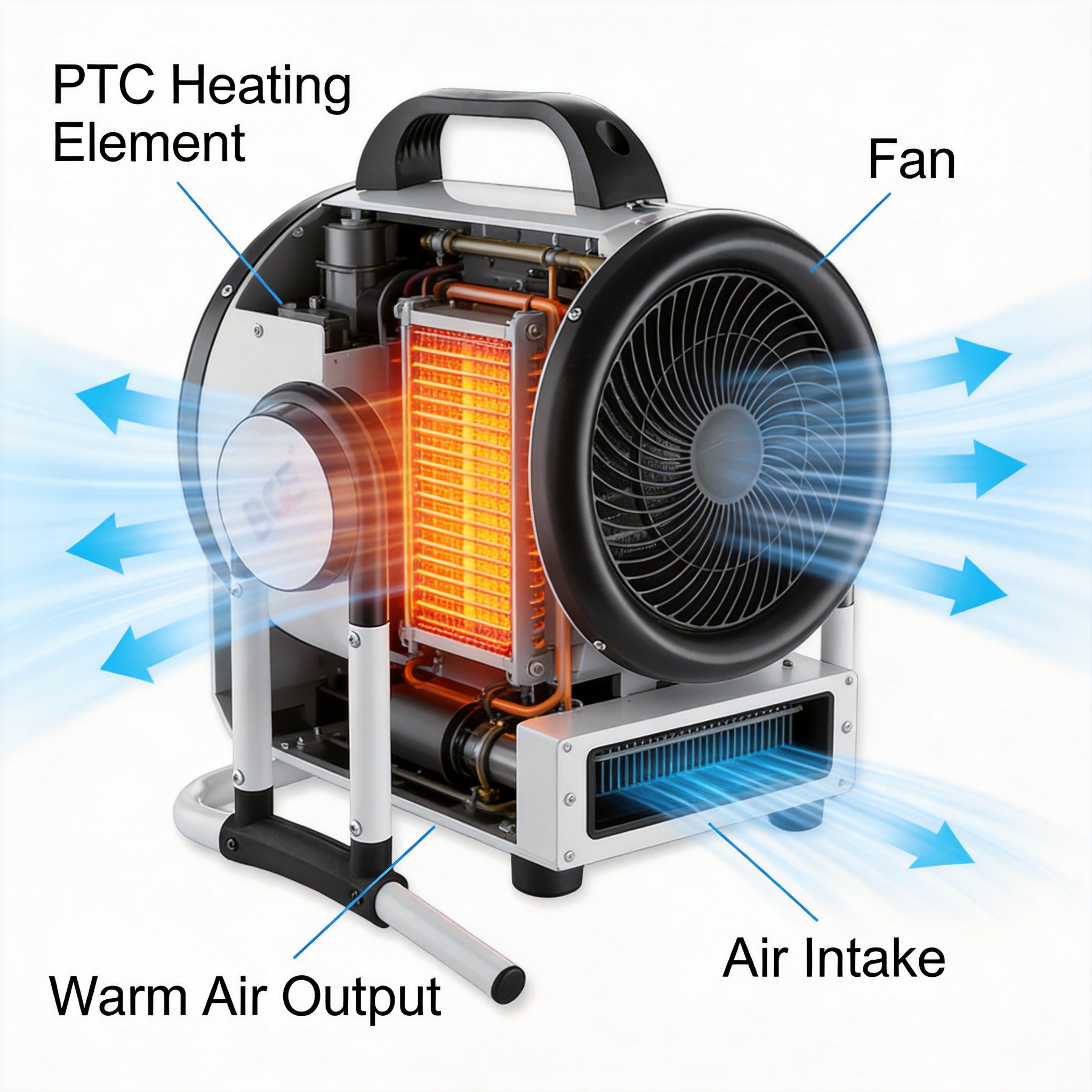
A heater’s power rating is only one part of performance. Warmth is also affected by how effectively heat is transferred to the surrounding air and distributed throughout the space. The PTC-02C series uses fan-assisted airflow, producing approximately 140 m3/h of heat air output. This airflow helps move heat away from the heating element and into the room, improving comfort distribution.
Radiant heaters warm objects and people directly in front of them, but the comfort may drop sharply outside the radiation zone. Natural convection heaters rely on warm air rising slowly, which can take time. A fan heater actively pushes warm air outward, reducing waiting time and helping create a more uniform room temperature. This is useful in workshops where users move around, in small shops where customers enter and leave, and in utility rooms where cold air may collect near the floor.
The fan also supports the efficient operation of the heating element. By moving air through the heater, the system transfers generated heat into the environment rather than allowing it to remain concentrated internally. Good airflow design is therefore important for both comfort and equipment reliability. A well-designed compact heater must balance air volume, noise, housing structure, heating element position, and user safety.
For many buyers, the most noticeable advantage is simple: warm air arrives quickly. A 2 kW heater with a capable fan can make a meaningful difference in a small room. It can improve working comfort, reduce cold-related fatigue, and create a better environment for tasks that require manual dexterity, such as repair, assembly, tool maintenance, packaging, inspection, and light manufacturing work.
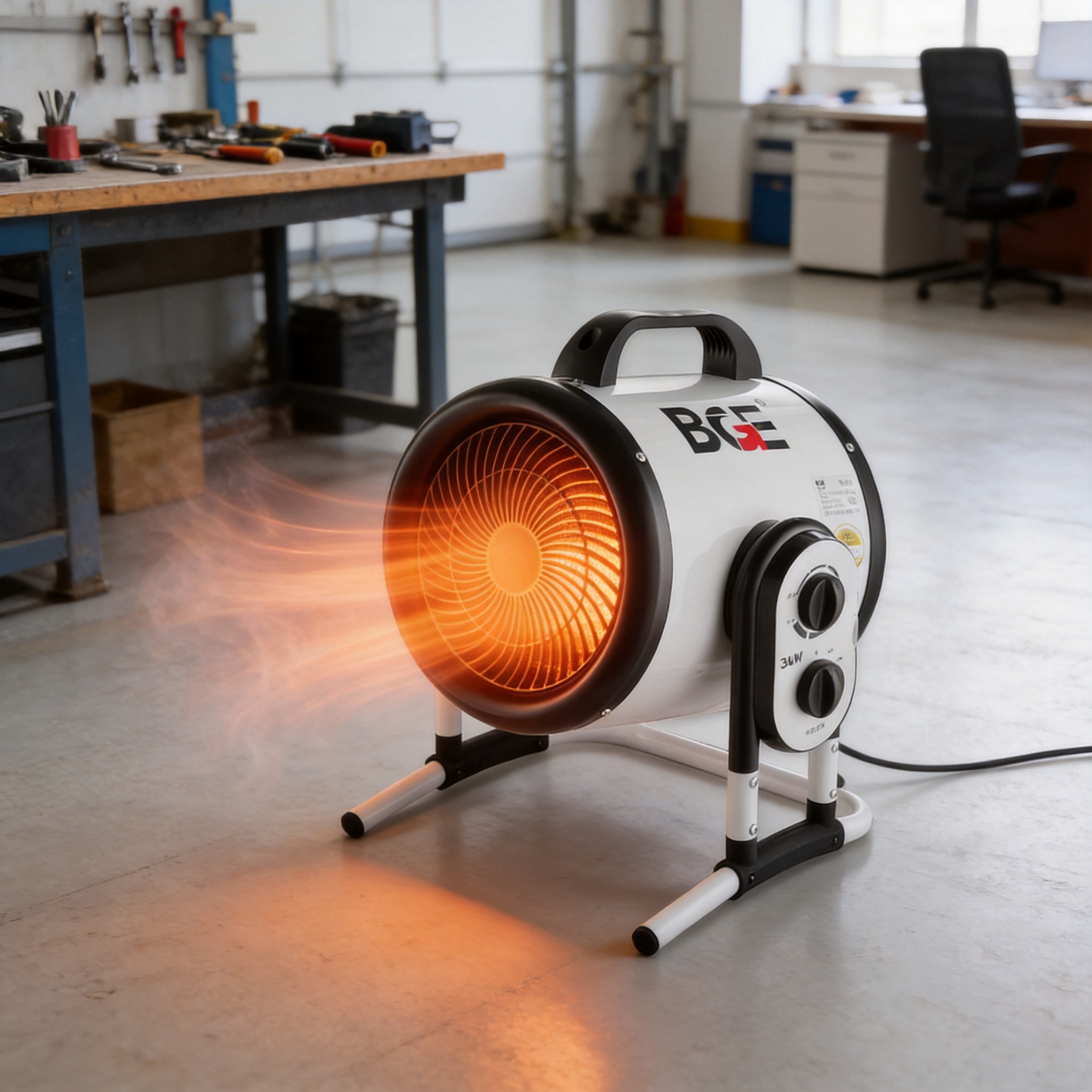
One of the strongest advantages of the PTC-02C electric fan heater series is portability. With a weight of about 1.4 kg and dimensions of 200 x 140 x 215 mm, the heater can be moved easily from one location to another. This is valuable for users who do not need permanent heating in every room but want a flexible unit that can follow changing work needs.
In a workshop, the heater may be used near a bench in the morning, moved to a packing area later, and stored on a shelf after work. In a small office, it can provide additional warmth under controlled conditions during colder periods. In a garage, it can support comfort during short maintenance tasks. In a retail or service area, it can help improve comfort in a localized zone without requiring large heating equipment.
The compact footprint is also important for storage and placement. Larger heaters may be difficult to position safely in crowded rooms. A small fan heater can fit in tighter areas, provided that clearance, ventilation, and safety instructions are followed. Its form factor allows users to benefit from electric heating without dedicating significant floor space.
Portability also improves cost efficiency. Instead of buying multiple large heaters for different locations, users may use a compact unit where it is needed most. For businesses, this flexibility can reduce equipment redundancy. For households, it means one device can support several rooms at different times.
Electric fan heaters offer a clean operating experience because they do not burn fuel at the point of use. There is no flame, no fuel tank, no kerosene smell, no LPG cylinder, and no direct exhaust emission inside the room. This is a major advantage in enclosed environments where ventilation is limited or where users want to avoid fuel handling.
Fuel heaters remain useful for certain outdoor, semi-open, agricultural, or industrial applications, especially when very high heat output is required. However, they can involve additional responsibilities such as fuel storage, combustion safety, exhaust management, and odor control. Electric heaters simplify daily operation by using standard electrical power and producing heat without on-site combustion.
For small areas, an electric PTC fan heater may be more practical than a large fuel heater. The output is easier to control, the unit is easier to transport, and the operating environment remains cleaner. In offices, enclosed workrooms, repair benches, and domestic spaces, these benefits can outweigh the raw power advantage of fuel heaters.
Electric heating also supports precise and short-duration use. A user can turn the heater on when entering a cold room and turn it off when leaving. This makes it convenient for intermittent spaces such as storage rooms, small workshops, guard rooms, temporary offices, and hobby areas. Because the heater is compact and responsive, it is well matched to short heating sessions.
The electric heater market includes many low-cost fan heaters, ceramic heaters, oil-filled radiators, infrared heaters, and fuel-based portable heaters. The PTC-02C series competes by combining practical heating output, compact size, fan-assisted distribution, and the safety-oriented characteristics of PTC technology. Its value lies not only in heat generation but also in balanced design for daily usability.
Compared with low-cost resistance-wire fan heaters, the PTC-based design offers a more controlled heating principle. Resistance-wire heaters can be inexpensive, but their elements may glow intensely and depend heavily on airflow and protective circuits to prevent overheating. PTC elements are generally recognized for self-regulating behavior, which can improve user confidence when the product is properly engineered.
Compared with oil-filled radiators, the PTC fan heater warms the surrounding air more quickly. Oil-filled units can provide steady heat after warming up, but they are often heavier and slower to respond. The PTC-02C series is lightweight and fan-assisted, making it better for users who want rapid warmth in a specific area. It is also easier to move and store.
Compared with infrared heaters, the fan heater provides broader air warming rather than only direct radiant comfort. Infrared heaters can be effective for spot heating people and objects, but they may not raise room air temperature as evenly. In small rooms where general air comfort is desired, fan-driven warm air can be more practical.
Compared with fuel heaters, the electric PTC fan heater is cleaner, simpler, and more suitable for many indoor spaces. It does not require fuel refilling, flame monitoring, exhaust ventilation, or combustible gas storage. While fuel heaters may deliver much higher heat output, they are not always appropriate for small indoor environments. For a 20 m2 room, a 2 kW electric heater can be a more convenient and controlled choice.
Another competitive advantage is the manufacturer’s broad experience in electrical and thermal equipment. A heater may seem simple, but reliable production requires knowledge of electrical safety, airflow, component assembly, material selection, quality testing, packaging, and international compliance. The company behind this product has a wider manufacturing background that includes welding machines, battery chargers, plasma cutting equipment, and heaters, which supports strong electrical engineering and production management capability.
The PTC-02C series is suitable for dry indoor environments where an IP20-rated portable electric heater can be used safely. It is appropriate for small rooms, service areas, workshops, light industrial spaces, utility rooms, and household areas that require supplemental warmth. The estimated heating area of 20 m2 makes it particularly useful for localized comfort rather than large building heating.
In a workshop, technicians may use the heater to warm the area around a workbench. Cold conditions can reduce hand comfort and slow precision tasks. A compact fan heater helps create a more comfortable working zone without needing to heat an entire facility. This is especially helpful in transitional seasons or in regions where cold mornings are common.
In offices and administrative rooms, the heater can supplement building heating. Some rooms may remain colder because of window exposure, poor insulation, or distance from central heating sources. A portable electric fan heater can provide additional warmth when used responsibly and according to safety instructions.
In small retail or service spaces, customer comfort matters. A compact heater may help warm a counter area, reception point, or staff zone. Because the unit is small and electric, it is easier to position than bulky fuel heaters, although it should always be placed away from water, flammable materials, and obstructed airflow.
In homes, the heater may be useful for bedrooms, studies, hobby rooms, utility rooms, and temporary heating needs. Users should choose a suitable location, maintain safe clearance, and avoid unattended operation unless allowed by the specific product instructions. Like all portable heaters, safe use is essential.
A practical electric fan heater must do more than produce heat. It must be easy to carry, stable when placed on a surface, simple to operate, and suitable for repeated use. The PTC-02C series reflects these priorities through compact dimensions, low weight, and a focused heating range. The design is intended for everyday heating tasks rather than oversized industrial heating demands.
The housing size allows the heater to be placed conveniently in a variety of locations. A width of approximately 200 mm and height of 215 mm makes it small enough for tight areas while still providing sufficient internal space for airflow and heating components. The 140 mm depth supports portability and storage efficiency.
The 1.4 kg weight is a meaningful advantage for daily handling. Heavy heaters may remain unused because moving them is inconvenient. A lightweight unit can be carried by many users without effort, which encourages practical use across multiple spaces. This is especially valuable in workshops, where equipment is frequently repositioned.
The output power of 2 kW offers a useful balance. Lower-powered heaters may struggle in cold rooms, while higher-powered units may require more electrical capacity and produce excessive heat in small spaces. A 2 kW electric fan heater is a common and practical choice for supplemental heating in many environments.
The fan air output of 140 m3/h supports effective heat distribution without requiring a large blower system. In compact products, airflow must be adequate but not excessive. Too little airflow reduces heating reach, while too much airflow may feel drafty or increase noise. A balanced air output helps provide comfort in small spaces.
The quality of an electric heater depends heavily on manufacturing discipline. Zhejiang Kende Mechanical & Electrical Co., Ltd. operates from Taizhou, Zhejiang Province, China, with a production area of 120,000 square meters and approximately 600 employees. The company has developed into an internationally recognized manufacturer and exporter of welding machines, battery chargers, and heaters, with annual exports approaching 1.5 million units and annual production capacity reaching 2 million units.
This manufacturing scale matters because it supports stable supply, standardized processes, and systematic quality control. A heater buyer may focus on visible features, but long-term reliability often comes from invisible manufacturing strengths: component selection, assembly accuracy, electrical testing, thermal inspection, packaging protection, and process traceability. A company with large-scale production experience can apply mature systems to maintain consistency across batches.
The company’s product portfolio includes MMA or stick manual arc welding machines, MIG/MAG gas-shielded welding machines, flux wire welding machines, TIG arc welding machines, plasma cutting machines, stud welding machines, automatic submerged arc welding machines, battery chargers, and electric, gas, and oil heaters. This wide electrical product background demonstrates capability in power electronics, thermal management, mechanical design, and safety compliance.
The company applies advanced management and manufacturing systems, including office automation, Toyota-style production management concepts, ERP K3, and MES management systems. These systems support production planning, materials control, workflow monitoring, quality documentation, and delivery efficiency. For heater production, such systems help ensure that parts, processes, and inspection steps are managed in a controlled and repeatable way.
Advanced manufacturing equipment also contributes to quality. The company uses automatic patching, plug-in and welding systems, robot processing, laser cutting, and other modern technologies. While these processes are often associated with welding machines and power electronics, the same manufacturing culture benefits heater production by improving component accuracy, assembly consistency, and production efficiency.
Product competitiveness is not created only on the assembly line. It begins with research and development. The company maintains a Zhejiang Provincial R&D Center, an Enterprise Technology Center, and an Intelligent Welding Technology Research Institute. With 98 R&D personnel, the organization has built strong capabilities in product design, testing, improvement, and adaptation for different markets.
Although the product described here is a compact electric fan heater, it benefits from the same engineering environment that supports more complex electrical equipment. Power electronics, insulation design, airflow management, safety structures, material selection, and durability testing are all relevant to heater development. A company that continuously develops welding and charging products can bring valuable electrical engineering knowledge to heater design.
The company has obtained multiple invention patents, utility model patents, appearance patents, and software copyrights. This intellectual property background indicates continuous investment in technical improvement. For customers, this can translate into products that are not merely copied from generic market designs but developed through structured engineering and refinement.
Innovation also supports customization. The company can develop new products according to the requirements of different regions, countries, and customers. This is important because heater markets vary widely. Voltage standards, plug types, climate conditions, certification requirements, user habits, packaging preferences, and seasonal demand patterns differ from one country to another. A manufacturer with strong development capacity can respond more effectively to such differences.
Electrical heaters must be designed with safety and compliance in mind. The company holds many international product certificates across its product lines, including GS, CE, EMC, ERP, US ETL, UKCA, and China CCC. These certifications demonstrate experience with international regulatory expectations and product testing systems.
Certification experience is valuable even when evaluating a specific heater model because it shows that the manufacturer understands documentation, testing, design verification, and market access requirements. Portable electric heaters involve electrical insulation, temperature rise, enclosure safety, stability, labeling, electromagnetic compatibility, and user instruction considerations. Manufacturers familiar with compliance processes are better positioned to design products that meet market requirements.
The company is also one of the national standard drafting units of the National Welding Machine Standardization Committee and has participated in the drafting, formulation, and revision of 20 national standards while leading the drafting of one group standard. Although this standards activity is related to welding machines, it reflects a disciplined engineering culture and a deep understanding of product safety, reliability, and technical requirements.
For international buyers, standards awareness reduces procurement risk. A low-price heater from an unknown supplier may look similar externally but may not have the same level of process control, engineering review, or documentation support. When choosing electrical heating equipment, buyers should evaluate not only the unit price but also manufacturing credibility and long-term cooperation capability.
Quality control for electric fan heaters begins with incoming materials. Heating elements, motors, switches, cables, housings, fasteners, terminals, and protective parts must meet defined requirements. If any critical component is inconsistent, the final heater may produce uneven performance or reduced service life. A strong manufacturer uses material inspection and supplier management to reduce this risk.
During assembly, accurate placement of the heating element and fan is essential. Air must pass properly through the heating area, and internal wiring must be routed safely. Loose wiring, poor terminal connections, or misaligned components can lead to performance problems. Structured assembly processes help prevent these issues.
Electrical testing is another important step. Portable heaters should be checked for proper operation, insulation performance, grounding design where applicable, power characteristics, and functional reliability. Temperature-related checks are also important because heaters operate under thermal stress. A systematic manufacturing environment supports these inspections.
Final inspection verifies appearance, labeling, packaging, and basic function before shipment. Packaging must protect the heater from transport vibration, compression, and moisture exposure. For export products, packaging strength and shipping stability are important because goods may travel long distances through multiple handling stages.
The company’s large production capacity and modern management systems support consistent quality control. MES systems can help monitor production activities, ERP systems support material planning, and automated processes reduce human error in selected operations. Together, these capabilities improve the likelihood that each unit delivered to customers performs as expected.
A 2 kW electric heater converts electrical energy into heat at the point of use. In practical terms, nearly all consumed electrical energy becomes heat inside the room. However, real-world efficiency depends on how the heater is used. Proper placement, insulation, door control, and user habits all affect heating results.
The PTC-02C series is most effective when used in a space close to its intended heating range. If the room is much larger than 20 m2, poorly insulated, or frequently exposed to cold outdoor air, the heater may need more time to provide comfort or may not reach the desired temperature. In such cases, users should consider multiple heating sources or a higher-output model.
For best performance, the heater should be placed where airflow can circulate freely. Blocking the air inlet or outlet reduces heating effectiveness and may create unsafe conditions. Users should keep the heater away from curtains, paper, clothing, furniture, water, and flammable materials. Safe clearance and stable placement are essential for all portable heaters.
Responsible use also includes turning the heater off when heating is no longer needed. Because the product is lightweight and quick to respond, users can operate it for targeted comfort rather than leaving it running continuously. This can help manage electricity consumption while maintaining comfort during working or living periods.
Safety is a central concern for any heating product. The PTC heating principle provides beneficial self-regulating behavior, but users must still follow proper safety practices. Portable heaters should be used only in suitable environments and according to the manufacturer’s instructions.
The listed protection class is IP20, which means the heater is intended for indoor dry locations and is not designed for water exposure. It should not be used in bathrooms, wet workshops, outdoor rain conditions, or areas where water spray may occur unless additional protection and suitable product ratings are provided. Users must keep the unit dry and avoid touching it with wet hands.
Electrical supply should match the rated input voltage of AC220V-240V 50Hz. The power outlet and circuit should be capable of supporting the heater’s load. Users should avoid overloaded extension cords, damaged cables, loose sockets, or unsafe adapters. For commercial use, electrical safety checks should be part of facility management.
Airflow must never be blocked. Clothes, towels, papers, packaging materials, and dust accumulation can create hazards. The heater should be placed on a stable surface and positioned so that it cannot easily tip over or be covered accidentally. Children and pets should be supervised around portable heating equipment.
When used correctly, a compact PTC electric fan heater can provide clean and convenient warmth. Safe operation depends on both product design and user behavior. Buyers should choose equipment from a capable manufacturer and educate users on correct placement, electrical connection, and maintenance.
The PTC-02C series is designed for practical daily use, and maintenance requirements are generally simple. The most important care tasks are keeping the heater clean, ensuring airflow openings remain unobstructed, inspecting the power cord, and storing the unit in a dry location when not in use.
Dust can reduce airflow and may produce odor when heated. Users should regularly remove surface dust with a dry cloth and, when appropriate, use gentle cleaning methods around air vents after the unit has been unplugged and cooled. Water or liquid cleaners should not be applied directly into the heater.
The power cord should be checked for damage before use. If the cord is cracked, cut, loose, or overheated, the heater should not be operated until properly repaired by qualified personnel or replaced according to service guidance. Electrical damage can create serious hazards.
Storage conditions also affect product life. The heater should be stored in a dry, clean place away from corrosive substances, heavy impact, and excessive moisture. Because the unit is compact, it can be kept on a shelf, in a cabinet, or in its packaging during warmer seasons.
For businesses using multiple units, a simple maintenance schedule can improve safety and reliability. Before the cold season, each heater can be inspected, cleaned, tested, and labeled. This reduces unexpected failures and supports responsible workplace safety management.
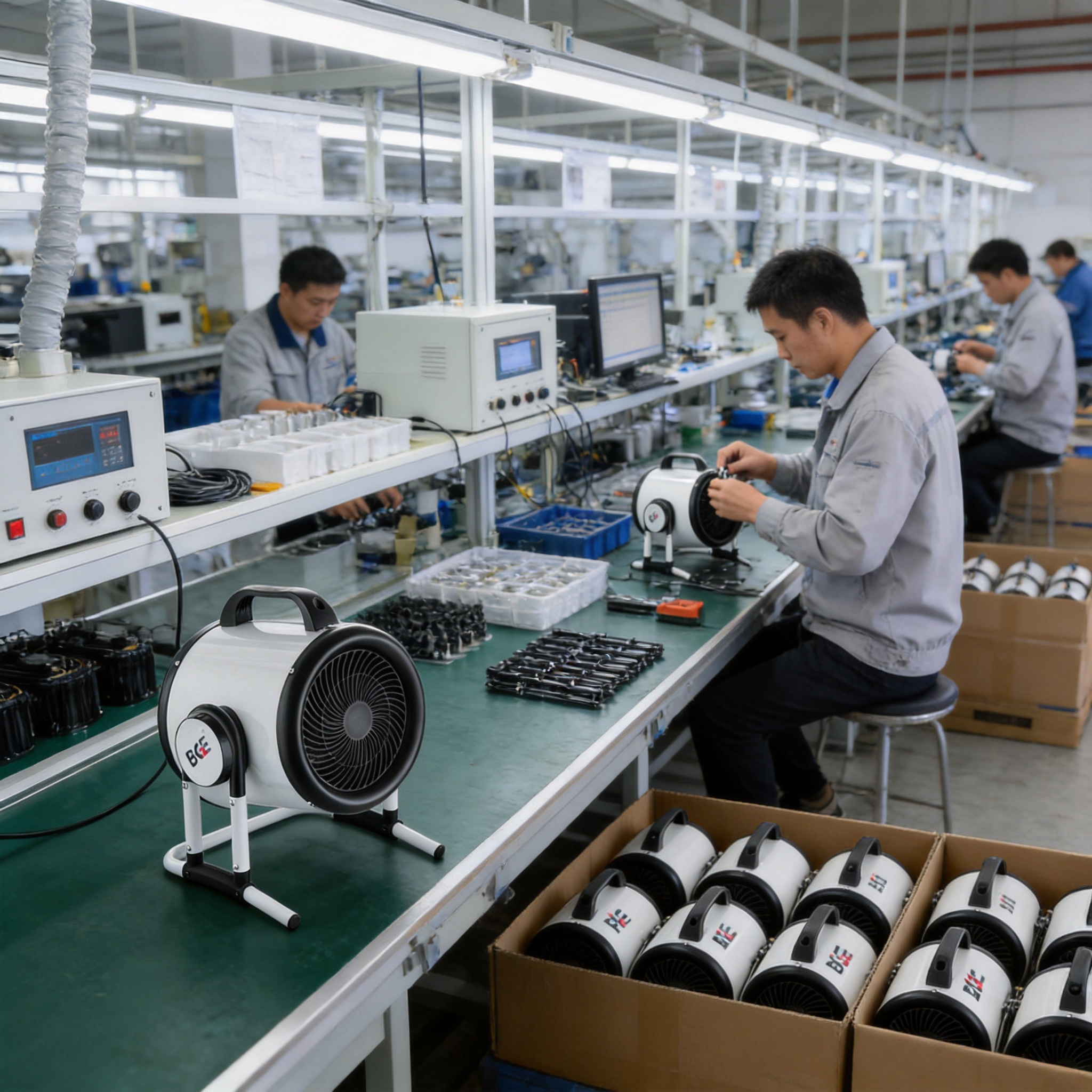
Distributors and importers often evaluate portable heaters based on price, appearance, certification, packaging, delivery time, and after-sales support. The PTC-02C series offers a product concept that is easy to explain and easy to sell: compact size, 2 kW output, PTC heating technology, fan-assisted warm air, and suitability for approximately 20 m2 spaces.
For distributors, the manufacturer’s production capacity is a major advantage. Annual export volume of nearly 1.5 million units and annual production capacity of 2 million units indicate the ability to support large orders and seasonal demand. Heating products often experience strong seasonal peaks, and suppliers must be able to deliver on time before cold weather arrives. A manufacturer with mature production planning can help reduce inventory risk.
For end users, the most important considerations are room size, electrical supply, intended usage time, and safety environment. A compact 2 kW heater is a good choice for supplemental warmth in smaller rooms, but it should not be expected to heat large warehouses or outdoor spaces. Users should match the product to the application.
Buyers should also consider manufacturer credibility. A heater is an electrical appliance that operates at elevated temperatures. Choosing a supplier with experience, R&D resources, manufacturing systems, and international certification awareness can provide greater confidence than choosing a generic product based only on low price.
Workplace comfort influences productivity, morale, and task quality. Cold environments can make workers uncomfortable, slow manual tasks, and increase distraction. Supplemental heating is often a practical solution, especially in buildings where central heating is limited or uneven.
The PTC-02C series helps address these challenges by providing localized warm airflow. In maintenance rooms, small manufacturing areas, packing stations, or inspection benches, employees can work more comfortably without requiring a full building heating upgrade. The heater’s portability allows businesses to apply warmth where it is needed most.
Clean electric heating is also suitable for environments where combustion heaters would be inconvenient. For example, repair counters, small offices, and enclosed workrooms generally prefer equipment that does not produce fumes or require fuel. The electric fan heater meets this need with simple operation and compact placement.
In modern workplaces, flexibility is important. Rooms may be reconfigured, temporary workstations may be created, and seasonal tasks may appear. A lightweight heater can adapt to these changes quickly. This makes the product useful not only as a heating appliance but also as a comfort management tool.
At the point of use, electric heaters do not release combustion gases. This can improve indoor air quality compared with unvented fuel heaters. For users concerned about odor, smoke, or fuel handling, electric heating provides a cleaner experience.
The product’s compact design also reduces material and storage burden compared with larger heating equipment. A smaller heater uses less space in warehouses, shops, homes, and transport packaging. For distributors, compact dimensions can improve logistics efficiency and shelf presentation.
Because the heater is intended for localized use, it may help reduce unnecessary heating of unused areas. Instead of heating an entire large space to a high temperature, users can warm the occupied zone. Actual energy savings depend on building conditions and user behavior, but targeted heating can be a practical strategy in many situations.
The product also avoids the practical waste associated with fuel storage and partially used fuel containers. There is no need to purchase, transport, or store kerosene, diesel, or LPG for this heater. This simplifies operation and reduces fuel-related mess.
Zhejiang Kende Mechanical & Electrical Co., Ltd. has built a strong reputation in electrical equipment manufacturing and export. The company’s “KENDE” trademark has received major recognition in China’s electric welding machine industry, including honors such as China Famous Trademark and China Export Famous Brand. Since 2004, it has been continuously recognized as a Zhejiang Famous Brand and Zhejiang Famous Trademark, and its inverter welding machines have been rated as national high-tech products.
These achievements reflect long-term development rather than short-term market activity. For customers purchasing heaters, this background matters because it shows that the company has established systems, technical expertise, and market credibility. A manufacturer known for complex electrical equipment can apply its knowledge to heater production, especially in areas such as wiring reliability, power control, safety testing, and production consistency.
The company’s international export activity also means it understands the needs of global customers. Export products must withstand long-distance shipping, meet documentation requirements, and satisfy market-specific expectations. This global experience supports better cooperation with importers, distributors, and private-label customers.
Strong company infrastructure also enables after-sales support and product improvement. Customer feedback from different countries can be collected and used to refine future products. A manufacturer with R&D capability, production scale, and quality management can respond more effectively than a small supplier with limited technical resources.
In the portable heater market, price competition is intense. However, the lowest-priced heater is not always the best value. Buyers should compare heating technology, build quality, electrical safety, airflow performance, manufacturer reliability, and long-term supply stability. The PTC-02C series offers value through a balanced specification set and the backing of an experienced manufacturer.
A low-cost competitor may use weaker materials, inconsistent components, or less rigorous testing. Such differences may not be visible in photographs, but they can affect performance, safety, and customer satisfaction. For distributors, product returns and complaints can be more expensive than the initial savings from a cheaper supplier.
The PTC-02C series focuses on real user needs: quick warmth, compact size, manageable power, lightweight handling, clean operation, and suitability for common small spaces. This combination makes it competitive in retail, wholesale, and direct-use applications.
When evaluated over its service life, a dependable heater can provide better value than a cheaper product that fails early or creates safety concerns. Manufacturing strength, quality control, and engineering experience are therefore important parts of the product’s overall value proposition.
The PTC-02C series is a compact electric fan heater using PTC heating technology. It combines an electric heating element with fan-assisted airflow to deliver warm air into small indoor spaces.
PTC means positive temperature coefficient. A PTC heating element increases electrical resistance as its temperature rises, helping regulate heat generation and supporting stable operation.
The listed PTC-020C model has an output power of 2 kW, which is suitable for supplemental heating in small rooms and localized work areas.
The listed heating area is approximately 20 m2. Actual performance depends on insulation, ceiling height, outdoor temperature, air leakage, and room layout.
The listed protection class is IP20, so it is intended for dry indoor environments. It should not be used in rain, wet locations, or areas exposed to water spray.
The listed weight is about 1.4 kg, making it easy to carry, move, and store.
The listed rated input voltage is AC220V-240V 50Hz, single phase. Users should ensure that the local electrical supply matches the product rating.
Oil-filled radiators can provide steady heat but are usually slower to warm up and heavier. The PTC fan heater provides faster warm airflow and is easier to move.
Fuel heaters can produce high heat output but require fuel handling and ventilation. The electric PTC fan heater is cleaner, simpler, and more suitable for many enclosed indoor areas.
Portable heaters are electrical products that operate at high temperatures. A manufacturer with strong R&D, production systems, quality control, and certification experience can provide more consistent and reliable products.
The PTC-02C, PTC-02CT, and PTC-03CT electric fan heater series offers a practical heating solution for users who need compact, clean, and efficient warmth. With a 2 kW output, 1720 kcal/h heat output, 140 m3/h warm air delivery, approximate 20 m2 heating area, 1.4 kg weight, and compact dimensions, the listed model is well suited for small rooms, workstations, service areas, offices, and household spaces.
Its PTC heating technology provides an important advantage over many conventional resistance-wire heaters by supporting more stable temperature behavior. The fan-assisted design improves warm air distribution, while the lightweight body makes the heater easy to reposition and store. Compared with oil-filled radiators, it offers faster response. Compared with fuel heaters, it provides cleaner and simpler indoor operation. Compared with many low-cost generic products, it benefits from the backing of an experienced manufacturer with strong production systems and technical capability.
Zhejiang Kende Mechanical & Electrical Co., Ltd. brings large-scale manufacturing capacity, advanced management systems, automated production equipment, R&D resources, international certification awareness, and extensive electrical product experience to the heater category. These strengths help support product consistency, supply reliability, and long-term customer confidence.
For distributors, the product is easy to position in the market as a compact PTC fan heater for practical indoor heating. For end users, it provides convenient warmth with simple electric operation. When selected and used correctly, the PTC-02C series is a dependable choice for modern portable heating needs.
International Electrotechnical Commission. Safety Standards for Household and Similar Electrical Appliances.
American Society of Heating, Refrigerating and Air-Conditioning Engineers. Fundamentals of Thermal Comfort and Indoor Environmental Quality.
European Committee for Electrotechnical Standardization. Requirements for Electrical Heating Appliances and EMC Compliance.
Positive Temperature Coefficient Ceramic Heating Element Technical Literature. Principles of Self-Regulating Electric Heating.
Industrial Product Quality Management Handbook. Process Control, Inspection, and Manufacturing Consistency in Electrical Appliance Production.
Recommended Products

Contact Us
No.2299, Luqiao Section, Shugang Avenue, Luqiao District, Taizhou, 318057 Zhejiang, PR China.
+86-576-82431568
 Privacy
China Welding Machine Factory
 English
 中文简体
中文简体
 русский
 Español
 عربى
عربى
 Français
 Português
 Deutsch
 Український