Email: [email protected]
Email: [email protected]

Blog
 2026.07.04
 Blog
Blog
In modern metal fabrication, fastening is no longer a secondary operation. The quality of a welded stud can determine whether a structural assembly remains reliable, whether a panel keeps its shape after production, and whether a manufacturer can meet demanding delivery schedules without unnecessary rework. The RSN-1000/2000 stud welder is designed for this practical reality. It is a powerful, industrial-grade stud welding solution developed for fast, repeatable, and high-quality joining of studs to metal workpieces, with a focus on stable arc performance, short welding time, easy operation, and broad material adaptability.
Unlike many conventional fastening methods, stud welding creates a direct metallurgical bond between the stud and the workpiece. There is no need for drilling, tapping, riveting, or access to the reverse side of the plate in many applications. This makes the process especially valuable in cabinet manufacturing, shipbuilding, vehicle production, steel structure fabrication, metal enclosure production, machinery manufacturing, and equipment installation. For manufacturers seeking to improve productivity while reducing deformation and post-processing, a dependable stud welding machine becomes an essential part of the production line.
The RSN-1000/2000 series is built around advanced microprocessor control and LCD display technology. This allows operators to set and monitor important welding parameters with greater confidence than with basic mechanical-control machines. The machine supports touch-button operation, selectable porcelain ring or gas protection, and adjustable welding time from 0 to 3 seconds. These features help create a controlled welding environment, allowing the operator to match the machine setup to the material, stud diameter, production requirement, and welding condition.
The RSN-1000/2000 stud welder is intended for metalworking operations that require speed, consistency, and dependable fastening strength. It is suitable for welding carbon steel, stainless steel, copper, aluminum, and alloy studs within the specified diameter range. The RSN-1000 model supports weldable peg diameters from 3 mm to 10 mm, with a weldable peg length of up to 400 mm. This capability allows the machine to serve many industrial tasks, from small component fixing to heavier metal assemblies requiring strong welded studs.
The machine uses three-phase 380 V, 50/60 Hz power input and provides a welding current adjustment range of 100 A to 1000 A. This wide adjustment range is important because stud welding quality depends heavily on matching current to the stud size, base material, surface condition, and welding time. A machine with limited adjustment may produce inconsistent welds when switching between applications. By contrast, the RSN-1000 gives operators the flexibility required for different production tasks while maintaining a strong output capacity.
One of the defining benefits of this product is its short welding cycle. Welding time can be set between 0 and 3 seconds, allowing rapid completion of each weld while limiting heat input to the surrounding workpiece. A shorter welding time reduces the size of the heat-affected zone, which helps minimize distortion, discoloration, and surface damage. For industries dealing with visible metal panels or dimensional assemblies, this is a major advantage over slower or less controlled joining methods.
The product also emphasizes a high duty cycle and reliable main circuit performance. The use of contactless point control technology in the main circuit helps improve reliability by reducing mechanical wear associated with frequent switching. In production environments where machines may be operated repeatedly throughout the day, this type of design contributes to longer service life and more consistent machine behavior.
The RSN-1000/2000 stud welder combines several technical characteristics that directly support welding quality and production efficiency. Advanced microprocessor control provides a more intelligent operating platform than simple analog machines. The LCD display helps operators view and manage settings clearly, reducing setup uncertainty and supporting repeatable parameter selection.
Touch-button operation improves user convenience. Instead of relying on complicated manual adjustment procedures, the operator can select parameters more directly. This is useful in workshops where different operators may use the same machine, or where production changes require quick setup between batches. Stable parameter control helps reduce variation from weld to weld, which is especially important when stud welds must meet quality requirements for strength, position, and appearance.
The machine allows selection between porcelain ring protection and gas protection. Porcelain rings are commonly used in drawn arc stud welding to help shape the molten pool, stabilize the welding zone, and protect the weld area during fusion. Gas protection may be preferred in certain applications where shielding gas provides better protection for specific materials or surface requirements. By giving users a choice, the machine becomes more adaptable than single-mode units with limited application range.
Another important feature is the ability to test several operating conditions, including the welding torch switch, the contact situation between the welding torch and the workpiece, protective gas, and temperature control. These diagnostic abilities support safer and more reliable operation because the machine can help identify whether the welding system is properly prepared before or during use. In industrial welding, many failures are not caused by the power source alone; they are caused by poor contact, incorrect torch operation, shielding problems, or overheating. A machine that supports checking these factors can help prevent avoidable defects.
| Model | RSN-1000 |
| Supply Voltage | 380 V ±15% |
| Frequency | 50/60 Hz |
| Rated Input Power | 40 |
| Instantaneous Input Maximum Power | 44 kVA |
| Rated No-Load Voltage | 85 V |
| Welding Current Adjustment Range | 100-1000 A |
| Maximum Output Current | 1000 A |
| Rated Load Duration | 15% |
| Weldable Peg Diameter | 3-10 mm |
| Weldable Peg Length | Up to 400 mm |
| Efficiency | 80% |
| Power Factor | 0.95 |
| Protection Class | IP21S |
| Insulation Class | F |
| Weight | 45 kg |
| Dimensions | 650 x 550 x 600 mm |
The RSN-1000/2000 stud welder offers clear advantages over traditional mechanical fastening. Mechanical fasteners often require drilling, punching, tapping, countersinking, or access to both sides of the workpiece. These steps increase labor time and may weaken the base material by removing metal. Stud welding, by contrast, attaches the fastener directly to the surface. This reduces preparation work, preserves material integrity, and improves production speed.
Compared with manual arc welding of small fasteners, stud welding is also more repeatable. When workers manually weld threaded rods or small studs using stick welding or other arc processes, the result depends heavily on operator skill. Heat input can be excessive, alignment may be inconsistent, and spatter may require cleaning. With a dedicated stud welder, the weld cycle is short and controlled. The operator positions the stud, triggers the cycle, and the machine completes the weld according to preset parameters. This improves consistency across batches.
Compared with lower-end stud welding machines, the RSN-1000/2000 series stands out because of its microprocessor control, LCD display, parameter stability, and built-in test functions. Machines with only basic control may be less expensive initially, but they can become costly if they generate inconsistent welds, require frequent maintenance, or fail under demanding production conditions. In contrast, a more stable and intelligent machine helps reduce scrap, rework, downtime, and operator uncertainty.
The contactless point control technology used in the main circuit is also an advantage for long-term reliability. In welding equipment, electrical switching components are exposed to repeated stress. Designs that reduce mechanical contact wear can provide more stable performance over time. For factories running regular stud welding operations, machine reliability is not optional; it directly affects delivery schedules and production costs.
Another competitive advantage is the combination of high output capacity and relatively compact form. With a maximum output current of 1000 A and a weight of 45 kg, the RSN-1000 model offers industrial power in a machine that remains movable within a workshop. This balance is valuable for manufacturers that need to use the machine at different stations, on large workpieces, or in flexible production layouts.
One of the most valuable characteristics of stud welding is the ability to produce a strong joint with very short welding time. The RSN-1000/2000 series allows welding time to be set from 0 to 3 seconds. This is particularly important for reducing the heat-affected zone. When a metal part is exposed to excessive heat, it can warp, soften, discolor, or lose dimensional accuracy. In thin plates and finished components, this can lead to significant production problems.
By concentrating the welding energy into a short cycle, the machine helps protect the surrounding material. The weld is formed quickly at the interface between the stud and the base metal, while the rest of the component receives limited thermal exposure. This reduces post-welding deformation and can decrease or eliminate the need for straightening, grinding, or cosmetic repair.
For visible panels, stainless steel assemblies, enclosures, and precision sheet metal parts, a small heat-affected zone is a major quality advantage. The goal is not only to attach the stud securely but also to preserve the appearance and geometry of the workpiece. In many competitive production environments, reducing post-weld correction is one of the fastest ways to improve throughput and lower cost per part.
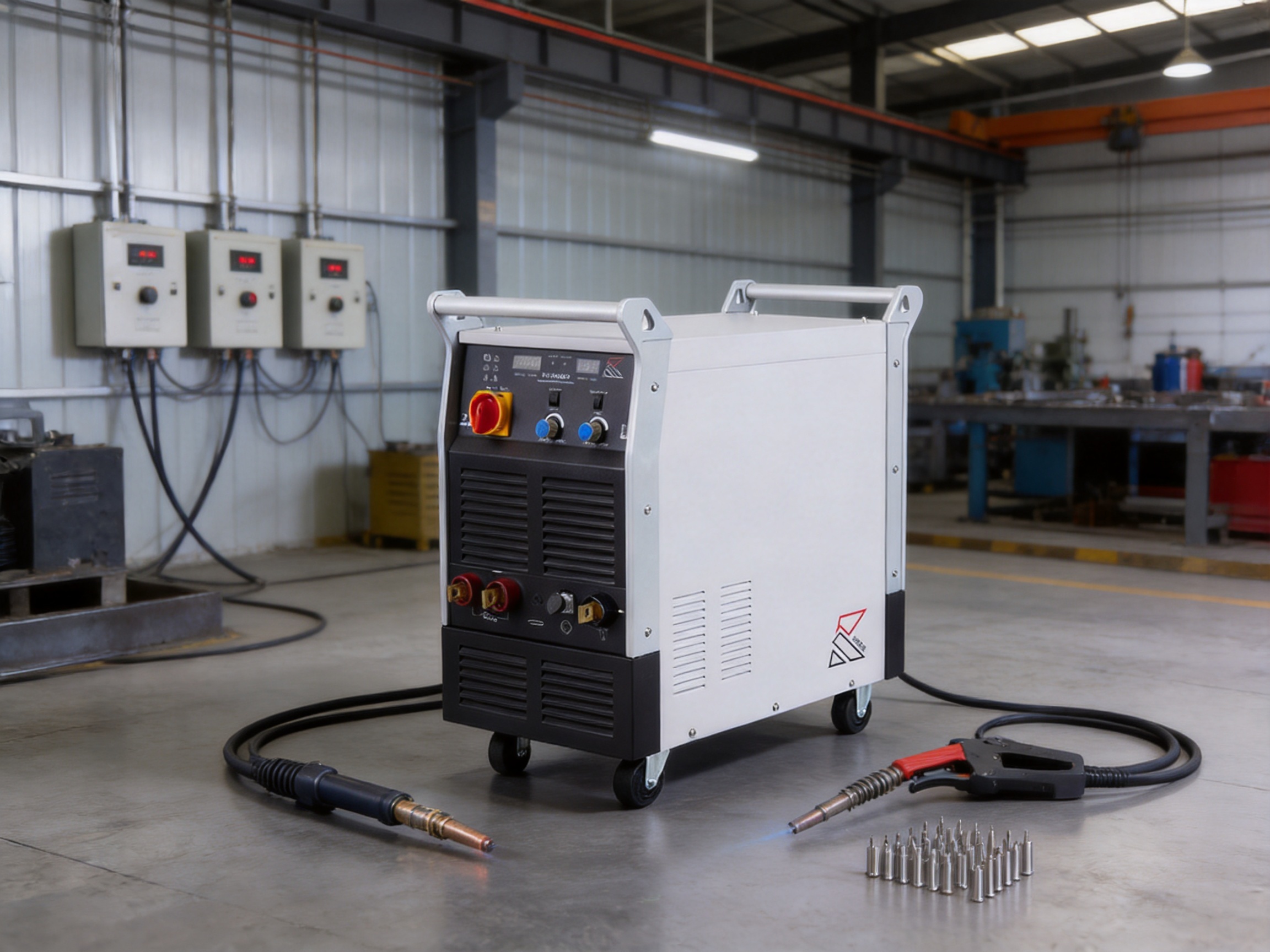
The RSN-1000/2000 stud welder is suitable for carbon steel, stainless steel, copper, aluminum, and alloy studs. This broad material capability makes the machine useful across different industries and production requirements. Carbon steel remains common in general fabrication, structural parts, frames, brackets, and machinery. Stainless steel is widely used where corrosion resistance, hygiene, or appearance is important. Aluminum is important in transportation, lightweight structures, electrical enclosures, and architectural applications. Copper and copper alloys are used in electrical and thermal applications where conductivity matters.
Because different materials conduct heat and electricity differently, a stud welder must offer adjustable parameters and stable output. Aluminum, for example, has high thermal conductivity and forms an oxide layer that can affect welding. Stainless steel requires control to avoid excessive discoloration or overheating. Carbon steel may be more forgiving, but production quality still depends on correct current and time settings. The RSN-1000’s 100-1000 A adjustment range gives operators the ability to select a suitable setting for the application.
The machine’s suitability for stud diameters from 3 mm to 10 mm on the RSN-1000 model covers many practical fastening needs. Smaller studs may be used for brackets, clips, cable supports, and light fixtures. Larger studs may be used for stronger mechanical attachment, equipment mounting, and heavier assemblies. The ability to weld studs up to 400 mm long further extends application flexibility for special structures and extended fastening elements.
Consistency is central to stud welding. A single strong weld is not enough; a production machine must deliver strong welds repeatedly, shift after shift. The RSN-1000/2000 stud welder is designed to provide stable welding parameters, giving operators and supervisors confidence in repeatable results. Stable parameters are especially valuable when welding multiple studs on the same workpiece or producing large quantities of similar parts.
Microprocessor-based control supports consistent regulation of the welding process. The operator can select key settings, and the machine helps maintain them throughout operation. In contrast, older or simpler machines may vary more due to thermal drift, mechanical switch wear, or less precise control systems. Even small variations in current or timing can affect the weld nugget, penetration, and final strength.
The LCD display also improves process repeatability. Instead of guessing the machine state or relying only on analog dial positions, the operator can check settings visually. This makes it easier to document standard procedures for specific stud sizes and materials. For companies implementing quality systems, repeatable setup and clear parameter control support better process management.
In production, parameter stability contributes to lower defect rates. Common stud welding defects include weak fusion, excessive spatter, undercut, poor alignment, surface burning, and inconsistent pull strength. While no machine can replace proper workpiece preparation and operator care, a stable power source significantly reduces process variability.
The option to select porcelain ring or gas protection improves the versatility of the RSN-1000/2000 stud welder. In many drawn arc stud welding applications, a porcelain ring is placed around the weld zone. It helps contain the molten metal, shields the weld area, supports proper bead formation, and can reduce atmospheric contamination. This is a proven method for producing strong, controlled stud welds on many steel applications.
Gas protection can be useful when the application benefits from shielding gas rather than a ceramic ferrule or porcelain ring. Shielding gas helps protect the molten weld pool from oxygen and nitrogen in the surrounding air. This can be important for certain materials, surface requirements, or production preferences. The ability to choose between these methods gives manufacturers more process control.
Competitor machines with limited protection options may force the user to adapt the application to the machine. The RSN-1000/2000 instead gives the user more ways to adapt the machine to the application. This matters when a factory produces a range of components rather than a single repetitive part. Flexibility is a practical advantage because it reduces the need to purchase separate equipment for different production scenarios.
A powerful machine must also be usable. The RSN-1000/2000 stud welder incorporates touch-button operation, clear display control, and a practical physical design. The RSN-1000 weighs 45 kg and has dimensions of 650 x 550 x 600 mm. While it is an industrial machine, it remains compact enough for movement within many workshop environments. This helps manufacturers use one machine in multiple work areas when needed.
Ease of operation has a direct effect on productivity. If a machine is difficult to set up, workers spend more time adjusting and less time welding. If parameter selection is unclear, weld quality may depend too much on personal experience. Touch-button operation and LCD display technology reduce the learning barrier and support more standardized operation.
In factories with multiple operators, user-friendly controls are especially important. Production managers can establish parameter ranges for common workpieces, and operators can apply them more reliably. This reduces the difference between experienced and less experienced users. It also helps training new personnel, which is important in growing manufacturing companies.
The RSN-1000/2000 stud welder includes functions that allow checking of the welding torch switch, the contact situation between the workpiece and the welding torch, protective gas, and temperature control. These functions are important because successful stud welding depends on more than output current. Proper contact, correct torch triggering, adequate shielding, and safe temperature operation are all necessary for reliable results.
Poor contact can cause unstable arc initiation, weak welds, excessive spatter, or incomplete fusion. A defective torch switch can interrupt production and cause inconsistent cycles. Inadequate protective gas can lead to oxidation and weld contamination when gas shielding is used. Excessive temperature can reduce component life or create unsafe working conditions. By supporting checks of these factors, the machine helps operators identify issues before they become serious production failures.
This diagnostic capability gives the RSN-1000/2000 an advantage over machines that provide little feedback. In a busy workshop, operators may not immediately recognize the cause of a welding defect. A machine that helps verify the operating conditions can shorten troubleshooting time and reduce unnecessary replacement of parts.
The quality of a welding machine depends not only on its design but also on the strength of the manufacturer behind it. Zhejiang Kende Mechanical & Electrical Co., Ltd. is located in Taizhou, Zhejiang Province, China, and operates on a large industrial base covering 120,000 square meters with about 600 employees. The company is an internationally recognized manufacturer and exporter of electric welding machines, chargers, and heaters, with exports reaching nearly 1.5 million units annually and an annual production capacity of approximately 2 million units.
This scale matters because industrial welding equipment requires stable supply chains, consistent production control, and mature quality management. A manufacturer that produces high volumes must develop repeatable processes, trained teams, and effective inspection systems. For customers, this can mean better product availability, more consistent parts supply, and stronger support for customized market needs.
The company’s product range includes MMA or stick welding machines, MIG/MAG gas-shielded welding machines, no-gas flux wire welding machines, TIG arc welding machines, CUT plasma cutting machines, stud welding machines, automatic submerged arc welding machines, battery chargers, and electric, gas, and oil heaters. This broad product portfolio indicates deep experience with power electronics, arc control, thermal management, user interface design, and industrial safety requirements. The RSN-1000/2000 stud welder benefits from this wider manufacturing and engineering background.
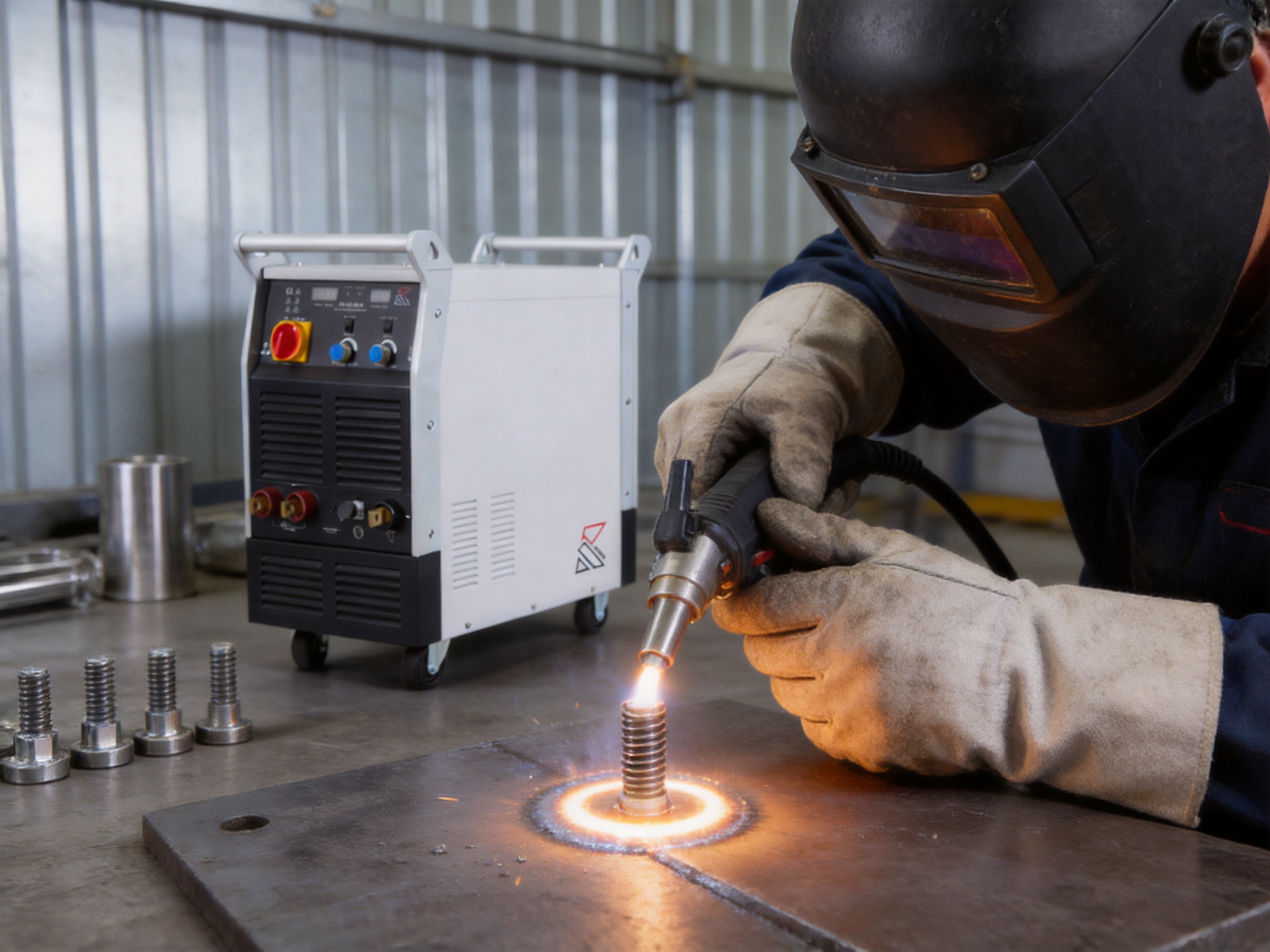
Modern welding machines require more than assembly. They require precise electronic manufacturing, mechanical processing, thermal design, and final testing. The manufacturer applies advanced management and manufacturing systems, including office automation, Toyota-style TPS management, ERP K3, and MES management systems. These systems support production planning, material control, process tracking, quality management, and delivery coordination.
The company uses advanced automatic patching, plug-in and welding systems, robot processing, laser cutting, and other advanced manufacturing technologies. Automatic electronic assembly helps improve consistency in circuit board production. Robotic processing can enhance dimensional repeatability and reduce variation in metal parts. Laser cutting supports accurate sheet metal fabrication and clean component preparation. Together, these technologies contribute to better machine structure, cleaner internal layout, and more reliable finished products.
For the RSN-1000/2000 stud welder, advanced manufacturing capability is especially relevant because the machine must manage high welding currents and repeated production cycles. Internal connections, circuit quality, cooling design, insulation, and enclosure construction all affect performance and service life. A manufacturer with mature production systems is better positioned to control these details.
The use of MES management systems is particularly important in modern manufacturing. MES systems can help monitor production flow, record process information, and support traceability. For industrial customers, traceability and controlled manufacturing processes provide confidence that each machine has been produced under defined standards rather than informal workshop methods.
The manufacturer has strong research, development, and innovation capabilities. It operates a provincial R&D center, an enterprise technology center, and an intelligent welding technology research institute. The company has a significant R&D team and has obtained multiple invention patents, utility model patents, appearance patents, and software copyrights. This technical foundation supports continued improvement of welding machines, control systems, user interfaces, and manufacturing methods.
For buyers of stud welding equipment, R&D strength matters because welding technology continues to evolve. Customers increasingly expect machines that are more compact, more efficient, more stable, easier to use, and better adapted to various materials. A supplier with active R&D capability is more likely to provide updated solutions and respond to changing market needs.
The RSN-1000/2000 reflects this engineering orientation through its microprocessor control, LCD display, diagnostic features, and stable parameter management. These are not merely decorative features; they are practical improvements that make the welding process more controllable and production-friendly.
The manufacturer holds many international product certificates, including GS, CE, EMC, ERP, ETL, UKCA, and China CCC certifications for relevant product categories. It is also one of the national standard drafting units of the National Welding Machine Standardization Committee and has participated in drafting, formulating, and revising numerous national standards. It has also led the drafting of a group standard.
This standards background is important because welding machines operate under demanding electrical and thermal conditions. Compliance with applicable standards helps ensure that products are designed and tested with safety, electromagnetic compatibility, durability, and market requirements in mind. While each model and destination market may require specific confirmation of certification status, a manufacturer with broad certification experience and standards participation brings added confidence to industrial customers.
Participation in standard drafting also indicates technical influence in the welding machine industry. It suggests that the company is not merely following the market but contributing to the development of industry expectations. For customers, this can translate into products that reflect practical knowledge, regulatory awareness, and long-term engineering experience.
The RSN-1000 model has an efficiency of 80% and a power factor of 0.95. These values are important for industrial users who consider not only welding performance but also electrical system compatibility and operating cost. A high power factor means the machine uses electrical input more effectively relative to apparent power demand. This can help reduce strain on the facility’s electrical system compared with equipment that has poor power factor behavior.
In stud welding, high current must be delivered quickly and reliably. The machine’s rated no-load voltage of 85 V and welding current adjustment range of 100-1000 A provide the operating foundation for strong weld formation. The instantaneous input maximum power of 44 kVA indicates the machine’s ability to support demanding welding cycles. Customers should ensure that the workshop power supply is suitable for three-phase 380 V operation and that cables, protection devices, and grounding are properly configured.
Energy efficiency also supports heat management inside the machine. Although welding equipment necessarily generates heat during operation, better efficiency reduces wasted energy and can contribute to more stable operation. Combined with temperature control checking, this supports safer and more predictable use in industrial conditions.
Stud welding often involves repetitive work. A single product may require dozens of welded studs, and a production batch may require thousands. In such conditions, reliability becomes more important than maximum output alone. The RSN-1000/2000 series addresses this need through high duty cycle design, stable welding parameters, contactless point control technology, and condition-checking functions.
High duty cycle capability helps the machine withstand repeated operation within its rated limits. Stable control helps maintain weld quality as the machine continues to work. Contactless control helps reduce wear in critical switching areas. Temperature monitoring helps prevent unsafe operation. Together, these features support a machine that is suitable for workshops where downtime is costly.
Reliability also affects worker confidence. Operators who trust their equipment can focus on positioning, preparation, and workflow rather than worrying about whether the machine will respond correctly. This contributes to smoother production and better overall quality.
The RSN-1000/2000 stud welder can be used in many industries requiring strong surface-mounted fasteners. In sheet metal fabrication, it can attach threaded studs to enclosures, panels, doors, brackets, and covers without visible fasteners on the opposite side. This improves appearance and reduces assembly time. In electrical cabinet production, welded studs can support rails, cable clips, grounding points, and internal mounting parts.
In vehicle and machinery manufacturing, stud welding can attach components to frames, panels, and structural assemblies. In shipbuilding and steel structure fabrication, welded studs may be used for insulation pins, fixing points, and attachment features. In construction equipment and metal furniture manufacturing, the process can speed up assembly and improve fastening reliability.
The machine is also useful for maintenance and custom fabrication shops. Because it can weld different materials and stud sizes, it provides flexibility for varied work. A shop that handles repair, prototyping, and small batch production can benefit from a machine that is powerful but not excessively large.
Weld quality depends on correct preparation, suitable parameter selection, proper contact, adequate shielding, and stable machine output. The RSN-1000/2000 supports these requirements in several ways. The adjustable current and time settings allow users to match the weld cycle to the application. The LCD display and touch controls make settings more visible and repeatable. The porcelain ring or gas protection options help protect the weld zone. Diagnostic functions help verify torch, contact, gas, and temperature conditions.
To achieve the best results, operators should clean the workpiece surface before welding. Oil, rust, paint, oxide, and heavy scale can interfere with fusion. The stud should be correctly positioned and held perpendicular to the surface unless the application requires otherwise. The selected current should be appropriate for the stud diameter and base material. Welding time should be long enough for proper fusion but not so long that it creates excessive heat input.
After welding, visual inspection can identify obvious issues such as misalignment, excessive spatter, incomplete weld collar, or surface burning. Mechanical testing, such as bend or torque testing, may be used according to internal quality requirements. Because the RSN-1000/2000 provides stable parameters, it supports the creation of standard welding procedures that can be verified and repeated.
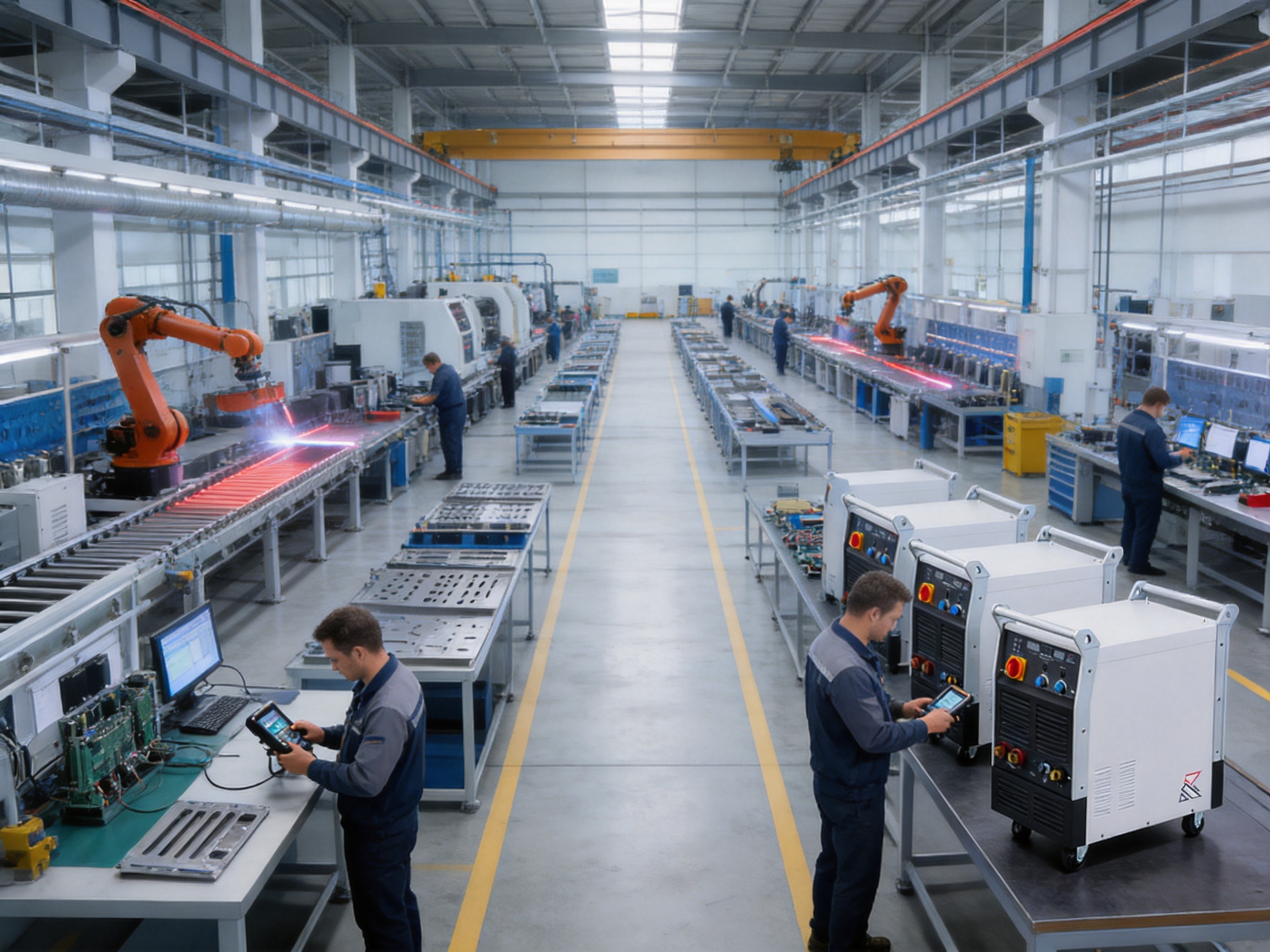
When compared with drilling and bolting, stud welding reduces the number of process steps. There is no need to drill holes in many applications, which saves time and preserves the workpiece surface. Bolting may require access to both sides of the material, while stud welding often requires access only to the welding side. This is especially useful for closed structures, panels, and assemblies where rear access is difficult or impossible.
When compared with riveting, stud welding provides a welded metal bond instead of a mechanical clamp. Rivets can loosen under vibration or require holes that may become stress concentration points. Stud welding can create a cleaner surface and stronger attachment when properly applied. It also allows the use of threaded studs for later assembly steps.
When compared with adhesive bonding, stud welding offers immediate mechanical strength and better resistance to heat in many applications. Adhesives require surface preparation, curing time, and environmental control. While adhesives are useful in many industries, they may not be ideal for high-temperature or high-load fastening. Stud welding provides a fast and durable alternative for metallic components.
When compared with manual welding of studs, a dedicated stud welder is faster and more standardized. Manual welding can be effective but may create larger heat-affected zones and more operator-dependent results. The RSN-1000/2000’s controlled cycle supports better repeatability and cleaner production.
A machine’s performance is important, but customers also need confidence in the supplier’s ability to deliver, support, and continuously improve products. A company with large production capacity and international export experience can better serve distributors, industrial users, and long-term purchasing programs. Zhejiang Kende Mechanical & Electrical Co., Ltd. exports large quantities of equipment annually and has developed a wide portfolio for different welding and heating applications.
Manufacturing scale supports purchasing efficiency. Customers may require not only one stud welder but also other welding machines, plasma cutting machines, battery chargers, or heaters. Working with a broad industrial manufacturer can simplify procurement and support consistent product standards across equipment categories.
Large-scale production also supports cost competitiveness. Advanced automation, process management, and supply chain integration can reduce production inefficiencies. This allows customers to access industrial features at a competitive value. The RSN-1000/2000 stud welder is positioned as a practical solution that combines professional performance with efficient manufacturing behind it.
Before selecting a stud welder, buyers should consider the stud diameter range, base material, production volume, power supply, required weld strength, and available operator skill. The RSN-1000 model is suitable for stud diameters from 3 mm to 10 mm and provides up to 1000 A output. Users requiring larger stud diameters or higher capacity should confirm the detailed specifications of the RSN-2000 model with the supplier.
The workshop power supply must match the machine requirement of three-phase 380 V input. Because stud welding draws high current during short cycles, the electrical installation should be properly sized and protected. Good grounding is essential for both safety and welding quality.
Buyers should also consider the required shielding method. If the production process commonly uses porcelain rings, the machine supports that method. If gas protection is preferred, the machine also supports selection for gas shielding. This flexibility helps future-proof the investment because production requirements may change over time.
To keep the machine performing well, operators should follow standard maintenance practices. The machine should be kept clean and dry, with adequate ventilation. Dust and metal particles should not be allowed to accumulate inside or around the machine. Cables and connectors should be inspected regularly because poor connections can cause heat buildup and unstable welding performance.
The welding torch should be checked for wear, correct movement, and secure contact. Stud holders and accessories should match the stud size and remain in good condition. Porcelain rings should be stored and handled properly to avoid breakage. If gas protection is used, gas flow should be checked and the supply system should be leak-free.
Operators should avoid exceeding the rated duty cycle and should pay attention to temperature warnings or control indications. Although the machine is designed for industrial use, correct operation extends service life and maintains weld quality. Preventive maintenance is always more efficient than emergency repair.
For professional production, companies should establish welding procedures for each common stud size and material. These procedures may include surface preparation requirements, current settings, welding time, shielding method, inspection criteria, and testing frequency. The RSN-1000/2000’s stable parameter control and display make it easier to implement such procedures.
Initial trial welds should be made when changing material, stud size, surface condition, or shielding method. Trial samples can be visually checked and mechanically tested before full production begins. This reduces the risk of batch defects. Operators should record successful parameter combinations so they can be repeated later.
Quality control should also include monitoring of consumables and accessories. Worn stud holders, damaged cables, poor grounding clamps, and contaminated surfaces can cause defects even when the power source is functioning correctly. A complete quality system considers both the machine and the surrounding process.
The main purpose is to weld metal studs or pegs directly to a workpiece surface quickly and reliably. It is used when manufacturers need strong fastening points without drilling, tapping, riveting, or extensive post-welding work.
The machine is suitable for welding studs made of carbon steel, stainless steel, copper, aluminum, and related alloys, provided that the correct welding parameters, surface preparation, and shielding method are used.
The RSN-1000 model supports weldable peg diameters from 3 mm to 10 mm. Users requiring other ranges should confirm the appropriate model and specification before purchase.
Short welding time reduces heat input into the surrounding workpiece. This helps minimize the heat-affected zone, reduce deformation, protect surface appearance, and improve production speed.
Microprocessor control supports more accurate and stable parameter management. It improves repeatability, helps maintain consistent welding output, and makes the machine easier to operate through display-based settings.
The LCD display allows operators to view settings more clearly. This reduces guesswork, supports standardized welding procedures, and helps operators repeat successful parameter combinations.
Yes. The machine allows selection of porcelain ring protection or gas protection. This increases flexibility for different materials, production requirements, and weld quality expectations.
The RSN-1000 is designed for a three-phase 380 V power supply with a frequency of 50/60 Hz. The installation should be properly sized for the machine’s power requirements.
Stud welding is faster in many applications because it can eliminate drilling and tapping. It also creates a direct welded bond and often requires access to only one side of the workpiece.
Its advantages include microprocessor control, LCD display, stable welding parameters, selectable shielding methods, condition-checking functions, high output capacity, compact construction, and manufacturing support from an experienced industrial producer.
The RSN-1000/2000 stud welder is a practical and capable solution for manufacturers that require fast, stable, and high-quality stud welding. Its combination of microprocessor control, LCD display technology, touch-button operation, short welding time, selectable porcelain ring or gas protection, and diagnostic checking functions gives it clear advantages over simpler machines and many conventional fastening methods.
For industrial users, the machine’s value lies not only in its 100-1000 A welding current range or its ability to weld studs from 3 mm to 10 mm on the RSN-1000 model. Its deeper value is in the production reliability it supports: stable parameters, reduced heat-affected zone, lower deformation, faster welding speed, and repeatable joint quality. These benefits help companies reduce rework, improve throughput, and maintain stronger control over welding outcomes.
The manufacturing strength behind the product further enhances its appeal. Zhejiang Kende Mechanical & Electrical Co., Ltd. brings large-scale production capacity, advanced manufacturing systems, R&D capability, international certification experience, and participation in welding machine standards. These strengths support a product that is engineered for real workshop demands rather than occasional light-duty use.
For factories, fabrication shops, and industrial users seeking a stud welding machine that balances power, control, reliability, and flexibility, the RSN-1000/2000 series represents a strong choice. It is designed to help users weld faster, produce cleaner joints, reduce deformation, and build more dependable metal assemblies in competitive manufacturing environments.
American Welding Society. Welding Handbook: Welding Processes, Part 1.
International Organization for Standardization. Welding and Allied Processes Standards for Metallic Materials.
National Welding Machine Standardization Technical Literature on Arc Welding Equipment.
Electrical Equipment Manufacturing Practice Reference for Industrial Welding Machines.
Stud Welding Technical Guides for Drawn Arc and Shielded Stud Welding Applications.
Recommended Products

Contact Us
No.2299, Luqiao Section, Shugang Avenue, Luqiao District, Taizhou, 318057 Zhejiang, PR China.
+86-576-82431568
 Privacy
China Welding Machine Factory
 English
 中文简体
中文简体
 русский
 Español
 عربى
عربى
 Français
 Português
 Deutsch
 Український