Email: [email protected]
Email: [email protected]

Blog
 2026.07.14
 Blog
Blog
Modern fabrication demands welding equipment that can do more than simply strike an arc. Workshops, repair teams, training centers, construction contractors, and small industrial plants increasingly need compact machines that combine precision TIG welding, reliable stick welding, stable output, energy efficiency, and intuitive operation. The WSME-200D IGBT Inverter TIG/MMA welding machine is designed to answer those requirements with a practical combination of AC TIG, DC TIG, DC pulse TIG, and MMA functions in one portable unit.
This article introduces the product in detail, explains its technical value, compares its advantages with common competitor solutions, and describes how the manufacturing strength of Zhejiang Kende Mechanical & Electrical Co., Ltd. supports consistent product quality. The machine is especially suitable for users who need clean TIG welds on stainless steel, carbon steel, alloy steel, aluminum, aluminum alloy, cast iron, and other metals, while also requiring the flexibility of MMA stick welding for repair and general fabrication tasks.
The WSME-200D is an IGBT inverter TIG/MMA welding machine with a rated welding current of 200A and a 230V single-phase input design. It is built in a metal case with a plastic protective frame, making it suitable for portable use while retaining structural strength for workshop and field environments. The machine includes a digital display and an easy-to-use control interface, allowing operators to set welding current clearly and repeat settings more accurately.
The product supports AC TIG, DC pulse TIG, DC TIG, and MMA welding modes. This broad process range is one of its major advantages. AC TIG makes the machine suitable for aluminum and aluminum alloy welding, where alternating current helps break the oxide layer and improves weld pool control. DC TIG supports clean, stable welding on stainless steel, carbon steel, alloy steel, copper alloys, and similar conductive metals. DC pulse TIG provides better heat management, especially on thin materials, edges, corners, and components where distortion must be minimized. MMA mode allows the operator to use common stick electrodes for fabrication, repair, outdoor work, and less controlled environments.
The machine uses high-frequency arc starting for TIG operation. This feature allows the arc to start without touching the tungsten electrode to the workpiece, reducing tungsten contamination, improving arc quality, and helping the operator produce cleaner weld starts. For stick welding, the machine provides anti-stick, hot start, and arc force functions. These functions improve electrode ignition, reduce sticking, and stabilize the arc during operation, especially when using different electrode types and working in varied positions.
In many workshops, the welding machine is expected to handle a wide range of jobs. A small repair order may involve stainless steel tubing in the morning, aluminum parts in the afternoon, and carbon steel brackets before the end of the day. Buying separate machines for every process increases cost, takes up space, and complicates maintenance. A multi-process TIG/MMA machine such as the WSME-200D solves this challenge by providing several welding capabilities in one compact system.
For professional operators, control and stability are essential. A poor arc makes even an experienced welder work harder. Unstable current causes inconsistent penetration, excessive spatter in stick mode, uneven bead appearance, and increased post-weld finishing. The WSME-200D uses IGBT inverter technology, pulse width modulation control, and constant-current output control to deliver accurate current regulation and stable welding performance. This gives users a more predictable welding experience and helps improve finished weld quality.
For companies, energy efficiency and equipment reliability are equally important. Traditional transformer-based machines are often heavier, less efficient, and less convenient for mobile work. Inverter technology reduces weight, improves electrical efficiency, and supports more compact design. The WSME-200D offers low power consumption and energy saving performance, helping workshops reduce operating cost while benefiting from strong arc characteristics.
Aluminum welding is challenging because aluminum forms a surface oxide layer that melts at a higher temperature than the base metal. AC TIG is widely used because the alternating current action assists oxide cleaning while maintaining weld pool formation. With AC TIG capability, the WSME-200D is suitable for aluminum components, aluminum alloy frames, repair parts, light fabrication structures, and maintenance work where visual quality and controlled penetration are important.
Compared with basic DC-only TIG machines, the WSME-200D gives operators a much wider material range. A DC-only TIG machine may perform well on stainless steel or carbon steel but cannot properly support conventional TIG welding of aluminum. By integrating AC TIG into a portable 200A platform, this product helps users avoid the limitation of single-process equipment and improves workshop versatility.
DC TIG welding is known for clean welds, precise heat control, and excellent bead appearance. The WSME-200D provides DC TIG operation with stable arc characteristics, making it suitable for stainless steel fabrication, carbon steel assemblies, alloy steel components, thin plates, tubes, tanks, mechanical parts, and repair applications. The high-frequency starting system supports clean arc ignition without scratching the workpiece surface.
For stainless steel welding, controlled heat input is especially valuable because overheating can cause discoloration, deformation, and corrosion-related issues. The constant-current output and precise current adjustment help operators maintain better control over the weld pool. This is an advantage over low-cost machines with coarse adjustment knobs or unstable output curves.
Pulse TIG alternates between a higher peak current and a lower background current. This allows the weld pool to form during the peak period and cool slightly during the background period. The result is improved heat control, reduced deformation, and better performance on thin metals or parts with strict appearance requirements. The WSME-200D includes DC pulse TIG, giving operators a practical tool for precision work.
Pulse TIG is useful for thin stainless steel sheets, decorative metal parts, light tubes, edges, and components where burn-through must be avoided. It can also help create a consistent bead rhythm for operators who prefer visual pulse timing. Compared with machines that offer only simple DC TIG, the pulse function adds real value for fabrication quality and process flexibility.
MMA, also known as stick welding, remains one of the most widely used welding processes because it is practical, adaptable, and suitable for many environments. The WSME-200D includes MMA capability, allowing users to weld with common electrodes from 1.6 mm to 5.0 mm. This makes it useful for structural repair, maintenance, carbon steel fabrication, farm equipment repair, site work, and situations where shielding gas is not convenient.
In stick mode, anti-stick, hot start, and arc force functions help make welding easier. Hot start provides improved ignition at arc start. Arc force helps stabilize the arc when the electrode approaches the workpiece. Anti-stick reduces the chance of the electrode sticking and overheating. These features are particularly helpful for users who need dependable results across different electrode types and skill levels.
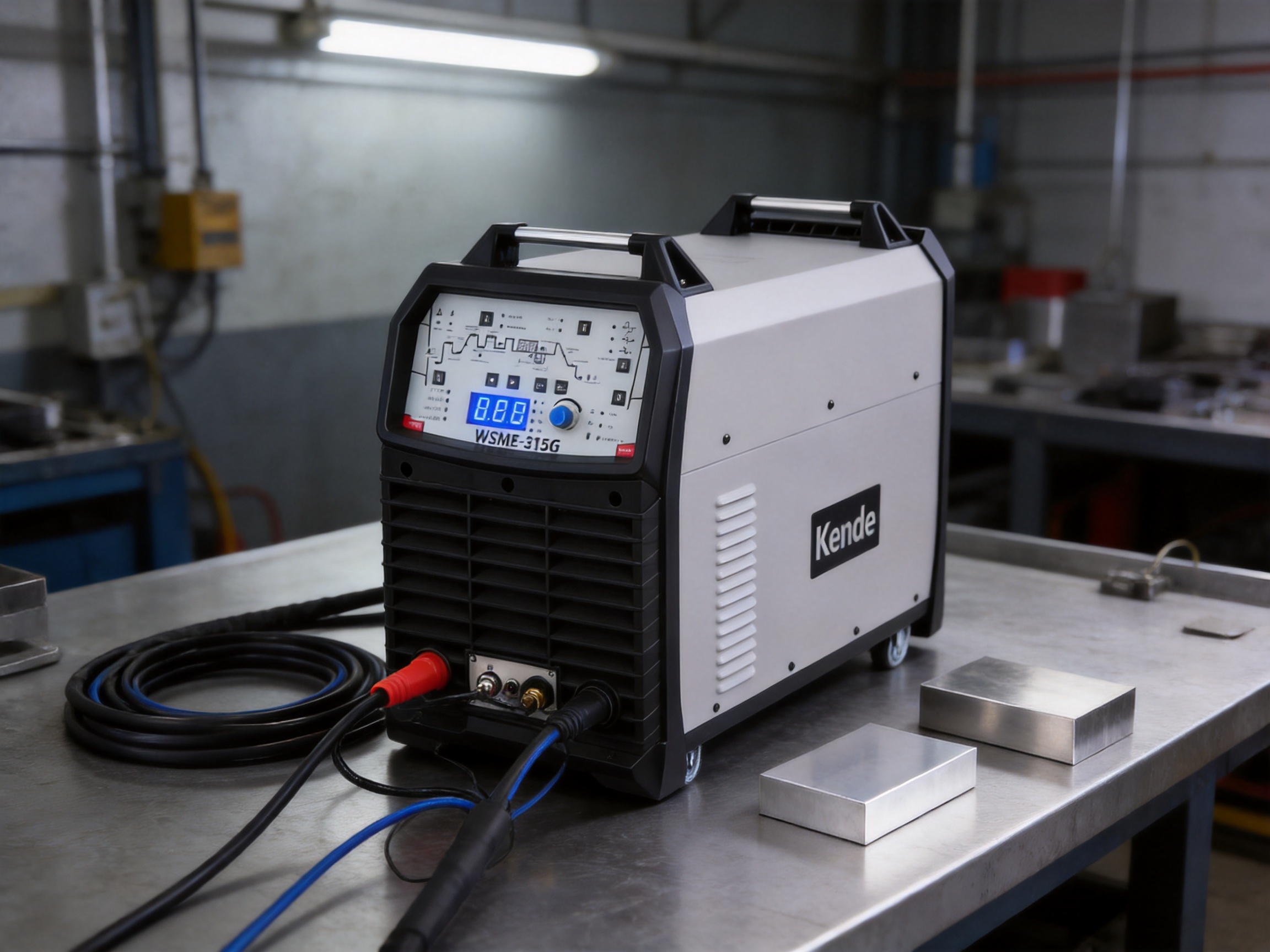
The following table summarizes key technical data for the WSME-200D and also includes the related higher-capacity WSME-315G model for reference. The WSME-200D is the focus of this article because it combines 200A output, single-phase input, portability, and multi-process capability.
| Model | Rated Supply Voltage | Supply Frequency | Rated Input Capacity | Rated Supply Current | No-Load Voltage | Welding Current Range | Rated Welding Voltage | Rated Duty Cycle | Usable Electrode | Efficiency | Power Factor | Protection Degree | Insulation Class | Net Weight | Machine Size |
| WSME-200D | 1 phase 220V to 230V | 50Hz to 60Hz | 9.2 kVA | 42A | 76V | 20A to 200A | 18V | 60 percent | 1.6 mm to 5.0 mm | 85 percent | 0.9 | IP21S | H | 21 kg | 550 mm x 270 mm x 440 mm |
| WSME-315G | 3 phase 380V | 50Hz to 60Hz | 11 kVA | 16.7A | 75V | 25A to 260A | 20.4V | 60 percent | 1.6 mm to 5.0 mm | 85 percent | 0.9 | IP21S | H | 44.4 kg | 625 mm x 340 mm x 616 mm |
Many entry-level TIG machines provide only DC TIG and MMA. While these machines can be useful for carbon steel and stainless steel, they lack the ability to perform AC TIG welding for aluminum. Other machines may offer TIG welding but omit pulse control, limiting the operator’s ability to manage heat on thin materials. The WSME-200D combines AC TIG, DC TIG, DC pulse TIG, and MMA, giving it a more complete functional profile for mixed-material fabrication.
This broad capability can reduce equipment investment for small and medium workshops. Instead of purchasing a DC TIG unit, a separate aluminum TIG machine, and a stick welder, users can rely on one multi-function machine for many daily applications. This saves space, reduces training time, and simplifies maintenance planning.
Low-cost TIG units sometimes use lift-start or scratch-start ignition. These methods can be useful in certain conditions, but they may contaminate the tungsten electrode or leave marks on the workpiece. High-frequency starting provides non-contact arc ignition, which is especially valuable for visible stainless steel welds, aluminum parts, and precision components. The WSME-200D includes high-frequency starting, giving operators a cleaner and more professional TIG experience.
Cleaner arc starts reduce grinding, rework, and tungsten dressing. They also make the machine easier to use for operators who need consistent starts on repeated production parts. In applications where appearance matters, such as metal furniture, stainless steel fixtures, aluminum frames, and visible equipment parts, this feature can directly improve the final result.
The machine uses powerful IGBT switching technology, advanced inverter architecture, microcontroller control, pulse width modulation, and constant-current output control. These technologies help maintain stable welding current and improve arc characteristics. Compared with older transformer machines, inverter welding machines are typically lighter, more efficient, and more responsive.
Digital control technology also supports more accurate current regulation. Operators can adjust welding current continuously over a large range and view settings through the digital display. This is particularly valuable when switching between thin materials, thicker sections, different electrode diameters, and different welding positions. Better current control means better repeatability, which matters for both professional welders and training environments.
The WSME-200D is designed for high-quality output and maximum efficiency, with efficiency rated at 85 percent and a power factor of 0.9. Its inverter platform reduces wasted energy compared with traditional machines. The product materials indicate energy savings of up to 30 percent, depending on use conditions and comparison equipment.
Energy efficiency is not only about electricity cost. A more efficient welding machine can also generate less unnecessary heat, support compact construction, and improve operating comfort. For busy workshops where machines operate frequently, efficiency contributes to long-term cost control and sustainable operation.
At 21 kg and with a compact size of 550 mm x 270 mm x 440 mm, the WSME-200D is easier to move than many traditional welding systems. Its metal case with plastic frame provides a balance of protection and portability. For maintenance teams, repair personnel, and flexible workshop layouts, portability is a real productivity benefit.
Some competitor machines in this output class may be heavier, especially older transformer designs. Others may be lightweight but offer limited welding modes or weaker duty cycles. The WSME-200D provides a strong combination: 200A output, 60 percent duty cycle, multi-process function, and practical physical design.
Welding environments are not always clean and gentle. Dust, vibration, temperature changes, and moisture can affect machine reliability. The WSME-200D is designed with moisture-proof, anti-corrosion, anti-vibration, and anti-conductive dust considerations. It also includes automatic protection against over-current and over-heat conditions.
These protections help improve durability and reduce downtime. In real fabrication environments, reliability can be more valuable than a slightly lower purchase price. A machine that stops work frequently, fails under load, or requires repeated service can cost far more over its working life than a better-engineered product.
A welding machine should support the operator rather than fight against the operator. The WSME-200D is designed with an easy-to-use interface that allows the user to set welding current and begin work with excellent results. This simplicity is important because many workshops employ operators with different experience levels. A clear control layout and digital display make machine setup faster and reduce errors.
In TIG mode, the stable arc helps operators control the weld pool. This supports neat bead formation, controlled penetration, and reduced spatter or contamination. In pulse TIG mode, lower heat input reduces deformation after welding, which is important for thin sheet metal, precision parts, stainless steel components, and aluminum fabrications. In MMA mode, hot start and arc force improve stick welding behavior, making the machine suitable for both experienced welders and general maintenance users.
The machine’s rated welding current range of 20A to 200A gives users flexibility. Low current settings are useful for thinner workpieces and delicate TIG welding. Higher settings support thicker material, larger electrodes, and more demanding repair work. The 76V no-load voltage assists arc initiation, while the 60 percent duty cycle supports practical production use.
Stainless steel requires careful heat control to preserve appearance and corrosion resistance. The WSME-200D provides DC TIG and DC pulse TIG functions that help operators maintain clean welds and reduce overheating. It is suitable for stainless steel pipes, kitchen equipment, railings, tanks, frames, machinery covers, and decorative products.
With AC TIG capability, the machine can weld aluminum and aluminum alloys. This expands its usefulness into applications such as aluminum frames, lightweight structures, vehicle repair parts, hardware components, and general aluminum maintenance. For many small workshops, having aluminum welding capability in a portable machine creates new business opportunities.
Carbon steel remains one of the most common fabrication materials. The WSME-200D can handle carbon steel through DC TIG for cleaner work or MMA for faster repair and general construction tasks. It can also weld alloy steel and cast iron in suitable applications with appropriate filler materials, electrodes, surface preparation, and welding procedures.
The combination of portability, 230V single-phase input, and MMA function makes the machine suitable for maintenance teams and repair technicians. Field service often requires equipment that can adapt to unknown job conditions. A TIG-only system may be too limited, while a stick-only welder may not offer enough precision. The WSME-200D fills the gap by combining precision and practicality.
Welding schools and training centers can use multi-process machines to teach several techniques on one platform. Students can learn TIG principles, AC and DC differences, pulse control, and stick welding fundamentals. The digital display and stable output help create repeatable training conditions. For institutions that need efficient equipment investment, this versatility is valuable.
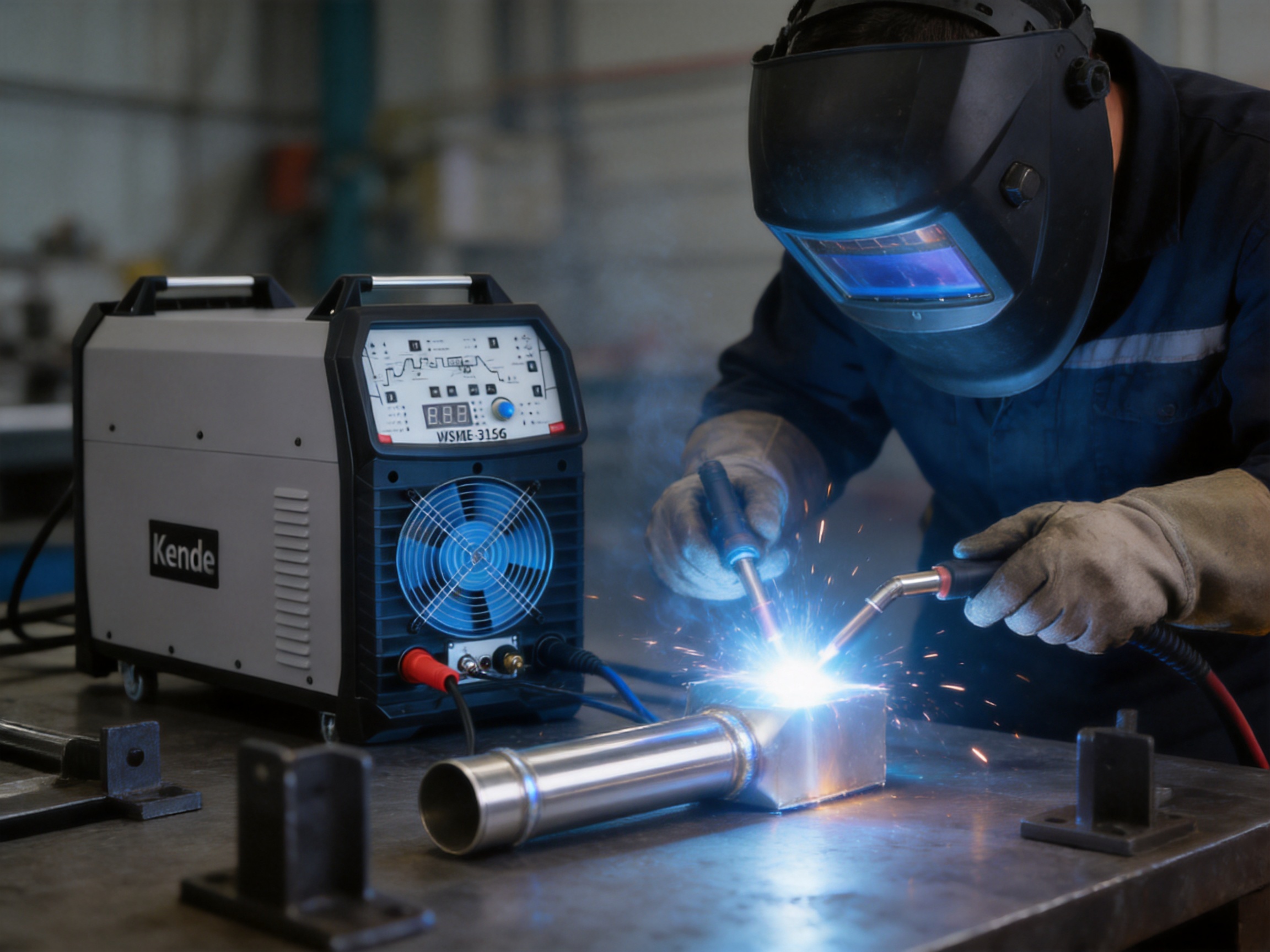
The WSME-200D is not only defined by its maximum current rating. Its real value appears in the details that improve daily operation. The digital display helps operators check current settings at a glance. The simple interface reduces setup complexity. The metal case helps protect internal components, while the plastic frame improves handling and impact resistance. The compact dimensions allow the machine to fit easily into workshop spaces, service vehicles, and production cells.
The machine supports continuous adjustment of welding current over a wide range. This allows operators to tune the process to workpiece thickness, joint type, filler material, electrode diameter, and welding position. In professional welding, small current changes can make a significant difference. A machine that responds accurately gives the welder better control and reduces trial-and-error time.
Thermal and over-current protection provide additional security. When a machine is pushed beyond safe operating conditions, protection systems can prevent serious damage. This is important in busy workshops where multiple operators may use the same equipment. Automatic protection helps safeguard the machine and supports longer service life.
Zhejiang Kende Mechanical & Electrical Co., Ltd. is an internationally recognized manufacturer and exporter of electric welding machines, chargers, and heaters. The company is located in Taizhou City, Zhejiang Province, China, and operates on a large manufacturing base covering about 120,000 square meters. With around 600 employees, annual exports of nearly 1.5 million units, and annual production capacity of about 2 million units, the company has the scale needed to support stable supply and consistent manufacturing quality.
Scale alone does not guarantee product quality. The company combines manufacturing capacity with research, process control, and modern management systems. It has extensive experience in product development and manufacturing, covering MMA or stick welding machines, MIG/MAG gas-shielded welding machines, no-gas flux wire welding machines, TIG arc welding machines, plasma cutting machines, stud welding machines, submerged arc welding machines, battery chargers, and heaters. This wide product background gives the engineering team a strong understanding of power electronics, welding characteristics, thermal management, and user requirements across many markets.
The company applies advanced management and manufacturing systems, including office automation, Toyota-style production management concepts, enterprise resource planning, and manufacturing execution systems. These systems support organized production scheduling, material control, process traceability, quality inspection, and continuous improvement. For a welding machine buyer, these manufacturing strengths translate into more consistent products and more reliable long-term cooperation.
Research and development are essential in inverter welding technology. A high-quality welding machine depends on electronic design, software logic, control algorithms, component selection, heat dissipation, electromagnetic compatibility, safety design, and mechanical structure. Zhejiang Kende Mechanical & Electrical Co., Ltd. has a provincial research and development center, an enterprise technology center, and an intelligent welding technology research institute. The company has a dedicated team of R&D personnel and has obtained multiple invention patents, utility model patents, appearance patents, and software copyrights.
This innovation background is important for products such as the WSME-200D because features like IGBT switching, microcontroller control, pulse welding, and protection systems require both hardware and software expertise. A manufacturer with mature R&D capability can improve arc performance, optimize machine reliability, develop new functions, and adapt products for different regional requirements.
The company has also participated in national standard drafting work related to welding machines. Participation in standards development demonstrates technical engagement with the industry and familiarity with safety, performance, and testing expectations. For distributors and professional buyers, this background provides confidence that the manufacturer understands international product requirements and industrial quality systems.
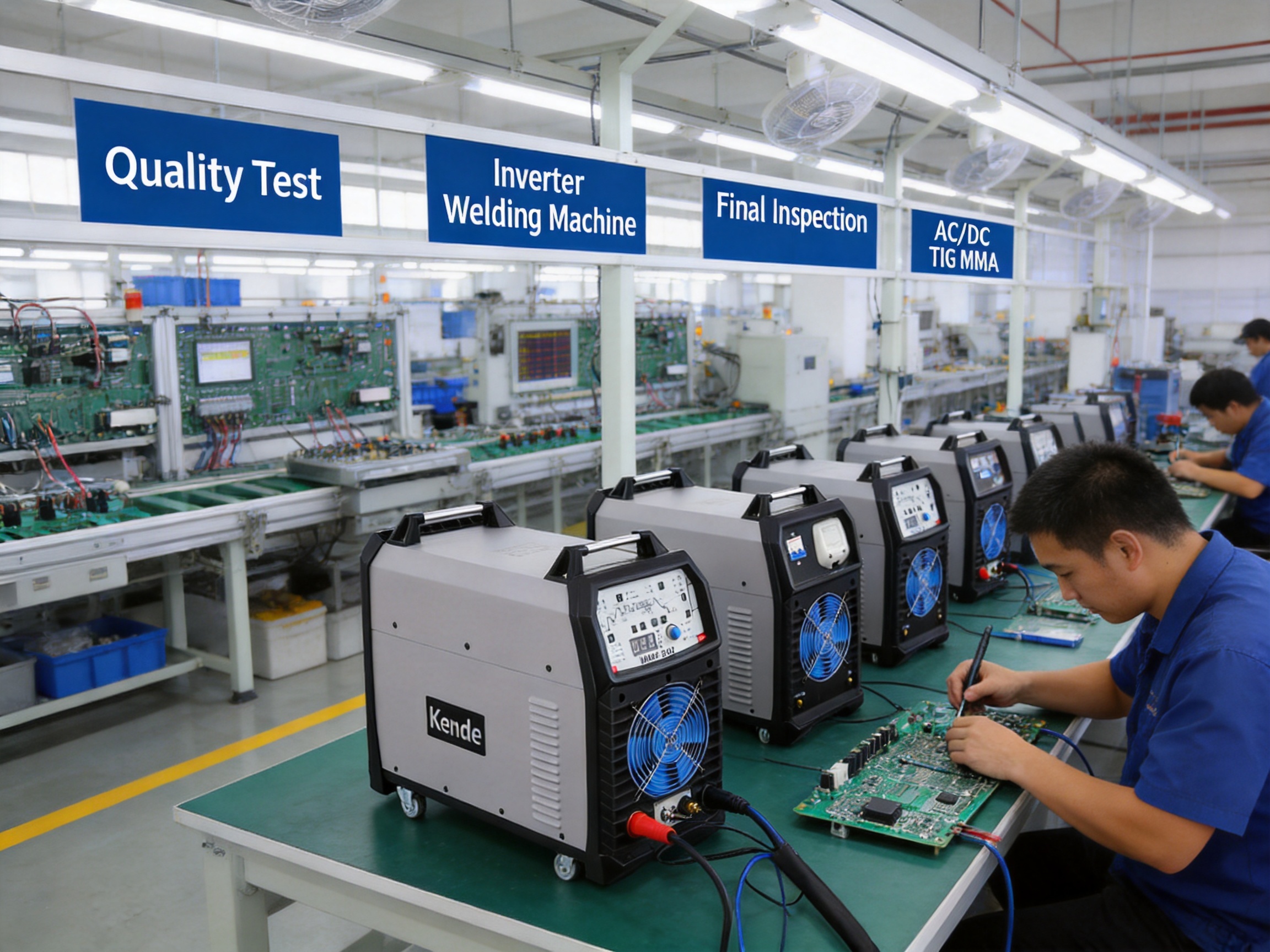
The company uses advanced production technologies such as automatic electronic component placement, plug-in and welding systems, robot processing, laser cutting, and other modern manufacturing methods. These processes support consistency and efficiency. In inverter welding machines, printed circuit board quality is especially important because electronic components must endure heat, vibration, current load, and long operating hours. Automated placement and controlled soldering help reduce human error and improve repeatability.
Laser cutting supports accurate sheet metal processing for machine housings and structural parts. Robot processing can improve dimensional consistency and production efficiency. Combined with organized quality control, these processes help ensure that each machine is built according to defined specifications.
Manufacturing technology also affects appearance and user experience. A well-made case, properly fitted components, stable connectors, and clear front-panel layout all contribute to operator confidence. The WSME-200D’s metal case with plastic frame reflects a practical design philosophy: protect the machine while supporting portable use.
The company holds many international product certificates, including GS, CE, EMC, ERP, ETL, UKCA, and China CCC certifications across its product range. These certifications show that the manufacturer has experience meeting safety, electromagnetic compatibility, energy, and market-entry requirements in different regions. For importers, distributors, and professional buyers, certification capability is a key factor when selecting a long-term welding machine supplier.
Certification experience also indicates that the company understands documentation, testing, compliance, and product consistency requirements. Welding machines are electrical power devices, and compliance is not optional in many markets. A manufacturer with international certification experience can better support customers who need reliable documentation and stable product supply.
Users may judge a welding machine by its arc, weight, price, and appearance, but manufacturing strength influences all of these factors. A stable supply chain helps ensure component quality. Advanced electronic assembly improves circuit reliability. Strong R&D improves arc control. Quality management reduces variation between units. Modern production systems improve delivery performance. These advantages combine to create a product that performs consistently in real use.
For the WSME-200D, the result is a machine that offers high-quality output, energy efficiency, multi-process welding, and practical portability. The product is not just a collection of specifications. It is supported by a manufacturer with large-scale production capacity, engineering resources, process technology, and international market experience.
When choosing a 200A TIG/MMA welding machine, buyers should consider more than the maximum current printed on the front panel. They should examine welding modes, arc starting method, pulse capability, duty cycle, input voltage, machine weight, protection features, manufacturer background, and after-sales support potential. The WSME-200D performs strongly across these criteria.
The 230V single-phase input makes it practical for many workshops and service environments. The 20A to 200A current range supports both lighter TIG tasks and stronger stick welding work. The 60 percent duty cycle is suitable for many professional and semi-industrial applications. AC TIG opens aluminum welding capability. DC pulse TIG improves heat control. MMA function adds versatility. IGBT inverter technology supports efficiency and compact size.
Buyers should also consider the long-term value of stable production and supplier capability. A machine with attractive specifications but weak manufacturing support may cause problems in spare parts availability, quality consistency, or compliance documentation. A manufacturer with extensive welding equipment experience, strong R&D resources, and large production capacity can provide a more dependable supply relationship.
To obtain the best results from the WSME-200D, operators should choose the correct welding mode for the material. Use AC TIG for aluminum and aluminum alloy. Use DC TIG for stainless steel, carbon steel, alloy steel, and similar materials. Use DC pulse TIG when heat input must be reduced or when working with thin material. Use MMA when welding outdoors, repairing heavy parts, or working where shielding gas is not practical.
Proper tungsten selection and preparation are important for TIG welding. Operators should use suitable tungsten type and diameter for the current level and material. Clean base metal surfaces before welding, especially aluminum and stainless steel. Use appropriate shielding gas flow and avoid drafts that can disturb gas protection. For MMA welding, select electrode diameter and type according to the workpiece material, thickness, and position.
Although the machine includes protection functions, operators should still follow duty cycle guidance and provide adequate ventilation. Keep air passages clear, avoid excessive dust buildup, and store the machine in a dry environment when not in use. Proper operation and maintenance help extend machine life and preserve welding performance.
A small fabrication shop may need to produce stainless steel brackets, repair aluminum parts, and weld carbon steel frames. The WSME-200D allows the shop to handle all three tasks without purchasing multiple separate machines. The digital display improves repeatability when switching between customer jobs, while pulse TIG helps reduce distortion on thin stainless steel parts.
A factory maintenance department often needs flexible equipment. One day may require TIG repair on a stainless steel component, while another day requires stick welding on a steel support. The WSME-200D offers both precision and rugged practicality. Its portability allows technicians to move it closer to the work area.
Vehicle repair work may involve steel brackets, aluminum parts, stainless exhaust components, or custom fabrication. AC/DC TIG and MMA functions give technicians more options. Clean TIG starts and pulse control are useful for visible or thin components, while MMA remains useful for stronger repair tasks.
Visible weld quality matters in metal furniture, railings, display structures, and decorative items. TIG welding helps create clean weld beads with minimal spatter. High-frequency starting reduces contamination, and pulse TIG helps maintain appearance on thin materials. The WSME-200D is well suited for these applications.
A training workshop can teach AC TIG, DC TIG, pulse TIG, and MMA using one machine platform. Students gain exposure to different materials and processes. The simple interface supports learning, while advanced functions prepare students for real professional welding challenges.
Energy saving is increasingly important for industrial equipment. The WSME-200D’s inverter technology improves electrical efficiency compared with many traditional welding machines. Lower energy consumption can reduce operating cost and support more responsible resource use. In a workshop with multiple machines, improved efficiency can become a meaningful long-term advantage.
Lower heat input through pulse TIG also reduces material distortion and post-weld correction work. Less rework means less grinding, fewer rejected parts, lower labor cost, and better customer satisfaction. When evaluating welding equipment, buyers should consider the total economic effect of stable arc performance, energy efficiency, and reduced rework.
International users expect welding equipment to be practical, stable, and adaptable. Different markets may have different power conditions, application preferences, certification needs, and price expectations. Zhejiang Kende Mechanical & Electrical Co., Ltd. has broad export experience and supplies large volumes of welding machines and related equipment to global customers. This experience helps the company understand how products are used in different regions and how to design equipment for varied customer needs.
The WSME-200D reflects this market-oriented approach. It offers a practical 230V input, portable construction, multi-process capability, and user-friendly operation. It can serve industrial users, professional workshops, repair teams, and skilled home fabricators. Its combination of functions provides value for buyers who need broad application coverage without unnecessary complexity.
The machine can weld many metals, including carbon steel, alloy steel, cast iron, stainless steel, aluminum, and aluminum alloy. AC TIG is suitable for aluminum and aluminum alloys, while DC TIG and DC pulse TIG are suitable for stainless steel, carbon steel, alloy steel, and similar materials. MMA mode supports general stick welding applications when appropriate electrodes are used.
AC TIG is important for aluminum welding because it helps remove the oxide layer on aluminum surfaces while forming a stable weld pool. A DC-only TIG machine is generally not suitable for standard TIG welding of aluminum, so the AC TIG function greatly expands the material range of the WSME-200D.
High-frequency arc starting allows the TIG arc to start without touching the tungsten electrode to the workpiece. This reduces tungsten contamination, protects the workpiece surface, and improves the quality of weld starts. It is especially useful for stainless steel, aluminum, and visible precision welds.
Pulse TIG alternates between higher and lower current levels, helping control heat input. This can reduce burn-through, minimize distortion, and improve bead appearance on thin or precision parts. The DC pulse TIG function is particularly useful for stainless steel sheet, thin tubes, and delicate components.
Yes. The WSME-200D includes MMA stick welding mode and supports electrodes from 1.6 mm to 5.0 mm. It also includes anti-stick, hot start, and arc force functions to improve ignition, reduce sticking, and stabilize the arc.
Yes. The machine weighs about 21 kg and has compact dimensions of 550 mm x 270 mm x 440 mm. Its metal case with plastic frame provides protection while supporting portable use in workshops, maintenance departments, and service environments.
The machine is designed for single-phase 220V to 230V input power with 50Hz to 60Hz frequency. This makes it suitable for many workshop and light industrial power environments.
Basic TIG welders may provide only DC TIG and may not include pulse or AC function. The WSME-200D includes AC TIG, DC TIG, DC pulse TIG, and MMA. It also provides high-frequency starting, digital display, IGBT inverter control, constant-current output, energy efficiency, and automatic protection functions.
The WSME-200D has a rated duty cycle of 60 percent. Duty cycle refers to the amount of welding time allowed within a defined operating period before the machine needs cooling time. A 60 percent duty cycle is practical for many professional and semi-industrial applications.
Zhejiang Kende Mechanical & Electrical Co., Ltd. supports product quality through large-scale production capacity, advanced manufacturing systems, automatic electronic assembly, robot processing, laser cutting, research and development centers, patent experience, certification capability, and participation in welding machine standards work. These strengths help support consistent production and reliable welding performance.
The WSME-200D IGBT Inverter TIG/MMA welding machine is a practical and capable solution for users who need precision, versatility, and portability. With AC TIG, DC TIG, DC pulse TIG, and MMA functions, it covers a wide range of materials and welding tasks. High-frequency arc starting improves TIG quality, while anti-stick, hot start, and arc force functions enhance stick welding performance. Digital control, stable constant-current output, and IGBT inverter technology support efficient and reliable operation.
Compared with many competitor machines, the WSME-200D offers a stronger balance of features. It is more versatile than DC-only TIG units, more precise than simple stick welders, more portable than older transformer systems, and more practical for mixed-material workshops than single-process machines. Its 200A output, 60 percent duty cycle, 230V input, and 21 kg body make it suitable for workshops, repair teams, training centers, and light industrial users.
The product is further strengthened by the manufacturing capability of Zhejiang Kende Mechanical & Electrical Co., Ltd. The company’s large production scale, advanced manufacturing processes, research and development resources, certification experience, and international market presence provide a strong foundation for dependable welding equipment. For buyers seeking a portable AC/DC TIG and MMA machine with professional functions and reliable manufacturing support, the WSME-200D is a compelling choice.
American Welding Society. Welding Handbook: Welding Processes and Practices.
International Electrotechnical Commission. Arc Welding Equipment Safety and Performance Standards.
Lincoln Electric. The Procedure Handbook of Arc Welding.
Miller Electric. Guidelines for TIG Welding Aluminum and Stainless Steel.
Kou, Sindo. Welding Metallurgy.
Weman, Klas. Welding Processes Handbook.
Company product technical data for WSME series TIG/MMA inverter welding machines.
Recommended Products

Contact Us
No.2299, Luqiao Section, Shugang Avenue, Luqiao District, Taizhou, 318057 Zhejiang, PR China.
+86-576-82431568
 Privacy
China Welding Machine Factory
 English
 中文简体
中文简体
 русский
 Español
 عربى
عربى
 Français
 Português
 Deutsch
 Український