Email: [email protected]
Email: [email protected]

Blog
 2026.08.03
 Blog
Blog
Modern welding users increasingly need equipment that combines portability, dependable arc performance, practical operating functions, and efficient energy use. A machine may be used in a professional workshop one day, transported to a construction site the next, and then deployed for repair, maintenance, fabrication, or domestic projects. In these situations, a welding system must provide more than a high current rating. It must be easy to operate, resistant to demanding working environments, compatible with different welding processes, and supported by a manufacturer with reliable design and production capabilities.
The MIG-200DX and MIG-205DX are compact inverter welding machines developed for these requirements. They support DC MIG/MAG welding, gasless flux-cored arc welding, and MMA welding with voltage reduction device functionality. Depending on the model, the equipment is designed for applications requiring a portable 160 A or 180 A class welding output, while product descriptions also identify the series as a 180 A/200 A family. The machines use IGBT switching technology, PWM control, digital display operation, automatic protection, and an enclosure designed to resist moisture, corrosion, vibration, and conductive dust.
These characteristics make the machines suitable for carbon steel, alloy steel, stainless steel, repair work, light fabrication, installation, maintenance, agricultural equipment, small structural components, and general workshop use. Their compact construction and selectable welding processes also give them an advantage over single-process equipment that can perform only one type of welding.
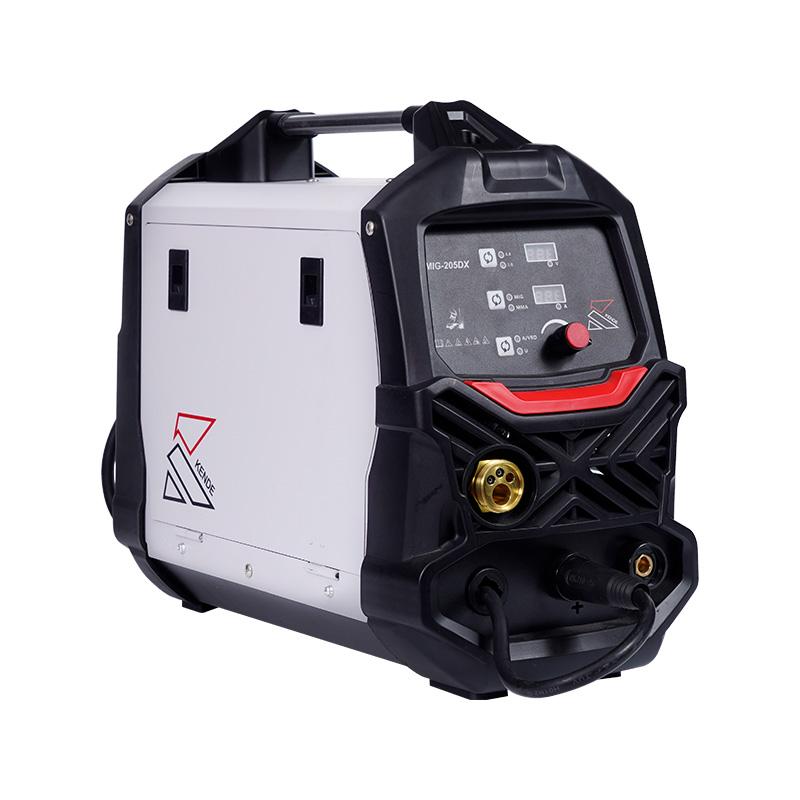
MIG-200DX/205DX, 180A/200A 220v/230V 180A 200A digital display MIG MAG gasless FLUX welder portable 1-5kg wire welding machine
The MIG-200DX and MIG-205DX belong to a portable inverter welding platform. The basic operating principle is to convert incoming single-phase AC power through a high-frequency electronic circuit, regulate the welding current electronically, and deliver controlled DC output to the welding circuit. Compared with traditional transformer welding machines, an inverter design can reduce the size and weight of the machine while improving controllability and power efficiency.
The MIG function is intended for continuous wire welding using a shielding gas such as carbon dioxide or an argon-based mixed gas. The machines can also work with gasless flux-cored wire, allowing the operator to weld without an external shielding-gas cylinder when the selected wire is designed for self-shielded operation. In addition, the MMA function allows the use of coated stick electrodes, providing a practical alternative when solid wire, a wire feeder, or shielding gas is not convenient.
The MIG-200DX is specified for a maximum wire capacity of approximately 1 kg, while the MIG-205DX is designed to accommodate a wire spool of up to approximately 5 kg. This difference is important for users who have different priorities. The smaller model is particularly convenient where minimum size and weight are important. The larger spool capacity of the MIG-205DX can reduce interruptions caused by wire replacement during extended fabrication work.
Both models are intended to provide a balance between portability and useful welding capacity. The machines are not positioned as heavy industrial production power sources, but they provide a versatile solution for workshops, service technicians, contractors, maintenance teams, and skilled home users who require more flexibility than a basic stick welder can offer.
MIG/MAG welding uses a continuously fed wire electrode. In MIG welding, an inert shielding gas is commonly used, while MAG welding generally uses an active gas or an active component in the shielding mixture. The wire serves as both the electrode and the filler metal, allowing the operator to weld continuously without stopping to replace a stick electrode after every short length.
This process is useful for fabrication jobs that require speed, consistent deposition, and relatively clean welds. It is suitable for many carbon-steel and stainless-steel applications when the correct wire, gas, polarity, contact tip, and parameter settings are selected. The digital control system helps the operator manage the welding output and establish a repeatable working condition.
For small and medium fabrication work, the MIG-200DX and MIG-205DX can offer a productivity advantage over conventional MMA equipment. A continuously fed wire can reduce the time spent changing electrodes and removing slag. The operator can also work with a shorter interruption cycle, which is helpful when assembling frames, brackets, panels, gates, machinery parts, and repair components.
Gasless flux-cored welding is valuable in outdoor work, mobile repairs, and locations where transporting or protecting a gas cylinder is inconvenient. The flux inside the wire generates shielding during welding and forms slag over the solidifying weld pool. This method can tolerate certain outdoor conditions more effectively than gas-shielded welding, although strong wind can still disturb the arc and appropriate protection should be used.
The gasless function gives the product family a practical advantage over MIG-only machines that require an external gas supply for every application. A contractor can use solid wire and shielding gas in a workshop, then change to self-shielded flux-cored wire for field repairs. This adaptability reduces dependence on a single consumable system and gives users more options when working in different environments.
Flux-cored welding requires correct wire selection, polarity, wire-feed adjustment, and slag removal. The operator should follow the wire manufacturer’s instructions because settings vary according to wire diameter, material, and formulation. When these factors are correctly matched, the machine can provide useful penetration and productivity for maintenance and general fabrication tasks.
The MMA function provides a second practical welding method within the same housing. Stick welding is widely used because it requires relatively simple equipment and can be performed on many outdoor and repair jobs. It is particularly useful when the workpiece is dirty, when access is difficult, or when the operator needs to weld away from a wire spool and feeder arrangement.
The machines include MMA operation with VRD, or voltage reduction device, functionality. VRD is intended to reduce the no-load output voltage when the machine is not actively welding, helping improve electrical safety in suitable operating conditions. VRD is not a substitute for proper grounding, personal protective equipment, safe work practices, or compliance with local electrical and workplace regulations.
Having MIG, flux-cored, and MMA capability in one machine can reduce the need to purchase and maintain separate power sources. It also allows a fabricator to choose the most suitable process for the job instead of forcing every project into a single welding method.
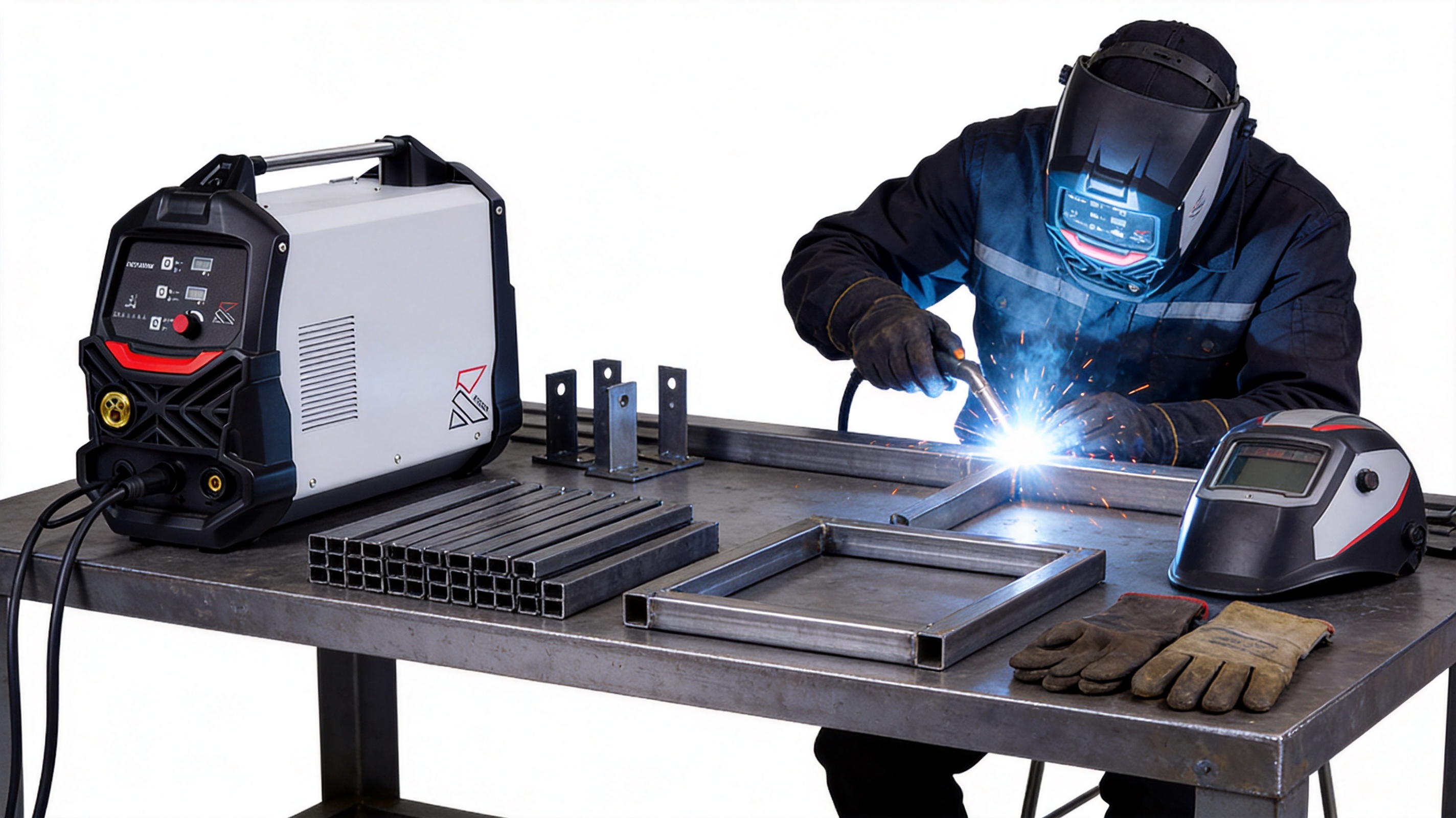
The machines use powerful insulated-gate bipolar transistor, or IGBT, switching technology. IGBT components are widely used in modern inverter welding systems because they can switch electrical power rapidly and support precise electronic control. In a welding machine, this high-frequency switching architecture helps reduce the size of the transformer and associated magnetic components compared with traditional low-frequency transformer designs.
The result is a compact power source with a favorable relationship between output capability and physical size. The listed net weights are approximately 12 kg for the MIG-200DX and 12.2 kg for the MIG-205DX. These figures make the equipment more manageable for transport, installation, and storage than many conventional transformer-based machines with similar general-use capacity.
Inverter construction also supports responsive current regulation. The control circuit can react to variations in the welding arc and adjust the output more rapidly than a basic transformer with limited electronic control. This contributes to arc stability and can make it easier to maintain consistent welding conditions when the operator changes travel speed or electrode position.
Pulse-width modulation, or PWM, is used to regulate the switching behavior of the inverter power stage. By changing the timing and duty cycle of the switching signals, the control system can manage the energy delivered to the welding circuit. The technology supports efficient power conversion and helps the machine produce a controlled welding output.
PWM control is one reason modern inverter machines can combine compact dimensions with useful power. It also provides a foundation for integrating electronic protection, process control, and user-interface functions into the same platform. For operators, the most visible result is a machine that responds predictably when the current, wire-feed condition, and arc length are properly adjusted.
The supplied technical information identifies a rated supply voltage of 230 V and a supply frequency of 50 Hz for both models. The MIG-200DX has a listed rated input capacity of 7.1 kVA and rated supply current of 26.5 A. The MIG-205DX has a listed rated input capacity of 7.9 kVA and rated supply current of 31.2 A.
The no-load voltage is listed as 54 V for both machines. The welding-current range is specified as MIG: 50–160 A and MMA: 40–160 A for the MIG-200DX. For the MIG-205DX, the listed range is MIG: 50–180 A and MMA: 40–180 A. The stated MIG welding-voltage ranges are 16.5–22 V for the MIG-200DX and 16.5–23 V for the MIG-205DX. The MMA voltage ranges are listed as 22–26.4 V and 22–27.5 V respectively.
These values should be interpreted together with the actual duty-cycle requirements, input-power conditions, extension-cable limitations, ambient temperature, consumable diameter, and welding technique. The maximum available output is not necessarily the correct setting for every job. A stable weld depends on selecting a suitable current and voltage for the material thickness, joint design, wire or electrode type, and welding position.
| Technical characteristic | MIG-200DX | MIG-205DX |
|---|---|---|
| Rated supply voltage | 230 V | 230 V |
| Supply frequency | 50 Hz | 50 Hz |
| Rated input capacity | 7.1 kVA | 7.9 kVA |
| Rated supply current | 26.5 A | 31.2 A |
| No-load voltage | 54 V | 54 V |
| MIG welding-current range | 50–160 A | 50–180 A |
| MMA welding-current range | 40–160 A | 40–180 A |
| MIG welding-voltage range | 16.5–22 V | 16.5–23 V |
| Rated duty cycle | 40% | 40% |
| Usable MIG wire diameter | 0.6–1.0 mm | 0.6–1.0 mm |
| Usable MMA electrode diameter | 1.6–4.0 mm | 1.6–5.0 mm |
| Efficiency | 85% | 85% |
| Power factor | 0.9 | 0.9 |
| Protection degree | IP21S | IP21S |
| Insulation class | H | H |
| Net weight | Approximately 12 kg | Approximately 12.2 kg |
| Machine dimensions | 450 × 180 × 315 mm | 490 × 220 × 380 mm |
The listed rated duty cycle is 40%. Duty cycle indicates the percentage of a defined testing period during which the machine can weld at a specified rated condition before a cooling period is required. Operators should not assume that a 40% duty cycle means unlimited operation at maximum current. The rating should be used as a guide, and the machine should be allowed to cool whenever the thermal protection indicator or operating conditions require it.
A welding machine’s practical performance is determined not only by its maximum current but also by how the arc behaves during starting, steady welding, stopping, and changes in work distance. The product information emphasizes excellent arc characteristics and welding performance. In practical terms, an electronically controlled inverter can help provide a responsive arc when the correct consumables and settings are used.
For MIG and flux-cored welding, the operator must coordinate wire-feed speed, voltage, torch distance, travel speed, and torch angle. The machine’s control system provides the power platform, but weld quality still depends on preparation and technique. Clean material, correct polarity, suitable shielding, and a stable work return connection are essential.
For MMA welding, arc behavior is affected by electrode type, electrode diameter, current, arc length, and welding position. A stable current supply can help reduce unwanted arc interruptions and make electrode manipulation more predictable. The operator should select the electrode manufacturer’s recommended current range and avoid exceeding the capacity of the workpiece or the machine.
The digital display is another practical feature. A display allows the operator to observe the selected or operating value more clearly than a simple analog scale. It can help users establish repeatable settings between similar jobs and can reduce guesswork when changing materials or consumables. Digital indication does not eliminate the need for welding trials, but it improves adjustment visibility and process consistency.
Over-current protection is intended to protect the power electronics and welding circuit when the current demand exceeds an acceptable operating condition. This may occur because of an inappropriate setting, a short circuit, incorrect connection, or another abnormal condition. Automatic protection helps reduce the risk of damage, although users must still identify and correct the cause of the event before continuing work.
Thermal protection monitors internal temperature and can interrupt operation when the machine becomes too hot. This is particularly important during high-current welding, extended work periods, high ambient temperatures, or operation in restricted spaces. When thermal protection activates, the operator should stop welding, leave the machine connected as instructed by the operating manual, and allow the cooling system and internal components to return to a safe temperature.
Ventilation openings should remain clear. The machine should not be placed against walls, covered with materials, or operated in locations where dust and debris block airflow. Although the enclosure is designed with moisture-proof, anti-corrosion, anti-vibration, and anti-conductive-dust characteristics, these features do not make the equipment waterproof or immune to contamination.
The product information identifies protection against moisture, corrosion, vibration, and conductive dust. These design objectives are valuable for equipment that may be used in workshops, repair areas, garages, construction environments, and mobile service applications. A robust enclosure and protected internal layout can help improve service life when the machine is transported or exposed to ordinary industrial conditions.
The listed degree of protection is IP21S. This should be understood as a limited enclosure rating, not permission to operate the machine in rain, standing water, heavy spray, or highly contaminated conditions. Operators should keep the machine dry, use appropriate shelter, and follow all instructions concerning storage, cleaning, ventilation, and electrical connection.
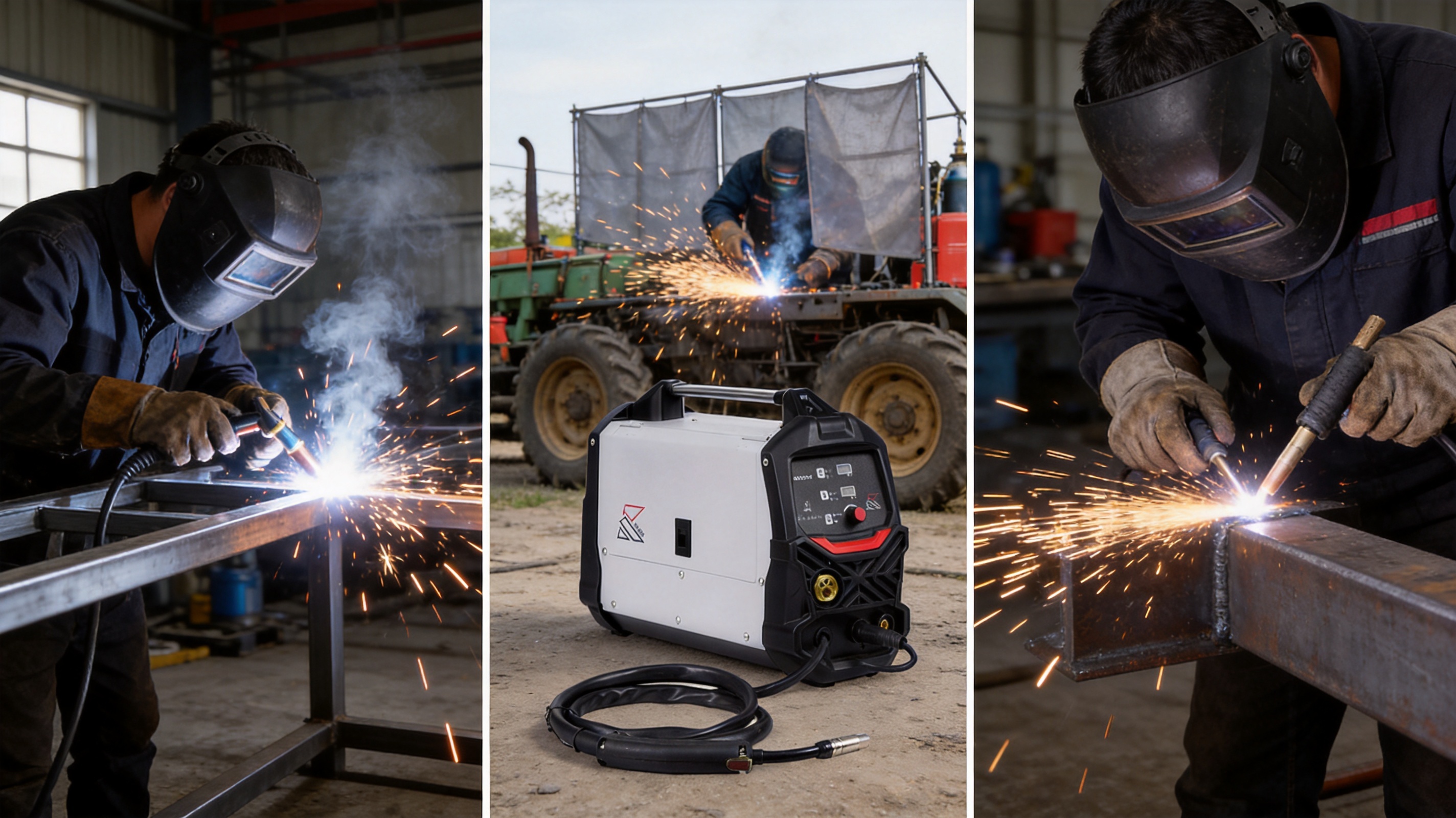
The equipment is specified with approximately 85% efficiency and a power factor of 0.9. These figures indicate that the inverter power stage is designed to use electrical input comparatively effectively under the relevant test conditions. The supplied product information also states that energy savings can reach up to 30% compared with less efficient conventional designs. Actual savings depend on duty cycle, welding current, process selection, input voltage, machine loading, and the equipment being used as the comparison.
Energy efficiency can influence more than the electricity bill. A machine that converts power efficiently may produce less unnecessary heat inside the enclosure, reduce the demand placed on the electrical supply, and be easier to transport because of its compact inverter construction. For workshops operating several machines, these factors may contribute to lower operating costs and more flexible power distribution.
The power factor of 0.9 is also useful in considering input-side performance. A higher power factor generally means that the machine makes more effective use of the supplied electrical current, although installation requirements must still be evaluated by a qualified professional. The rated input current for each model should be considered when selecting circuit protection, plugs, cables, extension leads, and portable generators.
The machines can support the production and repair of frames, brackets, stands, shelves, supports, gates, handrails, carts, equipment guards, and similar components. MIG welding is often suitable for repetitive fabrication because the wire feed allows continuous welds and reduces electrode changes. MMA can be used for heavier or less accessible joints, while flux-cored welding offers a useful option when shielding gas is not practical.
Maintenance work often involves different materials, positions, and working environments. A machine that supports multiple processes can be more useful than one restricted to a single method. A service technician may use gasless wire outdoors, MIG wire inside a workshop, and stick electrodes for a repair involving limited access or a contaminated surface.
Before welding any repair component, the operator should identify the material, remove paint and contamination from the weld zone, inspect for hidden fuel or electrical hazards, and determine whether the component is safe to heat. Welding on pressurized, sealed, or previously contaminated containers is especially hazardous and should not be attempted without appropriate professional procedures.
The compact form and moderate output range are suitable for many automotive, agricultural, and equipment-repair tasks. Possible applications include brackets, panels, frames, trailer components, farm implements, and general metal repairs. The proper process depends on material thickness and composition. Thin sheet requires careful heat control to avoid burn-through, while thicker parts may require multiple passes, joint preparation, preheating, or a different welding system.
Gasless flux-cored operation can be advantageous for mobile work because it reduces the need to transport a shielding-gas cylinder. The machine itself remains portable, and the user can carry wire, a torch, a work clamp, and appropriate protective equipment. Outdoor welding should be performed in a sheltered area whenever possible. Wind can disturb shielding, and damp conditions increase electrical and safety risks.
One of the strongest competitive advantages of the MIG-200DX and MIG-205DX is process flexibility. A basic MMA machine may be compact and inexpensive, but it cannot provide continuous wire welding without additional equipment. A MIG-only machine may provide productive wire welding, but it may be less convenient for field work requiring stick electrodes or gasless wire. A conventional transformer machine may be durable, yet larger and heavier than an inverter system with similar general-purpose capacity.
By integrating MIG/MAG, flux-cored, and MMA functions, the product family can help users consolidate several common workshop requirements into one platform. This can reduce equipment duplication, simplify storage, and make training easier because operators work with one familiar power source and control arrangement.
The IGBT inverter architecture also provides a weight and size advantage over many traditional transformer designs. The MIG-200DX dimensions are listed as approximately 450 mm long, 180 mm wide, and 315 mm high. The MIG-205DX is listed at approximately 490 mm long, 220 mm wide, and 380 mm high. Their net weights are close to 12 kg, which is practical for a portable machine in this output class.
The larger wire capacity of the MIG-205DX provides another distinction within the range. A spool of up to approximately 5 kg can be useful for users who value longer welding periods and fewer consumable changes. The MIG-200DX, with its smaller wire capacity, may be preferred for compact setups, occasional repair, and users who value a smaller footprint.
These advantages should be considered alongside the machines’ rated duty cycle and intended application level. Heavy automated production lines, very thick structural work, and continuous maximum-output operation may require a larger industrial power source. For portable general fabrication and multi-process repair, however, the combination of capability, size, and electronic control is compelling.
The manufacturer behind the product range is Zhejiang Kende Mechanical & Electrical Co., Ltd., based in Taizhou, Zhejiang, China. The company operates a site covering approximately 120,000 square meters and employs around 600 people. Its reported annual production capacity is approximately 2 million units, with exports of nearly 1.5 million units per year.
Such production scale can support more consistent sourcing, standardized assembly procedures, dedicated testing, and the development of specialized manufacturing teams. For welding-machine buyers, manufacturing capacity is important because product availability, replacement planning, quality control, and the ability to support different regional specifications all influence the total value of a purchase.
The company reports a Zhejiang Provincial Research and Development Center, an Enterprise Technology Center, and an Intelligent Welding Technology Research Institute. It also reports approximately 98 research and development personnel. These facilities and personnel support work in power electronics, welding processes, product design, mechanical construction, control systems, thermal management, and product adaptation.
The company has obtained invention patents, utility model patents, appearance patents, and software copyrights. Patent quantity alone does not determine field performance, but an active intellectual-property portfolio indicates ongoing investment in product development and engineering improvement. For customers seeking long-term suppliers, design capability is valuable because it supports product updates, regional customization, and the development of equipment for different operating conditions.
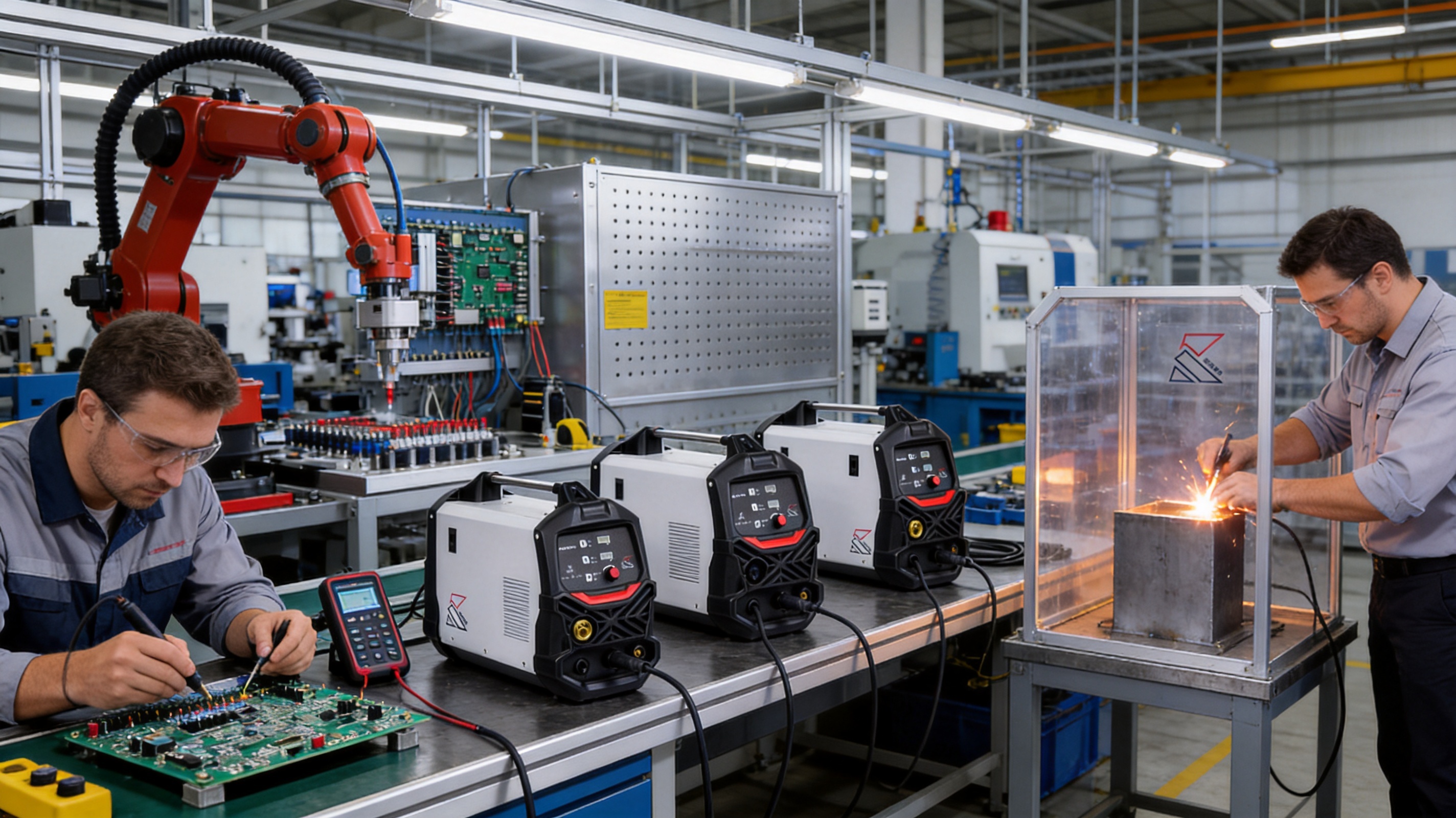
The reported manufacturing systems include automatic surface-mount technology, plug-in and welding systems, robotic processing, laser cutting, and other advanced production methods. Automated electronic assembly can improve component placement consistency and reduce variation in circuit-board production. Robotic processing can help maintain repeatable mechanical operations, while laser cutting supports accurate fabrication of enclosures and metal parts.
These methods are complemented by management and production systems identified by the company, including office automation, Toyota-style production management, ERP K3, and MES management systems. ERP systems can assist with material planning, purchasing, inventory, and production scheduling. MES systems can connect manufacturing instructions, work orders, process data, and quality records more closely to the factory floor.
When properly implemented, these systems can improve traceability and help the manufacturer identify process deviations. They can also support more efficient production of multiple models and regional versions. This is especially relevant for a product family that may require different input voltages, plugs, labels, manuals, wire-feed configurations, or certification markings for different markets.
Welding machines require more than visual inspection. A complete production approach may include checks of insulation, grounding continuity, no-load voltage, output current, thermal protection, fan operation, display function, wire-feed performance, and welding output. The precise test sequence depends on the product design and applicable standards, but systematic testing is essential for power-electronic equipment.
The manufacturer reports international certifications and compliance marks including GS, CE, EMC, ERP, US ETL, UKCA, and China CCC across its product portfolio. Certification applicability should always be confirmed for the specific model, voltage version, market, and production batch. Buyers should request the relevant declaration, certificate, test report, and user documentation when certification is a contractual requirement.
The company also reports participation in the drafting, formulation, and revision of 20 national standards and leadership in drafting one group standard through its involvement with welding-machine standardization activities. Participation in standards work can provide valuable technical insight into safety, performance, testing, and product requirements. It also demonstrates engagement with the broader development of the welding-equipment industry.
The choice between the two models depends primarily on wire capacity, desired output range, machine dimensions, and the expected working pattern. Users who need a compact machine for occasional repair or small fabrication may favor the MIG-200DX. Its smaller dimensions and approximately 1 kg wire capacity can be convenient for transport and storage.
The MIG-205DX is more appropriate when the user wants a larger wire spool and a somewhat broader listed welding-current range. A wire capacity of up to approximately 5 kg can reduce interruptions during longer jobs. Its enclosure is larger, so the buyer should confirm that the workbench, vehicle, cabinet, or storage area can accommodate the stated dimensions.
Both machines use a 230 V, 50 Hz supply according to the supplied specifications. Buyers in regions with different electrical standards should confirm the correct model version before ordering. Electrical installation should be performed according to local requirements, and the supply circuit must be capable of supporting the rated input demand.
MIG and flux-cored performance depends strongly on consumable compatibility. The listed usable MIG wire diameter is 0.6–1.0 mm. The correct contact tip, drive-roll groove, liner, wire type, polarity, and shielding method must match the selected diameter and process. A mismatch can cause unstable feeding, bird-nesting, excessive spatter, poor penetration, or premature wear of the torch components.
For MMA operation, the listed electrode range is 1.6–4.0 mm for the MIG-200DX and 1.6–5.0 mm for the MIG-205DX. The electrode type should be selected according to the base material, welding position, required strength, and applicable procedure. Electrodes must be stored correctly because moisture can affect arc behavior, weld quality, and hydrogen control.
Before welding, the operator should check the work return clamp, torch connection, gas hose if applicable, wire-feed path, drive rolls, cooling openings, and power cable. The workpiece should be securely positioned, and the welding area should be free of flammable materials. A clean joint improves arc stability and reduces defects.
Welding produces intense ultraviolet and infrared radiation, heat, fumes, sparks, and electrical hazards. Operators must use a suitable welding helmet, flame-resistant clothing, gloves, safety footwear, and appropriate eye and respiratory protection. Ventilation or local fume extraction should be provided according to the material and welding process.
Shielding gases must be stored and handled properly. Cylinders should be secured upright, protected from impact, and kept away from excessive heat. Gasless operation removes the need for a cylinder but does not remove the need for fume control or fire prevention.
The machine should be connected to a suitable supply with effective protective grounding. Damaged cables, plugs, torches, electrode holders, and work clamps must be repaired or replaced before use. The enclosure should not be opened by unqualified personnel because capacitors and other components may retain dangerous voltage after disconnection.
Operators should follow the supplied instruction manual, local electrical regulations, workplace safety requirements, and the safety data information for welding consumables. The IP21S enclosure rating does not permit operation in rain or standing water. The machine should be kept away from corrosive chemicals, excessive dust, explosive atmospheres, and locations where ventilation is inadequate.
Routine maintenance can help preserve welding performance and extend service life. The exterior should be kept clean, and ventilation passages should be inspected regularly. Dust should be removed using an approved method that does not force conductive particles deeper into the machine. The user should inspect the power cable, torch lead, gas hose, work cable, connections, and wire-feed components for wear.
For MIG and flux-cored operation, the contact tip should be checked for enlargement or blockage. The nozzle should be cleaned of spatter, and the liner should be inspected if wire feeding becomes inconsistent. Drive-roll pressure should be adjusted correctly: too much pressure can deform the wire, while too little pressure can cause slipping.
For MMA operation, electrode holders and work clamps should be checked for secure connections and overheating. If the thermal protection activates repeatedly during normal work, the operator should stop and investigate ventilation, duty cycle, ambient temperature, cable sizing, and possible internal faults rather than repeatedly resetting the machine.
The main competitive strength of the MIG-200DX and MIG-205DX is their combination of multi-process capability and portable inverter construction. Users receive MIG/MAG, gasless flux-cored, and MMA functions in a compact platform, allowing the equipment to serve different materials, environments, and work styles.
The machines also combine digital display control with IGBT and PWM technology. This creates a practical balance between user visibility, electronic regulation, and efficient power conversion. Automatic over-current and over-heat protection add another layer of operational security, while the stated environmental design features support use in ordinary workshop and field-service conditions.
The manufacturer’s scale is an additional advantage for distributors and professional buyers. A company with substantial production capacity, engineering resources, automated manufacturing equipment, quality systems, and international certification experience may be better positioned to support larger orders, private-label requirements, regional versions, and long-term product availability than a small assembler with limited technical infrastructure.
The product family is therefore suited to buyers who want more capability than a basic stick welder, but who do not need the size and cost of a high-output industrial production system. It can be considered for workshops, maintenance departments, rental fleets, contractors, agricultural users, vehicle repair facilities, and serious home fabricators.
The MIG-200DX and MIG-205DX support DC MIG/MAG welding, gasless flux-cored arc welding, and MMA or stick welding. The selected process requires the correct torch or electrode holder, consumable, polarity, and operating settings.
Yes. When used with compatible self-shielded flux-cored wire, the machines can perform gasless welding. The operator should verify wire specifications and polarity because gasless wire requirements differ from those of solid MIG wire.
The MIG-200DX is the more compact version and is specified for a maximum wire capacity of approximately 1 kg. The MIG-205DX is larger and can accommodate a wire spool of up to approximately 5 kg. The listed MIG/MMA current range is also higher for the MIG-205DX, at up to 180 A compared with 160 A for the MIG-200DX in the supplied technical table.
They are suitable for many professional repair, maintenance, and light-to-medium fabrication tasks. However, buyers should compare the 40% rated duty cycle and output range with the intended workload. Continuous heavy industrial production may require a larger machine designed for a higher duty cycle.
The product information identifies carbon steel, alloy steel, and stainless steel as suitable materials. Weldability depends on material grade, thickness, joint design, surface preparation, consumable selection, shielding, and procedure control.
Yes. The listed functions include automatic over-current and over-heat protection. The MMA mode also includes VRD functionality. These features support safer operation but do not replace grounding, protective clothing, ventilation, correct installation, or compliance with applicable safety regulations.
The supplied specifications list a rated supply voltage of 230 V and a supply frequency of 50 Hz. Buyers should confirm the exact regional version and plug configuration before purchase, especially when operating in a country with different electrical standards.
The listed efficiency is 85%, and the listed power factor is 0.9. The product information also states that energy savings can reach up to 30% compared with less efficient equipment. Actual energy use will vary according to welding current, duty cycle, process, and operating conditions.
IP21S indicates a limited level of protection against contact and vertically falling water under specified test conditions. It does not mean that the machine is waterproof. The equipment should be protected from rain, spray, standing water, and excessive moisture.
The listed MIG wire diameter range is 0.6–1.0 mm for both models. The actual wire type, drive roll, liner, contact tip, polarity, and settings must be suitable for the selected wire.
The listed MMA electrode range is 1.6–4.0 mm for the MIG-200DX and 1.6–5.0 mm for the MIG-205DX. The recommended size depends on the material thickness, electrode type, welding position, and required current.
The machines are manufactured by Zhejiang Kende Mechanical & Electrical Co., Ltd., located in Taizhou, Zhejiang Province, China. The company reports extensive manufacturing, export, research, certification, and product-development capabilities.
The MIG-200DX and MIG-205DX are designed as practical multi-process inverter welding machines for users who need portability, flexibility, and dependable electronic control. Their ability to perform MIG/MAG, gasless flux-cored, and MMA welding allows one machine to address a broad range of workshop, maintenance, repair, and field-service requirements.
IGBT switching, PWM regulation, digital display control, approximately 85% efficiency, a 0.9 power factor, automatic over-current and over-heat protection, and an enclosure designed for challenging working conditions contribute to the product’s value. The MIG-200DX emphasizes compactness and a smaller wire spool, while the MIG-205DX provides a larger wire capacity and higher listed output range.
Behind the products is a manufacturer with substantial production capacity, research and development resources, automated manufacturing technologies, digital management systems, international certification experience, and participation in welding-machine standardization. These strengths support the machines’ position as versatile equipment for distributors, contractors, workshops, maintenance teams, and professional users seeking a portable alternative to larger conventional systems.
As with any welding equipment, the best results depend on correct setup, suitable consumables, sound electrical installation, proper joint preparation, and trained operation. When used within their rated capabilities and maintained according to the manufacturer’s instructions, these machines provide a flexible foundation for efficient and controlled metal fabrication.
1. Product technical information for the MIG-200DX and MIG-205DX portable MIG/MAG, flux-cored, and MMA welding machines.
2. Manufacturer-provided specifications covering rated input capacity, welding-current ranges, duty cycle, efficiency, power factor, protection degree, insulation class, dimensions, and net weight.
3. General principles of gas metal arc welding and flux-cored arc welding, including consumable selection, shielding requirements, polarity, and welding procedure control.
4. General principles of manual metal arc welding, electrode selection, arc length, welding position, and joint preparation.
5. Technical guidance on IGBT inverter power conversion and pulse-width modulation control in modern welding equipment.
6. General electrical safety practices for arc-welding power sources, protective grounding, cable inspection, ventilation, and thermal protection.
7. Manufacturer-provided information concerning research and development facilities, production capacity, automated manufacturing, quality systems, intellectual property, and international certification experience.
Recommended Products

Contact Us
No.2299, Luqiao Section, Shugang Avenue, Luqiao District, Taizhou, 318057 Zhejiang, PR China.
+86-576-82431568
 Privacy
China Welding Machine Factory
 English
 中文简体
中文简体
 русский
 Español
 عربى
عربى
 Français
 Português
 Deutsch
 Український