Email: [email protected]
Email: [email protected]

Blog
 2026.09.30
 Blog
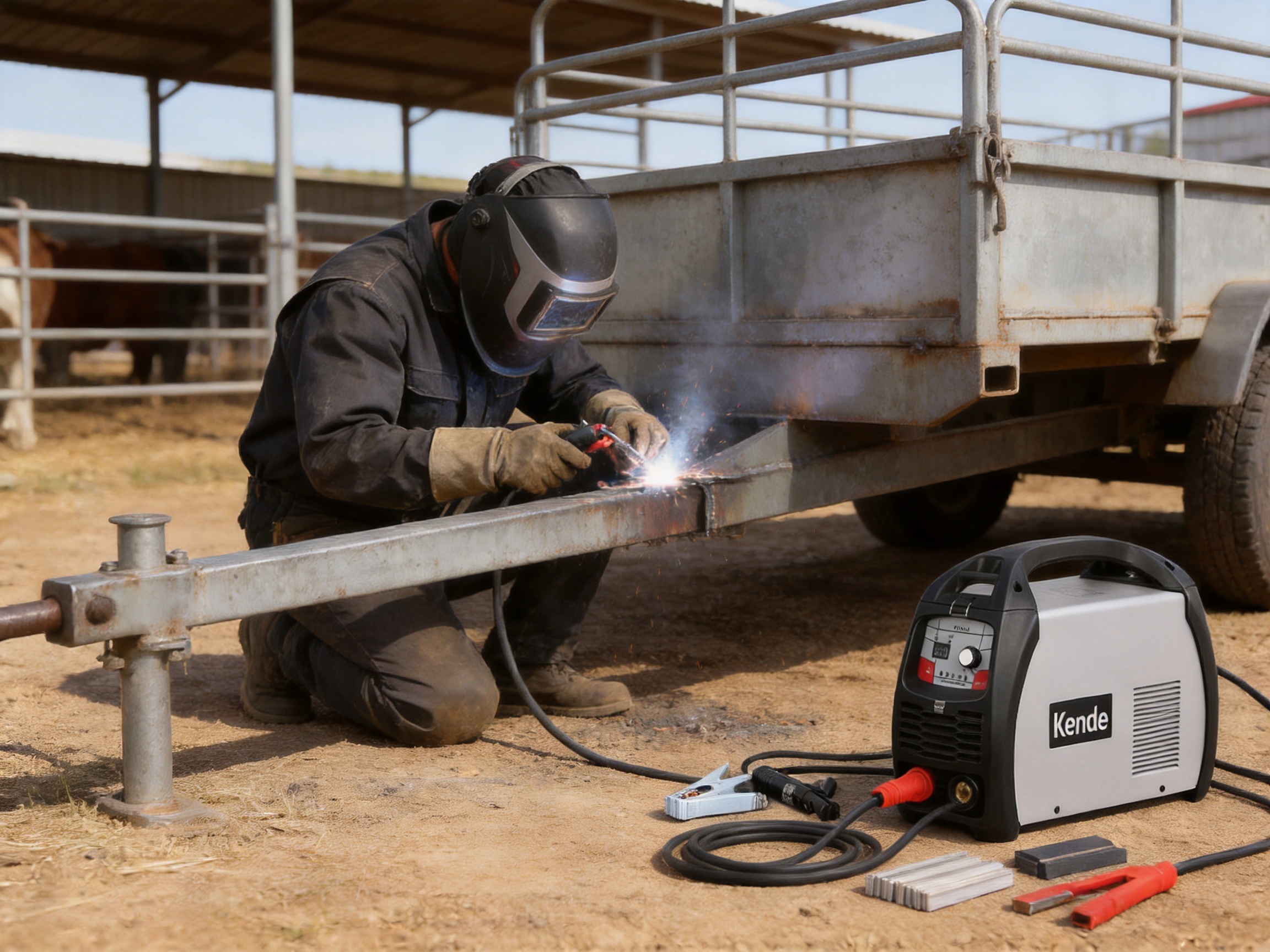
Modern welding work increasingly demands equipment that combines dependable arc performance, compact construction, energy efficiency, and practical protection. The KD-255A is designed to meet these needs as a portable IGBT inverter MMA or stick welding machine for workshops, maintenance teams, construction crews, agricultural users, fabricators, and demanding home applications. It delivers direct-current welding output, continuous current adjustment, and a set of intelligent arc functions that make electrode welding easier to start, control, and complete.
Although traditional transformer welding machines remain useful in some applications, they are often heavy, bulky, less energy-efficient, and more difficult to transport. The KD-255A uses advanced inverter technology and powerful IGBT switches to achieve a smaller and lighter design without sacrificing the practical functions expected from a professional manual metal arc welder. With a net weight of approximately 4.4 kilograms and machine dimensions of 275 by 130 by 215 millimeters, it is suitable for work locations where mobility and storage space are important.
The machine is engineered for a 230-volt supply and can operate properly across a broad input range of 130 to 270 volts. This wide-voltage capability is valuable in areas where the electricity supply may fluctuate or where long extension cables cause voltage drops. The machine provides a welding current range of 20 to 160 amperes and accepts electrodes from 1.6 to 5.0 millimeters, allowing it to address a wide variety of repair, assembly, fabrication, and installation tasks.
Its product design combines Hot Start, Arc Force, and Anti-Stick functions with thermal and over-current protection. These features support easier arc initiation, improved arc stability, reduced electrode sticking, and better protection of the internal electronic components. The result is a practical welding platform that can help users achieve more consistent results while reducing common interruptions during manual electrode welding.
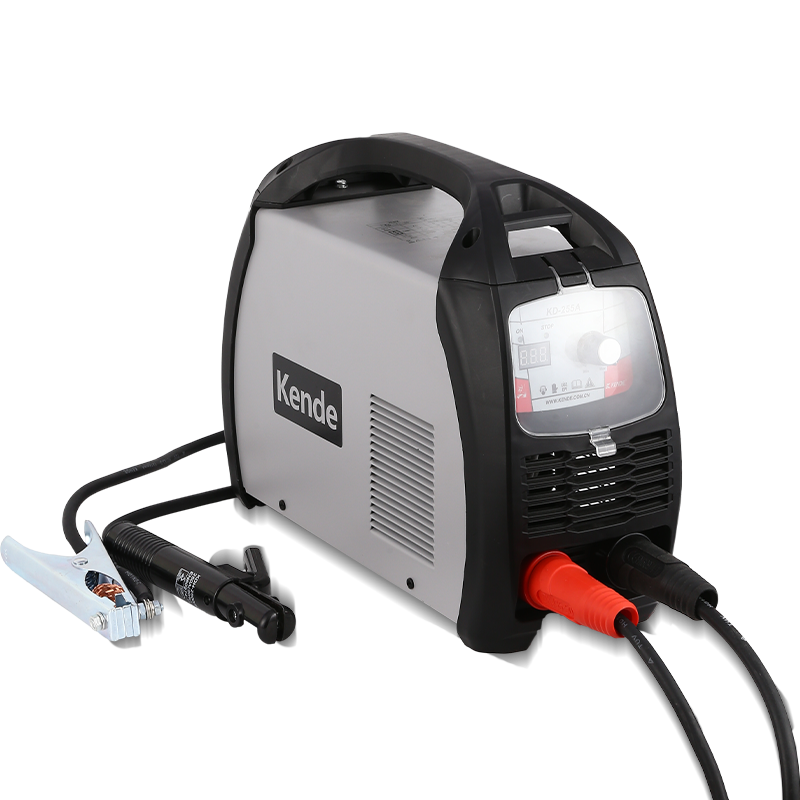
KD-255A
The KD-255A belongs to the IGBT Inverter MMA or Stick Welding Machine category. MMA welding, also called manual metal arc welding or shielded metal arc welding, uses a consumable coated electrode to create an arc between the electrode and the workpiece. The electrode coating generates shielding gases and slag during welding, so the process does not require an external shielding gas cylinder.
This makes the machine particularly useful for outdoor projects, field repairs, structural maintenance, agricultural equipment repair, general fabrication, and construction work. Users can weld in locations where transporting gas cylinders would be inconvenient or where wind makes gas-shielded processes more difficult. The machine’s DC output is suitable for many commonly used electrodes and can provide stable penetration on a broad selection of ferrous metals.
The welding machine is designed to work with carbon steel, alloy steel, cast iron, stainless steel, and other compatible metals when the correct electrode type, polarity, current, and preparation method are selected. The machine itself does not replace the need for qualified welding practice. Proper electrode selection, surface preparation, joint design, personal protective equipment, and welding procedure control remain essential for safe and strong welds.
Its compact form also makes it suitable as a supplementary machine in a professional workshop. A larger fabrication facility may use higher-capacity equipment for continuous heavy production while keeping a lightweight inverter machine available for maintenance, installation, difficult-access work, and quick repairs. For smaller businesses and individual tradespeople, the KD-255A can serve as a primary general-purpose electrode welder.
The following specifications summarize the main electrical, mechanical, and operating characteristics of the KD-255A.
| Specification | Value |
|---|---|
| Product model | KD-255A |
| Welding process | DC MMA or stick welding |
| Rated supply voltage | 230 V |
| Supply frequency | 50/60 Hz |
| Operating input range | 130–270 V |
| Rated input capacity | 5 kVA |
| Rated supply current | 31 A |
| No-load voltage | 76.5 V |
| Welding current range | 20–160 A |
| Maximum welding current | 160 A |
| Rated welding voltage | 26.4 V |
| Rated duty cycle | 25% |
| Usable electrode diameter | 1.6–5.0 mm |
| Efficiency | 82% |
| Power factor | 0.75 |
| Protection class | IP21S |
| Net weight | 4.4 kg |
| Machine dimensions | 275 × 130 × 215 mm |
The listed 25 percent duty cycle means that the machine is intended to weld for a defined portion of a standard test period at its rated output before requiring a cooling interval. Actual operating time depends on welding current, ambient temperature, ventilation, extension-cable conditions, and the cleanliness of the machine. At lower current settings, users may often achieve longer practical welding periods, but operators should always observe the thermal indicator and allow the machine to cool when required.
The central advantage of the machine is its inverter-based power architecture. Instead of relying on a large conventional transformer alone, the equipment converts and regulates electrical power through high-speed electronic switching. Powerful IGBT components work with advanced inverter control technology to deliver a controlled welding current from a compact housing.
IGBT technology allows the power source to regulate current rapidly in response to changes in the arc. This rapid control contributes to a more stable welding arc and helps the machine respond when the electrode approaches the workpiece or when arc length changes during manual operation. For the operator, this can mean fewer arc interruptions, smoother starts, and more predictable weld formation.
The machine uses PWM, or pulse-width modulation, control together with constant-current output control. Constant-current operation is especially important for MMA welding because the arc length naturally varies as the operator moves the electrode. The power source adjusts its behavior to maintain a more consistent welding current, helping limit sudden changes in heat input caused by normal hand movement.
The adjustable current range of 20 to 160 amperes gives the operator control over different electrode sizes and material thicknesses. Lower settings can be used for smaller electrodes, thinner components, root passes, and controlled repair work. Higher settings support larger electrodes and heavier material when the duty cycle, joint design, and electrode recommendations permit.
The 76.5-volt no-load voltage supports reliable arc initiation with suitable electrodes. A sufficiently high open-circuit voltage can help establish the arc more easily, while the controlled output prevents the machine from simply delivering uncontrolled current. Together with Hot Start, the electrical design is intended to reduce the frustration commonly associated with difficult starts.
An efficiency rating of 82 percent indicates that a substantial proportion of the input electrical energy is converted into useful welding output. Improved efficiency can help reduce energy waste compared with older, less efficient designs. The power factor is specified at 0.75, which reflects the electrical characteristics of the machine under its rated conditions.
Starting an MMA weld can be challenging, particularly when the electrode is cold, the workpiece surface is imperfect, or the operator is working with a small electrode. A weak start may cause the electrode to stick, produce an irregular bead, or leave an area with insufficient fusion. The Hot Start function is designed to address this initial stage of welding.
When the arc is initiated, Hot Start provides a temporary increase in current above the normal welding setting. This brief boost helps establish the arc more quickly and can reduce the likelihood of the electrode adhering to the workpiece. Once the arc is stable, the current returns toward the selected operating level.
Hot Start is useful for both experienced and less experienced operators. Skilled welders benefit from more consistent starts, while newer users may find that the feature reduces one of the most common difficulties in stick welding. A cleaner beginning can also make it easier to achieve proper fusion and connect the starting point smoothly with the remainder of the bead.
The function should not be viewed as a substitute for correct technique. Operators should still strike or tap the electrode correctly, maintain suitable arc length, and select a current setting appropriate for the electrode and material. Hot Start works as an electronic aid that supports those practices.
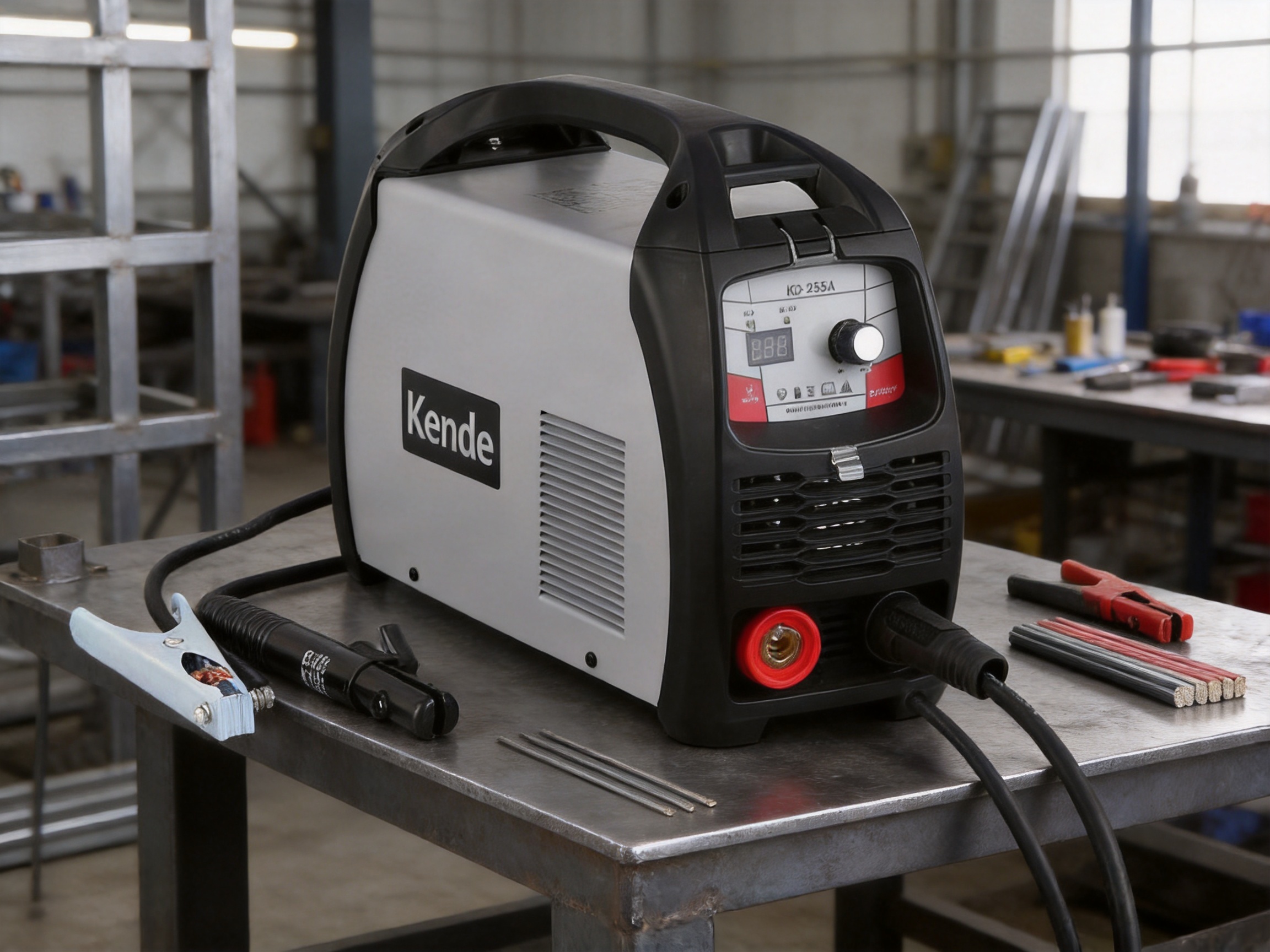
Arc Force monitors welding voltage and provides additional current when needed. During MMA welding, the arc can become shorter as the electrode approaches the workpiece. Without an appropriate response, the arc may become unstable or extinguish. Arc Force helps maintain the arc by increasing current during these momentary conditions.
This function is particularly valuable when welding in positions that require close control, when joint access is limited, or when the operator must use a relatively short arc. It can help the machine resist sticking and maintain a more forceful arc characteristic. The result may be better penetration and improved control of the molten pool, depending on the electrode and welding position.
Arc Force can also help during applications where the workpiece fit-up is not perfectly uniform. Minor changes in joint gap or hand movement can affect arc length. The electronic control responds quickly, reducing the effect of these variations and helping the operator maintain a continuous weld.
Like Hot Start, Arc Force is most effective when used with suitable current settings and proper electrode handling. Excessive current or an inappropriate electrode can still produce spatter, undercut, overheating, or poor bead shape. The advantage is that the power source provides additional support instead of leaving the operator to compensate for every small arc fluctuation manually.
Electrode sticking is a familiar problem in MMA welding. It can occur when the electrode touches the workpiece, the arc length becomes too short, the current is too low, or the operator is starting the weld. If the electrode remains attached, it can overheat and become difficult to remove. It may also disturb the weld surface and interrupt productivity.
The Anti-Stick function helps reduce this problem by limiting or reducing welding output when the electrode remains stuck to the workpiece. This allows the user to separate the electrode more easily and restart the weld with less effort. The function also helps reduce unnecessary heating of the electrode and workpiece during a sticking event.
This feature is valuable in maintenance environments where work conditions are not always ideal. Outdoor surfaces may be dirty, rusty, painted, or difficult to position. Even experienced operators can encounter sticking when welding in an awkward position or when using a new electrode type. Anti-Stick provides a useful layer of electronic assistance without complicating the machine’s operation.
A power switch with an illuminated indicator makes the operating status immediately visible. This simple feature helps users determine whether the machine is connected and energized before beginning work. It can also reduce the possibility of leaving the machine powered unintentionally after a job is complete.
Welding machines operate in environments that may contain metal dust, grinding particles, moisture, vibration, and temperature changes. A reliable design must therefore protect its electronic components while maintaining adequate ventilation. The KD-255A includes automatic protection functions for over-current and over-temperature conditions.
Over-current protection helps protect the power electronics when the machine experiences an abnormal electrical load or operating condition. Over-temperature protection monitors internal heat buildup and interrupts or limits operation when the temperature exceeds a safe level. A thermal overload indicator light informs the operator when the protection system has been activated or when the machine requires cooling.
The specified IP21S protection classification indicates protection against the relevant level of solid objects and vertically falling water under the applicable test conditions. It does not mean that the machine is waterproof or suitable for operation in rain. Users should keep the equipment dry, place it on a stable surface, and provide sufficient ventilation during operation.
The product information also identifies resistance to moisture, corrosion, vibration, and conductive dust as part of the special design. These characteristics are important for equipment used in workshops, construction areas, service vehicles, and industrial maintenance locations. Even so, basic care remains necessary. Dust should not be allowed to accumulate inside ventilation openings, and the machine should be stored in a clean, dry environment when not in use.
The practical protection design exceeds the basic IP21 requirement according to the product information. This supports the machine’s intended use in demanding working conditions, while responsible operation and regular inspection remain essential for long service life.
Electrical supply conditions vary considerably between regions, job sites, workshops, and temporary construction installations. Voltage may fall when other high-power equipment starts, when the supply network is distant, or when a long extension cable is used. A welder that only performs well at a narrow voltage may experience unstable output or frequent interruptions in these conditions.
The KD-255A is specified to operate properly under input voltages from 130 to 270 volts. This broad operating range gives the machine an advantage in locations with unstable or variable power. It also provides more flexibility for users who move the welder between different sites and cannot guarantee identical electrical conditions at each location.
Wide-voltage operation does not eliminate the need for a correctly rated electrical circuit. The power supply, plugs, extension cords, protective devices, and grounding arrangements must be suitable for the machine’s input requirements. Users should follow local electrical regulations and consult a qualified professional when the installation is uncertain.
The ability to weld with a long welding cable is another practical benefit. Longer cable arrangements may be necessary when the workpiece is large, when the machine must remain outside a restricted area, or when the operator needs to move around a structure. Cable size and total length should be selected correctly to minimize voltage drop and heat buildup.
At approximately 4.4 kilograms, the machine is substantially easier to carry than many conventional transformer-based stick welders. Its compact dimensions allow it to fit into service vehicles, workshop storage spaces, mobile tool cabinets, and temporary job-site stations. A lightweight power source can reduce setup time and physical strain when welding must be performed in multiple locations.
Portability is particularly valuable for maintenance technicians. A technician may need to climb stairs, travel across a plant, enter a narrow work area, or carry the machine together with electrodes, cables, and personal protective equipment. A compact inverter unit can be transported by one person and positioned close to the repair area.
The reduced size also supports flexible workshop organization. The machine can be stored as a backup power source without occupying the floor space required by a larger welder. When used in combination with another welding process, it can handle repairs and field tasks while dedicated equipment remains available for production work.
Portability must be balanced with safe placement. The machine should be positioned where air can circulate around it, away from standing water, excessive heat, flammable materials, and conductive contamination. The operator should also arrange cables to prevent tripping and protect them from sharp edges, hot surfaces, and vehicle traffic.
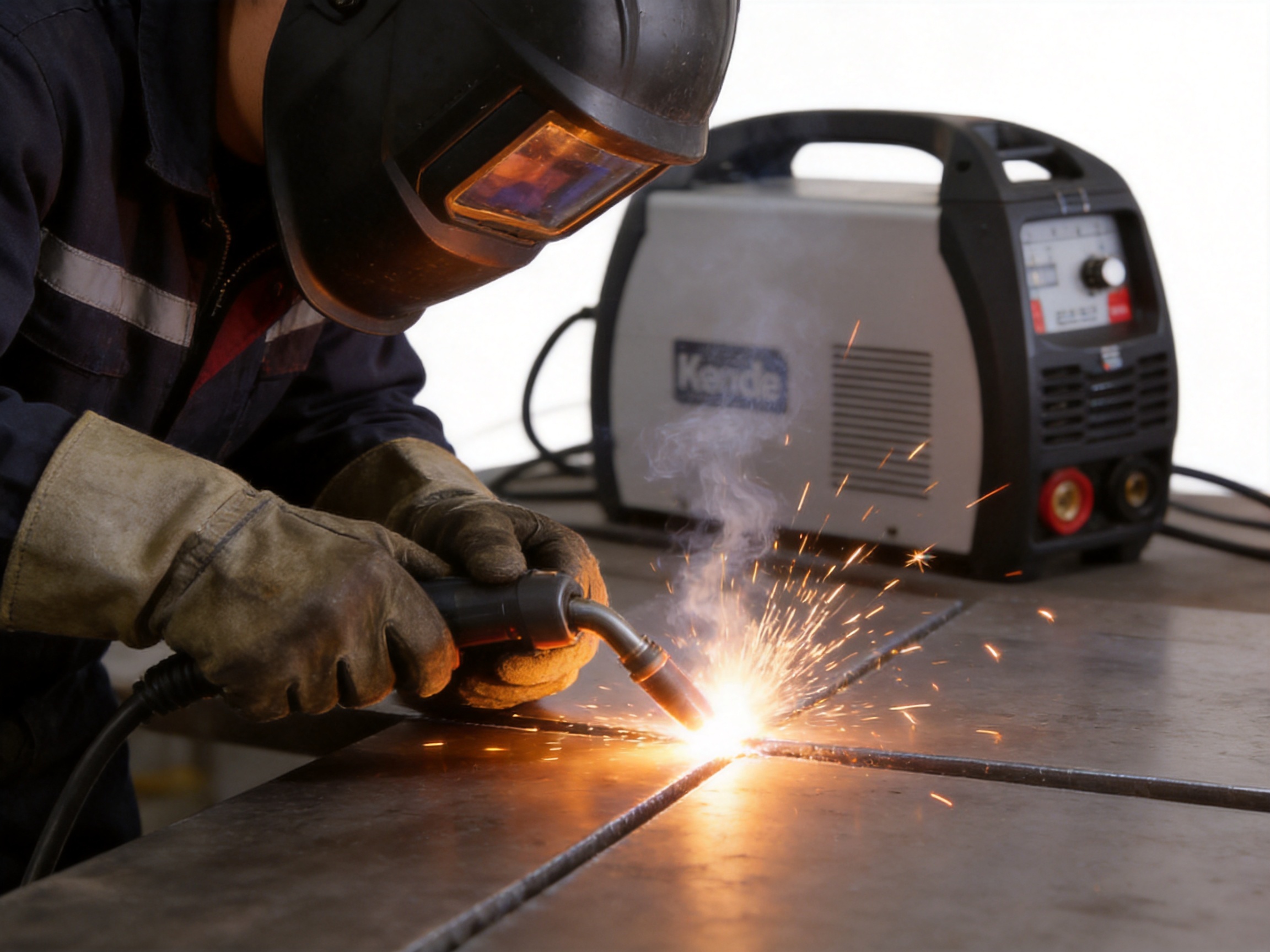
The standard product configuration includes a 2-meter welding cable with a dual-angle electrode holder and a 1.5-meter ground cable with clamp. These accessories allow users to connect the machine and begin basic MMA welding without sourcing every essential cable separately.
The dual-angle electrode holder is intended to give the operator practical positioning flexibility. Electrode angle influences arc behavior, slag movement, penetration, and bead appearance. The holder should be inspected regularly for damaged insulation, loose connections, overheating, or signs of excessive wear.
The ground cable and clamp provide the return path needed to complete the welding circuit. A clean and secure connection to the workpiece is essential. Paint, rust, oil, scale, and poor clamping can increase resistance and cause unstable output or localized heating. For dependable performance, the clamp should be attached to clean metal as close to the welding area as practical.
Accessories are working components rather than permanent items. They should be treated as part of the machine’s maintenance program. Users should check cable insulation, terminal connections, holder jaws, clamp pressure, and connector condition before each important job. Damaged welding leads should be repaired or replaced by qualified personnel.
Compared with traditional transformer-based MMA machines, an inverter design offers several practical advantages. The most visible is reduced size and weight. Conventional equipment may require more space and additional handling equipment, while the KD-255A can be carried and positioned by one operator.
Inverter technology can also provide more responsive control. The combination of PWM regulation, constant-current output, Hot Start, Arc Force, and Anti-Stick gives the operator electronic assistance that is not always available on basic transformer machines. These functions can improve usability, especially when welding conditions change or when the operator needs to work with different electrode sizes.
Energy efficiency is another important consideration. The stated 82 percent efficiency and energy-saving inverter design can reduce wasted electrical power compared with less efficient equipment. Lower energy consumption may be beneficial for workshops seeking to control operating costs or for users working with limited generator capacity, provided the generator is correctly sized for the machine.
The broad 130–270-volt operating range also distinguishes the machine from equipment designed for a narrow supply range. It can make the welder more adaptable to different job sites and electrical conditions. However, every comparison should consider the full application. A large industrial production line may require a higher-duty-cycle power source, advanced automation, or a different welding process. The KD-255A is strongest where portability, flexible manual welding, and general-purpose capability are priorities.
Compared with gas-shielded processes such as MIG or TIG, MMA has the advantage of simpler field logistics because it does not require an external shielding gas supply. It is often more tolerant of outdoor conditions and can be used for repairs far from a workshop. In contrast, MIG and TIG may offer greater productivity, cleaner appearance, or more precise control in suitable controlled environments. The appropriate process depends on material, thickness, joint design, finish requirements, and operator skill.
The product is manufactured by an established electrical equipment company with extensive experience in welding machines, battery chargers, heaters, and related equipment. Its facilities cover approximately 120,000 square meters and employ around 600 people. The reported annual production capacity of two million units and annual exports of nearly 1.5 million units indicate a substantial manufacturing and distribution infrastructure.
Large-scale production can provide advantages in component sourcing, process standardization, quality control, tooling, product testing, and after-sales support. For a welding machine, these capabilities are important because consistent assembly and electrical inspection directly influence arc performance, safety, and service life.
The company uses automated surface-mount technology, plug-in assembly, welding systems, robot processing, laser cutting, and other advanced production methods. Automated processes can improve repeatability by controlling component placement, connection quality, and production sequence. Laser cutting can support accurate enclosure fabrication, while robotic processing can help maintain consistent mechanical operations across high production volumes.
Modern enterprise systems are also used, including office automation, Toyota-style production management, enterprise resource planning, and manufacturing execution systems. These systems can help coordinate purchasing, production scheduling, inventory control, traceability, quality records, and delivery management. For international customers, organized manufacturing systems are particularly valuable because they support stable supply and repeatable product configuration.
The company maintains a Zhejiang provincial research and development center, an enterprise technology center, and an intelligent welding technology research institute. It has approximately 98 research and development personnel and has obtained invention patents, utility model patents, appearance patents, and software copyrights. This research structure supports ongoing development in inverter control, welding performance, product safety, industrial design, and manufacturing efficiency.
International buyers often require more than a machine that performs well in a single demonstration. They need evidence that products are designed, manufactured, tested, and documented for the target market. The manufacturer reports holding multiple certifications, including GS, CE, EMC, ERP, United Kingdom Conformity Assessed, United States ETL, and China Compulsory Certification approvals for relevant products.
Certification requirements vary according to product model, market, voltage, and applicable standard. Buyers should confirm that the exact KD-255A configuration offered for a particular country carries the appropriate current certificates and markings. Documentation should also be checked for supply voltage, plug configuration, electromagnetic compatibility, safety requirements, and instructions for use.
The manufacturer’s participation in national welding machine standards work is another indication of industry involvement. The company is reported to have participated in drafting, formulating, and revising 20 national standards and leading the drafting of one group standard. Such participation can provide valuable insight into safety expectations, performance criteria, testing methods, and industry development.
In practice, reliable quality control should cover incoming components, circuit board assembly, soldering, insulation, grounding, cooling, output stability, protection functions, enclosure construction, and final performance testing. A professional manufacturing system should also provide procedures for handling nonconforming components and tracing production batches when necessary.
The machine’s DC output provides a stable foundation for manual electrode welding. Stable output helps the operator maintain a consistent arc and can support good penetration when the correct current and electrode are selected. The quality of the finished weld still depends on joint preparation, electrode condition, travel speed, angle, arc length, and the cleanliness of the base metal.
The 20–160-ampere current range supports a broad range of general-purpose jobs. Small electrodes can be used for light repairs and thinner sections, while larger electrodes can be selected for heavier fabrication within the machine’s rated limits. Operators should follow electrode manufacturers’ recommendations rather than selecting current solely from the machine’s maximum rating.
The ability to use electrodes from 1.6 to 5.0 millimeters gives the machine flexibility for different applications. In many general repair tasks, smaller and medium-sized electrodes offer easier control and may be better matched to the machine’s duty cycle. Larger electrodes can require higher current and longer cooling periods, so users should plan work sequences accordingly.
Good penetration is achieved through the relationship between current, polarity, electrode type, travel speed, arc length, and material thickness. The machine’s stable current output and Arc Force function can support this relationship, but they cannot compensate for excessive travel speed, inadequate preparation, or incorrect polarity. Training and procedure discipline remain important for structural and safety-critical work.
Before welding, inspect the power cord, electrode holder, ground clamp, welding cables, ventilation openings, and enclosure. Confirm that the machine is placed on a dry and stable surface. Remove combustible materials from the work area and provide suitable ventilation to control fumes and smoke.
Select an electrode appropriate for the base material and intended weld position. Check that electrodes are dry and stored according to the electrode manufacturer’s instructions. Moisture in certain electrode coatings can contribute to porosity, cracking, hydrogen-related problems, or unstable arc behavior.
Clean the joint area to remove oil, paint, rust, scale, moisture, and other contaminants. Connect the ground clamp securely to clean metal. Set the welding current according to electrode diameter, material thickness, joint design, and the electrode supplier’s recommendations. Use the correct polarity for the selected electrode.
Switch on the machine and confirm the power indicator. Use the electrode holder to maintain the recommended angle and arc length. Allow Hot Start, Arc Force, and Anti-Stick functions to assist the arc, but do not rely on them to correct unsuitable operating settings. If the thermal indicator activates, stop welding and allow the machine to cool before continuing.
After welding, remove slag with appropriate tools and inspect the bead. Check for visible defects such as excessive spatter, undercut, porosity, cracks, incomplete fusion, or inconsistent width. For critical work, use the inspection method specified by the applicable procedure or standard.
Routine maintenance helps preserve both performance and safety. Keep the machine clean and prevent dust from blocking air inlets and outlets. In dusty workshops, qualified personnel should periodically inspect and clean the interior using an approved method. The machine must be disconnected from the power supply before internal inspection or service.
Inspect cables and connectors for cuts, crushed sections, exposed conductors, loose terminals, and overheating. Replace damaged parts before further operation. Check that the electrode holder remains properly insulated and that the ground clamp maintains a secure grip.
Do not modify the machine, bypass its protection functions, or use replacement components that do not meet the required specifications. The over-temperature and over-current systems are important safety features. If the machine repeatedly enters protection mode under normal conditions, qualified service personnel should investigate the cause instead of simply resetting the unit.
Storage should take place in a dry, clean area protected from corrosive chemicals, excessive vibration, and extreme temperatures. If the machine has been moved from a cold area to a warm environment, allow condensation to evaporate before connecting it to power. Careful storage is especially important for electronic inverter equipment.
In metal fabrication workshops, the machine can handle general assembly, brackets, frames, supports, gates, racks, and repair components. Its compact footprint allows it to be positioned near the workpiece without disrupting the main production area.
For construction and installation teams, portability and the absence of shielding gas can simplify field operations. Workers can carry the machine to a site, connect it to an appropriate electrical supply, and perform repairs or installation welding using suitable electrodes.
In agricultural environments, equipment such as trailers, implements, frames, gates, and support structures frequently requires repair. The machine’s MMA process is practical for outdoor maintenance, where wind may make gas-shielded welding less convenient. Surfaces should still be cleaned and the correct procedure selected for load-bearing repairs.
For service and maintenance departments, the welder can function as a mobile repair resource. Its compact design is useful for plant maintenance, vehicle service, building maintenance, and emergency repair work. The wide input range provides additional flexibility when the available electrical supply is not perfectly stable.
In educational and training settings, the machine’s Hot Start, Arc Force, and Anti-Stick functions can help learners focus on electrode manipulation and joint technique. Instructors should still teach electrical safety, fume control, personal protective equipment, material identification, and inspection practices from the beginning.
Buyers should evaluate the intended application before selecting the machine. Important questions include the available supply voltage, expected material thickness, electrode sizes, daily welding duration, working environment, cable length, transport requirements, and required certification for the destination market.
The KD-255A is especially well suited to portable general-purpose MMA work within its 20–160-ampere output range. It should not be selected solely because of a model number or maximum current figure. Actual suitability depends on duty cycle, electrode diameter, material thickness, joint requirements, and the amount of continuous welding expected.
Businesses should also consider spare accessories, replacement holders, grounding clamps, cables, ventilation requirements, and service support. A machine with a dependable supply chain and documented technical information can reduce downtime over its operating life.
For export orders, customers should confirm plug type, packaging, language of manuals, voltage configuration, labels, certification, warranty terms, and shipping protection. Product specifications should be verified against the exact production version supplied for the target region.
It is a DC MMA or stick welding machine. It uses coated consumable electrodes and does not require an external shielding gas cylinder for standard MMA operation.
The specified welding current range is 20 to 160 amperes, with a maximum welding current of 160 amperes.
The specified usable electrode range is 1.6 to 5.0 millimeters. The correct size depends on material thickness, electrode type, joint design, welding position, and the selected current.
The product information specifies proper operation under an input range of 130 to 270 volts. Users must still provide a correctly rated circuit, plug, cable, and protective device.
Hot Start temporarily increases current during arc initiation. This helps establish the arc more easily and can reduce electrode sticking at the beginning of a weld.
Arc Force monitors voltage and supplies additional current when needed, particularly when the arc becomes short. It helps support arc stability and may improve penetration and control.
Anti-Stick reduces output when an electrode adheres to the workpiece, making it easier to separate the electrode and restart welding.
MMA welding is practical outdoors because it does not require shielding gas. The machine itself must be protected from rain, standing water, excessive moisture, and conductive contamination. Its IP21S rating does not mean it is waterproof.
The machine has a net weight of approximately 4.4 kilograms and dimensions of 275 by 130 by 215 millimeters. This compact design makes it suitable for mobile repair and field service work.
The machine includes automatic over-current and over-temperature protection, along with a thermal overload indicator. Users should stop operation and allow cooling when the indicator activates.
The listed configuration includes a 2-meter welding cable with a dual-angle electrode holder and a 1.5-meter ground cable with clamp.
The product information identifies carbon steel, alloy steel, cast iron, and stainless steel among the compatible metal types. The correct electrode, polarity, preheating, cleaning, and welding procedure must be selected for each material.
The rated duty cycle is 25 percent at the specified test conditions. It is well suited to portable general-purpose welding and intermittent work. Applications requiring long periods of high-current welding should be evaluated carefully against the duty-cycle requirement.
Buyers should verify the exact voltage version, plug, certification, manuals, accessories, warranty, delivery configuration, and current technical documentation for their destination market.
The KD-255A is a compact and versatile IGBT inverter MMA welding machine designed for users who need reliable DC stick welding in a portable format. Its 20–160-ampere current range, 1.6–5.0-millimeter electrode compatibility, wide 130–270-volt operating range, and 4.4-kilogram weight give it strong practical value for field repairs, fabrication, maintenance, construction, agriculture, and workshop use.
Its main operating advantages come from the coordinated use of Hot Start, Arc Force, Anti-Stick, PWM control, constant-current output, and automatic protection functions. These features help the operator initiate the arc, maintain stability, reduce sticking, and protect the machine from abnormal conditions. The DC output and compact inverter architecture further support consistent welding performance and efficient transportation.
The manufacturer adds value through large-scale production, automated manufacturing equipment, research and development resources, international certification experience, and participation in welding standards work. Automated assembly, laser processing, robotic production, enterprise management systems, and dedicated engineering facilities support repeatability and product development.
For users seeking a lightweight manual welding power source rather than a large industrial production system, the machine offers a balanced combination of portability, operating flexibility, electronic arc assistance, and protective design. When matched with suitable electrodes, correct procedures, proper maintenance, and safe working practices, it can serve as a dependable tool for a wide range of metalworking tasks.
1. Product technical information for the KD-255A IGBT Inverter MMA Welding Machine.
2. Manufacturer-provided specifications for rated voltage, current range, duty cycle, efficiency, protection class, weight, and dimensions.
3. General principles of manual metal arc welding, electrode selection, arc control, and weld inspection.
4. General guidance on inverter welding power sources, IGBT switching technology, pulse-width modulation, and constant-current output control.
5. General electrical safety practices for portable welding equipment and job-site power supplies.
6. General recommendations for welding cable inspection, grounding, ventilation, thermal protection, and equipment maintenance.
7. Manufacturer information concerning research and development resources, production systems, certifications, patents, and manufacturing capabilities.
Recommended Products

Contact Us
No.2299, Luqiao Section, Shugang Avenue, Luqiao District, Taizhou, 318057 Zhejiang, PR China.
+86-576-82431568
 Privacy
China Welding Machine Factory
 English
 中文简体
 русский
 Español
 عربى
 Français
 Português
 Deutsch
 Український