Email: [email protected]
Email: [email protected]

Blog
 2026.09.28
 Blog
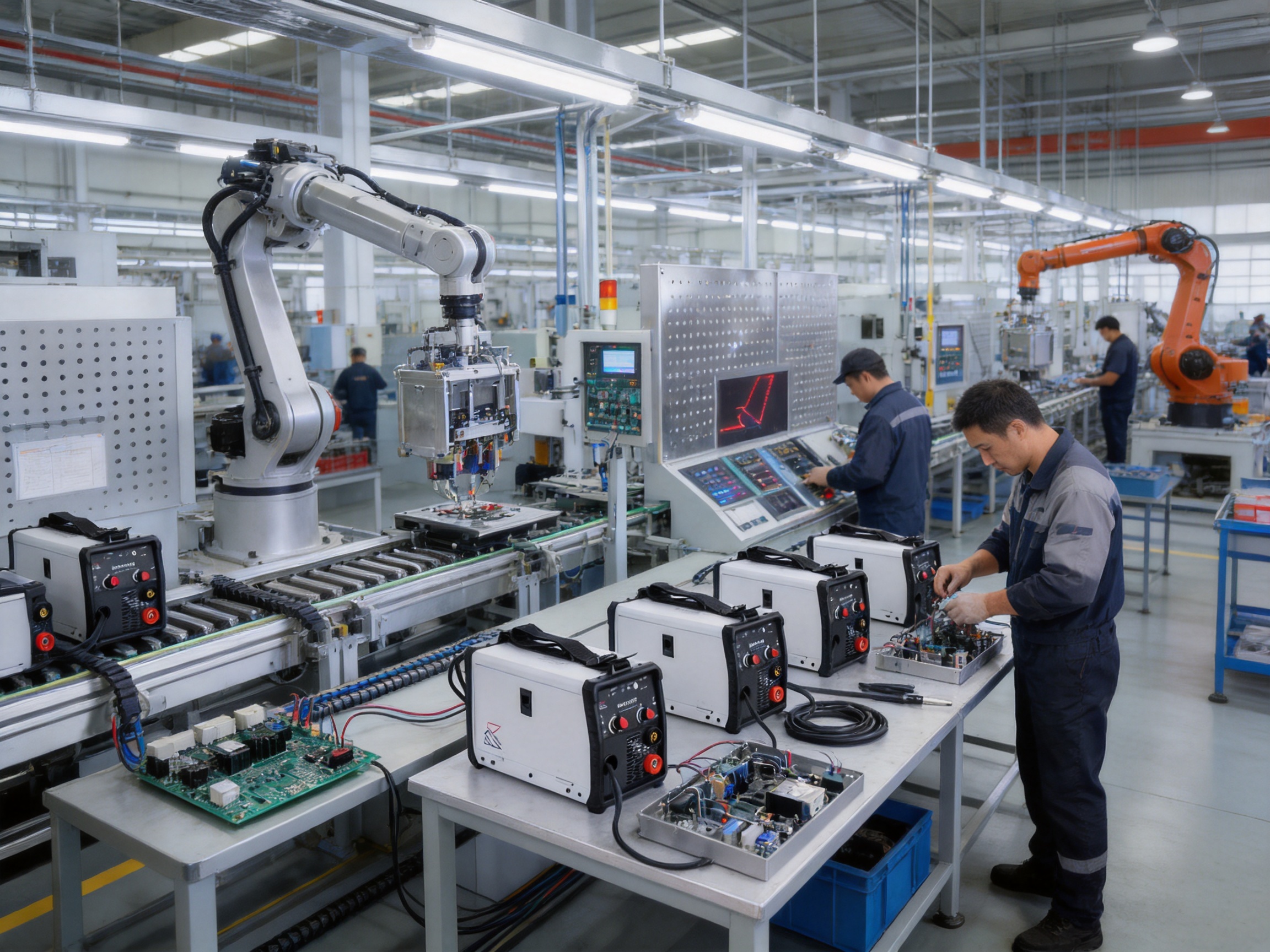
Modern welding work requires equipment that combines stable arc performance, simple operation, portability, energy efficiency, and dependable protection. Small fabrication shops, maintenance teams, construction contractors, agricultural users, vehicle repair professionals, and serious home workshop operators all need a welding machine that can adapt to different materials and working conditions without becoming unnecessarily complicated. The MIG-120FII, MIG-140FII, and MIG-160FII series has been developed to meet these practical requirements through a combination of flux-cored wire welding and manual metal arc welding, commonly called MMA or stick welding.
These machines are designed for users who need the flexibility of wire welding without shielding gas, while also requiring the familiar versatility of coated electrodes. Their compact inverter architecture provides a useful alternative to larger and heavier conventional welding power sources. At the same time, microprocessor control, IGBT inverter technology, switching-mode power supply control, integrated protection, and carefully engineered accessories help deliver consistent welding results across a broad range of everyday applications.
The three models share the same fundamental design philosophy but offer different output capacities. The MIG-120FII provides a maximum flux-cored welding current of 120 amperes, the MIG-140FII reaches 140 amperes, and the MIG-160FII reaches 160 amperes. Each model supports MMA welding as well as no-gas-shielded flux-cored wire welding. This makes the series suitable for thin carbon steel, alloy steel, stainless steel, and other compatible materials when the correct wire, electrode, polarity, and welding settings are selected.
The defining advantage of this series is its dual-process capability. A user can select flux-cored wire welding for faster continuous welding and improved productivity, or switch to MMA welding when working outdoors, repairing heavy sections, or using materials and positions better suited to stick electrodes. Instead of purchasing two separate machines, the operator can use one compact power source for both processes.
Flux-cored wire welding is particularly useful where carrying a shielding-gas cylinder is inconvenient. The flux inside the wire produces protective gases and slag during welding, allowing the machine to operate without an external gas supply in suitable applications. This can reduce the equipment required at the worksite and simplify transportation.
For construction, field maintenance, agricultural repairs, outdoor fabrication, and small workshops, the no-gas process can provide a practical balance between portability and productivity. The continuous wire feed reduces the need to stop frequently to replace electrodes. It can also make it easier to create longer welds with a consistent travel rhythm, provided the operator uses the correct wire diameter, polarity, current, and technique.
The machines support flux-cored wire in approximately 0.6 to 1.0 mm diameters, depending on the model and welding process. This range is appropriate for many light and medium fabrication tasks, including sheet-metal work, brackets, frames, equipment repairs, gates, supports, and general steel assembly.
MMA welding remains one of the most adaptable arc-welding processes. It does not require a wire-feeding system or shielding-gas cylinder, and it can be used in outdoor locations where wind could disturb a gas-shielded arc. With suitable electrodes, MMA can be applied to carbon steel, alloy steel, stainless steel, and many repair applications.
The MIG-120FII supports usable MMA electrodes from approximately 1.6 to 3.2 mm. The MIG-140FII offers the same general range, while the MIG-160FII can support electrodes up to approximately 4.0 mm under suitable operating conditions. This gives the larger model additional flexibility for thicker workpieces and more demanding repair tasks.
Switching between the two welding methods is intended to be straightforward. The operator can select the desired process and adjust the relevant parameters through the control interface. This reduces the need for complicated setup procedures and allows the machine to be used by both experienced welders and users developing their practical skills.
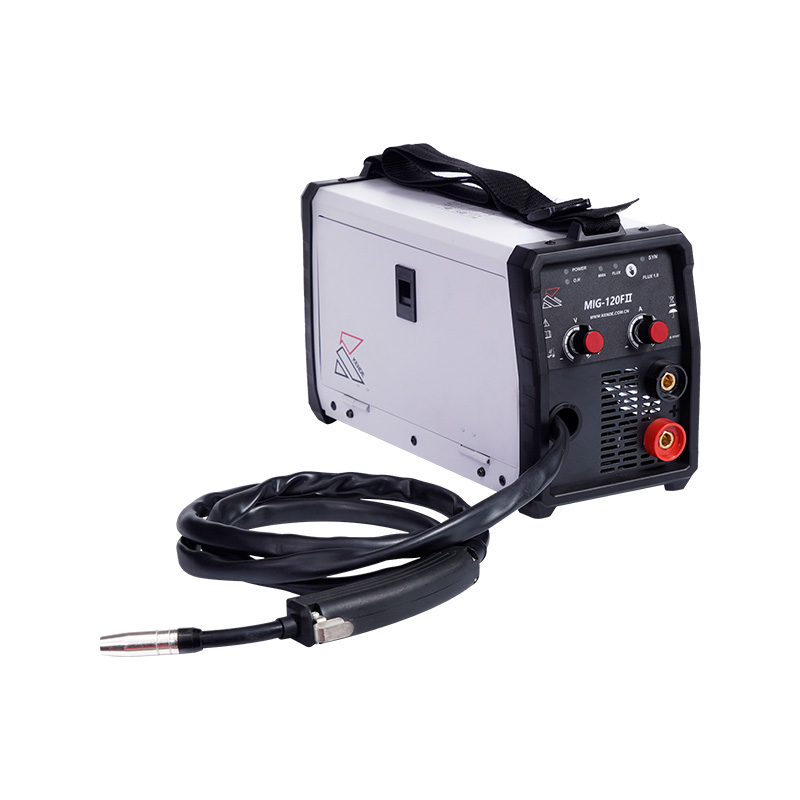
MIG-120FII/140FII/160FII , MMA (stick electrodes), flux-cored wire, 0.45-1KG, 1-5KG wire
The power source uses an advanced MCU, or Microprocessor Control Unit, together with IGBT inverter and switching-mode power supply technology. This electronic architecture is important because welding performance depends not only on the maximum current rating but also on how accurately the machine regulates current and voltage during the welding process.
A microprocessor-based control system can monitor operating conditions and coordinate the inverter circuit more precisely than a basic, less sophisticated control arrangement. The result is a more controlled welding arc, more predictable parameter adjustment, and improved response to changes in the welding load. In practical use, this can help reduce arc instability, unnecessary spatter, and inconsistent weld appearance.
Stable arc behavior is especially valuable when welding thin plate. Excessive current or an erratic arc can cause burn-through, excessive heat input, distortion, or poor bead formation. When the selected parameters are appropriate, the controlled output of these machines can help the operator maintain a smoother arc and better control over the weld pool.
The control system also supports single-knob or synergic parameter adjustment during no-gas flux-cored wire welding. Synergic control is intended to simplify setup by coordinating related welding parameters around the selected operating condition. Instead of requiring the operator to adjust every value independently, the control interface can provide a more convenient starting point for current and voltage selection.
Experienced welders may still fine-tune the settings according to wire type, material thickness, joint design, welding position, and personal technique. Less experienced users can benefit from a simpler adjustment process that helps them reach a workable setting more quickly.
IGBT technology is widely used in modern welding equipment because it allows the power source to operate at high switching frequencies while maintaining a compact form factor. Compared with traditional transformer-based machines, an inverter design can reduce the size and weight of the main power components. This is particularly valuable for equipment intended to be moved frequently between workstations or transported to field locations.
The MIG-120FII has a net weight of approximately 5.5 kg, while the MIG-140FII and MIG-160FII weigh approximately 8.6 kg and 8.8 kg respectively. These weights are considerably more convenient for portable fabrication and repair than those associated with many conventional welding power sources. The compact dimensions of the two larger models are approximately 420 mm long, 215 mm wide, and 315 mm high, while the MIG-120FII is approximately 380 mm long, 170 mm wide, and 230 mm high.
Portability does not only mean easier lifting. A smaller machine can occupy less room in a service vehicle, workshop, storage area, or construction trailer. It can also be positioned closer to the workpiece when long cable runs would otherwise create inconvenience. For maintenance teams, reducing the physical burden of transporting equipment can improve productivity and make it more practical to respond to remote repair requirements.
Inverter technology also contributes to energy efficiency. The listed efficiency for all three models is approximately 85 percent, with a power factor of approximately 0.9. These figures indicate that the machines are designed to use electrical power effectively while delivering useful welding output. Lower unnecessary power consumption can be beneficial for operating costs, generator compatibility, and the electrical loading of a workshop.
Electrical conditions can vary significantly between workshops, construction sites, rural locations, and temporary work areas. The product design includes strong resistance to power supply voltage changes, helping the machine maintain reliable operation when the incoming supply is not perfectly stable. This feature does not eliminate the need for a correctly rated electrical installation, suitable cables, and appropriate protection, but it can improve practical reliability in demanding environments.
The machines are rated for a 230-volt supply at 50 Hz. Users should confirm that the local electrical supply, circuit protection, extension cables, and generator capacity are suitable before operation. Correct installation remains essential for safety, output stability, and long-term equipment life.
The three models are intended to cover different levels of welding demand. Selecting the correct model depends on material thickness, electrode diameter, required duty cycle, available electrical capacity, desired portability, and the frequency of use.
The MIG-120FII is the lightest and most compact model in the series. It provides a flux-cored welding current range of approximately 40 to 120 amperes and an MMA range of approximately 20 to 100 amperes. Its rated input capacity is approximately 5.1 kVA, and its rated supply current is approximately 22 amperes.
This model is well suited to light fabrication, home workshops, small repairs, thin carbon-steel components, maintenance work, and applications where minimum equipment weight is important. It supports flux-cored wire in the approximate 0.6 to 1.0 mm range and MMA electrodes from approximately 1.6 to 3.2 mm.
Its compact size makes it convenient for service vehicles, limited workshop spaces, and users who frequently move the machine. The MIG-120FII can be an efficient choice when the primary requirement is controlled welding on thin and light-to-medium workpieces rather than prolonged high-output operation.
The MIG-140FII increases the available flux-cored output to approximately 140 amperes and the MMA range to approximately 40 to 120 amperes. Its rated input capacity is approximately 6.1 kVA, with a rated supply current of approximately 26 amperes.
This model offers a useful middle position between maximum portability and increased welding capacity. It can be appropriate for general fabrication shops, repair businesses, agricultural equipment maintenance, steel brackets, frames, gates, supports, and a wider range of medium-duty work than the smallest model.
Its listed duty cycle is approximately 30 percent for flux-cored operation and 40 percent for MMA operation. The actual welding time will depend on ambient temperature, current setting, material, cable arrangement, ventilation, and the operating conditions specified in the product documentation.
The MIG-160FII is the highest-capacity model in the group. It offers a flux-cored welding range of approximately 40 to 160 amperes and an MMA range of approximately 20 to 140 amperes. The rated input capacity is approximately 7.1 kVA, and the rated supply current is approximately 30.5 amperes.
The larger output range gives this model additional capacity for thicker workpieces, larger joints, and MMA electrodes up to approximately 4.0 mm. It can be particularly useful for repair workshops and fabricators that require more reserve power but still value the convenience of a portable inverter machine.
The listed duty cycle is approximately 20 percent for flux-cored operation and 30 percent for MMA operation. This model should be selected when higher peak output is more important than the lightest possible weight. As with all welding machines, operating at lower current generally permits longer working periods than operating continuously near maximum output.
| Model | Supply | Input Capacity | Flux-Cored Range | MMA Range | Usable Electrodes | Net Weight | Approximate Dimensions |
|---|---|---|---|---|---|---|---|
| MIG-120FII | 230 V, 50 Hz | 5.1 kVA | 40–120 A | 20–100 A | 1.6–3.2 mm | 5.5 kg | 380 × 170 × 230 mm |
| MIG-140FII | 230 V, 50 Hz | 6.1 kVA | 40–140 A | 40–120 A | 1.6–3.2 mm | 8.6 kg | 420 × 215 × 315 mm |
| MIG-160FII | 230 V, 50 Hz | 7.1 kVA | 40–160 A | 20–140 A | 1.6–4.0 mm | 8.8 kg | 420 × 215 × 315 mm |
The specifications in the table are reference values based on the supplied product information. Welding results depend on the workpiece, consumables, operator technique, electrical supply, and environmental conditions. Users should consult the applicable product manual before selecting final settings or planning continuous production work.
The series has several characteristics that distinguish it from basic single-process welding machines. Its most important advantage is versatility. A single unit can support both no-gas flux-cored welding and MMA welding, which reduces the need to maintain separate equipment for different tasks.
A second advantage is reduced setup complexity. A flux-cored process eliminates the need for a shielding-gas cylinder in suitable applications. This can be particularly useful in outdoor areas, elevated work, confined workspaces, mobile repair operations, and locations where gas logistics are inconvenient.
A third advantage is compactness. The relatively low weight and small dimensions make the machines easier to transport and position. A portable welding power source can be moved quickly from a workshop bench to a vehicle, construction area, agricultural site, or maintenance location.
A fourth advantage is electronic control. The MCU-based system and IGBT inverter architecture are intended to provide a stable welding arc, controlled parameter adjustment, and reliable response during operation. These features can help reduce spatter and support a cleaner, more consistent weld when the correct process and consumables are used.
A fifth advantage is the availability of integrated protection. Welding machines operate under demanding electrical and thermal conditions. Multiple protective measures can help guard the power source against abnormal operating situations and contribute to equipment reliability. Protection systems should be viewed as an additional safeguard rather than a substitute for correct use, ventilation, grounding, maintenance, and operator training.
Thin plate requires controlled heat input and careful arc management. Excessive current, long arc length, slow travel speed, or unsuitable wire can cause distortion and burn-through. The relatively adjustable output ranges of these machines, together with the controlled electronic system, provide the operator with tools for adapting the process to thinner carbon-steel and stainless-steel components.
For thin materials, the operator should begin with conservative parameters, use short welds where appropriate, maintain correct torch or electrode angles, and inspect the reverse side of the joint for penetration and overheating. Proper joint preparation remains essential. The machine cannot compensate for excessive gaps, contamination, poor fit-up, or incorrect consumables.
Maintenance welding often takes place in variable conditions. The repair may be inside a workshop one day and outdoors the next. MMA operation is useful in locations where wind, distance, or limited access makes a gas-shielded process less practical. Flux-cored operation can be selected when continuous wire feed and faster deposition are preferred.
The machine’s portability is also beneficial for maintenance teams that must carry equipment to machinery, agricultural implements, vehicles, structural supports, or remote service locations. The ability to use both wire and electrodes gives the operator more options when the repair material, position, or surrounding environment changes.
Small and medium fabrication tasks can include frames, brackets, tables, supports, gates, racks, equipment guards, and repair assemblies. These projects often require a combination of short welds, fillet welds, lap joints, butt joints, and varied material thicknesses. A dual-process inverter machine can support this range without requiring a large industrial power source.
For repetitive work, users should establish parameter settings for common material thicknesses and wire types. Standardized settings can help improve consistency between operators and reduce setup time. For critical or safety-related structures, welding procedures, qualified personnel, appropriate inspection, and applicable standards remain necessary.
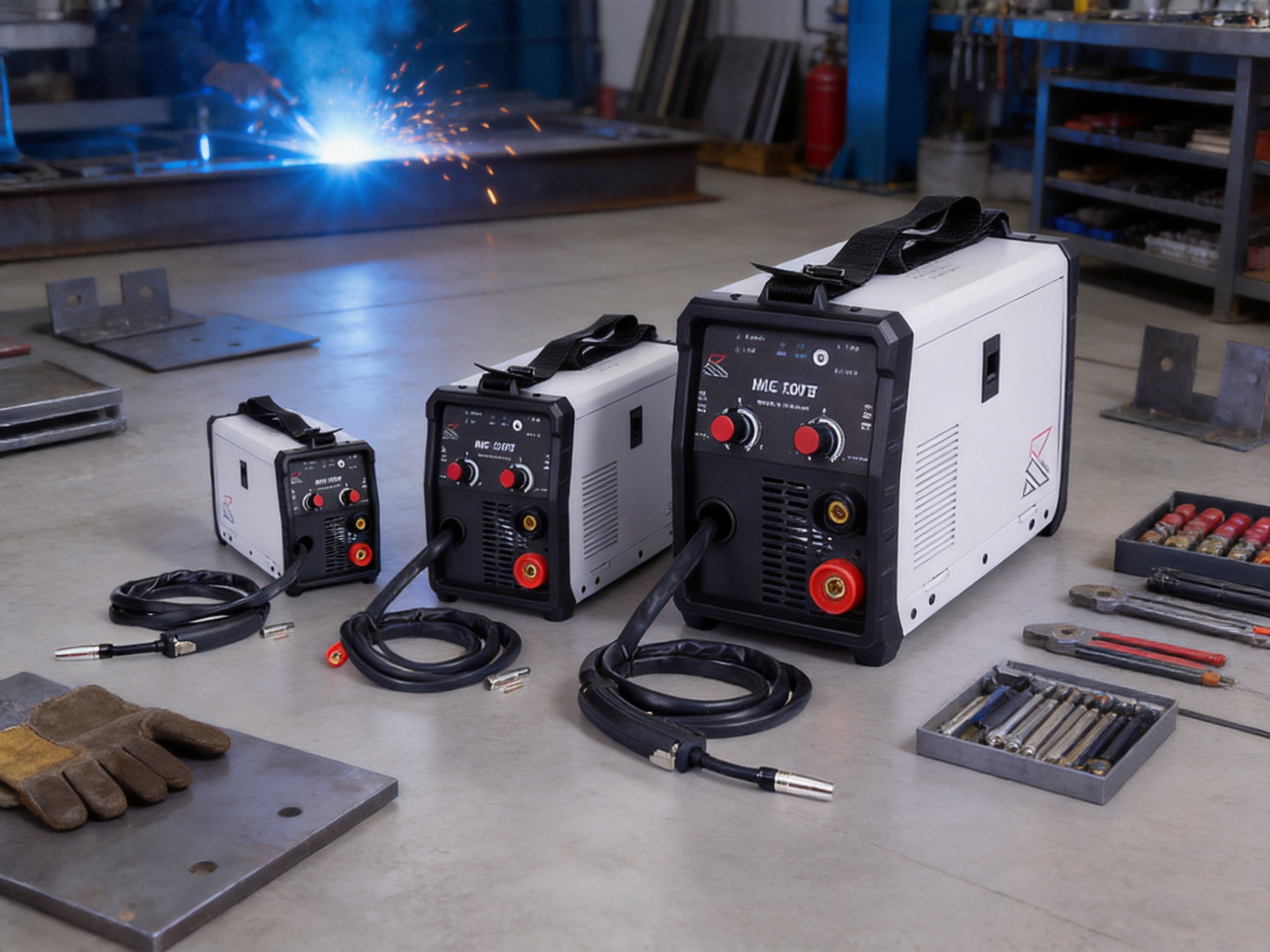
The product design includes touch-button controls and encoder-based parameter adjustment. This combination is intended to make operation clear and direct. Touch buttons can be used to select the welding process or operating function, while the encoder allows the user to adjust the relevant value with controlled, incremental movement.
Simple controls are particularly valuable in portable equipment because the machine may be used by different operators in different locations. A clear interface reduces the time needed to locate controls and helps users return to a known operating condition. The synergic function for no-gas flux-cored welding can provide an additional convenience by coordinating related parameters around the selected setting.
Ease of use does not mean that welding knowledge is unnecessary. Operators should understand electrode and wire selection, polarity, arc length, travel speed, workpiece preparation, ventilation, personal protective equipment, and the limitations of the process. The machine is designed to assist the operator, not replace proper welding practice.
The supplied package includes a MIG torch, electrode holder, earth clamp, welding cable, brush or hammer, and protective mask. Providing these accessories helps users begin work without sourcing every basic component separately.
The MIG torch is used for flux-cored wire welding and provides the connection between the machine, wire-feeding system, and workpiece. The electrode holder supports MMA operation. The earth clamp establishes the return connection to the workpiece, while the welding cable carries current between the power source and the welding circuit.
A brush and hammer can be used for removing slag and cleaning the weld area after MMA or flux-cored welding. Slag should be removed carefully so that the weld can be inspected for undercut, porosity, cracks, incomplete fusion, or other visible defects.
The supplied protective mask offers basic face and eye protection, but users should ensure that the shade rating and overall protective equipment are appropriate for the selected process and current. Welding operations may require additional protection, including flame-resistant clothing, gloves, safety footwear, hearing protection, respiratory protection, and suitable ventilation.
The manufacturer behind this series operates as a large-scale producer of welding machines, battery chargers, heaters, and related electrical equipment. Its manufacturing site covers approximately 120,000 square meters and employs about 600 people. The company reports annual exports of nearly 1.5 million units and an annual production capacity of approximately 2 million units.
Large production capacity can provide several practical benefits. It allows the manufacturer to develop specialized production lines, maintain dedicated quality-control procedures, invest in automated equipment, and support stable supply for international customers. It can also help the company manage multiple product families while preserving common engineering and manufacturing expertise across welding machines, chargers, and heating products.
The company uses advanced manufacturing systems that include automatic patching, plug-in and welding systems, robot processing, laser cutting, and other automated technologies. These processes can improve repeatability in the production of electronic assemblies and metal components. Automated placement and soldering equipment can help achieve consistent circuit-board assembly, while robotic processing and laser cutting can improve dimensional accuracy and production efficiency for selected structural parts.
Modern production is supported by management and information systems, including office automation, Toyota Production System-based management practices, ERP software, and MES management systems. These systems are intended to coordinate purchasing, production planning, material tracking, process control, inventory, quality records, and delivery management.
For a welding-machine buyer, manufacturing systems matter because product reliability is influenced by more than the circuit design alone. Consistent component sourcing, controlled assembly, traceable production, repeatable testing, and organized after-sales support all contribute to the long-term value of the equipment.
The manufacturer maintains a provincial research and development center, an enterprise technology center, and an intelligent welding technology research institute. Its reported R&D team includes approximately 98 personnel. This development structure supports work in inverter power electronics, welding control, product design, software, safety functions, thermal management, and manufacturing engineering.
The company has obtained invention patents, utility model patents, appearance patents, and software copyrights. Patent activity does not by itself guarantee that every product is suitable for every application, but it indicates an ongoing effort to develop proprietary solutions and improve product technology.
Research and development resources can also help a manufacturer respond to regional requirements. Electrical standards, input voltages, plug systems, labeling rules, duty-cycle expectations, and certification requirements differ between markets. A manufacturer with broad engineering experience is better positioned to adapt product configurations and documentation for different countries and customer groups.
The company reports product certifications and compliance experience including GS, CE, EMC, ERP, US ETL, UKCA, and China CCC. These marks and approvals address different market or product requirements, and their applicability depends on the specific model, configuration, and destination market.
Certification is important for distributors, professional users, and importers because it supports regulatory compliance and market access. Buyers should confirm that the exact model being purchased carries the appropriate certification for the intended country and that the supplied documentation corresponds to the actual product configuration.
The manufacturer also participates in the development and revision of national welding-machine standards. It is reported to have contributed to 20 national standards and to have led the drafting of one group standard. Participation in standardization activities can give a company valuable insight into technical requirements, safety expectations, testing methods, and future product development priorities.
Welding machines are exposed to dust, metal particles, heat, vibration, current surges, and repeated thermal cycling. The listed protection rating for these models is IP21S, and the insulation class is H. These ratings are part of the product’s electrical and environmental design, but they should not be interpreted as permission to operate the machine in rain, standing water, or heavily contaminated conditions.
Good operating practice remains essential. The machine should be placed on a stable, dry surface with sufficient ventilation. Air openings should not be blocked. The power cable and welding leads should be inspected regularly. Connections should be tight and free from excessive oxidation. The machine should be disconnected from the power supply before internal maintenance is attempted, and internal servicing should be performed only by qualified personnel.
The integrated protective functions are intended to improve reliability by responding to abnormal conditions such as excessive temperature, overload, or other electrical faults, depending on the specific control design. When a protection function activates, the operator should identify and correct the underlying cause rather than repeatedly restarting the machine without inspection.
Proper storage also contributes to service life. When the machine is not in use, it should be protected from moisture, corrosive fumes, impact, and excessive dust. Welding accessories should be coiled or stored without sharp bends, and consumables should be kept dry and clean according to the recommendations of their manufacturers.
The 85 percent efficiency rating and approximately 0.9 power factor indicate an effort to reduce unnecessary electrical losses. Efficient equipment can be advantageous in workshops where several machines operate at the same time or where electrical capacity is limited. It may also help reduce the size and fuel consumption requirements of a compatible generator, although generator selection must account for starting behavior, peak load, power factor, and the specific generator manufacturer’s recommendations.
The economic value of a welding machine should not be judged only by its purchase price. Users should also consider productivity, consumable use, downtime, portability, maintenance, operator training, electrical consumption, and the number of processes supported. A machine that handles both flux-cored wire and MMA welding can reduce the need to purchase and maintain separate power sources.
Reduced setup time can create additional value. Flux-cored operation may eliminate gas-cylinder rental, gas transport, regulator maintenance, and gas-flow adjustments in suitable jobs. MMA operation can reduce equipment requirements when the job calls for electrodes and a simple welding circuit. These benefits vary according to local consumable prices, job conditions, and operator preference.
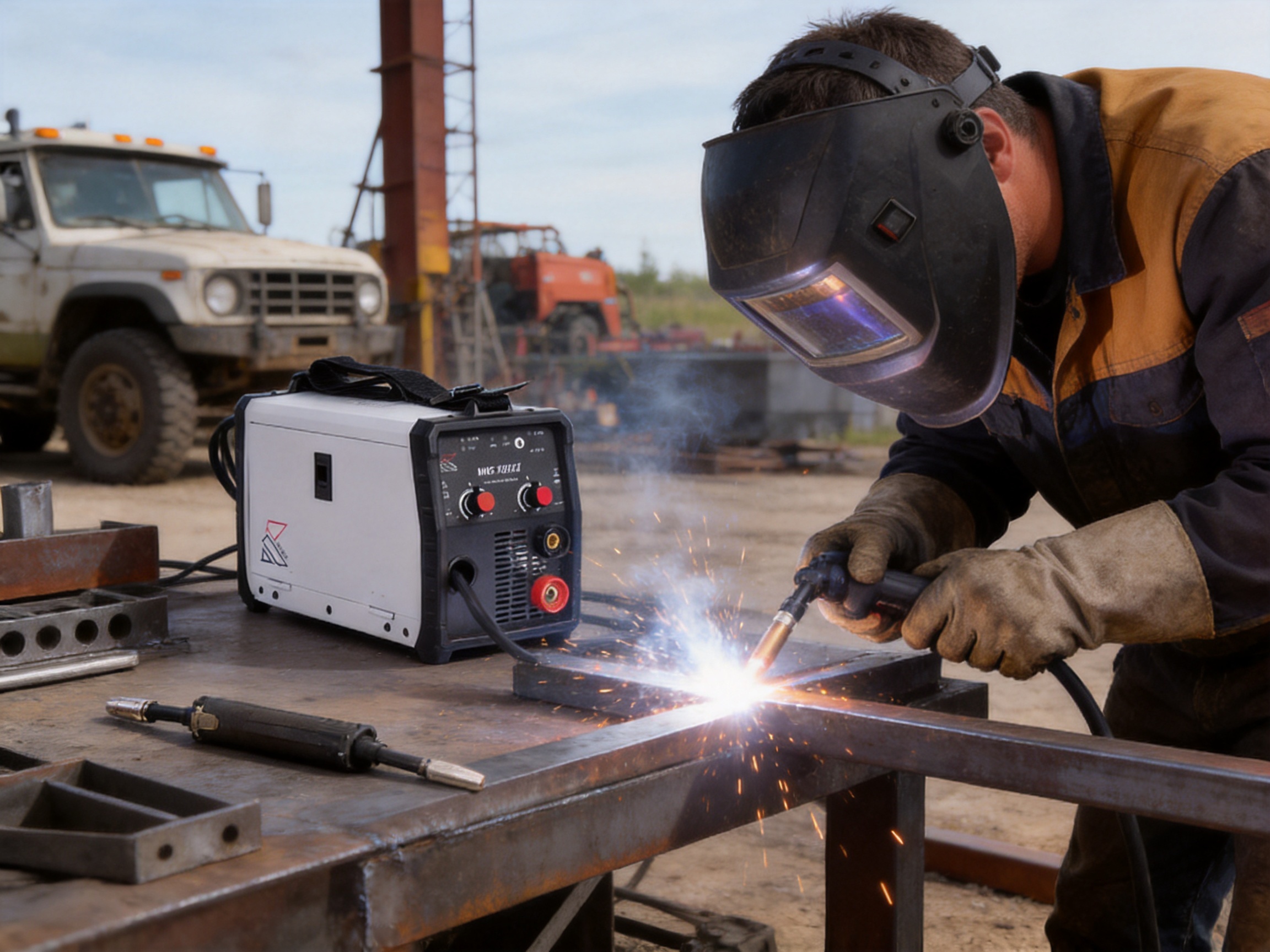
For home workshop users, the MIG-120FII can provide a practical introduction to both wire welding and MMA welding. Its lower weight and compact dimensions make it suitable for occasional projects, repairs, brackets, garden structures, and light fabrication. Users should place particular emphasis on electrical safety, ventilation, fire prevention, and protection from ultraviolet radiation.
Maintenance teams may benefit from the flexibility of carrying one machine that supports both flux-cored wire and stick electrodes. The machine can be used in the workshop for controlled fabrication and then transported to a repair location. The MIG-140FII or MIG-160FII may be preferable when the team frequently encounters thicker sections or requires a broader MMA output range.
Small fabricators often need equipment that can handle varied orders rather than one highly specialized process. The series offers a compact solution for light and medium work, particularly where production volumes do not justify a larger industrial system. The operator can select wire welding for longer joints and MMA for outdoor work, repairs, or specific materials.
Agricultural equipment and construction repairs often take place away from controlled indoor environments. No-gas flux-cored welding can be useful where wind makes external shielding gas impractical, while MMA remains a dependable option for many field repairs. The portable design helps users bring the equipment closer to machinery, frames, supports, or structural components.
Before welding, clean the base material and remove oil, paint, rust, moisture, and other contaminants from the joint area. Confirm that the workpiece is correctly fitted and that the earth clamp is attached to a clean, conductive surface. Poor grounding can contribute to unstable arc behavior and inconsistent weld quality.
Select the wire or electrode according to the base material and required weld characteristics. Confirm the correct polarity for the selected flux-cored wire or electrode. Install the consumable correctly and check that the torch, electrode holder, cable, and earth connection are secure.
Begin with a test weld on material of similar thickness. Observe arc stability, spatter, penetration, bead shape, and slag removal. Adjust current or synergic settings as necessary. A small test can prevent wasted material and reduce the risk of producing a defective production weld.
Maintain a consistent travel speed and arc length. Excessive speed may produce insufficient fusion, while excessively slow travel may create excessive heat input and an overly large weld bead. Keep the torch or electrode at a suitable angle and maintain a steady hand position.
After welding, inspect the joint visually. Look for cracks, undercut, overlap, porosity, incomplete fusion, excessive spatter, and irregular bead shape. For critical assemblies, additional inspection methods may be required. The machine can provide a stable power source, but weld quality ultimately depends on the complete combination of equipment, consumables, joint preparation, procedure, and operator skill.
Welding produces intense light, ultraviolet radiation, hot metal, sparks, fumes, and electric current. Operators must use an appropriate welding helmet or mask, protective gloves, flame-resistant clothing, safety footwear, and suitable eye protection for grinding and slag removal.
Work areas should be adequately ventilated. Coatings, solvents, oils, galvanized materials, and unknown substances can produce hazardous fumes when heated. Fire-resistant screens should be used where necessary, and combustible materials should be removed from the work area. A suitable fire extinguisher should be accessible.
Never weld on sealed containers, tanks, drums, or pipes unless they have been professionally cleaned, tested, and confirmed safe. Avoid operating the machine in wet conditions. Inspect cables before each use and do not operate equipment with damaged insulation, exposed conductors, loose connections, or defective controls.
Operators should also respect the rated duty cycle. Continuous operation beyond the specified duty cycle can activate thermal protection or damage components. Allow the machine to cool when required, and ensure that ventilation openings remain unobstructed.
The MIG-120FII, MIG-140FII, and MIG-160FII support no-gas-shielded flux-cored wire welding and MMA, also known as stick-electrode welding. They are not presented as conventional gas-shielded MIG machines requiring an external shielding-gas cylinder.
They can weld stainless steel when a compatible stainless-steel flux-cored wire or electrode is selected and the correct procedure is followed. The operator must verify consumable compatibility, polarity, current range, joint preparation, and ventilation requirements.
The MIG-120FII is the lightest model and can be suitable for thin-plate work when the material, wire, and settings are appropriate. The MIG-140FII and MIG-160FII can also be used for thin material, but the final result depends on parameter control, technique, joint fit-up, and heat management.
The MIG-160FII provides the highest listed output, reaching approximately 160 amperes for flux-cored welding and 140 amperes for MMA welding. It also supports MMA electrodes up to approximately 4.0 mm under suitable conditions.
No-gas flux-cored welding does not require an external shielding-gas cylinder when the correct self-shielded wire is used. MMA welding also does not require shielding gas. Users should ensure that the selected consumable is specifically designed for the intended process.
They can be suitable for outdoor work, especially when using self-shielded flux-cored wire or MMA electrodes. However, the machines must be protected from rain, standing water, excessive moisture, and unsafe electrical conditions. Wind can affect welding quality even when no external shielding gas is used.
Synergic control coordinates related welding parameters to simplify adjustment. It provides a practical starting point for flux-cored welding, while experienced operators can continue to fine-tune settings according to wire type, material thickness, joint design, and welding position.
The listed accessories include a MIG torch, electrode holder, earth clamp, welding cable, brush or hammer, and protective mask. Buyers should verify the exact package contents with the supplier because accessory configurations can vary by market and order specification.
Choose the MIG-120FII when portability and light-duty work are the main priorities. Choose the MIG-140FII when a balance between portability and medium-duty capacity is required. Choose the MIG-160FII when the application requires the highest output in the series, thicker work capability, or larger MMA electrodes.
The supplied specifications list a 230-volt, 50 Hz rated supply. Users must confirm local compatibility and ensure that the circuit, plug, extension cable, generator, and protective devices are correctly rated.
They are compact portable machines intended for light and medium applications. They can replace separate small welding units in many workshops and repair operations, but they are not a universal substitute for high-duty-cycle industrial systems, automated welding cells, or specialized equipment designed for continuous heavy production.
The MIG-120FII, MIG-140FII, and MIG-160FII series offers a practical combination of flux-cored wire welding and MMA welding in compact inverter platforms. Its principal advantages include dual-process flexibility, no-gas welding capability, microprocessor-based control, IGBT inverter technology, stable arc performance, adjustable parameters, multiple protective functions, efficient electrical operation, and portable construction.
The three models allow users to match output capacity to the intended application. The MIG-120FII emphasizes low weight and compact handling. The MIG-140FII provides a balanced option for general fabrication and repair. The MIG-160FII offers the highest output and the broadest electrode capability within the series.
These product advantages are supported by the manufacturer’s large-scale production resources, automated manufacturing technologies, research and development infrastructure, certification experience, standardization participation, and international supply capability. Automated electronic assembly, robotic processing, laser cutting, ERP and MES management systems, and dedicated technical centers contribute to a structured approach to product development and production.
For users seeking one portable machine that can handle both self-shielded flux-cored wire and stick electrodes, this series provides a versatile solution for workshops, maintenance teams, construction work, agricultural repairs, and general metal fabrication. Correct consumables, safe working practices, suitable electrical installation, and operator skill remain essential, but the underlying design gives users a capable and flexible foundation for everyday welding work.
1. Product technical information for the MIG-120FII, MIG-140FII, and MIG-160FII welding machines, including electrical ratings, output ranges, dimensions, duty cycles, and accessory details.
2. International guidance and technical literature on manual metal arc welding, flux-cored arc welding, welding procedure control, and operator safety.
3. General principles of insulated-gate bipolar transistor inverter power supplies used in modern arc-welding equipment.
4. Technical guidance concerning welding-machine duty cycles, thermal protection, electrical insulation, enclosure protection, and power-factor performance.
5. Manufacturer information concerning research and development facilities, manufacturing capacity, automated production systems, certifications, patents, and standardization activities.
Recommended Products

Contact Us
No.2299, Luqiao Section, Shugang Avenue, Luqiao District, Taizhou, 318057 Zhejiang, PR China.
+86-576-82431568
 Privacy
China Welding Machine Factory
 English
 中文简体
 русский
 Español
 عربى
 Français
 Português
 Deutsch
 Український