Email: [email protected]
Email: [email protected]

Blog
 2026.09.12
 Blog
Manual metal arc welding remains one of the most practical and versatile welding methods for fabrication, maintenance, construction, agricultural repair, installation work, and general metalworking. It requires relatively simple equipment, works with a wide variety of metals, and can be used in locations where shielding gas is inconvenient or unavailable. However, the quality of an MMA welding machine depends heavily on the stability of its current output, the responsiveness of its arc controls, its ability to tolerate difficult power conditions, and its resistance to demanding working environments.
The KD series IGBT inverter MMA or stick welding machines are designed to address these requirements in a compact and portable format. The range includes the KD-195, KD-225, KD-255, KD-275, and KD-295 models, offering maximum welding currents from 160 A to 250 A. Although the machines are small and lightweight, they incorporate inverter technology, pulse-width modulation control, constant-current output regulation, automatic protection functions, and operator-oriented arc features such as hot start, arc force, and anti-stick control.
These characteristics position the series as a practical alternative to older transformer-based welding machines and as a competitive solution for users seeking a balance between portability, welding performance, operating efficiency, and purchase value. The machines are suitable for welding carbon steel, alloy steel, cast iron, stainless steel, and other commonly used metals when the correct electrode and welding procedure are selected.
The product is manufactured by Zhejiang Kende Mechanical & Electrical Co., Ltd., a Chinese manufacturer with extensive experience in welding equipment, battery chargers, and heating products. The company combines product development, automated production, testing, research, certification, and export experience to support the manufacture of welding machines for both domestic and international markets.
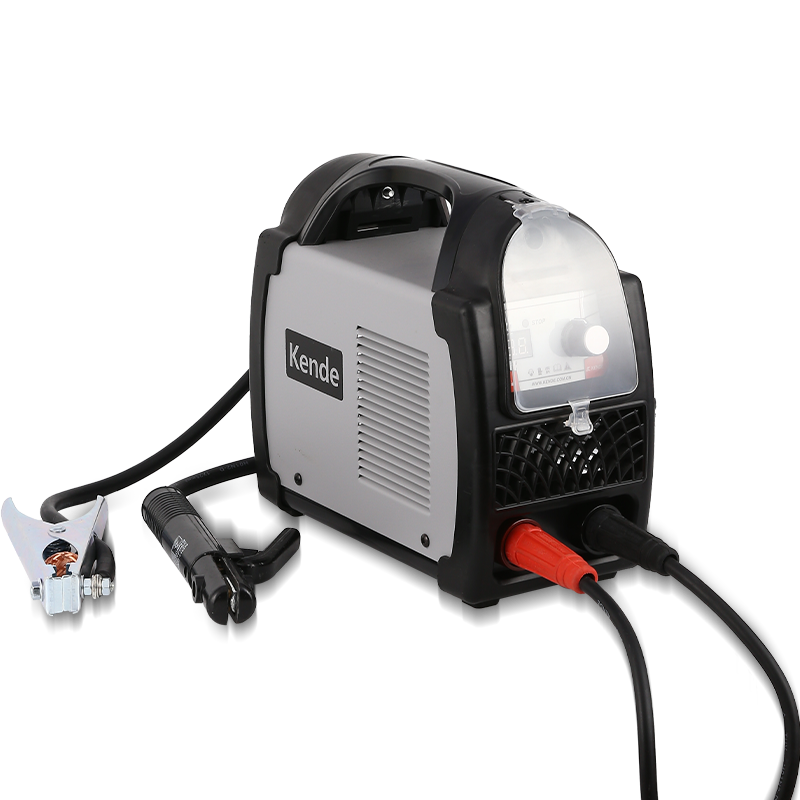
KD-195 IGBT Inverter MMA or Stick Welding Machines KD-255
The KD series is built around an insulated-gate bipolar transistor, commonly known as an IGBT, inverter power system. Inverter technology changes the way incoming electrical power is processed before it reaches the welding output. Compared with conventional low-frequency transformer designs, an inverter unit can use higher-frequency switching and a smaller magnetic structure. This allows the machine to deliver a controlled welding current from a comparatively compact enclosure.
For the operator, the main benefit is not simply a reduction in size. The inverter architecture also supports fast electronic control of the welding current. This helps the machine react more quickly to changes in arc length, electrode contact, and welding conditions. When combined with constant-current regulation, the result is a more consistent arc and more predictable welding behavior.
The machines operate from a single-phase 220/230 V supply at 50/60 Hz. The stated operating range of 130–270 V gives the equipment a degree of flexibility where supply voltage may fluctuate. This feature is particularly relevant for workshops, farms, construction sites, field service operations, and regions where electrical infrastructure is less stable than the nominal rating suggests.
The model family provides different output levels so that customers can select a machine according to electrode size, material thickness, expected duty cycle, and available input power. The KD-195 is the lightest model in the range, while the KD-295 provides the highest maximum welding current. The KD-255 offers a middle-to-high output configuration and supports electrodes up to 5.0 mm according to the supplied specifications.
• IGBT inverter power technology for compact construction and efficient power conversion.
• Pulse-width modulation control for accurate regulation of welding current.
• Constant-current output control for stable manual arc welding.
• Hot start to assist electrode ignition at the beginning of a weld.
• Arc force to provide additional current when the arc voltage falls and the electrode approaches the workpiece.
• Anti-stick functionality to help release an electrode that has accidentally adhered to the workpiece.
• Automatic over-current and over-temperature protection.
• Thermal overload indicator to alert the operator when the machine requires cooling.
• DC welding output for stable arc performance and useful penetration characteristics.
• Compact housing and low net weight for transport between work areas.
• Included welding and grounding cables for practical setup.
• Protection features designed for moisture, corrosion, vibration, and conductive dust resistance.
The series is available in five principal configurations. All models use a single-phase 220/230 V input and have a no-load voltage of 86 V. Their differences are primarily related to rated input capacity, input current, welding current range, maximum current, electrode capacity, duty cycle, weight, and enclosure dimensions.
| Model | Rated Input Capacity | Rated Supply Current | Welding Current Range | Maximum Welding Current | Rated Duty Cycle | Usable Electrode Diameter | Net Weight | Machine Size |
|---|---|---|---|---|---|---|---|---|
| KD-195 | 4.3 kVA | 21 A | 20–120 A | 160 A | 100% | 1.6–3.2 mm | 3.5 kg | 290 × 130 × 235 mm |
| KD-225 | 4.6 kVA | 26.5 A | 20–140 A | 180 A | 100% | 1.6–4.0 mm | 3.5 kg | 290 × 130 × 235 mm |
| KD-255 | 5.0 kVA | 31 A | 20–160 A | 200 A | 60% | 1.6–5.0 mm | 4.0 kg | 290 × 130 × 235 mm |
| KD-275 | 6.0 kVA | 36.3 A | 20–180 A | 220 A | 60% | 1.6–5.0 mm | 4.5 kg | 330 × 130 × 235 mm |
| KD-295 | 7.0 kVA | 41.5 A | 20–200 A | 250 A | 40% | 1.6–5.0 mm | 4.5 kg | 330 × 130 × 235 mm |
The KD-195 and KD-225 are appropriate where portability, light fabrication, repair work, and moderate electrode sizes are the main priorities. Their 100% rated duty cycle, as specified in the product data, makes them attractive for work within their rated operating conditions.
The KD-255 is a versatile general-purpose option. It supports electrodes up to 5.0 mm and provides a maximum welding current of 200 A. It can serve workshops, installation teams, maintenance departments, and users who need more output than a small household machine but still want a lightweight unit.
The KD-275 and KD-295 are intended for applications requiring higher current. Their increased input capacity and maximum output make them suitable for heavier electrodes and thicker workpieces, while their 60% and 40% rated duty cycles should be considered when planning continuous production work. Duty cycle represents the proportion of a defined operating period during which the machine can weld at a specified output before cooling is required. Users should always consult the applicable technical documentation and select the model according to the actual welding current and working schedule.
One of the clearest advantages over traditional transformer-based MMA machines is the reduction in size and weight. The stated net weights range from 3.5 kg to 4.5 kg, depending on model. This makes it easier for one operator to carry the equipment around a workshop, up a ladder, across a construction site, or between separate maintenance locations.
A portable welding machine can reduce setup time and transportation effort. It also allows repair personnel to bring the power source closer to the workpiece instead of moving large metal assemblies to a fixed welding station. For contractors and service technicians, this portability may improve productivity even when the welding current requirements are relatively modest.
The product information states that the inverter design can reduce power consumption and achieve energy savings of up to 30% compared with certain conventional designs. Actual savings depend on the operating current, duty cycle, input voltage, welding process, electrode type, and the efficiency of the specific comparison machine. Nevertheless, the combination of IGBT switching, PWM control, and an efficient high-frequency power conversion structure is intended to reduce unnecessary electrical losses.
Lower power consumption can be valuable for workshops with limited electrical capacity. It may also reduce the size requirements of extension cables and portable generators, provided that the generator and cables are correctly specified for the machine’s input current and starting characteristics. A qualified electrician should confirm supply requirements before installation or field use.
Manual arc welding requires the power source to respond to rapid changes in the arc. A long arc, short arc, electrode contact, changes in travel speed, and variations in joint geometry can all affect the welding current and voltage. The KD series uses constant-current control to help maintain a stable welding current while the operator moves the electrode.
Stable output contributes to a more uniform bead profile and helps the operator maintain a consistent arc. It can also reduce the likelihood of erratic starts, excessive sticking, and inconsistent penetration. While the power source cannot replace correct electrode selection or operator skill, it provides a more controlled platform for achieving reliable results.
The stated operating range of 130–270 V is a notable feature for users who experience voltage variation. Nominal 220/230 V supplies may not remain at the same voltage under load, particularly in remote locations, temporary installations, or buildings with long supply lines. A wider operating range can help the machine continue functioning under conditions that might cause a narrower-range unit to shut down or perform inconsistently.
Voltage tolerance should not be interpreted as permission to use unsafe or unsuitable electrical connections. The machine must still be connected to an appropriate circuit with correct grounding, over-current protection, cable sizing, and environmental protection. The operating range is an equipment feature, not a substitute for proper electrical installation.
Hot start provides a temporary increase in welding current when the electrode is first initiated. Starting an arc can be difficult if the electrode coating is cold, the workpiece surface is not perfectly prepared, or the selected current is near the lower end of the electrode’s operating range. The hot-start function helps establish the arc more easily and can reduce the frustration associated with repeated striking.
For less experienced operators, dependable arc initiation is particularly useful. For experienced welders, it can help maintain a fast and consistent workflow when performing repeated starts on assemblies, tack welds, repairs, or short weld sections.
Arc force monitors the welding voltage and supplies additional current when necessary. As the electrode approaches the workpiece and the arc length becomes shorter, the control system can respond to help prevent the arc from going out. This can improve arc stability during changes in hand position and electrode angle.
Arc force is valuable when welding in difficult positions or when using electrodes with different arc characteristics. It can help maintain a more responsive arc and support penetration when the operator is working around corners, inside joints, or on irregular surfaces. The correct setting remains important because excessive arc force may increase spatter or produce an overly aggressive arc in some applications.
Electrode sticking is a common challenge in MMA welding. If the electrode becomes attached to the workpiece, the current may continue to flow and heat the electrode rapidly. Anti-stick technology helps limit or interrupt the welding current so that the operator can separate the electrode more easily.
This feature supports safer and more convenient operation. It can reduce damage to the electrode, help prevent overheating at the contact point, and make restarting the weld simpler. Anti-stick control is especially useful during ignition, low-current welding, and work performed by operators who are still developing their technique.
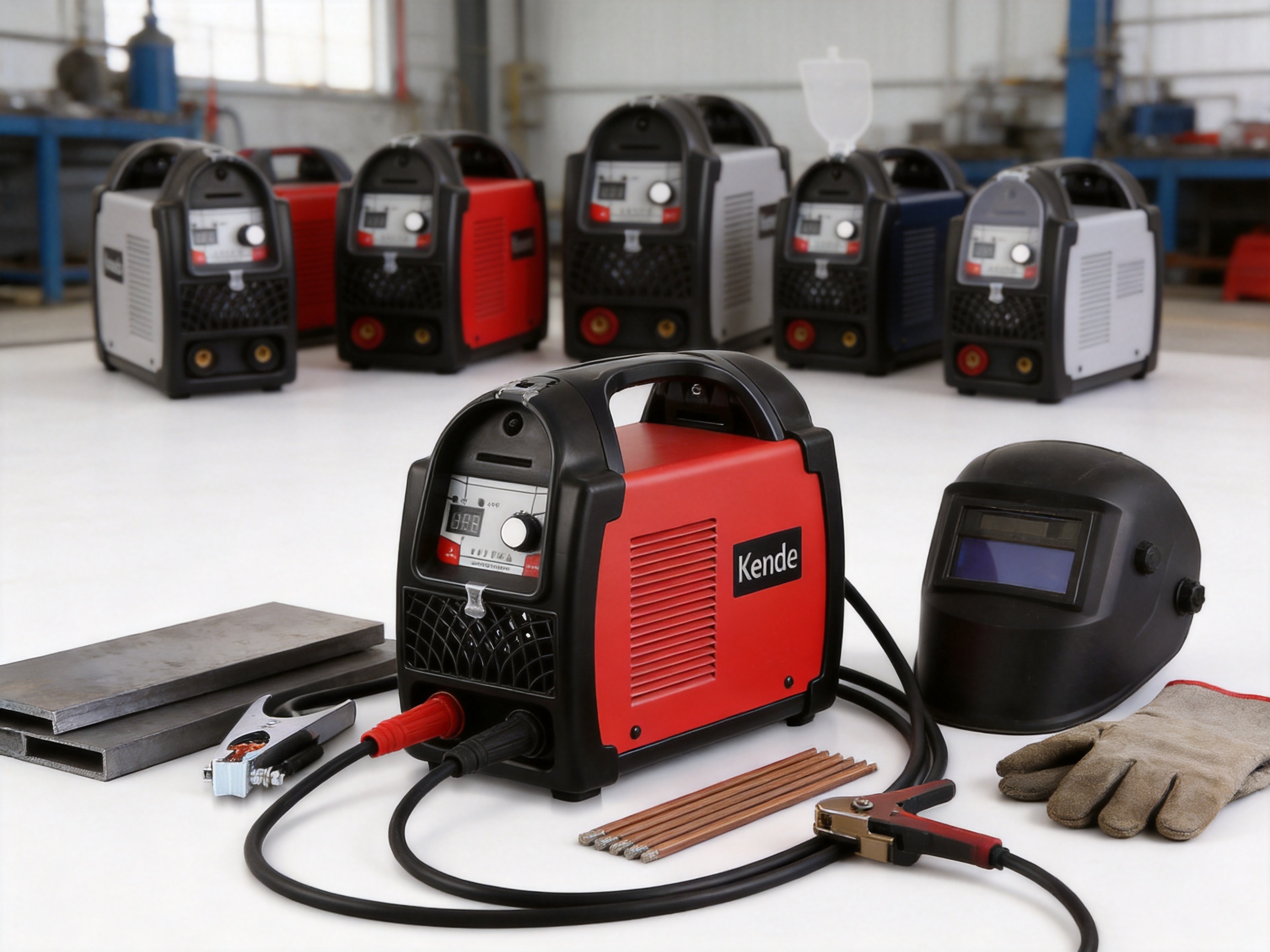
The KD series is designed for DC manual arc welding. It can be used with suitable electrodes for carbon steel, alloy steel, cast iron, stainless steel, and other compatible materials. The actual range of applications depends on electrode classification, material thickness, joint design, welding position, surface condition, and the operator’s procedure.
Typical applications include metal repair, farm equipment maintenance, gates and railings, frames, brackets, structural components within the machine’s capacity, pipe supports, machinery service, workshop fabrication, and field installation. The equipment can also be useful for contractors who need a backup welding power source that can be transported quickly to a repair location.
Carbon steel is one of the most common materials for MMA welding. With a suitable mild-steel electrode and correct current setting, the operator can produce sound welds on prepared joints. The stable DC output helps support consistent arc behavior, while hot start can make electrode initiation easier on clean or moderately prepared surfaces.
Stainless steel can be welded with compatible stainless electrodes. Cleanliness is essential because contamination can affect corrosion resistance and weld quality. Dedicated tools, suitable electrode storage, correct current, and appropriate post-weld cleaning practices should be used. The machine provides the power source, but the final result depends on the complete welding procedure.
Cast iron and alloy steel often require specialized electrodes and careful control of preheating, interpass temperature, cooling, and joint preparation. The KD series can provide a suitable DC welding source when the selected electrode and procedure are compatible with the material. For critical repairs, users should follow the electrode manufacturer’s recommendations and applicable welding standards.
Welding machines are frequently exposed to demanding conditions. Dust can enter ventilation paths, moisture can affect electrical insulation, and vibration can occur during transport or on construction sites. The supplied product information describes the series as waterproof, moisture-resistant, anti-corrosion, anti-vibration, and resistant to conductive dust. It also states a practical protection class exceeding IP21 and identifies the enclosure rating as IP21S.
These features are intended to improve durability in normal operating environments, but they do not make the equipment immune to abuse or severe weather. The machine should be protected from direct rain, standing water, corrosive chemicals, excessive dust accumulation, and unauthorized internal modifications. Adequate ventilation must be maintained so that cooling air can circulate through the enclosure.
Automatic over-current and over-temperature protection helps protect the power electronics when operating conditions become excessive. If the thermal indicator activates, the operator should stop welding and allow the machine to cool. Repeated overloads, blocked ventilation, incorrect input power, or damaged cables may cause faults and should be investigated rather than ignored.
The power switch includes an indicator light to show that the machine is energized. This simple feature improves awareness during setup and shutdown. Operators should still treat the welding power source, electrode holder, work clamp, and supply connection as energized equipment until the machine has been switched off and isolated in accordance with safe working procedures.
The product description specifies a 2 m welding cable with a dual-angle electrode holder and a 1.5 m ground cable with clamp. These components provide a practical starting configuration for MMA welding. The cable lengths allow the operator to work around a small assembly without immediately requiring additional leads.
Before welding, the ground clamp should be attached to a clean, secure portion of the workpiece or a properly designed work-return connection. Paint, rust, oil, scale, and other contamination can increase resistance and create unstable current flow. The electrode holder should be inspected for damaged insulation, loose connections, or excessive heat at the cable termination.
Longer welding cables may be used in appropriate circumstances, and the product information states that the machines can weld with a long welding cable. Cable size, total cable length, connection quality, and voltage drop should be considered. Undersized or excessively long cables can reduce performance and increase heating. Professional users should select cable specifications according to the intended current and applicable electrical requirements.
The machine’s relatively low weight makes it suitable for mobile work, but portability should not lead to careless placement. The power source should be positioned on a stable, dry surface with sufficient clearance around the ventilation openings. Cables should be routed to avoid sharp edges, hot surfaces, vehicle traffic, and trip hazards.
Traditional transformer MMA machines are often robust but comparatively large and heavy. Moving them may require two people or a wheeled platform. The KD inverter series offers a much smaller footprint and significantly lower weight, allowing more flexible placement and easier transportation.
Electronic inverter control can respond rapidly to arc changes. In comparison with a basic transformer machine without advanced arc functions, the hot-start, arc-force, and anti-stick features provide additional assistance during ignition and operation. These functions are particularly helpful when welding conditions vary or when multiple electrode types are used.
The smaller inverter architecture is designed to use power efficiently. Lower electrical demand can be beneficial in workshops with restricted supply capacity and in mobile applications. However, input current remains important, especially for the high-output KD-275 and KD-295 models. Users should not select a machine solely by its maximum welding current; the available electrical supply must also support the rated input requirements.
Inverter machines contain electronic power components and should be serviced by qualified personnel. Keeping ventilation passages clean, avoiding moisture, checking cables, and observing thermal protection indicators are important routine practices. Conventional transformer machines may appear mechanically simpler, but they can also be heavy and less efficient. The best choice depends on the user’s priorities, operating environment, service capability, and required output.
The manufacturer, Zhejiang Kende Mechanical & Electrical Co., Ltd., operates from Taizhou, Zhejiang Province, China. The company reports a production site covering approximately 120,000 square meters and a workforce of about 600 employees. Its reported annual production capacity is approximately 2 million units, with exports of nearly 1.5 million units each year.
This scale is important for buyers seeking a stable industrial supplier rather than a small trading operation. High-volume production can support more consistent component sourcing, standardized assembly procedures, specialized testing, spare-parts planning, and structured quality management. It also provides manufacturing capacity for distributors and importers who require repeat orders across multiple markets.
The company reports that it has a Zhejiang Provincial Research and Development Center, an Enterprise Technology Center, and an Intelligent Welding Technology Research Institute. It also identifies approximately 98 research and development personnel and a portfolio of invention patents, utility model patents, appearance patents, and software copyrights.
For an inverter welding machine, research and development capability is relevant to power topology, thermal design, current regulation, protection functions, enclosure construction, electromagnetic compatibility, user controls, and production testing. Continued engineering work can help a manufacturer adapt machines to different electrical systems, market regulations, electrode requirements, and customer applications.
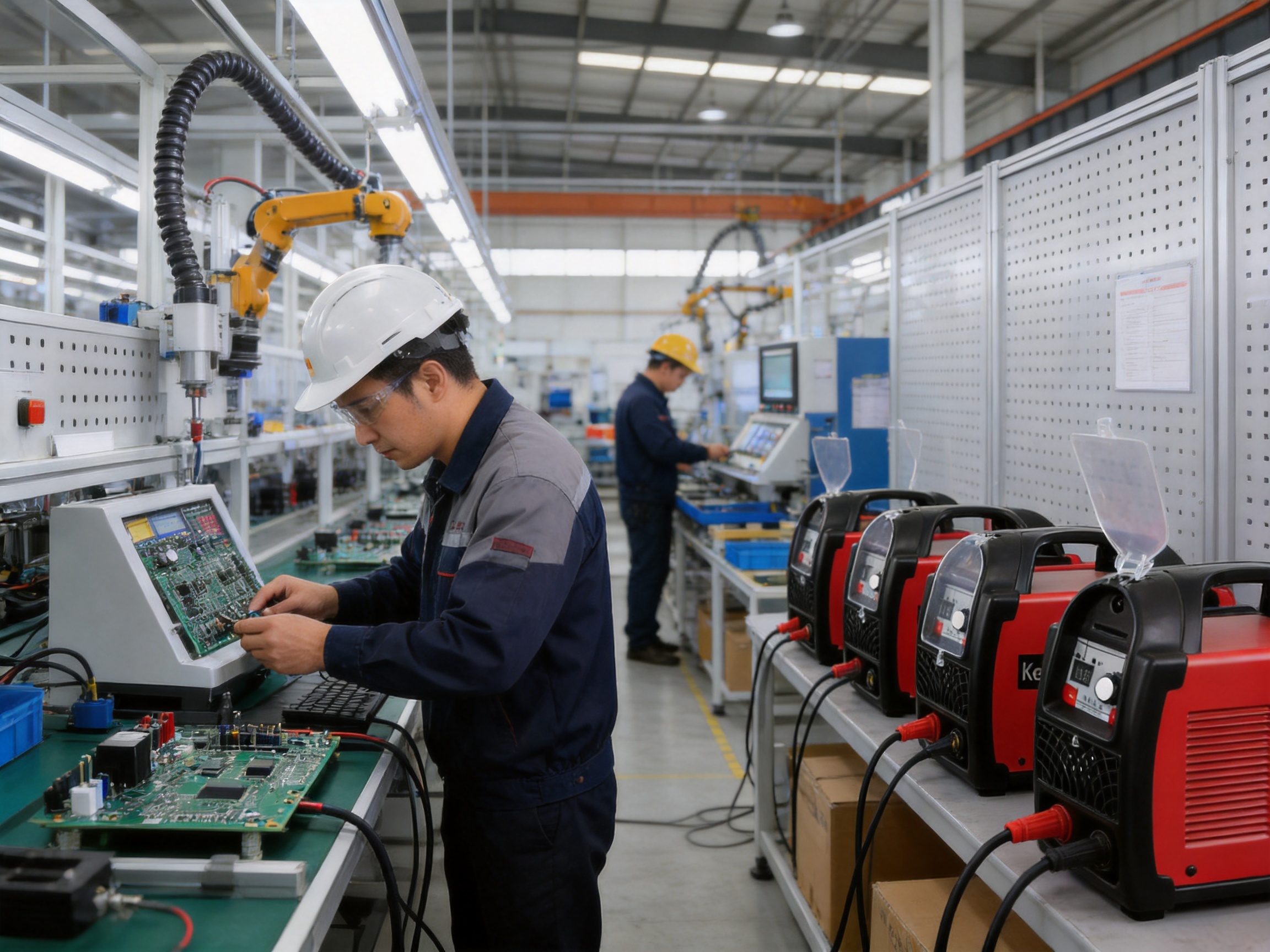
The manufacturer states that it uses automated patching, plug-in, and welding systems, together with robot processing, laser cutting, and other advanced technologies. Automated electronic assembly can improve placement consistency for circuit-board components, while controlled soldering and inspection processes can support reliable electrical connections.
Robot processing can be used for repeatable mechanical operations and standardized production tasks. Laser cutting can support accurate fabrication of sheet-metal parts, ventilation panels, brackets, and enclosure components. These technologies do not eliminate the need for inspection, but they can reduce variation in repetitive operations and improve manufacturing efficiency.
The company also reports the use of OA office automation, Toyota TPS management, ERP K3, and MES management systems. Together, such systems can support production planning, material control, work-order tracking, process monitoring, inventory management, and manufacturing data collection. When properly implemented, digital production management makes it easier to trace components, monitor output, identify bottlenecks, and coordinate quality activities.
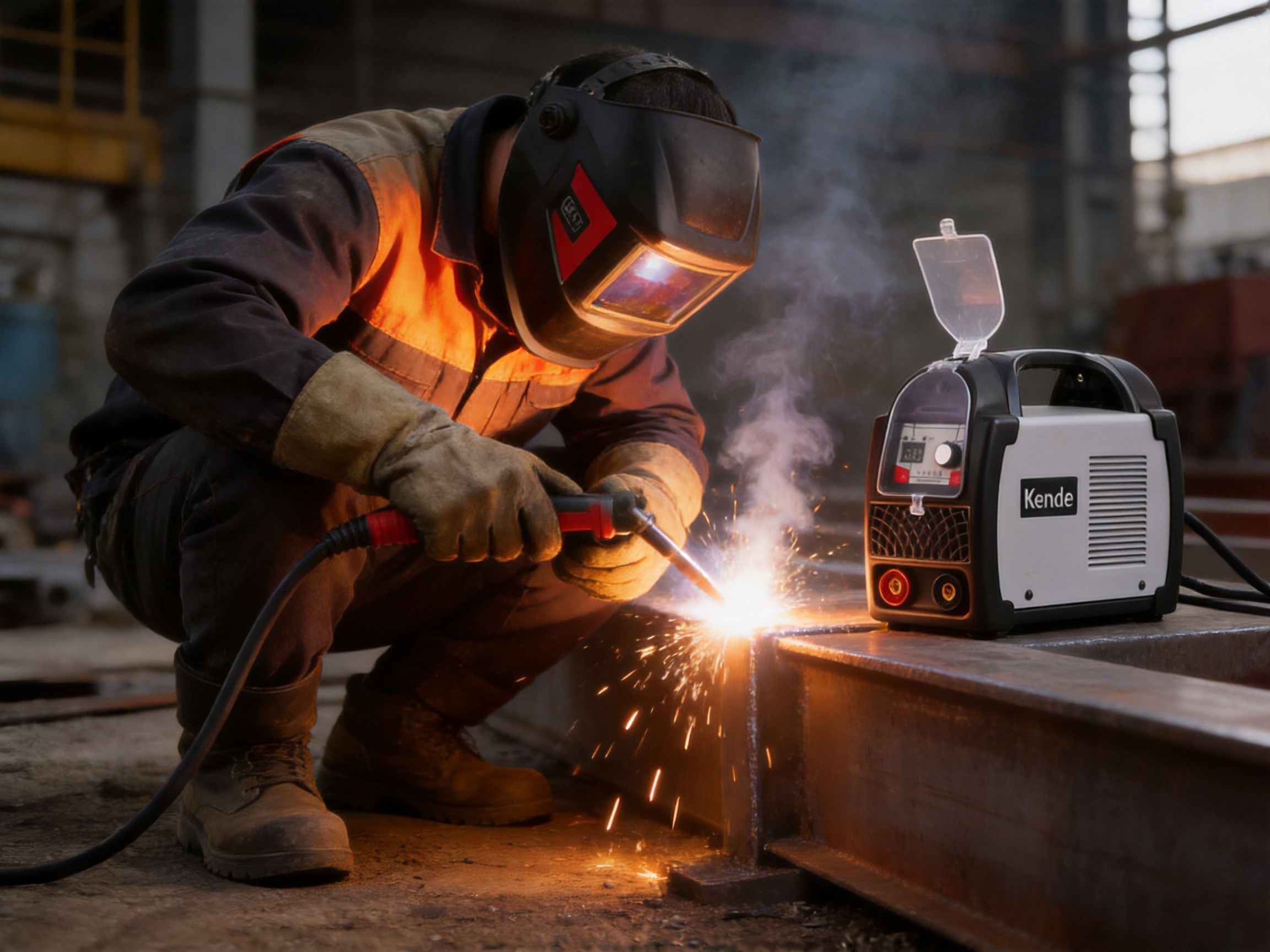
The manufacturer reports holding or supporting several international product certifications and compliance marks, including GS, CE, EMC, ERP, US ETL, UKCA, and China CCC. The relevance of each mark depends on the destination market, product configuration, applicable standard, and current certification status. Importers should request the exact certificate, test report, model designation, and scope before placing an order.
Certification is valuable because welding machines must satisfy requirements related to electrical safety, electromagnetic compatibility, energy performance where applicable, and regional market access. A responsible purchasing process should verify that the certificate covers the exact model being supplied and that the nameplate, user manual, packaging, and technical file are consistent with the approved configuration.
The company also reports participation in national welding-machine standardization work in China, including involvement in the drafting, formulation, or revision of 20 national standards and leadership in drafting one group standard. Participation in technical standardization can give a manufacturer valuable knowledge of performance, safety, testing, and terminology requirements within the industry.
For overseas distributors, manufacturing scale and certification experience may provide additional advantages. Product documentation can be prepared for different regions, packaging can be adapted, and model configurations may be developed for particular market requirements. Buyers should discuss plug types, input voltage, labeling language, warranty terms, spare parts, minimum order quantities, and technical support before finalizing a supply agreement.
Contractors often value equipment that can be moved quickly between job sites. The compact dimensions and low weight of the KD series reduce transport effort, while the wide input voltage range can be useful for temporary or variable electrical supplies. The included cables allow the machine to be placed into service without assembling a large accessory package.
The KD-255, KD-275, and KD-295 models provide higher current capacity for users who regularly work with larger electrodes. The appropriate choice should be based on the required duty cycle and actual welding schedule rather than maximum current alone.
Maintenance teams may need to repair machinery, frames, supports, brackets, or structural components at short notice. A lightweight MMA machine can remain available in a service area or be carried directly to the repair location. Hot start, arc force, and anti-stick functions can reduce downtime during repeated repair welds and help operators work more consistently.
Small and medium-sized workshops can benefit from a compact machine that occupies little floor space. The range allows the workshop to select a model suited to light fabrication or heavier work. DC output and compatibility with common electrode types support a broad range of repairs and fabrication tasks.
Distributors generally need more than a competitive unit price. They require dependable production capacity, documentation, model variety, compliance support, packaging, and after-sales communication. The manufacturer’s reported export volume, broad product portfolio, engineering resources, and certification experience can support distributors seeking to build a welding-equipment product line.
Entry-level users can benefit from an uncomplicated MMA interface combined with automatic arc-assistance functions. Hot start helps with ignition, arc force supports arc stability, and anti-stick reduces the consequences of accidental electrode contact. Training organizations should still provide instruction in electrical safety, electrode handling, workpiece preparation, personal protective equipment, and welding procedure control.
Before use, inspect the power cord, electrode holder, ground clamp, welding cables, ventilation openings, and enclosure. Do not operate the machine if insulation is damaged, connections are loose, or the housing has suffered impact damage. Confirm that the supply voltage and circuit protection are compatible with the selected model.
Select an electrode suitable for the base material and joint. Electrode diameter should be matched to the material thickness, welding position, joint design, and available current. Follow the electrode manufacturer’s storage and baking recommendations when low-hydrogen electrodes are used.
Prepare the workpiece by removing excessive rust, paint, oil, moisture, and scale from the welding area. Secure the workpiece so that it cannot move during welding. Attach the work-return clamp to a clean contact area and keep the welding cable connections tight.
Set the current within the recommended range for the electrode. Begin with a controlled arc length and maintain a consistent travel speed. Watch the weld pool, bead shape, slag behavior, and penetration. If the thermal protection indicator activates, stop welding and allow the machine to cool naturally with the ventilation system unobstructed.
Always use a suitable welding helmet, flame-resistant clothing, gloves, safety footwear, and eye protection. Provide adequate ventilation or fume extraction. Remove combustible materials from the welding area and follow all local requirements for hot-work permits, fire prevention, and electrical safety.
No welding machine is suitable for every application. The KD series is intended for MMA or stick welding and should not be treated as a substitute for a MIG/MAG, TIG, submerged arc, resistance, or laser welding system when those processes are required. Users should select the process according to production volume, joint quality requirements, material, shielding requirements, automation needs, and applicable standards.
The listed maximum currents are not equivalent to unlimited continuous output. Duty cycle decreases on the higher-output models, and actual operation must remain within the manufacturer’s ratings. Ambient temperature, ventilation, input voltage, extension cables, electrode type, and maintenance condition can all affect performance.
The stated protection class is intended for normal operating conditions and does not authorize use in rain, standing water, explosive atmospheres, or highly corrosive environments. If the machine will be used in an unusual location, the buyer should obtain application guidance and confirm the suitability of the enclosure and electrical installation.
Technical specifications should also be confirmed before purchase because product configurations, regional versions, certifications, accessories, and model names may change. Importers should request the latest datasheet, product manual, test documentation, packaging details, and warranty policy.
The main competitive strength of the KD series is the combination of features that are often evaluated separately. The machines provide inverter-based portability, a broad model range, electronic arc assistance, voltage tolerance, automatic protection, and a manufacturing platform capable of supporting international distribution.
Some competing machines may offer a high maximum current but be heavier, less efficient, or less convenient to transport. Others may be compact but provide fewer protection functions or a narrower output range. The KD series seeks to balance these factors rather than focus on a single specification.
The product also benefits from a coherent family structure. A customer can begin with a lower-current KD-195 or KD-225 for light work and move to the KD-255, KD-275, or KD-295 when electrode size and output requirements increase. Shared design characteristics across the range can simplify operator familiarity, product training, spare-parts planning, and distributor marketing.
From the supplier perspective, the manufacturer’s experience across welding machines, chargers, heaters, and related electrical products provides a broad industrial base. Its reported research facilities, patents, automated processes, digital management systems, standardization involvement, production capacity, and international certifications strengthen its position as an original equipment manufacturer and export supplier.
The KD series is designed for manual metal arc welding, also called MMA or stick welding. It uses a consumable flux-coated electrode and DC welding output.
The models differ mainly in input capacity, rated supply current, welding current range, maximum welding current, duty cycle, electrode capacity, weight, and enclosure size. The KD-195 is the lowest-output model, while the KD-295 provides the highest maximum welding current.
The KD-255 is a versatile middle-range option because it provides a 20–160 A adjustment range, a stated maximum current of 200 A, and support for electrodes up to 5.0 mm. The best choice still depends on the intended duty cycle, material thickness, and electrical supply.
Yes, the product information identifies stainless steel among the materials that can be welded. The operator must use a compatible stainless-steel electrode and follow appropriate cleaning, preparation, current, and safety procedures.
Hot start assists arc ignition by providing additional starting current. Arc force supplies additional current when the electrode approaches the workpiece and the arc voltage decreases. Anti-stick helps reduce current when the electrode adheres to the workpiece, making it easier to separate.
The supplied information states that the machine can weld with a long welding cable. Cable length and cross-sectional area must be selected correctly to limit voltage drop and overheating. Users should follow the applicable technical guidance.
It can be used in suitable field environments when protected from rain, standing water, excessive dust, and other hazards. The stated protection features do not mean that the machine can be exposed directly to severe weather or submerged conditions.
The product includes automatic protection against over-current and over-temperature, together with a thermal overload indicator. The enclosure is identified as IP21S in the supplied specifications.
No. The listed models use a single-phase 220/230 V supply at 50/60 Hz. Input current and circuit requirements vary by model and must be checked before installation.
The stated package includes a 2 m welding cable with dual-angle electrode holder and a 1.5 m ground cable with clamp. Package contents should be confirmed with the supplier for the specific market and order.
Buyers should request current certificates, test reports, manuals, nameplate information, and declarations applicable to the destination country. They should verify that the documentation covers the exact model and electrical configuration being purchased.
The manufacturer reports a large production site, approximately 600 employees, substantial annual production capacity, export experience, research facilities, automated manufacturing technologies, digital management systems, and multiple international certifications. These capabilities can support repeat orders and regional product requirements.
The KD series IGBT inverter MMA welding machines are designed to deliver practical stick-welding capability in a compact and portable package. Their principal advantages include stable DC current output, electronic inverter control, hot start, arc force, anti-stick technology, automatic protection, a broad operating-voltage range, and a selection of models covering light fabrication through higher-current welding work.
The series compares favorably with many conventional machines where portability, power efficiency, fast arc response, and ease of use are important. The KD-255 provides a particularly balanced configuration for general-purpose users, while the KD-275 and KD-295 address applications requiring greater maximum current. The KD-195 and KD-225 offer lighter-duty alternatives for users who prioritize manageable input requirements and compact transport.
Behind the product is a manufacturer with reported large-scale production, research and development resources, automated assembly and fabrication technologies, digital manufacturing systems, certification experience, and international export capability. These strengths are important for customers who need not only a functional welding machine, but also a dependable supply partner capable of supporting product quality, customization, compliance, and long-term purchasing.
As with any welding equipment, the machine must be selected according to actual current requirements, duty cycle, electrode type, workpiece material, supply capacity, and working environment. When properly matched, installed, operated, and maintained, the KD series provides a flexible solution for professional contractors, workshops, maintenance teams, distributors, and general metalworking users.
1. Product technical specifications for the KD-195, KD-225, KD-255, KD-275, and KD-295 IGBT inverter MMA welding machines.
2. Manufacturer-provided product information concerning hot start, arc force, anti-stick control, protection functions, accessories, and operating conditions.
3. Manufacturer-provided corporate information concerning production facilities, research and development, patents, certifications, and manufacturing systems.
4. General principles of manual metal arc welding, electrode selection, current control, weld preparation, and welding safety.
5. General guidance for electrical protection, duty-cycle interpretation, cable selection, ventilation, and personal protective equipment in welding applications.
Recommended Products

Contact Us
No.2299, Luqiao Section, Shugang Avenue, Luqiao District, Taizhou, 318057 Zhejiang, PR China.
+86-576-82431568
 Privacy
China Welding Machine Factory
 English
 中文简体
 русский
 Español
 عربى
 Français
 Português
 Deutsch
 Український