Email: [email protected]
Email: [email protected]

Blog
 2026.08.25
 Blog
Modern welding professionals need equipment that is portable, efficient, reliable, and capable of producing consistent results across a wide range of metals. The WS-160Q, WS-180Q, and WS-200Q series IGBT inverter welding machines are designed to meet these requirements through a combination of TIG direct-current welding, MMA stick welding, inverter power conversion, compact construction, and practical control functions.
This product family is especially suitable for maintenance work, workshop fabrication, light manufacturing, construction, metal repair, installation projects, and general-purpose welding. Its dual-process design allows one machine to support both TIG DC-Lift welding and manual metal arc welding. Users can therefore select the process most appropriate for the material, joint design, welding position, and required finish without investing in two separate power sources.
The machines are manufactured by Zhejiang Kende Mechanical & Electrical Co., Ltd., an experienced Chinese producer of welding machines, battery chargers, heaters, and related electrical equipment. The company combines large-scale production, research and development, automated manufacturing, product certification, and extensive export experience to create equipment for both industrial and domestic users.
The WS-160Q, WS-180Q, and WS-200Q are portable, single-phase DC welding machines based on IGBT inverter technology. They provide TIG and MMA functions in one compact unit and are designed for operation from a nominal single-phase supply of 110/240 volts at 50 or 60 hertz, according to the supplied technical data.
The WS-160Q offers a welding current range of 20 to 160 amperes. The WS-180Q provides 20 to 180 amperes, while the WS-200Q provides a listed range of 20 to 190 amperes. All three models use the same basic product platform and compact housing dimensions of approximately 375 millimeters in length, 150 millimeters in width, and 285 millimeters in height.
The product combines a metal case with a plastic frame. This construction approach provides a balance between structural protection, portability, insulation, and practical handling. The metal enclosure helps protect internal electrical components, while the plastic frame contributes to reduced weight and convenient movement around a worksite.
With a net weight of approximately 5.6 to 5.7 kilograms, the machines are substantially easier to transport than many conventional transformer-based welding power sources. Their compact form is beneficial for technicians who must move between service locations, work on ladders or platforms, or carry equipment through confined areas.
The series is classified under TIG or GTAW welding equipment while also supporting MMA or stick welding. TIG DC-Lift operation is suitable for controlled welding on compatible ferrous and stainless-steel applications. MMA operation is useful for outdoor work, repair, fabrication, and situations where shielding gas equipment is inconvenient or unavailable.
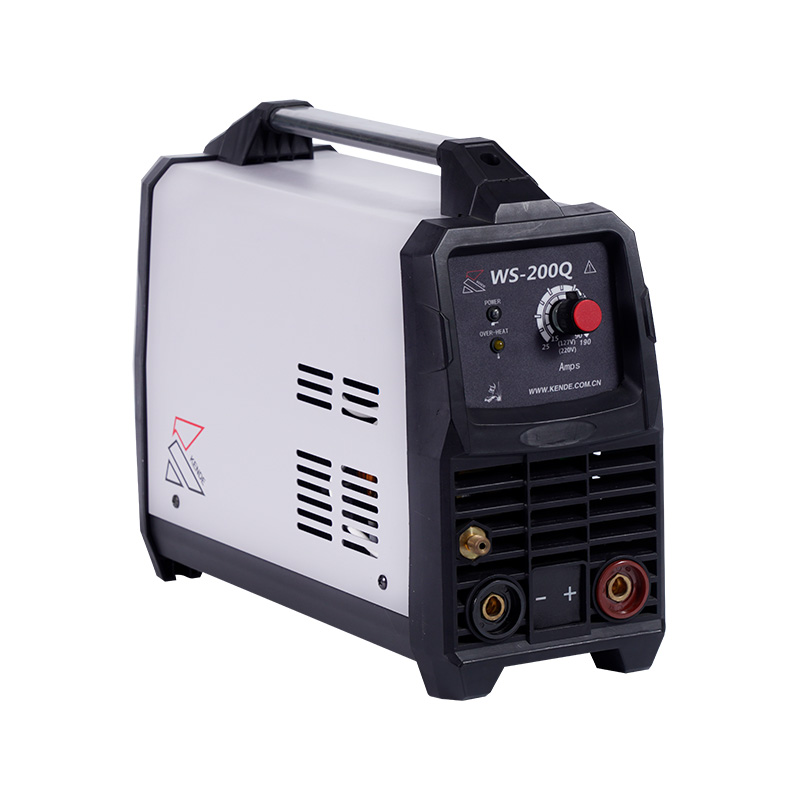
WS-160Q/180Q/200Q IGBT Inverter TIG/MMA Welding machine(TIG DC-LIFT), Metal case with plastic frame Portable DC Single Phase 110/220V 160A
The most important functional advantage of the WS-Q series is its ability to perform both TIG and MMA welding. A dedicated TIG machine may provide excellent arc control but can be less convenient for field repair when gas equipment is not available. A conventional stick welder may be highly practical but may not deliver the same level of control and appearance required for many TIG applications. A dual-process inverter combines these capabilities in one portable platform.
TIG welding uses a non-consumable tungsten electrode and an inert shielding gas, typically argon, to protect the weld area from atmospheric contamination. The process gives the operator precise control over the arc and filler material. It is commonly selected where a clean weld profile, controlled heat input, and careful appearance are important.
The WS-Q series supports TIG DC-Lift starting. In this method, the tungsten electrode briefly contacts the workpiece and is then lifted to establish the arc. This approach is practical for applications where high-frequency starting is not required or where electrical interference must be minimized.
The supplied product information also identifies high-frequency arc starting as a feature for ultimate arc quality. Configuration details may vary by production version or market specification, so buyers should confirm the exact starting method included with the ordered model. In either case, the inverter control system is intended to provide a stable and responsive welding arc.
TIG DC welding is particularly appropriate for carbon steel, alloy steel, stainless steel, and other electrically conductive metals compatible with direct-current welding. It can be used for fabrication, repair, thin and medium-gauge components, pipe-related work, brackets, frames, and precision joining tasks.
MMA welding uses a flux-coated consumable electrode. As the electrode melts, its coating generates shielding gas and slag to protect the weld pool. This makes the process highly versatile for outdoor work, maintenance, construction, and repair applications.
Because MMA welding does not require a separate shielding-gas cylinder, it is often more convenient in windy environments or remote locations. The operator can use suitable electrodes for carbon steel, stainless steel, cast iron, and other materials, provided that the electrode type and welding parameters match the application.
The machine includes practical stick-welding assistance functions such as anti-stick, hot start, and arc force. These functions are valuable for both new and experienced operators. Hot start can provide additional current when the arc is initiated, helping reduce difficult starts. Arc force can help maintain arc stability when the arc length changes or when the electrode approaches the workpiece. Anti-stick helps reduce the tendency of the electrode to remain fused to the workpiece.
The combination of TIG DC-Lift and MMA makes the machine more adaptable than a single-purpose power source. A fabricator may use TIG for a controlled root or visible finish and then switch to MMA for repair work or thicker sections. A maintenance technician may use MMA in the field and TIG for smaller, cleaner components in the workshop.
The welding machine uses powerful insulated-gate bipolar transistors, commonly called IGBTs, together with advanced inverter control technology. Inverter welding machines convert incoming electrical power at high frequency, allowing the power source to be made smaller and lighter than traditional low-frequency transformer equipment.
High-frequency switching also permits more responsive regulation of the welding current. The supplied information states that the machine uses pulse-width modulation control and constant-current output control. These technologies allow the welding current to be adjusted continuously across a broad range and help maintain a consistent output as working conditions change.
For the operator, the practical result is a welding arc that can respond quickly to changes in electrode distance, material conditions, and welding technique. A stable current supply can make it easier to maintain a consistent weld pool, especially during TIG welding where arc behavior has a direct effect on bead appearance.
Inverter technology also supports improved energy efficiency. The listed efficiency for the three models is 85 percent, with a power factor of 0.9. The product information indicates that power consumption may be reduced by up to 30 percent compared with less efficient conventional designs, depending on operating conditions and the equipment used for comparison.
Reduced energy consumption can provide several benefits. It can lower operating costs, reduce the load on site electrical systems, and make the machine more practical for portable generators or temporary work areas when the available power supply is suitable. Energy efficiency also reduces heat generated within the power source, which can contribute to more manageable thermal performance.
Constant-current control is important for both TIG and MMA welding. During manual welding, the distance between the electrode and workpiece naturally changes. Without appropriate regulation, these changes could produce unstable current and inconsistent penetration.
The constant-current design helps keep the selected welding current within a controlled operating range. The operator can select a current appropriate for the electrode diameter, material thickness, joint configuration, and welding position. This provides a more predictable foundation for producing repeatable welds.
The welding machine includes automatic protection functions for over-current and over-temperature conditions. These protections are intended to help prevent damage when the unit is operated beyond appropriate limits or when ventilation and ambient conditions cause internal temperatures to rise.
Protection functions do not replace correct operation. The machine should still be used within its rated duty cycle, connected to a suitable power supply, and positioned so that ventilation openings remain unobstructed. However, automatic protection adds an important layer of safety for professional and general-purpose users.
The product information also identifies moisture resistance, anti-corrosion design, anti-vibration characteristics, and resistance to conductive dust. These characteristics are valuable in workshops, service environments, construction areas, and other locations where equipment may encounter dust, vibration, humidity, or challenging storage conditions.
The following table summarizes the principal technical data supplied for the WS-160Q, WS-180Q, and WS-200Q models. Buyers should verify the final nameplate data and regional electrical configuration before placing an order, because specifications may be adjusted for different markets or production versions.
| Specification | WS-160Q | WS-180Q | WS-200Q |
|---|---|---|---|
| Rated supply voltage | Single-phase 110/240 V | Single-phase 110/240 V | Single-phase 110/240 V |
| Supply frequency | 50/60 Hz | 50/60 Hz | 50/60 Hz |
| Rated input capacity | 5 kVA | 6 kVA | 7 kVA |
| Rated supply current | 32 A | 37.6 A | 40 A |
| No-load voltage | 56 V | 56 V | 56 V |
| Welding current range | 20–160 A | 20–180 A | 20–190 A |
| Rated welding voltage | 26.4 V | 27.2 V | 27.6 V |
| Rated duty cycle | 25% | 20% | 15% |
| Usable electrode diameter | 1.6–4.0 mm | 1.6–5.0 mm | 1.6–5.0 mm |
| Efficiency | 85% | 85% | 85% |
| Power factor | 0.9 | 0.9 | 0.9 |
| Protection degree | IP21S | IP21S | IP21S |
| Insulation class | H | H | H |
| Net weight | 5.6 kg | 5.7 kg | 5.7 kg |
| Machine dimensions | 375 × 150 × 285 mm | 375 × 150 × 285 mm | 375 × 150 × 285 mm |
The three models are based on the same general design but provide different output levels and duty-cycle ratings. The appropriate model depends on the expected workload, electrode size, material thickness, electrical supply, and required portability.
The WS-160Q is the lightest model and provides a welding current range up to 160 amperes. It is a practical choice for maintenance, household fabrication, light workshop applications, small structural components, stainless-steel repair, and general service work.
Its listed 25 percent duty cycle is higher than the ratings shown for the WS-180Q and WS-200Q. This does not mean it is designed for unlimited continuous welding, but it may be advantageous for applications involving repeated short welds and intermittent work.
The WS-180Q extends the output capability to 180 amperes and supports electrodes up to 5.0 millimeters according to the supplied data. It may be appropriate for users who need additional current capacity for thicker material or larger electrodes while retaining the portability of the product family.
Its rated input capacity is 6 kVA, and its listed duty cycle is 20 percent. Operators should follow the prescribed work-rest cycle, particularly when welding at high current or in warm environments.
The WS-200Q is the highest-capacity model in the series, with a listed welding current range of 20 to 190 amperes. It offers an input capacity of 7 kVA and supports electrodes from 1.6 to 5.0 millimeters.
This model is suitable for users who want the greatest output available within the series while maintaining the same compact enclosure. Its rated duty cycle is listed as 15 percent, so it should be selected when higher peak output is more important than extended continuous operation.
When comparing the models, users should avoid selecting solely by maximum amperage. A complete assessment should include duty cycle, electrode diameter, expected weld length, supply capacity, ambient temperature, and the type of work performed. A lower-output model may be more appropriate for intermittent repair, while a higher-output model may offer greater flexibility for larger electrodes and thicker components.
The WS-Q series provides several advantages over older, heavier welding machines and over single-process equipment. These advantages are especially relevant to users who value mobility, energy efficiency, process flexibility, and simplified operation.
Traditional transformer-based welding machines often require large steel housings, heavy copper windings, and substantial magnetic components. By using high-frequency IGBT inverter technology, the WS-Q series can deliver useful welding output in a housing weighing approximately 5.6 to 5.7 kilograms.
Reduced weight lowers transportation effort and makes the machine easier to use at different points of a workshop or construction site. It can also reduce shipping costs, storage requirements, and the physical strain associated with moving equipment.
A single TIG-only or MMA-only machine may force users to purchase multiple power sources. The WS-Q series combines two common welding processes in one unit, allowing the same equipment to be used for precision welding and general repair work.
This is particularly valuable for small businesses, mobile technicians, vocational training centers, maintenance departments, and workshops that need broad capability but have limited equipment space.
The listed 85 percent efficiency and 0.9 power factor indicate an efficient electrical design. Although real-world consumption depends on load, welding current, cable condition, and duty cycle, the inverter platform is intended to use electrical energy more effectively than many conventional designs.
Efficient operation can support lower running costs over the service life of the machine. It may also be useful in areas where power availability is limited, provided that the generator or electrical circuit is correctly sized for the selected model.
Inverter control allows the welding current to react quickly to changes during operation. Together with hot start, arc force, and anti-stick functions, this supports smoother electrode starts and more stable MMA welding.
For TIG work, controlled current adjustment and a stable arc can help the operator manage heat input and produce a cleaner weld profile. The machine is therefore suitable for users who need both practical repair performance and improved control over the welding process.
The product is designed with an uncomplicated interface. The supplied description emphasizes that the operator can set the welding current and begin welding with minimal adjustment. This simplicity reduces setup time and can make the machine easier to use for operators with different levels of experience.
Simple controls are also useful in field environments. A technician may need to change from MMA to TIG, adjust current, and begin work without navigating a complex menu system. The result is a more direct relationship between the selected process and the welding task.
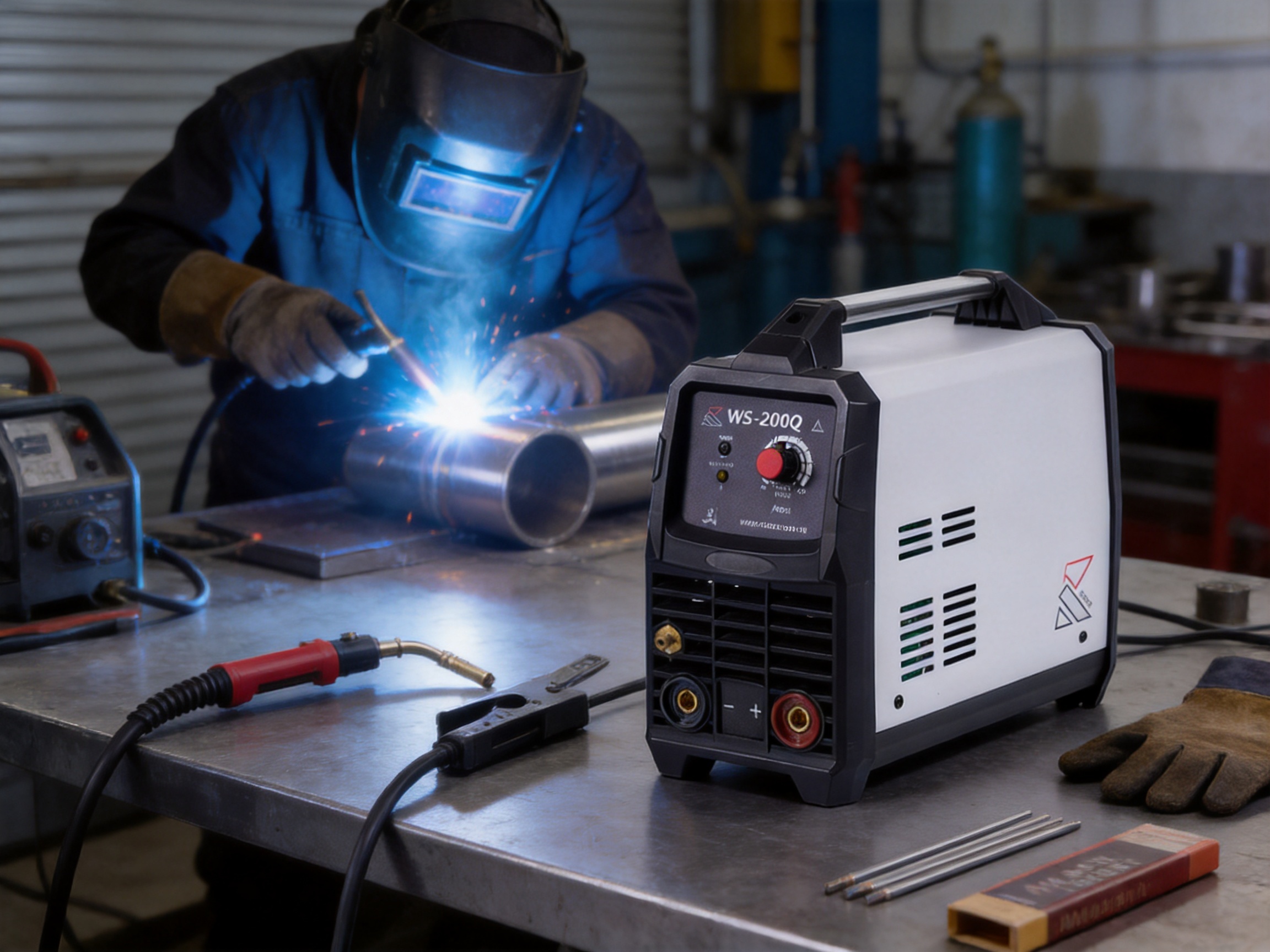
The WS-Q series can be used in many environments where DC welding and portability are important. Its exact application should always be evaluated against the material, thickness, electrode type, welding position, ventilation, and applicable safety requirements.
Small and medium workshops can use the machine for frames, brackets, supports, gates, handrails, equipment stands, and general metal assemblies. MMA is useful for robust fabrication and repair, while TIG can be selected when a more controlled appearance is required.
Maintenance teams often work on a variety of components rather than a single standardized product. The dual-process capability enables them to handle routine repairs, cracked brackets, worn edges, stainless-steel parts, and small precision components using one portable power source.
The MMA function is practical for construction and installation work because it does not depend on an external shielding-gas cylinder. The machine can be transported to a work area and used with suitable electrodes for structural and repair tasks.
Equipment repair operations may involve thin sections, brackets, frames, and parts requiring careful heat management. TIG DC welding can be useful for suitable steel and stainless-steel components, while MMA can provide a fast solution for heavier repairs and outdoor maintenance.
Training institutions can use a dual-process unit to introduce students to both TIG and MMA principles. The simple control arrangement helps learners focus on electrode handling, arc length, travel speed, joint preparation, and welding safety rather than becoming distracted by complicated machine settings.
The supplied information states that the machine can weld various metals, including carbon steel, alloy steel, cast iron, and stainless steel. Material compatibility also depends on correct electrode selection, polarity, joint preparation, shielding gas for TIG, and the operator’s technique.
Carbon steel is commonly welded with either suitable MMA electrodes or TIG filler rods. Alloy steel may require attention to preheating, interpass temperature, and post-weld requirements. Stainless steel benefits from clean preparation and proper shielding to reduce oxidation and contamination.
Cast iron welding requires special care because of its carbon content, brittleness, and sensitivity to thermal stress. Appropriate electrodes, controlled heat input, gradual cooling, and sound repair procedures are important. The machine provides the electrical power source, but the welding procedure must be selected for the specific grade and condition of the casting.
For TIG welding, the use of clean tungsten, suitable filler material, adequate argon flow, and proper torch technique is essential. Contamination of the tungsten or weld pool may cause porosity, discoloration, unstable arc behavior, or reduced weld quality.
Duty cycle is one of the most important specifications when selecting a welding machine. It indicates the proportion of a defined operating period during which the machine can weld at a specified output before it requires cooling time. The WS-160Q, WS-180Q, and WS-200Q have listed duty-cycle ratings of 25 percent, 20 percent, and 15 percent respectively.
Users should interpret these figures together with the manufacturer’s rating conditions. Welding at a lower current may permit longer operation than welding at the maximum output. High ambient temperatures, blocked ventilation, long cables, poor electrical connections, and excessive dust can increase thermal stress.
The internal over-temperature protection helps protect the machine if operating conditions become excessive. If protection activates, the operator should stop welding, leave the machine switched on if the operating instructions permit cooling-fan operation, and wait until the unit returns to a normal temperature.
Good operating practice includes keeping the ventilation openings clean, placing the machine on a stable dry surface, protecting it from rain and direct water exposure, and using properly rated cables and connectors. The work clamp should make a clean electrical connection to the workpiece, and cable lengths should be appropriate for the application.
The manufacturer behind the product has substantial experience in the design and production of electrical welding equipment. Zhejiang Kende Mechanical & Electrical Co., Ltd. operates from Taizhou, Zhejiang Province, China, with a reported site area of approximately 120,000 square meters and a workforce of about 600 employees.
The company reports an annual production capacity of approximately 2 million units and annual exports of nearly 1.5 million units. This scale indicates experience in production planning, component sourcing, assembly control, quality inspection, packaging, logistics, and international customer support.
Large-scale production can benefit product consistency when supported by appropriate process controls. Repeated manufacturing of the same inverter platform allows engineers and production teams to refine component placement, thermal management, electrical safety, enclosure construction, and inspection procedures.
The company maintains a Zhejiang Provincial Research and Development Center, an Enterprise Technology Center, and an Intelligent Welding Technology Research Institute. It reports a research and development team of 98 personnel, supporting continued development of welding machines, chargers, heaters, and related products.
The company also reports holding invention patents, utility model patents, appearance patents, and software copyrights. These intellectual property assets reflect investment in electrical design, mechanical construction, control systems, product appearance, and manufacturing improvements.
Research and development capabilities are particularly important for inverter welding machines because performance depends on the interaction of power semiconductors, control software, switching circuits, thermal systems, current sensors, protection circuits, and user controls. A well-coordinated development process can improve arc stability, efficiency, safety, and product serviceability.
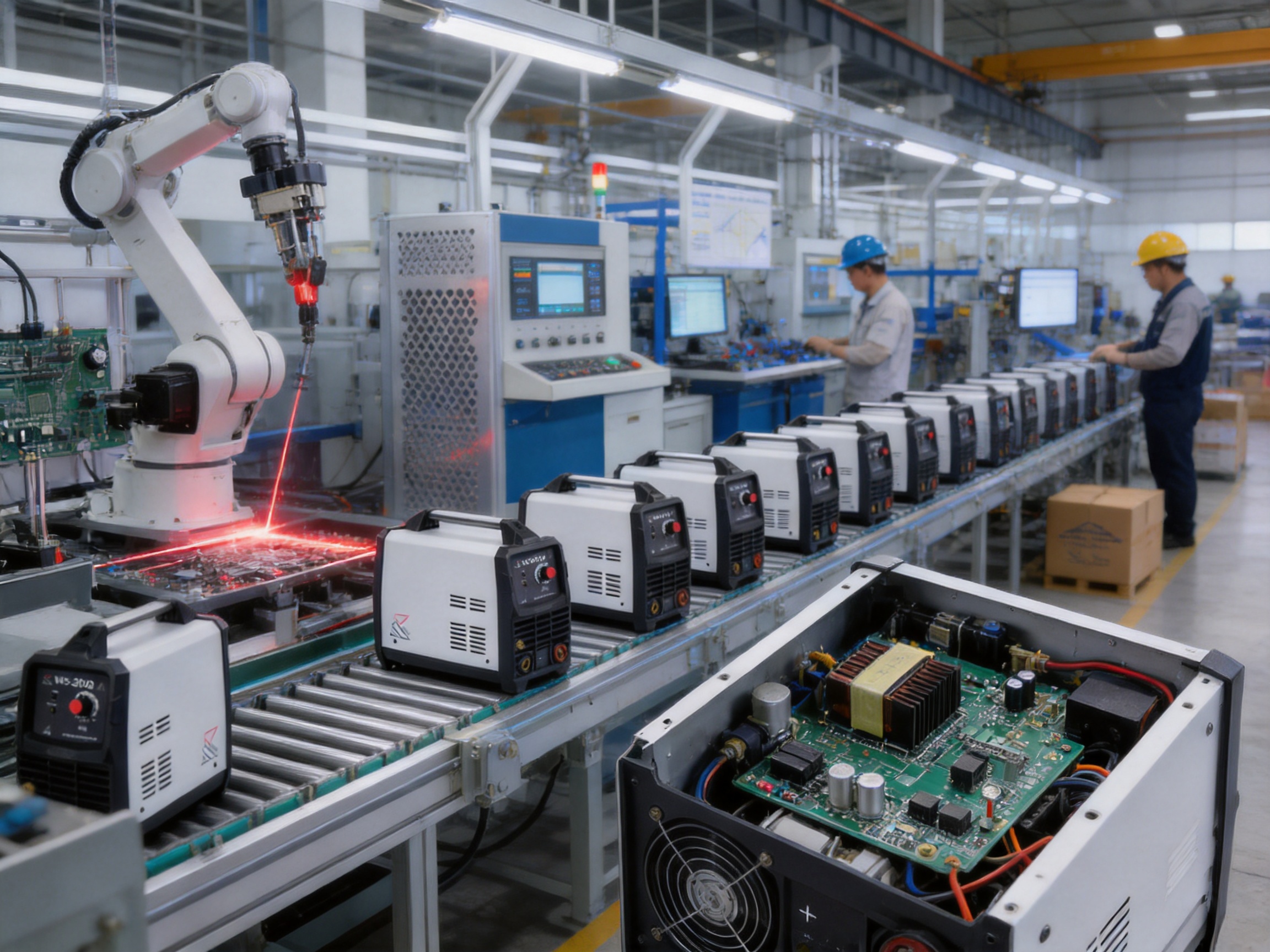
The manufacturer uses automated patching, plug-in and welding systems, robotic processing, laser cutting, and other advanced production technologies. Automated component placement can improve repeatability in circuit-board assembly, while controlled soldering and inspection processes help reduce variation between units.
Robot processing and laser cutting can contribute to accurate metal fabrication and consistent enclosure dimensions. Consistent mechanical dimensions are important for fit, ventilation, cable access, assembly quality, and the protection of internal components.
The company also applies several management and manufacturing systems, including office automation, Toyota Production System methods, ERP K3, and MES management. These systems can help coordinate materials, production orders, inventory, process tracking, quality records, and delivery schedules.
Manufacturing software is valuable when it is connected to real production discipline. Traceable production information can support corrective action, supplier management, inventory control, and continuous improvement. It can also help a manufacturer respond more efficiently to different regional requirements and customer orders.
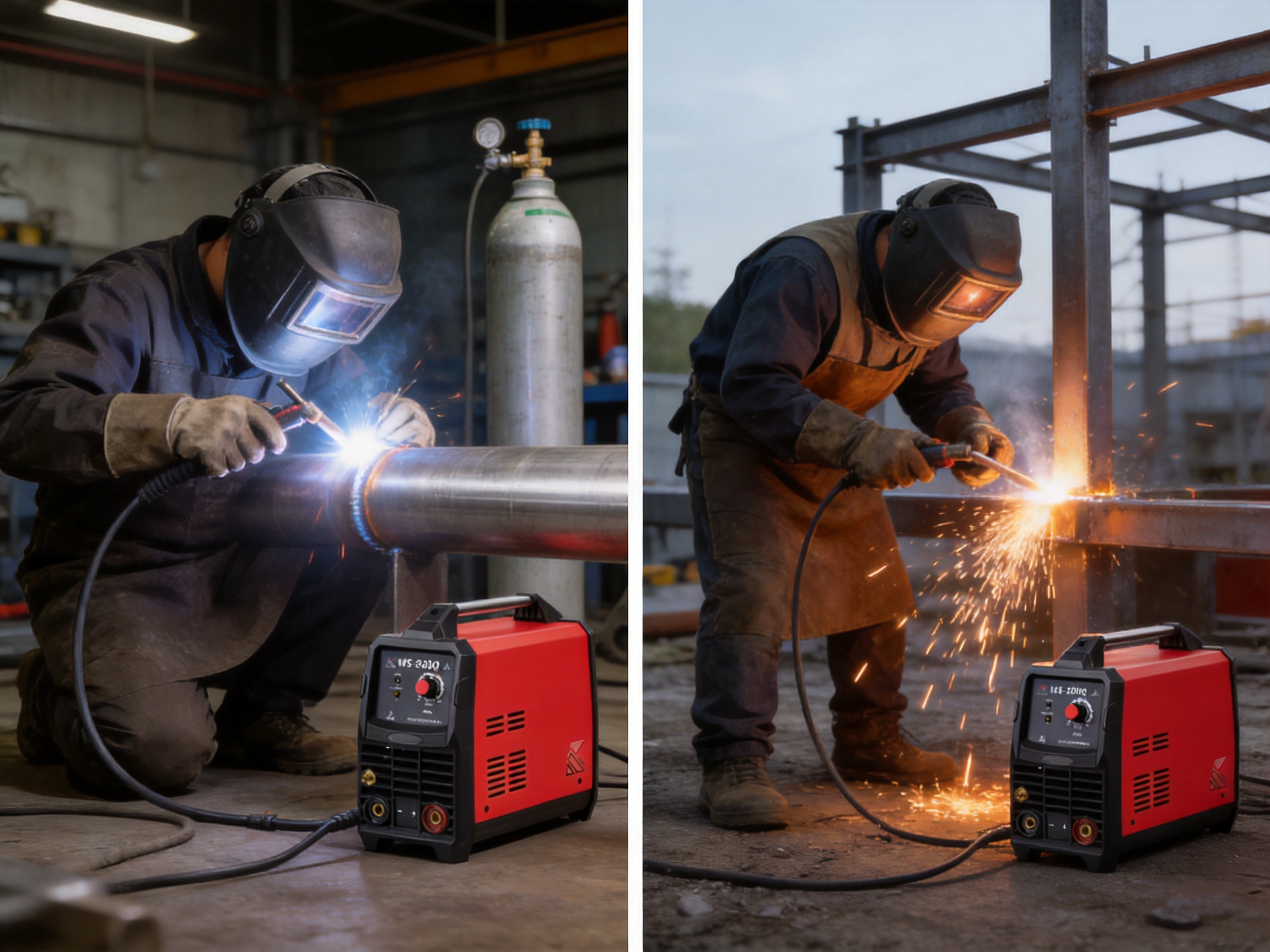
The manufacturer reports a broad portfolio of international and domestic product certifications, including GS, CE, EMC, ERP, United States ETL, United Kingdom UKCA, and China CCC certifications. Certification requirements differ by product, market, and model, so buyers should request the specific documentation applicable to the exact machine configuration being purchased.
CE-related requirements may involve electrical safety and electromagnetic compatibility for applicable markets. EMC performance is important because welding machines use high-current switching electronics that must be designed to manage electromagnetic emissions and immunity. ETL and UKCA markings may support distribution in additional markets when the relevant product has been evaluated under the applicable requirements.
Certifications do not eliminate the need for safe installation and operation. Users must still follow local electrical codes, use suitable protective equipment, provide appropriate ventilation, and ensure that the machine is connected to a compatible power supply.
The company’s export experience is also relevant to distributors and importers. International supply requires attention to packaging, product labeling, manuals, spare parts, documentation, regional plugs, voltage configurations, and shipping requirements. A manufacturer experienced in international business is generally better positioned to support these practical needs.
Welding involves electric shock, ultraviolet radiation, hot metal, sparks, fumes, compressed gas, and fire hazards. Operators should wear a correctly rated welding helmet, flame-resistant clothing, welding gloves, safety footwear, and suitable eye and face protection.
Work areas should be kept free of flammable materials. Sparks and hot slag can travel considerable distances, so nearby surfaces, containers, insulation, dust, and solvents must be evaluated before work begins. Fire extinguishing equipment should be available where required.
When TIG welding, shielding-gas cylinders must be secured upright and handled according to applicable gas-safety procedures. Regulators, hoses, fittings, and flow rates should be checked before use. The work area must have adequate ventilation to control welding fumes and prevent the accumulation of shielding gas.
The IP21S protection classification indicates that the machine is designed for specified protection conditions but is not a waterproof outdoor power source. It should be protected from rain, spray, flooding, and direct moisture. The machine should not be operated in wet conditions unless the installation and safety procedures specifically permit it.
Before maintenance, inspection, or internal service, the power supply must be disconnected and the appropriate waiting period observed. Only qualified personnel should open the enclosure or work on internal electrical components. Even after disconnection, capacitors and other components may retain hazardous energy.
Before operation, inspect the machine, power cable, welding leads, electrode holder, work clamp, TIG torch, gas hose, and connectors. Damaged insulation, loose terminals, cracked fittings, or overheated cables should be corrected before welding begins.
Place the machine on a dry, stable surface with sufficient clearance around the ventilation openings. Avoid placing tools, cloth, welding rods, or other objects on top of the enclosure. Keep the air path clear so that the cooling system can function properly.
Connect the machine to a suitable electrical circuit. The rated supply current listed for the models ranges from 32 to 40 amperes, so the installation must be evaluated by a qualified person and protected with the appropriate circuit equipment. Regional voltage and plug requirements should be confirmed before shipment and commissioning.
For MMA welding, select the electrode type and polarity recommended by the electrode manufacturer. Set the current within the suitable range for the electrode diameter and material. Attach the work clamp to clean metal and ensure that the return path is secure.
For TIG welding, connect the torch, work lead, argon supply, and any required control connections. Clean the workpiece, prepare the tungsten electrode correctly, and set a suitable gas flow. Use a stable torch angle and maintain an appropriate arc length to support a consistent weld pool.
After welding, allow the machine to cool as necessary. Inspect the weld visually for defects such as cracking, porosity, lack of fusion, excessive spatter, undercut, or irregular bead shape. Machine settings should be adjusted only after the operator has considered material preparation, joint fit-up, shielding, electrode condition, and travel technique.
Regular maintenance helps preserve performance and extend service life. The exterior should be kept clean, and accumulated dust should be removed from ventilation areas using methods that do not drive conductive contamination deeper into the machine.
Welding cables and connectors should be inspected for wear, heat damage, loose connections, and exposed conductors. The electrode holder and work clamp should maintain secure contact. TIG torches should be checked for damaged ceramic cups, worn collets, contaminated tungsten, and gas leaks.
Cooling fans should operate normally, and unusual noise or vibration should be investigated. If the machine repeatedly activates over-temperature or over-current protection under ordinary conditions, it should be removed from service and inspected by qualified technicians.
The manufacturer’s production capabilities in electrical assembly, robotic processing, laser cutting, and process management can support a structured approach to product service. Distributors should confirm the availability of manuals, replacement consumables, control components, fans, cables, and other service parts for the intended market.
For professional buyers, the value of a welding machine is determined by more than maximum output. Portability, process range, production consistency, certification support, energy efficiency, documentation, and supplier reliability all influence the total ownership experience.
The WS-Q series addresses these requirements with a compact inverter platform, two welding processes, continuous current adjustment, practical arc functions, automatic protection, and a relatively low net weight. The three output versions allow distributors and end users to select a model appropriate for different workloads.
The manufacturer’s scale provides additional advantages for original equipment customers, importers, wholesalers, and regional distributors. A broad product portfolio covering MMA, MIG/MAG, TIG, plasma cutting, battery charging, heating, and other equipment can simplify supplier relationships and product-line expansion.
The company also states that it can develop new products according to the needs of different regions, countries, and customers. This capability may be relevant when buyers require specific voltage configurations, labeling, packaging, accessories, certifications, or market-oriented product variations.
Energy-efficient equipment can reduce the electricity consumed during welding, particularly in applications involving frequent use. The listed efficiency of 85 percent and power factor of 0.9 support the machine’s positioning as an efficient inverter solution.
The small dimensions and low weight can also reduce logistical impact. More units may fit into a shipment or storage area, and individual operators may require less lifting equipment when moving the machine. These benefits can be significant for service companies with multiple mobile teams.
Long-term value also depends on correct use and maintenance. Operating within the rated duty cycle, preventing overheating, protecting the equipment from moisture, and using suitable cables can reduce avoidable failures. Proper welding procedures also reduce rework, electrode waste, and material loss.
The WS-160Q, WS-180Q, and WS-200Q support TIG direct-current welding and MMA or stick welding. TIG is intended for controlled welding with a tungsten electrode and shielding gas, while MMA uses flux-coated consumable electrodes.
The simple interface and practical assistance functions make the machine accessible to beginners, although users should receive proper welding and safety training. Hot start, arc force, and anti-stick functions can help with MMA operation, but they cannot replace correct electrode handling and welding technique.
TIG DC-Lift starting establishes the arc by touching the tungsten electrode to the workpiece and lifting it away. It is a practical starting method for many DC TIG applications. The supplied product information also mentions high-frequency starting, so the exact starting configuration should be confirmed for the ordered version.
Yes. The supplied information identifies stainless steel among the metals that can be welded. The operator must use suitable TIG filler material or MMA electrodes, clean the joint thoroughly, select appropriate polarity and current, and provide adequate shielding for TIG operation.
The product information states that the machine can weld cast iron. Cast iron repair requires careful material identification, electrode selection, heat management, joint preparation, and cooling procedures. The power source alone does not guarantee a successful cast-iron repair.
The WS-180Q and WS-200Q provide higher maximum output than the WS-160Q and support electrodes up to 5.0 millimeters according to the supplied data. However, selection should also consider duty cycle, weld length, material type, joint design, and the required electrical supply.
Yes, the supplied specifications list approximately the same machine dimensions for all three models: 375 millimeters long, 150 millimeters wide, and 285 millimeters high. Their net weights are also similar, ranging from approximately 5.6 to 5.7 kilograms.
IP21S is not a waterproof rating. The machine should be protected from rain, direct water, flooding, and excessive moisture. Outdoor welding should take place in a properly protected and safe environment with suitable electrical and ventilation arrangements.
Inverter technology allows the machine to be compact and lightweight while providing responsive current control. It also supports efficient power conversion, adjustable welding output, and useful arc-control functions compared with many traditional transformer-based designs.
Shielding gas is required for TIG welding, normally argon or another gas specified by the welding procedure. MMA welding does not require an external shielding-gas cylinder because the electrode coating provides shielding as it burns.
Buyers should confirm the exact model, supply voltage, plug type, starting method, duty-cycle test conditions, included accessories, certification documents, language of manuals, warranty terms, packaging, and availability of service parts. These details may vary by market or customer order.
The WS-160Q, WS-180Q, and WS-200Q form a practical family of portable IGBT inverter welding machines for users who need both TIG DC and MMA capability. Their compact metal-and-plastic construction, low weight, continuous current adjustment, constant-current control, and protection functions make them suitable for workshops, maintenance teams, construction work, repair operations, and general fabrication.
The product’s principal advantage over single-process or traditional heavy equipment is versatility in a portable format. TIG provides controlled DC welding for suitable metals and applications, while MMA offers a convenient solution for outdoor and general-purpose work. Hot start, arc force, and anti-stick functions further improve the practical experience of stick welding.
The manufacturer strengthens this product offering through large-scale production, advanced research facilities, automated assembly, robotic processing, laser cutting, digital manufacturing systems, export experience, and a broad certification portfolio. These capabilities support consistent product development and provide a foundation for serving distributors, industrial users, and customers with regional requirements.
When the correct model is selected and operated within its rated limits, the WS-Q series can provide an efficient and adaptable welding solution for a wide variety of professional and domestic applications.
1. Product technical specifications for the WS-160Q, WS-180Q, and WS-200Q IGBT inverter TIG/MMA welding machine series.
2. Product information regarding inverter control, PWM technology, constant-current output, hot start, arc force, anti-stick, and automatic protection functions.
3. Manufacturer information concerning production capacity, research and development facilities, manufacturing systems, certifications, and export experience.
4. General principles of gas tungsten arc welding and shielded metal arc welding practice.
5. General guidance for welding-machine electrical safety, duty-cycle operation, ventilation, protective equipment, and maintenance.
Recommended Products

Contact Us
No.2299, Luqiao Section, Shugang Avenue, Luqiao District, Taizhou, 318057 Zhejiang, PR China.
+86-576-82431568
 Privacy
China Welding Machine Factory
 English
 中文简体
 русский
 Español
 عربى
 Français
 Português
 Deutsch
 Український