Email: [email protected]
Email: [email protected]

Blog
 2026.08.23
 Blog
Welding quality depends on much more than the power source alone. Even the most advanced welding machine cannot deliver stable, safe, and repeatable results if its torch components, cables, connectors, holders, clamps, consumable supports, cooling elements, or other operating parts are unsuitable, worn, or incorrectly matched. Welding accessories and replacement parts form the practical connection between the welding machine, the operator, and the workpiece. They influence current transfer, shielding protection, arc stability, operator comfort, work efficiency, and the service life of the entire welding system.
The Parts product category is designed to support a broad range of welding applications, including manual metal arc welding, MIG/MAG welding, TIG welding, plasma cutting, resistance spot welding, submerged arc welding, and related industrial processes. It is suitable for equipment used in workshops, construction, fabrication, repair, agricultural machinery, automotive production, maintenance departments, and general metalworking environments.
High-quality accessories provide a practical way to maintain equipment and improve productivity without replacing an entire welding machine. A properly selected replacement part can restore electrical continuity, reduce unnecessary downtime, improve handling, and help operators achieve consistent welds. For distributors, service centers, original equipment manufacturers, and professional users, a complete accessories portfolio also simplifies procurement and makes it easier to support different machine types and welding processes.
Zhejiang Kende Mechanical & Electrical Co., Ltd. manufactures welding machines, chargers, heaters, and associated components in China. Its experience across multiple welding technologies gives the Parts category a strong foundation in practical equipment requirements. Rather than treating accessories as isolated items, the company can develop and manufacture them with an understanding of how welding power sources, torches, cables, control systems, and mechanical assemblies work together.

Parts
Welding accessories are the working components that allow a welding machine to perform its intended function. Some accessories conduct welding current, some protect the operator, some direct shielding gas, and others position, support, cool, or control the equipment. Although many of these components are relatively small compared with a complete welding machine, their effect on performance can be substantial.
For example, a damaged electrode holder may create unstable electrical contact and excessive heating. A worn work clamp can increase resistance between the welding circuit and the workpiece. A deformed MIG/MAG nozzle can interfere with shielding gas coverage. A contaminated TIG collet or gas lens can make tungsten positioning less reliable. A cable with damaged insulation can create a serious safety risk. These examples show why accessory quality should be considered part of welding system quality.
The Parts category supports maintenance and operational continuity by providing components that can be selected according to welding process, current rating, machine design, duty cycle, cable arrangement, and working environment. This approach is important for both high-volume industrial users and smaller workshops, where equipment availability directly affects delivery schedules and operating costs.
Accessories also influence ergonomics. Welding operators may use a torch or electrode holder for several hours in one shift. Excessive weight, poor balance, stiff cables, uncomfortable handles, or difficult-to-use controls can cause fatigue and reduce accuracy. A well-designed accessory helps the operator maintain a stable position, keep the correct travel angle, and work more efficiently.
The product range is associated with a comprehensive selection of welding and cutting technologies. This includes MMA or stick welding machines, MIG/MAG or GMAW equipment, TIG or GTAW equipment, plasma cutting systems, submerged arc welding machines, resistance spot welding systems, robotic welding systems, and laser welding equipment. Each process requires different accessory characteristics, and the correct component must always be matched to the application.
Manual metal arc welding uses a consumable electrode held in an electrode holder, with a separate work clamp completing the electrical circuit. Typical supporting parts include electrode holders, welding cables, cable connectors, work clamps, cable lugs, and protective sleeves. The holder must maintain secure electrode contact while allowing the operator to change electrodes quickly. It also needs sufficient insulation to protect the operator from accidental contact with energized conductive parts.
For demanding work, the current rating and duty cycle of the electrode holder and cable are especially important. Undersized components may become hot during prolonged welding and may experience premature deterioration. Properly selected parts help keep voltage drop under control and support a stable arc. Cable flexibility is also important because a stiff cable can pull against the operator’s hand and make electrode positioning more difficult.
MIG and MAG systems use a continuously fed wire electrode and shielding gas. Their accessories commonly include welding torches, contact tips, nozzles, diffusers, liners, swan necks, trigger assemblies, torch handles, Euro-style connectors, wire-feed components, gas hoses, and replacement cable assemblies.
Contact tips are critical because they transfer current to the welding wire while allowing the wire to move through the torch. The internal diameter, material, length, and thread design must be suitable for the wire size and welding current. A tip that is excessively worn can cause inconsistent wire feeding, arc instability, and irregular bead appearance. A nozzle that is obstructed by spatter may restrict shielding gas and contribute to porosity.
Consumable parts are subject to heat, spatter, abrasion, and electrical wear. Reliable manufacturing and dimensional consistency are therefore essential. When nozzle, diffuser, liner, and contact tip dimensions are properly controlled, operators can replace parts quickly and return to production with fewer adjustments.
TIG welding requires precise control of the tungsten electrode and shielding gas. Accessories may include TIG torches, collets, collet bodies, gas lenses, ceramic cups, tungsten holders, back caps, torch switches, cables, and gas hose assemblies. These parts must support accurate tungsten alignment and stable gas coverage around the arc.
Gas lenses can improve the smoothness and direction of shielding gas flow. Ceramic cups must resist thermal shock and maintain their shape during repeated heating and cooling cycles. Collets should grip the tungsten securely without damaging it. The torch handle should provide a comfortable and insulated grip while allowing the operator to control the arc with precision.
In precision fabrication, stainless steel work, aluminum welding, pipe welding, and thin-sheet applications, small changes in shielding performance can affect surface appearance and metallurgical results. For this reason, TIG accessories should be chosen according to current level, torch type, tungsten diameter, gas flow, joint design, and the required level of weld cleanliness.
Plasma cutting systems use an electrically conductive plasma arc to cut metal. Their accessory requirements are different from those of conventional welding equipment. Typical parts include plasma torches, electrodes, nozzles, swirl rings, retaining caps, shields, torch leads, air filters, and related connection components.
The electrode and nozzle operate under severe thermal and electrical conditions. Their condition influences cutting speed, kerf quality, arc starting, and consumable life. A damaged nozzle may produce an uneven cut or excessive bevel. An electrode with deep wear may cause unreliable arc starting. Keeping compatible replacement parts available helps reduce interruptions during fabrication work.
Submerged arc welding is used for high-deposition applications such as structural fabrication, pressure vessels, long seams, and heavy steel components. Supporting parts may include welding heads, wire guides, contact assemblies, flux handling components, cables, clamps, and control connections.
Automated and robotic welding systems also depend on reliable accessory interfaces. Torch mounting assemblies, cable packages, wire-feeding components, sensors, connectors, and protective covers must be designed for repeated movement and industrial duty. In automated production, a small accessory failure can stop an entire cell, making compatibility, durability, and fast replacement particularly important.
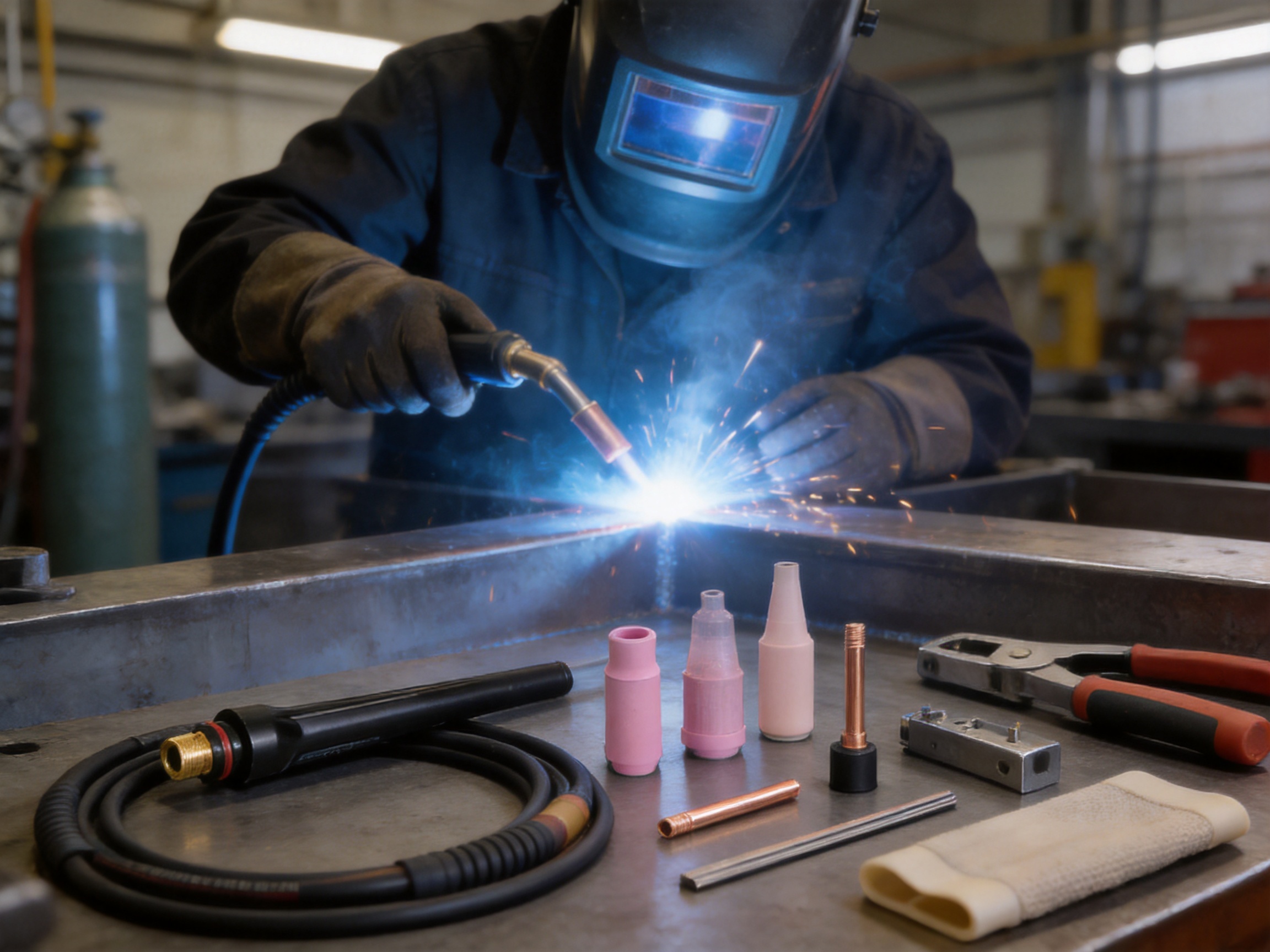
A complete accessory supply strategy offers several advantages over purchasing disconnected components from multiple sources. The first is compatibility. When parts are developed with knowledge of the related welding machines and processes, the risk of mismatch is reduced. Dimensions, connection methods, electrical ratings, insulation structures, and operating characteristics can be considered together.
The second advantage is simplified purchasing. Industrial users and distributors can obtain welding equipment and supporting accessories through a coordinated product source. This can reduce the number of suppliers, simplify stock management, and make technical communication more efficient. A distributor can also offer customers a broader after-sales solution instead of supplying only a welding power source.
The third advantage is easier maintenance. Frequently replaced items such as contact tips, nozzles, liners, electrode holders, work clamps, and cable assemblies can be organized into a planned maintenance program. Regular replacement based on operating condition is generally more efficient than waiting for a failure that interrupts production.
The fourth advantage is greater equipment utilization. A welding machine that remains idle while a small replacement part is sourced creates hidden costs, including labor delays, missed production targets, and possible penalties for late delivery. Maintaining the right accessories on site helps keep the machine available.
| Accessory Function | Typical Application | Main Performance Considerations | Operational Benefit |
|---|---|---|---|
| Electrode holder | MMA and stick welding | Current rating, insulation, grip, electrode retention | Stable arc control and safer manual operation |
| Work clamp | MMA, MIG/MAG, TIG, and general welding | Contact pressure, conductive area, heat resistance | Reliable circuit completion and reduced resistance |
| MIG/MAG contact tip | Gas-shielded wire welding | Internal diameter, material, thread accuracy, wear resistance | Consistent wire transfer and arc stability |
| Gas nozzle | MIG/MAG welding | Shape, insulation, spatter resistance, gas flow | Improved shielding and fewer weld defects |
| TIG collet and gas lens | TIG and GTAW welding | Tungsten grip, gas distribution, dimensional accuracy | Precise arc positioning and clean shielding |
| Plasma electrode and nozzle | Air plasma cutting | Thermal resistance, geometry, electrical compatibility | Reliable arc starting and consistent cutting quality |
| Cable assembly | Multiple welding and cutting processes | Conductor size, insulation, flexibility, connector design | Efficient current transfer and improved mobility |
Accessory performance begins with material selection. Conductive parts must transfer current efficiently while tolerating heat and mechanical contact. Copper and copper alloys are widely used where electrical conductivity and thermal performance are important. Brass and other engineered alloys may be selected for connectors, holders, fittings, and threaded components when strength and dimensional stability are also required.
Insulating parts must withstand heat, electrical stress, impact, and repeated handling. Engineering polymers, high-temperature plastics, ceramics, rubber compounds, and protective sleeves may be used in different applications. The correct material depends on the part’s location, expected temperature, exposure to spatter, mechanical load, and insulation requirements.
Welding cables require a balance between conductivity, flexibility, abrasion resistance, and insulation durability. A cable that is electrically adequate but mechanically stiff may reduce operator comfort. A highly flexible cable with insufficient protection may not withstand a harsh workshop environment. The design must consider bending cycles, contact with sharp edges, oil exposure, heat, ultraviolet radiation, and storage conditions.
Threaded components and precision interfaces require consistent machining and forming. Contact tips, torch connections, collet assemblies, and connectors must be produced within suitable tolerances so that components can be installed securely. Poorly matched threads may lead to looseness, difficult assembly, gas leakage, or premature damage.
Surface treatment can also improve service performance. Plating, polishing, coating, heat treatment, and controlled finishing may be used to improve electrical contact, corrosion resistance, wear resistance, or release of welding spatter. These treatments must be selected carefully because excessive coating thickness or an unsuitable surface can affect fit and conductivity.
The production of welding accessories benefits from a manufacturer that understands complete welding systems. Zhejiang Kende Mechanical & Electrical Co., Ltd. operates a large manufacturing facility in Taizhou, Zhejiang Province, covering approximately 120,000 square meters and employing about 600 people. This scale supports coordinated research, production, quality management, warehousing, and export operations.
The company has an annual production capacity of approximately two million units and exports close to 1.5 million units each year across its product categories. Such production experience supports standardized manufacturing procedures, supplier coordination, production scheduling, and international order management. For customers purchasing accessories in commercial quantities, stable capacity is an important advantage.
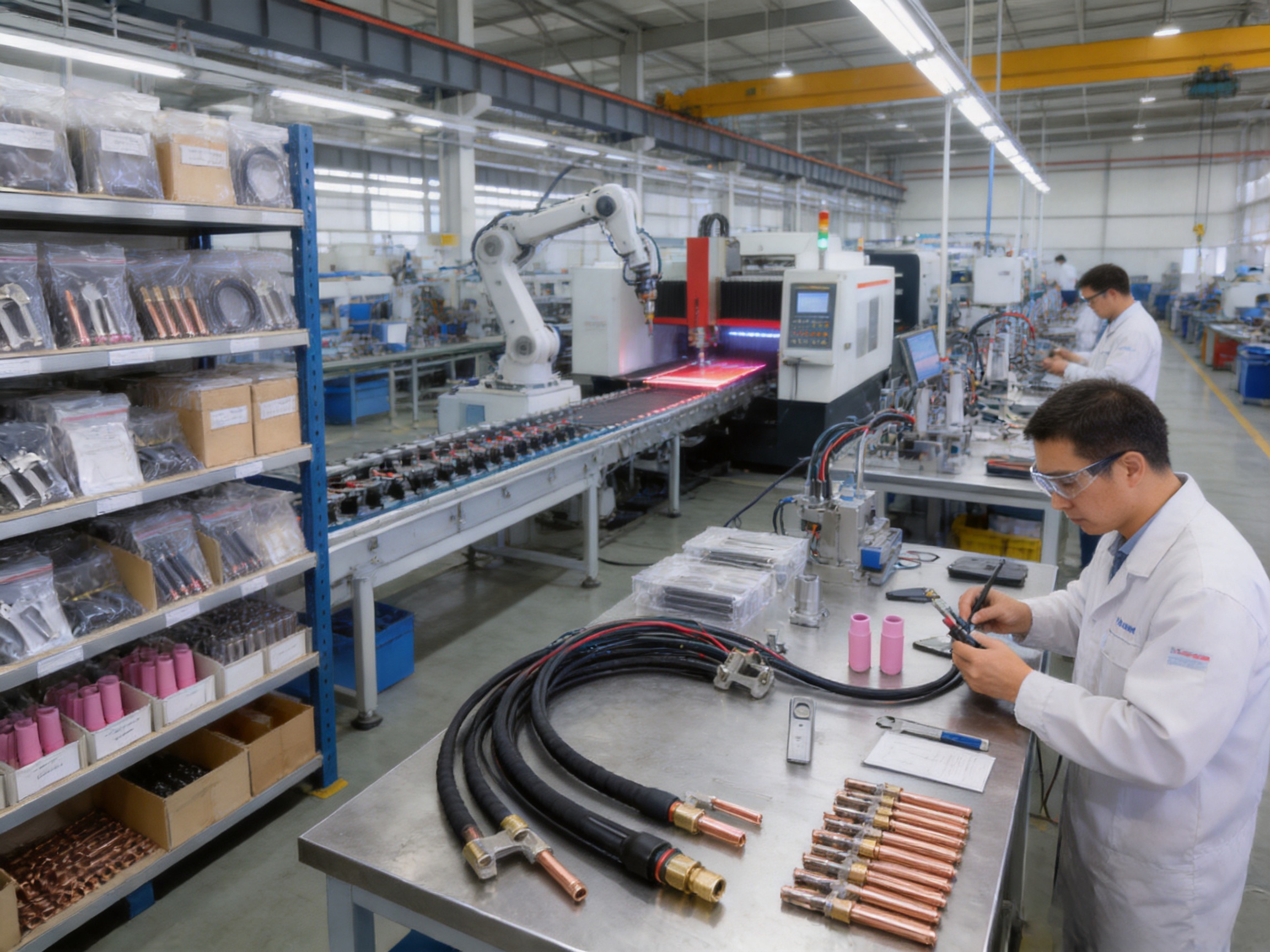
The company’s manufacturing systems include automatic patching, plug-in and welding equipment, robotic processing, laser cutting, and other advanced production technologies. These technologies are relevant to accessories because many parts require repeatable assembly, accurate cutting, reliable soldering or welding, and consistent mechanical dimensions.
Automated production can reduce variation between batches when the process is correctly programmed and monitored. It also improves repeatability in operations such as circuit assembly, cable preparation, connector installation, and component placement. Robotic processing can support consistent movement and pressure during repetitive manufacturing tasks, while laser cutting can produce clean, accurate profiles for selected sheet-metal components.
Modern production is supported by management and information systems, including office automation, Toyota-style production management, ERP K3, and MES systems. These systems can assist with production planning, material control, process tracking, inventory coordination, and manufacturing data management. A well-organized production information flow is especially valuable when a product portfolio includes many models, specifications, and accessory configurations.
Welding accessories are not static products. Welding machines continue to evolve toward higher efficiency, improved portability, digital control, automation, and more specialized applications. Accessories must evolve with them. Torch interfaces, cable arrangements, cooling structures, connectors, control components, and protective designs may need to be adapted for new machine platforms.
Kende maintains a Zhejiang Provincial Research and Development Center, an Enterprise Technology Center, and an Intelligent Welding Technology Research Institute. The company has approximately 98 research and development personnel. These resources support product improvement, process development, testing, and the creation of new solutions for different markets.
The company has obtained invention patents, utility model patents, appearance patents, and software copyrights. Its reported patent portfolio includes nearly 200 patents. Intellectual property is valuable in accessory manufacturing because it reflects investment in new structures, improved usability, production methods, and product integration. It may also support customized development for customers with specific technical requirements.
Because the company manufactures welding machines as well as accessories, its engineers can evaluate a component in relation to the complete system. This can help address practical questions such as how a connector behaves under load, how a cable package moves during operation, how a torch is balanced, or how a replacement part interacts with a machine’s control and cooling architecture.
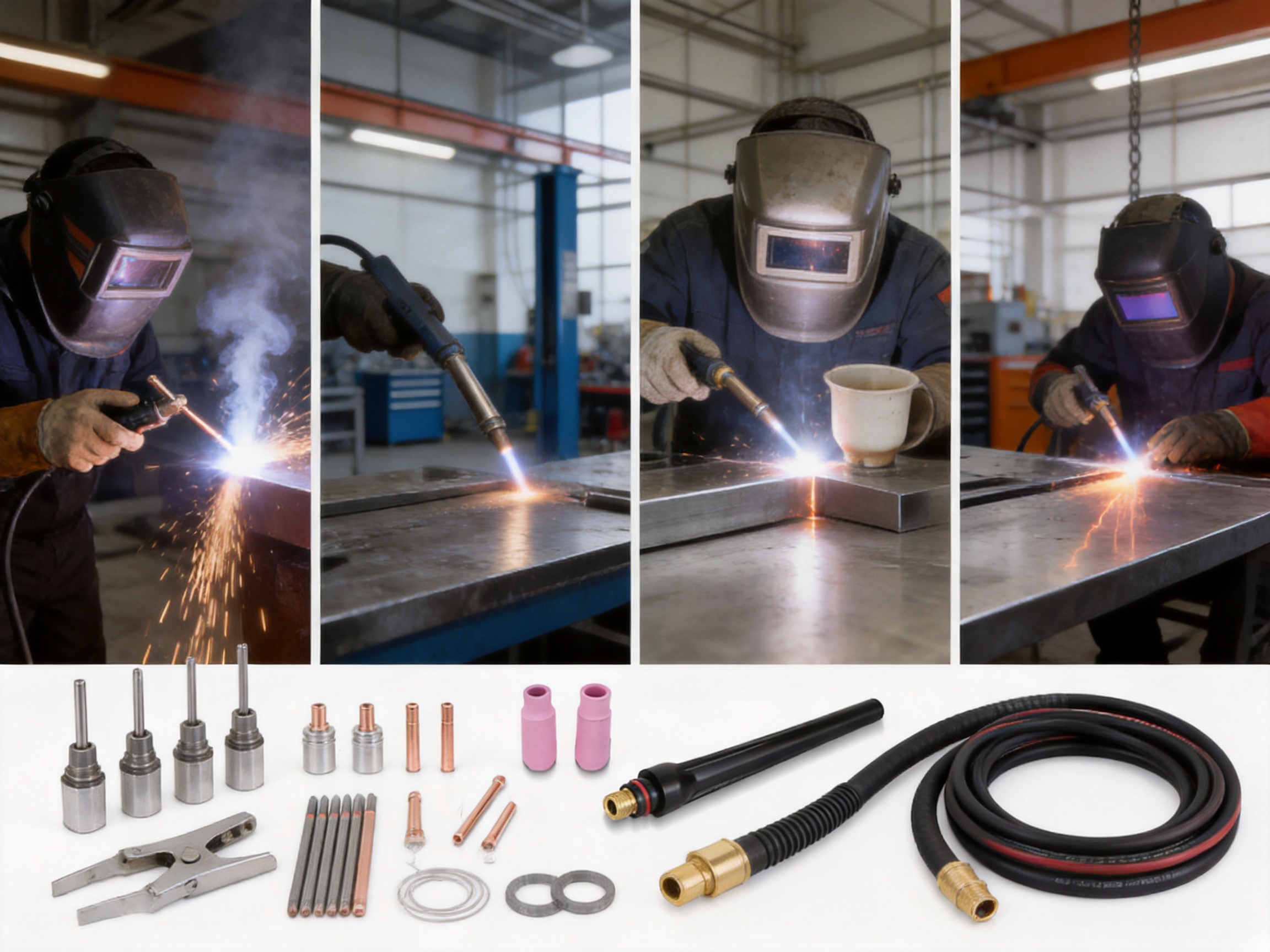
Welding accessories operate in environments involving electrical current, heat, mechanical movement, compressed gas, and metal spatter. Quality control must therefore cover more than appearance. Depending on the component, relevant checks may include dimensions, material condition, insulation, electrical continuity, connection security, gas passage, mechanical strength, temperature resistance, and functional performance.
Incoming material control is the first stage. Conductive materials, insulating materials, cable components, fasteners, and electronic parts should be verified according to purchasing and engineering requirements. Consistent incoming materials make it easier to maintain stable production results.
Process inspection is also important. Operations such as cutting, stamping, molding, machining, assembly, cable crimping, soldering, and welding should be controlled at defined points. Operators and inspectors can use drawings, work instructions, gauges, electrical testers, and functional fixtures to identify deviations before the finished product is packed.
Final inspection may include visual examination, dimensional checks, continuity tests, insulation tests, mechanical checks, and sample-based performance verification. For assembled accessories, the inspection method should reflect the way the part will be used. A cable assembly, for example, should not be evaluated only by appearance; its connector attachment, conductor continuity, insulation condition, and strain relief are also important.
Kende holds or supports products with international certifications and compliance marks including GS, CE, EMC, ERP, US ETL, UKCA, and China CCC. The exact certification applicable to a particular accessory depends on its design, market, electrical characteristics, and intended use. Customers should confirm the certification requirements for their destination market and product configuration before placing an order.
The company is also identified as one of the national standard drafting units associated with China’s National Welding Machine Standardization Committee. It has participated in the drafting, formulation, and revision of 20 national standards and has led the drafting of one group standard. This involvement provides experience with technical requirements, terminology, safety considerations, and industry development.
The apparent purchase price of an accessory does not represent its complete cost. A low-quality part may be cheaper initially but may cause more frequent replacement, production stoppages, poor weld quality, or damage to connected equipment. In contrast, a properly engineered part can offer better total value through longer service intervals and more predictable performance.
Dimensional consistency is one major difference. When a contact tip, nozzle, connector, or collet is manufactured accurately, it can be installed without excessive force or unwanted looseness. This supports faster maintenance and reduces the risk of damaging mating components.
Electrical performance is another difference. Conductive parts with suitable material and contact surfaces can reduce unnecessary resistance and heat generation. Stable current transfer contributes to more consistent arc behavior. This is particularly important in high-current applications and in equipment used for long operating cycles.
Mechanical durability is equally important. Handles, holders, clamps, cable assemblies, and torch bodies are repeatedly dropped, moved, twisted, pulled, heated, and exposed to workshop contaminants. Strong housings, suitable insulation, effective strain relief, and durable connection points help accessories withstand normal industrial use.
Shielding gas management can directly influence weld quality. Nozzles, diffusers, hoses, and fittings must work together to maintain the required flow. Components that leak, deform, or become easily blocked can create porosity and oxidation. Correctly matched gas components improve process stability and reduce rework.
Availability is another competitive advantage. A broad product portfolio enables customers to maintain compatible accessories for several welding processes. In combination with manufacturing capacity and international export experience, this can help distributors and industrial buyers plan regular replenishment instead of relying on emergency sourcing.
Welding accessories are used in structural steel fabrication, shipbuilding, agricultural equipment production, vehicle repair, metal furniture manufacturing, machinery assembly, pipeline work, construction, maintenance, and general repair. The specific accessory selection depends on the process and the conditions of use.
In construction and field repair, portability and durability are particularly important. Equipment may be moved between work areas and exposed to dust, moisture, impact, and uneven storage conditions. Flexible cables, robust holders, protected connectors, and secure clamps can improve reliability in these environments.
In fabrication workshops, productivity and repeatability are often the main priorities. Operators may perform many similar welds each day, making consumable life and quick replacement important. MIG/MAG torches, contact tips, nozzles, liners, and work clamps should be maintained so that wire feeding and shielding remain consistent.
In precision welding, the emphasis may shift toward control, cleanliness, and appearance. TIG accessories such as collets, gas lenses, ceramic cups, tungsten holders, and torch controls must support accurate manipulation. A well-maintained accessory set can help reduce contamination and improve the consistency of finished welds.
In automated or robotic production, accessories must tolerate repeated movement and integration with machine controls. Cable packages should be routed and protected correctly. Torch mounting and connection components must maintain alignment. Replacement planning is essential because unplanned downtime in an automated cell can affect multiple downstream operations.
For equipment distributors, the Parts category can complement a wider portfolio that includes MMA, MIG/MAG, TIG, plasma cutting, battery charging, heating, and other equipment. A complete product offering allows distributors to support both initial machine sales and continuing service requirements.
The first step in selecting an accessory is identifying the welding process. A part designed for MMA welding should not automatically be used for MIG/MAG or TIG applications. The electrical circuit, shielding method, mechanical interface, and operating temperature can differ substantially between processes.
The second step is confirming machine compatibility. Buyers should check the machine model, connector type, torch interface, cable length, control arrangement, mounting method, and required accessory dimensions. When several machine generations are in use, it is useful to maintain a compatibility list or approved-parts register.
Current and duty cycle must also be considered. Accessories should be rated for the actual welding current and expected operating duration. A component suitable for light intermittent work may not be suitable for continuous high-current production. Overspecification may increase cost, while underspecification can reduce safety and service life.
The work environment influences material and construction requirements. Outdoor work may require improved resistance to moisture and abrasion. Heavy fabrication may require reinforced cables and high-temperature components. High-spatter applications may benefit from suitable nozzle shapes and protective treatments. Clean-room or precision applications may require components selected for low contamination and controlled gas delivery.
Buyers should also evaluate replacement frequency and total operating cost. A consumable component may be selected according to its expected life, availability, ease of replacement, and effect on weld quality. For high-volume operations, purchasing larger quantities of commonly used consumables can reduce delays, but storage conditions and inventory rotation must be managed properly.
| Selection Question | Why It Matters | Information to Confirm |
|---|---|---|
| Which welding process is used? | Each process requires different electrical, thermal, and gas-related components. | MMA, MIG/MAG, TIG, plasma, submerged arc, resistance, robotic, or laser process |
| What machine model is involved? | Interfaces and control connections may vary between models. | Machine model, connector design, torch type, cable arrangement |
| What current and duty cycle are required? | Incorrect ratings can cause overheating or premature failure. | Maximum current, normal current, duty cycle, operating duration |
| What are the working conditions? | Heat, abrasion, dust, moisture, and spatter affect material selection. | Indoor or outdoor use, temperature, movement, contamination, impact |
| Is customization required? | Special applications may need modified dimensions or packaging. | Drawings, samples, labeling, branding, cable length, order volume |
Correct maintenance begins with regular visual inspection. Operators should check cables for cuts, exposed conductors, crushed sections, excessive stiffness, and damaged strain relief. Torch handles, electrode holders, and clamps should be examined for cracks, loose components, excessive heat damage, or missing insulation.
MIG/MAG contact tips and nozzles should be checked for wear and spatter buildup. Excessive spatter should be removed with an appropriate tool rather than by striking the torch against a hard surface. Contact tips should be replaced when wire movement becomes inconsistent, the tip opening is visibly enlarged, or arc stability deteriorates.
TIG accessories should be kept clean and assembled carefully. Collets and collet bodies should be matched to the tungsten diameter. Ceramic cups should be replaced if cracked or seriously chipped. Gas lenses should be protected from contamination because blocked or damaged screens can affect gas distribution.
Plasma cutting consumables should be inspected according to the manufacturer’s recommended wear criteria. The electrode, nozzle, swirl ring, and shield should be installed in the correct sequence. Compressed air quality is also important; excessive moisture or oil can reduce consumable life and affect cutting performance.
Connections should be kept tight but should not be over-tightened. Loose connections create resistance and heat, while excessive force may damage threads or housings. Cable assemblies should be routed without sharp bends, and they should not be dragged unnecessarily across abrasive surfaces.
Storage conditions also affect service life. Accessories should be kept dry, clean, and protected from direct sunlight, chemicals, and extreme temperatures. Small consumables should be organized by size and application to prevent incorrect installation. First-in, first-out inventory rotation can help prevent older stock from remaining unused for long periods.
Different markets and customers may require different accessory configurations. Requirements may include special cable lengths, connector types, torch angles, handle designs, packaging formats, labels, language instructions, current ratings, or machine-specific mounting structures. A manufacturer with research, engineering, and production capabilities can evaluate these requirements more effectively than a trading source with no direct manufacturing control.
Customization normally begins with technical information. Buyers may provide drawings, samples, photographs, machine models, target specifications, operating conditions, and expected order volumes. Engineering teams can then review material selection, dimensions, assembly methods, performance requirements, and testing procedures.
Prototype or sample development helps confirm fit and function before mass production. For accessories that connect directly to welding equipment, compatibility testing is especially important. The sample should be evaluated in the intended application, including current load, cable movement, gas flow, operator handling, and installation procedure.
After approval, production documentation should define the accepted materials, dimensions, inspection points, packaging, and labeling. This creates a reference for future batches and helps maintain consistency. Customers seeking private-label or OEM supply may also benefit from coordinated packaging and product identification.
Kende’s broad manufacturing background, export experience, engineering resources, and integrated management systems provide a foundation for customized product development. The final feasibility of any custom accessory depends on the technical requirements, certification needs, tooling, order quantity, and intended market.
Welding accessories should always be selected and used according to their intended ratings and the instructions for the connected equipment. Operators should disconnect power before replacing or servicing electrical accessories. Damaged insulation, loose connectors, exposed conductors, cracked holders, and overheated components should be removed from service immediately.
Welding cables should not be placed in standing water, routed across sharp edges without protection, or positioned where vehicles can crush them. Gas hoses should be kept away from excessive heat and should be checked for leaks. Torches, electrode holders, clamps, and plasma components should be handled only by trained personnel using appropriate protective equipment.
The use of a compatible accessory does not remove the need for proper welding safety procedures. Operators should use suitable eye and face protection, protective clothing, gloves, ventilation, and electrical safeguards. Workpieces should be prepared and grounded correctly, and the workplace should be managed to reduce fire, fume, and arc-flash risks.
Certification and compliance requirements vary by country and by product category. Buyers should confirm whether a particular accessory is included within the conformity assessment of a welding machine or requires separate documentation. Technical data, ratings, and certification information should be reviewed before importation or commercial distribution.
Manufacturing integration provides a meaningful advantage in a product category where small details have system-wide effects. A company that produces power sources, torches, chargers, heaters, and related equipment can observe recurring service issues and use that experience to improve designs. Feedback from production, quality control, engineering, and after-sales service can be incorporated into future accessory development.
Integrated production also improves communication. When a customer reports an issue involving a connector, torch, cable, or machine interface, technical staff familiar with the complete system can investigate the relationship between the parts. This may shorten the time required to identify the cause and recommend a solution.
Manufacturing scale can support investment in testing equipment, process automation, tooling, and quality systems. It can also improve the ability to manage multiple product families and regional requirements. This is particularly useful for international customers that need consistent supply across several markets.
The combination of product breadth, engineering capability, production capacity, certification experience, and export operations positions the Parts category as more than a collection of generic replacement items. It represents a supporting platform for welding equipment users who need dependable operation throughout the service life of their machines.
Distributors often need products that are easy to explain, stock, and support. Welding accessories meet a continuous replacement need because consumables and working components naturally experience wear. A distributor that supplies compatible parts can strengthen customer relationships and create recurring business beyond the initial equipment sale.
Industrial buyers can benefit from standardized procurement. By identifying approved components for each machine group, purchasing departments can reduce ordering errors and improve maintenance planning. Maintenance teams can keep critical spare parts available, while production teams can reduce the time spent waiting for emergency deliveries.
For international buyers, documentation and packaging are important. Clear identification of models, sizes, ratings, and applications helps prevent confusion in warehouses and workshops. Well-organized packaging also reduces damage during transportation and makes stock counting easier.
Technical support is another consideration. Buyers should be able to communicate questions about compatibility, current rating, installation, replacement intervals, and operating conditions. A manufacturer with experienced engineering and export teams can provide more useful assistance when the required information is clearly defined.
The category includes welding accessories and replacement components used with different welding and cutting systems. Depending on the application, these may include holders, clamps, torches, cables, connectors, contact tips, nozzles, liners, collets, gas lenses, plasma consumables, protective components, and other machine-supporting parts.
No. Compatibility depends on the machine model, welding process, connector design, current rating, cable arrangement, dimensions, and control system. Buyers should confirm the exact specification before ordering and should not assume that visually similar components are interchangeable.
Accessories affect current transfer, wire feeding, shielding gas coverage, tungsten positioning, workpiece connection, and operator control. A worn or unsuitable part can cause arc instability, porosity, excessive spatter, overheating, poor cutting quality, or inconsistent weld appearance.
The contact tip should match the welding wire diameter, torch design, thread specification, and operating current. The material and internal dimensions should support smooth wire movement and reliable electrical transfer. The tip should be replaced when it becomes excessively worn, damaged, or associated with unstable wire feeding.
Important factors include conductor size, current rating, duty cycle, length, flexibility, insulation material, connector type, strain relief, and working environment. The cable should be suitable for the expected heat, bending, abrasion, moisture, and mechanical movement.
An equipment manufacturer can often provide better system compatibility, technical support, documentation, and coordinated replacement solutions. Its engineers may understand the relationship between the accessory and the power source, torch, feeder, or control system, helping reduce the risk of mismatched parts.
Customized development may be possible depending on the technical requirements, order volume, tooling, certification needs, and intended market. Customers should provide drawings, samples, machine information, performance requirements, and packaging expectations for an initial engineering review.
Regular inspection, correct installation, proper cleaning, avoidance of excessive bending, protection from heat and abrasion, and timely replacement can extend service life. Consumables should be stored in clean, dry conditions and selected according to the welding current and process.
The applicable certification depends on the product design and destination market. The manufacturing company has experience with certifications and compliance marks including GS, CE, EMC, ERP, US ETL, UKCA, and China CCC across its product range. Buyers should request the relevant documentation for the specific product and configuration.
An inquiry should identify the welding process, machine model, accessory name, dimensions, current rating, cable length, connector type, quantity, destination market, packaging requirements, and any customization needs. Photographs, drawings, or samples can make technical evaluation faster and more accurate.
Welding accessories and replacement parts are essential to the performance, safety, and service life of welding and cutting equipment. They influence current transfer, arc stability, shielding, operator comfort, machine availability, and finished-work quality. Selecting reliable and compatible parts is therefore a practical investment rather than a minor purchasing decision.
The Parts category supports MMA, MIG/MAG, TIG, plasma cutting, submerged arc, automated, robotic, and related welding applications. Its value comes from broad process coverage, compatibility-focused development, material and dimensional control, maintenance support, and the ability to provide replacement solutions for professional and industrial users.
Zhejiang Kende Mechanical & Electrical Co., Ltd. brings substantial manufacturing resources to this category, including a large production site, approximately 600 employees, annual capacity of about two million units, international export experience, automated production technologies, ERP and MES management systems, research centers, engineering personnel, and experience with international certification. Its involvement in welding machine standards and its broad equipment portfolio further support product development.
For distributors, maintenance teams, OEM customers, and welding professionals, a dependable parts supplier can reduce downtime, simplify purchasing, improve compatibility, and support long-term equipment operation. When accessories are selected according to process, rating, environment, and machine specification, they become an important part of a complete welding performance strategy.
1. International Electrotechnical Commission. Welding Equipment Safety and Performance Principles.
2. International Organization for Standardization. Quality Management Systems: Requirements and Production Control Practices.
3. International Organization for Standardization. Welding and Allied Processes: Terminology, Consumables, and Quality Requirements.
4. American Welding Society. Welding Handbook: Welding Processes, Equipment, and Applications.
5. European Committee for Standardization. Arc Welding Equipment and Welding Accessory Safety Requirements.
6. National Welding Machine Standardization Committee. Technical Principles for Welding Machine Design, Testing, and Standardization.
7. Manufacturer technical information for welding machines, chargers, heaters, plasma cutting equipment, and welding accessories.
Recommended Products

Contact Us
No.2299, Luqiao Section, Shugang Avenue, Luqiao District, Taizhou, 318057 Zhejiang, PR China.
+86-576-82431568
 Privacy
China Welding Machine Factory
 English
 中文简体
 русский
 Español
 عربى
 Français
 Português
 Deutsch
 Український