Email: [email protected]
Email: [email protected]

Blog
 2026.08.27
 Blog
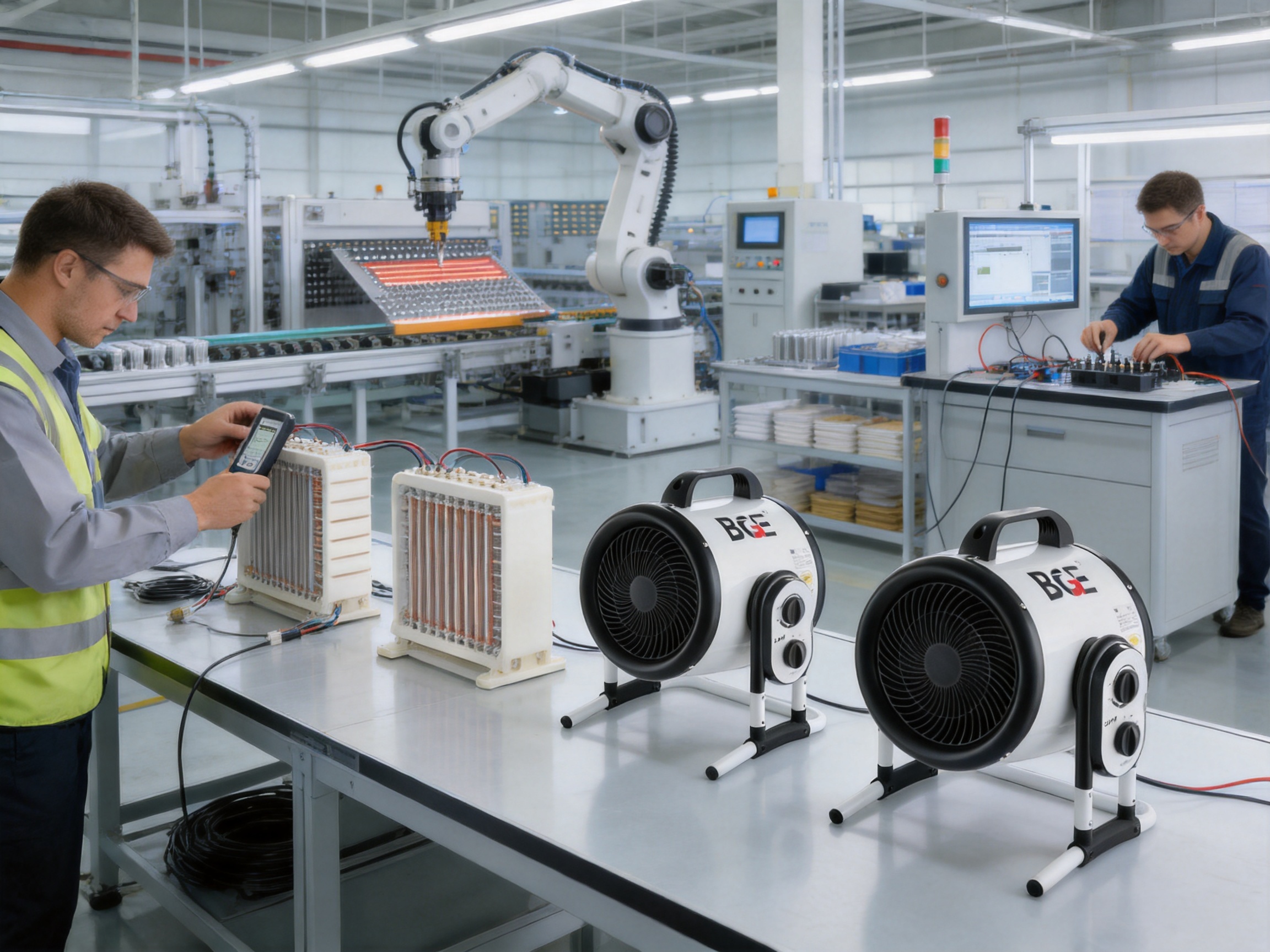
Compact electric fan heaters are designed to deliver fast, controlled, and convenient warmth wherever a reliable source of heat is needed. The PTC-02C, PTC-02CT, and PTC-03CT family of electric fan heaters combines positive temperature coefficient heating technology with forced-air circulation in a small, lightweight format. This product category is suitable for domestic rooms, offices, workshops, garages, retail spaces, temporary work areas, and other locations that require localized heating without the installation requirements associated with permanent heating systems.
The supplied product information identifies the PTC-020C model with a rated input voltage of AC 220–240 V at 50 Hz, a heating output of 2 kW, a heating capacity of 1,720 kcal/h, an air output of 140 m³/h, a recommended heating area of approximately 20 m², a net weight of 1.4 kg, an IP20 protection class, and dimensions of 200 × 140 × 215 mm. These specifications describe a compact heater that can be moved easily and used in a wide range of indoor environments.
Unlike many traditional heating products that require fuel, flues, gas connections, or permanent mounting, a PTC electric fan heater can be placed close to the area requiring warmth and connected to a suitable electrical outlet. Its compact design makes it practical for supplementary heating, while its fan-assisted airflow helps distribute warm air more rapidly than a passive radiant heater of similar size.
The PTC-02C, PTC-02CT, and PTC-03CT series is positioned within the electric heater category. The name PTC refers to positive temperature coefficient heating elements. These elements are manufactured from ceramic materials whose electrical resistance increases as their temperature rises. This characteristic supports a self-regulating heating behavior and helps limit excessive temperature increase under normal operating conditions.
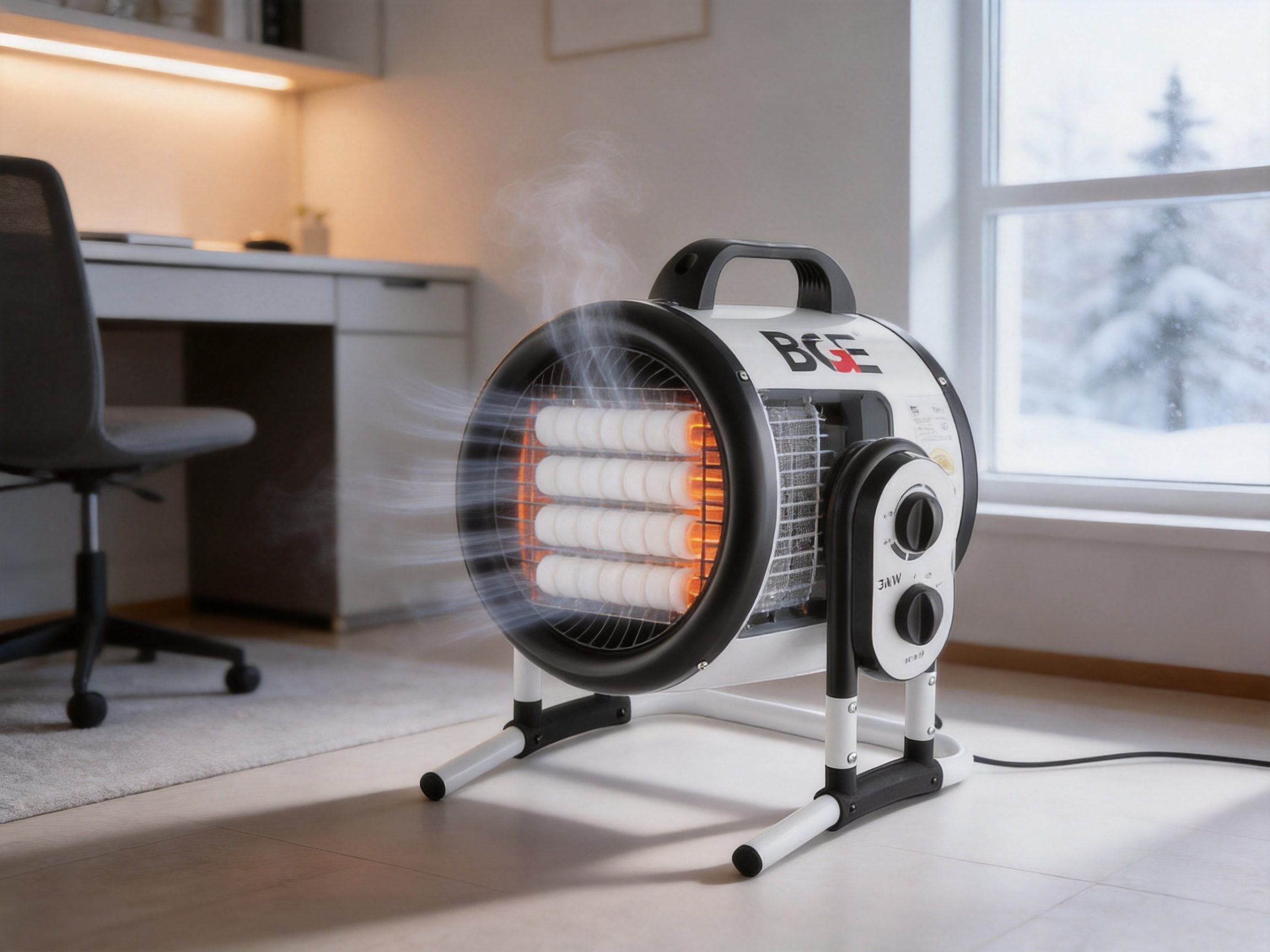
When the heater is switched on, the PTC element begins converting electrical energy into heat. A fan draws room air through the heater, passes it across the heated ceramic element, and directs the warmed air into the surrounding space. This combination of electrical heating and forced airflow enables a quick response after startup and helps spread heat more evenly within a room.
The compact PTC-020C specification supplied for this product family provides a useful reference point for buyers. With 2 kW of output power and a rated airflow of 140 m³/h, the unit is designed for localized heating rather than large-building central heating. A recommended heating area of approximately 20 m² makes it appropriate for many bedrooms, offices, small workshops, reception areas, storage rooms, and temporary workspaces, subject to insulation, outdoor temperature, ceiling height, ventilation, and local climate conditions.
At only 1.4 kg and approximately 200 × 140 × 215 mm, the heater is easy to carry, store, and reposition. Users can move it between rooms or place it near a workstation during cold periods. This flexibility is an important advantage over fixed heating equipment, which may require professional installation and may heat areas that are not occupied.
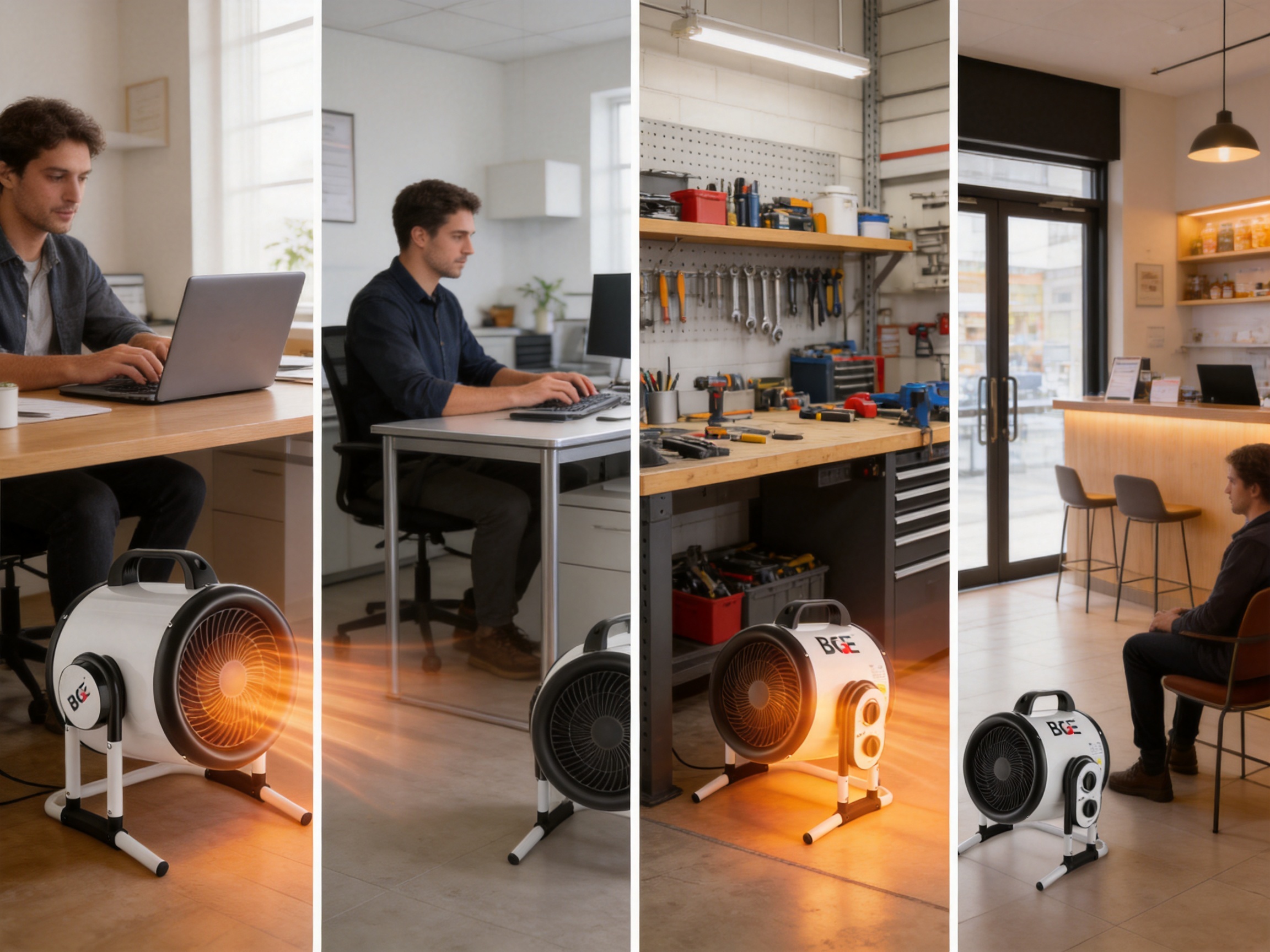
The product is also suitable for businesses that need portable heating equipment in changing environments. A workshop may require heat in one assembly zone during the morning and in another service area later in the day. A retail store may use a compact unit near an entrance or cashier station. An office may use it to supplement an existing heating system without changing the building’s permanent infrastructure.
PTC heating elements operate differently from conventional resistance wires. A traditional resistance wire generally maintains a comparatively predictable resistance as its temperature changes. A PTC ceramic element, by contrast, is engineered so that its resistance increases significantly as it becomes hotter. This behavior reduces the current available to the element and contributes to temperature control.
The self-regulating nature of PTC technology does not eliminate the need for proper design, airflow, controls, or safety protection. However, it provides a valuable operating characteristic. As the element approaches its designed temperature range, its electrical behavior helps reduce excessive heating tendency. This makes PTC technology attractive for compact portable heaters, air heaters, vehicle heating applications, and other products requiring responsive electrical warmth.
PTC ceramic elements also offer several practical benefits. They can reach useful operating temperatures quickly, provide stable heat output, and avoid the exposed glowing-wire appearance associated with some older heater designs. Since the heating element is integrated into a purpose-built airflow path, the product can be made compact while still delivering a useful volume of heated air.
For users, the most important result is predictable operation. The heater can provide warmth shortly after activation, and the fan helps distribute that warmth beyond the immediate surface of the unit. This is especially useful in spaces where people need direct, localized comfort rather than slow, room-wide heating from a distant source.
The following table summarizes the available specification for the PTC-020C model supplied in the product information. The product title also references PTC-02C, PTC-02CT, and PTC-03CT variants. Buyers should confirm the exact electrical rating, controls, dimensions, and performance data of the selected variant before ordering, because specifications may differ between models or destination markets.
| Specification | PTC-020C Supplied Data |
|---|---|
| Product type | PTC electric fan heater |
| Heating output | 2 kW |
| Heat output | 1,720 kcal/h |
| Rated input voltage | AC 220–240 V, 50 Hz, single phase |
| Air output | 140 m³/h |
| Recommended heating area | Approximately 20 m² |
| Net weight | 1.4 kg |
| Protection class | IP20 |
| Dimensions | 200 × 140 × 215 mm |
A 2 kW heating output provides a practical balance between portability and performance. It is powerful enough for many small and medium indoor areas while remaining compatible with common single-phase electrical supplies in markets using 220–240 V systems. The 140 m³/h airflow rating indicates the volume of air the fan can move under specified test conditions. Actual air delivery and perceived warmth can vary with filters, obstructions, ambient temperature, voltage, and installation position.
The IP20 classification indicates that the heater is intended for indoor use in locations where it is protected from water and significant dust ingress. It should not be used outdoors in rain, in wet rooms, near open water, or in areas where water spray can reach the housing. The product should always be used in accordance with local electrical regulations and the manufacturer’s instructions.
A principal advantage of a fan-assisted PTC heater is the ability to deliver warm air quickly. Passive heaters depend mainly on natural convection or radiation. They may warm the air gradually, but the area immediately around the user can remain uncomfortable during the initial heating period. The built-in fan in a PTC electric fan heater actively moves air through the heating chamber and into the room.
This forced-air action is beneficial in workplaces, offices, and living areas where occupants want a noticeable improvement in comfort without waiting for a large thermal mass to warm up. It is also helpful when the heater is used intermittently, because the unit can begin producing useful airflow soon after it is switched on.
The supplied PTC-020C dimensions occupy little floor or shelf space. Its low weight allows one person to carry it easily. This portability offers a practical advantage over fixed wall heaters, oil-filled radiators, and larger industrial heating systems. The heater can be stored during warmer seasons and brought out when required, helping users avoid dedicating permanent space to equipment that is used only part of the year.
Portable construction also supports flexible zoning. Instead of heating an entire building, users can position the unit near an occupied desk, workbench, service counter, or seating area. This may reduce unnecessary heating in unoccupied parts of a facility, although actual energy savings depend on usage patterns, building insulation, thermostat settings, and electricity prices.
Because the heater uses electricity rather than burning LPG, diesel, kerosene, or other fuel, it does not produce combustion gases at the point of use. There is no fuel tank to refill and no combustion flue required for ordinary indoor operation. This makes an electric fan heater convenient for locations where fuel storage, exhaust routing, or combustion ventilation would be difficult.
Clean operation is particularly valuable in offices, retail interiors, classrooms, workshops, and temporary work areas. The heater does not add combustion-related moisture or odor to the room when correctly operated. It is still important to maintain adequate general ventilation and keep the air inlet and outlet free of dust and obstructions.
PTC ceramic heating elements are valued for their positive temperature coefficient characteristics. As the element becomes hotter, its resistance rises, helping moderate electrical current. This supports a more controlled heating process than a simple uncontrolled resistance element. The product’s complete protection system, including its electrical design, airflow arrangement, thermal controls, and housing, determines its final safety performance.
The PTC element can also provide consistent heat generation during ordinary operation. It is well suited to compact equipment because the heating material can be arranged in a relatively small chamber while maintaining a useful air path. This allows designers to combine heating performance, portability, and a modest external footprint.
The AC 220–240 V single-phase rating allows the supplied model to operate from a standard electrical supply in applicable markets. Compared with gas or oil heaters, electrical installation is straightforward because there is no fuel line, burner assembly, pump, exhaust duct, or fuel container. Users should nevertheless select a suitable outlet and avoid extension cords or adapters that are not rated for the heater’s electrical load.
At 2 kW, the unit draws a substantial current for a portable appliance. The electrical circuit must be correctly protected, properly grounded where required, and suitable for continuous operation. Qualified personnel should handle any permanent electrical installation or commercial deployment.
In homes, a compact PTC heater can supplement central heating in rooms that are occupied for limited periods. It may be useful in a home office, bedroom, reading area, utility room, or enclosed balcony that becomes cold during winter. The unit’s small size makes it easy to place on a stable floor or appropriate surface while leaving the main heating system at a lower setting in unused rooms.
Users should maintain a safe clearance around the heater and keep curtains, bedding, clothing, paper, furniture, and other combustible materials away from the warm-air outlet and air intake. The heater should never be covered, operated while damaged, or left unattended in situations where local safety rules prohibit unattended operation.
Open-plan offices often contain areas with different comfort requirements. Windows, entrances, exterior walls, and high ceilings can create localized cold zones. A compact fan heater can provide supplementary heat near an employee’s workstation or reception desk without requiring changes to the building’s central HVAC system.
In retail environments, the unit may assist employees working near frequently opened doors. In small commercial premises, it can provide temporary heating during building maintenance or system downtime. The neutral, compact format is easier to store than larger fuel-powered units and does not require the handling of combustible liquids or pressurized gas cylinders.
Workshops and garages frequently need localized warmth during assembly, inspection, repair, and preparation tasks. A 2 kW electric fan heater can be moved close to an occupied work area, helping improve comfort without attempting to heat the entire building. This approach is useful when doors are opened regularly or when the structure has limited insulation.
However, workshop users must consider dust, metal particles, paint vapors, solvents, and other materials in the environment. The supplied IP20 rating is intended for dry indoor conditions and does not indicate protection against liquid, explosive atmospheres, or heavy industrial contamination. A risk assessment should be completed before the heater is used in any workshop containing flammable vapors or combustible dust.
Construction offices, service counters, event spaces, and temporary workstations may not have permanent heating. A lightweight electric fan heater can be deployed quickly and removed when the project or event is complete. Its portability helps organizations adapt to changing layouts and seasonal conditions.
For temporary installations, cable routing is important. Power cords should not cross walkways where they can create trip hazards. Where the heater is used in a public or commercial area, operators should consider physical barriers, equipment monitoring, electrical inspection, and compliance with workplace safety procedures.
A successful portable heater must do more than generate heat. It must also be easy to position, operate, transport, clean, and store. The compact design of the PTC-020C supports these practical requirements. Its 1.4 kg weight is low enough for frequent relocation, while the small dimensions help it fit into storage cabinets, utility rooms, and vehicle compartments when appropriate.
The fan-based design also provides a more directional heating effect than a purely radiant appliance. Users can position the unit so that warmed air reaches a working area or seating zone. This gives occupants greater control over comfort, particularly in rooms where the entire space does not need to be heated evenly at all times.
Another benefit is product versatility. The same general PTC platform can be adapted to different variants, output levels, control arrangements, housings, and market requirements. The PTC-02C, PTC-02CT, and PTC-03CT designations indicate a product family rather than a single universal configuration. Buyers should therefore identify whether they require a particular thermostat, switch arrangement, plug type, mounting format, or heating capacity.
Good product design also includes serviceability. Air inlets should be accessible for routine cleaning, and the housing should protect the heating and electrical components during ordinary handling. Although detailed service procedures were not included in the supplied information, users should follow the applicable operating manual and should not open the appliance unless authorized and qualified to do so.
The manufacturer, Zhejiang Kende Mechanical & Electrical Co., Ltd., operates in Taizhou, Zhejiang Province, China. The company reports a production site covering approximately 120,000 square meters and a workforce of about 600 employees. Its manufacturing activities include electric welding machines, battery chargers, electric heaters, gas heaters, and oil heaters. This broad product portfolio gives the company experience with electrical power conversion, thermal management, metal housings, controls, wiring, safety systems, and high-volume assembly.
The company reports annual exports of nearly 1.5 million units and annual production capacity of approximately 2 million units. These figures indicate an industrial manufacturing organization capable of serving international customers and supporting repeat production. For buyers, production scale can be valuable because it may support component purchasing, standardized assembly procedures, quality-control systems, spare-parts planning, and more stable delivery for established product lines.
Manufacturing a compact PTC heater requires coordination among several technical disciplines. The heating element must match the intended electrical input and airflow. The fan must move an adequate volume of air while maintaining reasonable noise and reliability. The housing must guide airflow, protect internal parts, resist ordinary handling, and prevent unsafe contact with hot components. Wiring, switches, thermal protectors, and connections must be correctly selected and assembled.
A manufacturer experienced in both heaters and welding equipment can apply knowledge from multiple product categories. Welding machines demand attention to current control, heat dissipation, insulation, electromagnetic compatibility, mechanical durability, and production consistency. Those same disciplines are relevant to electric heaters, although the thermal and airflow requirements differ. Experience across these product families can strengthen design reviews, process control, and testing practices.
The company states that it uses several management and manufacturing systems, including office automation, Toyota Production System methods, ERP K3, and MES management systems. Each system can contribute to product consistency when correctly implemented.
Toyota Production System principles are commonly associated with standardized work, waste reduction, visual management, continuous improvement, balanced production, and attention to process problems. In a heater factory, these principles may support repeatable assembly sequences, organized component flow, reduced handling errors, and faster identification of defects.
An ERP system can connect purchasing, inventory, production planning, sales orders, and financial information. For a product such as a portable heater, effective material planning is important because production depends on coordinated supplies of PTC elements, fans, motors, switches, thermal protectors, housings, fasteners, wires, plugs, labels, and packaging materials.
An MES system can provide more detailed production information at the shop-floor level. Depending on the implementation, it may record work orders, process status, inspection results, operator information, equipment conditions, and traceability data. Such information can help manufacturers identify recurring issues and improve the consistency of high-volume assembly.
The manufacturer also reports the use of automatic patching, plug-in and welding systems, robot processing, laser cutting, and other advanced technologies. Automated electronic assembly can improve repeatability in suitable production stages. Robotic processing can provide consistent motion and positioning for selected mechanical operations. Laser cutting can produce accurate sheet-metal components and support efficient housing fabrication.
These technologies are especially relevant to electric heaters because the external housing and internal support structures must be produced accurately. Poorly formed parts can create airflow restrictions, alignment problems, vibration, sharp edges, or inconsistent assembly. Controlled metal processing helps support a cleaner fit between components and a more stable production process.
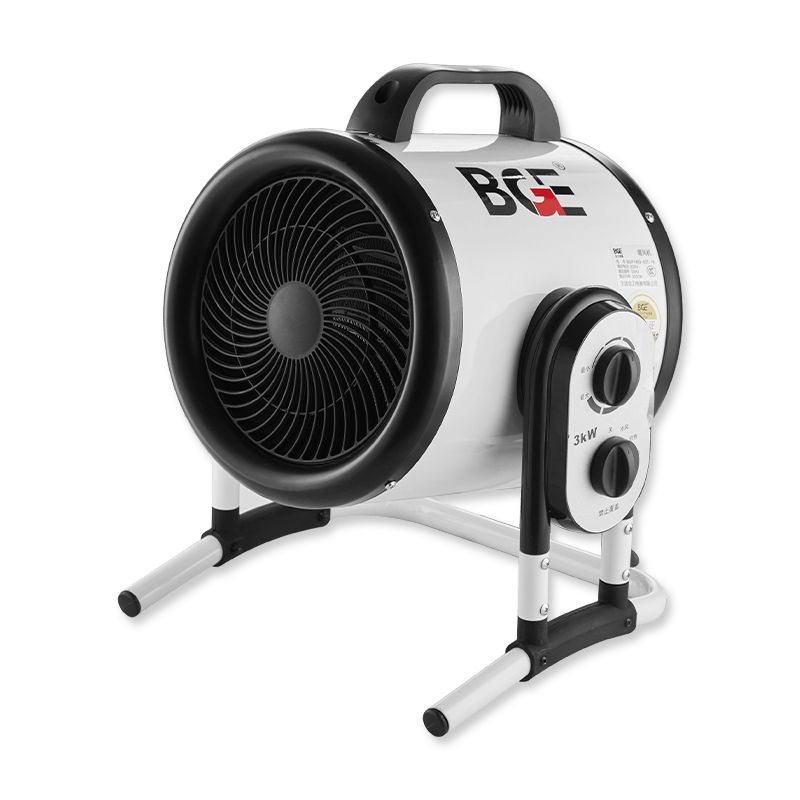
PTC-02C PTC-02CT PTC-03CT Electric fan heaters
The company reports that it operates a Zhejiang Provincial R&D Center, an Enterprise Technology Center, and an Intelligent Welding Technology Research Institute. It also reports 98 research and development personnel. Although these facilities are not limited to the electric heater product line, they demonstrate a broader engineering infrastructure supporting product design, testing, process improvement, and innovation.
Product development for a PTC heater involves more than selecting a heating element. Engineers must evaluate the relationship between electrical input, heat output, airflow, enclosure temperature, noise, thermal protection, insulation, component life, and user controls. Design changes may be required to suit different climates, electrical standards, plug configurations, room sizes, or customer expectations.
Research and development capabilities can also help manufacturers respond to regional requirements. A heater sold in one market may need different documentation, markings, plugs, certifications, packaging, or control instructions for another market. A company with experience exporting to multiple regions is better positioned to understand these differences and prepare products for international distribution.
The manufacturer states that it has obtained invention patents, utility model patents, appearance patents, and software copyrights. Intellectual property does not by itself guarantee product performance, but it indicates continuing investment in product structure, technology, appearance, and control systems. For buyers seeking private-label or customized products, an established engineering team can also support modifications to housings, labels, packaging, electrical configurations, or control interfaces, subject to technical feasibility and order quantities.
The company reports holding or supporting international product certifications and compliance marks, including GS, CE, EMC, ERP, US ETL, UKCA, and China CCC. The exact certification applicable to a specific heater model, voltage version, and destination market should always be verified in the current technical documentation. Certification marks must correspond to the actual product configuration being purchased.
Electrical heater compliance commonly involves requirements related to electrical safety, insulation, temperature rise, mechanical protection, electromagnetic compatibility, energy performance where applicable, labeling, and user instructions. Testing may evaluate abnormal operating conditions, leakage current, grounding, dielectric strength, stability, accessible surfaces, and protection against overheating.
Electromagnetic compatibility is relevant because the fan motor, switching components, and control circuitry can produce electrical noise. A properly designed heater should operate without causing unacceptable interference to nearby equipment and should have reasonable immunity to disturbances in its intended environment.
Energy-related requirements may also apply depending on the market and product category. Portable heaters are often evaluated according to national or regional rules concerning efficiency information, standby behavior, controls, or environmental documentation. Buyers should request the relevant declarations, test reports, and certification records for the exact model before importing or selling the product.
Quality assurance should extend from incoming materials to final inspection. A suitable factory process may include checks of PTC element resistance, fan operation, wiring, switch function, thermal protection, housing assembly, noise, labeling, packaging, and final electrical safety. The precise inspection plan depends on the manufacturer’s quality system and the requirements of the target market.
Choosing a factory with established manufacturing experience can offer advantages over sourcing from a trading business with limited technical control. A direct manufacturer may have greater visibility into component specifications, production schedules, assembly methods, tooling, engineering changes, and inspection procedures. This can simplify communication when a customer needs a technical clarification or product modification.
Scale can also support more consistent purchasing. Components used in large production volumes may be sourced under controlled specifications and evaluated through established supplier processes. Consistency is important in heaters because small differences in fan performance, ceramic element resistance, thermal protection, or wiring can affect the final user experience.
Manufacturing depth is particularly important for export products. International customers may require multilingual manuals, customized packaging, country-specific plugs, barcodes, carton markings, pallet specifications, and pre-shipment inspection. A factory accustomed to export orders is more likely to have established procedures for these requirements.
The company’s long product history in welding equipment, chargers, and heaters also supports cross-category engineering knowledge. Welding machines require robust electrical design and thermal management. Battery chargers require controlled power delivery and protection functions. Fuel heaters require combustion, airflow, and safety expertise. While each product has different technical demands, the combined experience can contribute to a mature approach to product development and manufacturing management.
The PTC-020C is specified for AC 220–240 V, 50 Hz, single-phase operation. It must be connected only to a supply compatible with the rating shown on its nameplate. Before use, inspect the power cord, plug, housing, air intake, and warm-air outlet. Do not operate the heater if any component is cracked, loose, burned, or otherwise damaged.
Place the heater on a firm, level, and non-combustible surface. Keep it away from water, sinks, showers, open containers, and areas where liquid can splash. The IP20 rating is not suitable for wet environments. Do not place the unit inside a cabinet, under a desk where airflow is blocked, or against a wall if doing so restricts the intake or outlet.
Maintain clear space around the appliance. Clothing, paper, plastic materials, curtains, bedding, packaging, sawdust, and other combustible items should not be placed over or near the heater. Never cover the unit during operation. The fan needs unobstructed airflow to remove heat from the element and deliver warm air safely.
Use an electrical outlet that is suitable for the heater’s rated load. Avoid sharing an overloaded circuit with other high-power appliances. Extension leads should be used only when permitted by the instructions and when their current rating, cable size, plug, socket, and condition are appropriate. In commercial or workshop environments, a qualified electrician should inspect the supply and protective devices.
Allow the heater to cool before moving or storing it. Disconnect the power before cleaning. Dust accumulation can reduce airflow and increase operating temperature, so the air intake and outlet should be kept clean according to the maintenance instructions. Do not insert tools or objects into the grille, and do not attempt to repair internal parts without appropriate training.
The stated heating area of approximately 20 m² is a practical reference, not a guarantee for every room. Actual performance depends on insulation, window area, ceiling height, outside temperature, air leakage, wall construction, room layout, and the desired temperature increase. A well-insulated 20 m² room may warm more effectively than a larger but poorly sealed room.
Airflow also affects perceived warmth. A fan heater can distribute heat quickly, but air movement may be noticeable. Some users prefer a direct warm-air stream, while others may choose a lower setting or a different heater type for quiet overnight operation. Noise levels were not included in the supplied specification, so buyers who require low-noise operation should request measured sound data for the selected variant.
Electrical heaters convert electrical energy into heat at the point of use, but operating cost depends on the local electricity tariff and operating duration. The 2 kW rating indicates the heating output and approximate power demand when the heating function is operating at full capacity. Users can manage consumption by heating occupied areas, using thermostatic control where available, improving room insulation, and switching the heater off when warmth is no longer needed.
For larger spaces, several small heaters may not always be the best solution. A properly designed central heating or HVAC system may provide more uniform temperature control. The PTC-020C is most advantageous when flexibility, quick localized heat, and easy installation are more important than whole-building heating.
Electric PTC fan heaters and LPG, diesel, kerosene, or fuel-oil heaters serve different applications. Fuel-powered heaters can deliver high heat output in large or semi-open areas, but they require fuel handling and appropriate ventilation. Depending on the design, combustion gases must be discharged safely. Fuel storage, odor, maintenance, burner adjustment, and fire safety are additional considerations.
The PTC-020C offers a simpler solution for dry indoor areas with access to a suitable electrical supply. It produces heat without burning fuel at the point of use, starts quickly, and requires no fuel tank or burner maintenance. For offices, homes, small workshops, and temporary indoor spaces, these characteristics can make an electric model more convenient.
Fuel-powered equipment may remain more appropriate for construction sites, warehouses, agricultural buildings, or other places where high heat output and limited electrical capacity are the primary concerns. The selection should be based on heat demand, ventilation, operating environment, fuel availability, emissions requirements, and safety procedures rather than on output alone.
Oil-filled radiators warm through a combination of natural convection and surface radiation. They can provide steady, quiet heat, but they are generally slower to respond and may be heavier because of the thermal fluid and metal body. A compact PTC fan heater offers quicker warm-air delivery and is easier to reposition, although the fan introduces airflow and may produce more operating noise.
Radiant heaters direct infrared energy toward people and objects in their line of sight. They can be effective for very localized comfort, but they may not distribute warmth evenly throughout a room. A fan-assisted PTC model instead warms and circulates air, which can be preferable when several people occupy a small room or when the objective is to raise ambient air temperature.
Each design has a valid role. The competitive advantage of the PTC series is its combination of rapid response, compact construction, portable operation, and clean electrical heating. It is not necessary for the product to replace every other heater type; its value lies in providing a flexible option for suitable indoor applications.
For international buyers, product performance is only one part of a successful purchase. Packaging must protect the fan, housing, controls, and power cord during transportation. Carton design, internal cushioning, moisture protection, labels, instruction manuals, and pallet loading can all influence the condition of the product on arrival.
An established export manufacturer can support practical requirements such as product labels, carton markings, user documentation, destination-market plugs, and private-label packaging. Any customization should be confirmed in writing before production. Electrical changes, in particular, may affect certification, tooling, testing, minimum order quantities, and production schedules.
Customers should request a complete commercial and technical package before placing a large order. This package may include the model designation, rated voltage and frequency, power input, heating output, airflow, dimensions, weight, protection classification, plug specification, certification status, warranty terms, packaging details, spare-parts policy, and inspection arrangements.
Where multiple variants are offered, purchasers should avoid relying on model names alone. Similar names may represent different thermostats, switches, output levels, housings, or destination configurations. A signed specification sheet and approved sample can help ensure that mass production matches the expected product.
Routine maintenance is straightforward but important. Dust and lint should be removed from the external grille and air intake according to the manufacturer’s instructions. A restricted intake can reduce airflow and increase the thermal load on internal components. The heater should be unplugged and completely cool before cleaning.
Users should periodically inspect the power cord and plug for discoloration, cuts, loose connections, or overheating marks. Any abnormal smell, repeated thermal cutout, unusual fan noise, sparking, or reduction in airflow should be treated as a reason to stop using the heater until it has been checked by qualified service personnel.
The product should be stored in a dry location when not in use. Avoid placing heavy objects on the housing or storing the unit where the fan grille can become deformed. Protecting the heater from impact, moisture, and excessive dust can support a longer service life.
Factory quality has an important role in longevity, but operating conditions also matter. Correct voltage, clean airflow paths, stable placement, suitable ambient conditions, and proper handling all contribute to reliable performance. A well-designed heater cannot compensate for misuse, blocked ventilation, wet conditions, or an unsuitable electrical supply.
Electric heating produces no direct combustion emissions at the appliance, making it suitable for locations where indoor air cleanliness is a priority. Nevertheless, the overall environmental impact depends on how the electricity is generated, how efficiently the space retains heat, how long the heater operates, and whether the appliance is recycled responsibly at the end of its service life.
Businesses can improve responsible use by heating only occupied zones, improving door and window sealing, maintaining clean filters and grilles, and using thermostatic controls where available. Energy monitoring can help identify whether localized electric heating is more efficient for a particular application than operating a larger building-wide system.
At the workplace, operators should include portable heaters in electrical safety inspections and fire-prevention procedures. Staff should know who is authorized to move or connect the unit, what clearance is required, and how to respond if the heater overheats or becomes damaged. Clear procedures are especially important in offices, schools, retail stores, and shared workshops.
Before purchasing, identify the room size, insulation level, target temperature, electrical supply, operating hours, and required portability. For a small indoor room of approximately 20 m² under suitable conditions, the supplied 2 kW model may provide an effective localized heating solution. For larger or poorly insulated areas, buyers may need a higher-output model or a different heating system.
Confirm the destination country’s voltage, frequency, plug type, electrical safety requirements, and certification expectations. A model designed for AC 220–240 V, 50 Hz should not be connected to an incompatible supply. Request confirmation of the exact model number and ensure that the quotation, sample, packaging, nameplate, and technical documents all correspond.
Ask about control functions, including thermostat operation, fan-only mode, heating stages, overheat protection, tip-over protection where applicable, and automatic restart behavior. These features were not fully specified in the supplied product data, so they should not be assumed. The buyer should also confirm noise level, cable length, plug type, warranty, replacement parts, and service arrangements.
For wholesale or private-label projects, discuss minimum order quantities, sample approval, lead time, packaging artwork, inspection standards, shipment terms, and production capacity. A factory with engineering and manufacturing resources may be able to support custom requirements, but technical changes should be evaluated before commercial commitments are made.
The PTC-020C is a compact PTC electric fan heater. It uses a positive temperature coefficient ceramic heating element and a fan to move warmed air into the surrounding space.
The supplied specification lists an output power of 2 kW and a heat output of 1,720 kcal/h. The actual operating demand can vary according to the control setting and operating cycle.
The supplied model is rated for AC 220–240 V, 50 Hz, single-phase operation. Buyers must verify the nameplate and destination-market configuration before connecting the appliance.
The listed heating area is approximately 20 m². This figure is dependent on insulation, room height, air leakage, outdoor temperature, and the desired temperature increase. It should be treated as a reference rather than a universal guarantee.
The supplied protection class is IP20, which indicates use in dry indoor conditions. The heater should not be exposed to rain, water spray, or wet environments. It is also unsuitable for locations containing explosive vapors or heavy combustible dust unless specifically approved for those conditions.
PTC ceramic elements have a positive temperature coefficient: their resistance rises as temperature increases. This supports self-regulating heating behavior and allows a compact element to produce responsive heat. The complete product still requires suitable thermal controls and safety protection.
The listed 2 kW model is intended for localized heating and a reference area of approximately 20 m². A large warehouse would normally require a system designed for a much greater volume, better airflow distribution, and the specific ventilation and safety conditions of the building.
It can replace a fuel-powered heater in some dry indoor applications where the electrical supply is adequate and the required heat output is moderate. Fuel-powered systems may remain more suitable for very large, open, poorly insulated, or electrically restricted spaces.
An electric PTC heater does not require a combustion flue because it does not burn fuel at the point of use. It must still be used with adequate general ventilation and in accordance with local electrical and workplace regulations.
IP20 indicates protection against access to hazardous parts by a typical finger and no stated protection against water. It is appropriate only for environments where the heater is protected from moisture and water ingress.
Disconnect the power and allow the unit to cool completely before cleaning. Keep the air intake and outlet free of dust and lint using the method recommended in the operating instructions. Do not insert objects into the grille or open the housing without proper authorization.
The manufacturer reports engineering and export capabilities that may support product and packaging customization. Possible changes could include labels, cartons, plug configurations, controls, or electrical versions, but every modification must be evaluated for tooling, testing, certification, cost, and minimum order requirements.
Importers should verify the exact model, voltage, frequency, power, airflow, heating area, protection class, dimensions, plug, certifications, packaging, warranty, inspection requirements, and documentation. They should also request confirmation that the certification applies to the precise configuration being purchased.
Factory experience supports consistency in component sourcing, assembly, inspection, export documentation, packaging, and technical support. A manufacturer with heater, charger, and welding-machine production experience may also have established capabilities in electrical design, thermal management, metal processing, automation, and quality control.
The PTC-02C, PTC-02CT, and PTC-03CT electric fan heater family offers a practical combination of rapid warm-air delivery, compact dimensions, low weight, clean electrical operation, and flexible placement. The supplied PTC-020C data describes a 2 kW, AC 220–240 V, 50 Hz model with 140 m³/h airflow and a recommended heating area of approximately 20 m². These characteristics make it suitable for localized heating in homes, offices, workshops, retail spaces, and temporary indoor work areas.
Its main advantages over many conventional portable heating options are ease of installation, portability, the self-regulating behavior of PTC ceramic technology, and freedom from fuel storage and combustion exhaust at the point of use. The heater is not intended to replace every heating system, but it is a strong option when users need quick and targeted warmth in a dry indoor environment.
The manufacturer strengthens the product proposition through reported industrial scale, international export experience, research and development resources, automated production technologies, ERP and MES management systems, and a broad portfolio of electrical and thermal equipment. Its reported certifications and participation in national standards work further indicate an organized approach to international product development, although buyers should always verify current documentation for the exact model and market.
For successful use, purchasers should match the heater to the room size and electrical supply, respect the IP20 indoor-use limitation, maintain clear airflow, and follow all safety and maintenance instructions. With correct selection and operation, a compact PTC electric fan heater can provide dependable supplementary warmth while offering the flexibility that fixed or fuel-powered systems often cannot provide.
1. Supplied product specification for the PTC-020C electric fan heater, including heating output, voltage, power, airflow, heating area, weight, protection class, and dimensions.
2. General engineering principles of positive temperature coefficient ceramic heating elements and forced-air electric heating systems.
3. General guidance on electrical appliance safety, thermal protection, indoor heating equipment, and protection classifications.
4. Manufacturer-provided company information concerning production capacity, factory area, workforce, research and development resources, certifications, and manufacturing systems.
5. General principles of Toyota Production System methods, enterprise resource planning, manufacturing execution systems, automated assembly, robotic processing, and laser-cut metal fabrication.
6. General product-selection guidance for portable electric heaters, including room conditions, insulation, electrical supply, ventilation, maintenance, and workplace safety.
Recommended Products

Contact Us
No.2299, Luqiao Section, Shugang Avenue, Luqiao District, Taizhou, 318057 Zhejiang, PR China.
+86-576-82431568
 Privacy
China Welding Machine Factory
 English
 中文简体
 русский
 Español
 عربى
 Français
 Português
 Deutsch
 Український