Email: [email protected]
Email: [email protected]

Blog
 2026.06.26
 Blog
Blog
Modern metal fabrication depends on cutting systems that can deliver speed, accuracy, stability, safety, and cost control at the same time. The CUT-60KF Inverter Air Plasma Arc Cutting Machine is designed for this environment. It is a practical, efficient, and highly capable plasma cutting solution for workshops, factories, maintenance teams, metal product manufacturers, and fabrication professionals who need dependable cutting performance on thin and medium metal plates.
Built around advanced IGBT inverter technology, switching mode power supply design, and PWM control technology, this machine represents a major improvement over many traditional cutting methods and older cutting power sources. It is intended for cutting carbon steel, alloy steel, stainless steel, and other conductive metals with a stable cutting arc, high efficiency, good cutting quality, and strong reliability. For users who previously depended on oxygen and acetylene flame cutting, mechanical cutting, or older heavy plasma equipment, the CUT-60KF offers a more compact, safer, and energy-saving alternative.

CUT-60KF Inverter Air Plasma Arc Cutting Machines for Precise Metal Cutting
The CUT-60KF Inverter Air Plasma Arc Cutting Machine is positioned in the plasma cutting category and is engineered for precise metal cutting. It uses compressed air as the plasma gas, making it convenient for many industrial and workshop applications. Unlike oxy-fuel cutting, which relies on combustible gases and is mainly suitable for ferrous metals, air plasma cutting can process a broader range of conductive metals and does so with faster cutting speed, narrower kerf, lower heat input, and less deformation in many applications.
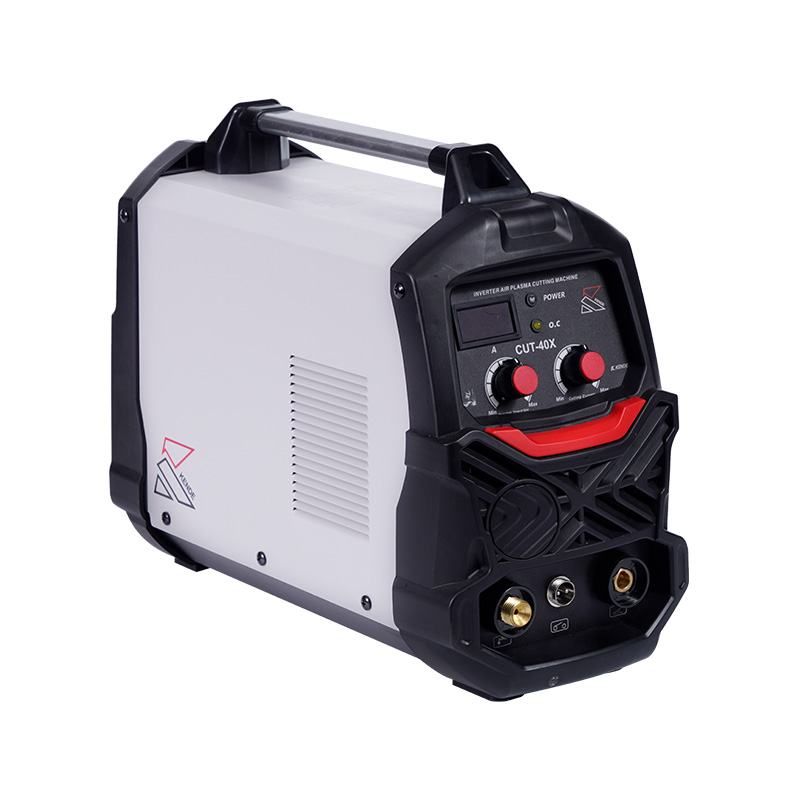
The machine is designed to cut thin and medium plates efficiently. Its stable cutting arc helps operators produce clean cuts with good edge quality. Its compact structure and lighter weight improve portability and make it easier to move between workstations. Its digital current display allows operators to observe cutting current more conveniently, helping them select and maintain suitable cutting parameters for different material thicknesses and work requirements.
The product’s core technical foundation includes IGBT inverter technology, switching mode power supply, and PWM control. These technologies help improve energy conversion efficiency, reduce machine size, enhance current control, and support stable arc output. In practical production, these benefits translate into faster work, reduced operating cost, improved operator confidence, and more consistent results.
Inverter plasma cutting has become an important technology in modern metalworking because it combines high power density with precise control. Traditional transformer-based cutting equipment is often large, heavy, and less efficient. While such machines can be durable, they may consume more power, respond more slowly to load changes, and be less convenient for mobile or space-limited workshops. In contrast, an inverter plasma cutting machine uses electronic power conversion to create a controlled high-frequency output suitable for plasma arc cutting.
The CUT-60KF takes advantage of this approach by using IGBT devices. IGBT technology is widely valued in welding and cutting equipment because it offers a strong balance between switching performance, current handling capability, and reliability. In a plasma cutting machine, this can help produce a stable arc and improve control over cutting current. Stable current is especially important because the plasma arc must maintain enough energy to penetrate and cut metal without excessive fluctuation, interruption, or rough edge formation.
The switching mode power supply further supports efficiency and compactness. Instead of relying on a bulky low-frequency transformer, the system converts and regulates power electronically. This helps reduce the size and weight of the equipment while improving response and energy utilization. PWM control technology adds another layer of regulation by controlling the power output with precision. The result is a machine that can deliver suitable cutting power while maintaining stability under changing working conditions.
The use of IGBT inverter technology is one of the most important strengths of the CUT-60KF. IGBT components allow the machine to achieve high-speed switching and efficient power conversion. For the operator, this does not simply mean a more modern circuit design; it means the machine can provide controlled cutting current, better arc stability, and reduced energy waste compared with many older designs.
In competitive environments, stable output can be a decisive advantage. A low-quality cutting machine may struggle with arc inconsistency, especially when cutting different materials, working near maximum capacity, or operating under variable power supply conditions. The CUT-60KF is designed with strong resistance to power supply voltage changes, helping it remain dependable even when workshop electrical conditions are not perfect. This reliability is valuable in real production settings, where voltage fluctuation can affect cutting quality and productivity.
The switching mode power supply design contributes to high efficiency and compact construction. A more efficient power supply wastes less energy as heat and can help reduce electricity consumption during regular use. It also supports a smaller internal structure, making the whole machine easier to transport, install, and manage in a workshop.
For a manufacturer or fabrication business, this matters because equipment footprint is part of production efficiency. A smaller machine can be placed closer to the work area, moved more easily for maintenance tasks, or integrated into a flexible production layout. Space-saving equipment also benefits small and medium workshops where floor area must be used carefully.
PWM control technology allows the machine to regulate output in a controlled and responsive manner. In plasma cutting, current stability directly influences cut quality. If output is unstable, the arc may wander, sputter, or create uneven edges. With better control, the operator can achieve more predictable results across different cutting jobs.
This is especially important when cutting thinner materials. Excessive or unstable heat can produce warping, rough edges, wider kerfs, and unnecessary post-processing. A stable plasma arc helps the machine cut quickly while limiting excess heat input. For medium plates, controlled current helps maintain penetration and cut continuity.
The digital meter for cutting current is a practical feature that improves usability. Operators can monitor the cutting current directly, making it easier to adjust parameters and repeat successful settings. In production environments, repeatability is essential. If one operator finds an effective setting for a material thickness, another operator can reproduce it more accurately when the machine provides a clear current display.
This feature also supports training and quality management. New operators can learn the relationship between current, material thickness, cutting speed, and edge quality more quickly when current information is visible. Experienced operators can make fine adjustments with greater confidence.
A stable cutting arc is central to good plasma cutting performance. The CUT-60KF is designed to provide stable arc behavior, which helps improve cut quality and reduce rework. A steady arc can produce cleaner edges, more consistent kerf formation, and better operator control. In many fabrication operations, reducing rework is as important as increasing cutting speed because grinding, correction, and repeated cuts consume labor and delay production.
The machine is built with multiple protective measures to improve reliability. Protection systems are important because cutting equipment operates under demanding electrical and thermal conditions. A plasma cutter must handle high current, arc starting, heat, dust, and sometimes unstable supply voltage. Protective design helps reduce the risk of damage and improves long-term serviceability.
For professional buyers, reliability is not an optional feature. A low-cost machine that fails frequently can become expensive through downtime, repair cost, delayed orders, and wasted material. By emphasizing protection and reliability, the CUT-60KF is designed for users who need consistent availability and dependable performance.
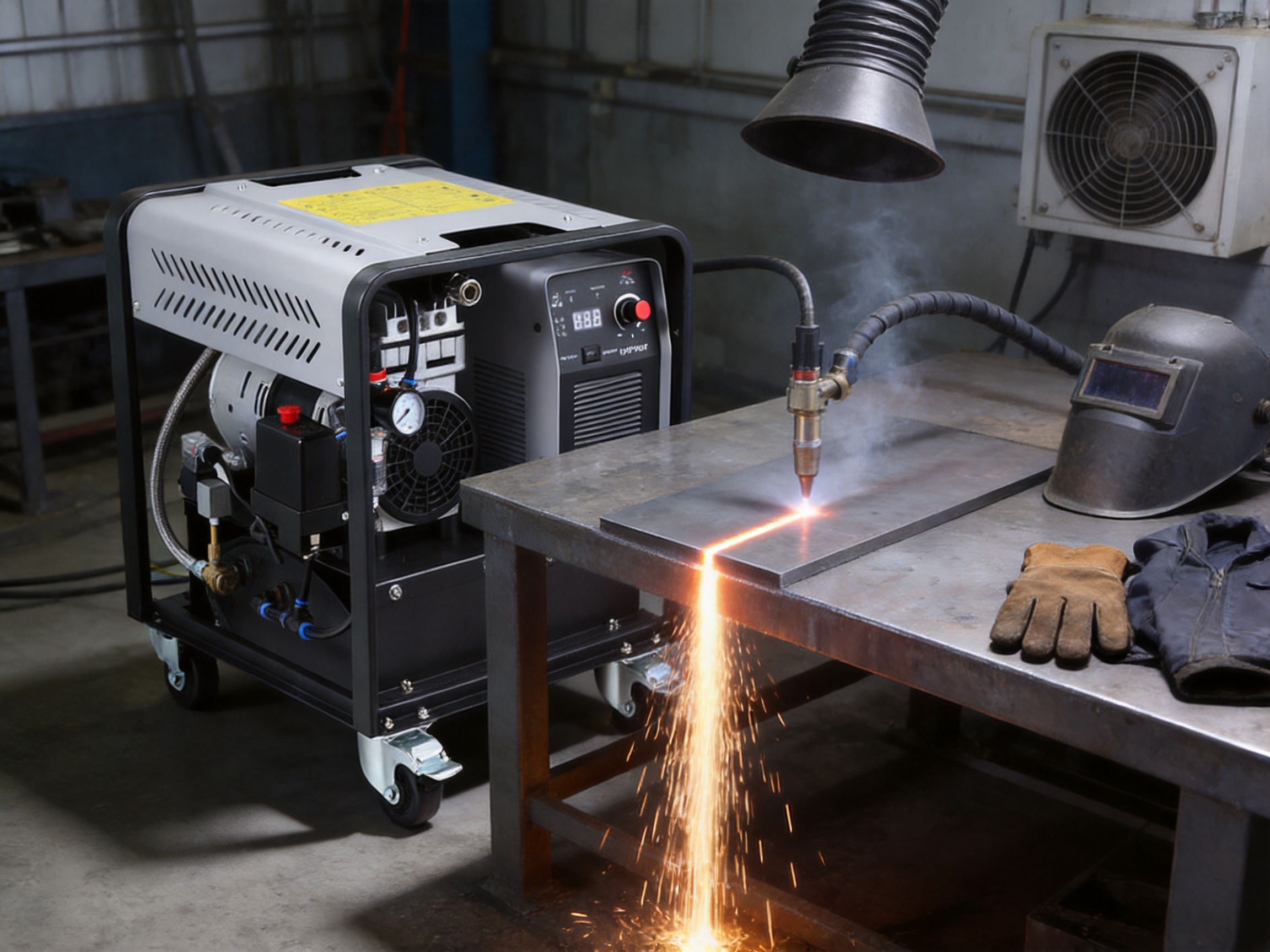
The CUT-60KF is suitable for cutting thin and medium plates of carbon steel, alloy steel, stainless steel, and similar conductive materials. These materials are widely used in metal fabrication, machinery manufacturing, vehicle repair, equipment maintenance, architectural metalwork, agricultural machinery, sheet metal processing, and general industrial production.
Carbon steel is one of the most common materials in workshops, and plasma cutting is often chosen because it is fast and flexible. Alloy steel may require controlled cutting to manage edge quality and avoid excessive heat effects. Stainless steel benefits from plasma cutting because oxy-fuel cutting is not effective on stainless steel in the same way it is on carbon steel. With air plasma cutting, operators can process stainless steel more conveniently without relying on specialized mechanical cutting equipment.
Typical application scenarios include cutting plates for frames, brackets, machine parts, repair panels, fabrication components, ductwork parts, metal cabinets, agricultural parts, vehicle body repair pieces, and construction metal parts. The machine is also useful for maintenance teams that need to remove damaged sections, cut replacement parts, or modify existing metal structures on site.
One of the clearest advantages of the CUT-60KF is its improvement over oxygen and acetylene gas flame cutting in many common applications. Oxy-fuel cutting has long been used in metalworking, especially for thick carbon steel. However, it involves combustible gases, cylinders, regulators, hoses, flame adjustment, and fire safety concerns. It also has limitations when cutting stainless steel, aluminum, and some alloy materials.
The CUT-60KF uses air plasma cutting, which reduces the dependence on fuel gas. This can lower operating cost and remove the need to manage acetylene cylinders for many cutting tasks. It also helps reduce explosion and flame-related safety risks. Although plasma cutting still requires proper electrical and arc safety procedures, it avoids many hazards associated with storing and using combustible gas mixtures.
Cutting speed is another major benefit. For thin and medium plates, plasma cutting is often much faster than oxy-fuel cutting. Faster cutting speed means higher productivity, shorter job completion time, and better responsiveness to customer orders. In workshops where labor cost is significant, speed directly affects profitability.
Cut quality can also improve. Plasma cutting typically produces a narrower kerf and less preheating time than oxy-fuel cutting. Operators can start cutting quickly, follow patterns more easily, and reduce heat-affected distortion in thinner workpieces. These characteristics make plasma cutting especially useful for sheet and medium-plate processing.
Compared with many older transformer-based plasma cutters, the CUT-60KF offers important advantages in efficiency, size, weight, and control. Traditional machines may be rugged, but they can be difficult to move and may occupy more workshop space. They may also consume more energy and provide less refined output control.
The inverter platform allows the CUT-60KF to be more compact and energy-saving. Its small volume and light weight make it easier to move, which is valuable for operators who need flexible work arrangements. Instead of bringing every workpiece to a fixed cutting station, users may move the machine closer to the work area when appropriate.
Control quality is another difference. Inverter and PWM technologies help provide stable current and arc characteristics. This can result in smoother cutting, more consistent penetration, and better edge appearance. In competitive production, these differences can reduce finishing work and help maintain a higher standard of output.
Not all plasma cutters are equal. Some low-end machines may advertise attractive cutting capacity but lack stable arc control, durable components, effective protection, or accurate current indication. The CUT-60KF is designed with a combination of advanced power electronics, digital display, protective measures, and strong resistance to voltage changes. These features help separate it from basic machines that may perform acceptably only under ideal conditions.
In real workshops, conditions are rarely perfect. Operators may cut different materials throughout the day, power supply may fluctuate, and duty demands may vary. A machine that lacks proper protection and stable current control can overheat, trip, produce rough cuts, or suffer premature failure. The CUT-60KF addresses these concerns through its technical design and reliability-focused construction.
The digital meter also gives it an operational advantage. Machines without clear current display require operators to rely more heavily on estimation. This may be acceptable for rough work, but precise metal cutting benefits from visible and repeatable parameter settings. For professional use, better control supports better quality.
| Item | Specification | Practical Meaning |
| Product Type | Inverter Air Plasma Arc Cutting Machine | Designed for fast, precise cutting of conductive metals |
| Rated Supply Voltage | 1-220/230 V ±10% | Suitable for single-phase power environments within the stated tolerance |
| Rated Input Capacity | 7.7 KVA | Indicates power demand during rated cutting operation |
| Rated Supply Current | 33.3 A | Helps users prepare suitable electrical supply and protection |
| No-Load Voltage | 280 V | Supports arc starting and plasma cutting operation |
| Rated Duty Cycle | 20% | Defines the rated working cycle under specified conditions |
| Current Range | 15-45 A | Allows adjustment for different plate thicknesses and cutting requirements |
| Quality Cutting Thickness | 12 mm | Suitable for clean cutting within recommended material conditions |
| Maximum Cutting Thickness | 15 mm | Indicates upper cutting capability under appropriate conditions |
| Arc Start | Contact Arc Ignition | Provides a practical arc starting method for workshop cutting |
| Degree of Protection | IP21S | Indicates protection level of the machine enclosure |
| Net Weight | 30.5 kg | Compact enough for easier movement compared with many older machines |
| Machine Size | 480 L x 390 W x 510 H mm | Space-saving design for workshops and production areas |
Cutting performance is not measured only by maximum thickness. Professional users care about how quickly the machine cuts, how stable the arc remains, how clean the edge looks, how often consumables must be changed, how easy the machine is to adjust, and how reliably it performs throughout the day. The CUT-60KF is designed to address these practical concerns.
For thin and medium plates, fast cutting speed is one of its defining advantages. A faster cut reduces labor time and supports higher output. When a workshop handles many small parts, even a small time saving per cut can become a major productivity advantage over a full day or week.
Good cutting quality reduces secondary processing. If cut edges are rough, heavily oxidized, or distorted, operators must spend additional time grinding or correcting the workpiece. Stable plasma cutting helps reduce this burden. Cleaner cuts also improve fit-up for welding, assembly, and finishing operations.
The adjustable current range allows operators to choose a suitable output for each task. Lower current can be used for thinner materials to control heat and maintain precision, while higher current supports thicker materials within the machine’s capability. This flexibility allows the same machine to serve multiple departments or job types.
Safety is a major reason many workshops consider air plasma cutting instead of flame cutting. Oxygen and acetylene systems require careful gas storage, leak checks, flashback arrestors, cylinder handling, and flame control. Improper gas handling can lead to serious hazards. By using compressed air as the cutting gas, the CUT-60KF reduces the need for combustible fuel gas in many cutting applications.
This does not mean plasma cutting is risk-free. Operators must still use appropriate eye protection, gloves, protective clothing, ventilation, grounding, and electrical safety practices. Plasma cutting produces intense arc light, hot metal, sparks, and fumes. However, the elimination of acetylene fuel gas can simplify safety management and reduce certain risks.
The machine’s multiple protective measures also contribute to safer and more reliable operation. Protection systems help guard against conditions that may damage the machine or interrupt cutting. Strong resistance to power supply voltage changes is especially useful in workshops where the electrical supply may vary due to other machines starting and stopping.
The CUT-60KF is designed with practical usability in mind. The digital current display makes the machine easier to set and monitor. Operators can observe the cutting current and adjust according to material thickness and desired cutting effect. This supports both experienced users and operators who are still developing their plasma cutting skills.
Contact arc ignition provides a familiar and practical starting method. The machine’s stable arc behavior helps the operator maintain control during cutting. Its compact design and manageable weight also make it easier to reposition as needed.
Ease of movement is not merely a convenience. In maintenance and fabrication environments, the location of the workpiece may change frequently. Some parts are too large, fixed, or inconvenient to move to a central cutting station. A portable machine gives users more flexibility and can reduce material handling time.
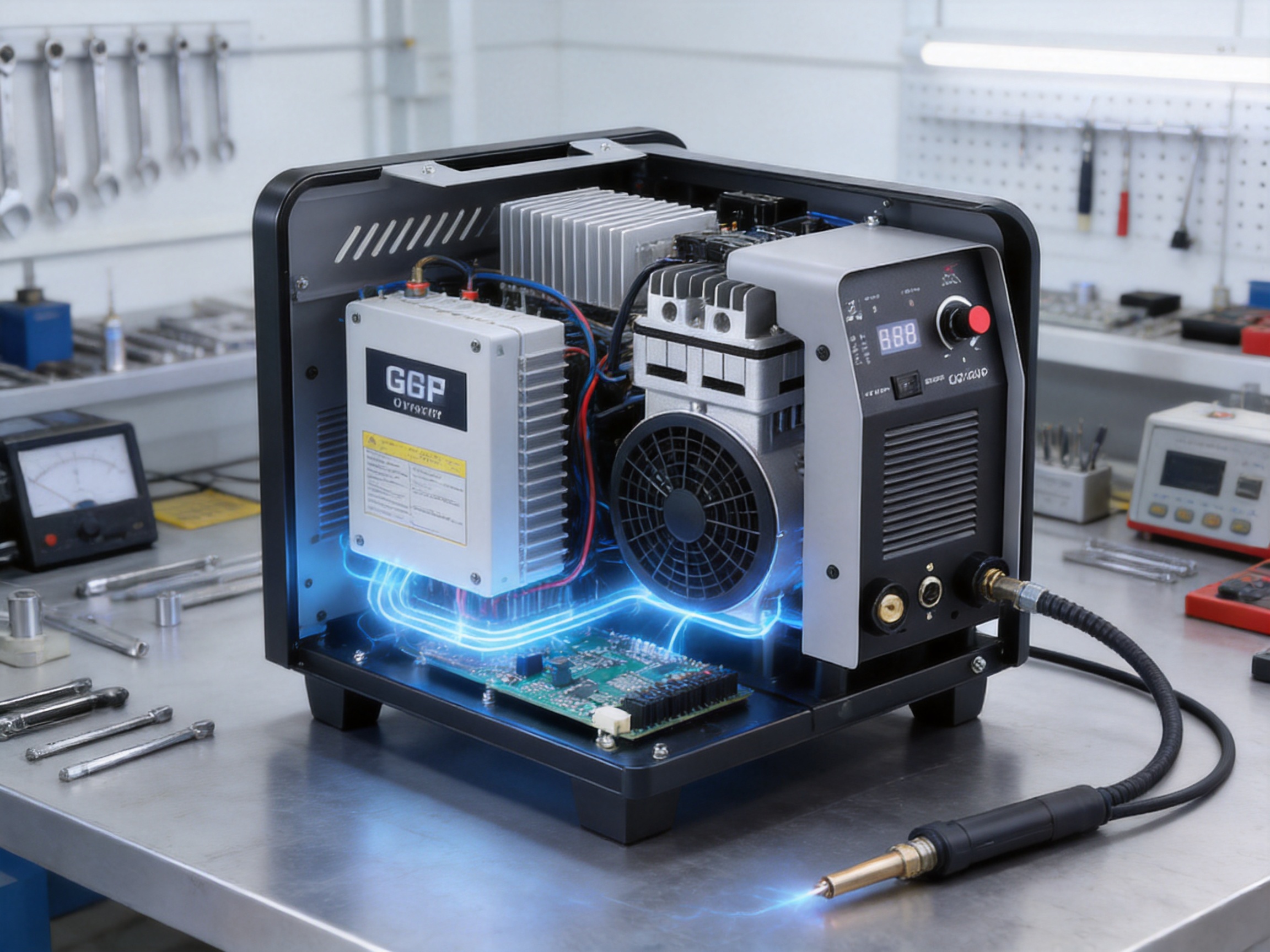
The quality of a plasma cutting machine depends not only on design but also on the strength of the manufacturer behind it. Zhejiang Kende Mechanical and Electrical Co., Ltd. is a large-scale manufacturer and exporter of welding machines, cutting machines, chargers, and heaters. The company is located in Taizhou, Zhejiang Province, China, and operates with a substantial production base covering 120,000 square meters and employing around 600 people.
The company has an annual production capacity of approximately 2 million units and exports nearly 1.5 million units annually. This scale gives it extensive experience in production organization, supply chain coordination, quality control, and international market requirements. Large production volume also helps the company refine manufacturing processes, improve consistency, and respond to global customer demand.
The company’s product range includes MMA or stick welding machines, MIG/MAG gas-shielded welding machines, flux wire welding machines, TIG arc welding machines, CUT plasma arc cutting machines, stud welding machines, automatic submerged arc welding machines, battery chargers, and electric, gas, and oil heaters. This broad product portfolio demonstrates deep knowledge of power electronics, arc control, thermal systems, and industrial equipment manufacturing.
Modern welding and cutting equipment requires precise assembly, reliable circuit boards, stable power modules, effective testing, and consistent quality control. The manufacturer applies advanced production and management systems, including office automation, Toyota-style TPS management concepts, ERP K3, and MES management systems. These systems support process control, production planning, quality tracking, and operational efficiency.
Advanced automatic patching, plug-in, and welding systems are used in production. Automated electronic assembly processes help improve consistency and reduce human error in circuit board manufacturing. For inverter plasma cutting machines, circuit board quality is extremely important because control electronics must operate reliably under electrical stress, heat, vibration, and dust exposure.
Robot processing and laser cutting technologies are also part of the company’s manufacturing capabilities. These technologies can improve precision in metal parts, cabinets, structural components, and production efficiency. A plasma cutting machine’s exterior structure, internal layout, cooling design, and assembly quality all affect reliability and user experience. Accurate sheet metal processing helps ensure proper fit, durable construction, and professional appearance.
MES management provides production visibility and traceability. In a modern factory, traceability is essential for quality improvement. If a quality issue is found, production data can help identify the batch, process, component source, or assembly stage involved. This supports continuous improvement and helps maintain stable product quality across large production volumes.
The manufacturer has strong research and development capability. It operates a provincial-level research and development center, an enterprise technology center, and an intelligent welding technology research institute. With a dedicated R&D team, the company is able to develop new products, improve existing designs, and adapt equipment to the needs of different regions, countries, and customer groups.
Innovation is important in plasma cutting because user needs continue to evolve. Customers expect better portability, lower energy consumption, improved cutting quality, more reliable electronics, safer operation, and easier maintenance. The development of machines such as the CUT-60KF reflects the demand for compact, efficient, and stable cutting equipment suitable for modern workshops.
The company has obtained numerous patents, including invention patents, utility model patents, appearance patents, and software copyrights. Intellectual property achievements indicate continuous investment in technology and product development. For customers, this suggests that the manufacturer is not only assembling machines but also investing in engineering improvements and proprietary know-how.
The manufacturer holds many international product certificates, including GS, CE, EMC, ERP, US ETL, UKCA, and China CCC. Certifications are important because welding and cutting equipment must meet safety, electromagnetic compatibility, energy, and regional compliance requirements. For distributors and end users, certified products help reduce market entry barriers and provide greater confidence.
The company is also one of the national standard drafting units of the National Welding Machine Standardization Committee. It has participated in drafting, formulating, and revising many national standards and has led the drafting of a group standard. This involvement demonstrates technical authority and industry recognition. A company that contributes to standards development usually has a deeper understanding of safety requirements, performance evaluation, and technical trends.
International export experience is also significant. Different markets have different power conditions, user habits, regulatory requirements, and application environments. A manufacturer that exports large quantities must learn to support product stability across varied conditions. This experience can benefit the design and production of machines such as the CUT-60KF.
Reliability is one of the central values of a plasma cutting machine. A machine used in fabrication must be ready when needed. Downtime affects schedules, labor planning, customer delivery, and production cost. The CUT-60KF addresses reliability through multiple protective measures, resistance to power supply voltage changes, stable arc design, and efficient power conversion.
From a manufacturing perspective, reliability begins with component selection, circuit design, thermal layout, assembly control, and final testing. Inverter machines must manage heat effectively because electronic components can be sensitive to excessive temperature. A compact machine must balance size reduction with adequate cooling and safe internal spacing. Advanced manufacturing processes and management systems help maintain this balance in production.
Consistent quality is especially important when products are shipped internationally. Customers expect each machine to match the published performance and operate reliably under normal use. Production scale, process automation, testing systems, and traceability all contribute to this objective.
Operating cost is a major consideration for metal fabrication businesses. The CUT-60KF offers cost advantages in several ways. First, its inverter power system improves energy efficiency compared with many older machines. Reduced energy waste can lower electricity consumption, especially for users who cut frequently.
Second, air plasma cutting can reduce dependence on oxygen and acetylene fuel gas for many thin and medium plate applications. Gas cylinders, refilling, transportation, storage, and safety management all add cost. Using compressed air as the plasma gas can simplify operations and reduce some recurring expenses.
Third, faster cutting speed reduces labor cost. If operators complete cutting jobs more quickly, the workshop can process more work in the same time. This can improve delivery speed and production capacity without adding more labor.
Fourth, better cut quality can reduce post-cut finishing. Grinding, re-cutting, and correcting poor edges consume labor and abrasive materials. A stable plasma arc helps improve the chance of obtaining acceptable edges directly after cutting.
The actual cutting result depends on several factors: material type, material thickness, current setting, cutting speed, air pressure, torch condition, consumable condition, grounding, operator skill, and machine stability. The CUT-60KF provides a strong foundation with stable output and adjustable current. Operators can achieve better results when they combine the machine’s capabilities with correct cutting practice.
For carbon steel, the machine can provide fast cutting and efficient production. For stainless steel, plasma cutting offers a practical method where flame cutting is unsuitable. For alloy steel, careful parameter selection helps maintain edge quality. In all cases, a clean work surface, correct air supply, and properly maintained torch parts are important.
The quality cutting thickness listed in the technical information is 12 mm, while the maximum cutting thickness is 15 mm. In practice, quality cutting is usually the range where the edge quality, speed, and cut consistency are most suitable for regular production. Maximum cutting indicates the upper capacity under suitable conditions, but users may need slower speed and may obtain rougher edges near maximum thickness.
To make full use of the CUT-60KF, operators should follow good plasma cutting practices. First, ensure the electrical supply meets the machine’s requirements. The listed rated supply voltage is single-phase 220/230 V with a tolerance of ±10%. Suitable wiring, grounding, and protective devices should be prepared according to local electrical regulations and professional guidance.
Second, use clean and dry compressed air. Moisture, oil, or contamination in the air supply can affect arc quality and consumable life. A proper air filter or dryer may improve cutting stability and reduce maintenance issues.
Third, set the current according to material thickness and desired cut quality. The digital meter helps monitor cutting current. Operators should avoid using unnecessarily high current on thin materials because excess heat can increase distortion and reduce edge quality.
Fourth, maintain suitable travel speed. Moving too slowly can create excessive dross and heat input, while moving too quickly may fail to penetrate fully. Operators should observe the arc, sparks, and cut edge to adjust technique.
Fifth, inspect torch consumables regularly. Worn electrodes, nozzles, or tips can cause arc instability and poor cutting quality. Consumable maintenance is a low-cost way to protect cut quality and machine performance.
Sixth, keep the machine clean and ventilated. Plasma cutting environments may contain dust and metal particles. Adequate ventilation around the machine supports cooling and long-term reliability.
For distributors, the CUT-60KF is attractive because it belongs to a high-demand category: portable inverter plasma cutting equipment. Many workshops need machines that are powerful enough for common fabrication tasks but compact enough for flexible use. The product’s combination of inverter technology, digital display, safety advantages, and reliable manufacturing background makes it suitable for a broad customer base.
For end users, the value comes from productivity, safety, flexibility, and cost control. A machine that cuts faster than flame methods, handles stainless steel and carbon steel, and reduces fuel gas dependence can improve workshop efficiency. Its compact size and manageable weight make it practical for daily work. Its stable arc and protective design help support consistent results.
The manufacturer’s broad export experience and certification background also strengthen commercial confidence. Customers often consider not only the machine itself but also the supplier’s ability to provide stable quality, technical documentation, and long-term product support. A company with large-scale production and strong R&D resources is better positioned to meet these expectations.
Mechanical cutting methods such as shearing, sawing, drilling, or abrasive cutting remain useful, but they can be slower or less flexible for irregular shapes. A plasma cutter can follow curves, cut openings, trim edges, and process different shapes without dedicated tooling. This flexibility is valuable for custom fabrication and repair work.
Laser cutting can provide extremely high precision and clean edges, especially in automated sheet processing, but laser systems are more expensive and typically require larger investment, specialized setup, and more controlled production environments. The CUT-60KF is not intended to replace industrial laser cutting lines; instead, it offers a cost-effective and flexible cutting solution for workshops that need practical performance without the cost of a laser system.
Oxy-fuel cutting remains valuable for very thick carbon steel, but for thin and medium plates, plasma cutting is often faster and more versatile. The CUT-60KF reduces the need for combustible gas, improves cutting speed, and works with metals such as stainless steel that are not well suited to oxy-fuel cutting.
A modern workshop must be flexible. Orders may change quickly, materials may vary, and production areas must handle multiple tasks. The CUT-60KF supports this flexibility through compact dimensions, inverter efficiency, adjustable current, and practical portability. It can be used in fabrication areas, repair departments, maintenance sites, and production support operations.
The machine’s small volume and light weight help reduce the burden of movement. Its digital meter supports clear parameter control. Its stable arc helps operators maintain cut consistency. Its protective measures support reliability. These features combine to create a machine that is not only technically advanced but also suitable for daily use.
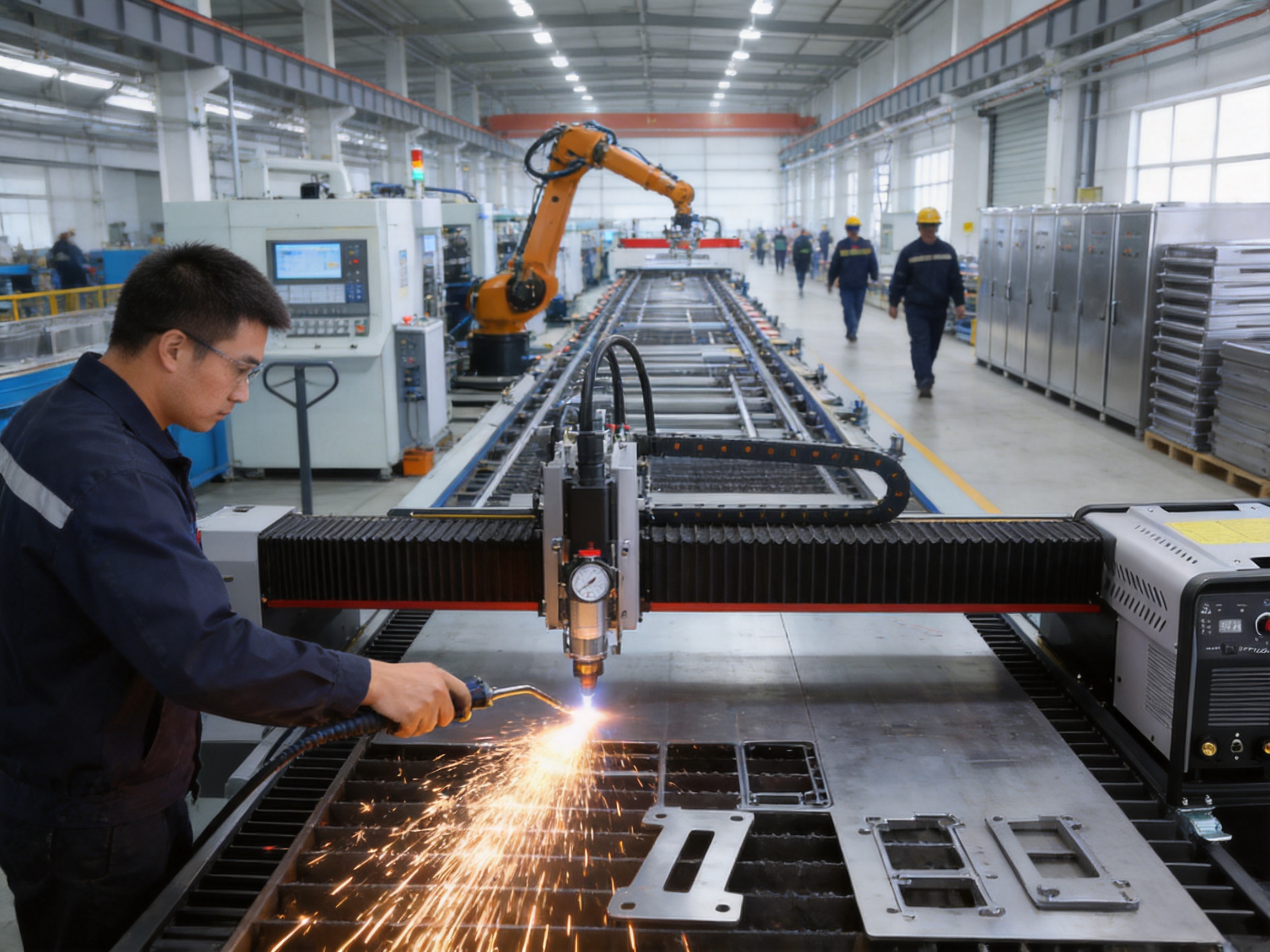
The machine is designed for precise and efficient cutting of thin and medium conductive metal plates, including carbon steel, alloy steel, and stainless steel. It is suitable for fabrication, repair, maintenance, and industrial production tasks.
It uses IGBT inverter technology, switching mode power supply design, and PWM control technology. These technologies help improve energy efficiency, reduce size and weight, stabilize cutting current, and support better arc performance.
For thin and medium plates, it can cut faster, reduce operating cost, and avoid many safety risks associated with combustible fuel gas. It also works on materials such as stainless steel, where oxy-fuel cutting is not generally effective.
The listed quality cutting thickness is 12 mm. The listed maximum cutting thickness is 15 mm under suitable working conditions.
The digital current meter allows operators to monitor cutting current clearly. This makes setting adjustment easier, improves repeatability, and helps operators match current to material thickness and cutting requirements.
Yes. With a listed net weight of 30.5 kg and compact dimensions of 480 mm by 390 mm by 510 mm, it is easier to move than many traditional cutting machines. This makes it suitable for flexible workshop layouts and maintenance work.
The technical information lists contact arc ignition. This is a practical method for starting the cutting arc in workshop applications.
IGBT inverter technology supports efficient power conversion and stable current control. In plasma cutting, this helps produce a more stable arc, improves cutting quality, and reduces energy waste compared with many older power source designs.
It reduces dependence on oxygen and acetylene gas flame cutting, helping avoid fuel gas storage and explosion-related risks in many applications. It also includes multiple protective measures for improved machine reliability. Operators must still follow plasma cutting safety practices, including eye protection, ventilation, grounding, and protective clothing.
The manufacturer operates a large production base, uses advanced management systems such as ERP and MES, applies automated electronic assembly processes, and has strong R&D capabilities. It also holds multiple international certificates and participates in welding machine standard development.
The CUT-60KF Inverter Air Plasma Arc Cutting Machine is a strong solution for users who need fast, safe, efficient, and reliable cutting of thin and medium metal plates. By combining IGBT inverter technology, switching mode power supply, PWM control, digital current display, stable arc performance, multiple protective measures, and compact construction, it offers clear advantages over traditional flame cutting, many older transformer machines, and low-end plasma cutters.
Its value lies not only in technical specifications but also in practical workshop benefits. It can improve cutting speed, reduce fuel gas dependence, lower certain operating costs, support cleaner cuts, and make production more flexible. For manufacturers, maintenance teams, distributors, and fabrication professionals, these advantages can translate into better productivity and stronger competitiveness.
The product is also supported by a manufacturer with large-scale production capacity, advanced manufacturing systems, broad product expertise, strong R&D resources, international certifications, and experience in standard development. This background gives the machine a solid foundation in engineering, production consistency, and global market suitability.
For businesses seeking a practical plasma cutting machine that balances performance, reliability, safety, and cost-effectiveness, the CUT-60KF stands out as a compelling choice for modern metalworking.
American Welding Society. Welding Handbook: Welding Processes and Cutting.
International Electrotechnical Commission. Standards for Arc Welding Equipment Safety and Performance.
National Welding Machine Standardization Committee. Technical Requirements for Welding and Cutting Power Sources.
Kalpakjian, S., and Schmid, S. Manufacturing Engineering and Technology.
Lancaster, J. F. The Physics of Welding.
Weman, K. Welding Processes Handbook.
Recommended Products

Contact Us
No.2299, Luqiao Section, Shugang Avenue, Luqiao District, Taizhou, 318057 Zhejiang, PR China.
+86-576-82431568
 Privacy
China Welding Machine Factory
 English
 中文简体
中文简体
 русский
 Español
 عربى
عربى
 Français
 Português
 Deutsch
 Український