Email: [email protected]
Email: [email protected]

Blog
 2026.11.11
 Blog
Welding quality depends on much more than the power source, welding wire, or operator technique. The performance of a complete welding system is also determined by the condition, compatibility, and design of its parts and accessories. Torches, electrode holders, earth clamps, cables, contact tips, nozzles, regulators, connectors, cooling components, control elements, and other replacement parts all influence arc stability, heat transfer, operator safety, and production efficiency.
Professional welding machine parts are therefore essential for maintaining reliable performance across MIG/MAG, TIG, MMA or stick welding, plasma cutting, resistance welding, submerged arc welding, and related applications. Correctly selected parts help protect the equipment, reduce unplanned downtime, improve weld consistency, and extend the useful life of the machine. They also allow users to adapt one welding system to different materials, thicknesses, work environments, and production requirements.
Zhejiang Kende Mechanical & Electrical Co., Ltd. provides welding accessories and machine parts for industrial, commercial, workshop, construction, agricultural, automotive, maintenance, and household applications. Supported by extensive manufacturing experience, research and development capability, automated production technologies, quality systems, and international certifications, the company offers parts designed to support a broad range of welding and cutting equipment.
The following article explains the role of welding machine parts, the main categories available, their technical advantages, manufacturing considerations, selection methods, and the strengths of an experienced manufacturer with integrated production capabilities.

Parts
Welding equipment operates under demanding conditions. Welding arcs generate intense heat, electrical components carry substantial current, and accessories are frequently exposed to sparks, spatter, dust, vibration, impact, and repeated handling. A small part that is worn, incorrectly sized, or poorly manufactured can affect the entire welding process.
For example, a damaged contact tip can interrupt wire feeding and make the arc unstable. A clogged gas nozzle can disturb shielding coverage and cause porosity. A loose earth clamp can increase electrical resistance and create an inconsistent arc. A deteriorated cable can reduce current delivery, generate excessive heat, or create a safety hazard. In TIG welding, a contaminated tungsten electrode or an unsuitable ceramic cup can affect gas protection and lead to weld defects.
Using suitable replacement parts restores the intended operating conditions of the equipment. It also helps operators avoid unnecessary replacement of an entire machine when only a consumable, connector, cable assembly, or accessory requires attention. This approach reduces maintenance costs and supports more sustainable equipment use.
High-quality parts provide several practical benefits:
1. More stable arc performance during welding.
2. Better electrical conductivity and lower energy loss.
3. Improved shielding gas coverage.
4. More consistent wire or electrode feeding.
5. Reduced frequency of maintenance interruptions.
6. Better protection for the operator and the welding machine.
7. Greater compatibility across different operating conditions.
8. Longer service life in demanding workshop environments.
9. Lower total cost of ownership.
10. Improved productivity for professional and industrial users.
Different welding processes require different accessories and replacement components. A parts supplier with broad product knowledge can support customers across several technologies instead of offering only a narrow range of products.
MIG and MAG welding systems use a continuously fed wire electrode and shielding gas. The torch assembly, liner, contact tip, gas nozzle, diffuser, wire guide, cable, and connector all play an important role in the process.
Contact tips must provide reliable electrical transfer from the torch to the welding wire. The internal diameter must match the wire size while allowing smooth feeding. If the tip is too tight, wire movement may become irregular. If it is too loose or worn, the arc may become unstable and the contact point may overheat.
Gas nozzles guide shielding gas around the arc and molten pool. Their shape and internal dimensions influence gas distribution and access to the joint. A durable nozzle should resist heat, spatter, and repeated cleaning. Replacement nozzles are particularly useful in high-volume welding operations, where spatter accumulation can quickly affect shielding performance.
Liners guide the welding wire through the torch cable. A suitable liner reduces feeding resistance and supports a consistent wire delivery rate. Different liner materials and internal dimensions may be selected for steel wire, stainless steel wire, aluminum wire, or other specialized applications.
Diffusers, necks, torch handles, trigger switches, cable assemblies, and Euro-style or other machine-side connectors complete the MIG/MAG accessory system. When these parts are properly matched, operators can achieve smooth wire feeding, stable current transfer, and more comfortable torch handling.
TIG welding requires precise control of the arc and shielding gas. Common TIG parts include torch bodies, torch heads, collets, collet bodies, ceramic gas cups, back caps, tungsten electrodes, gas lenses, switches, flexible cables, and connectors.
The collet securely holds the tungsten electrode while allowing adjustment of electrode extension. The collet body supports gas flow around the tungsten. A ceramic cup directs shielding gas toward the weld zone and protects the electrode from accidental contact. Gas lenses can improve gas coverage and help maintain a smoother shielding pattern, especially when a longer electrode extension is necessary.
TIG torch components must withstand repeated exposure to heat while remaining comfortable for the operator. Handle design, cable flexibility, switch position, and torch balance all influence control during precision welding. For professional users, ergonomic parts can reduce hand fatigue and improve the consistency of long welding operations.
Parts for air-cooled and water-cooled TIG torches must be selected according to the equipment configuration. Water-cooled systems use additional hoses, fittings, and cooling connections. Using incompatible parts may reduce cooling efficiency or cause leakage. Correct matching is therefore essential for reliable operation.
MMA or stick welding is widely used in construction, repair, fabrication, agricultural equipment maintenance, and general workshop applications. Its main accessories include electrode holders, earth clamps, welding cables, cable lugs, connectors, and storage equipment.
An electrode holder must grip the electrode securely and provide reliable current transfer. It should also offer sufficient insulation between the energized components and the operator’s hand. A well-designed holder allows the electrode to be positioned at different angles, making it suitable for flat, horizontal, vertical, and overhead welding.
Earth clamps complete the welding circuit and must maintain firm contact with the workpiece or welding table. Strong springs, conductive contact surfaces, and heat-resistant materials help maintain electrical stability. Cable assemblies must be flexible enough for practical movement while resisting abrasion, cuts, heat, and mechanical stress.
MMA accessories are often used in mobile and outdoor environments. For this reason, durability and portability are particularly important. Robust connectors and reinforced cable ends reduce the risk of failure when equipment is transported between work locations.
Air plasma cutting machines use an electric arc and compressed air or another plasma gas to cut electrically conductive materials. Plasma torch parts commonly include electrodes, nozzles, swirl rings, shields, torch heads, retaining caps, and cable assemblies.
Plasma consumables are exposed to extreme heat and high-velocity plasma flow. Their geometry directly influences the shape, concentration, and stability of the cutting arc. A worn electrode or nozzle can produce a wider kerf, rougher cut edge, reduced cutting speed, or difficulty in starting the arc.
Replacing plasma parts at the correct time supports clean cutting and reduces the risk of damage to the torch. It is important to use consumables designed for the specific current range, gas type, torch model, and material thickness. Proper air quality is also important because moisture and oil contamination can shorten consumable life.
Resistance spot welding requires reliable current flow, accurate electrode contact, and consistent mechanical pressure. Parts may include electrodes, electrode holders, arms, tips, transformers, cables, foot switches, control components, and replacement insulation elements.
Spot welding electrodes experience repeated heating and cooling cycles. Their shape, material, and condition influence the size and strength of the weld nugget. Proper maintenance and timely replacement help prevent inconsistent weld penetration and excessive marking on the workpiece.
For automotive, sheet-metal, appliance, and light fabrication applications, replacement resistance welding parts help maintain repeatability. The correct components also reduce the risk of excessive energy consumption and overheating in the welding circuit.
Submerged arc welding is used for high-deposition welding in heavy fabrication, pressure vessels, structural steel, pipelines, and other industrial applications. The process requires wire feeding systems, contact assemblies, flux delivery equipment, guide components, cables, and control elements.
Parts for submerged arc welding must support continuous operation and high deposition rates. Wire guides and contact components should maintain accurate alignment, while flux delivery components should provide even coverage over the welding zone. Reliable parts are particularly important in automated production lines, where a small interruption can affect a long weld seam and cause significant production loss.
Welding accessories can be divided into several practical groups. Understanding these groups helps distributors, service technicians, and end users identify the right replacement items.
| Accessory Category | Typical Components | Main Function |
|---|---|---|
| Current Transfer Parts | Contact tips, electrode holders, collets, cable lugs | Transfer welding current efficiently to the electrode or workpiece |
| Shielding Components | Gas nozzles, ceramic cups, gas lenses, diffusers | Direct and stabilize shielding gas around the welding zone |
| Wire Feeding Parts | Liners, drive rolls, guides, tension components | Deliver welding wire smoothly and consistently |
| Torch Components | Handles, switches, necks, torch bodies, retaining caps | Support control, protection, and practical torch operation |
| Connection Components | Plugs, sockets, connectors, adapters, cable assemblies | Connect the welding machine, torch, workpiece, and accessories |
| Plasma Consumables | Electrodes, nozzles, swirl rings, shields | Maintain plasma arc concentration and cutting quality |
| Safety and Support Parts | Insulators, covers, strain reliefs, protective sleeves | Protect the user and equipment from heat, impact, and electrical contact |
The same part category may contain multiple dimensions, materials, connection standards, and performance ratings. Selecting the correct specification is more important than choosing an accessory based only on appearance.
Electrical conductivity is a fundamental requirement for welding accessories. Current-transfer components must have suitable conductive materials and carefully controlled contact surfaces. Poor conductivity creates resistance, which can result in heat buildup, unstable arc behavior, energy loss, and premature failure.
Professionally manufactured components are designed with attention to material selection, surface finish, dimensional accuracy, and contact pressure. These factors help maintain stable electrical performance under normal operating loads.
Welding accessories are repeatedly exposed to high temperatures. Torches, nozzles, electrode holders, plasma consumables, and cable ends must tolerate thermal cycling without excessive deformation or loss of insulation.
Suitable copper alloys, heat-resistant plastics, ceramics, rubbers, and insulating materials help components retain their shape and protective properties. Thermal stability is particularly important for users operating at high current, high duty cycle, or extended welding duration.
Small dimensional differences can affect welding performance. A contact tip bore, torch thread, collet diameter, nozzle opening, or connector interface must be manufactured within suitable tolerances. Accurate dimensions support correct assembly and help prevent looseness, leakage, wire feeding problems, or poor electrical contact.
Modern production equipment, tooling, inspection systems, and process controls allow manufacturers to produce repeatable parts for large-volume orders and replacement programs.
Durability is influenced by material strength, wall thickness, surface treatment, assembly method, and design. A durable accessory does not necessarily need to be oversized or heavy. Instead, it should be designed to withstand the actual combination of heat, current, movement, impact, and chemical exposure found in the intended application.
Longer-lasting parts reduce the frequency of replacement and help users keep equipment available for production. This is particularly valuable for fabricators, service centers, rental companies, and industrial users with multiple welding stations.
Parts such as torch handles, cable assemblies, electrode holders, and switches directly affect the operator. Balanced components, flexible cables, smooth triggers, and ergonomic grips reduce fatigue and allow better control of the weld pool.
Operator comfort can influence productivity and weld quality over a full shift. Accessories designed for practical handling are therefore not merely convenience products; they are important elements of the complete welding system.
A broad parts portfolio helps users maintain different types of equipment within one workshop. Standardized connectors, replacement torch assemblies, cable options, and consumables can simplify inventory management while allowing equipment to be configured for different jobs.
Compatibility should always be verified by machine model, current rating, torch type, connection style, wire diameter, electrode size, gas system, and intended application. Technical support and accurate product documentation are valuable when several options appear similar.
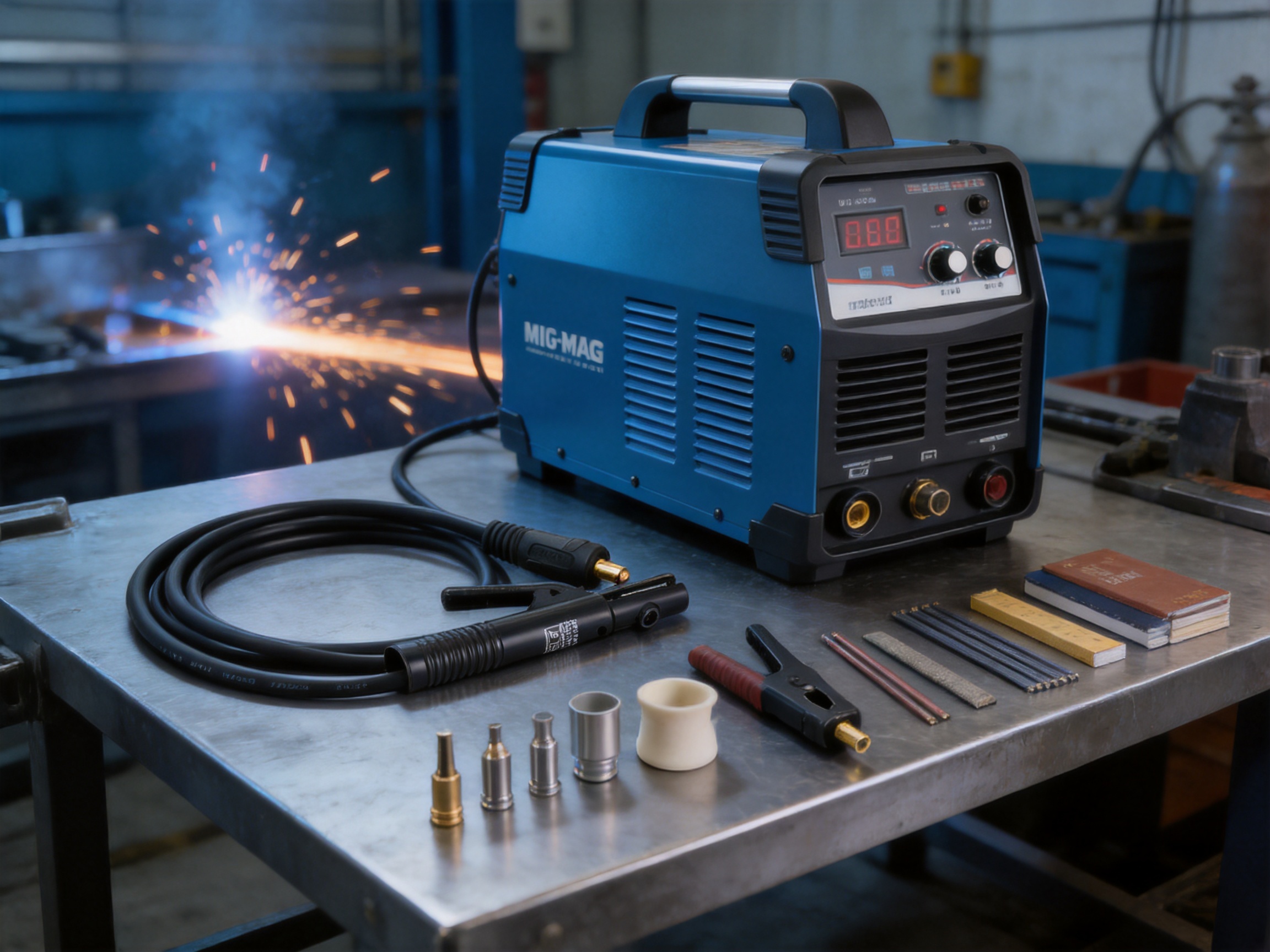
The performance of welding accessories is strongly connected to the manufacturing process used to produce them. A reliable supplier must control the complete route from product design and material selection to forming, machining, assembly, inspection, packaging, and after-sales support.
Product development begins with an understanding of the welding application. Engineers evaluate operating current, duty cycle, temperature, gas flow, mechanical loading, connection requirements, and expected service life. This information is used to determine the geometry, materials, insulation, cooling requirements, and assembly method.
Computer-aided design supports accurate development of torches, holders, connectors, nozzles, cable assemblies, and other components. Prototypes can be evaluated and modified before large-scale production. This reduces development risk and allows products to be adapted to regional standards or customer requirements.
Different parts require different material characteristics. Conductive components may require copper or copper alloys with suitable strength and conductivity. Insulating parts may use heat-resistant engineering plastics, rubber, or ceramics. Cable jackets must balance flexibility, abrasion resistance, temperature resistance, and electrical insulation.
Material selection also affects manufacturing consistency. Stable raw materials with controlled properties help reduce dimensional variation and improve the repeatability of finished products.
Machining processes are used for threaded components, contact tips, collets, connectors, holders, adapters, and other parts requiring accurate dimensions. Forming, stamping, injection molding, and die-casting processes may be used for larger production quantities and complex shapes.
Tooling quality and process control are essential. Properly maintained molds, dies, cutting tools, and fixtures help ensure that each part meets its intended geometry. Automated equipment can improve production speed while reducing variation between batches.
Welding machines and related systems often include electronic control boards, switches, sensors, power components, and protection circuits. Advanced automatic patching, plug-in, soldering, and assembly systems support consistent production of electrical modules.
Automation can improve placement accuracy, reduce manual handling errors, and support stable quality for large production volumes. It also allows manufacturing teams to trace process data and identify potential issues earlier.
Robot processing is useful for repeatable operations such as handling, welding, assembly, and material movement. Robotic systems can maintain consistent paths and production cycles, especially when the same parts are produced in significant quantities.
Laser cutting and related laser technologies support accurate processing of sheet metal and other components. Laser equipment can create clean profiles, reduce secondary finishing work, and support efficient customization. These capabilities are particularly valuable when producing housings, brackets, protective structures, and specialized accessories.
Inspection should take place throughout production rather than only at the end. Incoming materials can be checked before use. During processing, dimensions, assembly position, electrical continuity, insulation, appearance, and other characteristics can be monitored. Finished accessories may be tested for current capacity, mechanical operation, gas flow, connection security, and heat resistance according to their design.
Testing procedures should reflect the actual function of the part. A cable assembly requires different checks from a plasma nozzle, while a TIG torch body requires different evaluation from an electrode holder. Application-specific testing provides more meaningful quality assurance.
Zhejiang Kende Mechanical & Electrical Co., Ltd. operates as an integrated manufacturer and exporter of electric welding machines, chargers, heaters, welding accessories, and related products. Its large production base and broad product scope provide important advantages for customers seeking compatible parts and complete equipment support.
The company covers approximately 120,000 square meters and employs about 600 people. Its reported annual production capacity reaches approximately two million units, with exports of nearly 1.5 million units each year. This scale indicates substantial experience in production planning, supply chain coordination, quality control, international logistics, and customer service.
A large manufacturing platform can provide several benefits for welding parts customers. It can support stable purchasing volumes, more efficient tooling investment, broader technical resources, and improved coordination between machine design and accessory development. It also allows parts to be evaluated in relation to complete welding systems rather than as isolated components.
Kende uses modern management and manufacturing systems, including office automation, Toyota-style production management, ERP management, and manufacturing execution systems. These systems help organize materials, production schedules, process information, quality records, and order fulfillment.
Advanced automatic patching, plug-in, welding, robotic processing, and laser cutting technologies support efficient production. The integration of these technologies helps improve consistency, reduce avoidable production variation, and provide a foundation for large-volume manufacturing.
The company also maintains research and development resources, including a provincial research and development center, an enterprise technology center, and an intelligent welding technology research institute. With approximately 98 research and development personnel, Kende has the resources to develop, modify, and optimize products for different markets and applications.
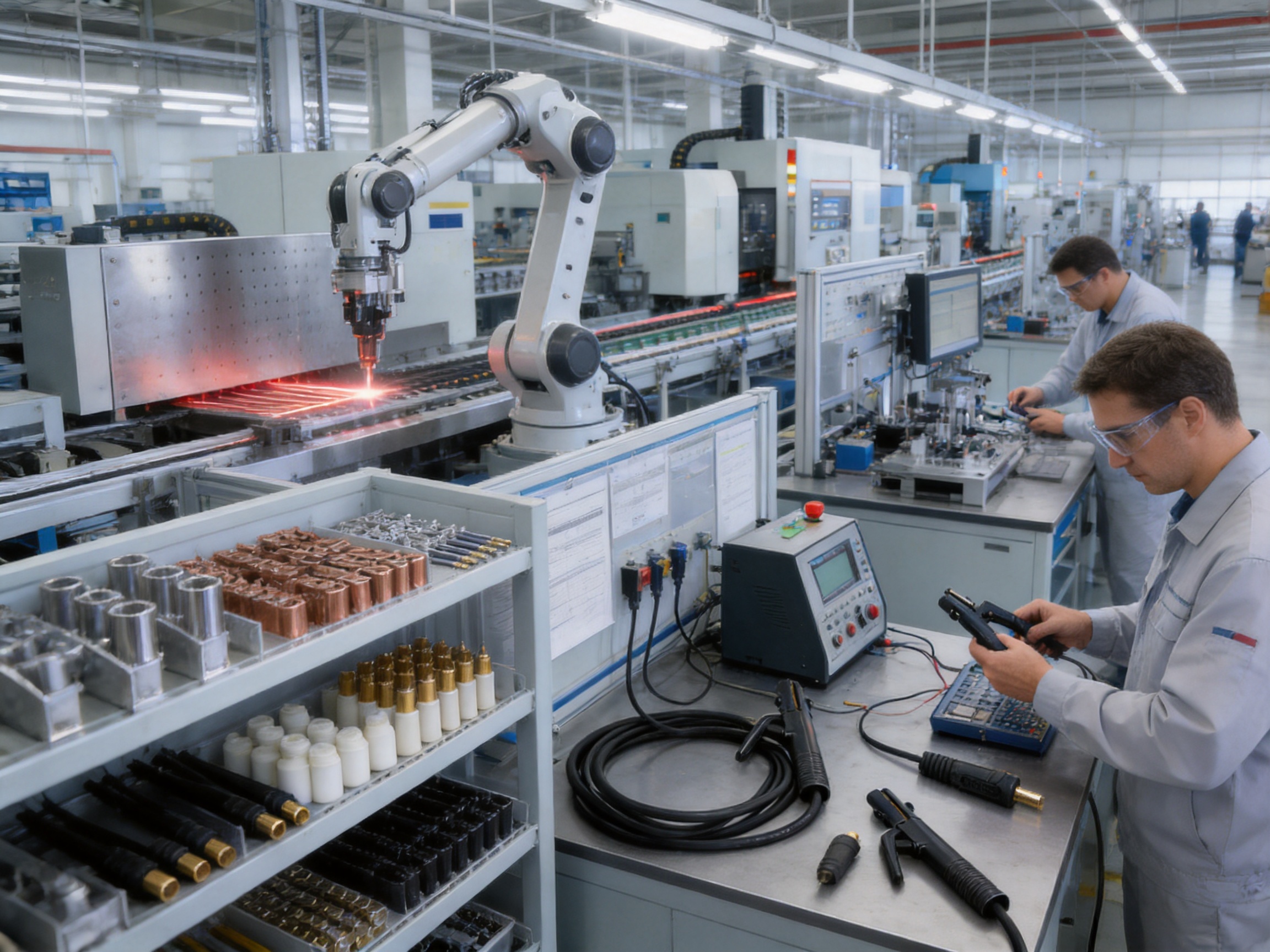
International customers often require products to meet recognized safety, electromagnetic compatibility, energy efficiency, and market-access requirements. Certifications do not replace practical testing, but they provide evidence that products have been evaluated against relevant standards or regulatory requirements.
Kende holds a range of international product certifications, including GS, CE, EMC, ERP, United States ETL, United Kingdom UKCA, and China CCC certifications. The exact certification applicable to a product depends on its design, market, voltage, intended use, and relevant standards.
For distributors and importers, certification support can simplify market entry and reduce uncertainty during product registration or customer approval. For end users, certification can provide additional confidence that equipment has been designed with recognized safety and performance requirements in mind.
Kende also participates in the development of national welding machine standards through the National Welding Machine Standardization Committee. The company has participated in drafting, formulating, and revising multiple national standards and has led the drafting of a group standard. Such participation demonstrates engagement with the wider technical development of the welding industry.
Patents and technical awards can also reflect long-term investment in innovation. Kende has obtained invention patents, utility model patents, appearance patents, and software copyrights. These capabilities support product differentiation in areas such as inverter technology, control systems, manufacturing processes, safety structures, and user-oriented design.
A stable arc requires consistent electrical contact, controlled gas protection, and reliable wire or electrode positioning. Replacement parts restore these conditions when original components become worn or contaminated.
For MIG/MAG welding, contact tips, liners, drive components, and gas nozzles directly influence arc stability. For TIG welding, the tungsten holding system and gas cup affect electrode position and shielding. For MMA welding, electrode holders, cables, and earth clamps influence current flow and operator control.
Welding defects can result from many factors, including incorrect parameters, poor surface preparation, unsuitable materials, operator technique, and defective accessories. Parts cannot eliminate every possible defect, but they can remove equipment-related causes.
Proper gas nozzles and diffusers help reduce shielding disturbances. Correct liners and drive rolls help prevent wire feeding interruptions. New plasma consumables support a concentrated cutting arc. Reliable cables and clamps reduce electrical resistance and intermittent contact.
Efficient production depends on keeping equipment operating for as much of the planned schedule as possible. A planned inventory of common replacement parts allows technicians to perform quick maintenance instead of waiting for a complete torch, machine, or imported component.
Standard replacement programs are especially useful for production lines with many welding stations. Parts can be inspected during routine maintenance and replaced before they cause an unexpected stoppage.
Accessories can also help users adapt existing equipment. A different torch configuration, cable length, electrode holder, contact tip, or gas nozzle may make a machine more suitable for a new workpiece or production method.
However, upgrades must remain within the machine’s electrical and thermal ratings. A part that fits physically may not be suitable for the current, duty cycle, gas type, or control system. Technical consultation is recommended when changing the original configuration.
Welding machine parts are used in many sectors because welding itself is a fundamental joining and cutting technology.
In metal fabrication workshops, accessories support daily production of frames, brackets, cabinets, gates, platforms, and structural components. In automotive repair, MIG/MAG torches, spot welding parts, clamps, cables, and plasma consumables are used for bodywork and chassis-related tasks.
In construction, MMA holders, earth clamps, cables, connectors, and protective parts are valued for portability and durability. On-site welding often involves uneven surfaces, long cable runs, dust, vibration, and changing weather conditions, making robust accessories important.
In agricultural equipment maintenance, welding machines are used to repair trailers, machinery frames, implements, containers, and support structures. Replacement parts reduce downtime when equipment must be returned to service quickly.
In industrial manufacturing, automated or semi-automated welding systems rely on consistent accessories for repeatable production. Submerged arc parts, wire feeding components, contact systems, and control accessories are especially important for long weld seams and high-deposition processes.
In maintenance departments, a broad accessory inventory supports rapid response to breakdowns. The ability to obtain compatible components from a dependable source can simplify procurement and reduce the number of suppliers required.
Correct selection begins with identifying the welding process and equipment model. Users should record the machine type, torch type, rated current, duty cycle, connection standard, wire diameter, electrode size, gas type, and intended material.
For MIG/MAG components, check the welding wire diameter, torch model, liner length, contact tip specification, gas nozzle design, diffuser type, and machine-side connector. For TIG parts, check the torch cooling method, tungsten diameter, cup size, collet dimensions, gas connection, and switch configuration.
For plasma consumables, identify the exact torch and machine family, recommended current range, electrode and nozzle combination, air or gas requirement, and material thickness. Mixing parts from different plasma systems can reduce cut quality or damage the torch.
For MMA accessories, check the welding current, cable cross-section, connector size, electrode holder capacity, cable length, and insulation condition. Larger current and longer cable runs may require appropriate cable sizing to control voltage drop and heat generation.
Users should also consider operating frequency and environment. A light workshop application may not require the same accessory durability as a continuous production line. Outdoor work may require stronger cable protection and more robust connectors. Precision TIG work may prioritize torch flexibility and gas control.
When in doubt, provide photographs, model numbers, dimensions, and application information to the supplier. Technical staff can then help identify a suitable replacement or compatible alternative.
Even high-quality parts require proper maintenance. Operators should inspect torches, holders, cables, connectors, clamps, nozzles, and consumables regularly. Damaged insulation, loose connections, excessive spatter, deformation, discoloration, gas leakage, and abnormal heating are signs that service may be required.
MIG/MAG contact tips and nozzles should be cleaned using suitable tools rather than excessive force. Liners should be kept free of contamination and replaced when wire feeding becomes inconsistent. Drive rolls should match the wire type and remain correctly tensioned.
TIG gas cups should be cleaned or replaced when cracked, heavily contaminated, or unable to maintain suitable shielding. Collets and collet bodies should be checked for wear. Tungsten electrodes should be prepared according to the welding process and protected from contamination.
MMA cables and electrode holders should be inspected for cuts, exposed conductors, loose terminals, and heat damage. Earth clamps should make firm contact with clean metal. Plasma consumables should be checked for erosion and replaced as a matched set when required.
All maintenance should be performed with the equipment isolated from the power supply. Operators should follow the machine manual, applicable workplace safety procedures, and relevant electrical and welding safety requirements.
Purchasing parts from an experienced integrated manufacturer can offer advantages beyond the individual product. Buyers may receive better technical coordination, more consistent product families, clearer documentation, and improved support for custom requirements.
An integrated supplier understands how power sources, torches, cables, consumables, and controls interact. This knowledge can help reduce compatibility problems. It also allows the supplier to recommend parts based on the complete application rather than selecting products from a disconnected catalog.
Integrated manufacturing can support original equipment manufacturing, private labeling, regional product adaptation, and custom development. Customers serving different markets may require different plugs, voltage ratings, certifications, packaging, manuals, colors, connectors, or accessory combinations.
A manufacturer with its own research, production, testing, and quality systems can coordinate these requirements more efficiently. The result can be a more stable supply program and a product range better suited to the customer’s market.
Replacing a worn part instead of discarding a complete welding machine can reduce material consumption and extend equipment life. Durable accessories also reduce the number of discarded consumables and maintenance-related interruptions.
Efficient welding accessories may contribute to lower energy loss by improving electrical contact and reducing resistance. Stable gas delivery can help prevent waste caused by excessive flow or repeated defective welds. Correctly maintained plasma consumables can improve cutting efficiency and reduce the need for rework.
When calculating cost, buyers should consider more than the purchase price. The total cost of ownership includes service life, replacement frequency, downtime, labor, energy, rework, transport, and inventory management. A reasonably priced part with stable quality may provide better value than a low-cost component that fails frequently or causes production problems.
Manufacturers with advanced production systems can also improve material utilization, production efficiency, and quality consistency. These factors may contribute to more competitive long-term pricing without sacrificing essential performance.
Welding accessories are sold in markets with different technical standards, languages, voltages, packaging expectations, and regulatory requirements. An experienced exporter must be able to manage documentation, labeling, packaging, production schedules, inspection, and international delivery.
Kende has long-term experience exporting welding machines, chargers, heaters, and related products. Its international certifications and broad customer base support cooperation with distributors, importers, wholesalers, project contractors, and equipment brands.
Effective customer support includes product identification, technical data, replacement recommendations, order coordination, packaging information, and after-sales communication. For parts, clear identification is particularly important because many components may look similar while having different dimensions or performance ratings.
Customers should expect suppliers to provide accurate part names, drawings or dimensions when necessary, compatible machine information, material details where relevant, recommended operating ranges, and packaging quantities. These details simplify purchasing and reduce the risk of incorrect orders.
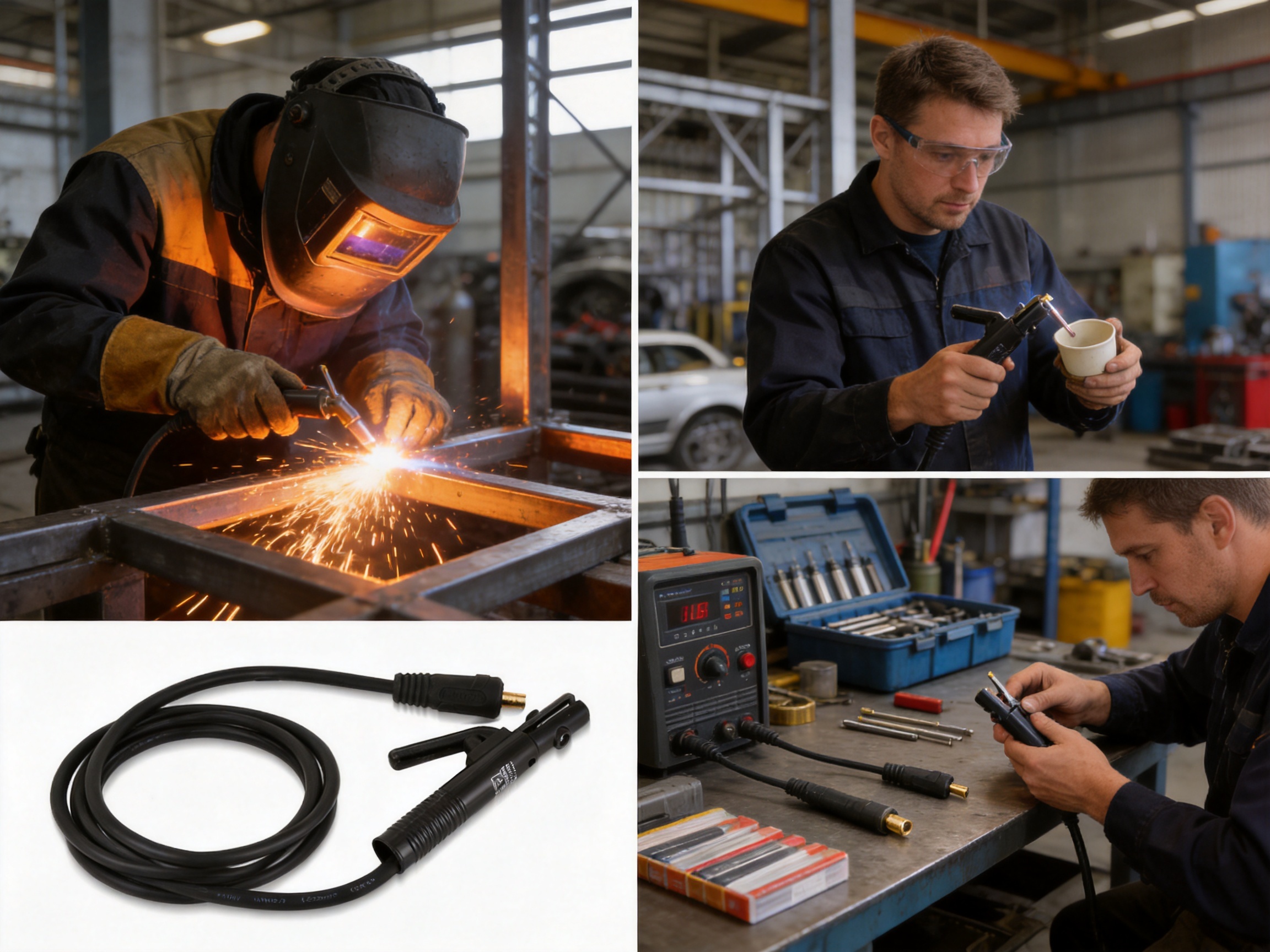
Welding machine parts and accessories are components used to operate, maintain, repair, protect, or adapt welding and cutting equipment. They include torches, electrode holders, cables, clamps, connectors, contact tips, nozzles, liners, collets, ceramic cups, plasma consumables, switches, and protective components.
Worn parts can cause unstable arcs, poor gas coverage, wire feeding problems, excessive heat, electrical resistance, uneven cuts, weld defects, and safety risks. Prompt replacement helps maintain equipment performance and reduces the chance of damage to more expensive components.
No. Parts must be matched to the process, machine model, torch type, connection standard, current rating, wire or electrode size, and application. Physical similarity does not guarantee electrical, thermal, or mechanical compatibility.
Replacement frequency depends on the accessory, welding current, duty cycle, materials, operator practice, maintenance, and working environment. Consumables such as contact tips, nozzles, and plasma electrodes may require frequent inspection, while cables, holders, and torch bodies may last longer when properly maintained.
Useful information includes the machine model, torch model, part number, dimensions, current rating, wire or electrode diameter, connection type, photographs, quantity, and application. Details about the welding material and working conditions may also help with selection.
Certification can provide evidence that a product or machine has been assessed against relevant safety, electromagnetic compatibility, energy efficiency, or market-access requirements. The required certification depends on the product and destination market. Buyers should confirm the applicable requirements for their specific order.
A consumable is normally designed to wear during ordinary operation and requires regular replacement, such as a contact tip, plasma nozzle, electrode, or tungsten electrode. A replacement part may be a longer-life component used to repair or restore equipment, such as a cable assembly, switch, handle, connector, or torch body.
Many accessories can be adapted through changes to dimensions, connectors, cable lengths, packaging, labels, colors, materials, or accessory combinations. Customization depends on production volume, technical feasibility, tooling requirements, applicable certifications, and customer specifications.
Useful technologies include computer-aided product design, precision machining, injection molding, stamping, die casting, automated electronic assembly, robotic processing, laser cutting, electrical testing, dimensional inspection, and application-specific performance testing.
A large and experienced manufacturer may provide broader product coverage, stronger research and development resources, stable production capacity, more consistent quality control, international certification support, improved customization capability, and better coordination between welding machines and their accessories.
Welding machine parts are essential to the performance, safety, efficiency, and service life of welding and cutting equipment. Although accessories are often smaller than the machine itself, their influence on current transfer, gas shielding, wire feeding, arc stability, cutting accuracy, operator comfort, and maintenance costs is significant.
A complete parts program can support MIG/MAG, TIG, MMA, plasma cutting, resistance welding, submerged arc welding, and other applications. High-quality components provide accurate dimensions, reliable conductivity, heat resistance, durable insulation, practical ergonomics, and compatibility with professional equipment.
The manufacturing capability behind the part is equally important. Advanced design, material control, precision processing, automated assembly, robotic technology, laser cutting, inspection, testing, certification, and technical support all contribute to consistent product performance.
Zhejiang Kende Mechanical & Electrical Co., Ltd. combines large-scale manufacturing, research and development, international certification experience, advanced management systems, and a broad welding product portfolio. Its capabilities provide a strong foundation for supplying welding accessories, replacement parts, complete machines, and customized product solutions to customers in different markets.
For distributors, workshops, contractors, industrial users, and equipment manufacturers, selecting reliable welding parts is a practical investment. Properly matched accessories reduce downtime, improve process stability, protect the welding system, and help users achieve more consistent results over the working life of their equipment.
1. American Welding Society, Welding Handbook, welding processes, equipment, consumables, and safety practices.
2. International Organization for Standardization, quality management principles and conformity assessment practices for industrial products.
3. International Electrotechnical Commission, safety and performance considerations for arc welding equipment.
4. National Welding Machine Standardization Committee, technical development and standardization practices for welding equipment.
5. Manufacturer technical information for MIG/MAG, TIG, MMA, plasma cutting, resistance welding, and submerged arc welding accessories.
6. Industrial maintenance guidelines for welding torches, cables, electrode holders, contact tips, nozzles, connectors, and plasma consumables.
7. General occupational health and safety guidance for welding, cutting, electrical equipment, compressed gases, and thermal hazards.
Recommended Products

Contact Us
No.2299, Luqiao Section, Shugang Avenue, Luqiao District, Taizhou, 318057 Zhejiang, PR China.
+86-576-82431568
 Privacy
China Welding Machine Factory
 English
 中文简体
 русский
 Español
 عربى
 Français
 Português
 Deutsch
 Український