Email: [email protected]
Email: [email protected]

Industry News
 2026.01.16
 Industry News
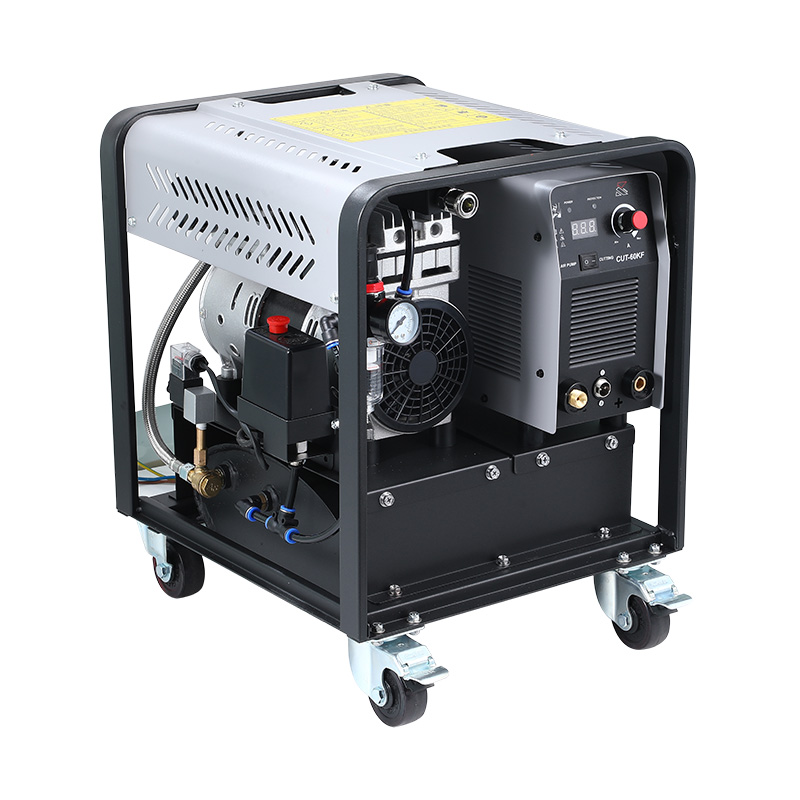
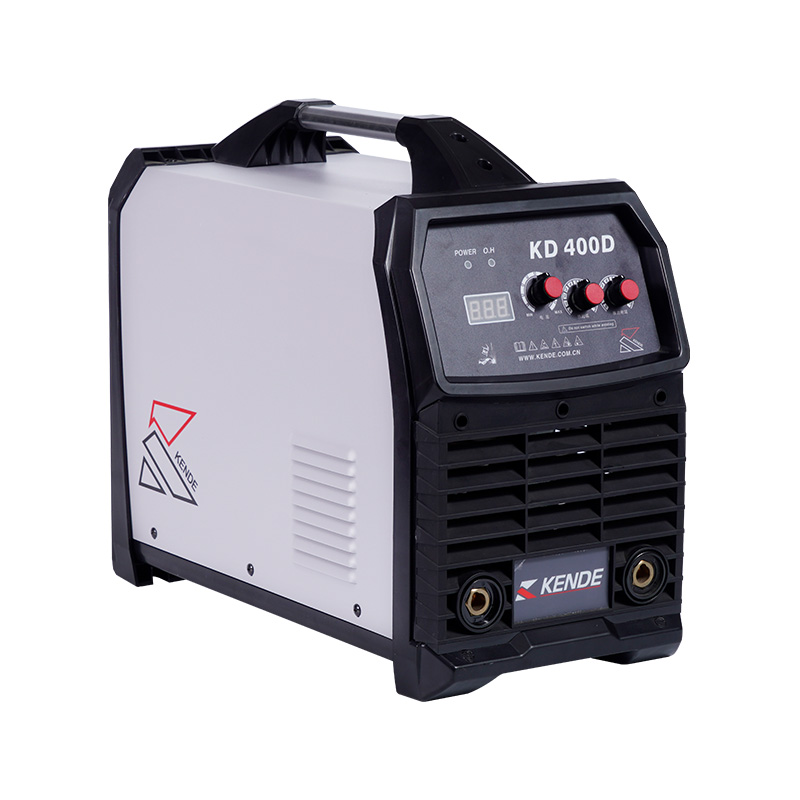
Metal cutting requires precision, efficiency, and reliability. Among the tools available for cutting metal sheets and plates, an Inverter Plasma Cutter has become a popular choice for both professional workshops and DIY enthusiasts. Its compact design, adjustable power, and clean cutting ability make it suitable for a wide range of applications.
An Inverter Plasma Cutter uses high-frequency electrical current to generate a plasma arc capable of melting and cutting metal quickly. Unlike traditional cutting methods, plasma cutters do not rely on mechanical blades or intense heat from fuel, which reduces warping and allows for precise control.
The inverter technology converts power into a stable, high-frequency output, making the machine efficient while reducing energy consumption. This enables smoother cuts and greater control over different metal thicknesses.
A typical Inverter Plasma Cutter consists of a power supply, an electrode, a nozzle, and a handle with a trigger. The inverter module regulates electrical current to maintain consistent cutting performance.
Key features often include adjustable current settings, thermal protection, and portability. These features allow users to work on various metals, such as steel, stainless steel, aluminum, or copper, while maintaining cutting accuracy. The machine's compact size also makes it convenient for workshops or job sites with limited space.
In workshops, an Inverter Plasma Cutter is commonly used for cutting sheets, plates, or metal components for fabrication, repair, and maintenance. It is particularly useful for projects requiring straight cuts, curves, or custom shapes.
For DIY enthusiasts, the tool simplifies home or hobby metalworking projects. Its ease of setup and operation allows users to handle tasks that would be difficult or time-consuming with traditional saws or oxy-fuel cutting tools.
Additionally, the Inverter Plasma Cutter is used in automotive repair, construction, and metal art projects. Its ability to cut quickly and precisely saves time while producing clean edges that often require minimal finishing.
While using an Inverter Plasma Cutter, safety precautions are essential. Operators should wear protective gear, including gloves, a welding helmet, and fire-resistant clothing. Proper grounding and ventilation are also important to prevent accidents or inhalation of fumes.
Maintaining the torch, nozzle, and electrode ensures consistent cutting quality. Checking for wear and cleaning the components regularly prevents interruptions and prolongs the life of the machine.
The Inverter Plasma Cutter offers several practical advantages. It is faster than mechanical cutting, produces less heat distortion, and requires minimal preparation. Its portability and versatility make it accessible to both professional shops and small-scale users.
Moreover, inverter technology provides stable and controlled output, reducing energy consumption and improving cutting consistency. These benefits contribute to efficient workflow and reliable results across multiple applications.
An Inverter Plasma Cutter is a versatile and efficient tool for metal cutting, suitable for both professional and hobbyist use. From compact design to precise cutting capability and energy-efficient operation, it offers practical solutions for a wide range of metalworking tasks. Understanding its features, applications, and maintenance requirements helps users achieve clean cuts and reliable performance while improving overall workflow in workshops or home projects.
Recommended Products

Contact Us
No.2299, Luqiao Section, Shugang Avenue, Luqiao District, Taizhou, 318057 Zhejiang, PR China.
+86-576-82431568
 Privacy
China Welding Machine Factory
 English
 中文简体
中文简体
 русский
 Español
 عربى
عربى
 Français
 Português
 Deutsch
 Український