Email: [email protected]
Email: [email protected]

Industry News
 2026.04.24
 Industry News
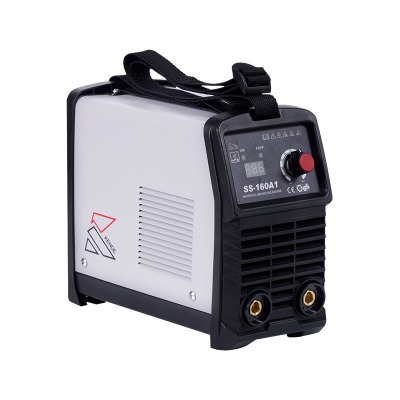
A Welding Machine Factory today operates in a more connected and detail-focused environment than before. It is not only about assembling machines but also about aligning design, production, and application needs. As customers expect equipment that fits different working conditions, factories are refining how they manage both efficiency and usability.
The process in a Welding Machine Factory often begins with understanding application scenarios. Instead of focusing only on technical specifications, teams look at how operators use welding equipment in daily work. This includes considering factors such as workspace limitations, power availability, and ease of adjustment.
Design teams then translate these needs into practical features. For example, control panels may be simplified, and interfaces adjusted for quicker setup. These decisions help reduce unnecessary complexity while keeping the machine functional for different tasks.
Inside the workshop, a Welding Machine Factory usually follows a structured production flow. Each stage is clearly defined, from component preparation to final assembly. This helps reduce confusion and ensures that each part of the process is traceable.
Workers are often assigned to specific tasks, such as wiring, casing installation, or system calibration. This division of labor allows for better consistency across production batches. At the same time, internal checks are placed between stages to identify issues early.
Automation is gradually being introduced in many areas of a Welding Machine Factory. Tasks like cutting metal panels or assembling circuit boards can be handled by machines to improve consistency. However, manual work still plays a key role.
For instance, performance testing often relies on experienced technicians. They observe arc behavior, check stability, and make fine adjustments when necessary. This balance between automated processes and manual input helps maintain reliable results without overcomplicating the workflow.
Another important part of a Welding Machine Factory is how it manages components. Even small variations in materials or electronic parts can affect overall performance. To address this, factories often build long-term relationships with suppliers and set internal inspection standards.
Incoming materials may go through sampling checks before entering the production line. This step helps reduce unexpected variations and supports more stable product output over time.
A Welding Machine Factory often serves customers from different regions and industries. Each market may have its own preferences, such as voltage standards, machine size, or feature requirements.
To handle this, factories develop flexible production systems. Modular designs are commonly used, allowing different models to share core components while offering variations where needed. This approach makes it easier to adjust production without major disruptions.
Testing is not limited to the final stage. In a Welding Machine Factory, checks are integrated throughout the process. Electrical safety, load performance, and operational stability are evaluated at different points.
Feedback from customers is also considered. Factories may adjust certain details based on user experience, such as improving cooling systems or modifying handle structures for better grip. These small changes can make machines more suitable for real working environments.
A Welding Machine Factory is not just a production site but a system that connects design, materials, and user needs. By maintaining a clear workflow, balancing automation with manual expertise, and staying flexible in product development, factories can respond to a wide range of demands. This balanced approach helps ensure that welding machines remain practical and consistent across different applications.
Recommended Products

Contact Us
No.2299, Luqiao Section, Shugang Avenue, Luqiao District, Taizhou, 318057 Zhejiang, PR China.
+86-576-82431568
 Privacy
China Welding Machine Factory
 English
 中文简体
中文简体
 русский
 Español
 عربى
عربى
 Français
 Português
 Deutsch
 Український