Email: [email protected]
Email: [email protected]

Blog
 2026.06.24
 Blog
Blog
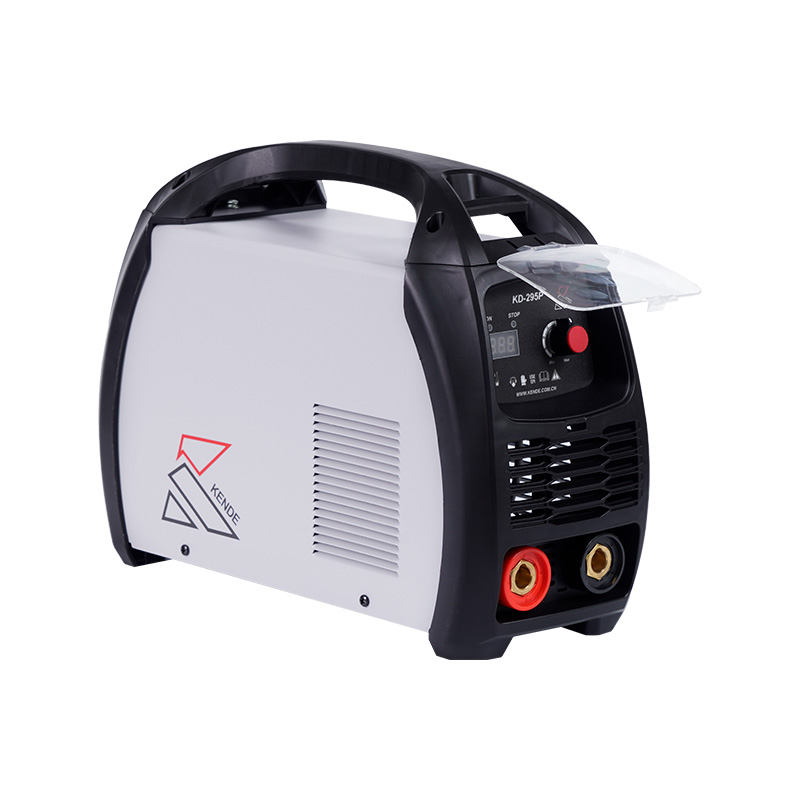
The KD-295A IGBT inverter MMA or stick welding machine is designed for users who need reliable direct-current arc welding performance in a compact, portable, and energy-efficient package. Built for manual metal arc welding, it combines modern inverter technology, constant-current output control, practical arc-assist functions, and protective design features that help welders complete demanding jobs with greater confidence. Whether used in workshop fabrication, maintenance repair, metal installation, farm equipment repair, light industrial production, or mobile service work, this machine offers a balanced combination of welding power, portability, and operating stability.
In the welding equipment market, many users must choose between heavy conventional transformer welders, low-cost machines with unstable arc behavior, and professional inverter machines that may be difficult to operate or expensive to maintain. The KD-295A is positioned as a practical answer to these concerns. It provides strong welding current stability, DC output for good penetration, hot start for easier ignition, arc force for improved control during welding, and anti-stick technology to reduce electrode sticking. These functions are not decorative features; they directly affect the everyday welding experience, especially for operators who need to work efficiently across different metals and job conditions.
The product belongs to the IGBT inverter MMA or stick welding machine category. IGBT inverter technology is widely valued because it allows welding power sources to be smaller, lighter, more efficient, and more responsive than older transformer-based machines. By using advanced switching and inverter control, the KD-295A can deliver a stable welding current while reducing energy consumption and improving portability. This makes it suitable for both professional and semi-professional environments where consistent weld output and easy transport are equally important.
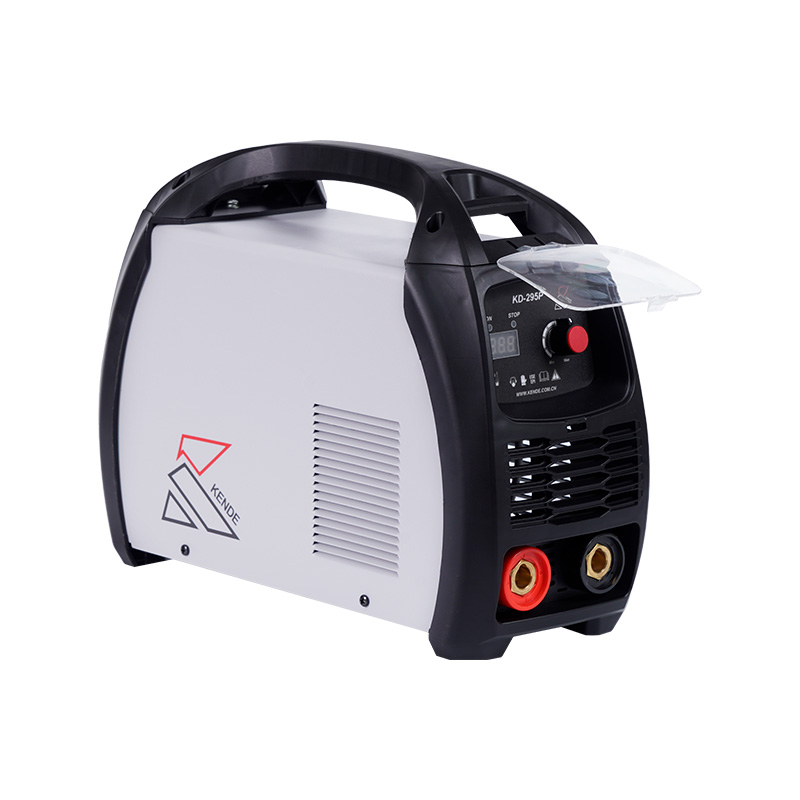
KD-295A IGBT Inverter MMA or Stick Welding Machine IN-225/255/275/295A1/A2/B1/B2
The KD-295A is a manual arc welding power source intended for electrode welding with a usable electrode range of 1.6 mm to 5.0 mm. This range supports a broad set of general fabrication and repair applications. It can be used for welding carbon steel, alloy steel, cast iron, stainless steel, and other common metals when the correct electrode and procedure are selected. Its rated supply voltage is 230 V, and it supports 50/60 Hz supply frequency, making it compatible with many workshop and site power environments.
The machine is especially valuable where users need a portable welder with enough current capacity for practical work. Its welding current range of 20 A to 200 A gives the operator flexibility for thin, medium, and heavier workpieces. The listed maximum welding current reaches 250 A, while the rated welding voltage is 28 V. A no-load voltage of 86 V supports arc initiation, and the unit has a rated duty cycle of 40%, which is suitable for many maintenance, repair, and fabrication operations when used within recommended conditions.
Unlike equipment that is designed only for occasional low-intensity tasks, the KD-295A is built around a professional set of control and protection functions. The product information highlights moisture-proof, anti-corrosion, anti-vibration, and anti-conductive dust characteristics. These are important because many welding environments are not clean laboratory spaces. Shops may contain dust, metal particles, humidity, temperature variation, and vibration from nearby equipment. Design attention to environmental resistance helps improve long-term reliability and reduces downtime caused by avoidable electrical or mechanical problems.
| Item | KD-295A Specification | Practical Meaning for Users |
| Rated Supply Voltage | 230 V | Suitable for common single-phase power environments where 230 V supply is available. |
| Supply Frequency | 50/60 Hz | Adaptable to different regional power standards. |
| Rated Input Capacity | 7 KVA | Provides sufficient input capacity for practical MMA welding tasks. |
| Rated Supply Current | 41.5 A | Indicates the input current requirement under rated conditions. |
| No-Load Voltage | 86 V | Supports easier arc starting and stable arc establishment. |
| Welding Current Range | 20-200 A | Allows adjustment for different electrode sizes and workpiece thicknesses. |
| Maximum Welding Current | 250 A | Provides strong peak output capability for demanding welding conditions. |
| Rated Welding Voltage | 28 V | Supports stable welding output during operation. |
| Rated Duty Cycle | 40% | Suitable for common production, maintenance, and repair welding intervals. |
| Usable Electrode | 1.6-5.0 mm | Covers a wide range of general MMA electrodes. |
| Efficiency | 85% | Helps reduce energy loss compared with older or less efficient equipment. |
| Power Factor | 0.9 | Supports better power utilization and more efficient electrical performance. |
| Degree of Protection | IP21S | Provides a defined level of protection suitable for proper indoor or sheltered use. |
| Insulation Class | H | Indicates strong insulation temperature capability for welding equipment. |
| Net Weight | 4.5 kg | Easy to carry, store, and move between work areas. |
| Machine Size | 275 x 130 x 215 mm | Compact footprint for mobile and space-limited applications. |
The heart of the KD-295A is its IGBT inverter power structure. IGBT technology is widely used in modern welding equipment because it offers fast switching, strong power control, and improved electrical efficiency. In conventional transformer welders, the power source is often large, heavy, and less responsive to rapid arc changes. In contrast, an inverter power source converts and controls electrical energy at high frequency, allowing the welder to maintain a more stable current with a smaller and lighter internal structure.
For the user, this technological difference is easy to understand in practical terms. A traditional transformer machine may be difficult to move around a worksite, may consume more power, and may offer less refined arc control. A lower-quality inverter welder may be portable but may lack stable output, may suffer from poor heat management, or may respond poorly when the electrode angle or arc length changes. The KD-295A combines portability with controlled output, giving users the benefits of inverter technology without sacrificing basic welding strength.
The machine uses PWM control technology and constant-current output control. PWM, or pulse width modulation, allows electronic regulation of output power, while constant-current control helps maintain welding current at the selected level. During stick welding, arc length naturally changes as the operator moves the electrode. Without good control, the current may fluctuate, causing spatter, unstable penetration, poor bead appearance, or electrode sticking. The constant-current design helps reduce these problems by stabilizing the welding output across ordinary variations in operator technique.
High welding current stability is one of the product’s most important advantages. Stable current improves bead consistency and helps the operator maintain a predictable molten pool. This is essential for structural repair, pipe brackets, steel frames, maintenance components, and other tasks where the weld must be more than visually acceptable. Stable current also helps less experienced operators develop better technique because the machine responds predictably instead of forcing them to compensate for erratic power behavior.
Hot start is a function that temporarily increases current at the beginning of the weld. This helps the electrode ignite more easily and reduces the frustration of failed starts. In MMA welding, arc initiation can be difficult when the electrode coating, workpiece surface, electrode angle, or operator movement is not ideal. A weak starting response can cause the electrode to stick to the workpiece, leave scratch marks, or delay the job.
The KD-295A includes hot start to let users start welds more easily. This feature is useful for both beginners and experienced welders. Beginners benefit because it reduces one of the most common difficulties in stick welding. Experienced welders benefit because they can start more quickly and reduce wasted time when performing repeated welds. Compared with basic machines that rely entirely on the operator’s manual striking technique, a welder with effective hot start can support smoother workflow and better first-pass quality.
Easy arc ignition also helps in repair conditions. Workpieces may be slightly worn, coated, rough, or positioned in less-than-perfect ways. Although proper surface preparation is always recommended, a strong starting function gives the welder more practical operating margin. The ability to initiate the arc cleanly is especially valuable when welding in tight positions, on small parts, or during quick maintenance tasks where repeated repositioning is required.
Arc force is another practical advantage of the KD-295A. The function monitors arc voltage and provides additional current when needed. During welding, if the electrode gets too close to the workpiece, arc voltage can drop and the arc may become unstable. Without corrective response, the electrode may stick, the weld pool may become irregular, and penetration may suffer. Arc force helps compensate for these conditions by adding current at the right moment.
This feature improves the user’s ability to maintain a stable arc, especially during positional welding or when welding on irregular surfaces. It also supports better performance with electrodes that require stronger arc characteristics. For general-purpose users, arc force provides a more forgiving welding experience. For professional users, it improves productivity by reducing interruptions and allowing smoother progression along the joint.
Compared with competitors that offer only simple current adjustment, the KD-295A provides a more intelligent response to real welding conditions. It is not enough for a machine to show a high current value on a panel; the power source must respond properly when the arc changes. Arc force is one of the functions that separates a more refined inverter MMA machine from a simple low-cost welder.
Electrode sticking is one of the most common problems in manual arc welding. It can happen at the start of the weld, when arc length becomes too short, when current is set too low, or when the electrode is moved incorrectly. When the electrode sticks, the operator must stop, separate the electrode from the workpiece, and often restart the weld. This wastes time and may damage the electrode coating or affect the weld area.
The KD-295A includes anti-stick technology that allows the user to separate the electrode from the workpiece more easily. This function improves comfort and productivity. It also reduces the stress placed on the machine and electrode during sticking events. For new welders, anti-stick can make training less frustrating. For experienced welders, it helps maintain workflow during repetitive tasks.
In competitive terms, anti-stick is especially important because many entry-level welders may advertise high output but fail to provide practical arc management features. A machine that frequently sticks may appear inexpensive at the time of purchase but becomes costly in daily use through wasted electrodes, delayed work, and operator fatigue. The KD-295A addresses this issue directly through an integrated control function.
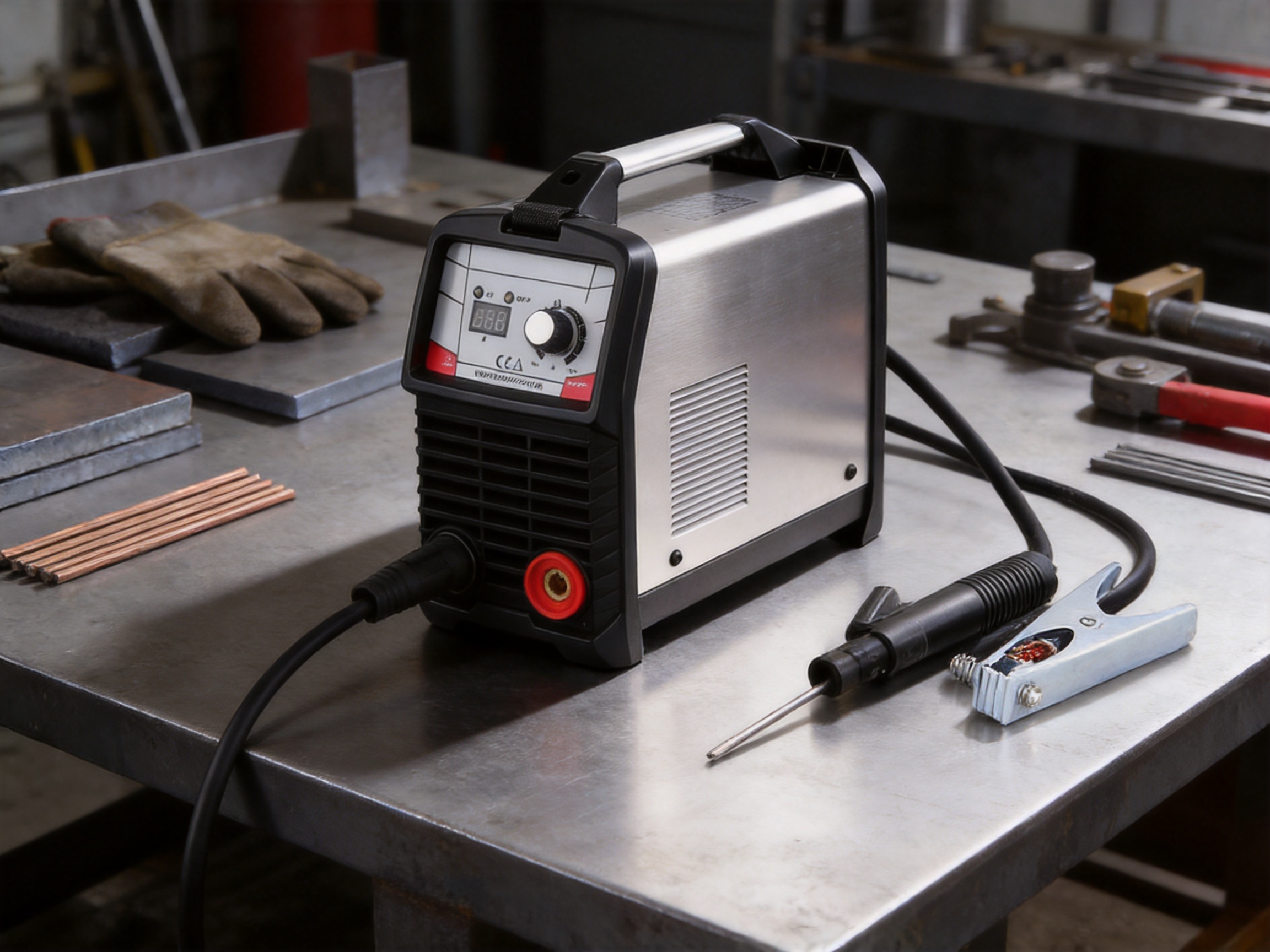
The product description highlights DC current output, which provides stable output for good penetration. In manual metal arc welding, direct current is commonly valued for arc stability, smooth operation, and suitability with many electrode types. Stable DC output helps the welder maintain a controlled puddle and supports consistent fusion between the electrode metal and base metal.
Good penetration is essential because a weld that looks acceptable on the surface may still be weak if fusion is poor. The KD-295A’s stable DC output and constant-current control help reduce the risk of shallow or inconsistent penetration when correct welding procedures are followed. This makes the machine useful for fabrication where mechanical strength matters, not only for cosmetic welds.
The combination of DC output, hot start, arc force, and anti-stick produces an integrated welding experience. Each function supports a different stage of welding: hot start helps begin the weld, arc force supports control during the weld, anti-stick helps recover from close-contact events, and DC output supports stable penetration throughout the process. Together, these features improve performance beyond what users can expect from a basic power source.
One of the KD-295A’s most visible advantages is its portability. With a net weight of 4.5 kg and a machine size of 275 x 130 x 215 mm, it is easy to carry between workstations or transport to job sites. Portability matters in modern fabrication and repair work because welding tasks are not always located near a fixed bench. Operators may need to weld gates, brackets, frames, agricultural tools, machinery components, or structural accessories in different locations.
Compared with older transformer machines, which can be bulky and inconvenient to move, the KD-295A reduces physical effort and increases flexibility. A lighter machine is not only easier to carry; it also reduces setup time. Faster setup means more productive working hours, particularly for maintenance teams and small contractors who must complete multiple tasks in a day.
Portability also supports better storage efficiency. In small workshops, space is valuable. A compact welder can be stored on a shelf, carried in a vehicle, or placed near the work area without occupying excessive floor space. This makes the KD-295A attractive for users who need a capable machine but do not want a large industrial power source for every job.
Although compact, the machine still offers a usable electrode range up to 5.0 mm and a welding current range of 20-200 A. This balance of small size and practical output is one of the major advantages of inverter technology. The user gets a machine that is convenient to handle while still being able to perform a broad range of welding tasks.
The KD-295A is listed with 85% efficiency and a power factor of 0.9. The product information also states that the inverter design can reduce power consumption and support energy saving up to 30%. Energy efficiency matters for both economic and operational reasons. A more efficient machine wastes less energy as heat and uses input power more effectively for welding output.
For individual users, lower energy consumption can reduce electricity costs over time. For workshops operating multiple welding machines, improved efficiency can contribute to measurable savings, especially when equipment is used frequently. In areas where electrical supply is limited, efficient operation can also reduce stress on the power system.
Compared with conventional welding equipment, inverter machines are generally more efficient because high-frequency conversion allows more precise control and smaller magnetic components. The KD-295A uses this advantage to offer strong output in a compact form. Efficiency also supports thermal management because less wasted energy means less unnecessary heat inside the machine.
Welding machines operate under demanding conditions. Electrical load, heat, dust, vibration, and operator movement can all affect reliability. The KD-295A includes auto-protection functions for over-current and over-heat conditions. It also has thermal overload protection with an indicator light. These functions help protect internal components and inform the user when the machine requires attention or cooling time.
Thermal overload protection is especially important because welding duty cycle must be respected. Every welding machine has limits on continuous operation. If a machine overheats and lacks proper protection, components may be damaged, performance may decline, or service life may be shortened. With indicator-based thermal protection, the operator receives a clear warning and can allow the machine to cool before continuing.
The power switch lights up to tell the user that the power is on. This simple feature improves operating awareness and helps prevent confusion during setup. In a busy workshop, clear indicators are valuable because they reduce the chance of accidental operation or unnecessary troubleshooting.
The listed IP21S protection degree and class H insulation show that the machine is designed according to recognized equipment protection concepts. IP21S indicates protection against certain solid objects and vertically falling water drops under specified conditions, while class H insulation indicates a high insulation temperature rating. These characteristics support safer and more dependable operation when the machine is used correctly and maintained properly.
The KD-295A product package includes a 2 m welding cable with a dual-angle electrode holder and a 1.5 m ground cable with clamp. These accessories are important because welding performance depends not only on the power source but also on the quality of the current path from the machine to the electrode and back through the workpiece. A reliable electrode holder and ground clamp help maintain stable current transfer.
The dual-angle electrode holder improves handling flexibility. Different welding positions may require different electrode angles, and a holder that supports practical grip positions can improve comfort and accessibility. The ground cable with clamp allows the user to establish the return circuit necessary for welding. Proper grounding is essential for stable arc behavior and safe operation.
While some competitors may focus only on the machine body, a complete practical setup matters to users. Included cables reduce the need for immediate additional purchases and allow the machine to be deployed more quickly. Users should still inspect cables regularly, keep contact surfaces clean, and replace damaged accessories when needed.
The product information states that the machine is able to weld all kinds of metal, such as carbon steel, alloy steel, cast iron, and stainless steel. In practical terms, MMA welding is highly versatile because different electrodes can be selected for different base materials and requirements. The welder provides the power source, while the electrode type, polarity, current setting, joint preparation, and operator technique determine the final weld result.
For carbon steel, common general-purpose electrodes may be used for fabrication, repair, and structural work. For stainless steel, suitable stainless electrodes are required to maintain corrosion-resistant properties. For cast iron, specific nickel-based or cast-iron electrodes and careful heating and cooling procedures may be needed. The KD-295A provides the stable DC output and current adjustability needed to support these tasks when correct welding consumables and processes are applied.
This versatility gives the machine a competitive advantage over equipment that is limited to narrow applications. A workshop may need to repair a steel frame in the morning, weld a stainless component in the afternoon, and address a cast component later. A flexible MMA power source allows one machine to serve many practical needs, reducing equipment investment and storage complexity.
The provided product information states that the machine can work properly under 140-580 V. This indicates wide voltage adaptability as described in the product material. In many regions and job sites, supply voltage can fluctuate due to long cables, generator use, weak grids, or nearby high-load equipment. A welding machine that tolerates power variation can be more dependable in real-world environments than a machine that requires ideal electrical conditions.
Voltage adaptability is a practical advantage for mobile repair teams, rural workshops, and construction-related users. When power is not perfectly stable, some welders may struggle to start, trip protection frequently, or deliver inconsistent arcs. A machine designed with advanced inverter control and protective functions can help reduce these problems. Users should still follow electrical safety rules, use appropriate input cables, and ensure that power supply capacity matches operating requirements.
The competitive benefit is clear: a welder that remains stable under wider power conditions can reduce interruptions and make work planning easier. For businesses, fewer interruptions mean better productivity. For individual users, dependable operation means less frustration and greater confidence in the equipment.
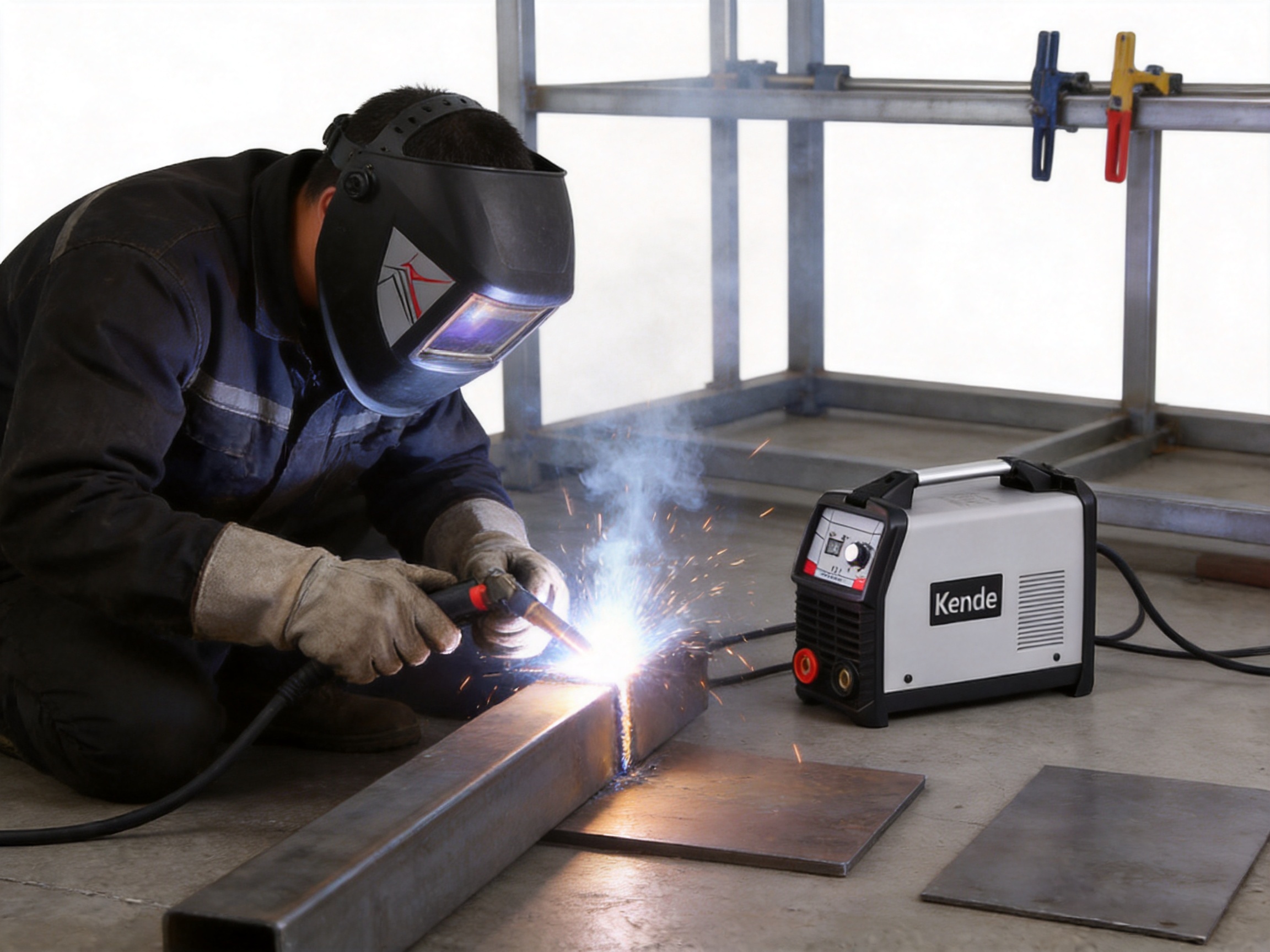
The KD-295A is supported by the manufacturing strength of Zhejiang Kende Mechanical and Electrical Co., Ltd., a large-scale producer located in Taizhou City, Zhejiang Province, China. The company covers an area of 120,000 square meters and has approximately 600 employees. It exports nearly 1.5 million units annually and has an annual production capacity of 2 million units. This production scale is important because it indicates mature manufacturing organization, supply chain capability, and experience in meeting international market demand.
The company manufactures and exports electric welding machines, chargers, and heaters. Its welding product range includes MMA or stick manual arc welding machines, MIG/MAG gas-shielded welding machines, no-gas flux wire welding machines, TIG arc welding machines, CUT plasma arc cutting machines, stud welding machines, automatic submerged arc welding machines, and related products. This broad product structure gives the company deep process knowledge across multiple welding technologies. Experience in different welding categories supports better design decisions for each product line.
The company uses modern management and manufacturing systems, including office automation, Toyota TPS management concepts, ERP K3, and MES management systems. These systems help coordinate production planning, material management, quality tracking, process efficiency, and factory workflow. In modern manufacturing, product quality is not created only at final inspection. It is built through controlled processes, standardized operations, trained personnel, traceable materials, and continuous improvement. The company’s investment in these systems supports stable product quality at large production volume.
Advanced production equipment also contributes to product consistency. The company uses automatic patching, plug-in and welding systems, robot processing, laser cutting, and other advanced technologies. For inverter welding machines, electronic assembly quality is critical. Control boards, power modules, wiring, connectors, and cooling structures must be produced with precision. Automated and semi-automated processes help reduce human error, improve repeatability, and support efficient production.
Strong product performance depends on research and development. The company has a Zhejiang Provincial R&D Center, an Enterprise Technology Center, and an Intelligent Welding Technology Research Institute. It has 98 R&D personnel and has obtained invention patents, utility model patents, appearance patents, and software copyrights. These capabilities support continuous improvement in welding control, product structure, safety, heat management, efficiency, and user experience.
For the KD-295A, R&D strength is reflected in the integration of IGBT inverter technology, PWM control, constant-current output, hot start, arc force, anti-stick, over-current protection, over-heat protection, and compact structural design. A welding machine must combine power electronics, thermal design, mechanical housing, electrical safety, electromagnetic compatibility, and practical user operation. These areas require engineering experience and systematic testing.
Compared with suppliers that only assemble generic machines, a manufacturer with dedicated R&D resources can respond more effectively to market needs. It can adjust product designs for different regions, develop new models, improve control algorithms, enhance protection circuits, and refine mechanical layouts. This is valuable for distributors, professional users, and OEM customers who need stable product support rather than short-term availability.
The company holds many international product certificates, including GS, CE, EMC, ERP, US ETL, UKCA, and China CCC. Certification experience matters because welding machines must satisfy electrical safety, electromagnetic compatibility, efficiency, and market access requirements in different regions. For customers, certificates provide an additional layer of confidence that products are developed and tested according to recognized requirements.
The company is also one of the national standard drafting units of the National Welding Machine Standardization Committee. It has participated in the drafting, formulation, and revision of 20 national standards and has led the drafting of one group standard. This standards involvement reflects technical understanding beyond ordinary manufacturing. Participation in standards work requires familiarity with welding machine safety, performance, testing methods, and industry development.
For the KD-295A, this background strengthens the product’s credibility. Users are not only buying a compact inverter welder; they are buying equipment produced by a manufacturer with experience in standards, certification, production scale, and international export. In competitive markets, this combination can be more valuable than a product that only offers an attractive appearance or a high advertised current rating.
Modern welding machines require careful control of electronic and mechanical quality. A stable inverter welder depends on many details: circuit board assembly, soldering quality, power component installation, heat sink contact, fan airflow, wiring security, insulation clearance, grounding, switch reliability, control calibration, and final performance testing. The company’s use of automatic patching, plug-in systems, robot processing, and laser cutting supports repeatable manufacturing quality.
Toyota TPS management concepts emphasize waste reduction, process discipline, continuous improvement, and efficient workflow. ERP and MES systems help connect business planning with shop-floor execution. For welding machine production, these systems can support material traceability, production scheduling, component control, quality checks, and delivery coordination. This is especially important when annual output reaches very high volumes.
A machine such as the KD-295A must be consistent from unit to unit. Customers expect the same arc behavior, protection response, current adjustment, and mechanical assembly quality across repeated orders. Advanced manufacturing systems help achieve this consistency. They also support faster response when design improvements or production changes are needed.
The KD-295A offers several advantages over conventional transformer-based MMA welders. First, it is much more portable. A 4.5 kg inverter machine is easier to carry than heavy transformer equipment, making it more suitable for mobile repair and flexible workshop use. Second, inverter technology improves energy efficiency, reducing wasted power and supporting lower operating costs. Third, electronic current control provides more stable arc behavior than many older transformer machines.
Traditional transformer welders are often durable but heavy and less refined in control. They may require more physical space and may be inconvenient for users who must move between jobs. Their arc characteristics can be less adjustable, and their energy efficiency may be lower. The KD-295A addresses these limitations with compact size, high efficiency, and advanced arc support functions.
Another advantage is operator convenience. Hot start, arc force, and anti-stick functions make welding easier and more forgiving. Older machines may not provide these intelligent functions, forcing the operator to manage every arc condition manually. Skilled welders can work with simple equipment, but even skilled operators benefit from a machine that reduces interruptions and improves consistency.
Not all inverter welders are equal. Some low-cost machines may be light and inexpensive but can suffer from unstable current, weak protection, poor heat management, short service life, or inconsistent manufacturing quality. The KD-295A distinguishes itself through a combination of advanced control functions, practical specifications, protective design, and the support of a large experienced manufacturer.
Competitors may advertise high maximum current values, but real welding quality depends on stable output, usable duty cycle, arc response, and component reliability. The KD-295A provides high welding current stability, constant-current output control, and DC output for penetration. These characteristics matter more in daily work than simple promotional numbers.
Protection is another difference. Over-current and over-heat auto-protection functions help protect the machine during demanding use. Thermal overload indication gives the operator useful feedback. Environmental resistance characteristics such as moisture-proof, anti-corrosion, anti-vibration, and anti-conductive dust design further support real-world reliability. Basic machines may omit or reduce such features to cut costs, but users often pay the price through downtime and replacement.
A good welding machine improves the operator’s workflow from setup to completion. The KD-295A supports this workflow through compact size, clear power indication, practical cables, easy arc start, stable welding current, anti-stick recovery, and protection indicators. These features reduce unnecessary interruptions and allow the user to focus on joint preparation, electrode control, travel speed, and weld quality.
For repeated repair tasks, even small time savings accumulate. Faster arc starts reduce wasted seconds on every weld. Fewer stuck electrodes reduce downtime and frustration. Stable current reduces rework caused by poor bead consistency. Lightweight design reduces effort when moving the unit. Protection indicators reduce uncertainty when the machine needs cooling. Together, these benefits improve productivity.
The machine is also suitable for training environments and small workshops because it supports operators with helpful arc functions. A beginner can learn more effectively on a stable machine because the welding response is predictable. An unstable welder can make learning more difficult by producing defects that are caused by the machine rather than the operator’s technique. The KD-295A helps create a better learning and working environment.
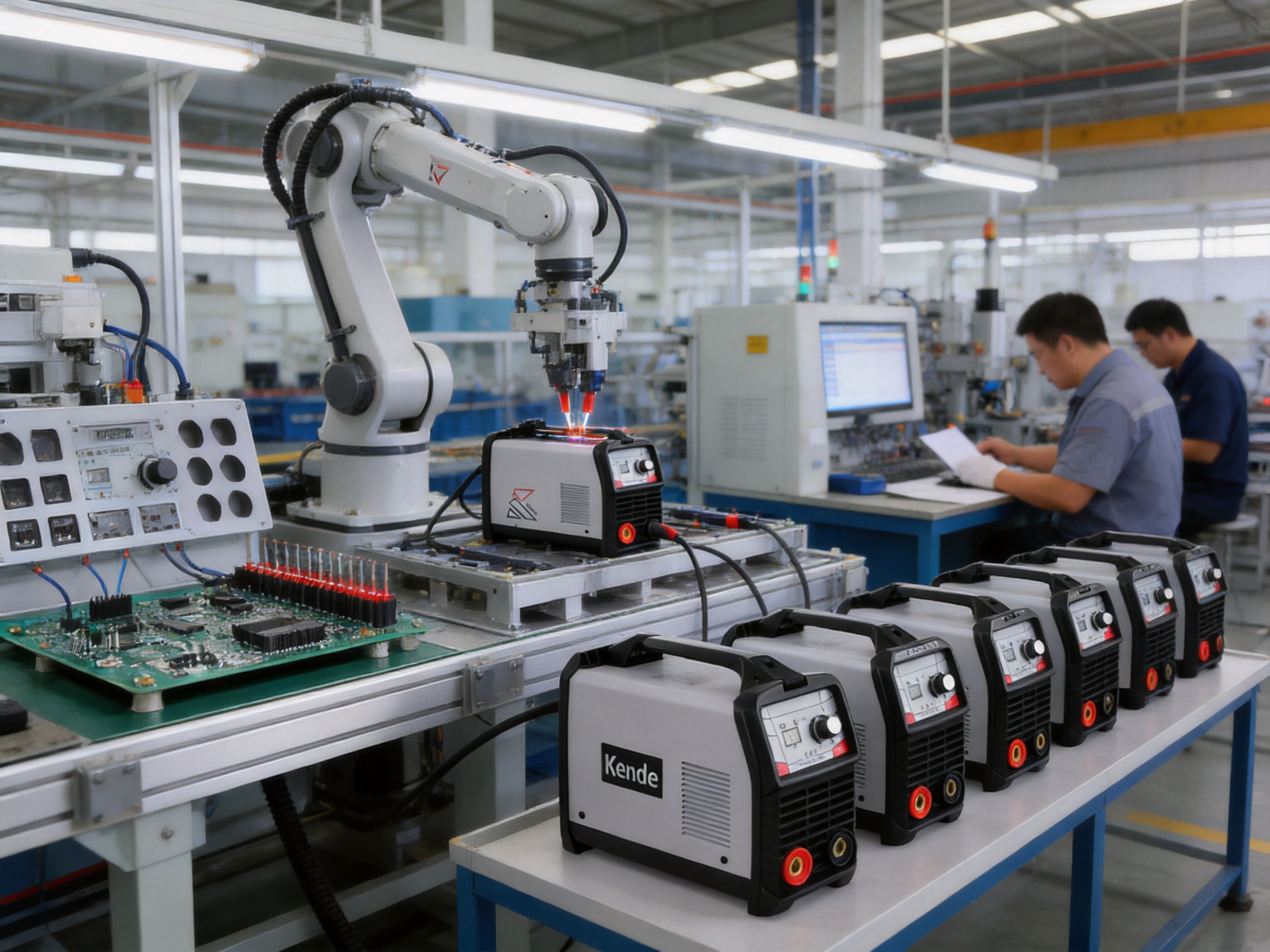
To obtain the best performance from the KD-295A, users should choose the correct electrode size and type for the base metal and joint design. The machine supports electrodes from 1.6 mm to 5.0 mm, but the current setting must match the electrode diameter, welding position, and material thickness. Too little current may cause sticking and poor fusion, while too much current may cause excessive spatter, undercut, burn-through, or electrode overheating.
Workpiece preparation remains important even with an advanced inverter welder. Surfaces should be cleaned of excessive rust, oil, paint, and contamination whenever possible. A clean ground connection should be established using the clamp. Poor grounding can cause unstable arcs and inconsistent welding performance. Cables should be inspected for damage and securely connected before operation.
Duty cycle should also be respected. The KD-295A has a rated duty cycle of 40%, meaning it is designed for welding and cooling intervals under rated conditions. If the thermal overload indicator activates, users should allow the machine to cool and check that the fan and ventilation areas are unobstructed. Proper ventilation is essential for inverter welder reliability.
The machine should be used in suitable environments according to its protection rating and safety instructions. Although the product has moisture-proof and anti-corrosion design considerations, welding equipment should still be protected from rain, direct water exposure, and conductive dust accumulation as much as possible. Good care extends service life and maintains safe operation.
For distributors and professional buyers, the KD-295A offers a strong combination of marketable features and manufacturer credibility. The machine is portable, compact, efficient, and easy to explain to end users. Its key functions are practical and directly connected to welding performance. Hot start, arc force, anti-stick, DC output, high current stability, and protection systems are features that customers can understand and appreciate.
The manufacturer’s production scale and export experience also support buyer confidence. A company with annual exports of nearly 1.5 million units and production capacity of 2 million units can better support stable supply than a small workshop producer. The broad product portfolio also makes it easier for buyers to source related welding equipment, chargers, heaters, cutting machines, and accessories from one experienced supplier.
Certification experience is another advantage for international buyers. Markets may require different compliance documents, safety standards, and performance expectations. A manufacturer familiar with GS, CE, EMC, ERP, ETL, UKCA, and CCC requirements is better positioned to serve customers across regions. This reduces risk for buyers who need products suitable for regulated markets.
The KD-295A stands out because it combines the most important elements of a modern portable MMA welder. It is light enough for mobile use, powerful enough for a wide range of electrode sizes, stable enough for consistent weld output, and intelligent enough to assist with arc starting and arc control. It is also supported by protective functions that help preserve machine reliability.
Its competitive strength does not depend on a single specification. Instead, it comes from balance. A welder with high current but poor portability may not suit mobile users. A lightweight welder with weak arc stability may not satisfy professionals. A low-cost machine without protection may be risky for frequent work. The KD-295A balances power, control, weight, efficiency, and protection in a way that serves practical users.
The company’s advanced manufacturing processes further strengthen this value. Automated production systems, robot processing, laser cutting, quality management tools, R&D centers, and standards participation all contribute to a more reliable product foundation. In a market crowded with visually similar welding machines, manufacturing depth and engineering capability are major differentiators.
The KD-295A is designed for MMA welding, also known as stick welding or manual metal arc welding. It uses coated electrodes and provides DC output for stable arc performance and good penetration.
The machine supports usable electrodes from 1.6 mm to 5.0 mm, making it suitable for a wide range of general repair, fabrication, and maintenance applications.
IGBT inverter technology allows the welder to be compact, lightweight, efficient, and responsive. It supports stable current control and helps reduce energy consumption compared with many conventional transformer welders.
Hot start temporarily increases current at arc initiation, helping the electrode ignite more easily. This reduces failed starts, sticking at the beginning of the weld, and operator frustration.
Arc force monitors arc voltage and provides extra current when needed. It helps maintain arc stability when the electrode gets close to the workpiece, reducing sticking and improving control.
Anti-stick technology helps the user separate the electrode from the workpiece when sticking occurs. This reduces downtime, protects the electrode, and makes welding easier for both beginners and experienced users.
Yes. The machine weighs 4.5 kg and measures 275 x 130 x 215 mm, making it easy to carry, store, and move between work areas.
With suitable electrodes and proper welding procedures, the machine can be used for carbon steel, alloy steel, cast iron, stainless steel, and other common metals.
The machine includes over-current protection, over-heat protection, and thermal overload protection with an indicator light. These functions help protect the welder and improve operating reliability.
Strong production capability supports consistent quality, stable supply, and better process control. The manufacturer has large-scale facilities, advanced manufacturing systems, R&D resources, and international certification experience, all of which strengthen product reliability.
The KD-295A IGBT inverter MMA stick welding machine is a practical, modern, and competitive welding solution for users who need stable performance in a portable format. Its IGBT inverter platform, PWM control technology, constant-current output, hot start, arc force, anti-stick function, DC welding output, and automatic protection systems all contribute to a better welding experience. It offers clear advantages over heavy conventional transformer welders and low-cost basic inverter machines that may lack stable output or durable protection.
The machine’s compact 4.5 kg body and 275 x 130 x 215 mm size make it easy to transport, while its 20-200 A welding current range and 1.6-5.0 mm electrode compatibility provide practical flexibility. Its 85% efficiency, 0.9 power factor, and energy-saving inverter structure support economical operation. Its protection features and environmental resistance characteristics help improve reliability in real workshop conditions.
Behind the product is a manufacturer with large-scale production capacity, advanced factory systems, strong R&D resources, international certification experience, and participation in welding machine standards development. This combination of product engineering and manufacturing strength makes the KD-295A more than a portable welder; it is a reliable tool built on modern welding technology and disciplined industrial production.
For users seeking a compact stick welder that is easy to operate, stable in output, efficient in power use, and supported by a capable manufacturer, the KD-295A offers a strong and well-balanced choice.
American Welding Society. Welding Handbook: Welding Processes, Part 1.
International Electrotechnical Commission. Arc Welding Equipment Safety and Performance Standards.
Lincoln Electric. The Procedure Handbook of Arc Welding.
Jeffus, Larry. Welding: Principles and Applications.
Weman, Klas. Welding Processes Handbook.
Company product technical materials for KD-295A IGBT inverter MMA welding machine.
Recommended Products

Contact Us
No.2299, Luqiao Section, Shugang Avenue, Luqiao District, Taizhou, 318057 Zhejiang, PR China.
+86-576-82431568
 Privacy
China Welding Machine Factory
 English
 中文简体
中文简体
 русский
 Español
 عربى
عربى
 Français
 Português
 Deutsch
 Український