Email: [email protected]
Email: [email protected]

Blog
 2026.06.23
 Blog
Blog
Industrial and commercial heating is often treated as a simple utility function, but in real work environments it directly affects productivity, safety, comfort, drying speed, curing performance, equipment protection, and seasonal operating costs. A fuel heater used in workshops, warehouses, construction sites, agricultural facilities, maintenance areas, temporary shelters, and large service spaces must do more than generate heat. It must start reliably, maintain a stable temperature, burn fuel efficiently, protect itself from unsafe conditions, and remain easy to move when the work location changes.
The SPARK-70/100 fuel heater series is designed for users who need high heat output, practical mobility, and intelligent operating control in a compact wheeled structure. With two commonly listed output levels, 70 kW and 100 kW, the series serves environments where small domestic heaters are insufficient and where operators require a stronger, more durable machine for professional use. The SPARK-70 model offers a listed heat output of 55,900 kcal/h, while the SPARK-100 model reaches 86,000 kcal/h. Both models are powered by single-phase AC220V-240V 50Hz input and are built around convenient control, automatic ignition, double digital display, fuel system refinement, and durable combustion construction.
Unlike basic fuel heaters that rely on simple switches and rough mechanical regulation, this series provides stepless temperature setting from 5 ℃ to 98 ℃. That means the operator can set the desired heating level without being restricted by fixed gear positions. For workshops or process areas where temperature stability matters, this is a major practical advantage. The heater can automatically maintain a constant temperature, reducing the need for frequent manual adjustment and helping avoid energy waste caused by overheating the space.
Another important advantage is its double-screen digital display. Operators can view the set temperature and the ambient temperature clearly and quickly. In a noisy, busy, or cold working area, the value of simple visual feedback should not be underestimated. A machine that communicates its operating status clearly is easier to manage, easier to train new workers on, and less likely to be misused.
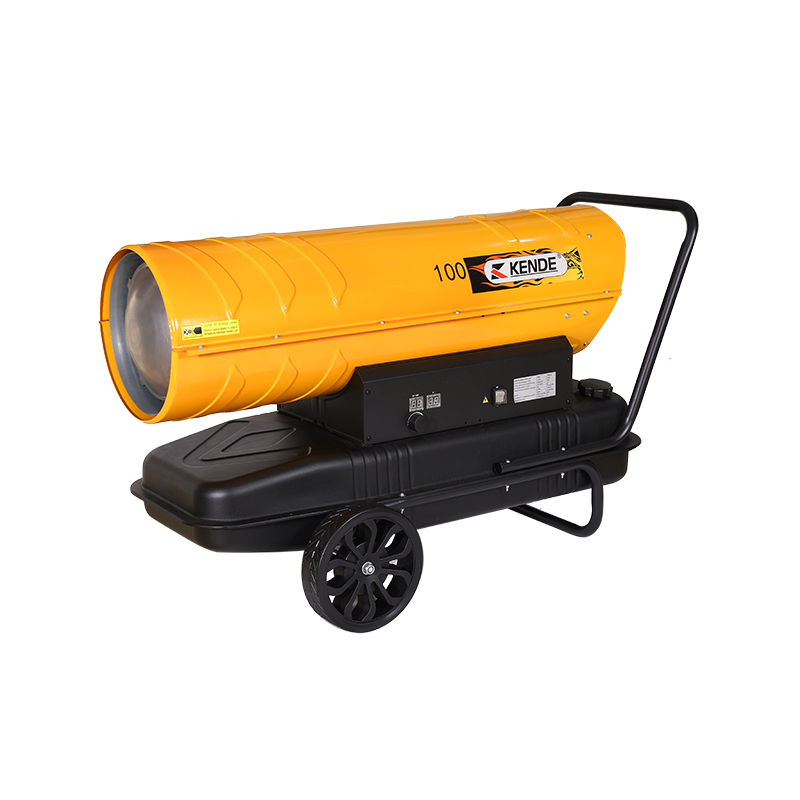
The SPARK-70/100 fuel heater is positioned as a portable high-output oil-fired heater for demanding heating tasks. It is especially suitable for customers who require a balance of heating performance, mobility, safety protection, and simplified operation. The two-model configuration allows users to select an output level according to site size, insulation condition, outdoor temperature, ventilation, and heating objective.
The SPARK-70 provides 70 kW output power and is suitable for many medium-to-large environments requiring strong air heating. The SPARK-100 provides 100 kW output power for more demanding conditions, faster warm-up, or larger spaces. Both versions share the same listed 69 L fuel tank capacity, 1,750 m³/h hot air output, 37 kg weight, and 1220 mm by 580 mm by 715 mm dimensions, making the choice mainly a question of heat demand and fuel consumption preference.
This product is not merely a heat source; it is a worksite support system. In cold seasons, insufficient heating can slow material handling, reduce worker comfort, affect paint or coating performance, delay drying, and increase the risk of condensation on tools, parts, or electrical equipment. A high-capacity fuel heater helps stabilize the working environment, allowing operations to continue more smoothly.
The heater’s wheeled tube-frame design also supports flexible deployment. Instead of permanently installing separate heating systems in every area, users can move the heater where heat is needed most. This is valuable for construction teams, maintenance crews, temporary production lines, agricultural storage, livestock support areas, logistics buildings, and repair workshops.
The following table summarizes the commonly listed specifications for the SPARK-70 and SPARK-100 fuel heater models. As with all industrial equipment, users should confirm final technical data from the product nameplate, user manual, purchase documentation, or supplier confirmation before installation and operation.
| Specification | Unit | SPARK-70 | SPARK-100 |
| Heat output | kcal/h | 55,900 | 86,000 |
| Rated input voltage | 1 phase | AC220V-240V 50Hz | AC220V-240V 50Hz |
| Output power | kW | 70 | 100 |
| Hot air output | m³/h | 1,750 | 1,750 |
| Fuel consumption | kg/h | 5.6 | 8 |
| Fuel tank capacity | L | 69 | 69 |
| Weight | kg | 37 | 37 |
| Dimensions | mm | 1220 x 580 x 715 | 1220 x 580 x 715 |
One of the strongest selling points of the SPARK-70/100 fuel heater series is its stepless temperature setting. Many simple heating products offer only low, medium, and high settings. While that may be acceptable for occasional domestic use, professional users often need more accurate control. A workshop may require a steady temperature range to protect materials. A drying process may require warmer air without excessive heat. A storage environment may need frost prevention rather than aggressive heating. Stepless control gives the operator flexibility across a broad setting range from 5 ℃ to 98 ℃.
The automatic constant temperature function further improves usability. Once the desired temperature is selected, the heater works to maintain the set condition. This helps reduce unnecessary fuel consumption because the machine is not simply running at maximum output regardless of actual room temperature. It also helps prevent uncomfortable overheating, which can occur when an oversized heater is used without adequate control.
Compared with competitors that depend on manual adjustment, the SPARK-70/100 offers a more controlled heating experience. Operators do not need to repeatedly guess whether the space is warm enough or return frequently to adjust a basic knob. In practice, this can save time and reduce distraction, especially in busy facilities where one worker may be responsible for several machines or work zones.
The dual-screen digital display design allows the operator to view both the set temperature and the ambient temperature at a glance. This feature is simple but highly practical. A heater may be powerful, but if the user cannot easily understand the current operating state, the machine becomes less efficient to manage. Clear display information helps workers confirm whether the machine is performing as expected.
In a large facility, temperature can vary between different zones. The ambient reading helps the user understand whether the environment is still warming up, has reached the target range, or needs repositioning. The set temperature display reduces confusion when more than one worker uses the equipment during different shifts. The result is better communication, easier handover, and fewer unnecessary setting changes.
From a competitive standpoint, digital display control is an advantage over low-cost heaters with minimal indicators. Basic heaters may have only a power light or a mechanical dial, forcing users to rely on separate thermometers or subjective comfort. The SPARK-70/100 integrates the essential feedback directly into the machine, creating a more professional operating experience.
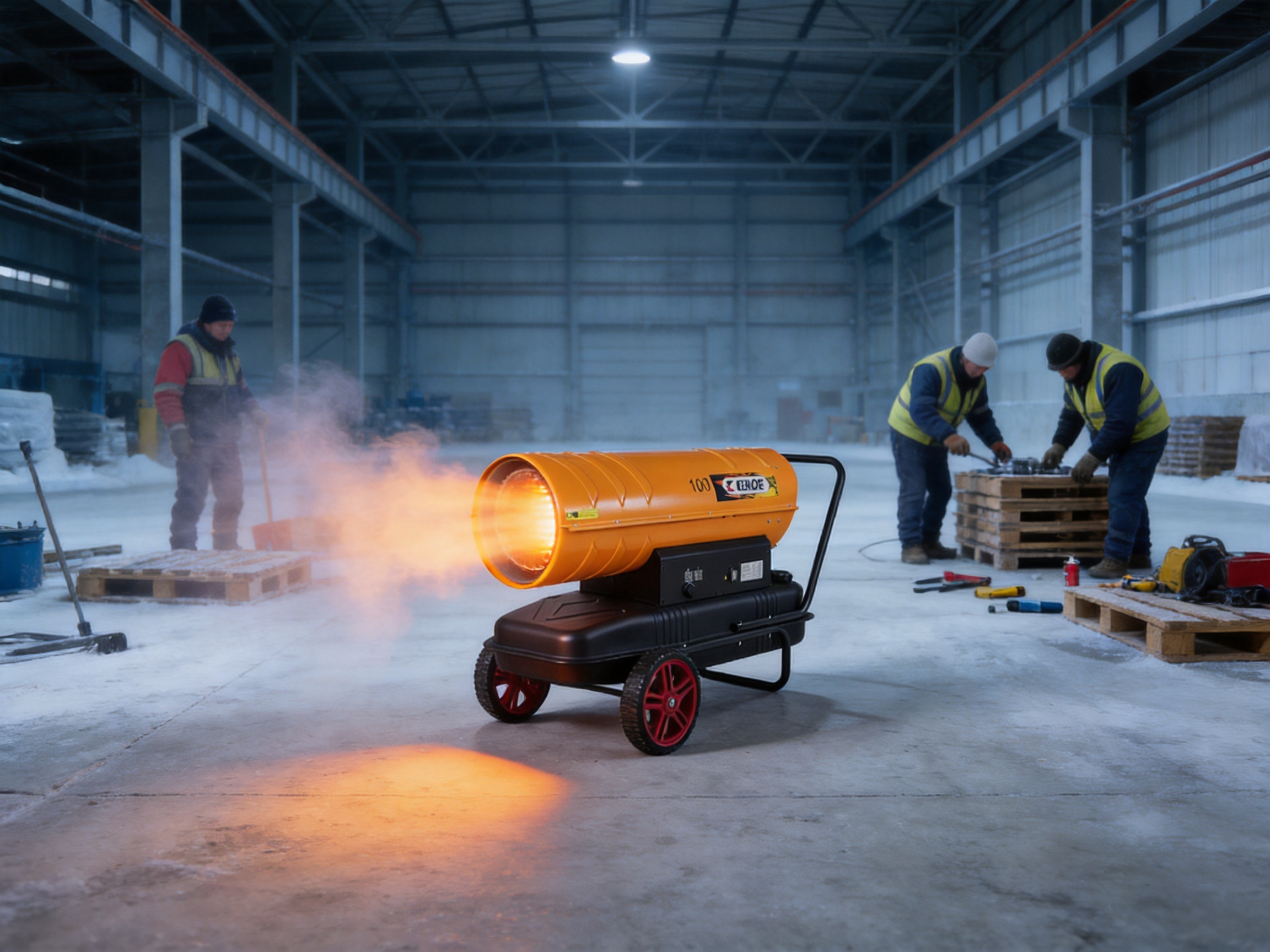
Cold weather operations often happen under time pressure. Workers arrive at a construction site, warehouse, or workshop and need heat quickly. Manual ignition systems can delay start-up, increase training requirements, and introduce inconsistency. The SPARK-70/100 fuel heater is designed with automatic ignition when the machine is switched on, making operation easier and more convenient.
Automatic ignition supports safer and more repeatable starts. It reduces reliance on operator technique and helps standardize use across different workers. This is particularly important for rental fleets, multi-shift factories, maintenance departments, and distributed work teams. When equipment is intuitive, it is more likely to be used correctly.
The convenience of automatic ignition also makes the heater more suitable for changing site conditions. If a team needs to relocate the heater, stop work temporarily, or restart after refueling, the machine can return to operation with minimal procedure. This is an advantage over less refined heaters that require more manual intervention.
Safety is one of the most important considerations in fuel-fired heating equipment. The SPARK-70/100 includes overheating protection and automatic shutdown when the oil level is insufficient. These functions contribute to safe and reliable operation, particularly in busy industrial environments where equipment may run for long periods.
Overheating protection helps guard against abnormal temperature rise. Causes of overheating can include blocked airflow, improper positioning, excessive environmental restriction, or component malfunction. A heater with protective logic is better prepared to respond to abnormal conditions than a basic unit without intelligent safeguards.
The low-oil automatic shutdown function is also valuable. Running a fuel system without sufficient oil may cause unstable combustion, poor atomization, repeated ignition attempts, or unnecessary wear. Automatic shutdown helps protect the machine and reduces the likelihood of unsafe operation. It also signals to the user that refueling is required.
These safety functions help distinguish the SPARK-70/100 from cheaper alternatives that may provide high heat output but fewer protective systems. For professional buyers, the purchase price of a heater is only one part of the decision. Downtime, maintenance risk, operator confidence, and workplace safety are equally important.
The SPARK-70/100 series uses a brand fuel pump and nozzle to support more uniform fuel atomization and more adequate combustion. In fuel-fired heaters, the quality of atomization directly affects combustion efficiency, heat output stability, smoke control, odor, ignition reliability, and component cleanliness. Poor atomization can produce incomplete combustion, higher residue, unstable flame behavior, and more frequent maintenance requirements.
A more uniform fuel spray helps the combustion process become more consistent. When fuel is broken into fine particles and mixed effectively with air, the flame can burn more completely. This improves heating performance and can help reduce waste. In large heaters where fuel consumption may be several kilograms per hour, even modest improvements in combustion quality can affect operating cost over a season.
The SPARK-70 consumes approximately 5.6 kg/h of fuel under listed conditions, while the SPARK-100 consumes approximately 8 kg/h. These figures reflect the higher output of the 100 kW model. Users should select the model according to heating demand rather than simply choosing the highest output. A well-matched heater can reach the target temperature efficiently and then operate under more controlled conditions.
Compared with competitors using low-grade pumps or inconsistent nozzles, the emphasis on pump and nozzle quality is meaningful. Heat output alone does not define a good heater. Stable combustion, reliable ignition, and reduced maintenance burden are long-term advantages that professional users appreciate after months or years of operation.
Fuel quality in real work environments is not always ideal. Dust, debris, storage contamination, and handling impurities can enter fuel tanks. If contamination reaches the pump or nozzle, the heater may suffer from clogging, uneven combustion, poor ignition, reduced output, or service interruptions. The SPARK-70/100 addresses this challenge with double filtration during refueling and oil suction.
Double filtration helps protect the fuel path from impurities before they affect critical combustion components. This is especially important for heaters used on construction sites, farms, repair yards, and temporary work locations where fuel may be transported in cans or stored in less controlled conditions. Cleaner fuel delivery supports more complete combustion and helps prolong component life.
From a maintenance perspective, filtration is a practical cost-saving feature. A heater that is less sensitive to routine fuel contamination can reduce downtime and service intervention. It also helps maintain consistent heating performance across different environments. For distributors and fleet owners, this can reduce customer complaints and improve equipment satisfaction.
The combustion cylinder is one of the most demanding parts of a fuel heater. It must withstand high temperature, repeated heating and cooling cycles, combustion byproducts, airflow, and possible corrosive exposure. The SPARK-70/100 uses a 439 stainless steel combustion cylinder designed for high-temperature combustion and corrosion resistance.
439 stainless steel is commonly valued for oxidation resistance and thermal stability in applications involving elevated temperatures. In a heater, a stronger combustion chamber can contribute to durability, performance consistency, and longer service life. When the combustion cylinder is poorly made, users may experience deformation, accelerated corrosion, cracking, or reduced combustion stability over time.
This material choice gives the SPARK-70/100 an important advantage over low-cost heaters that may use thinner or less corrosion-resistant materials. Buyers should look beyond the rated heat output and examine the construction of the combustion system. A robust combustion cylinder is central to long-term reliability.
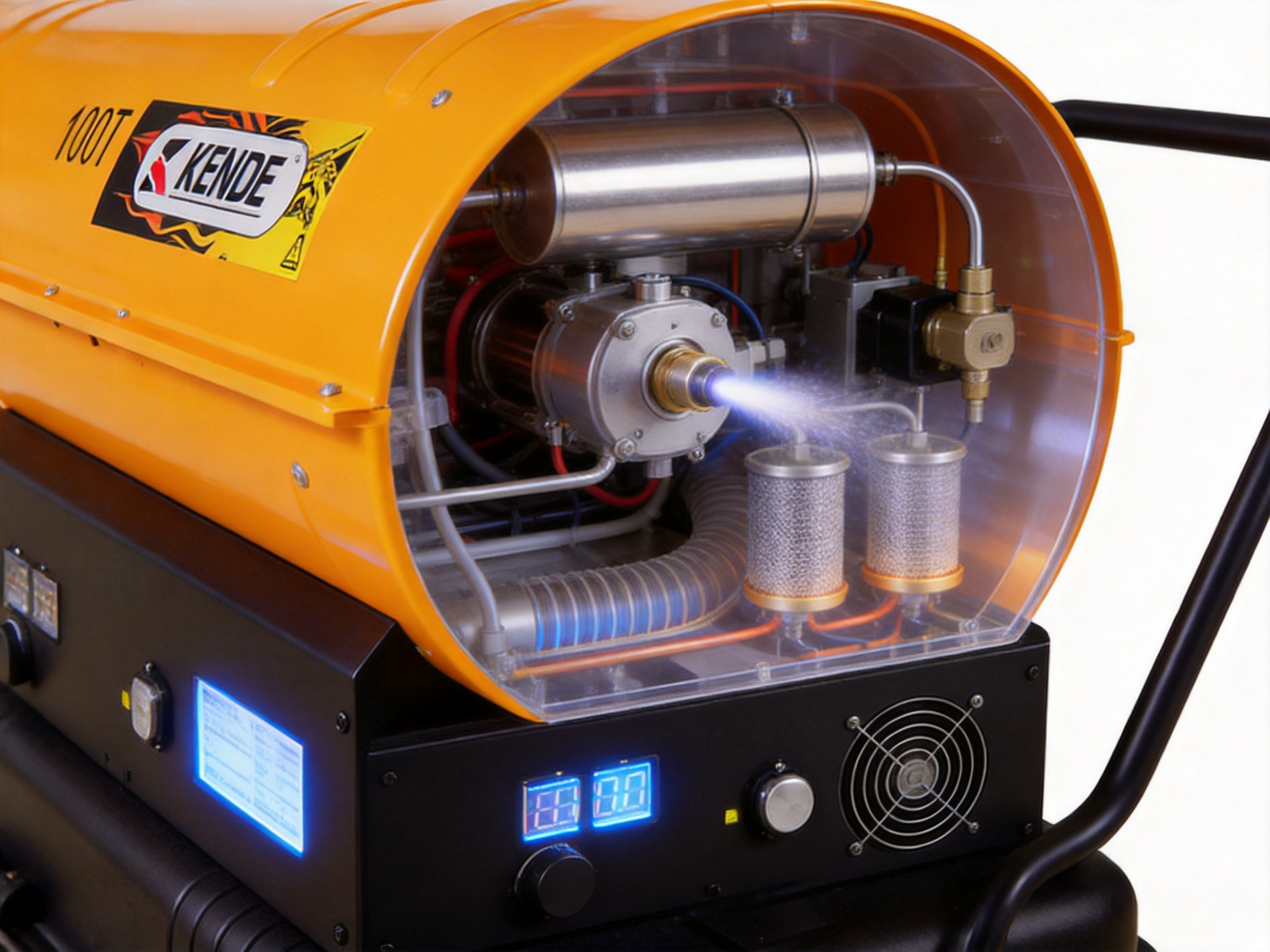
After a high-output heater is switched off, internal components can remain hot. If the fan stops immediately, residual heat may remain concentrated around the combustion area, electrical parts, seals, or surrounding structures. The SPARK-70/100 includes a delayed blowing cooling function, allowing the machine to cool down more effectively after operation.
This design helps protect the heater from thermal stress. Controlled cooling can reduce the risk of heat damage, extend component life, and improve durability. For users who operate heaters frequently, start and stop them multiple times, or use them for long shifts, this feature is especially valuable.
Competitors without delayed cooling may appear simpler, but immediate shutdown can place additional thermal load on internal parts. Over time, repeated heat soak may contribute to premature aging. The SPARK-70/100’s delayed cooling function shows attention to real operating conditions rather than only headline specifications.
The power failure memory function reduces repeated temperature setting. If power interruption occurs or the machine is restarted, the heater can remember previous settings, depending on operating conditions and configuration. This improves convenience and supports consistent use in environments where power supply may be interrupted or where the same temperature target is used day after day.
For a workshop supervisor, small convenience features can create meaningful time savings. If workers must reset every machine after each interruption, errors and delays become more likely. Memory function reduces repetitive input and helps maintain process consistency.
This feature also reflects a broader design philosophy: the product is built not only to generate heat but also to fit into actual work routines. The best professional equipment reduces unnecessary decisions and helps operators focus on their main tasks.
Mobility is a defining feature of the SPARK-70/100 series. The heater uses a wheeled tube-frame design with a compact structure, making it easier to move despite its high heating capacity. At approximately 37 kg, the unit is substantial enough to feel industrial, yet portable enough for relocation by workers in typical site conditions.
The frame helps protect the machine during handling and provides a practical structure for pushing, positioning, and transport. Wheels are essential when a heater must move between work zones, such as from a loading bay to a workshop, from one area of a construction site to another, or between agricultural buildings.
Some high-output heaters are powerful but inconvenient to move, while some portable heaters are easy to carry but lack sufficient heat. The SPARK-70/100 series sits in a useful middle ground: high output with practical portability. This combination is one of its most important competitive advantages.
Choosing between the SPARK-70 and SPARK-100 depends on the size of the heating area, insulation level, outdoor temperature, air exchange rate, desired warm-up speed, and budget for fuel consumption. The SPARK-70 is a strong option when 70 kW output is sufficient and users want lower fuel consumption. The SPARK-100 is better suited for larger spaces, colder climates, or applications requiring faster heat recovery.
Both models share the same listed fuel tank capacity of 69 L. Based on listed fuel consumption, the SPARK-70 can operate longer per tank under comparable operating assumptions than the SPARK-100, while the SPARK-100 provides higher heat output. In real use, operating time depends on temperature setting, cycling behavior, ambient condition, ventilation, and fuel characteristics.
The shared dimensions and weight simplify purchasing decisions for fleet operators. If a company owns both models, storage, handling, and transport procedures can remain similar. The common frame size also helps distributors and service teams manage inventory, demonstration, and training more easily.
The SPARK-70/100 fuel heater provides several advantages over conventional fuel heaters in the same general class. First, stepless temperature control offers better precision than fixed gear settings. Second, automatic constant temperature control helps reduce unnecessary overheating and improves comfort. Third, the double digital display gives clearer operating feedback than simple indicator lights or mechanical dials.
Fourth, automatic ignition improves convenience and reduces training requirements. Fifth, overheating protection and low-oil shutdown improve safety and reliability. Sixth, the brand fuel pump and nozzle support more uniform atomization and more adequate combustion. Seventh, double filtration protects the fuel system from contamination. Eighth, the 439 stainless steel combustion cylinder improves high-temperature durability and corrosion resistance. Ninth, delayed blowing cooling protects the machine after shutdown. Tenth, the wheeled tube-frame design improves mobility.
These features work together. A heater with only high output may still perform poorly if it is difficult to control, burns fuel unevenly, clogs easily, or lacks protection. The SPARK-70/100 combines heat output with operating intelligence and mechanical durability. That balance is what makes it competitive for professional users.
The SPARK-70/100 can be used in many environments where portable high-output heating is required. In workshops, it can help maintain worker comfort and reduce cold-related productivity loss. In warehouses, it can support loading areas, temporary work zones, and spaces that are not served by permanent heating. In construction, it can provide heat for workers, materials, drying, and temporary enclosed areas.
In agricultural settings, the heater can support equipment maintenance zones, storage areas, and seasonal operations. In repair facilities, it can help create a more stable environment for mechanics, tools, and parts. In logistics facilities, it can be positioned near doors, docks, or temporary workstations where cold air enters frequently.
Users should always ensure proper ventilation and follow fuel heater safety guidance. Fuel-fired heaters must be operated according to the manual, applicable regulations, and site safety rules. The machine’s protective functions are important, but they do not replace proper installation, ventilation, supervision, and maintenance.
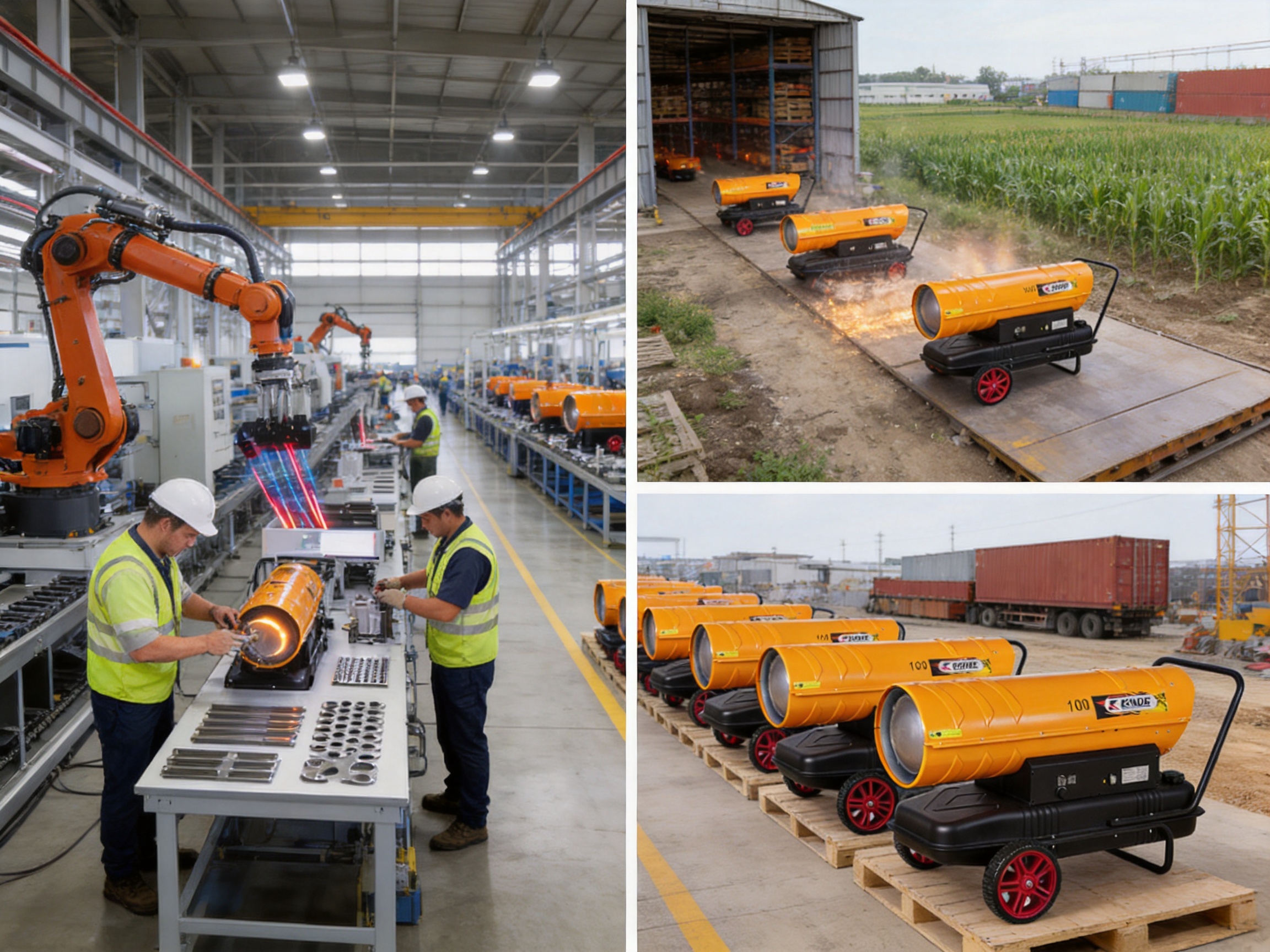
Zhejiang Kende Mechanical & Electrical Co., Ltd. is located in Taizhou City, Zhejiang Province, China. The company operates on a large manufacturing foundation, covering approximately 120,000 square meters and employing about 600 people. Its product scope includes welding machines, chargers, electric heaters, gas heaters, and oil heaters. This broad manufacturing experience supports the development of practical heating products such as the SPARK-70/100 fuel heater.
The company has an annual export volume of nearly 1.5 million units and an annual production capacity of about 2 million units. Such scale is important because it supports supply stability, production standardization, purchasing power, quality management, and continuous improvement. For international buyers, production capacity affects delivery reliability and long-term cooperation.
The company’s experience in electrical, mechanical, and thermal products gives it a strong base for heater manufacturing. Fuel heaters require coordinated design across combustion, airflow, temperature control, electrical protection, structural support, and user interface. A manufacturer with broad electromechanical experience is better positioned to integrate these systems effectively.
The company has strong research, development, and innovation capability, including a Zhejiang Provincial R&D Center, an Enterprise Technology Center, and an Intelligent Welding Technology Research Institute. Although the research institute is strongly associated with welding technology, the broader engineering capabilities also support product development across electrical and mechanical categories.
With 98 R&D personnel and numerous patents, including invention patents, utility model patents, appearance patents, and software copyrights, the manufacturer has the human resources and technical culture necessary for product improvement. For a fuel heater, this can translate into better control logic, more durable structural design, improved airflow, refined combustion systems, and more user-friendly operation.
Innovation is not only about creating entirely new machines. It also includes improving everyday reliability, making controls easier to understand, protecting components from failure, reducing maintenance points, and adapting products for different regional requirements. The SPARK-70/100 reflects this practical innovation through its digital display, memory function, delayed cooling, protective shutdown, and double filtration.
The company applies advanced management and manufacturing systems, including OA office automation, Japan Toyota TPS management, ERP K3, and MES management systems. These systems help organize production, materials, scheduling, traceability, process control, and quality management. For customers, advanced manufacturing management reduces the risk of inconsistent production and supports repeatable product quality.
Production technologies include automatic patching, plug-in and welding systems, robot processing, laser cutting, and other advanced manufacturing methods. These technologies can improve precision, reduce manual variation, enhance structural consistency, and improve production efficiency. In heater manufacturing, frame accuracy, component placement, wiring quality, and sheet metal consistency all affect final reliability.
Robot processing and laser cutting are particularly valuable for structural parts. A heater’s frame, housing, airflow path, and component mounting positions must fit accurately. Poorly aligned structures can cause vibration, airflow inefficiency, assembly stress, or service difficulty. Advanced fabrication processes help create more consistent machines.
MES management further supports production traceability. If a quality issue appears, a strong manufacturing system can help identify affected batches, processes, components, or workstations. This improves corrective action and long-term quality improvement. For international buyers, traceability is a major sign of manufacturing maturity.
The company holds many international product certificates, including GS, CE, EMC, ERP, US ETL, UKCA, and China CCC for relevant products and markets. Certification capability demonstrates familiarity with international safety, electromagnetic compatibility, energy, and compliance expectations. While buyers should confirm the specific certification status of the exact heater model and destination market, the company’s broader certification experience is an important strength.
The company is also one of the national standard drafting units of the National Welding Machine Standardization Committee and has participated in the drafting, formulation, and revision of 20 national standards, as well as leading the drafting of one group standard. This background indicates deep technical participation in industry standardization and a strong understanding of regulated product development.
For buyers of heaters, this matters because the same organizational culture that supports standardization in welding equipment can also influence heater development and manufacturing discipline. Companies that understand standards, testing, and documentation are generally better equipped to meet demanding customer requirements.
The manufacturer offers a wide product range for industrial and domestic users and can develop new products according to the needs of different regions, countries, and customers. This flexibility is valuable in the heater market because climate, voltage requirements, fuel preferences, safety regulations, language labels, and distribution needs vary widely by region.
For distributors, the ability to discuss market-specific requirements can be a major advantage. A heater sold in a cold northern region may need different positioning than one sold for temporary construction use in a milder climate. A professional manufacturer with broad export experience can better understand packaging, documentation, after-sales support, and product adaptation.
Industrial scale also supports spare parts supply and production continuity. A buyer is not only purchasing one unit; in many cases, they are building a seasonal heating program or retail product line. Reliable manufacturing capacity supports repeat orders and long-term cooperation.
To obtain the best performance from the SPARK-70/100, users should select the correct model, place the heater in a suitable position, maintain proper ventilation, use appropriate fuel, and follow the maintenance schedule. The heater should not be operated in unsafe or unventilated spaces. Air intake and outlet areas should remain unobstructed. Operators should check fuel level, inspect the general condition of the unit, and ensure the machine is stable before use.
The double filtration system helps protect the fuel circuit, but users should still avoid dirty fuel. Fuel should be stored in clean containers and kept away from water or debris. The exterior should be cleaned periodically, and service should be performed according to the manual. If abnormal smoke, odor, noise, vibration, or ignition failure occurs, the heater should be stopped and inspected by qualified personnel.
The delayed cooling function should be allowed to complete its cycle. Disconnecting power immediately after shutdown may prevent proper cooling and reduce the benefit of this feature. Users should train operators to understand the shutdown process and avoid moving or covering the heater while it remains hot.
Professional buyers often compare heaters by output power and price. However, a deeper comparison should include temperature control, ignition convenience, safety functions, fuel system quality, combustion chamber material, filtration, cooling logic, mobility, manufacturer capability, and after-sales support. The SPARK-70/100 performs strongly across these practical criteria.
The 70 kW and 100 kW output options allow buyers to match heating capacity to real conditions. The 69 L tank supports extended operation. The 1,750 m³/h hot air output helps distribute heat effectively. The wheeled tube frame improves portability. The digital controls and display improve usability. The protection functions enhance safety. The stainless steel combustion cylinder supports durability.
Behind the product, Zhejiang Kende Mechanical & Electrical Co., Ltd. brings large-scale production, advanced management systems, R&D resources, international market experience, and a broad electromechanical manufacturing base. This combination of product-level features and factory-level strength creates a compelling value proposition.
Kende uses the same model names on different market versions for some product categories. Therefore, exact figures should always be confirmed from the machine nameplate, product manual, or supplier documentation. This principle applies broadly across equipment types, including heaters and welding machines.
For example, commonly listed specifications for certain Kende single-phase DC inverter MMA/ARC welding machines are approximately as follows. These welding machine figures are included only as an example of why nameplate confirmation matters across product lines; they are not specifications for the SPARK-70/100 fuel heater.
| Specification | Kende ARC/MMA 250 | Kende ARC 270Y |
| Welding process | MMA/SMAW stick welding | MMA/SMAW stick welding |
| Input voltage | 1-phase AC 220 V ±15% | 1-phase AC 220 V ±15% |
| Frequency | 50/60 Hz | 50/60 Hz |
| Output current range | About 20-250 A | About 20-270 A |
| Rated output voltage | About 30 V | About 30.8 V |
| No-load voltage | Typically 56-65 V | Typically 56-65 V |
| Rated input capacity | About 9-10 kVA | About 10-11 kVA |
| Electrode size | Approx. 1.6-5.0 mm | Approx. 1.6-5.0 mm |
| Efficiency | Around 85% | Around 85% |
| Power factor | Around 0.9 | Around 0.9 |
| Insulation class | F / H depending on version | F / H depending on version |
| Protection class | Usually IP21 / IP21S | Usually IP21 / IP21S |
| Advertised duty cycle | Often 60% at 250 A | Often 60% at 270 A |
| Approximate continuous-use current | Around 190-200 A at 100% duty cycle | Around 205-210 A at 100% duty cycle |
A 60% duty cycle means that in a 10-minute period, the welder can weld for about 6 minutes and then must cool for about 4 minutes at the rated maximum current. If a 270Y unit is an older transformer-type welder rather than an inverter model, the duty cycle may be much lower, often around 10-20% at maximum current. This example reinforces a basic purchasing rule: always verify the exact specification from the specific machine and its official documentation.
The main difference is heating output. The SPARK-70 is listed at 70 kW with 55,900 kcal/h heat output and approximately 5.6 kg/h fuel consumption. The SPARK-100 is listed at 100 kW with 86,000 kcal/h heat output and approximately 8 kg/h fuel consumption. Both models share the same listed tank capacity, dimensions, weight, and hot air output.
Stepless temperature control allows the operator to set the temperature from 5 ℃ to 98 ℃ without being limited to fixed gears. This improves comfort, helps avoid overheating, supports more stable working conditions, and can reduce unnecessary fuel use compared with simple high-medium-low control systems.
The double digital display shows the set temperature and the ambient temperature. This allows operators to confirm the target setting and monitor the current environmental condition quickly.
Yes. The heater is designed for automatic ignition when switched on, making start-up easier and more convenient than manual ignition systems.
The heater includes overheating protection and less-oil automatic shutdown. These functions help protect the machine and support safer operation under abnormal or low-fuel conditions.
The combustion cylinder must withstand high temperature and combustion stress. 439 stainless steel provides high-temperature combustion performance and corrosion resistance, supporting durability and long service life.
Delayed blowing cooling helps remove residual heat after shutdown. This reduces thermal stress on internal components and helps make the heater more durable over time.
Yes. The wheeled tube-frame design and compact structure make the heater easier to move between work areas, warehouses, construction zones, workshops, and other temporary heating locations.
Both the SPARK-70 and SPARK-100 are commonly listed with a 69 L fuel tank. Actual operating time depends on model, temperature setting, duty behavior, environment, ventilation, and fuel condition.
Yes. Exact specifications should be confirmed from the machine nameplate, official manual, or supplier documentation, especially because product versions can vary by market.
The SPARK-70/100 fuel heater series is a strong solution for professional users who need portable high-output heating with intelligent controls and durable construction. Its value comes from more than heat output alone. Stepless temperature setting, automatic constant temperature operation, double digital display, automatic ignition, overheating protection, low-oil shutdown, high-quality fuel atomization, double filtration, 439 stainless steel combustion construction, power failure memory, delayed cooling, and wheeled mobility combine to create a practical and competitive heating product.
The SPARK-70 offers a balanced 70 kW output for demanding but fuel-conscious applications, while the SPARK-100 provides 100 kW output for larger spaces and faster heating needs. Both share a compact and mobile frame, 69 L tank capacity, and industrial usability.
Equally important is the manufacturing strength behind the product. Zhejiang Kende Mechanical & Electrical Co., Ltd. operates with large production scale, advanced management systems, R&D capability, automated manufacturing processes, international certification experience, and broad electromechanical expertise. For buyers seeking not only a heater but also a reliable supply partner, these factory strengths add confidence.
In competitive heating markets, the best product is not simply the one with the highest output number. It is the product that delivers heat reliably, controls temperature intelligently, protects itself safely, supports efficient combustion, moves easily, and comes from a manufacturer capable of consistent production. The SPARK-70/100 fuel heater series meets these priorities and offers a practical heating solution for modern worksites and commercial environments.
Product specification materials for SPARK-70 and SPARK-100 fuel heater models.
Company profile and manufacturing capability information of Zhejiang Kende Mechanical & Electrical Co., Ltd.
General industrial heating equipment operation and safety principles.
General combustion heater design references covering fuel atomization, airflow, temperature control, and thermal protection.
Common technical reference notes for single-phase DC inverter MMA/ARC welding machine duty cycle interpretation and nameplate verification.
Recommended Products

Contact Us
No.2299, Luqiao Section, Shugang Avenue, Luqiao District, Taizhou, 318057 Zhejiang, PR China.
+86-576-82431568
 Privacy
China Welding Machine Factory
 English
 中文简体
中文简体
 русский
 Español
 عربى
عربى
 Français
 Português
 Deutsch
 Український