Email: [email protected]
Email: [email protected]

Blog
 2026.07.20
 Blog
Blog
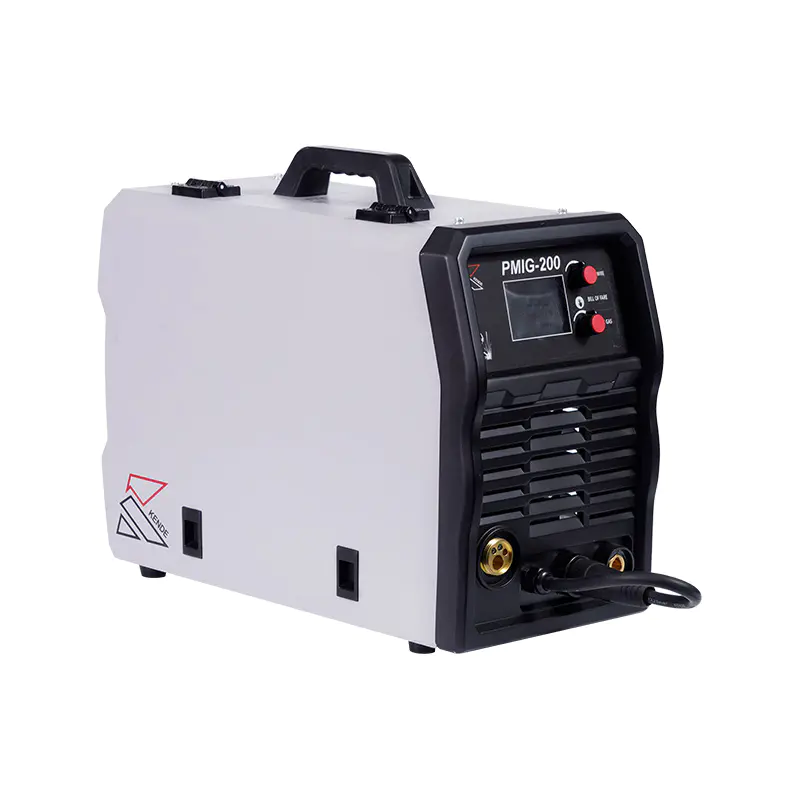
Modern metal fabrication demands welding equipment that can deliver clean seams, stable arc behavior, flexible material compatibility, and simple operation without requiring a large industrial power infrastructure. The PMIG-160/200A full digital pulse MIG welding machine series is designed for exactly this environment. It combines microprocessor digital control, IGBT inverter technology, pulse MIG capability, MIG/MAG welding, no-gas flux-cored welding, MMA stick welding, and TIG welding parameter support in a compact single-phase platform. For workshops, maintenance teams, light industrial manufacturers, training centers, and professional users who need one machine to handle many jobs, this series offers a practical balance of precision, portability, and welding performance.
The product is positioned in the MIG/MAG or GMAW category, but its value extends beyond conventional gas-shielded welding. With full digital control and synergic parameter adjustment, the operator can manage current, voltage, wire feed speed, plate thickness, arc length, and inductance more conveniently than on many traditional analog welding machines. The pulse welding function is especially important for users who work with stainless steel, carbon steel, aluminum-magnesium alloys, aluminum-silicon alloys, and other materials where heat input, spatter control, and weld appearance matter.
The PMIG-160/200A series includes two main models: PMIG-160 and PMIG-200. Both are portable inverter welding machines powered by single-phase 230 V, 50 Hz input. The PMIG-160 is suitable for users who prioritize compactness and moderate welding current, while the PMIG-200 provides a higher MIG welding current range and broader working capacity. Both models share the same digital concept: stable arc control, reduced spatter, convenient parameter setting, and multi-process welding flexibility.
The machine uses an advanced microprocessor control unit, often referred to as MCU control, together with IGBT inverter technology. This combination gives the welding system faster response, better electrical efficiency, smaller size, and improved arc stability compared with older transformer-based welding machines. Instead of relying only on mechanical switches and coarse analog adjustment, the system digitally coordinates welding parameters to help the user achieve a more consistent result.
A clear LCD screen and touch-button interface make operation straightforward. Parameter adjustment is performed with an encoder, allowing the operator to change settings smoothly and accurately. For many users, this is a major advantage over basic machines that require repeated trial welding to locate the correct combination of voltage and wire feed speed. In production, repair, and training environments, easier setting means less setup time, fewer wasted consumables, and better repeatability.
The PMIG-160/200A series is built around practical multi-process capability. The primary processes include pulse MIG, DC MIG/MAG, no-gas shielded flux wire welding, and MMA welding. The technical data also includes TIG current and voltage ranges, showing that the machine is designed with broader arc welding support for users who need additional flexibility.
Pulse MIG is one of the most important features of the series. In pulse MIG welding, the welding current alternates between a high peak current and a lower background current. This controlled current waveform allows metal transfer to occur more smoothly while reducing excessive heat input. For thin metal, stainless steel, aluminum-magnesium alloys, and aluminum-silicon materials, pulse welding can help reduce burn-through, distortion, and spatter.
DC MIG/MAG welding remains the standard process for carbon steel and many general fabrication applications. It offers productivity, easy learning, and high deposition efficiency. The machine supports common wire diameters, allowing users to select wire size according to material thickness and welding current requirement.
No-gas shielded flux wire welding expands the machine’s usefulness for outdoor maintenance and field repair. Because flux-cored wire can generate its own shielding atmosphere, it is less dependent on an external gas cylinder. This is valuable for users who repair equipment, gates, farm tools, frames, and general steel structures in locations where wind or mobility makes gas-shielded welding less convenient.
MMA, also known as stick welding, provides additional versatility. Many workshops still rely on electrodes for repair, maintenance, thick steel sections, and situations where surface conditions are not ideal. The PMIG-160 supports MMA current from 20 A to 140 A, while the PMIG-200 supports MMA current from 20 A to 180 A. This allows the same power source to support both wire welding and electrode welding tasks.
| Specification | PMIG-160 | PMIG-200 |
| Rated supply voltage | 230 V | 230 V |
| Supply frequency | 50 Hz | 50 Hz |
| Rated input capacity | 6.2 KVA | 8.5 KVA |
| Rated supply current | 26.9 A | 38 A |
| No-load voltage | 65 V | 71 V |
| MIG welding current range | 40-160 A | 30-200 A |
| MMA welding current range | 20-140 A | 20-180 A |
| TIG current range | 10-200 A | 10-200 A |
| MIG rated welding voltage | 16-22 V | 15.5-24 V |
| MMA rated welding voltage | 20.8-25.6 V | 20.8-27.2 V |
| TIG rated welding voltage | 10.8-18 V | 10.4-18 V |
| Rated duty cycle | 15% | 15% |
| MIG wire diameter | 0.6-1.0 mm | 0.6-1.2 mm |
| MMA electrode diameter | 1.6-3.2 mm | 1.6-4.0 mm |
| TIG electrode diameter | 1.6-4.0 mm | 1.6-4.0 mm |
| Efficiency | 85% | 85% |
| Power factor | 0.9 | 0.9 |
| Protection degree | IP21S | IP21S |
| Insulation class | H | H |
| Net weight | 13.5 kg | 15.5 kg |
| Machine size | 530 L x 225 W x 430 H mm | 530 L x 250 W x 430 H mm |
One of the strongest advantages of this series is its full digital control architecture. Many entry-level welders still use simpler analog circuits where the relationship between voltage, wire feed speed, and arc response depends heavily on operator experience. Such machines can perform acceptable welding, but they often require frequent correction when material thickness, wire type, gas mixture, or joint position changes.
The PMIG-160/200A series uses an MCU-based control system that can coordinate welding parameters more precisely. The operator can select or adjust current, wire feed speed, plate thickness, voltage, arc length, and inductance. This allows the machine to respond more intelligently to different welding tasks. The result is a more stable arc, better control of droplet transfer, and more consistent weld appearance.
The synergic control function is also important. In synergic MIG welding, one primary adjustment can coordinate several related welding parameters. This simplifies setup for less experienced welders and improves repeatability for professionals. Instead of independently adjusting many variables, the user can select a target welding condition and fine-tune it when needed. This is a significant advantage in small workshops where one operator may handle different materials throughout the day.
For competitive comparison, a basic MIG welder may offer only wire speed and voltage adjustment. A more advanced digital system provides a wider operating window and helps reduce common problems such as spatter, unstable arc starts, poor fusion, excessive reinforcement, and inconsistent bead shape. The PMIG-160/200A series is therefore suitable not only for simple fabrication, but also for users who want better process control without moving to a large industrial welding platform.
The product title emphasizes pulse welding without splash soldering, which refers to the machine’s ability to perform low-spatter pulse MIG welding. Spatter is a common problem in conventional short-circuit MIG welding, especially when parameters are not balanced. Spatter increases cleanup time, wastes wire, damages nearby surfaces, and can reduce the visual quality of the finished work.
Pulse MIG helps control metal transfer. By delivering current in controlled pulses, the machine supports smoother droplet detachment from the wire electrode. This can reduce random short circuits and violent arc behavior. In practical terms, the user can achieve a cleaner weld bead with less grinding, less brushing, and less post-weld correction.
This is especially beneficial when welding stainless steel and aluminum alloys. Stainless steel can discolor and distort when excessive heat is applied. Aluminum has high thermal conductivity and requires stable control to avoid burn-through on thin sections and poor fusion on thicker areas. Pulse welding helps manage these challenges by balancing penetration and heat input.
For manufacturers, reduced spatter means lower labor cost. For repair shops, it means faster job completion and better customer satisfaction. For training centers, it helps students learn correct welding technique without being overwhelmed by unstable arc behavior. Compared with conventional machines without pulse capability, the PMIG-160/200A series provides a cleaner and more controlled welding experience.
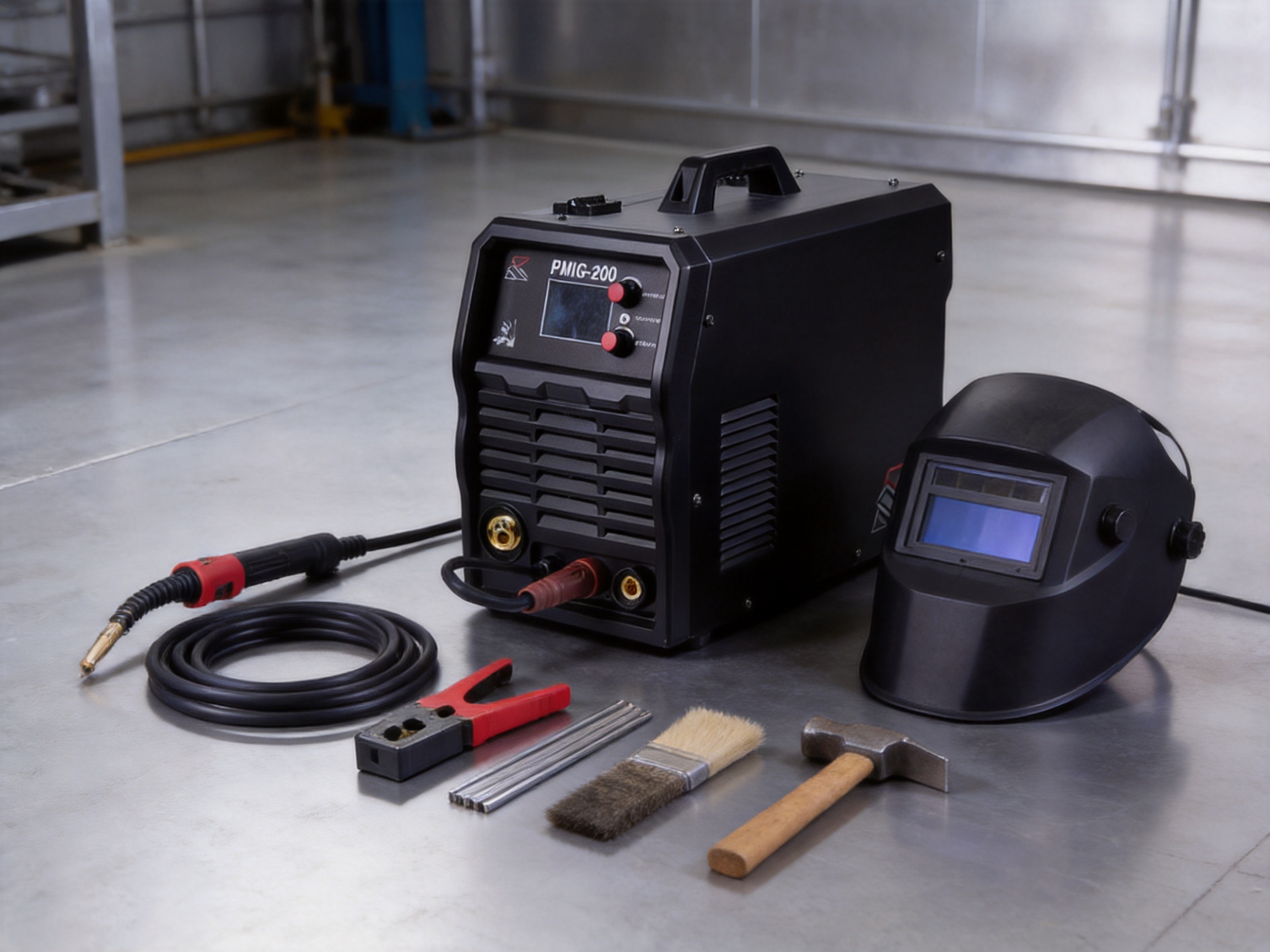
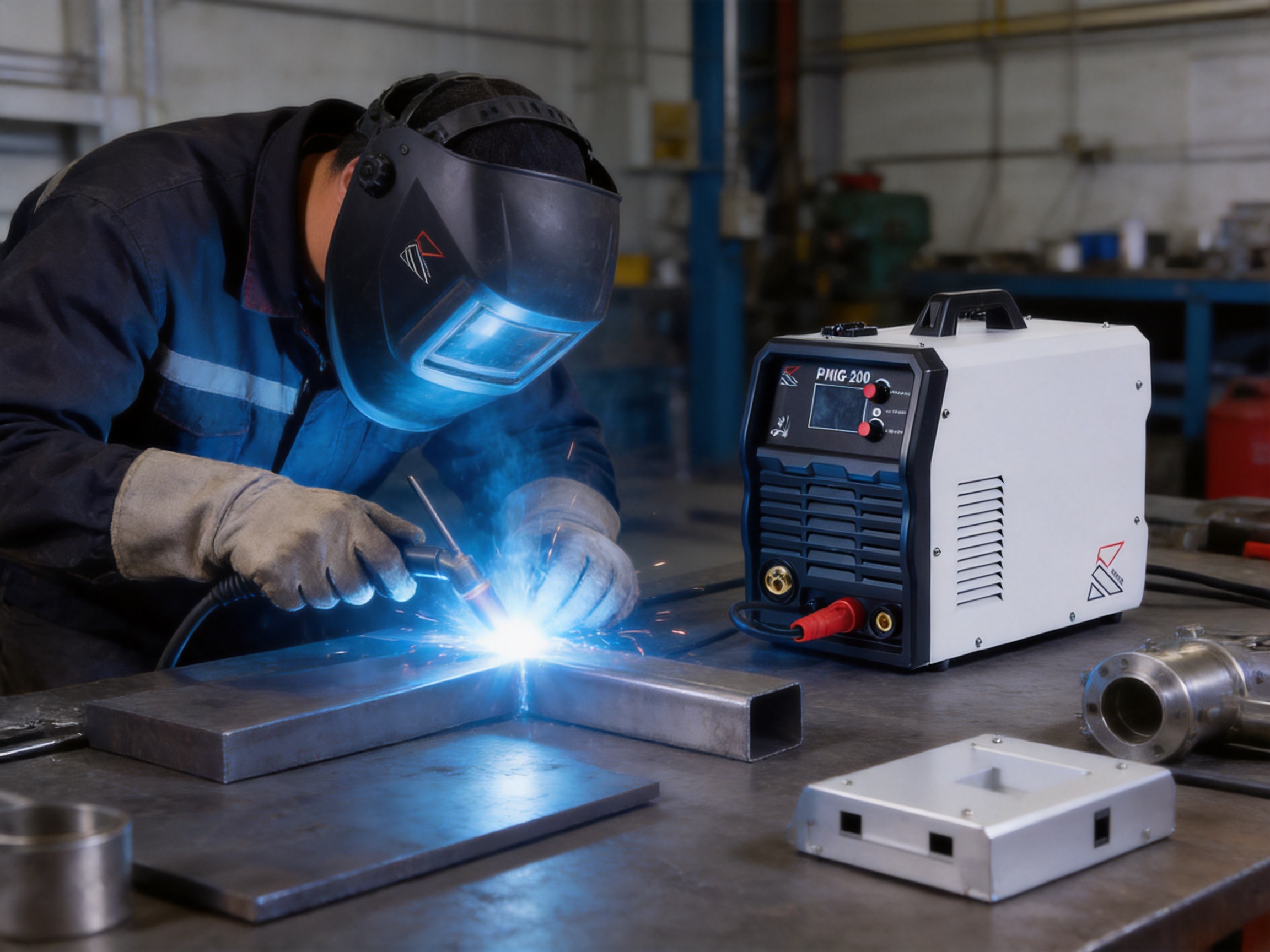
The PMIG-160/200A series can weld ordinary carbon steel, stainless steel, aluminum-magnesium alloys, aluminum-silicon alloys, alloy steel, and other common materials. This broad material compatibility makes the machine valuable for mixed-material workshops. A single user may need to weld mild steel brackets in the morning, stainless steel parts in the afternoon, and aluminum components during a custom fabrication project. A machine with only basic carbon steel performance would limit productivity in such an environment.
Carbon steel welding is the everyday foundation of many fabrication shops. The machine’s DC MIG/MAG function supports general structural repair, frames, gates, brackets, sheet metal, machinery guards, and light manufacturing. With proper wire, shielding gas, and parameter selection, users can complete strong and efficient welds.
Stainless steel welding benefits from stable arc control and reduced spatter. The ability to manage arc length and induction gives the operator more influence over bead profile and heat input. This matters in food equipment, decorative metalwork, kitchen equipment, railings, and corrosion-resistant components.
Aluminum-magnesium and aluminum-silicon materials require more careful technique. Pulse MIG technology is particularly useful because it can improve control over heat and metal transfer. The PMIG-200, with its 30-200 A MIG current range and support for 0.6-1.2 mm MIG wire, is especially suitable for users who need a higher output range for aluminum welding tasks.
Portability is another important advantage. The PMIG-160 has a net weight of 13.5 kg, while the PMIG-200 weighs 15.5 kg. Compared with traditional transformer machines, these inverter units are much easier to move around a workshop or transport between job sites. The machine dimensions remain compact, with the PMIG-160 measuring 530 x 225 x 430 mm and the PMIG-200 measuring 530 x 250 x 430 mm.
The single-phase 230 V input also increases practical usability. Many small workshops, farms, maintenance rooms, garages, and light industrial sites do not have three-phase power available. A machine that can operate from single-phase supply allows users to access advanced MIG and pulse welding functions without major electrical installation cost.
Portability is not only about weight. It is also about workflow. When one machine can support pulse MIG, standard MIG/MAG, flux-cored welding, MMA, and TIG parameter ranges, the operator does not need to move multiple welding power sources. This saves floor space and reduces equipment investment. For mobile repair professionals, fewer machines also mean easier transport and faster setup.
The LCD screen, touch buttons, and encoder parameter adjustment help create a modern user experience. Clear display feedback allows the operator to confirm settings quickly. Touch-button operation reduces mechanical complexity and supports a clean front panel. Encoder adjustment offers a precise and intuitive way to modify welding parameters.
In many welding environments, ease of use has a direct effect on quality. If a machine is difficult to set, operators may avoid adjusting it properly and instead tolerate mediocre welds. A more user-friendly interface encourages correct parameter selection. This can improve weld consistency, reduce rework, and help new users learn faster.
The availability of single-knob or synergic parameter control under pulse MIG, MIG/MAG, and no-gas flux wire welding is especially useful. A beginner can use synergic settings as a guide, while an experienced welder can fine-tune arc length, voltage, inductance, and wire feed speed to match personal technique or specific joint requirements.
The PMIG-160/200A series has an efficiency rating of 85% and a power factor of 0.9. These values reflect the benefits of inverter technology. Older transformer welders are often heavier and less efficient, converting more energy into heat and requiring larger internal components. IGBT inverter systems switch power electronically at high frequency, allowing smaller transformers, faster response, and improved energy use.
Energy efficiency matters for both cost and working comfort. A more efficient machine can reduce operating losses, lower internal heating, and contribute to more stable performance. In production settings where welding equipment may be used daily, energy savings become more meaningful over time.
A power factor of 0.9 indicates that the machine uses input power effectively. This supports better compatibility with workshop electrical systems and helps maintain stable operation. The product also includes multiple protective measures and strong resistance to power supply voltage changes. Such protection is valuable in real-world environments where power quality may fluctuate.
Welding machines operate in demanding conditions. Dust, heat, electrical load, metal particles, and frequent movement can all affect service life. The PMIG-160/200A series includes multiple protective measures to support reliability. Its protection degree is IP21S, and insulation class is H, indicating suitability for controlled workshop environments and robust internal insulation performance.
Stable arc control is not only a welding quality feature; it is also a reliability feature. When the power source reacts predictably, the user is less likely to overload the machine through inappropriate settings. Digital control can help keep the welding process within a more stable operating range.
The rated duty cycle is 15%. Users should understand duty cycle as part of correct machine operation. A 15% duty cycle means that at rated output, the machine is designed to weld for a portion of a ten-minute cycle and rest for the remaining time. For intermittent fabrication, repair, maintenance, and small production tasks, this duty cycle can be practical when the machine is used correctly. Proper ventilation, reasonable parameter selection, and attention to thermal protection help extend service life.
The machine is supplied with complete accessories, including a MIG torch, electrode holder, earth clamp, welding cable, brush and hammer, and protective mask. This accessory package adds value because the user receives the essential items needed to begin basic welding tasks. For distributors and dealers, a complete package can improve customer satisfaction by reducing the need for separate accessory purchases.
Accessory quality also affects welding performance. A stable earth clamp helps maintain current flow. A suitable torch supports consistent wire feeding and operator comfort. Welding cables must be properly rated and connected securely. By providing a complete set, the product offers a more convenient starting point for users moving from older equipment or purchasing their first multi-process welding machine.
When compared with basic transformer MIG machines, the PMIG-160/200A series offers clear advantages in weight, efficiency, arc control, and portability. Transformer machines are often heavier, less responsive, and less convenient for precise parameter management. The inverter structure allows the PMIG models to remain compact while delivering high current output for their size.
Compared with simple inverter MIG machines without pulse function, the PMIG-160/200A series provides a more advanced welding process for thin material, stainless steel, and aluminum alloy. Pulse welding can reduce spatter and help create smoother weld beads. This reduces cleanup and improves visual results.
Compared with machines that require manual coordination of voltage and wire feed speed, synergic control gives the PMIG series an operational advantage. It helps reduce setup errors and makes the machine more accessible to a wider range of users. Less experienced welders can produce acceptable results faster, while experienced operators still have room to adjust settings precisely.
Compared with single-process machines, the multi-process platform reduces equipment investment. A workshop that needs MIG, flux-cored, MMA, and occasional TIG-related capability may otherwise need multiple machines. The PMIG-160/200A series consolidates these functions into a compact unit, making it attractive for space-limited shops and mobile work.
Compared with machines from suppliers with limited manufacturing scale, this product benefits from the strength of an established manufacturer with significant production capacity, research resources, certification experience, and advanced management systems. Product consistency, supply reliability, and compliance support are important factors for distributors and professional buyers.
The PMIG-160/200A series is supported by a manufacturer with a large industrial base in Taizhou, Zhejiang Province, China. The company operates on a site of approximately 120,000 square meters and employs about 600 people. This scale supports structured production, stable capacity, and the ability to serve both domestic and international markets.
The company is an internationally recognized manufacturer and exporter of electric welding machines, battery chargers, and heaters. It exports nearly 1.5 million units annually and has an annual production capacity of approximately 2 million units. Such production volume demonstrates experience in mass manufacturing, supply chain coordination, quality control, and international market adaptation.
The product range is broad, including MMA or stick welding machines, MIG/MAG gas-shielded welding machines, no-gas flux wire welding machines, TIG arc welding machines, CUT plasma arc cutting machines, stud welding machines, automatic submerged arc welding machines, battery chargers, and electric, gas, and oil heaters. This broad product structure gives the company deep knowledge of power electronics, thermal design, arc control, accessories, and user requirements in different markets.
Strong R&D capability is a key reason the PMIG-160/200A series can integrate digital control, pulse welding, and multi-process operation. The company has a provincial R&D center, an enterprise technology center, and an intelligent welding technology research institute. It employs 98 R&D personnel and has obtained invention patents, utility model patents, appearance patents, and software copyrights.
For a digital welding machine, R&D is not limited to mechanical design. It includes power electronics, MCU programming, welding waveform control, thermal management, user interface design, electromagnetic compatibility, safety design, and long-term reliability testing. Each of these areas affects the user’s experience in the field.
Pulse MIG welding especially depends on control knowledge. The timing of current pulses, arc response, wire feed coordination, and parameter adjustment must work together. A manufacturer with dedicated welding technology research is better positioned to refine these functions and improve product consistency over time.
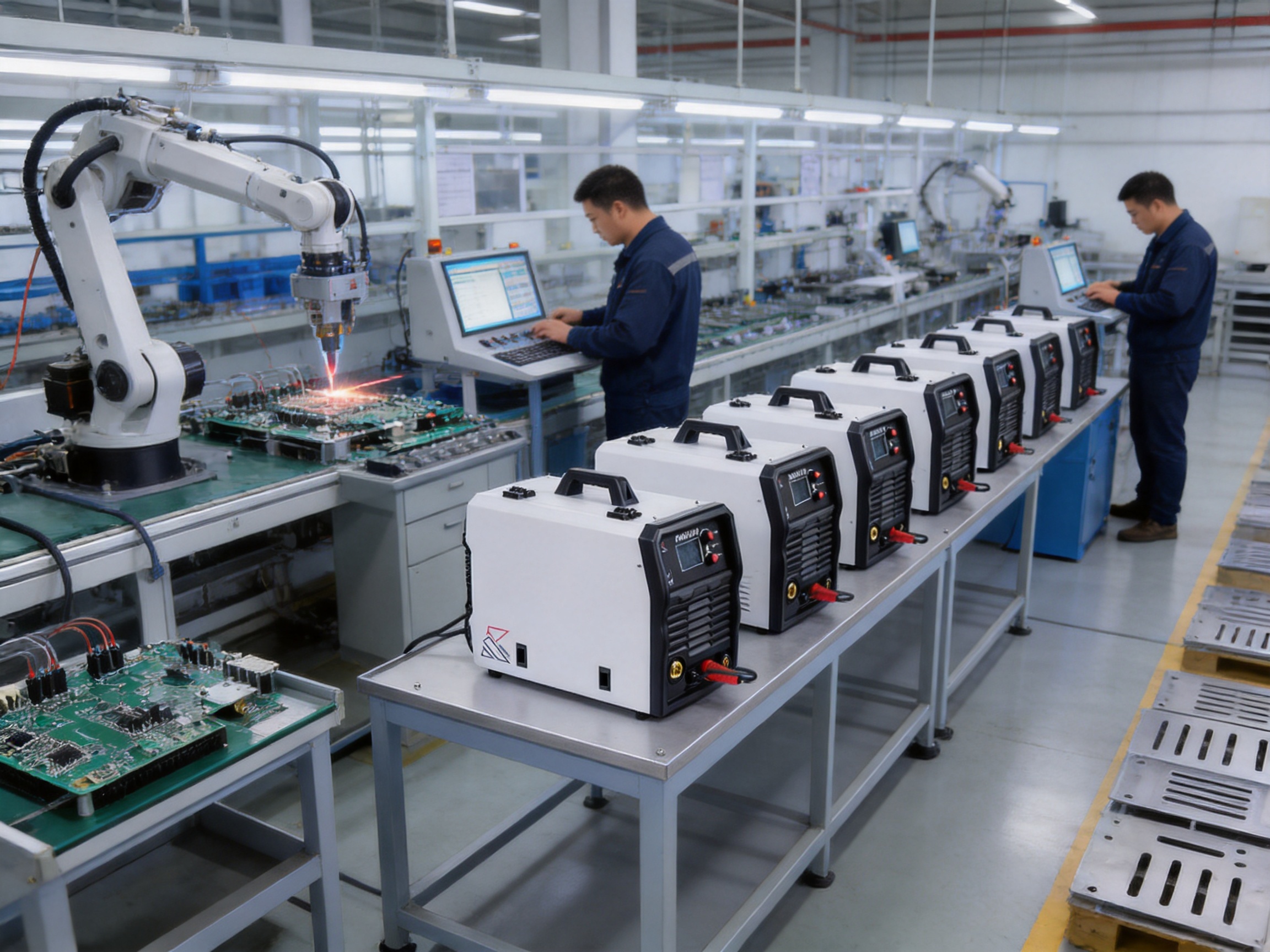
The manufacturer applies advanced management and production systems, including office automation, Toyota Production System management principles, ERP K3, and MES manufacturing execution systems. These systems help coordinate planning, materials, production, quality inspection, and delivery. In welding machine manufacturing, process discipline is essential because small variations in electronic assembly, wiring, thermal contact, or calibration can affect performance.
Advanced automatic patching, plug-in, and welding systems are used in production. These automated processes improve consistency in circuit board assembly and reduce human error. For inverter welding machines, circuit board quality is critical. Components such as IGBTs, capacitors, control chips, sensors, and connectors must be accurately assembled and reliably soldered.
Robot processing and laser cutting are also used. Robot processing can improve repeatability for metal parts and assemblies, while laser cutting supports accurate sheet metal fabrication. A well-made enclosure contributes to heat dissipation, mechanical strength, and product appearance. A clean internal structure also supports serviceability and airflow.
The use of MES management helps track production data and improve process control. This is important for quality assurance, especially when producing at high volume. If an issue occurs, traceability allows the manufacturer to identify affected batches, analyze process conditions, and implement corrective action.
The company holds a range of international product certifications, including GS, CE, EMC, ERP, ETL for the United States, UKCA, and China CCC. These certifications reflect attention to safety, electromagnetic compatibility, energy-related requirements, and market access standards. For distributors, importers, and professional buyers, certification support can reduce compliance risk.
The company is also one of the national standard drafting units of the National Welding Machine Standardization Committee. It has participated in drafting, formulating, and revising 20 national standards and has led the drafting of one group standard. Participation in standards work indicates technical depth and industry influence. It also means the company remains close to evolving safety, performance, and testing requirements.
For users, standards and certifications are not abstract achievements. They relate directly to product safety, electrical reliability, electromagnetic compatibility, and market acceptance. A welding machine is a high-power electrical device, and buyers should pay attention to whether a supplier has the engineering and compliance background needed to produce stable products.
The PMIG-160/200A series can serve many application scenarios. In metal fabrication shops, it can weld brackets, frames, guards, cabinets, machinery parts, and custom structures. The MIG/MAG process provides efficient production, while pulse MIG supports cleaner work on thinner or more demanding materials.
In repair and maintenance, the machine’s multi-process capability is especially useful. A maintenance technician may encounter unknown steel thickness, outdoor repair conditions, or parts that are difficult to clean perfectly. Flux-cored welding and MMA welding provide options when standard gas-shielded MIG is not ideal. The portable weight and single-phase input make the machine convenient for repair teams.
In automotive and light transport repair, reduced spatter and controlled heat input are important. Thin sheet metal, brackets, exhaust components, stainless parts, and aluminum repairs can benefit from pulse control and precise parameter adjustment. The operator must still select the correct wire, gas, and technique, but the machine provides a more capable platform than a basic MIG unit.
In training environments, the digital interface and synergic control help students understand the relationship between material thickness, wire feed, voltage, current, and arc behavior. Instructors can use the machine to demonstrate different processes without changing to a separate power source.
The PMIG-160 is a strong choice for users who need a compact machine for general welding, maintenance, and light fabrication. It offers a MIG current range of 40-160 A, MMA range of 20-140 A, and support for MIG wire from 0.6 to 1.0 mm. At 13.5 kg, it is lighter than the PMIG-200 and slightly narrower.
The PMIG-200 is better suited for users who want higher output and broader wire diameter support. Its MIG current range is 30-200 A, and its MMA current range reaches 180 A. It supports MIG wire from 0.6 to 1.2 mm and MMA electrodes up to 4.0 mm. For users who weld thicker material more often or want more headroom, the PMIG-200 is the more flexible choice.
Both models share the same general digital philosophy, efficiency rating, protection degree, insulation class, and single-phase input design. The decision should be based on expected material thickness, current demand, portability needs, and budget.
To obtain the best results from the PMIG-160/200A series, users should select the correct welding wire for the base material. Mild steel wire, stainless steel wire, aluminum wire, and flux-cored wire each require suitable settings and shielding conditions. Using the wrong wire can reduce weld quality regardless of machine capability.
Shielding gas selection is also important. Carbon steel MIG/MAG welding often uses carbon dioxide or argon-carbon dioxide mixtures. Stainless steel and aluminum require appropriate gas selections based on the wire and application. Pulse MIG performance is strongly influenced by gas and wire compatibility.
Proper grounding is essential. The earth clamp should be connected to clean metal near the weld area. Poor grounding can cause arc instability, excessive spatter, and inconsistent penetration. Users should also ensure that welding cables, torch consumables, contact tips, and liners are in good condition.
For aluminum welding, wire feeding condition is critical because aluminum wire is softer than steel wire. Correct drive roll pressure, clean liner condition, suitable contact tip, and appropriate torch handling can significantly affect performance. Pulse control helps the arc, but mechanical wire feeding must also be stable.
Users should respect the duty cycle. For long welds at high current, allow cooling intervals and keep ventilation openings clear. Operating within the machine’s design limits supports reliability and long service life.
It is a full digital inverter welding machine series focused on MIG/MAG or GMAW welding, with pulse MIG, DC MIG/MAG, no-gas flux wire welding, MMA stick welding, and TIG parameter support.
Pulse MIG welding helps control metal transfer, reduce spatter, manage heat input, and improve weld appearance. It is especially useful for stainless steel, aluminum alloys, and thinner materials.
Yes. The machine can weld aluminum-magnesium and aluminum-silicon materials when suitable wire, shielding gas, torch setup, and parameters are used. Pulse MIG capability is a major advantage for aluminum welding.
It can weld ordinary carbon steel, alloy steel, stainless steel, aluminum-magnesium alloys, aluminum-silicon alloys, and other compatible metals depending on process setup and consumables.
The PMIG-160 offers MIG current from 40 to 160 A and weighs 13.5 kg. The PMIG-200 offers MIG current from 30 to 200 A, supports larger MIG wire up to 1.2 mm, supports larger MMA electrodes up to 4.0 mm, and weighs 15.5 kg.
Yes. Its single-phase 230 V input, compact size, portability, and multi-process capability make it suitable for small workshops, maintenance departments, garages, training centers, and light industrial users.
Full digital control allows more precise coordination of current, voltage, wire feed speed, plate thickness, arc length, and inductance. This improves arc stability, repeatability, and ease of operation compared with many basic analog machines.
Yes. The package includes a MIG torch, electrode holder, earth clamp, welding cable, brush and hammer, and protective mask.
Both models are designed for single-phase 230 V, 50 Hz power supply.
Its competitive strengths include pulse MIG capability, full digital MCU control, IGBT inverter efficiency, synergic parameter setting, multi-process operation, compact design, low spatter performance, and the support of an experienced manufacturer with advanced production systems and strong R&D resources.
The PMIG-160/200A full digital pulse MIG welding machine series offers a strong combination of clean welding performance, process flexibility, portability, and modern digital control. It is not simply a basic MIG welder; it is a multi-process inverter platform designed to help users weld carbon steel, stainless steel, aluminum-magnesium alloys, aluminum-silicon alloys, and other materials with improved control and reduced spatter.
For users comparing welding machines, the key advantages are clear. Pulse MIG supports cleaner welds and better heat management. Synergic digital control simplifies setup and improves repeatability. IGBT inverter technology reduces size and weight while supporting efficient output. Multi-process capability reduces the need for multiple machines. Complete accessories make the machine practical for immediate use.
Behind the product is a manufacturer with large-scale production capacity, advanced manufacturing systems, R&D centers, patent achievements, international certifications, and experience in welding machine standards. This industrial foundation supports product consistency and long-term market reliability. For professional buyers, distributors, and end users, that combination of product performance and manufacturing strength makes the PMIG-160/200A series a compelling solution for modern welding needs.
American Welding Society. Welding Handbook: Welding Processes, Part 1. American Welding Society.
International Electrotechnical Commission. IEC 60974-1: Arc Welding Equipment, Part 1: Welding Power Sources.
International Electrotechnical Commission. IEC 60974-10: Arc Welding Equipment, Part 10: Electromagnetic Compatibility Requirements.
Cary, Howard B., and Scott C. Helzer. Modern Welding Technology. Pearson.
Jeffus, Larry. Welding: Principles and Applications. Cengage Learning.
Lancaster, J. F. The Physics of Welding. International Institute of Welding.
ASM International. ASM Handbook, Volume 6: Welding, Brazing, and Soldering.
Recommended Products

Contact Us
No.2299, Luqiao Section, Shugang Avenue, Luqiao District, Taizhou, 318057 Zhejiang, PR China.
+86-576-82431568
 Privacy
China Welding Machine Factory
 English
 中文简体
中文简体
 русский
 Español
 عربى
عربى
 Français
 Português
 Deutsch
 Український