Email: [email protected]
Email: [email protected]

Blog
 2026.08.31
 Blog
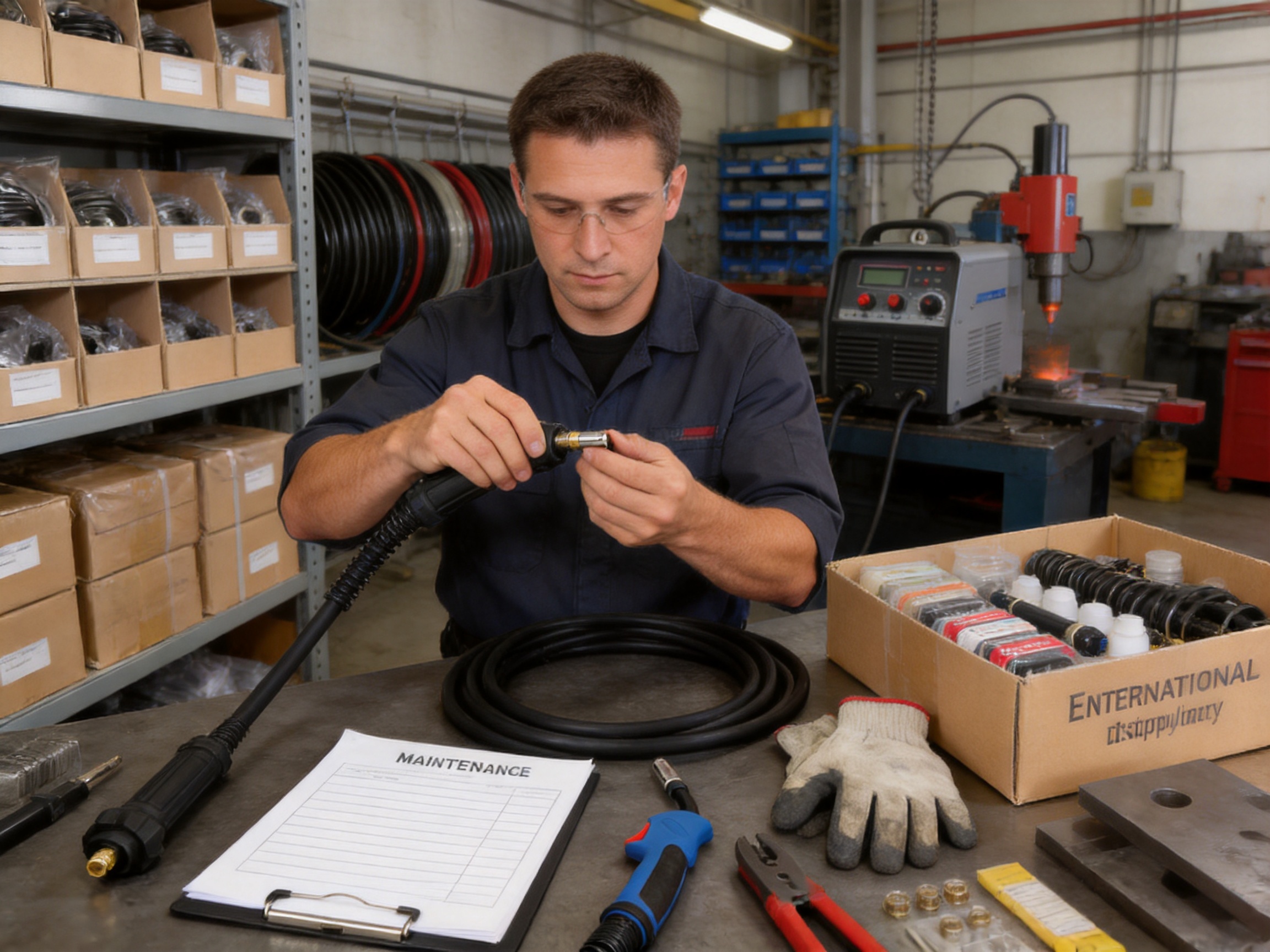
Industrial welding equipment is designed to operate under demanding conditions, but even the most durable machine depends on properly selected and correctly installed parts. Welding torches, cable assemblies, contact tips, electrode holders, clamps, control components, cooling elements, connectors, and other accessories all contribute to stable arc performance, operator safety, and long service life. When one component becomes worn, damaged, contaminated, or unsuitable for the application, the performance of the entire welding system can be affected.
High-quality welding machine parts provide a practical way to maintain equipment, reduce downtime, and extend the useful life of welding systems. They support a wide range of processes, including manual metal arc welding, MIG/MAG welding, flux-cored welding, TIG welding, plasma cutting, resistance welding, submerged arc welding, and related fabrication operations. For workshops, construction contractors, maintenance departments, distributors, and industrial manufacturers, access to dependable replacement parts is an important part of equipment management.
Zhejiang Kende Mechanical & Electrical Co., Ltd. is an established manufacturer and exporter of welding machines, battery chargers, heaters, and associated products. Its broad experience in welding technology, product development, manufacturing, testing, and international distribution supports the production and supply of parts intended for practical industrial and domestic applications. The company combines product engineering with organized manufacturing systems, automated production equipment, quality management, and customer-oriented customization.
Welding machines work by delivering electrical energy, controlling current and voltage, guiding shielding gas or compressed air where required, and maintaining a stable connection between the power source and the workpiece. Each part in this chain must perform its intended function consistently. A small failure in a connector, cable, torch component, cooling fan, or control assembly may lead to arc instability, overheating, poor weld appearance, increased spatter, or an unexpected machine shutdown.
Replacement parts are therefore more than simple accessories. They are functional elements that affect productivity, safety, and weld quality. A suitable contact tip helps maintain consistent wire transfer in a MIG/MAG system. A properly rated electrode holder supports safe manual welding. An intact ground clamp improves electrical continuity. A correctly matched torch assembly provides better operator control and reduces unnecessary heat exposure. In plasma cutting, the condition of the electrode, nozzle, swirl ring, and shield components directly influences cut quality and consumable life.
Using compatible parts also protects the original welding machine. Components that are poorly sized or made from unsuitable materials can increase electrical resistance, generate excessive heat, interrupt gas flow, or place additional stress on internal circuits. Over time, these problems may cause more serious damage and create avoidable maintenance expenses.
Quality parts are especially important for professional users who operate equipment for long periods each day. In production environments, a minor component failure can interrupt an entire fabrication line. A reliable replacement strategy allows maintenance personnel to restore a machine quickly instead of waiting for a complete equipment replacement or an uncertain repair solution.
The parts category is suitable for users who need components for welding machine operation, maintenance, repair, and process support. Because welding applications vary significantly, parts should always be selected according to machine type, output rating, duty cycle, connection design, welding process, and working environment.
Typical applications include metal fabrication, vehicle repair, agricultural machinery maintenance, structural steel production, shipbuilding, construction, pipeline work, equipment manufacturing, general maintenance, and household metal repair. Parts may be used with compact portable equipment as well as larger industrial welding systems.
For MIG/MAG or GMAW applications, relevant parts may include torch components, cable assemblies, liners, contact tips, nozzles, wire-feed elements, connectors, earth clamps, and gas-related fittings. These parts support both solid-wire welding with shielding gas and flux-cored operations, depending on the machine and torch configuration.
For TIG or GTAW welding, users may require torch bodies, ceramic cups, collets, collet bodies, back caps, tungsten electrodes, flexible cables, foot-control components, and gas fittings. TIG parts must support precise arc control and stable shielding because the process is often used for stainless steel, aluminum, thin sheet, precision fabrication, and visually demanding welds.
For MMA or stick welding, essential accessories can include electrode holders, work clamps, welding cables, cable connectors, and storage or handling items. These components must withstand the current produced by the welding power source and remain comfortable for the operator during extended use.
Plasma cutting systems use their own group of wear and support parts, including cutting torches, electrodes, nozzles, shield caps, air fittings, and cable assemblies. Correctly matched plasma components help maintain a concentrated arc, improve edge quality, and reduce unnecessary consumption of replacement items.
Resistance welding equipment may use electrode caps, holders, arms, shunts, cables, transformers, and control elements. Submerged arc systems may require welding heads, wire guides, flux delivery elements, contact assemblies, and related mechanical or electrical components. The correct part depends on the system design and the operating conditions.
Parts can also support welding automation, robotic welding systems, laser welding equipment, laser cleaning equipment, and workshop accessories. These applications may require more specialized components, precise interfaces, and carefully controlled installation procedures.

Parts
A professionally manufactured replacement part is developed with attention to dimensions, connection methods, electrical characteristics, material selection, and operating conditions. Compatibility is not limited to whether a component physically fits. It also includes whether the part can safely handle the required current, voltage, temperature, mechanical stress, gas pressure, and duty cycle.
Reliable compatibility helps prevent loose connections, unplanned contact loss, excessive resistance, unstable gas delivery, and premature wear. For distributors and service providers, standardized designs also simplify stock management and make it easier to identify suitable replacements for customers in different markets.
Welding systems require consistent current transfer. Cables, connectors, holders, clamps, torch assemblies, and internal electrical parts must provide a dependable conductive path. High-quality components are manufactured with suitable conductive materials, controlled contact surfaces, and appropriate insulation.
Stable electrical performance contributes to easier arc starting, smoother welding, reduced voltage fluctuation, and less heat generation at connection points. This is particularly valuable for inverter welding machines, where electronic control systems are designed to regulate the arc precisely. Poor connections can undermine the advantages of the power source and may cause unnecessary stress on electronic components.
Welding creates intense heat, and parts located close to the arc or current path must tolerate repeated thermal cycles. Torch handles, cable insulation, connectors, holders, nozzles, electrode components, and protective coverings need suitable heat resistance for the intended application.
Better heat resistance reduces deformation, cracking, insulation damage, and premature deterioration. It also improves operator comfort by helping handles and external surfaces remain manageable during normal working conditions. Parts should nevertheless be used within their specified ratings, because overheating can occur when a component is used beyond its duty cycle or in an unsuitable environment.
Durability is influenced by material quality, design, manufacturing precision, surface treatment, assembly accuracy, and inspection. A durable part maintains its function through repeated installation, vibration, heating, cooling, and routine workshop handling.
Longer service life reduces the frequency of replacements and lowers the total cost of ownership. It also reduces the time maintenance personnel spend diagnosing recurring component failures. In high-volume production, dependable parts help support consistent operating schedules and reduce interruptions caused by avoidable wear.
Parts designed for serviceability can be easier to inspect, remove, clean, replace, and reinstall. This is important because welding equipment often requires routine maintenance. Spatter, dust, metal particles, oil, moisture, and heat can gradually affect consumables and accessories.
When parts are clearly identified and readily available, technicians can follow preventive maintenance schedules more effectively. Regular replacement of wear items also protects more expensive machine assemblies. For example, replacing a worn contact tip or damaged liner may prevent wire-feeding problems that could otherwise affect a torch, drive system, or control circuit.
Zhejiang Kende Mechanical & Electrical Co., Ltd. operates from Taizhou, Zhejiang Province, China, and covers approximately 120,000 square meters with a workforce of about 600 employees. Its scale provides a foundation for organized engineering, procurement, production, quality assurance, warehousing, and export operations.
The company has an annual production capacity of approximately two million units and exports nearly 1.5 million units annually. This experience in large-scale manufacturing and international supply gives the company an understanding of different market requirements, technical expectations, packaging needs, documentation practices, and product certification systems.
A significant advantage is the company’s broad product knowledge. Its product range includes MMA or stick welding machines, MIG/MAG welding machines, flux-cored welding machines, TIG welding machines, plasma cutters, stud welding machines, submerged arc welding machines, battery chargers, and electric, gas, and oil heaters. This wider product portfolio allows parts to be developed with a clear understanding of the equipment in which they are used.
Parts manufacturers that understand complete machines can better evaluate the relationship between an accessory and the power source, wire-feed system, cooling system, torch, control panel, or protective circuit. This system-level knowledge supports better compatibility and more practical product development.
Kende has a Zhejiang Provincial Research and Development Center, an Enterprise Technology Center, and an Intelligent Welding Technology Research Institute. The company has approximately 98 research and development personnel and has obtained invention patents, utility model patents, appearance patents, and software copyrights.
Research and development resources are valuable in the parts category because welding components must adapt to changing equipment designs, new welding processes, higher efficiency requirements, and varied customer expectations. Engineers can study product interfaces, materials, thermal behavior, electrical performance, ergonomics, and service conditions when improving existing components or developing new products.
The company can also develop products according to the requirements of different countries, regions, and customers. This flexibility is useful for distributors that need private-label packaging, regional configurations, alternative connectors, different cable lengths, customized specifications, or product solutions designed for particular machines.
Modern parts production benefits from accurate processing and repeatable assembly. Kende uses advanced automatic patching, plug-in, and welding systems, together with robot processing and laser cutting technology. These systems can support consistent production and help reduce variation between batches.
Laser cutting is particularly useful for producing precise metal components, brackets, plates, covers, and other shaped parts. Robotic processing can improve repeatability for suitable operations, while automatic assembly systems can enhance productivity and reduce manual inconsistencies. The correct production method depends on the component, material, geometry, and required tolerance.
Automated equipment does not replace engineering judgment or inspection. Instead, it provides a stable manufacturing platform when combined with suitable process control, trained personnel, equipment maintenance, and quality verification.
The company applies several management and manufacturing systems, including OA office automation, Toyota TPS management, ERP K3, and MES management systems. Together, these systems can support communication, production planning, material tracking, process coordination, inventory control, and manufacturing visibility.
For parts supply, production traceability is important. Customers may need consistent replenishment over a long period, especially when a part is used in a popular machine model or distributed through multiple markets. Organized management systems help manufacturers coordinate purchasing, production schedules, inspection records, packaging, and shipment information.
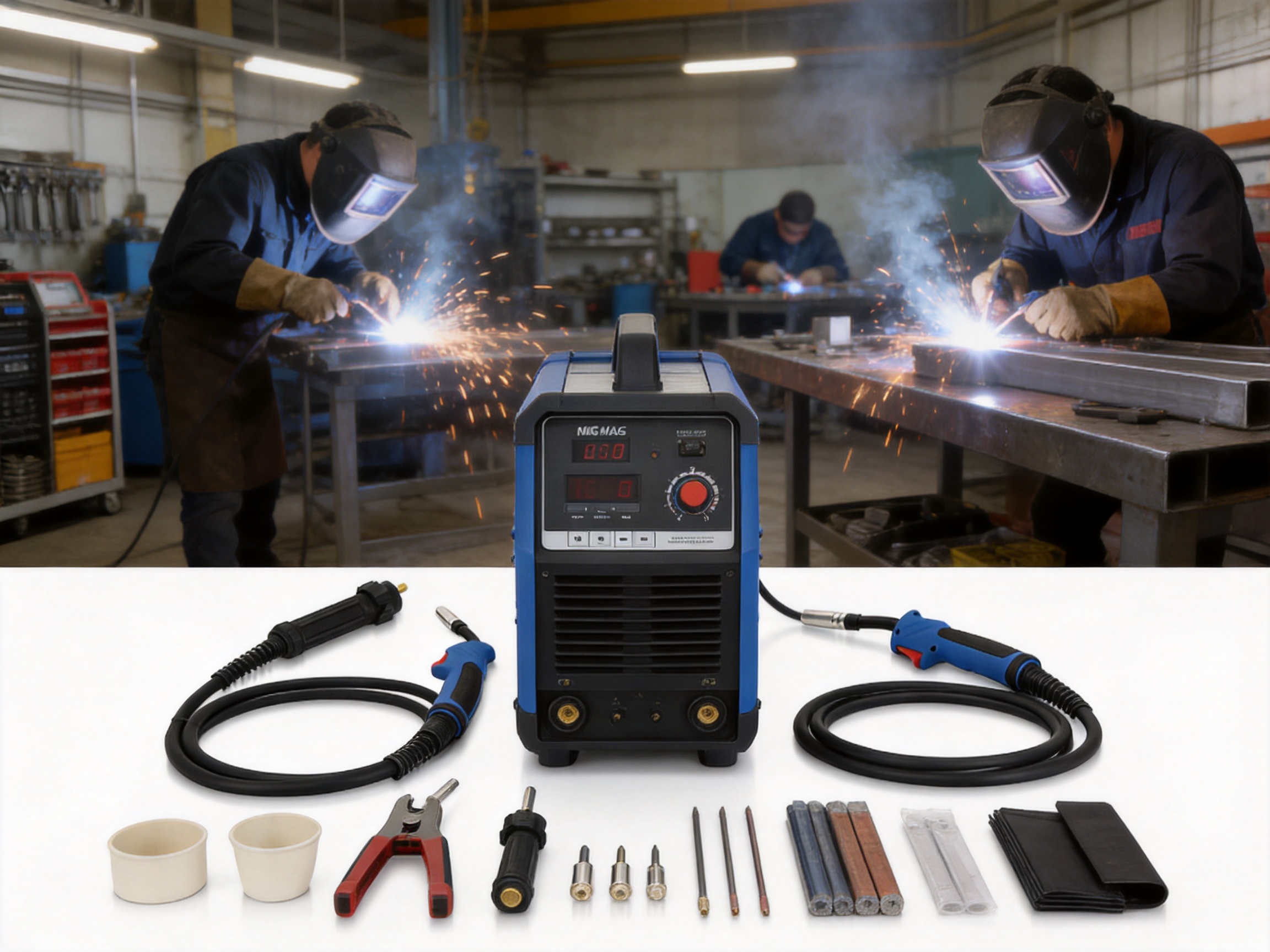
Quality control for welding machine parts should begin before production. Materials, electrical components, insulation, metal stock, plastics, fasteners, and other inputs need to be evaluated according to their intended use. Proper incoming inspection helps prevent unsuitable materials from entering the production process.
During manufacturing, attention may be given to dimensions, machining accuracy, molding quality, welding strength, crimping, insulation, surface treatment, assembly torque, connector fit, and visual appearance. Different parts require different inspection methods. A cable assembly may require continuity, insulation, and load-related testing, while a mechanical bracket may require dimensional and structural inspection.
Finished parts can be checked for appearance, function, packaging, labeling, and conformity with approved specifications. Where appropriate, testing may include electrical resistance, insulation performance, temperature behavior, mechanical strength, connection stability, gas passage, or simulated operating conditions.
Quality assurance is especially important for parts used in safety-related functions. Electrode holders, work clamps, cables, torch handles, connectors, and protective components must be designed and manufactured to reduce the risk of accidental contact, electrical leakage, overheating, or mechanical failure.
International certifications held across the company’s product range include GS, CE, EMC, ERP, US ETL, UKCA, and China CCC. Certification requirements vary according to the product category and market, so customers should confirm the specific certification applicable to the part or complete equipment being purchased. These certifications and compliance systems demonstrate the company’s experience with international technical and regulatory expectations.
MIG/MAG welding uses a continuously fed wire electrode and shielding gas, or in some configurations a flux-cored wire with or without external gas. The torch and wire-feed path are central to process stability. Contact tips must match the wire diameter and torch design. Liners should guide the wire smoothly without creating excessive friction. Nozzles must provide suitable shielding coverage and should be kept free from excessive spatter.
Welding cables, control cables, connectors, earth clamps, and gas fittings also influence operation. A complete maintenance program should inspect these components for cuts, loose connections, deformation, contamination, and heat damage. Selecting suitable parts can improve feeding consistency, reduce wire interruptions, and support a cleaner weld.
TIG welding requires precise control and effective shielding gas coverage. Torch components such as collets, collet bodies, ceramic cups, back caps, and tungsten electrodes must be correctly matched. A damaged ceramic cup can disturb gas flow, while an incorrectly sized collet may fail to hold the tungsten securely.
TIG cables and torch assemblies should be flexible enough for controlled manipulation but sufficiently robust for repeated workshop use. Gas connections must be secure and free from leaks. For applications involving stainless steel, aluminum, copper, or thin materials, stable accessories are particularly important because welders often work with low currents and narrow process tolerances.
Stick welding is valued for its simplicity, portability, and suitability for outdoor and maintenance work. The electrode holder, welding cable, work clamp, and connectors must be suitable for the machine’s output and duty cycle. A good holder should grip the electrode securely while allowing practical angle changes and safe handling.
Work clamps need reliable contact with clean metal. Rust, paint, scale, or loose connections can reduce current transfer. Cable insulation should be inspected regularly, particularly in construction and repair environments where cables may be dragged across rough surfaces or exposed to moisture.
Plasma cutting depends on a concentrated electrical arc and a controlled flow of compressed air or another suitable gas. The electrode and nozzle are wear components, while the shield and swirl elements help shape and stabilize the plasma stream. Incorrect or heavily worn components can cause an irregular arc, poor cut quality, excessive bevel, or difficulty initiating the cut.
Replacement parts should be selected according to the plasma cutter model, current rating, material thickness, and cutting mode. Clean air supply, correct pressure, and proper torch assembly are equally important. Operators should not continue using visibly damaged or severely worn plasma consumables simply to reduce replacement frequency, because this may increase operating costs and affect the torch.
Resistance welding creates heat through electrical resistance between workpieces. Electrode materials, holders, arms, cables, shunts, and control components must withstand repeated current pulses and mechanical pressure. Electrode condition has a direct influence on weld consistency and energy use.
Parts for resistance welding should be selected with attention to thermal conductivity, mechanical strength, alignment, and wear resistance. In automated production, even small dimensional changes can affect electrode positioning and repeatability. Regular inspection and dressing of electrodes may be required depending on the application.
Submerged arc welding is used for high-deposition applications and often involves automatic or semi-automatic equipment. Welding heads, wire guides, contact elements, flux delivery parts, cables, and control accessories must support continuous operation. Stable wire positioning and reliable electrical contact are important for maintaining a consistent weld bead.
Because submerged arc equipment is often used in heavy fabrication, its parts may experience significant heat, vibration, dust, and mechanical loading. Strong construction and suitable maintenance procedures can help reduce interruptions and support long production runs.
Laser welding and laser cleaning systems require specialized components and strict attention to equipment configuration. Depending on the system, parts may include protective covers, optical components, nozzles, cooling elements, cable assemblies, control interfaces, and safety-related accessories.
Users should obtain laser-related parts only from qualified suppliers and follow the equipment manufacturer’s installation and safety instructions. Optical and laser-path components should not be substituted casually, because incorrect parts may affect beam quality, operating safety, or system performance.
The lowest purchase price does not always represent the lowest operating cost. Generic parts may appear similar but differ in material grade, dimensional accuracy, insulation quality, contact design, heat resistance, or manufacturing consistency. These differences may not be visible during initial inspection but can become apparent during extended operation.
Professionally manufactured parts offer several potential advantages over unverified alternatives. They are more likely to be developed for a defined machine interface, produced under controlled processes, tested according to an internal specification, and supported by technical documentation or customer service. More consistent dimensions can simplify installation, while more reliable materials may improve service life.
Parts supplied through an established manufacturer can also provide better continuity. If a customer needs repeat orders, customized packaging, or a long-term supply program, an organized manufacturer is more likely to maintain product records and coordinate future production. This is particularly valuable for wholesalers, service networks, and equipment distributors.
| Evaluation Area | Professionally Manufactured Parts | Unverified Generic Parts |
|---|---|---|
| Compatibility | Designed around defined interfaces, ratings, and machine requirements | May fit physically but have uncertain electrical or mechanical compatibility |
| Material selection | Chosen according to heat, current, wear, and insulation requirements | Material grade and performance may be unclear |
| Dimensional consistency | Supported by controlled production and inspection | May vary between batches or suppliers |
| Service life | Developed for repeated use within stated conditions | May wear or fail prematurely under demanding conditions |
| Safety confidence | More likely to follow documented design and quality procedures | Compliance and testing information may be unavailable |
| Supply continuity | Suitable for planned replenishment and distributor programs | Availability and specifications may change without notice |
| Technical support | Can be supported by product engineering and application knowledge | Support may be limited or inconsistent |
The first step is to identify whether the part will be used for MIG/MAG, TIG, MMA, plasma cutting, resistance welding, submerged arc welding, laser equipment, or another process. Each process has different electrical, thermal, mechanical, and gas-delivery requirements.
Machine model information is essential. Buyers should record the manufacturer, model number, output rating, production year where relevant, connector style, torch interface, cable length, and existing part number. Photographs can help clarify appearance, but photographs alone should not replace technical confirmation.
Current capacity, voltage rating, duty cycle, polarity, and insulation requirements should be reviewed before ordering. A part rated for a compact machine may not be suitable for a high-output industrial system. Conversely, using a larger part may not guarantee compatibility if its connection or control configuration is different.
Workshops and job sites may expose parts to dust, water, oil, vibration, impact, high temperature, corrosive substances, or outdoor weather. The selected component should be appropriate for the environment. Heavy-duty construction sites may require more robust cable protection and strain relief than a clean indoor production area.
Some parts are expected to wear regularly, while others are intended to last for the life of the machine. Buyers should distinguish between consumables and durable assemblies. Maintaining an appropriate stock of common wear components can prevent production delays, but excessive inventory of obsolete or model-specific items should be avoided.
For professional purchasing, request product specifications, drawings, compatibility information, packaging details, inspection information, and applicable certificates. Technical documentation helps the customer compare products accurately and reduces the risk of ordering an unsuitable component.
Distributors and original equipment customers may require large quantities, special labels, customized packaging, barcodes, language-specific instructions, or modified cable lengths. A manufacturer with engineering and production capacity can often evaluate these requirements more effectively than a trading company with no direct manufacturing control.
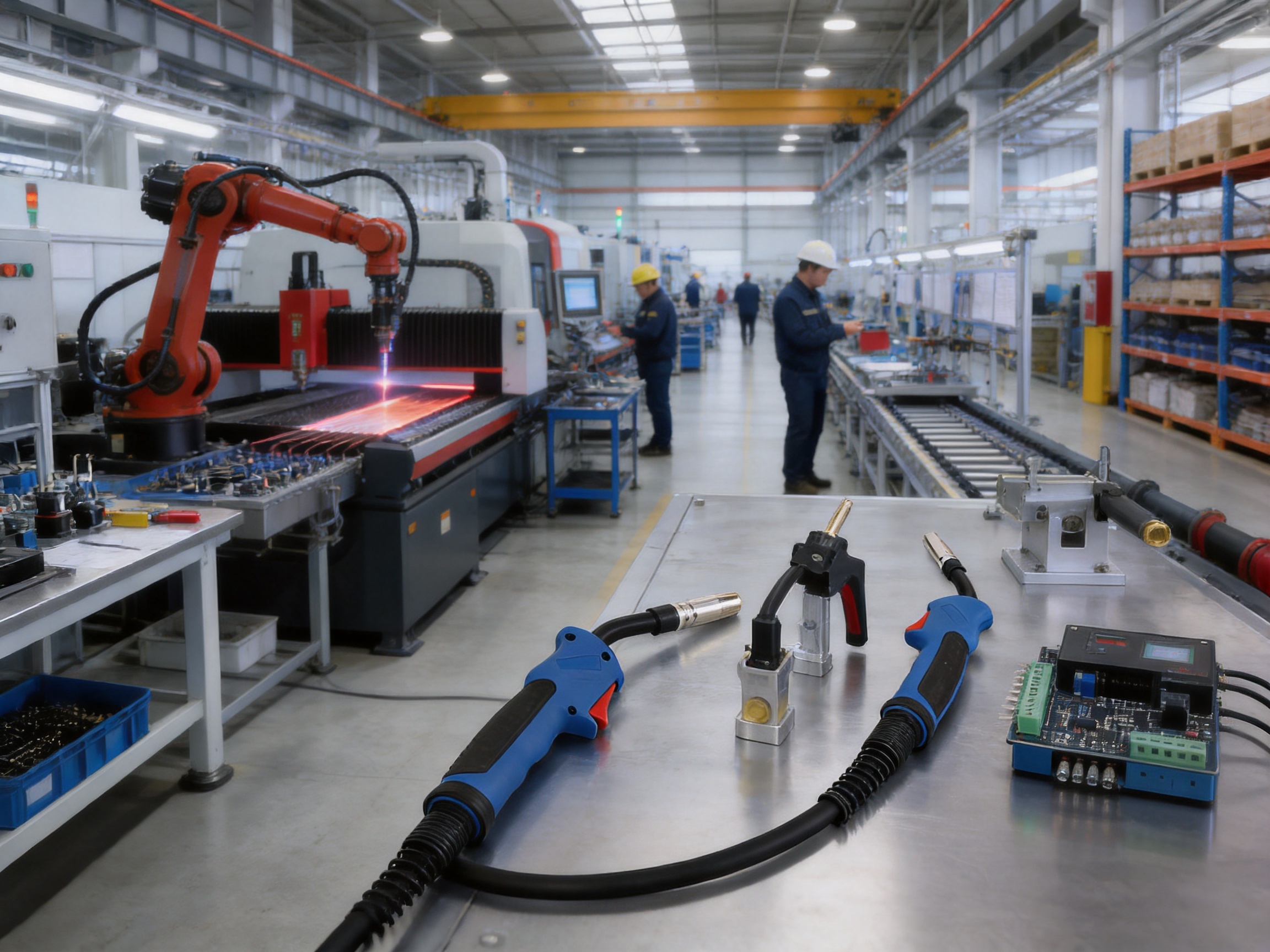
Welding equipment markets differ from country to country. Users may require different electrical input systems, connector standards, cable lengths, accessory configurations, packaging languages, or performance specifications. A flexible manufacturer can adapt products to regional needs while maintaining controlled production and quality requirements.
Kende’s experience in developing equipment for different markets supports this type of customization. The company can work with customers on new products and product modifications according to application requirements. This may include a customized accessory set for a welding machine, an alternative cable assembly, a private-label parts package, or a coordinated group of components for a regional distribution program.
Customization should begin with a clear technical brief. The customer should provide the application, machine model, desired performance, quantity, market, standards, packaging requirements, and expected delivery schedule. Engineering teams can then assess feasibility, create or revise drawings, select materials, prepare samples, and organize verification before mass production.
Although customized parts can provide strong commercial advantages, they should remain controlled through documented specifications. Changes to dimensions, materials, connectors, or ratings can affect safety and machine performance. A professional development process helps ensure that customization improves suitability without creating unrecognized risks.
Efficient manufacturing can reduce material waste, improve resource utilization, and support more stable delivery. Automated cutting, assembly, and processing systems can help optimize production when properly programmed and maintained. Enterprise resource planning and manufacturing execution systems can also assist with material planning, batch control, and production scheduling.
Longer-lasting welding parts contribute to sustainability by reducing the frequency of disposal and replacement. A durable cable, holder, clamp, torch component, or connector can remain in service longer when correctly maintained. Repairable and replaceable components can also extend the life of a complete welding machine, reducing the need to discard an otherwise functional power source.
Environmental performance also depends on responsible operation. Users should dispose of worn electrical parts, metal components, plastics, and contaminated consumables according to local regulations. Welding shops should avoid burning insulation, releasing hazardous substances, or mixing recyclable materials with general waste.
Manufacturers can support responsible use through efficient packaging, clear product identification, durable designs, and accurate technical information. Customers can contribute by ordering the correct parts, storing them properly, and replacing components based on condition and technical need rather than guesswork.
Installation should be performed by trained personnel familiar with the welding machine and the relevant safety requirements. Before replacing a part, disconnect the equipment from the power supply and allow hot components to cool. For gas-connected systems, close the supply and release pressure according to the equipment instructions.
Inspect the replacement part before installation. Look for cracks, deformation, exposed conductors, damaged threads, contamination, missing insulation, incorrect connectors, or signs of transport damage. Confirm that the part number and rating match the machine requirements.
Connections should be clean and secure. Loose terminals can generate heat and intermittent faults, while overtightening may damage threads or deform connection surfaces. Cable routing should avoid sharp edges, excessive bending, hot surfaces, moving machinery, and areas where vehicles or tools may cause crushing damage.
Torches and consumables should be cleaned regularly. Spatter buildup can restrict shielding gas flow and cause premature wear. Contact tips, nozzles, liners, electrodes, and plasma consumables should be replaced when their condition begins to affect process stability or weld quality.
Ground clamps should be attached to clean, suitable metal whenever possible. Painted, rusty, oily, or heavily contaminated surfaces can increase resistance. Cables should be coiled without tight kinks, stored away from moisture, and protected from unnecessary mechanical stress.
Maintenance teams should record recurring failures. If a part fails repeatedly, the cause may be improper application, incorrect rating, excessive duty cycle, poor ventilation, unsuitable consumables, damaged cables, incorrect installation, or a problem elsewhere in the machine. Replacing the same component without investigating the cause may not solve the underlying issue.
Welding machine parts are closely connected to welding technology. A company that manufactures only isolated accessories may not fully understand how each component interacts with a power source, torch, wire feeder, cooling system, control board, or protection circuit. A manufacturer with broad welding equipment experience can approach parts from a more complete system perspective.
Kende has been involved in welding machine development and manufacturing for many years. Its product knowledge covers manual, semi-automatic, automatic, inverter, gas-shielded, plasma, submerged arc, and related equipment. This broad technical base supports the evaluation of components across multiple process categories.
The company is also one of the national standard drafting units associated with the National Welding Machine Standardization Committee. It has participated in the drafting, formulation, and revision of 20 national standards and has led the drafting of one group standard. Participation in standard-related work reflects familiarity with technical terminology, safety expectations, performance requirements, and industry development.
The company’s patents and research resources further support innovation. In a competitive parts market, innovation may involve improved ergonomics, stronger cable protection, more efficient cooling, better wear resistance, easier serviceability, or new accessory configurations designed for modern welding systems.
Industrial users typically prioritize productivity, durability, compatibility, and service support. They may need parts for multiple machines, several welding processes, or a large fleet distributed across different workshops. For these users, a structured parts program can include recommended stock levels, replacement schedules, equipment records, and supplier coordination.
Construction companies often require portable and rugged accessories. Equipment may be transported frequently and used in outdoor conditions. Cable assemblies, electrode holders, clamps, connectors, and protective components must be selected with mobility, impact, dust, and weather exposure in mind.
Automotive repair shops may value flexible MIG/MAG accessories, reliable ground connections, and parts that support work on thin and medium-gauge materials. TIG accessories may be useful for stainless steel, aluminum, exhaust systems, and appearance-sensitive repairs.
Metalworking factories may need stable supplies for automated welding, robotic systems, resistance welding, and high-duty-cycle production. In these environments, parts should be integrated into preventive maintenance systems and monitored according to operating hours, weld counts, or observed wear.
Domestic and small workshop users may need simpler replacement solutions for occasional repair work. Clear identification, straightforward installation, practical packaging, and accessible technical support can be especially important for these customers.
Parts are often shipped in large quantities and may be distributed through wholesalers, retailers, service centers, and equipment dealers. Proper packaging protects components from impact, moisture, abrasion, and contamination during transportation. Labels should provide clear identification and, where applicable, model compatibility, quantity, specification, and handling information.
International distribution requires attention to carton design, pallet loading, export documentation, product classification, and destination-market requirements. An experienced exporter can coordinate these details more effectively, helping customers receive products in an organized and identifiable condition.
After-sales support is also important. Customers may need help identifying a part, confirming compatibility, troubleshooting a failure, or determining a replacement schedule. A manufacturer with product engineering, sales, and production teams can provide more informed assistance than a supplier that has limited knowledge of the equipment.
For long-term cooperation, communication should include forecasts, technical changes, quality feedback, packaging updates, and delivery planning. This approach helps both the supplier and customer maintain stable availability while responding to market changes.
Before placing an order, buyers should prepare the machine model and the exact part name or reference number. If a reference number is unavailable, provide photographs, dimensions, connector details, cable length, current rating, and the intended welding process.
Confirm whether the part is an original configuration, a compatible replacement, or a customized design. Ask whether the component is intended for a specific duty cycle and whether it should be used with a particular torch, power source, wire diameter, electrode diameter, gas system, or plasma cutter.
Review the required quantity and whether the order is for a one-time repair, routine inventory, distribution, or private-label program. For regular orders, discuss minimum order quantities, lead times, packaging, sample approval, inspection standards, and future availability.
Verify storage requirements. Some parts should be kept dry and protected from direct sunlight, chemicals, dust, or high temperatures. Proper storage before installation helps preserve insulation, plastics, rubber elements, electrical contacts, and precision surfaces.
Finally, confirm applicable safety and compliance requirements for the destination market. Complete welding equipment may require specific certifications, and component compliance may depend on how the part is supplied and used. Technical questions should be reviewed with the manufacturer or a qualified engineer.
Welding machine parts are replacement components and accessories used to operate, maintain, repair, or support welding and cutting equipment. They may include electrical, mechanical, thermal, gas-delivery, torch, cable, control, and wear components.
Professionally manufactured parts are generally produced according to defined dimensions, materials, ratings, and quality procedures. They are more likely to provide consistent compatibility, stable performance, predictable service life, and reliable supply than unverified alternatives.
Some parts are cross-compatible, but compatibility must be confirmed rather than assumed. The machine model, connector, dimensions, current rating, duty cycle, control configuration, and welding process should all be reviewed before installation.
Yes, customized development may be possible for specific applications, cable lengths, connectors, packaging, labels, accessory kits, or regional requirements. Customers should provide detailed technical information so the engineering team can evaluate feasibility and prepare a controlled specification.
Start with the machine model, part number, welding process, output rating, and connector details. If the original part is available, compare its markings and dimensions. Photographs, drawings, and technical data can help confirm the correct replacement.
Replacement frequency depends on the component, welding current, duty cycle, material, operating environment, cleaning routine, and user technique. Wear parts should be replaced when they show damage or begin to affect arc stability, wire feeding, gas coverage, cutting quality, or operator safety.
Inspect the insulation, connectors, strain relief, flexible sections, terminals, and signs of overheating or crushing. Do not continue using a cable with exposed conductors, severe cuts, loose terminals, melted insulation, or other damage that could create an electrical hazard.
Plasma consumables are usually designed for particular torch and machine systems. Even if two parts look similar, differences in dimensions, gas passages, current ratings, and materials can affect performance. Confirm the exact torch and cutter compatibility before purchase.
Relevant certifications depend on the product and destination market. Product-related certifications in the company’s broader portfolio include GS, CE, EMC, ERP, US ETL, UKCA, and China CCC. Buyers should confirm which certification applies to the specific product and configuration.
Use compatible components, follow preventive maintenance schedules, keep common wear parts in stock, inspect cables and connections regularly, clean torches and consumables, and investigate repeated failures. A planned supply program is usually more effective than ordering parts only after a machine stops.
Yes, parts can be developed or selected for automatic, robotic, submerged arc, resistance welding, and other specialized systems. These applications require careful attention to mechanical interfaces, electrical signals, cycle rates, positioning, cooling, and safety requirements.
A distributor should provide the product category, machine or torch model, required specifications, quantities, destination market, packaging preference, labeling requirements, certification expectations, target delivery date, and whether customization or private labeling is needed.
Reliable parts are essential to the safe and efficient operation of welding and cutting equipment. They influence current transfer, arc stability, shielding gas delivery, heat management, operator control, cutting accuracy, and machine service life. Choosing suitable components helps workshops reduce downtime, protect their equipment, and maintain consistent production quality.
The parts supplied through Zhejiang Kende Mechanical & Electrical Co., Ltd. benefit from the company’s experience in welding equipment, chargers, heaters, and related manufacturing. Its large production base, research and development facilities, engineering resources, automated processing technologies, management systems, international certifications, and export experience provide a strong foundation for professional parts supply.
Compared with unverified low-cost alternatives, professionally developed parts can offer better compatibility, more consistent dimensions, improved material performance, stronger quality control, and more dependable long-term availability. Whether the requirement involves MIG/MAG, TIG, MMA, plasma cutting, resistance welding, submerged arc welding, robotic welding, or specialized equipment, careful product identification and technical selection remain essential.
For distributors, industrial users, repair centers, contractors, and private-label customers, a planned parts partnership can provide more than individual replacement items. It can support preventive maintenance, customized product development, stable inventory, consistent quality, and long-term equipment reliability.
1. International Electrotechnical Commission. Welding Equipment Safety and Performance Principles.
2. International Organization for Standardization. Quality Management Systems and Manufacturing Process Control.
3. International Organization for Standardization. Arc-Welding Equipment and Welding Consumable Guidance.
4. National Welding Machine Standardization Committee. Technical Principles for Welding Machine Design and Manufacturing.
5. Manufacturer technical information concerning welding machines, plasma cutting equipment, battery chargers, heaters, production systems, and product certification.
6. Industrial maintenance practices for welding torches, cable assemblies, electrode holders, work clamps, plasma consumables, and related accessories.
Recommended Products

Contact Us
No.2299, Luqiao Section, Shugang Avenue, Luqiao District, Taizhou, 318057 Zhejiang, PR China.
+86-576-82431568
 Privacy
China Welding Machine Factory
 English
 中文简体
 русский
 Español
 عربى
 Français
 Português
 Deutsch
 Український