Email: [email protected]
Email: [email protected]

Industry News
 Home / News / Industry News / How Do Plastic Welding Machine Suppliers Support Modern Production Needs
  2026.05.22
 Industry News
Plastic welding is used in many production environments where parts need to be joined under controlled heat or energy input. In practice, the equipment is rarely the focus on its own. What matters more is how it behaves inside a running production flow.
Different plastic parts respond in different ways during processing. Some soften quickly, some hold shape longer, and some react more noticeably when pressure changes. Because of this, equipment selection is usually tied to production behavior rather than a single fixed method.
Plastic Welding Machine Suppliers are often involved at this stage, providing different machine configurations that can be adjusted based on how products are actually assembled on the line.
What often gets overlooked is the physical setup around the machine. Space, operator movement, and how parts enter and leave the station can influence performance as much as the welding method itself.
In real factory environments, the selection process tends to revolve around a few practical points:
Plastic Welding Machine Suppliers are usually assessed based on how well their equipment adapts to these conditions rather than on machine description alone.
Different welding processes exist because plastic materials behave differently under heat, vibration, or energy input. In production use, the process is usually chosen based on part structure rather than theoretical preference.
Some methods are more suitable for simple joints, while others are used when the contact area is larger or more complex.
Common process types include:
| Welding approach | Typical use condition | What it mainly affects |
|---|---|---|
| Contact heating | Simple part assembly | Surface bonding consistency |
| Vibration joining | Larger components | Structural stability |
| Energy controlled | Sealed products | Joint continuity |
| Focused energy | Fine structures | Local precision |
In many production lines, the choice is not fixed permanently. It may shift slightly when product design or material behavior changes.
Material behavior is often the point where welding results start to differ. Even when two materials look similar, their response during heating or pressure can vary in subtle ways.
Suppliers usually adjust equipment settings or configuration based on these differences rather than using one standard setup. This becomes more noticeable when switching between unreinforced plastics and modified materials.
Some practical considerations often include how the material reacts when temperature rises, whether deformation appears at the joint area, and how stable the surface remains after cooling.
Applications also play a role. A sealed container behaves differently from a structural housing, even if both are made from similar materials.
Plastic Welding Machine Suppliers tend to respond to these variations by offering flexible configurations rather than fixed-function machines.
In production environments, welding machines usually sit inside a larger workflow rather than acting as standalone units. Parts move in, get positioned, processed, and then continue to the next step.
Some setups are compact and rely more on manual handling, while others are arranged in a continuous flow with coordinated movement. The surrounding layout often affects how the machine is designed and operated.
Typical usage environments include assembly stations, semi-guided work areas, and coordinated production lines where multiple steps are linked together.
Performance is not only about welding capability. It is also about how smoothly the equipment fits into the movement of materials and operators around it. Plastic Welding Machine Suppliers often adjust structure and layout considerations based on these real working conditions.
Different industries use plastic welding in slightly different ways, depending on how the final product is expected to perform during use. In some cases, the focus is on sealing performance. In others, it is more about structural holding or long term stability.
Plastic Welding Machine Suppliers often work across several sectors rather than focusing on a single application type. The requirements tend to shift based on product design and the environment where the product will be used.
Common application areas include:
These industries do not use identical welding approaches. Even when the material looks similar, the final requirement can change how the process is configured on the production line.
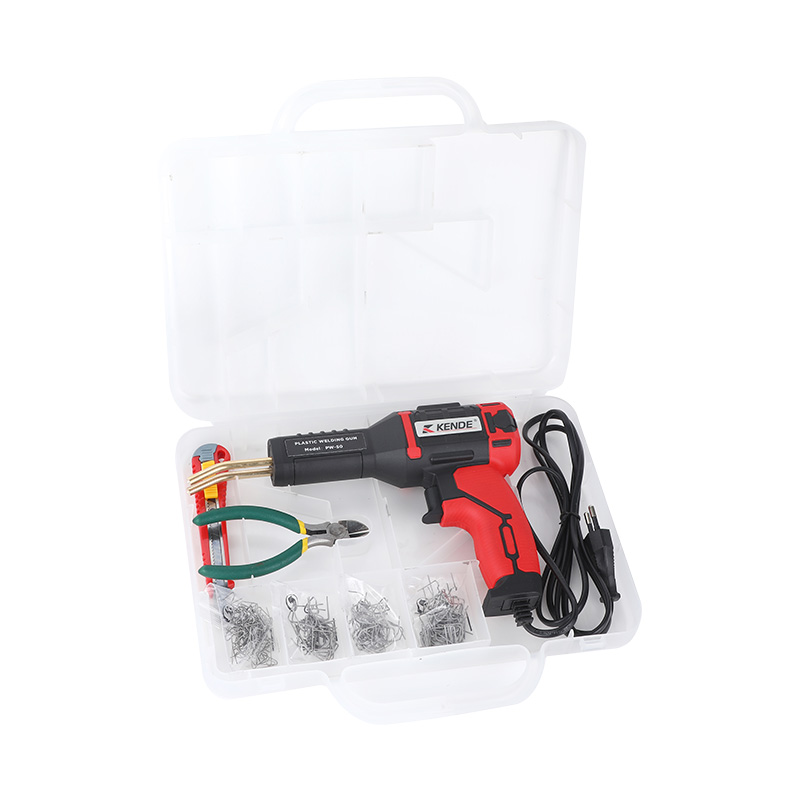
Automation has become part of many production setups, and welding equipment is often integrated into these systems rather than used independently. This changes how machines are designed and how they interact with surrounding equipment.
In automated environments, the welding machine usually needs to follow a defined sequence. Parts arrive, positioning happens, welding is triggered, and the product moves forward without interruption.
Plastic Welding Machine Suppliers typically adjust machine interfaces and control systems so that equipment can connect with external production flow systems. This may include synchronization with conveyors, robotic positioning units, or timing based controls.
In practice, integration is less about adding complexity and more about keeping movement consistent across the entire line. When timing is aligned properly, operators spend less effort on manual adjustment, and production flow becomes more predictable.
In real production environments, stability often matters more than isolated performance results. A machine may work well in short cycles, but the behavior over long running periods is what usually affects output quality.
When evaluating Plastic Welding Machine Suppliers, attention is often placed on how consistent the welding result remains under repeated operation. This includes how the joint behaves after multiple cycles and whether adjustments are frequently needed during operation.
Some practical points often observed on production floors include:
| Evaluation aspect | What is observed in production |
|---|---|
| Process stability | Repeated results over time |
| Adjustment frequency | How often settings change |
| Output consistency | Uniformity across cycles |
| Material response | Sensitivity to variation |
Stability is usually not judged from a single test, but from how the machine behaves under continuous use in real production conditions.
Comparing suppliers is not only about equipment capability at the beginning. In many cases, long term cooperation depends on how the supplier responds when production needs change or when adjustments are required on site.
One common observation in manufacturing environments is that requirements rarely remain fixed. Product structure, material choice, or output demand may shift gradually over time.
When comparing Plastic Welding Machine Suppliers, attention is often placed on how flexible their support structure is and how communication is handled during equipment use.
Practical considerations often include:
Cooperation tends to work more smoothly when both sides treat the equipment as part of a longer production cycle rather than a single delivery point.
Recommended Products

Contact Us
No.2299, Luqiao Section, Shugang Avenue, Luqiao District, Taizhou, 318057 Zhejiang, PR China.
+86-576-82431568
 Privacy
China Welding Machine Factory
 English
 中文简体
中文简体
 русский
 Español
 عربى
عربى
 Français
 Português
 Deutsch
 Український