Email: [email protected]
Email: [email protected]

Industry News
 Home / News / Industry News / How Does an Inverter MIG Welder Manufacturer Adapt to Modern Fabrication Needs?
  2026.03.20
 Industry News
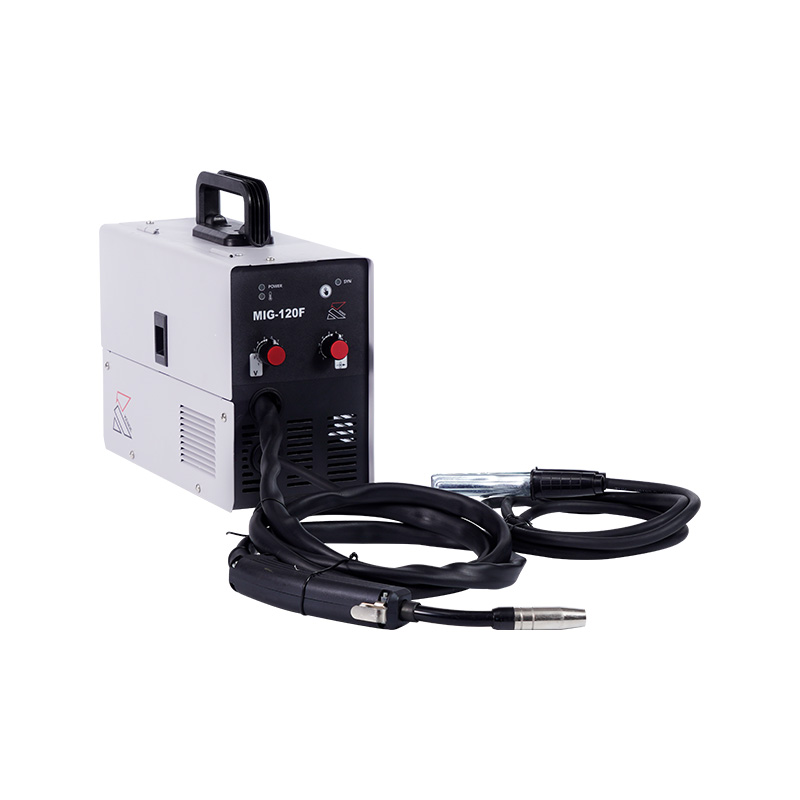
Welding technology has changed significantly over the past two decades. Compact machines have replaced bulky transformers, and digital controls have made arc adjustment more precise. In this shift, the role of an Inverter MIG Welder Manufacturer has evolved beyond simple production. Today, manufacturers are not just assembling machines—they are responding to the changing expectations of workshops, fabrication plants, and individual welders.
As fabrication projects grow more diverse, flexibility and reliability have become essential. The way an inverter MIG welder manufacturer approaches design, sourcing, and testing directly influences how smoothly a welder can work on site.
Traditional MIG welders relied on heavy transformer systems. They were durable but often large and energy-intensive. Inverter technology changed that by converting input power more efficiently and reducing machine size.
An Inverter MIG Welder Manufacturer must carefully engineer circuit boards, cooling systems, and power modules to ensure stable arc performance. The result is equipment that is lighter, easier to transport, and suitable for both workshop and field use.
This technical shift has allowed welders to work in tighter spaces and move machines between job sites without significant effort.
Modern welders expect more than a simple on-off switch. They look for adjustable voltage control, smooth wire feeding, and compatibility with various materials. A responsive Inverter MIG Welder Manufacturer studies how machines are actually used—whether in automotive repair, structural steel fabrication, or home workshops.
For example, consistent arc stability is critical when working with thin sheet metal. In heavier applications, duty cycle and thermal protection become more important. By understanding these scenarios, manufacturers refine machine design to match practical needs rather than theoretical specifications.
One of the defining features of inverter welders is portability. However, reducing size cannot come at the expense of durability. An experienced Inverter MIG Welder Manufacturer balances compact design with reinforced casing, reliable cooling fans, and stable internal wiring.
Portable units are often exposed to dust, vibration, and fluctuating power supplies. Careful component selection and quality checks help ensure that machines maintain steady output even under demanding conditions.
This balance between performance and portability is what makes inverter-based equipment appealing to a broad range of users.
Production does not end at assembly. Rigorous testing plays a crucial role in building trust. Many manufacturers run load simulations, arc tests, and heat endurance checks before machines leave the factory.
An Inverter MIG Welder Manufacturer that invests in consistent inspection processes can reduce failure rates and warranty claims. Over time, this attention to detail strengthens long-term relationships with distributors and end users.
Different markets have different electrical standards and safety regulations. Voltage ranges, plug types, and certification requirements vary by region. A flexible Inverter MIG Welder Manufacturer adapts designs to meet these standards without compromising functionality.
Some clients also request private labeling or custom configurations, such as dual-voltage options or spool gun compatibility. Modular production systems make such adjustments feasible without disrupting the main manufacturing line.
Manufacturing is only part of the equation. Technical documentation, spare parts availability, and after-sales service influence how customers perceive a brand. Clear manuals and accessible support channels reduce downtime and build confidence in the product.
An Inverter MIG Welder Manufacturer that maintains communication with distributors and technicians can gather feedback for future improvements. This ongoing dialogue helps refine features and address emerging challenges in welding practice.
So, can an Inverter MIG Welder Manufacturer redefine efficiency in modern workshops? The answer depends on how well it integrates technology, practical feedback, and quality control into its process. By focusing on compact design, stable arc performance, and reliable production standards, manufacturers contribute directly to smoother fabrication workflows.
In the end, the success of welding equipment is measured not only by specifications on paper but by how confidently it performs in real-world conditions. When manufacturers align engineering with everyday use, they become more than equipment suppliers—they become partners in productivity.
Recommended Products

Contact Us
No.2299, Luqiao Section, Shugang Avenue, Luqiao District, Taizhou, 318057 Zhejiang, PR China.
+86-576-82431568
 Privacy
China Welding Machine Factory
 English
 中文简体
中文简体
 русский
 Español
 عربى
عربى
 Français
 Português
 Deutsch
 Український