Email: [email protected]
Email: [email protected]

Industry News
 Home / News / Industry News / Inverter Plasma Cutter Manufacturer: What a Repair Log Reveals About Duty Cycle Claims
 2026.11.27
 Industry News
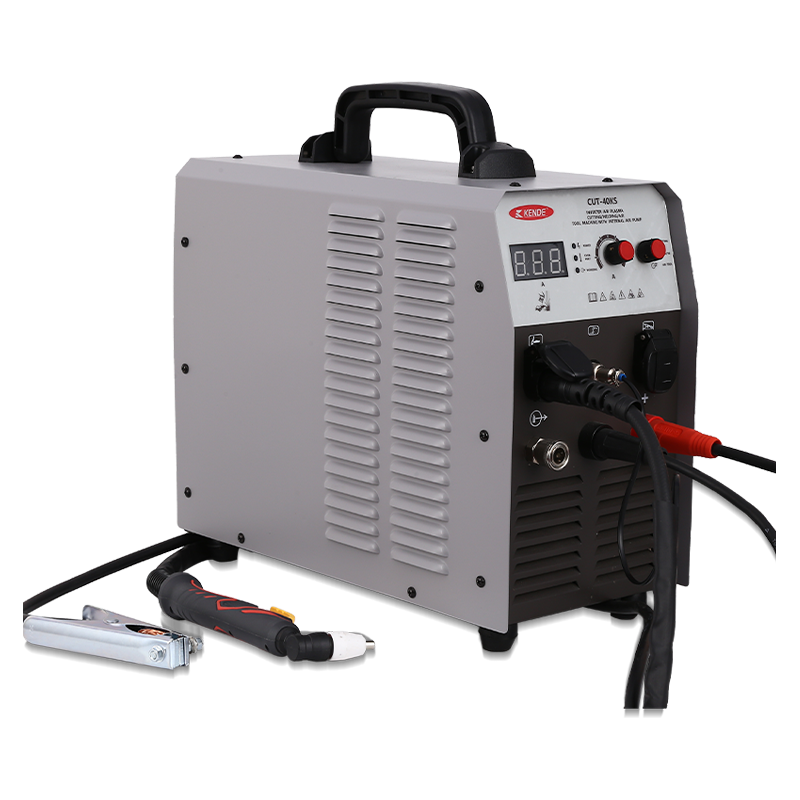
An inverter plasma cutter manufacturer is usually assessed on amperage, cutting thickness, and price, but the clearest picture of a supplier often comes from its repair records rather than its catalogue. Units that come back with burnt boards, melted tips, or repeated thermal trips tell a buyer more about duty cycle honesty and air-quality requirements than any specification sheet. A manufacturer willing to discuss what fails and why is easier to evaluate than one that only talks about what the machine can cut.
When plasma cutters fail early, the cause is frequently moisture or oil in the air supply rather than a fault in the inverter itself. A manufacturer that asks about the buyer's compressor and filter setup before quoting is more useful than one that ships a unit and leaves the air question to the customer. Buyers should ask what air quality the cutter requires, whether a filter and dryer are recommended, and how the manufacturer handles warranty claims related to contaminated air.
A duty cycle figure is only meaningful with its test conditions attached. Buyers should ask at what amperage the figure was measured, at what ambient temperature, and whether the unit was tested with the torch that ships with it. Two practical checks help:
A manufacturer that answers these questions with data is easier to trust than one that repeats the catalogue figure.
Consumables are where operating cost accumulates, and the design of the electrode and nozzle affects how often they are replaced. Buyers should ask how the consumables are cooled, what the expected life is under a stated cutting condition, and whether the manufacturer offers a range of consumables for different materials. A cheap torch that eats electrodes quickly costs more over a year than a slightly more expensive torch with longer consumable life.
Inverter cutters depend on electronic boards, and how those boards are protected decides whether the unit survives dust and heat. Buyers should ask whether the boards are conformal coated, how the cooling air path is arranged, and how repair is handled. A unit that must be returned to the factory for every fault is inconvenient; a unit that can be repaired locally with available boards is easier to keep running.
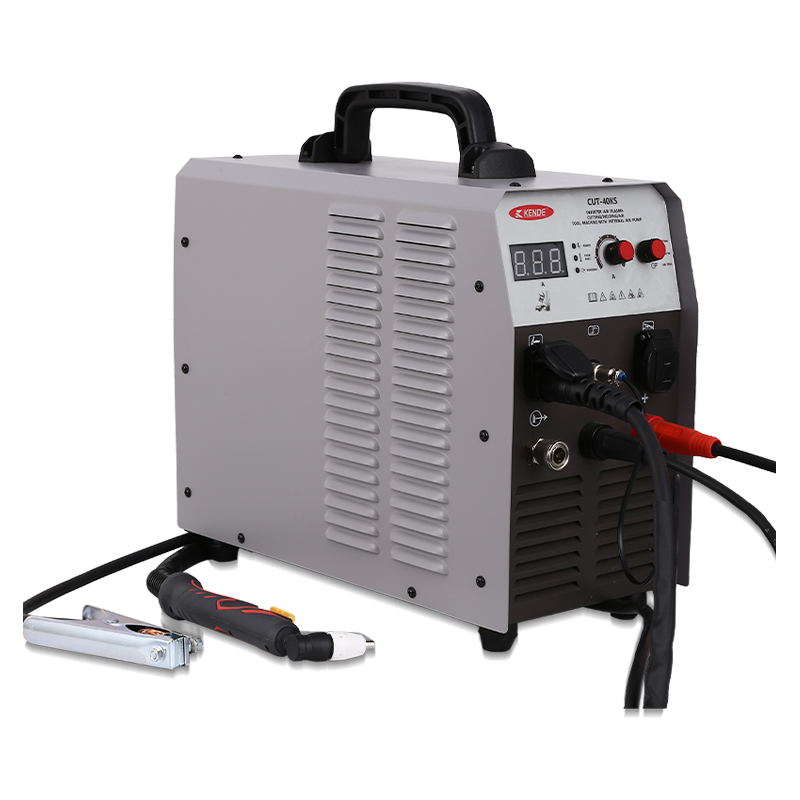
Rather than comparing amperage and price, buyers can ask which components fail most often, how warranty claims are handled, what air quality is required, and how consumable life is measured. Suppliers who answer with failure data and service procedures are easier to trust than those who answer with a cutting thickness chart. The cutter is a familiar tool; the difference lies in whether the manufacturer understands how its units fail in real shops.
Recommended Products

Contact Us
No.2299, Luqiao Section, Shugang Avenue, Luqiao District, Taizhou, 318057 Zhejiang, PR China.
+86-576-82431568
 Privacy
China Welding Machine Factory
 English
 中文简体
 русский
 Español
 عربى
 Français
 Português
 Deutsch
 Український