Email: [email protected]
Email: [email protected]

Industry News
 Home / News / Industry News / Mini Welding Machine Factory: Small Units Earn Their Reputation at the Duty Cycle
 2026.11.13
 Industry News
A mini welding machine factory is judged less on catalogue range than on whether its small units hold up when buyers treat them as tools rather than toys. Buyers comparing quotations usually look at amperage, duty cycle, and price, while the differences that decide whether a factory's output performs sit in transformer or inverter design, thermal protection, and how consistently the units are assembled on the line.
A mini welding machine is rated at a duty cycle, and the duty cycle is usually measured at a specific amperage and ambient temperature. A machine rated generously at a low amperage may overheat quickly when run at its maximum. A factory that states the test conditions is easier to trust than one that quotes a single duty cycle figure without context. Buyers should ask at what amperage and temperature the rating was measured, and whether the figure applies to the whole range or only to the smallest model.
Small machines are built around either a transformer or an inverter, and the choice affects weight, efficiency, and repair. Inverter machines are lighter and more efficient but depend on electronic components that are sensitive to heat and dust. Transformer machines are heavier and simpler but tolerate rough handling better. Buyers should ask which design the factory uses, how the electronics are protected, and how repair is handled. A factory that can explain the trade-off is more useful than one that sells only one design.
The thermal protection circuit is what keeps a small machine from destroying itself, and it is where cost-cutting often shows. Buyers should ask what temperature the protection trips at, whether the fan runs after shutdown, and how the components are rated. A machine that trips too early frustrates the operator, while one that trips too late damages the electronics. A factory that can describe its protection settings and component ratings is easier to evaluate than one that describes only output.
Small machines are often assembled in high volumes, and consistency depends on how the line is controlled. Two points matter when a buyer visits or audits a line:
A factory that tests every unit under load is more reliable than one that tests a sample. A consistent small machine is more valuable than a powerful one that varies from unit to unit.
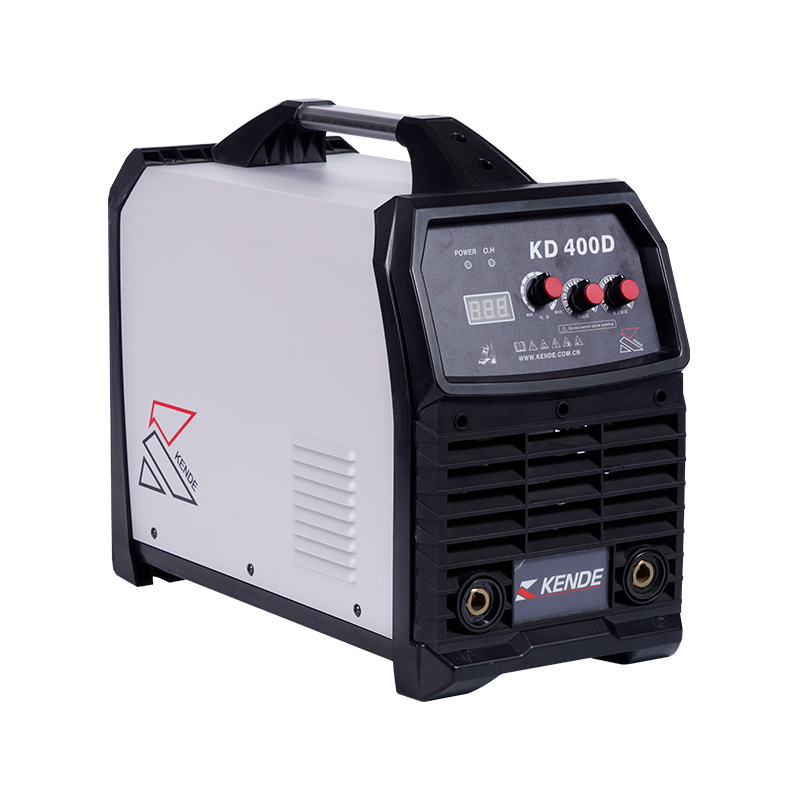
Rather than comparing amperage and price, buyers can ask at what conditions the duty cycle was measured, how the thermal protection is set, which design the factory builds, and how each unit is tested. Suppliers who answer with settings and records are easier to trust than those who answer with a power figure. The machine is small; the difference lies in whether the factory built it for real welding conditions.
Recommended Products

Contact Us
No.2299, Luqiao Section, Shugang Avenue, Luqiao District, Taizhou, 318057 Zhejiang, PR China.
+86-576-82431568
 Privacy
China Welding Machine Factory
 English
 中文简体
 русский
 Español
 عربى
 Français
 Português
 Deutsch
 Український