Email: [email protected]
Email: [email protected]

Blog
 2026.07.28
 Blog
Blog
Modern welding work requires equipment that combines precise arc control, reliable electrical performance, convenient portability, and the flexibility to handle different metals and welding processes. The WSME-200D IGBT Inverter TIG/MMA Welding Machine is designed to meet these requirements in a compact, portable format. It combines AC TIG, DC pulse TIG, DC TIG, and MMA welding functions in one machine, giving fabricators, maintenance technicians, workshops, installers, and professional welders a versatile solution for a wide range of applications.
With a maximum welding current of 200 amperes, high-frequency arc starting, digital control, adjustable pulse functions, and an inverter-based electrical system, this machine is suitable for both precision TIG welding and practical stick welding. Its ability to work with materials such as carbon steel, stainless steel, aluminum, aluminum alloys, alloy steel, and cast iron gives it a broad operating range. The inclusion of AC TIG is particularly valuable for aluminum and aluminum alloy work, while DC TIG provides controlled welding performance on steel and stainless steel.
The machine is also engineered for demanding operating environments. Its metal case, plastic frame structure, moisture-resistant design, anti-corrosion treatment, anti-vibration construction, and protection against conductive dust contribute to long-term service reliability. Automatic over-current and over-temperature protection further reduce the risk of damage during difficult operating conditions.
This article examines the product’s operating functions, technical characteristics, practical advantages, manufacturing quality, application range, maintenance requirements, and the strengths of its manufacturer, Zhejiang Kende Mechanical & Electrical Co., Ltd. It also explains why a multi-process inverter welding machine can provide greater value than a single-function competitor product.
The WSME-200D is a single-phase, 230-volt-class welding machine rated for a maximum output of 200 amperes. It is built around insulated-gate bipolar transistor, or IGBT, inverter technology. Compared with many conventional transformer-based welding machines, an IGBT inverter unit can provide a more compact structure, improved electrical efficiency, more responsive current control, and reduced power consumption.
The product supports four principal operating modes: AC TIG, DC pulse TIG, DC TIG, and MMA. This combination is important because different materials and joint designs require different arc characteristics. AC TIG is commonly selected for aluminum because the alternating current helps manage the oxide layer on the material. DC TIG is appropriate for many steels and stainless steels. DC pulse TIG can reduce heat input and improve control when welding thin sections. MMA, also known as stick welding, provides a practical option for outdoor work, repair work, and applications where shielding gas is inconvenient.
The rated welding current range is 20 to 200 amperes. This allows the machine to perform delicate work at lower current settings while still providing sufficient output for heavier fabrication within the capacity of a portable 200A unit. The rated duty cycle is 60 percent, meaning the machine is designed to weld for an appropriate portion of a standard operating cycle before a cooling period is required. Actual duty cycle performance depends on ambient temperature, welding current, ventilation, electrode type, and operating conditions.
A digital display gives the operator a clear indication of the selected or operating welding current. Digital control improves repeatability because users can record settings and return to them for similar joints. For production repair, workshop fabrication, and training environments, this repeatability can reduce setup time and support more consistent weld quality.
AC TIG is one of the most important functions of the WSME-200D. Aluminum and aluminum alloys naturally develop a tenacious oxide film that has a higher melting point than the underlying metal. A suitable AC welding current helps break up or clean this surface oxide while maintaining the arc required to melt the base material.
The availability of AC TIG allows the machine to serve applications that would not be practical with a DC-only TIG welder. Typical examples include aluminum frames, vehicle components, heat exchangers, light fabrication, motorcycle parts, signs, tanks, and aluminum repair work. Operators can use a suitable tungsten electrode, shielding gas, filler rod, and joint preparation to produce clean, controlled welds on aluminum components.
AC TIG also provides an alternative for specialized fabrication where arc behavior and heat distribution must be carefully managed. Although advanced industrial systems may provide a wider range of waveform and frequency adjustments, a reliable AC TIG function in a portable 200A machine offers an attractive balance between capability, simplicity, and cost.
Pulse TIG alternates between a higher peak current and a lower background current. This allows the operator to control heat input while maintaining arc stability. Pulse welding can be useful for thin sheet, stainless steel, small components, precision joints, and applications where distortion must be minimized.
Lower heat input can help reduce warping, discoloration, excessive penetration, and damage to heat-sensitive components. It can also support a more controlled weld pool when the operator is working on narrow joints or delicate parts. For stainless steel fabrication, pulse operation may help maintain a consistent bead profile and reduce the risk of excessive heat accumulation.
Pulse TIG is especially useful for welders who need greater control than a basic constant-current TIG unit can provide. The operator can coordinate torch movement and filler addition with the pulse cycle, creating a regular weld pattern when the technique is properly applied. The machine’s digital control architecture supports this type of repeatable adjustment.
DC TIG is widely used for carbon steel, stainless steel, alloy steel, copper-based materials, and many other conductive metals. It provides a focused and stable arc that can produce clean welds with accurate heat placement. The WSME-200D is designed to offer strong arc characteristics in TIG mode, helping the operator establish and maintain a controlled weld pool.
High-frequency starting is a significant advantage in DC TIG operation. Instead of requiring the tungsten electrode to touch the workpiece to initiate the arc, high-frequency starting allows contactless arc ignition. This reduces the chance of tungsten contamination, scratches on the workpiece, and inconsistent starts. It is particularly valuable when welding visible surfaces or contamination-sensitive joints.
For professional fabrication, the combination of DC TIG and high-frequency starting supports applications such as stainless steel pipework, food-processing equipment, sheet-metal fabrication, precision brackets, laboratory components, and repair work. The operator can select the current appropriate to the material thickness and joint design while maintaining a clean torch technique.
MMA welding provides a practical second process when TIG equipment, shielding gas, or filler wire is not convenient. Stick electrodes are self-shielded, so the process is suitable for outdoor work, construction repair, agricultural equipment, structural maintenance, and general fabrication.
The WSME-200D includes useful MMA functions such as hot start, arc force, and anti-stick. Hot start temporarily increases current during arc ignition, helping the electrode start more easily. Arc force assists in maintaining the arc when the electrode is held close to the workpiece or when arc length changes during welding. Anti-stick helps limit current if the electrode becomes stuck, making it easier to release and reducing the possibility of overheating the electrode or workpiece.
These features give the machine an advantage over basic stick inverters that provide only a simple current adjustment. They also make the unit more approachable for less experienced operators while giving skilled welders additional control over arc behavior.
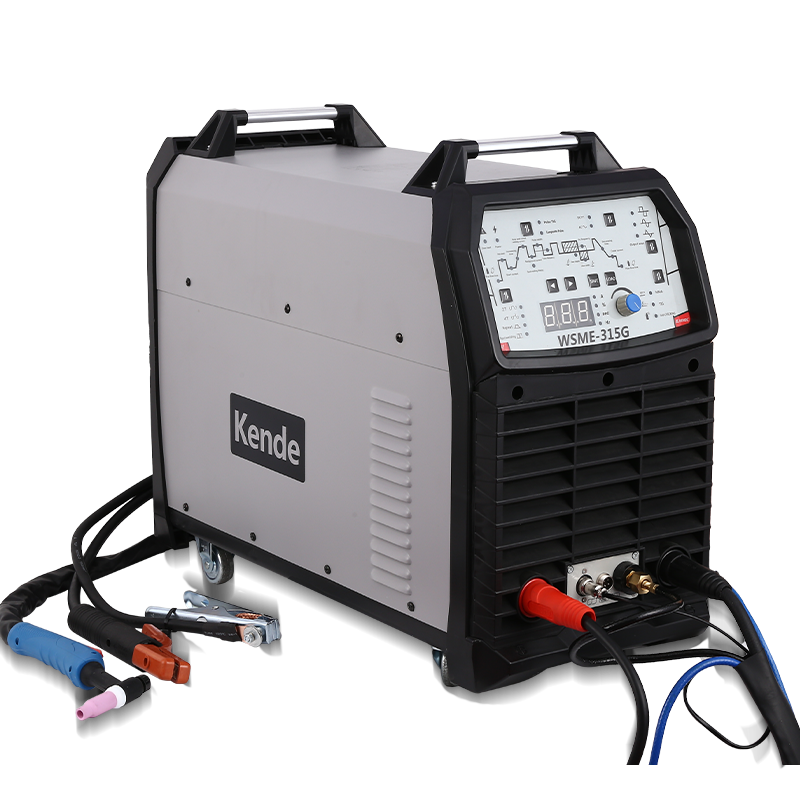
WSME-200D IGBT Inverter TIG/MMA Welding machine(TIG DC-HF), Metal case with plastic frame Portable , AC TIG, DC PULSE TIG, DC TIG and MMA, Digital Display, 230V 200A
The product uses powerful IGBT switching devices, advanced inverter technology, pulse-width modulation control, and constant-current output control. Together, these systems allow the welding current to be regulated accurately across a broad range. The current can be adjusted continuously rather than being limited to a small number of fixed settings.
IGBT technology is widely used in modern welding equipment because it can switch electrical power efficiently at high speed. This supports a smaller transformer and a more compact overall design than many traditional low-frequency transformer machines. The result is a portable product with a useful current capacity and a more manageable physical footprint.
The rated input capacity of the WSME-200D is 9.2 kVA, with a rated supply current of 42 amperes. The stated efficiency is 85 percent, and the power factor is 0.9. A relatively high power factor means that the machine can make more effective use of the available electrical supply compared with equipment with a lower power factor. This is beneficial in workshops where multiple electrical loads may operate at the same time.
The inverter system is also designed to limit unnecessary energy consumption. The manufacturer states that energy savings can reach up to 30 percent compared with less efficient designs, although actual savings depend on the welding process, current setting, input supply, duty cycle, and comparison equipment. Reduced power consumption can lower operating costs and make the machine more suitable for locations where electrical capacity is limited.
Constant-current control is especially important for TIG and MMA welding. When the arc length changes slightly, the control system works to maintain stable welding current. This helps the operator achieve a more consistent arc and reduces the effect of minor variations in torch position or electrode movement.
Arc quality is a major factor in the performance of any welding machine. A machine may have a high maximum current rating, but its practical value depends on whether the arc starts easily, remains stable, responds predictably to adjustments, and produces a controllable weld pool.
The WSME-200D is designed with exceptional arc characteristics in both TIG and stick modes. In TIG operation, high-frequency starting helps produce a clean, contactless ignition. In MMA operation, hot start and arc force adjustments assist with ignition and arc stability. These features can reduce common problems such as electrode sticking, unstable arc length, irregular penetration, and difficult restarts.
For TIG welders, a stable arc supports more precise control of bead width and penetration. This is important when welding thin stainless steel, aluminum sheet, or components with close dimensional tolerances. A predictable arc also helps the operator maintain a consistent rhythm when feeding filler material.
For stick welders, arc force can be useful when welding in challenging positions or when using electrodes that require a particular arc behavior. The operator can adjust the response to suit the electrode type, material, joint design, and personal welding technique.
The digital interface is described as simple and easy to use. A simple interface is a practical advantage because excessive controls can slow down setup and increase the possibility of incorrect adjustments. The basic operating approach allows the user to select the required welding function and set the welding current, while additional controls support pulse, hot start, or arc force requirements where applicable.
The machine uses a metal case with a plastic frame and is intended for portable use. A metal enclosure can provide useful mechanical protection for internal electrical components, while a plastic frame can help reduce weight and support insulation around selected structural areas. The stated net weight is 21 kilograms, and the machine dimensions are approximately 550 millimeters long, 270 millimeters wide, and 440 millimeters high.
At this size and weight, the machine is suitable for movement within workshops, service areas, construction sites, maintenance departments, and training facilities. It is more portable than many large conventional welding power sources while still providing a 200A output class. Portability can reduce the need to transport workpieces to a fixed welding station.
The protection rating is IP21S. This indicates that the enclosure is intended to provide basic protection against contact with hazardous internal parts and vertically falling water under specified conditions. The equipment should nevertheless be operated in a dry, properly ventilated environment and protected from rain, standing water, excessive dust, and corrosive atmospheres.
The insulation class is H, indicating a high thermal endurance class for the insulation system. The product information also identifies moisture-proof, anti-corrosion, anti-vibration, and anti-conductive-dust characteristics. These features are useful for equipment that may be used in workshops or service environments where dust, movement, and variable conditions are unavoidable.
Protection functions include over-current and over-temperature protection. If the machine experiences an abnormal current condition or reaches an excessive internal temperature, the protection system can help prevent severe damage. Protection does not eliminate the need for proper operation, adequate ventilation, correct cable sizing, or compliance with electrical safety requirements, but it adds an important layer of equipment security.
The following table summarizes the principal published specifications for the WSME-200D model. The figures should be considered together with the operating manual, local electrical standards, and the requirements of the specific welding application.
| Specification | WSME-200D |
|---|---|
| Power supply | Single-phase, 220/230 V |
| Supply frequency | 50/60 Hz |
| Rated input capacity | 9.2 kVA |
| Rated supply current | 42 A |
| No-load voltage | 76 V |
| Welding current range | 20–200 A |
| Rated welding voltage | 18 V |
| Rated duty cycle | 60% |
| Usable electrode diameter | 1.6–5.0 mm |
| Efficiency | 85% |
| Power factor | 0.9 |
| Protection degree | IP21S |
| Insulation class | H |
| Net weight | 21 kg |
| Machine dimensions | 550 L × 270 W × 440 H mm |
The specifications show that this is a versatile workshop and field machine rather than an extremely high-output industrial power source. Its strength lies in combining several welding processes, useful control functions, and portable construction in one platform. For heavy continuous production requiring very high amperage, a larger three-phase system may be more appropriate. For repair, fabrication, maintenance, installation, and general professional use, the 200A class can provide a practical balance.
One of the clearest advantages is process flexibility. A single-function DC TIG machine may deliver excellent results on steel and stainless steel but cannot provide AC TIG for aluminum. A basic MMA inverter may be useful for outdoor repair but may not offer the precision required for stainless steel or thin sheet. A dedicated AC/DC TIG machine may provide advanced control but require a separate stick welder for rugged field work.
The WSME-200D combines AC TIG, DC pulse TIG, DC TIG, and MMA in one unit. This reduces the need to purchase, store, transport, and maintain several separate power sources. It also enables a workshop to respond to different customer requirements without changing the primary machine.
Conventional transformer-based welding equipment can be durable, but it is often larger, heavier, and less energy efficient. The inverter design allows the WSME-200D to provide a substantial current range in a more portable package. This is especially valuable for mobile repair teams, installation contractors, agricultural service operations, and workshops with limited floor space.
The published efficiency of 85 percent and power factor of 0.9 reflect an electrical design intended to use input power effectively. Lower energy consumption can benefit users who weld frequently or operate in areas where electrical supply capacity is limited. Reduced energy demand can also contribute to lower operating costs over the product’s service life.
High-frequency TIG starting, hot start, arc force, and anti-stick functions provide a more controlled welding experience than a basic machine with only current adjustment. These features can improve starting reliability, help reduce electrode sticking, and support more consistent arc characteristics across different welding situations.
Moisture resistance, anti-corrosion treatment, anti-vibration construction, conductive-dust protection, over-current protection, and over-temperature protection all contribute to equipment reliability. Competitor products at a similar price level may omit some of these features or use simpler control systems.
The ability to weld carbon steel, alloy steel, cast iron, stainless steel, aluminum, and aluminum alloys expands the machine’s potential customer base. Material compatibility still depends on correct process selection, electrode or tungsten choice, shielding gas, joint preparation, polarity, and operator skill. However, the multi-process design gives the user the necessary foundation for a broad range of work.
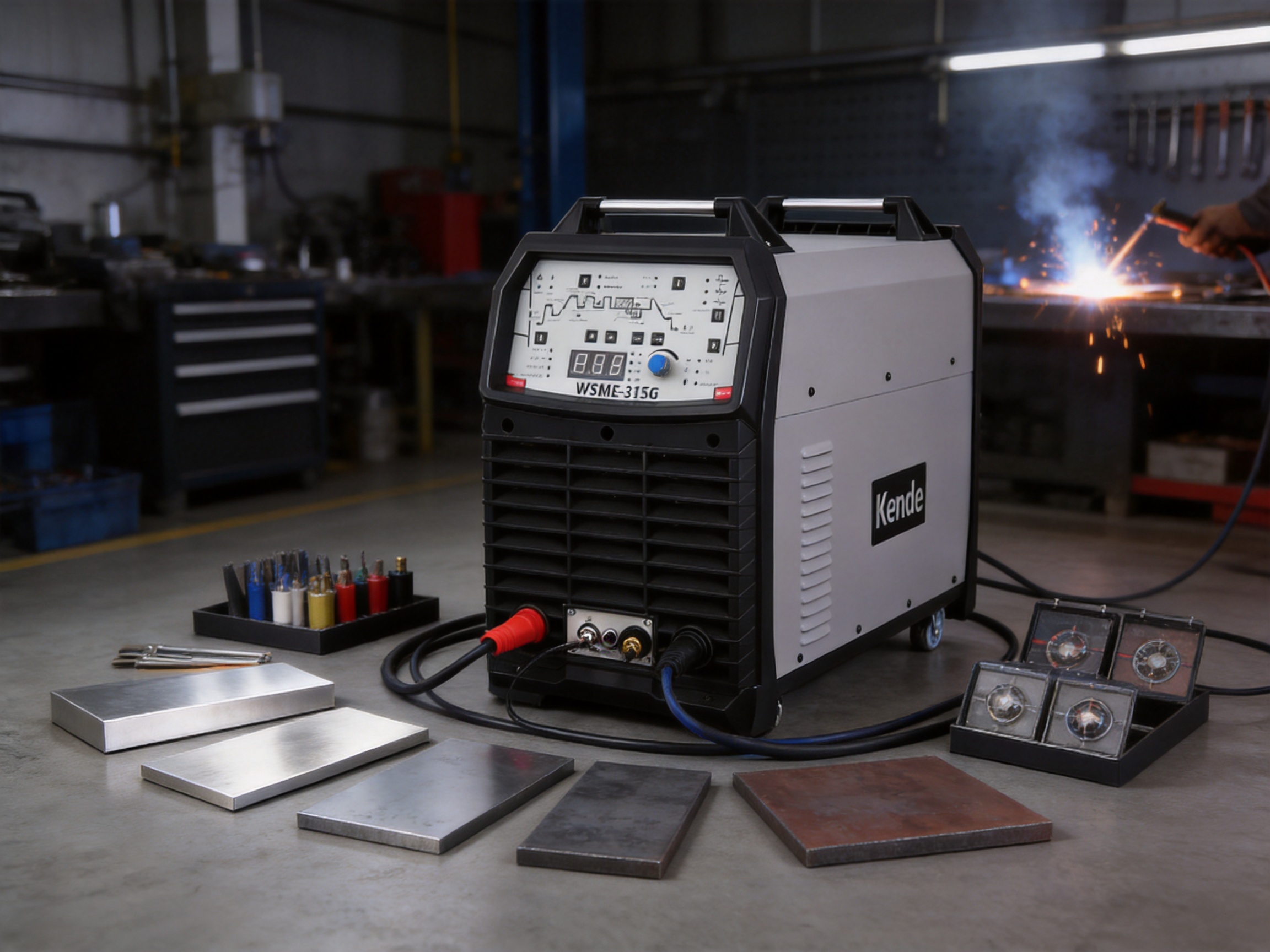
The WSME-200D can be used in general metal fabrication where the material thickness and duty cycle fall within the machine’s operating range. Fabricators may use DC TIG for clean welds on stainless steel brackets, frames, panels, and small assemblies. MMA can be selected for heavier repair work or joints where surface conditions make TIG preparation less convenient.
In maintenance departments, the machine can support repairs to machinery components, platforms, guards, pipes, frames, and fixtures. Its portability makes it practical for moving between work areas. The operator can use stick welding when access is difficult or use TIG when a more controlled and visually clean result is required.
For aluminum fabrication, AC TIG provides the necessary process capability for components such as small tanks, housings, frames, support structures, heat sinks, and transport equipment. Aluminum welding requires careful cleaning, suitable shielding gas, correct tungsten preparation, and appropriate technique. The machine is a power source for these tasks, but successful results also depend on preparation and operator competence.
Automotive and motorcycle workshops may find the machine useful for chassis components, exhaust-related work, brackets, aluminum parts, restoration, and general repair. TIG can provide a neat finish on visible components, while MMA can handle robust repair jobs where appearance is less important than strength and practicality.
Educational institutions and training centers can also use the product to demonstrate several welding processes on one platform. Students can learn the differences between AC TIG, DC TIG, pulse TIG, and MMA without needing a separate power source for every lesson. The digital display and simple interface can make demonstrations easier to repeat.
Small manufacturing operations may use the machine for prototypes, low-volume fabrication, maintenance, and secondary repair work. It may not replace a fully automated production cell in high-volume manufacturing, but it can provide valuable flexibility for jobs that do not justify dedicated equipment setup.
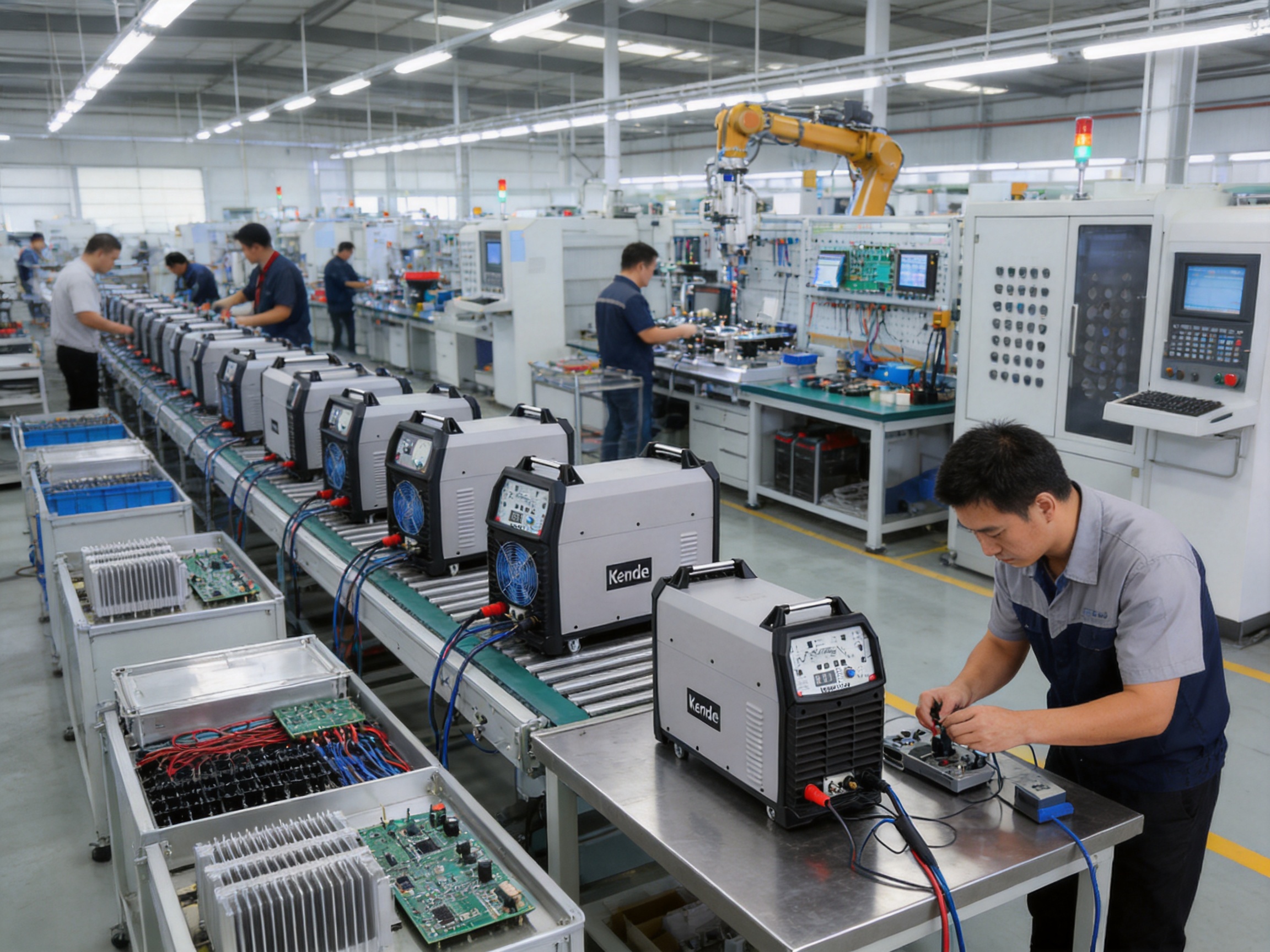
Zhejiang Kende Mechanical & Electrical Co., Ltd. is an established Chinese manufacturer and exporter of welding machines, battery chargers, and heaters. The company operates in Taizhou, Zhejiang Province, and has a production site covering approximately 120,000 square meters with a workforce of about 600 employees. Its reported annual production capacity is approximately two million units, with exports approaching 1.5 million units annually.
This scale provides several potential advantages for buyers. A large manufacturing organization can invest in dedicated tooling, quality-control equipment, product testing, supplier management, engineering resources, and production automation. It can also support more stable component sourcing and repeatable manufacturing processes than a small assembly operation.
The company uses several management and production systems, including office automation, Toyota TPS-style production management, ERP K3, and MES management systems. These systems can support production planning, material tracking, process control, inventory management, work-order visibility, and manufacturing data collection.
MES systems are particularly useful when a manufacturer produces multiple models and specifications. They can help connect engineering instructions with shop-floor activities and provide records of production status. ERP systems support purchasing, inventory, planning, sales, and logistics. When these systems are properly implemented, they can help reduce production errors and improve delivery coordination.
The reported production technologies include automatic patching, plug-in and welding systems, robot processing, laser cutting, and other automated manufacturing methods. Automated component placement can improve repeatability on electronic control boards. Robotic processing can provide consistent movement and handling for suitable mechanical parts. Laser cutting can produce accurate enclosure components and reduce variation in fabricated metal panels.
These manufacturing processes are directly relevant to inverter welding machines. An inverter unit includes power electronics, control boards, heat sinks, fans, connectors, cabling, an enclosure, and protective components. Consistency in assembly and inspection is essential because poor electrical connections, insufficient soldering, inaccurate assembly, or inadequate thermal management can affect reliability.
The company reports having a Zhejiang Provincial R&D Center, an Enterprise Technology Center, and an Intelligent Welding Technology Research Institute. It also reports a research and development team of 98 personnel. These resources support product development, design improvements, testing, customization, and adaptation to different regional requirements.
A strong R&D structure is valuable in the welding industry because products must respond to changes in semiconductor technology, energy-efficiency requirements, safety standards, user expectations, and regional electrical systems. The ability to develop new models and modify existing products can help a manufacturer serve both professional and domestic markets.
The company has obtained invention patents, utility model patents, appearance patents, and software copyrights. While the existence of patents does not by itself guarantee product performance, it indicates an ongoing effort to develop proprietary structures, circuits, controls, or industrial designs.
The manufacturer reports international and regional product certifications including GS, CE, EMC, ERP, US ETL, UKCA, and China CCC. Certification requirements vary according to the destination market, product configuration, and applicable standards. Buyers should request the relevant certificate and declaration documents for the exact model and market rather than relying only on general company-level statements.
The company also reports participation in national welding machine standardization work and involvement in drafting, formulating, and revising national standards. Experience with standards development can strengthen a manufacturer’s understanding of safety, electromagnetic compatibility, performance testing, and technical documentation.
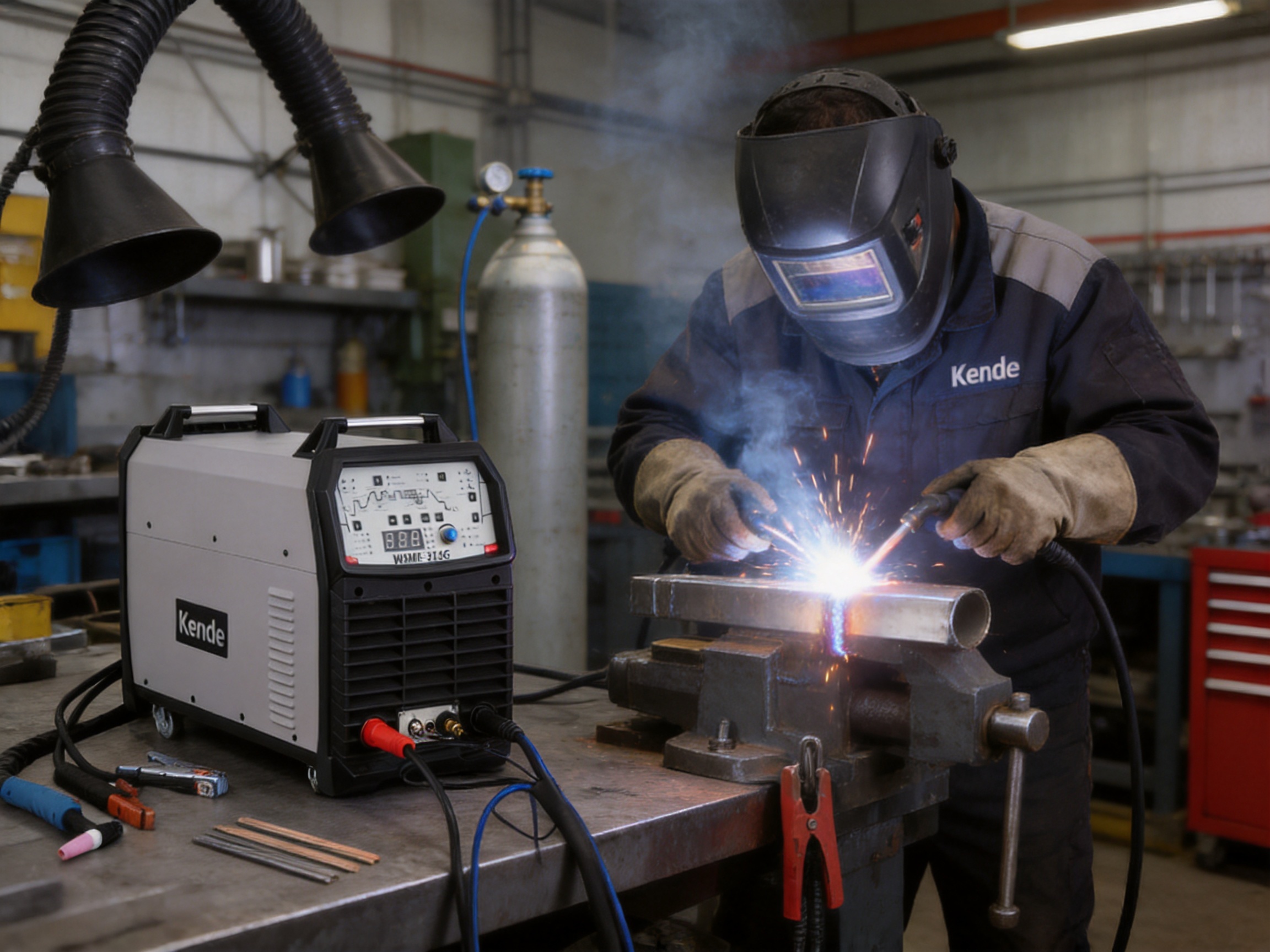
The manufacturing process begins with product definition. Engineers determine the required current range, input supply, duty cycle, process functions, enclosure dimensions, thermal design, control layout, and safety requirements. For a multi-process machine, the design must account for the electrical behavior of AC TIG, DC TIG, pulse TIG, and MMA operation.
Engineers must also balance performance with cost, weight, serviceability, and production efficiency. The machine must provide sufficient cooling while remaining portable. Internal components must be arranged to reduce electromagnetic interference, protect sensitive control circuits, and allow appropriate airflow through the power section.
Electronic control boards are assembled using automated placement and soldering processes where appropriate. Accurate component placement is important because inverter welding machines operate at high switching speeds and can be sensitive to circuit layout. Consistent solder quality helps support stable electrical connections and long-term durability.
After assembly, electronic boards may undergo visual inspection, electrical testing, functional testing, and troubleshooting. Components such as IGBT modules, capacitors, diodes, transformers, current sensors, control processors, and protective circuits must work together correctly. Testing helps identify assembly errors before the board is installed in the finished machine.
The metal case protects internal components and provides the mounting structure for the front panel, rear ventilation system, power connections, and welding terminals. Laser cutting can produce accurately shaped panels, openings, brackets, and ventilation features. Consistent dimensions support easier assembly and reduce problems with misalignment.
Surface treatment and coating help protect the enclosure from corrosion and wear. The plastic frame can provide support, insulation, and impact protection in designated areas. The final enclosure design must allow access for service while preventing accidental contact with hazardous internal parts.
During final assembly, the control board, power devices, heat sinks, fans, cables, terminals, switches, displays, and protective components are installed. Proper cable routing is important for both electrical safety and cooling. High-current connections must be secure and correctly tightened. Insulation distances and grounding arrangements must be checked according to the relevant design and safety requirements.
Finished machines should undergo functional inspection. Typical checks may include power-up behavior, display operation, current adjustment, no-load voltage, welding output, fan operation, protection response, and insulation performance. Multi-process machines require testing in each supported mode to verify that AC TIG, DC pulse TIG, DC TIG, and MMA functions operate as intended.
Production testing is an important differentiator between a properly manufactured welding machine and a product that has merely been assembled. Consistent testing helps identify defects, protects the customer from early failures, and provides feedback for ongoing process improvement.
The machine should be placed on a stable, dry surface with sufficient clearance around the ventilation openings. Airflow must not be blocked by walls, tools, packaging, dust, or other equipment. A clean air path helps the cooling system maintain safe internal temperatures.
The power supply should be compatible with the machine’s rated single-phase voltage and frequency. Because the rated supply current is substantial, the electrical circuit, plug, socket, breaker, extension cable, and grounding system should be selected by a qualified person in accordance with local regulations. Undersized cables or inadequate connections can cause voltage drop, overheating, nuisance tripping, or unsafe operation.
Welding cables, electrode holders, TIG torches, work clamps, shielding gas regulators, and connectors should be in good condition. The work clamp should make firm electrical contact with clean metal. Poor grounding can cause unstable arcs and unnecessary heating in cables or connectors.
For TIG welding, the operator should select the correct tungsten electrode, shielding gas, cup size, gas flow, polarity, and filler material. Aluminum usually requires AC TIG and careful oxide removal. Steel and stainless steel commonly use DC TIG with the appropriate polarity and shielding gas. Pulse settings should be chosen according to material thickness, joint type, travel speed, and desired heat input.
For MMA welding, electrode selection should match the base material and welding position. Electrodes must be stored correctly because moisture can affect arc behavior and weld quality. The operator should set current according to the electrode manufacturer’s recommendation and adjust hot start or arc force if the machine provides those controls in the selected mode.
Personal protective equipment is essential. The operator should use a suitable welding helmet, protective clothing, gloves, safety footwear, hearing protection where necessary, and adequate ventilation or fume extraction. Combustible materials should be removed from the work area, and appropriate fire-prevention procedures should be followed.
Routine maintenance helps preserve welding performance and extend equipment life. The machine should be disconnected from the electrical supply before internal cleaning or service. Only qualified technicians should open the enclosure because capacitors and other internal components may retain dangerous electrical energy after shutdown.
External surfaces and ventilation openings should be kept free from dust and metal particles. In dusty environments, accumulated contamination can restrict airflow and reduce cooling performance. A suitable low-pressure cleaning method should be used according to the service manual. Compressed air containing moisture or oil should not be directed into sensitive components.
Cables, plugs, connectors, torch leads, electrode holders, and work clamps should be inspected regularly. Damaged insulation, loose terminals, burnt connectors, or exposed conductors should be repaired or replaced before further use. TIG consumables should also be maintained because contaminated tungsten, blocked gas cups, and worn collets can create arc instability that may be mistaken for a machine fault.
If the over-temperature protection activates, the operator should stop welding and allow the machine to cool. Repeated thermal shutdown may indicate excessive current, operation beyond the duty cycle, blocked airflow, high ambient temperature, fan failure, or internal contamination. The cause should be corrected rather than repeatedly restarting the machine.
Service documentation, model identification, and fault records are useful for professional maintenance departments. A manufacturer with established engineering and production resources can generally provide better access to replacement components, technical guidance, and model-specific service information than an anonymous low-volume supplier.
The total value of a welding machine includes more than its purchase price. Buyers should consider the number of processes supported, expected service life, energy consumption, maintenance requirements, replacement parts, operator productivity, and the cost of purchasing additional equipment.
The WSME-200D can reduce capital expenditure by combining four welding functions in one machine. A workshop that would otherwise purchase separate AC TIG, DC TIG, pulse TIG, and MMA equipment may use one multi-process unit for many tasks. This can also reduce floor-space requirements and simplify equipment allocation.
Its portable structure may lower labor and handling costs by allowing the machine to be moved to the workpiece. The digital control and repeatable settings can support faster setup. High-frequency TIG starting and MMA arc-assistance features can reduce time lost to difficult starts and unstable arcs.
Energy efficiency can contribute to long-term operating value, particularly for workshops with frequent welding activity. The 85 percent efficiency rating and 0.9 power factor indicate an electrical design aimed at practical energy use, although the final cost benefit depends on local electricity prices and actual operating patterns.
For distributors and importers, the manufacturer’s broad product portfolio can provide opportunities to source related products such as MIG/MAG machines, MMA welders, plasma cutters, battery chargers, heaters, welding accessories, and other equipment from one established supplier. This can simplify product management and create a more coherent offering for industrial and domestic customers.
A responsible product evaluation should also recognize the machine’s limitations. The WSME-200D is a 200A-class portable system. It is not intended to replace a high-amperage industrial power source for continuous heavy fabrication, large structural assemblies, or automated production lines requiring very high duty cycles.
The 60 percent rated duty cycle means operators must plan cooling intervals when working near the upper current range. Actual performance can vary with ambient temperature, supply voltage, extension cable length, electrode type, and ventilation. Users should consult the operating manual for detailed duty-cycle conditions.
The IP21S protection rating does not mean the machine is waterproof. It should not be used in rain or exposed to direct water spray. Proper shelter, dry storage, and clean ventilation are still required. The unit should also be used only by trained operators who understand welding hazards and electrical safety.
These limitations do not reduce the value of the product when it is correctly positioned. The machine is best suited to professional workshops, maintenance teams, repair contractors, fabricators, educational centers, and mobile operators who need multi-process capability in a portable format.
The strongest competitive argument for the WSME-200D is the combination of process range, inverter efficiency, arc-control functions, protection features, and manufacturing support. Many low-cost welding machines compete mainly on headline amperage. A more useful comparison examines whether the machine can start reliably, control the arc, sustain performance, protect itself from abnormal conditions, and receive technical support over time.
The product’s AC TIG function increases its usefulness for aluminum. DC pulse TIG adds control for thin or heat-sensitive materials. DC TIG supports clean precision welding on steel and stainless steel. MMA provides a rugged and convenient option for repair and field work. This range is difficult to match with a single-function machine.
The manufacturer’s production scale, automated equipment, R&D facilities, certification experience, and standards participation provide additional confidence for distributors and professional users. These capabilities indicate that the product is supported by a broader engineering and manufacturing organization rather than being a one-off design with limited technical resources.
For buyers comparing suppliers, important questions should include the availability of model-specific certificates, consistency of production, spare parts support, warranty terms, packaging quality, export experience, customization capability, and technical documentation. A supplier capable of addressing these questions transparently is more likely to support reliable long-term procurement.
The machine supports AC TIG, DC pulse TIG, DC TIG, and MMA or stick welding. This allows it to work with aluminum, aluminum alloys, steel, stainless steel, alloy steel, cast iron, and other suitable metals when the correct consumables and procedures are used.
Yes. The AC TIG function is intended to support aluminum and aluminum alloy welding. Successful results require proper cleaning, suitable tungsten preparation, appropriate shielding gas, correct current settings, and an operator with appropriate aluminum TIG experience.
The published maximum welding current is 200 amperes. The adjustable welding current range is 20 to 200 amperes.
The WSME-200D is rated for single-phase 220/230-volt input at 50 or 60 hertz. Electrical installation should be checked by a qualified professional because the published rated supply current is 42 amperes.
High-frequency starting initiates the TIG arc without requiring the tungsten electrode to touch the workpiece. This helps reduce tungsten contamination, surface marks, and inconsistent arc starts.
Hot start assists electrode ignition by temporarily increasing current. Arc force helps maintain a stable MMA arc when arc length changes. Anti-stick reduces current when the electrode becomes stuck, making it easier to release and helping limit overheating.
It can be used for suitable outdoor repair work when it is protected from rain, water, excessive dust, and extreme environmental conditions. The IP21S rating does not indicate waterproof operation. A stable, dry, ventilated, and electrically safe location is required.
The rated duty cycle is 60 percent. Users should consult the operating manual for the specific test conditions and should allow the machine to cool when the thermal protection indicator activates or when operating near maximum output.
The published net weight is 21 kilograms, with dimensions of approximately 550 by 270 by 440 millimeters. Its metal case and plastic frame design provide a practical balance between protection and portability for workshops, service areas, and mobile repair work.
The manufacturer’s product range includes MMA or stick welding machines, MIG/MAG machines, flux-cored welding machines, TIG machines, plasma cutters, submerged arc equipment, stud welders, battery chargers, heaters, and related products. This broad portfolio may be useful for distributors seeking multiple product categories from one supplier.
Buyers should request the latest technical datasheet, operating manual, model-specific certification documents, warranty conditions, packaging details, spare-parts information, production lead time, and electrical configuration confirmation. Importers should also verify that the exact model meets the regulations of the destination market.
The WSME-200D IGBT Inverter TIG/MMA Welding Machine is designed as a flexible, portable, and efficient welding solution for users who require more than a basic single-process welder. Its combination of AC TIG, DC pulse TIG, DC TIG, and MMA functions allows one machine to cover precision aluminum welding, controlled steel and stainless steel welding, thin-material applications, and practical stick welding.
High-frequency starting, digital adjustment, hot start, arc force, anti-stick, constant-current control, and inverter technology contribute to a more stable and manageable welding experience. Its 20–200A current range, 60 percent duty cycle, 85 percent efficiency, 0.9 power factor, compact dimensions, and 21-kilogram net weight make it well suited to general professional fabrication, maintenance, repair, training, and mobile service applications.
The machine’s value is reinforced by the manufacturing capabilities of Zhejiang Kende Mechanical & Electrical Co., Ltd. The company combines large-scale production, automated assembly and fabrication technologies, ERP and MES management systems, dedicated research facilities, a substantial technical team, international certification experience, and a broad product portfolio. These strengths can support consistent production, product development, export service, and long-term cooperation.
For users who need a practical balance of versatility, portability, efficiency, arc control, and manufacturing support, this 200A AC/DC TIG and MMA platform represents a strong option. Correct installation, proper consumables, regular maintenance, suitable ventilation, and safe operating procedures remain essential, but within its intended application range, the machine offers a capable and economical foundation for professional welding work.
1. Product technical information for the WSME-200D IGBT Inverter TIG/MMA Welding Machine, including published electrical ratings, welding functions, protection characteristics, and dimensions.
2. Manufacturer-provided company profile for Zhejiang Kende Mechanical & Electrical Co., Ltd., including production capacity, facilities, export activity, research resources, certifications, and manufacturing systems.
3. General principles of gas tungsten arc welding, alternating-current aluminum welding, pulse welding, and manual metal arc welding.
4. General guidance on inverter welding power sources, IGBT switching technology, pulse-width modulation, constant-current control, power factor, and electrical efficiency.
5. General workplace guidance for welding ventilation, electrical safety, personal protective equipment, fire prevention, and maintenance of welding equipment.
Recommended Products

Contact Us
No.2299, Luqiao Section, Shugang Avenue, Luqiao District, Taizhou, 318057 Zhejiang, PR China.
+86-576-82431568
 Privacy
China Welding Machine Factory
 English
 中文简体
中文简体
 русский
 Español
 عربى
عربى
 Français
 Português
 Deutsch
 Український