Email: [email protected]
Email: [email protected]

Industry News
 2026.10.02
 Industry News
The welder pulls the trigger and the arc starts. That is the moment everyone talks about. But the machine that makes that moment possible was decided long before, on a factory floor where the transformer gets wound, the board gets coated, and the unit gets run under load before it ships. A welding machine factory is judged on what happens in the first ten seconds of the arc, and on what happens in the ten thousandth hour of service.
Inside the machine, copper or aluminum wire wraps around a laminated steel core. The number of turns, the wire gauge, and the core size set the output amperage and the duty cycle. A welding machine factory that winds its own transformers controls the output from the start. A factory that buys the transformer from a third party controls less.
Aluminum windings cost less and weigh less. Copper windings run cooler and hold voltage better under load. The choice shows up in the arc. A machine with copper windings holds a steadier arc when the welder pushes the rod into the joint.
The control board is the brain. It reads the setting and adjusts the current in real time. Inverter machines switch the current at high frequency, which is how they get smaller and lighter than the old transformer machines. A welding machine factory that writes its own control logic can tune the arc for different electrodes and wires. A factory that uses a generic board ships a machine that welds, but the arc is whatever the board happens to produce.
A welding shop is a dusty place. Grinding dust, metal fines, and welding spatter float in the air. The cooling fan pulls that air through the machine. A welding machine factory that coats the circuit boards with conformal coating keeps the conductive dust off the components. A factory that skips the coating ships a machine that fails in a dirty shop, sometimes within the first year.
Every machine should be run before it leaves the factory. The test bay strikes an arc on steel plate. The amperage is checked against the setting. The duty cycle is verified. A welding machine factory that tests under load catches the loose terminal, the misrouted wire, and the fan that vibrates before the customer does.
Here is what separates a factory that ships reliable machines from one that ships problems:
Stick welders are the simplest and the most portable. They run on 110 or 220 volts and handle repair and farm work. MIG welders feed wire and weld faster. TIG welders are the precision tools for thin metal and stainless. A welding machine factory that builds all three covers the market, but the quality bar is the same for each.
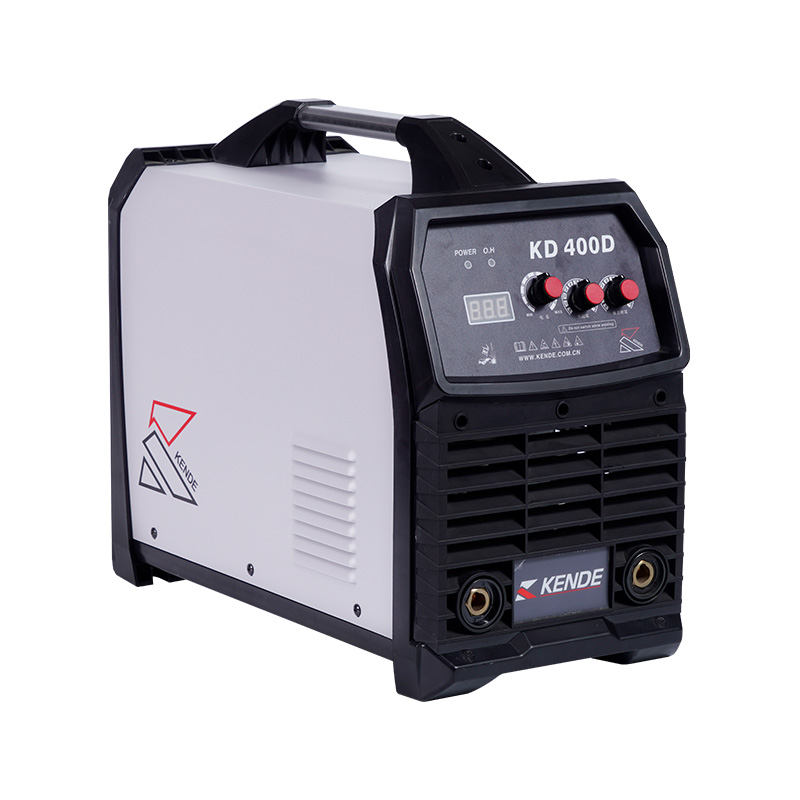
The buyer sees the arc. The buyer never sees the winding tension on the transformer, the conformal coating on the board, or the test bay that ran the machine before it shipped. Those are the decisions that determine whether the machine welds for a season or for a decade. A welding machine factory is not selling a box with a cable. It is selling the sum of those invisible decisions. The arc is just where they show up.
Recommended Products

Contact Us
No.2299, Luqiao Section, Shugang Avenue, Luqiao District, Taizhou, 318057 Zhejiang, PR China.
+86-576-82431568
 Privacy
China Welding Machine Factory
 English
 中文简体
中文简体
 русский
 Español
 عربى
عربى
 Français
 Português
 Deutsch
 Український