Email: [email protected]
Email: [email protected]

Blog
 2026.10.24
 Blog
Modern fabrication requires welding equipment that can deliver stable arc performance, accurate current control, efficient operation, and dependable results in demanding working environments. The WSM-160X, WSM-180X, WSM-200X, and WSM-250X series IGBT inverter welding machines are designed to meet these needs through a combined TIG DC high-frequency pulse and MMA welding platform. Their compact metal-case construction, digital control system, automatic high-frequency ignition, pulse functionality, and 2T/4T operating modes make them suitable for professional workshops, maintenance departments, construction sites, equipment manufacturers, and skilled home users.
Rather than limiting users to a single welding process, this series provides both high-frequency TIG welding and manual metal arc welding in one portable machine. TIG mode supports controlled, clean, and precise welding of many metals, while MMA mode provides flexibility when outdoor conditions, material thickness, or job-site access make electrode welding more practical. This dual-process design allows users to select the most appropriate welding method without investing in two separate power sources.
The machines are manufactured by Zhejiang Kende Mechanical & Electrical Co., Ltd., an experienced Chinese producer and exporter of welding machines, battery chargers, and heaters. The company combines inverter technology, automated production, research and development, quality certification, and large-scale manufacturing capacity. Its experience in welding equipment gives the WSM-X series a foundation based on practical product development rather than only basic circuit assembly.
The WSM-X series is a group of single-phase, 230 V IGBT inverter welding machines offering TIG DC high-frequency pulse and MMA functions. Four versions are available: WSM-160X, WSM-180X, WSM-200X, and WSM-250X. Each model is designed around a compact portable structure measuring approximately 410 mm in length, 180 mm in width, and 310 mm in height. Depending on the model, net weight ranges from approximately 6.1 kg to 6.3 kg.
The machines use a metal case with a plastic frame, creating a balance between structural protection and manageable weight. The metal enclosure helps protect the internal power electronics from routine workshop handling, while the plastic frame contributes to portability and practical equipment positioning. This construction is particularly useful for technicians who must transport equipment between workstations or carry it to maintenance locations.
In TIG mode, the machines use direct current and high-frequency arc starting. High-frequency ignition allows the operator to initiate the arc without repeatedly touching the tungsten electrode to the workpiece. This helps reduce tungsten contamination, supports cleaner arc starts, and improves control when welding stainless steel, carbon steel, alloy steel, and other compatible metals.
The pulse function provides an additional level of control. By alternating between higher and lower current levels, pulse TIG operation can help manage heat input, improve control over the weld pool, and reduce the likelihood of excessive distortion on thinner materials. It can also support improved penetration control and a more consistent bead appearance when the operator selects suitable pulse parameters.
In MMA mode, the equipment supports manual electrode welding for general fabrication, repairs, installation work, and outdoor applications. MMA welding is valued for its simple setup, tolerance of less-than-perfect site conditions, and ability to operate without an external shielding gas cylinder. The combination of TIG and MMA makes the WSM-X series more versatile than a single-purpose TIG or stick welding machine.
The WSM-X series uses powerful insulated-gate bipolar transistor, or IGBT, switching technology combined with advanced inverter control. An inverter power source converts and controls electrical energy at high frequency, allowing the equipment to achieve a compact design while maintaining responsive current regulation.
Compared with traditional heavy transformer-based welding machines, an inverter platform can offer several practical advantages. It can reduce the size and weight of the power source, improve current response, reduce energy losses, and support more precise electronic control. These characteristics are especially valuable in portable equipment, where users need professional performance without the burden of moving a large conventional transformer unit.
IGBT technology also allows the control system to respond rapidly to changes in arc conditions. This helps maintain a more stable welding arc when the electrode position, arc length, or workpiece condition changes. Stable current behavior is important for reducing spatter, improving operator confidence, and producing more consistent welds.
Pulse width modulation, or PWM, is used to regulate the welding output with a high degree of accuracy. The control system adjusts the duration and timing of electronic switching to manage the output current. This provides continuous current adjustment across a broad operating range and gives the operator greater control over welding conditions.
In TIG operation, PWM control supports accurate adjustment of the welding current and contributes to a predictable arc. In pulse operation, it helps coordinate the changing current levels that define the pulse cycle. The result is better control over heat input and weld pool behavior than would normally be available from a simple fixed-output power source.
Precise adjustment is important when welding different metal thicknesses. Thin stainless steel, for example, may require a lower and carefully controlled current to avoid burn-through or excessive discoloration. Thicker carbon steel may require greater current and stronger penetration. The WSM-X series allows the user to select an appropriate current within the capability of the specific model.
The machines use constant current, or CC, output control. This type of output is suitable for TIG and MMA welding because it helps maintain the selected current even when arc length changes during operation. Constant current behavior gives the welder a more stable working experience and helps reduce large fluctuations in the weld pool.
For MMA welding, CC control is especially useful because the electrode naturally changes length as it is consumed. The operator must continually manage the arc distance, and a stable current response makes that process easier. For TIG welding, the same principle supports controlled arc behavior while the operator moves the torch along the joint.
Automatic high-frequency ignition is a major feature of this series. Instead of striking the tungsten electrode against the workpiece, the system initiates the arc through high-frequency electrical discharge. This reduces the possibility of tungsten inclusion and helps preserve the sharpness and cleanliness of the electrode.
High-frequency starting is particularly advantageous for precision TIG work. It supports cleaner starts on visible welds, reduces the need for repeated starting attempts, and helps protect sensitive materials from accidental contact marks. It also improves convenience when the operator must start an arc at a precise point on a joint.
High-frequency TIG ignition should always be used with appropriate installation practices. Users should follow the equipment manual, observe proper grounding procedures, and consider the effect of high-frequency equipment on nearby electronic devices. Correct setup helps ensure safe and reliable operation.
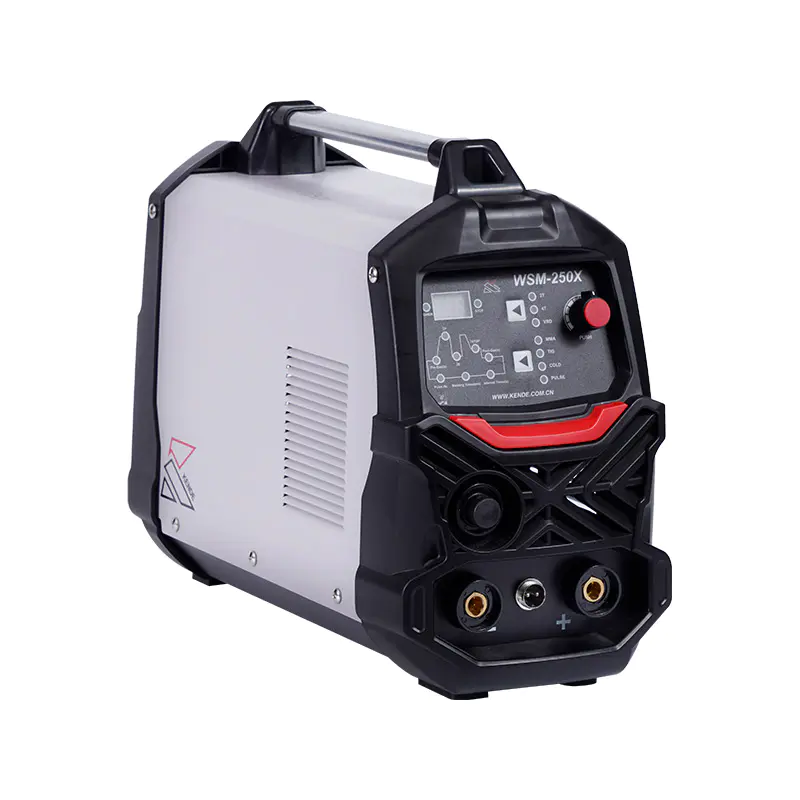
WSM-160X/180X/200X /250X IGBT Inverter TIG/MMA Welding machine(TIG DC-HF, PULSE ), Metal case with plastic frame Portable, DC TIG pulse and MMA , Digital Display, With an automatic high-frequency ignition, 2T/4T VRD
Direct-current TIG welding is suitable for many ferrous and nickel-based metals, including carbon steel, stainless steel, alloy steel, and cast iron. It provides a controlled arc and allows the operator to add filler metal separately from the heat source. This separation between torch movement, arc control, and filler addition is one of the main reasons TIG welding is preferred for precision joints.
The WSM-X machines are designed to provide a focused arc that can support neat weld profiles and controlled penetration. When used with a suitable tungsten electrode, shielding gas, torch, filler rod, and correctly prepared joint, the equipment can produce high-quality welds with low spatter and a clean appearance.
TIG welding requires attention to gas coverage and workpiece cleanliness. The operator should remove oil, rust, paint, moisture, and other contaminants from the joint area. Argon shielding gas is commonly used for DC TIG welding. Correct gas flow, torch angle, travel speed, and electrode preparation are equally important for achieving the best results.
MMA welding offers a practical alternative when portability and job-site flexibility are more important than cosmetic appearance. The process uses coated electrodes that create their own shielding as the coating melts. This means that an external shielding gas cylinder is not required, making MMA useful for outdoor repairs, construction, agricultural equipment maintenance, and emergency service work.
The WSM-X series includes practical arc assistance functions such as anti-stick, hot start, and arc force. These features are intended to simplify electrode starting and help maintain a usable arc under changing conditions.
Hot start can provide a temporary increase in current at the beginning of the weld. This assists arc ignition and can help reduce the frustration of an electrode sticking during the start. Arc force helps support arc stability when the electrode approaches the workpiece or when the arc length varies. Anti-stick reduces welding current if the electrode becomes stuck, helping the operator release it more easily and reducing the chance of excessive heating.
A dedicated TIG machine may provide excellent precision but may not be the most convenient option for outdoor repair or heavy fabrication. A dedicated MMA machine may be durable and simple but may not provide the clean appearance and fine control required for thin stainless steel or visible components. The WSM-X series addresses this difference by combining both processes in one power source.
For a fabrication shop, the machine can be used for precision TIG work during production and then moved to MMA operation for brackets, supports, repairs, or rougher structural work. For a maintenance technician, the same equipment can handle stainless steel pipe repairs, carbon steel frames, equipment restoration, and general field welding. This flexibility can reduce equipment duplication and simplify transport.
The 2T and 4T functions are designed to match different welding tasks and operator preferences. In 2T mode, the operator presses and holds the torch switch to begin welding and releases it to stop. This mode is simple, direct, and suitable for short welds, tack welding, small repairs, and applications where the operator frequently starts and stops.
In 4T mode, the operator presses and releases the torch switch to begin the welding sequence, then presses and releases it again to finish. This allows the operator to weld for a longer period without continuously holding the switch. The result can be reduced hand fatigue and improved comfort during extended welds.
For long seams, repeated production joints, or large fabrication tasks, 4T operation can help the operator maintain a more relaxed posture. It can also make it easier to concentrate on torch movement, filler addition, and joint alignment. For short or intermittent welds, 2T mode remains fast and convenient.
The availability of both operating modes is a practical advantage over simpler machines that provide only one trigger behavior. Different operators and applications can be accommodated without changing the power source or adding an external control unit.
Heat management is essential when welding thin sections, stainless steel components, decorative parts, and assemblies that may distort during fabrication. Excessive heat can cause burn-through, warping, discoloration, loss of dimensional accuracy, and unnecessary post-weld finishing. Pulse TIG helps the operator manage these risks by alternating between a peak current and a lower background current.
The peak portion of the pulse can provide penetration and arc energy, while the background portion allows the weld pool and surrounding material to cool partially. This does not eliminate the need for correct technique, but it can make the heat input easier to control. With suitable settings, pulse operation can support a narrower heat-affected area and more controlled weld progression.
Pulse operation may also help regulate filler addition and bead spacing. Some experienced welders use a rhythm that coordinates filler metal placement with the pulse cycle. This can create an even appearance when welding thin sheet, tubing, or components where visual quality is important.
The practical value of pulse welding depends on the operator’s ability to select suitable settings. Current, pulse timing, travel speed, shielding gas flow, tungsten size, joint preparation, and material thickness must work together. The WSM-X control system provides the electronic foundation for this control, while final results depend on correct application and training.
The supplied specifications identify the protection rating as IP21S. This indicates that the machine is designed for indoor or suitably protected operating environments and includes protection against vertically falling water under the specified test conditions. It should not be treated as a waterproof machine or exposed to rain, standing water, or severe weather without suitable protection.
The product information also identifies moisture-proof, anti-corrosion, anti-vibration, and anti-conductive dust design features. These characteristics are important in workshops where equipment may encounter metal dust, vibration from nearby machinery, changes in humidity, or regular transport between work areas.
Environmental protection does not eliminate the need for care. The machine should be kept clean, dry, and adequately ventilated. Air inlets and outlets should not be blocked, and accumulated dust should be removed according to the maintenance instructions. Proper storage and handling can significantly extend the service life of inverter power electronics.
The WSM-X series includes automatic protection functions for over-current and over-temperature conditions. These systems are designed to reduce the risk of damage if the power source is operated beyond safe electrical or thermal limits.
Over-temperature protection is particularly important during high-current operation or in warm environments. If internal temperature rises excessively, the machine can enter a protective state until the temperature returns to an acceptable level. This helps protect the inverter components and encourages the operator to respect the machine’s duty cycle.
Protection circuits should be regarded as a safety and reliability feature rather than a substitute for correct operation. The operator should select the correct welding current, use appropriate cables and connections, maintain ventilation, and observe the rated duty cycle. Repeated protective shutdowns may indicate excessive loading, restricted airflow, unsuitable supply conditions, or a maintenance issue.
The listed rated duty cycle is 20 percent for TIG operation and 25 percent for MMA operation across the supplied models. Duty cycle represents the percentage of a defined operating period during which the machine can weld at a stated output before a cooling interval is required. The exact test conditions and reference period should be confirmed from the official product documentation.
A duty cycle of 20 percent does not mean that the machine can operate for only a short period during normal work. It means that at the rated test output, welding time must be balanced with cooling time. At lower current settings, the available operating time may be longer. Users should select the machine according to the expected current, material thickness, production rhythm, and ambient conditions.
Understanding duty cycle helps prevent unrealistic comparisons between welding machines. A compact portable inverter should be evaluated not only by its maximum current rating but also by its current range, thermal design, protection system, portability, and suitability for the intended workload.
The four models provide different maximum TIG and MMA current capabilities. The WSM-160X is the lightest-duty version, while the WSM-250X offers the highest output in the supplied range. The WSM-180X and WSM-200X provide intermediate options for users who need additional current without moving to the largest model.
| Model | Rated Supply Voltage | Frequency | Rated Input Capacity | Rated Supply Current | No-Load Voltage | TIG Current Range | MMA Current Range | Net Weight |
|---|---|---|---|---|---|---|---|---|
| WSM-160X | 230 V | 50 Hz | 6.2 kVA | 27 A | 64 V | 10–160 A | 20–140 A | 6.1 kg |
| WSM-180X | 230 V | 50 Hz | 6.2 kVA | 27 A | 64 V | 10–180 A | 20–140 A | 6.1 kg |
| WSM-200X | 230 V | 50 Hz | 7.2 kVA | 31.5 A | 64 V | 10–200 A | 20–160 A | 6.3 kg |
| WSM-250X | 230 V | 50 Hz | 8.2 kVA | 36 A | 64 V | 10–230 A | 20–180 A | 6.3 kg |
The product title identifies the final model as WSM-250X, while the supplied technical table lists a TIG range of 10–230 A and an MMA range of 20–180 A for that version. Buyers should confirm the nameplate, final output rating, input plug, cable configuration, and regional technical documentation before placing an order, particularly where model naming and maximum output may vary by market.
| Common Specification | Details |
|---|---|
| Welding processes | DC TIG with high-frequency ignition and pulse function; MMA or stick welding |
| Control technology | IGBT inverter, PWM regulation, constant-current output |
| Operating modes | 2T and 4T |
| Arc assistance | Anti-stick, hot start, and arc force |
| Efficiency | 85 percent |
| Power factor | 0.9 |
| Protection degree | IP21S |
| Insulation class | H |
| Approximate dimensions | 410 mm length by 180 mm width by 310 mm height |
| Supply | 230 V, 50 Hz |
| Construction | Portable metal case with plastic frame |
The efficiency rating of 85 percent and power factor of 0.9 indicate that the machine is designed to use electrical power effectively within its operating conditions. A relatively high power factor can help reduce the difference between apparent power and useful active power, although installation requirements still depend on local electrical regulations and the machine’s rated input current.
The most direct advantage of the WSM-X series is its dual-process capability. Basic MMA-only machines cannot provide the same TIG precision, while basic TIG-only machines may be less convenient for outdoor or general repair work. Combining TIG and MMA in one portable platform gives users a broader range of applications without requiring two separate power sources.
High-frequency TIG ignition provides a cleaner starting method than scratch or lift starting. It reduces the need for physical contact between the tungsten and workpiece and supports a more consistent start. This can be especially valuable on stainless steel, thin sheet, visible welds, and components where contamination or start marks are unacceptable.
PWM and constant-current control provide a more refined adjustment experience than simple transformer-based or low-cost fixed-output equipment. The operator can select current across a broad range and adapt the arc to different materials and thicknesses. Pulse operation provides an additional method for managing heat input.
At approximately 6.1 to 6.3 kg, the machines are significantly easier to move than many traditional welding power sources. Portability improves productivity when work is spread across a facility or when repairs must be performed at the customer’s location. The compact dimensions also help users save floor and storage space.
Hot start, arc force, and anti-stick functions help make MMA welding more accessible and more stable. These features are useful for both experienced welders and operators who do not perform stick welding every day. The functions can reduce common starting and sticking problems without requiring additional external equipment.
Inverter technology supports lower equipment weight and efficient electrical conversion. The product information states that energy savings can reach up to 30 percent compared with conventional equipment under applicable operating conditions. Actual savings depend on the previous machine, welding current, duty cycle, input supply, and work pattern, but the inverter design is inherently suited to efficient portable operation.
The WSM-X series can serve a wide range of applications. In metal fabrication, TIG mode can be used for controlled welding of frames, panels, brackets, tubes, and components requiring a clean finish. MMA mode can support heavier assemblies, temporary repairs, fixtures, and structural parts where speed and accessibility are priorities.
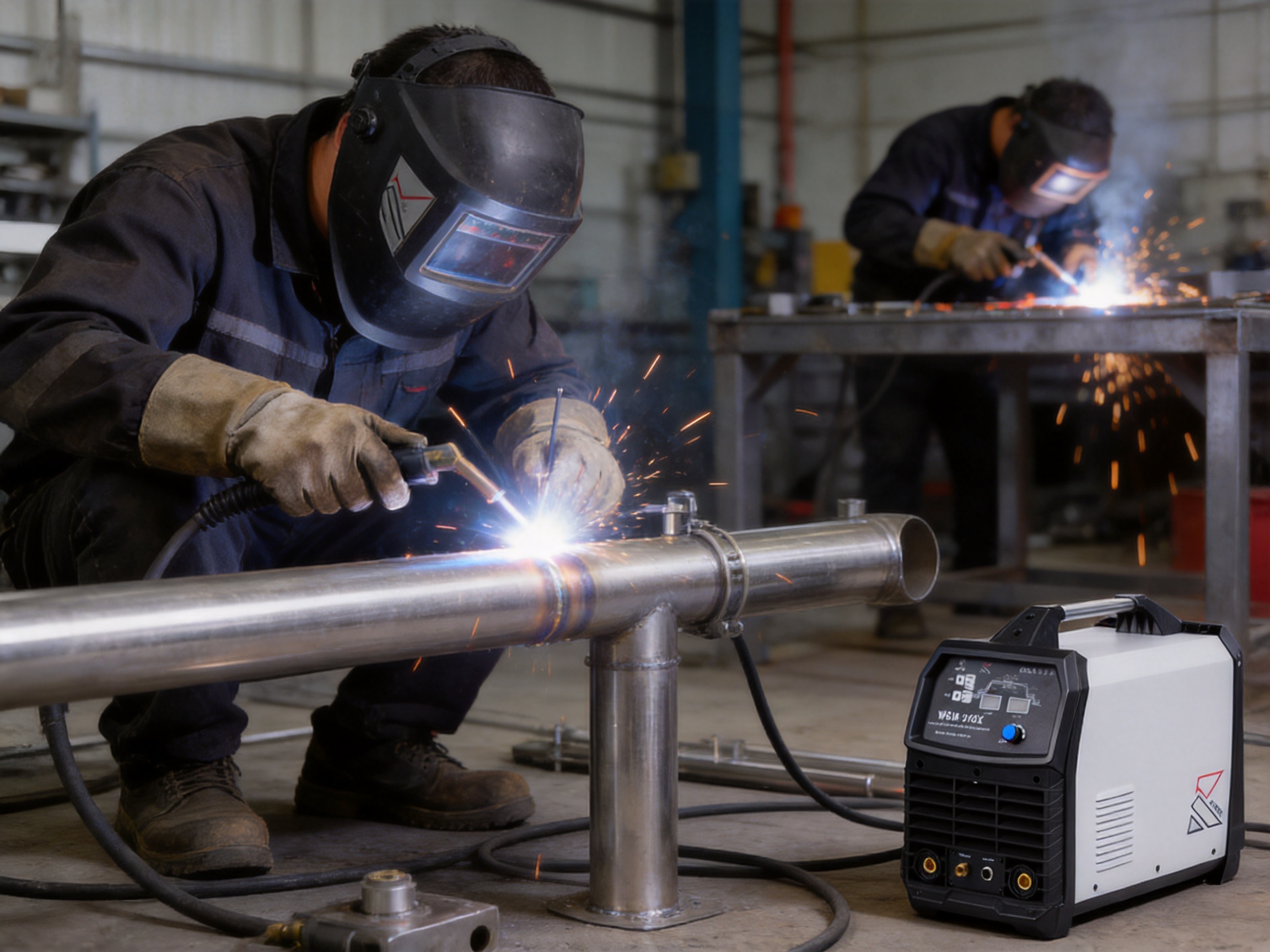
In stainless steel fabrication, direct-current TIG welding can provide the control required for clean seams and accurate joint preparation. The operator can use pulse welding to help manage heat on thin sheet and tubing. Stainless steel requires careful cleaning and shielding gas control, but the high-frequency ignition and current adjustment features provide a suitable equipment platform.
In maintenance and repair, the compact design makes the machine useful for service vehicles, workshops, farms, factories, and construction sites. MMA operation is valuable when a gas cylinder is inconvenient or when work must be performed outdoors. TIG operation can be selected when a more precise repair is required on a smaller or more sensitive component.
For educational and vocational environments, the two-process design also allows students to learn different welding methods using one family of equipment. Instructors can demonstrate arc characteristics, current control, pulse effects, and trigger modes without switching between unrelated machine interfaces.
Small and medium-sized fabricators may benefit from the ability to standardize equipment across multiple workstations. A workshop can select different output models according to workload while maintaining a similar control concept, service approach, and operating method.
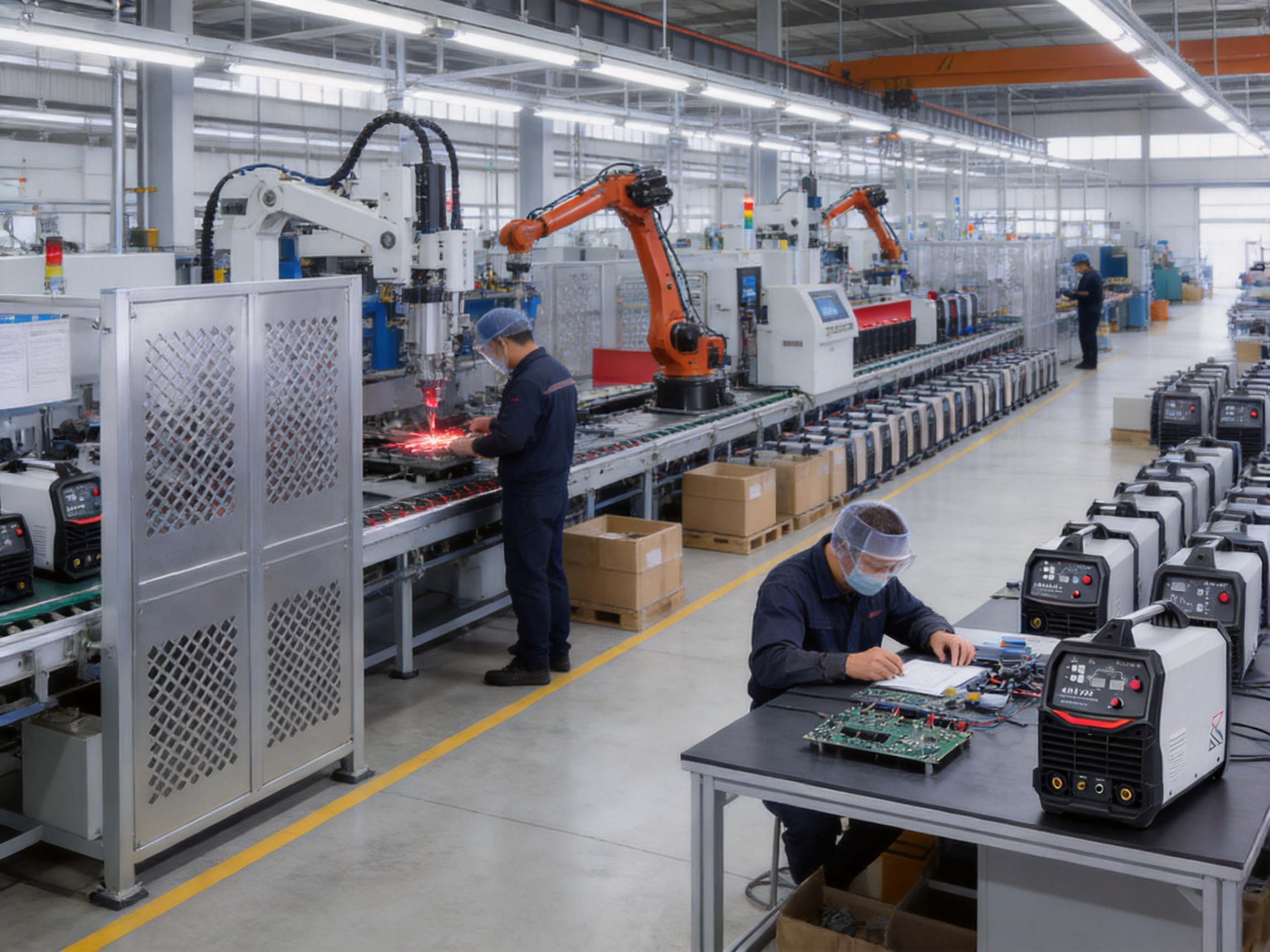
Zhejiang Kende Mechanical & Electrical Co., Ltd. operates a large manufacturing facility in Taizhou, Zhejiang Province, China. The company covers approximately 120,000 square meters and employs around 600 people. Its reported annual production capacity is approximately two million units, with exports of nearly 1.5 million units each year.
This scale provides several potential advantages for buyers. High-volume production can support stable component sourcing, repeatable assembly processes, organized quality control, and more efficient production planning. It also gives the company experience in meeting the packaging, documentation, electrical, and compliance requirements of different regions.
Large-scale manufacturing does not by itself guarantee the quality of every product, but it creates the infrastructure necessary for systematic production. The value comes from combining facility scale with process control, testing, engineering, traceability, and continuous improvement.
The company operates a Zhejiang Provincial research and development center, an enterprise technology center, and an intelligent welding technology research institute. It has approximately 98 research and development personnel and has obtained invention patents, utility model patents, appearance patents, and software copyrights.
These resources are relevant to the WSM-X series because inverter welding machines require coordinated development of power electronics, control software, thermal management, mechanical structure, user interface, and protection systems. A product is not defined only by its maximum current. Reliable operation depends on how these systems interact under real welding conditions.
Research and development capability also supports adaptation for different countries and customers. Electrical standards, plug types, supply frequencies, language requirements, packaging rules, and certification expectations may vary by market. An established engineering organization is better positioned to manage these variations than a company focused only on basic product reselling.
The company reports the use of automatic patching, plug-in and welding systems, robot processing, laser cutting, and other advanced manufacturing technologies. Automated surface-mount and electronic assembly processes can improve placement consistency for circuit-board components. Automated welding and insertion processes can support repeatable electrical connections and reduce variation between units.
Robot processing can improve repeatability in mechanical production, while laser cutting can produce accurate sheet-metal components with clean edges and consistent dimensions. These technologies are especially relevant to compact inverter welders because internal spacing, ventilation openings, mounting points, and enclosure alignment must be controlled carefully.
Advanced equipment is most effective when combined with inspection and process management. Production systems should include incoming-material checks, in-process verification, electrical safety testing, functional testing, and final inspection. The company’s use of OA, ERP K3, MES, and Toyota-inspired production management systems indicates an effort to coordinate information, manufacturing, inventory, and quality activities.
The company holds or supports products with international certifications and approvals including GS, CE, EMC, ERP, US ETL, UKCA, and China CCC. Specific certification coverage may differ by product model and market, so buyers should request the relevant certificates for the exact WSM-X version they intend to purchase.
Certification experience is important for importers and distributors because welding machines are electrical products subject to safety, electromagnetic compatibility, energy, labeling, and documentation requirements. A manufacturer familiar with these requirements can help reduce the risk of incomplete technical files or unsuitable market documentation.
The company is also described as a national standard drafting unit associated with the National Welding Machine Standardization Committee. It has participated in the drafting, formulation, and revision of numerous national standards and has led the drafting of a group standard. Participation in standards work can provide useful insight into product safety, testing methods, performance terminology, and industry development.
When selecting a WSM-X machine, the first consideration should be the required TIG and MMA output. The WSM-160X is suitable for users who need a compact machine for lighter fabrication, maintenance, and general welding. The WSM-180X offers a higher TIG range while maintaining a similar input capacity and physical size.
The WSM-200X provides up to 200 A in TIG operation and up to 160 A in MMA operation according to the supplied table. It may be appropriate for users who need additional capacity for thicker material or more demanding electrodes. The WSM-250X provides the highest listed capability and may be preferred where the work regularly approaches the upper range of the series.
Buyers should also consider input supply capacity. The listed rated supply current increases from 27 A on the WSM-160X and WSM-180X to 31.5 A on the WSM-200X and 36 A on the WSM-250X. The installation should be checked by a qualified person to ensure that the circuit, protection device, socket, extension cable, and grounding arrangement are suitable.
Duty cycle is another important consideration. A user performing occasional repair work may be satisfied with a compact model operating at moderate current. A production shop carrying out long welds at high current should evaluate the duty cycle, cooling requirements, work rhythm, and possibility of selecting a larger or higher-duty model.
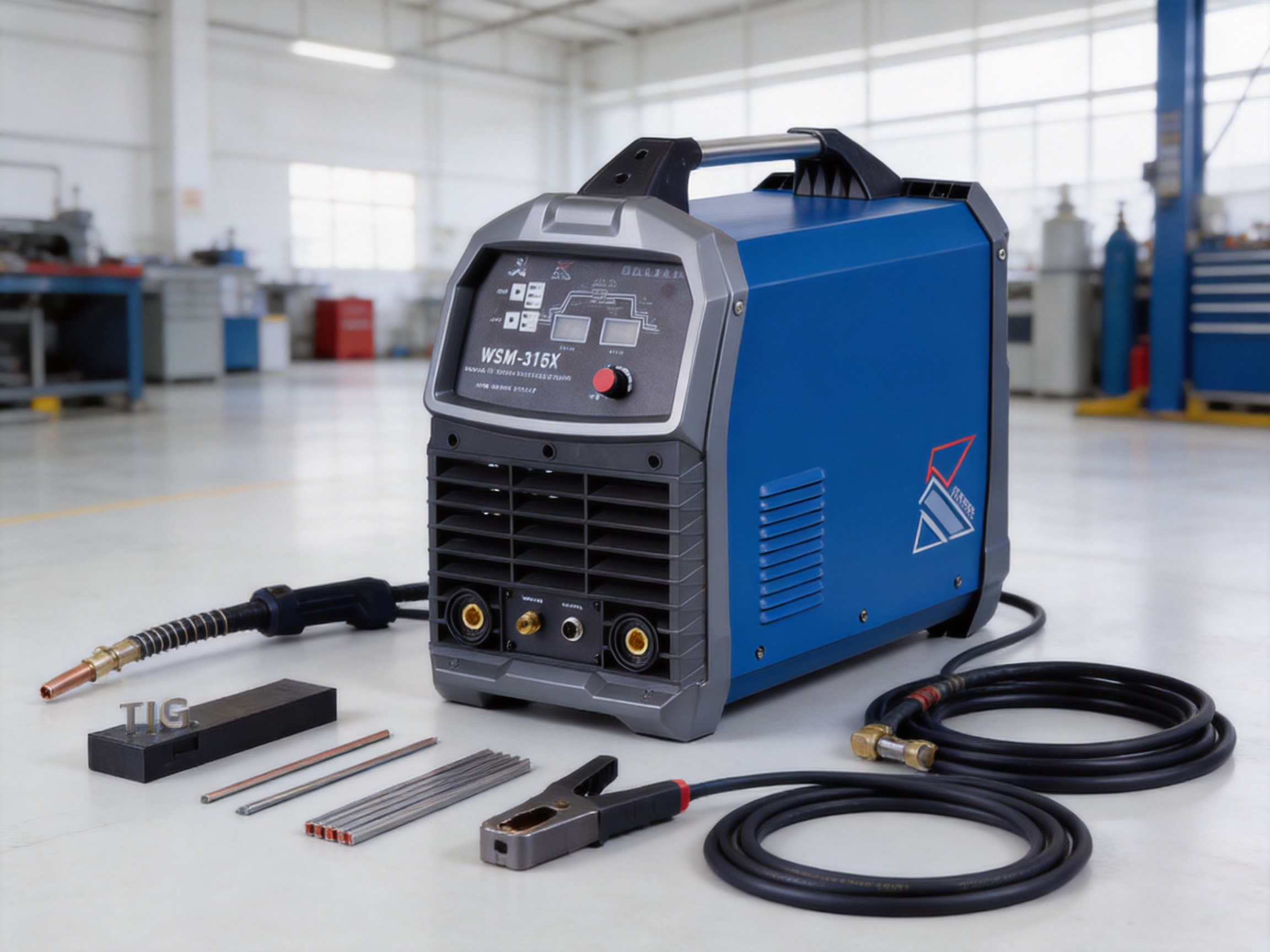
Accessories also affect performance. TIG welding normally requires a suitable TIG torch, argon regulator, shielding gas hose, tungsten electrodes, work clamp, torch consumables, and appropriate filler rods. MMA welding requires electrode holders, work clamps, welding cables, and electrodes matched to the material and application. Buyers should confirm whether accessories are included in the shipment or must be purchased separately.
Before operation, inspect the machine, power cable, welding leads, connectors, torch, electrode holder, work clamp, and gas hose. Do not use damaged cables or loose connections. Confirm that the input voltage matches the machine nameplate and that the work area has sufficient ventilation.
For TIG welding, connect the torch, work lead, shielding gas, and control connection as specified by the manual. Select a tungsten electrode suitable for the current and application. Grind the electrode according to the recommended geometry, clean the workpiece, set a suitable gas flow, and verify that the torch cup and collet are correctly installed.
For MMA welding, select an electrode suitable for the base metal and required weld position. Set the current according to the electrode manufacturer’s recommendation and the material thickness. Ensure that the work clamp is attached to a clean and electrically sound area of the workpiece.
During operation, use suitable personal protective equipment. A welding helmet with the correct shade, welding gloves, flame-resistant clothing, safety footwear, and eye protection are essential. The work area should be free of combustible materials, and adequate fume extraction should be provided where required.
After use, allow the machine to cool if it has been operating at a high load. Keep ventilation openings free from dust and obstruction. Store the equipment in a dry location protected from impact, corrosive chemicals, excessive humidity, and unauthorized use. Periodic inspection should include checking cable insulation, plug condition, grounding, connectors, cooling fans, and the enclosure.
Only qualified technicians should open the machine or perform internal electrical repairs. Inverter welding machines contain hazardous voltages that may remain present after disconnection. Service work should follow the manufacturer’s procedures and applicable electrical safety requirements.
For distributors, contractors, and industrial purchasers, the WSM-X series offers a practical combination of functions, model choice, and manufacturing support. The range includes four output levels while maintaining a consistent product concept. This makes it easier to present a family of machines to customers with different workloads.
The product’s portable design can appeal to both professional and semi-professional users. Its TIG pulse function and high-frequency ignition provide features associated with more advanced welding equipment, while MMA operation keeps the machine useful for general-purpose work. The digital display and electronic control also make the machine easier to understand than older analog transformer equipment.
The manufacturer’s experience in welding machines, chargers, and heaters supports a broad industrial base. Its reported export volume, product certifications, research resources, and automated production capabilities can be important factors for buyers seeking a long-term manufacturing partner rather than a one-time source.
Customization and regional adaptation may also be available depending on order requirements. Buyers should discuss voltage, frequency, plug style, packaging, labeling, language, accessories, warranty arrangements, spare parts, and certification documents before finalizing a purchase.
The series is designed for direct-current TIG welding with high-frequency ignition and pulse functionality, as well as MMA or stick welding. This allows one machine to handle precision TIG work and general-purpose electrode welding.
In 2T mode, the torch switch is held during welding and released to stop. In 4T mode, the operator presses and releases the switch to begin and then repeats the action to finish. Four-step operation can reduce hand fatigue during longer welds.
Yes. The supplied information states that the machines can weld stainless steel, carbon steel, alloy steel, cast iron, and other compatible metals. Stainless steel TIG welding requires correct cleaning, tungsten preparation, argon shielding, current selection, and technique.
Pulse TIG alternates between higher and lower current levels. It can help manage heat input, improve control of the weld pool, reduce distortion on suitable thin materials, and support a more consistent bead pattern.
MMA welding uses coated electrodes that generate shielding as they melt, so an external shielding gas cylinder is normally not required. This makes MMA practical for many outdoor and field repair applications.
The WSM-200X and WSM-250X provide the highest output ranges in the supplied series. The correct choice depends on material thickness, electrode size, expected welding current, duty cycle, electrical supply, and production requirements. The final nameplate and technical documentation should be confirmed before purchase.
The listed models use a 230 V, 50 Hz supply. Rated supply current is listed as 27 A for the WSM-160X and WSM-180X, 31.5 A for the WSM-200X, and 36 A for the WSM-250X. Electrical installation should be checked by a qualified professional.
MMA operation can be convenient outdoors, but the machine itself should be protected from rain, standing water, excessive moisture, and conductive dust. The IP21S rating does not mean that the equipment is waterproof. A dry, ventilated, and protected operating location is required.
Hot start assists electrode ignition by briefly increasing starting current. Arc force supports arc stability when the electrode approaches the workpiece. Anti-stick reduces current when the electrode becomes stuck, helping the operator release it.
IGBT inverter technology can provide a compact and lightweight power source, responsive current control, efficient electrical conversion, and stable arc behavior. It also supports electronic features such as pulse control, high-frequency starting, protection systems, and digital adjustment.
Typical TIG accessories include a TIG torch, argon regulator, gas hose, tungsten electrode, collet and cup components, work clamp, welding leads, and suitable filler rods. The exact accessories included with the machine should be confirmed with the supplier.
Keep the machine dry and clean, maintain unobstructed ventilation, inspect cables and connectors, and remove dust according to the service instructions. Internal repairs should only be performed by qualified technicians because inverter equipment contains hazardous electrical voltages.
The manufacturer reports significant export activity and experience with international certifications including CE, EMC, GS, ERP, ETL, UKCA, and CCC. Certification availability should be verified for the exact model and destination country.
The WSM-160X, WSM-180X, WSM-200X, and WSM-250X welding machines provide a versatile solution for users who need both TIG precision and MMA flexibility in a compact format. Their IGBT inverter architecture, PWM control, constant-current output, pulse TIG capability, high-frequency ignition, digital display, 2T/4T modes, and arc assistance functions create a strong combination for workshop, maintenance, fabrication, and field applications.
The series offers advantages over basic single-process or transformer-based machines by combining portability, electronic control, process flexibility, and practical protection features. Its metal-case and plastic-frame construction supports transport and routine workshop use, while the different output models allow buyers to select a capacity appropriate to their work.
The manufacturing background of Zhejiang Kende Mechanical & Electrical Co., Ltd. adds further value. The company’s large production base, research and development resources, automated manufacturing technologies, international certification experience, standards participation, and established export operation provide a substantial foundation for product development and supply.
For the best results, buyers should match the model to the expected current, duty cycle, material thickness, electrical installation, and work environment. They should also confirm the exact model specifications, included accessories, certification documents, packaging, warranty, and regional requirements before ordering. Used correctly and maintained properly, the WSM-X series can provide a flexible and efficient welding platform for a broad range of professional and general-purpose applications.
1. Product technical information for the WSM-160X, WSM-180X, WSM-200X, and WSM-250X IGBT inverter TIG/MMA welding machine series.
2. Manufacturer-provided information concerning IGBT inverter control, PWM regulation, constant-current output, pulse TIG operation, high-frequency arc starting, and protection functions.
3. Manufacturer-provided technical specifications for rated input, current ranges, duty cycle, efficiency, power factor, protection degree, insulation class, weight, and dimensions.
4. General principles of gas tungsten arc welding, manual metal arc welding, welding current control, arc starting, heat management, and electrode selection.
5. General guidance concerning electrical safety, welding personal protective equipment, equipment ventilation, maintenance, and safe operation of inverter welding power sources.
6. Manufacturer-provided corporate information concerning production capacity, research and development facilities, certifications, standards participation, automated manufacturing, and export activity.
Recommended Products

Contact Us
No.2299, Luqiao Section, Shugang Avenue, Luqiao District, Taizhou, 318057 Zhejiang, PR China.
+86-576-82431568
 Privacy
China Welding Machine Factory
 English
 中文简体
 русский
 Español
 عربى
 Français
 Português
 Deutsch
 Український