Email: [email protected]
Email: [email protected]

Blog
 2026.10.14
 Blog
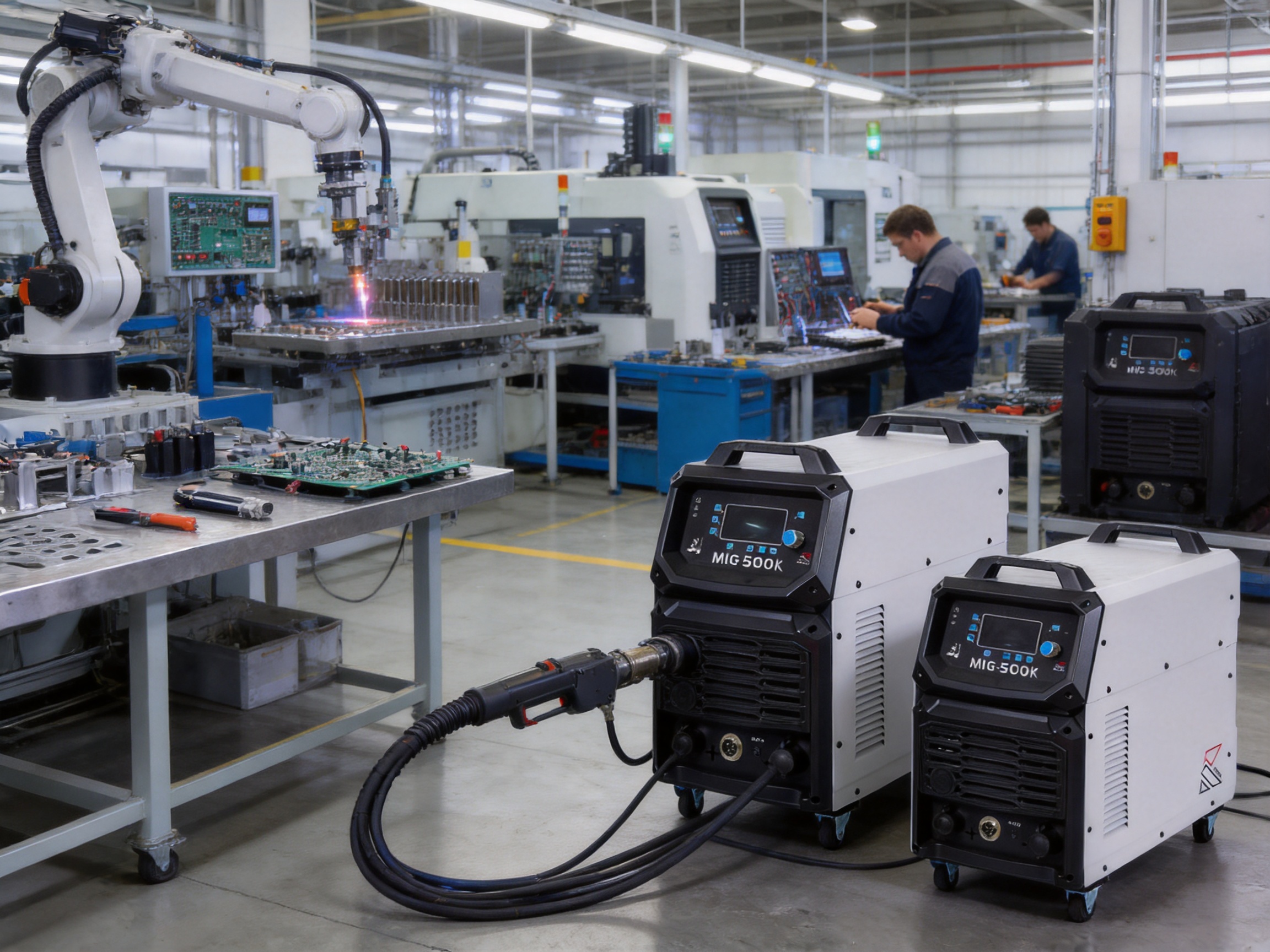
Modern fabrication shops require welding equipment that can perform consistently across different materials, joint designs, and production environments. A machine used for structural steelwork may also need to handle stainless steel fabrication, repair work, flux-cored welding, manual metal arc welding, or carbon arc gouging. Purchasing separate machines for each process can increase equipment costs, consume valuable floor space, and complicate operator training. The MIG-350K and MIG-500K multi-function gas-shielded welding machines address this challenge by combining several welding and gouging functions in a single IGBT inverter platform.
Designed for industrial and professional applications, these machines use an advanced microprocessor control unit, digital parameter management, an LCD display, touch-button operation, and encoder adjustment. Their design supports MIG/MAG welding, no-gas flux-cored wire welding, MMA or stick welding, and air carbon arc cutting and gouging. This process flexibility allows one power source to serve multiple fabrication requirements while maintaining stable arc performance.
The two models provide different output levels for different workload requirements. The MIG-350K offers a MIG/MAG output range of 40A/16V to 350A/31.5V and an MMA range of 20A/20.8V to 350A/34V. The MIG-500K increases the available MIG/MAG range to 60A/17V through 500A/39V, with an MMA range of 20A/20.8V through 480A/39.2V. Both models are rated for a 60 percent duty cycle and operate from a 380V supply.
Beyond their welding functions, the machines reflect the manufacturing capabilities of Zhejiang Kende Mechanical & Electrical Co., Ltd., an established producer of welding equipment, battery chargers, and heating products. The company combines research and development, automated production, quality management, product certification, and export experience to deliver equipment for both domestic and international markets.

MIG-350K/MIG-500K MCU Controlled Multi-function Gas Shielded Welding Machines
The MIG-350K and MIG-500K are multifunctional inverter welding systems intended for users who need more than a basic MIG power source. Each machine integrates a welding power unit with a wire-feeding arrangement and control system. Depending on the selected process, the operator can use solid welding wire with shielding gas, flux-cored wire without external shielding gas, coated electrodes for MMA welding, or carbon electrodes for air carbon arc gouging.
The core power technology is based on insulated-gate bipolar transistor, or IGBT, inverter technology. Compared with traditional transformer-based equipment, an inverter platform can provide a more compact power source, faster electronic control, improved parameter response, and better portability relative to its output capability. The inverter approach also supports digital control and more precise regulation of welding current and voltage.
The microprocessor control unit is central to the machine’s operating concept. Instead of relying only on analog potentiometers and manually estimated settings, the operator can select and adjust parameters through a digital interface. The LCD screen presents operating information, while touch buttons and an encoder provide a direct method for entering or modifying settings.
This arrangement is particularly useful when operators must change between materials, wire diameters, or welding positions. The machine can manage current, wire feeding speed, plate thickness, voltage, arc length, inductance, and related welding parameters. Depending on the chosen process, the user can either set individual values or use a synergic control approach in which related parameters are coordinated through a single main adjustment.
The equipment is designed to weld carbon steel, alloy steel, stainless steel, and other compatible metals. Actual results depend on material grade, joint preparation, shielding gas, wire or electrode selection, operator technique, and the applicable welding procedure. Nevertheless, the wide process range gives fabricators the flexibility to configure the machine for many common industrial tasks.
MIG/MAG welding uses a continuously fed wire electrode and a shielding gas. The wire feeder supplies the electrode at a controlled speed, while the power source establishes and maintains the welding arc. MIG generally refers to welding with an inert shielding gas, while MAG commonly refers to welding with an active gas or gas mixture.
The MIG-350K supports a MIG/MAG output range from 40A/16V to 350A/31.5V. The MIG-500K supports 60A/17V to 500A/39V. These ranges allow the machines to handle lighter fabrication work as well as heavier structural and industrial welds, provided the selected wire, gas, joint design, and duty cycle are suitable for the job.
Continuous wire feeding can increase productivity compared with manually feeding individual stick electrodes. It is especially useful for long seams, repetitive assemblies, frame construction, machinery fabrication, and general steel production. The digital control architecture helps the operator coordinate wire feeding speed and voltage to achieve a stable arc and consistent deposition.
The machines also support no-gas shielded flux-cored wire welding under the MIG/MAG function. Flux-cored wire contains compounds that generate shielding and slag during welding, allowing the process to be used without an external shielding gas in suitable conditions.
This capability can be valuable in outdoor work, maintenance operations, construction sites, and locations where wind may disturb an externally supplied shielding gas. It can also simplify equipment logistics by reducing dependence on gas cylinders. The operator must still select the correct wire, polarity, feed settings, and operating technique for the application.
Flux-cored welding can offer useful penetration and deposition characteristics for carbon steel and related materials. The machine’s adjustable wire feeding speed, voltage, inductance, and arc-related settings give users more control over the behavior of the process. Slag removal and appropriate ventilation remain important parts of the welding procedure.
MMA welding, also known as manual metal arc or stick welding, uses a coated consumable electrode. It is widely used for repair, installation, maintenance, construction, and fabrication because it does not require a wire feeder or external shielding gas.
The MIG-350K provides an MMA range of 20A/20.8V to 350A/34V, while the MIG-500K provides 20A/20.8V to 480A/39.2V. The supported electrode diameter range for both models is listed as 1.6 to 5.0 millimeters. This gives users the option of switching from wire welding to stick welding when access is limited, when working outdoors, or when a specific electrode type is preferred.
The availability of MMA in the same machine can reduce the need to move workpieces between different welding stations. A fabrication team may use MIG/MAG for production seams, flux-cored wire for outdoor work, and MMA for root passes, repairs, or areas where a wire feeder is inconvenient. This versatility is one of the principal advantages of a multifunctional welding platform.
Under the MMA function, the machines can also be used for air carbon arc cutting and gouging, commonly identified as CAC-A. In this process, an electric arc melts the metal while compressed air removes the molten material. It is used for removing defective welds, preparing grooves, opening cracks, back-gouging, removing excess metal, and correcting fabrication errors.
Having gouging capability in the same power source can be valuable in heavy fabrication and repair environments. Operators do not need to reserve a separate power unit solely for corrective work. The machine can therefore contribute to both primary welding and post-weld preparation activities.
Because air carbon arc gouging involves high current, compressed air, sparks, molten metal, and substantial noise, it requires suitable personal protective equipment, ventilation, fire prevention, and trained operation. The machine should be used within its rated capacity and according to the electrode and air pressure requirements of the selected procedure.
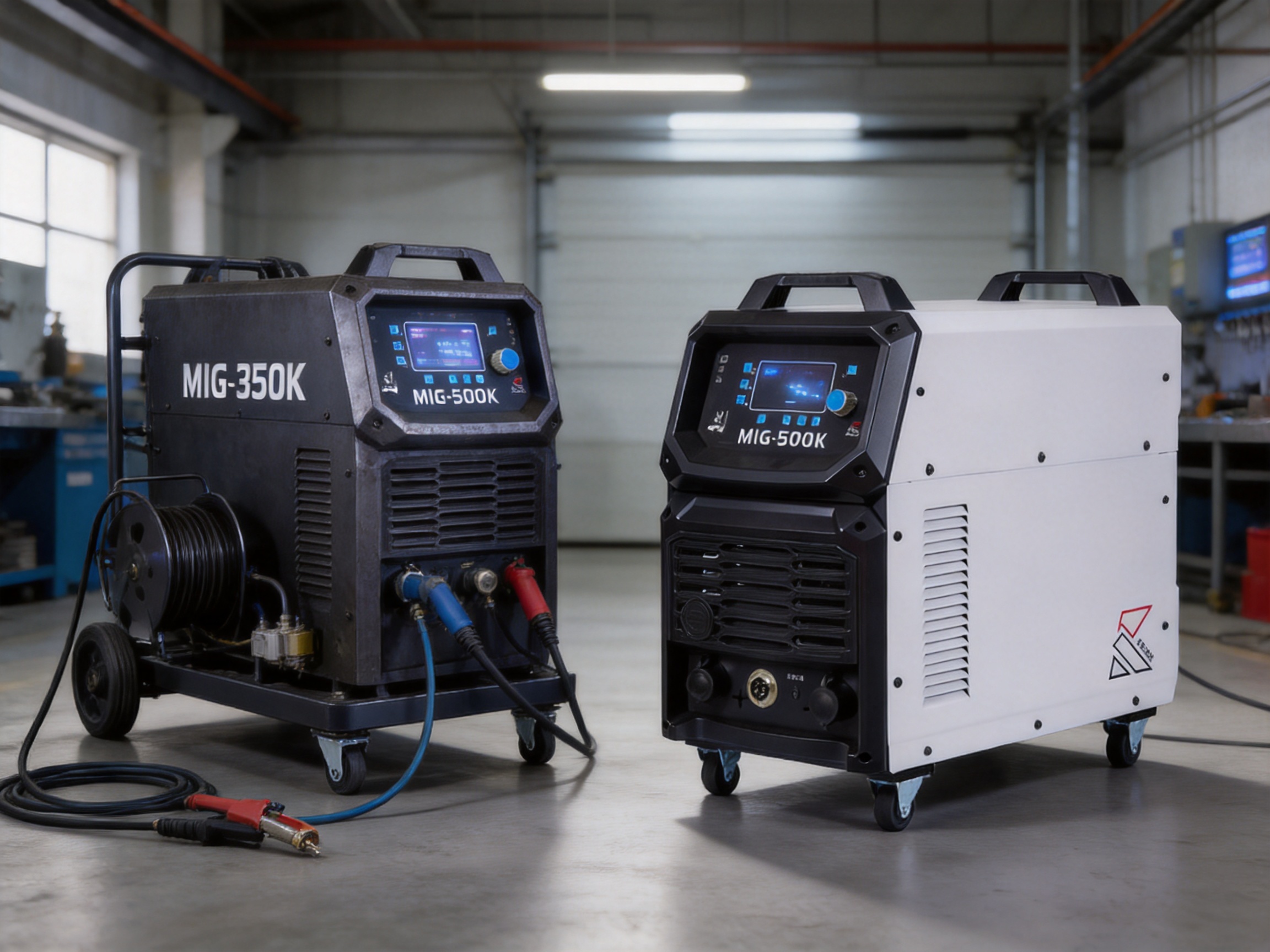
The microprocessor control unit allows the welding machine to monitor and regulate operating parameters electronically. Digital control can improve repeatability because the operator can record, reproduce, and adjust settings more systematically than with purely mechanical controls.
For production users, repeatability is important. A consistent combination of voltage, current, wire speed, inductance, and arc length can help reduce variation between welders and between production batches. Digital control does not replace proper welding procedure qualification or operator skill, but it gives the user a more precise foundation for applying those procedures.
The LCD screen provides a direct view of the selected settings and operating information. Touch-button operation simplifies access to process selection and parameter adjustment. Compared with complex analog control panels, a clearly organized digital interface can make it easier for operators to identify the active process and confirm their settings before welding.
The interface is also helpful when the machine is used by several operators. A clear display can reduce uncertainty during shift changes and make training more straightforward. Operators can use the screen and encoder to adjust the machine without repeatedly referring to external instruments for basic parameter information.
The encoder provides a controlled method of changing settings. It is suitable for making fine adjustments to parameters such as welding current, voltage, wire feeding speed, plate thickness, arc length, and inductance. This is important because welding quality often depends on small changes in the relationship between voltage and wire speed.
A single-knob or synergic adjustment mode is available for MIG/MAG and no-gas flux-cored welding. Synergic operation is intended to coordinate related parameters, making initial setup faster and reducing the number of independent adjustments required. Experienced welders may still prefer manual fine-tuning, while less experienced users can benefit from a more guided setup process.
A conventional single-process welding machine may perform one function effectively but require additional equipment for stick welding, flux-cored welding, or gouging. The MIG-350K and MIG-500K combine several functions in one system. This can reduce equipment duplication and make better use of workshop space.
For a small or medium-sized fabrication business, multifunctional equipment can be especially practical. The machine can be allocated to different jobs without requiring a separate power source for every process. For larger facilities, the machines can serve as flexible workstations for maintenance departments, fabrication cells, or repair areas.
IGBT inverter technology and microprocessor control allow the machines to respond electronically to changes during welding. A controlled power output contributes to a stable arc, which can help the operator maintain a more consistent weld pool and reduce unnecessary spatter when the correct settings and consumables are used.
Arc stability is an important advantage over basic equipment with limited adjustment capability. When the power source provides better control over voltage, current, wire speed, and inductance, the operator has more opportunity to match the arc behavior to the material thickness and welding position.
Analog machines can be effective, but their settings may be difficult to reproduce precisely, particularly when multiple controls interact. Digital parameter management makes it easier to return to a known setup. This may support more uniform production, simpler troubleshooting, and more efficient training.
Repeatability can also reduce setup time. Once an operator has established suitable values for a specific material and wire combination, the same general settings can be entered again for similar work. Any final settings should still be confirmed through test welds, procedure requirements, and visual or nondestructive inspection as appropriate.
The MIG-350K has a listed item size of 625 by 275 by 580 millimeters and a net weight of 23 kilograms. The MIG-500K has a listed item size of 710 by 330 by 650 millimeters and a net weight of 41 kilograms. These dimensions and weights provide substantial output capacity without the footprint associated with many traditional high-current transformer machines.
The more compact inverter format can simplify movement within a workshop and help users organize work cells more efficiently. The MIG-350K is particularly suitable where portability and moderate-to-high output are both important. The MIG-500K is intended for users who need higher current capacity and heavier-duty welding performance.
The machines are suitable for carbon steel, alloy steel, stainless steel, and other compatible materials. This broad material range allows fabricators to use one platform for general steelwork, machinery components, stainless assemblies, maintenance repairs, and structural applications.
Material compatibility depends on the welding process and consumables. Solid wire, flux-cored wire, coated electrodes, and shielding gases must be selected according to the base metal and required weld properties. The advantage of the product is not that every material can be welded with one universal setting, but that the equipment provides the process and adjustment range needed to configure multiple procedures.
| Specification | MIG-350K | MIG-500K |
|---|---|---|
| Machine type | IGBT inverter MIG/MAG multifunction welding machine | IGBT inverter MIG/MAG multifunction welding machine |
| Rated input voltage | 380V | 380V |
| Input capacity | 15 KVA | 30 KVA |
| MIG/MAG current and voltage range | 40A/16V to 350A/31.5V | 60A/17V to 500A/39V |
| MMA current and voltage range | 20A/20.8V to 350A/34V | 20A/20.8V to 480A/39.2V |
| MIG/MAG wire diameter | 0.8 to 1.2 mm | 1.0 to 1.6 mm |
| MMA electrode diameter | 1.6 to 5.0 mm | 1.6 to 5.0 mm |
| Rated duty cycle | 60 percent | 60 percent |
| Insulation class | H | H |
| Case protection degree | IP21 | IP21 |
| Net weight | 23 kg | 41 kg |
| Item size | 625 × 275 × 580 mm | 710 × 330 × 650 mm |
The MIG-350K is suited to users who need strong multifunction performance while maintaining a lower machine weight and smaller footprint. Its 350-amp maximum MIG/MAG output is appropriate for general fabrication, equipment repair, metalwork, structural components, and many medium-duty production tasks.
The machine accepts MIG/MAG wire from 0.8 to 1.2 millimeters and MMA electrodes from 1.6 to 5.0 millimeters. This range supports fine-to-medium wire applications and a broad selection of stick electrodes. Its 15 KVA input capacity is lower than that of the MIG-500K, which may be beneficial where electrical infrastructure or available workshop space is more limited.
The MIG-500K is designed for users requiring higher output and a larger wire range. With a maximum MIG/MAG output of 500 amps and a maximum MMA output of 480 amps, it is appropriate for heavy fabrication, thicker materials, larger structures, and demanding repair operations.
The machine supports MIG/MAG wire from 1.0 to 1.6 millimeters. Its 30 KVA input capacity reflects the higher output class. The MIG-500K is heavier and larger than the MIG-350K, but that additional size is associated with its greater current capability and industrial workload potential.
The MIG-350K package includes a 4-meter MB36 assembly, 35 mm² welding cable, a 5-meter control wire cable, a 5-meter 350A welding torch, a 3-meter 300A ground clamp with 35 mm² cable, a flow meter, a 7-meter gas pipe, wire feeder swivel, and trolley. A 3-meter 4G2.5 mm² power cable is available as an additional configuration item.
The MIG-500K package includes a 4-meter MB46 assembly, 50 mm² welding cable, a 5-meter control wire cable, a 5-meter 350A or 500A welding torch, a 3-meter 500A ground clamp with 50 mm² cable, a flow meter, a 7-meter gas pipe, wire feeder swivel, and trolley. A 3-meter 4G4 mm² power cable is available as an additional configuration item.
The supplied cables, torch, ground clamp, gas connections, feeder swivel, and trolley are important because they enable the power source to function as an integrated workstation rather than as a standalone electrical unit. Cable cross-section and accessory ratings should be matched to the selected welding current and operating conditions.
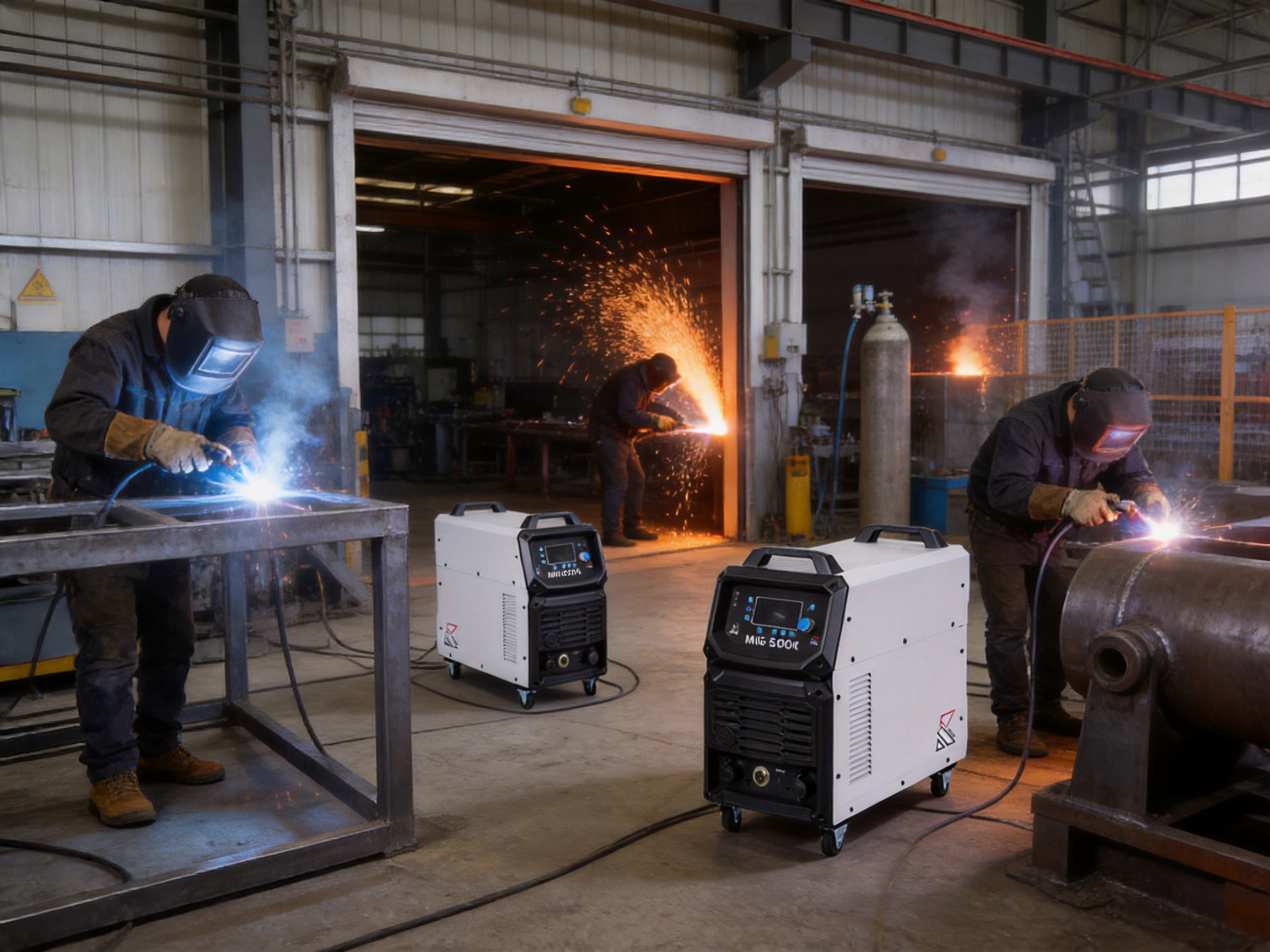
Both models are listed with insulation class H and case protection degree IP21. Class H insulation indicates a high-temperature insulation category for electrical components when used within the manufacturer’s specified conditions. IP21 provides protection against solid objects of a certain size and vertically falling water drops, but it does not make the machine suitable for unrestricted outdoor exposure, rain, water spray, or dusty industrial environments without additional protection.
The equipment should be installed in a dry, clean, and adequately ventilated location. Airflow around the machine must not be blocked, and accumulated dust should be removed according to a planned maintenance schedule. The power supply must be correctly installed and protected by suitable electrical equipment. Connections should be made by qualified personnel in accordance with local electrical requirements.
Welding produces ultraviolet radiation, visible light, fumes, heat, sparks, and molten metal. Operators should use an appropriate welding helmet, protective clothing, gloves, safety footwear, hearing protection where required, and suitable respiratory or ventilation controls. Gas cylinders must be secured, hoses inspected, and regulators handled correctly.
Air carbon arc gouging requires additional attention because it produces high noise levels, strong sparks, molten material, and fumes. Work areas should be cleared of combustible materials, and fire prevention procedures should be applied before, during, and after operation.
The 60 percent duty cycle means that the machine can operate at its rated output for a specified portion of a standard test period, followed by a cooling period. It should not be interpreted as permission to weld continuously at maximum output without interruption. The actual duty cycle may vary with ambient temperature, welding current, ventilation, extension cables, and operating conditions.
Zhejiang Kende Mechanical & Electrical Co., Ltd. operates from a facility in Taizhou, Zhejiang Province, China. The company reports an area of approximately 120,000 square meters and a workforce of about 600 employees. This scale supports coordinated research, component production, assembly, testing, logistics, and after-sales activities.
A large manufacturing base can provide advantages in supply-chain control and production organization. Welding machines require coordinated management of power electronics, sheet-metal structures, wire-feeding systems, control panels, cables, thermal management, and final testing. A broad facility and dedicated personnel allow these activities to be integrated within a structured manufacturing system.
The company maintains a Zhejiang Provincial R&D Center, an Enterprise Technology Center, and an Intelligent Welding Technology Research Institute. It also reports approximately 98 research and development personnel. These resources support continued work in inverter technology, welding process control, product design, intelligent welding, and application development.
For the MIG-350K and MIG-500K, research and development capability is reflected in the combination of IGBT power electronics, microprocessor control, synergic adjustment, LCD operation, and multifunction process management. Such functions require coordination between hardware and software. The control system must interpret user inputs, regulate output behavior, manage wire feeding, and support stable operation across different welding modes.
The company uses automated patching, plug-in and welding systems, robot processing, laser cutting, and other advanced manufacturing technologies. Automated electronic assembly can support repeatable placement and soldering of circuit-board components. Robotic processing can improve consistency in repetitive mechanical operations, while laser cutting can produce accurate sheet-metal parts for machine cases and internal structures.
These technologies are valuable for welding machine production because product quality depends on both electronic and mechanical precision. Accurate case parts support proper assembly, ventilation, and protection. Consistent electronic assembly supports reliable control-board performance. Automated processes can also improve production efficiency and reduce variation when supported by inspection and process control.
The company applies OA office automation, Toyota TPS management methods, ERP K3, and MES management systems. Together, these systems can support production planning, material tracking, order management, manufacturing execution, inventory control, and quality documentation.
Manufacturing execution systems are particularly relevant for equipment that may be produced in multiple models and configurations. The MIG-350K and MIG-500K differ in output, dimensions, cables, wire ranges, and accessory specifications. A structured production information system helps coordinate the correct parts and procedures for each model.
The company reports product certifications and compliance experience including GS, CE, EMC, ERP, US ETL, UKCA, and China CCC. The applicable certification for a particular model, market, and configuration should always be confirmed before purchase or shipment. Nevertheless, experience with multiple certification systems demonstrates familiarity with international technical, electrical, electromagnetic compatibility, and safety requirements.
The company is also identified as a national standard drafting unit associated with the National Welding Machine Standardization Committee. It has participated in the drafting, formulation, and revision of national standards and has led the drafting of a group standard. Participation in standardization work can strengthen a manufacturer’s understanding of safety expectations, performance terminology, testing methods, and industry development.
Reliability in a welding machine depends on the interaction of several factors: power semiconductor quality, thermal design, circuit-board construction, mechanical assembly, cable selection, cooling airflow, software control, final testing, and user maintenance. A product with advanced features must be supported by disciplined production processes to deliver those features consistently.
The reported manufacturing capabilities of the producer provide a foundation for quality control across these areas. Automated assembly can improve repeatability, while ERP and MES systems can support traceability. Research and testing resources can assist with design verification, process stability, and compliance evaluation.
Users can contribute to long service life by following the operating instructions, maintaining clean airflow paths, avoiding overloads, inspecting cables and connectors, keeping the machine dry, and using suitable consumables. Welding torches, contact tips, liners, ground clamps, gas hoses, and wire-feeding components are wear items and should be inspected regularly.
A stable ground connection is particularly important for arc performance. Loose, contaminated, or undersized ground connections can increase resistance, create heat, and produce unstable welding behavior. Correct cable routing also reduces the risk of mechanical damage and unnecessary voltage drop.
Fabrication shops can use the machines for frames, brackets, platforms, supports, machinery parts, panels, guards, and general steel assemblies. MIG/MAG provides efficient continuous welding, while MMA remains available for repairs, installation, and areas where a wire feeder is less convenient.
Repair departments often encounter different material thicknesses and joint conditions during the same shift. The ability to switch between MIG/MAG, flux-cored wire, MMA, and gouging can help technicians remove defective metal, prepare the joint, and complete the repair using a suitable process.
Flux-cored welding without external shielding gas can be useful for selected outdoor applications, especially where wind makes gas shielding difficult. MMA welding provides another practical option for field work. The machine should still be protected from rain, excessive dust, and unsuitable environmental conditions because its IP21 protection rating does not indicate full weather resistance.
The MIG-500K’s higher current capability makes it suitable for heavier industrial fabrication when used with an appropriate procedure. It can support the welding of thicker sections, larger assemblies, and demanding repair work. The MIG-350K offers a more compact option for general industrial fabrication and medium-duty production.
Air carbon arc gouging allows users to remove weld defects, open grooves, remove excess weld metal, and prepare damaged areas for repair. Combining gouging and welding in one system can improve the workflow in maintenance shops where corrective work is a regular requirement.
Before selecting a model, users should evaluate the required maximum current, material thickness, wire diameter, duty cycle, available electrical supply, workplace environment, mobility requirements, and accessories. The MIG-350K may be the more practical choice for users prioritizing lower weight, a smaller footprint, and a 350-amp MIG/MAG capacity. The MIG-500K is better suited to applications requiring higher output, larger wire, and heavier fabrication capability.
Operators should begin with the consumable manufacturer’s recommended parameters and then make controlled adjustments based on weld position, joint design, material condition, shielding gas, and desired bead profile. Synergic control can provide a useful starting point, while manual adjustment may be used to fine-tune arc characteristics.
For MIG/MAG welding, gas flow should be checked before production begins. Excessive flow can create turbulence and draw air into the shielding zone, while insufficient flow may lead to porosity. The nozzle, contact tip, liner, and wire path should be kept clean and in good condition.
For flux-cored welding, polarity, wire type, travel angle, and slag removal are important. For MMA, electrode storage, arc length, current selection, and slag removal affect weld quality. For gouging, carbon electrode diameter, air pressure, travel speed, and electrode angle must be selected according to the workpiece and desired groove.
The machines support MIG/MAG welding, no-gas shielded flux-cored wire welding, MMA or stick welding, and air carbon arc cutting and gouging. These functions allow one power source to cover a wide range of fabrication, repair, and maintenance tasks.
The principal difference is output capacity and size. The MIG-350K provides up to 350 amps for MIG/MAG and MMA, while the MIG-500K provides up to 500 amps for MIG/MAG and 480 amps for MMA. The MIG-500K also has a higher input capacity, larger dimensions, greater weight, and support for larger MIG/MAG wire sizes.
Yes. Both models are listed with a rated input voltage of 380V. Electrical installation should be completed by qualified personnel, and the power supply should meet the applicable local requirements.
Yes, when suitable no-gas flux-cored wire is used. The flux within the wire generates shielding during welding. The correct wire, polarity, settings, and operating technique must be selected for the application.
Synergic control coordinates related welding parameters so that the operator can make adjustments through a simplified control method, often using one main knob or encoder. It can make initial setup easier, while experienced operators may use additional manual adjustments for precise control.
They can weld stainless steel when compatible wire, electrode, shielding gas, polarity, and procedure settings are used. The machine itself provides the process capability, but the consumables and welding procedure must be appropriate for the stainless-steel grade.
Both machines have a listed rated duty cycle of 60 percent. The actual permissible operating time depends on the selected current, ambient temperature, ventilation, and other conditions. Users should follow the operating instructions and allow the machine to cool when required.
They may be used for suitable outdoor welding applications when protected from rain, water spray, excessive dust, and other unsuitable conditions. The IP21 case protection rating does not indicate unrestricted weatherproof operation. Flux-cored wire and MMA may be useful outdoors, but safe electrical and environmental practices remain essential.
The MIG-500K is generally the better choice when the application requires higher current, larger wire, thicker sections, or heavier continuous work. The MIG-350K is suitable for many general fabrication and medium-duty industrial applications where its lower weight and smaller dimensions are advantageous.
Recommended maintenance includes cleaning ventilation paths, inspecting cables and connectors, checking the ground clamp, examining the torch and wire-feeding system, protecting the machine from moisture, and replacing worn consumables. Maintenance intervals should be adapted to the dust level, workload, and operating environment.
The MIG-350K and MIG-500K provide a practical combination of multifunction welding capability, digital control, inverter efficiency, and industrial output. By supporting MIG/MAG, no-gas flux-cored welding, MMA, and air carbon arc gouging, they can serve as flexible platforms for fabrication, repair, maintenance, construction, and heavy industrial work.
The MIG-350K emphasizes a compact and comparatively lightweight format while offering up to 350 amps for MIG/MAG and MMA welding. The MIG-500K provides a higher-capacity solution with up to 500 amps for MIG/MAG, support for larger wire, and a design intended for heavier workloads. Both models use a 380V supply, provide a 60 percent duty cycle, and incorporate Class H insulation and IP21 case protection.
The products’ principal technical advantages include IGBT inverter technology, microprocessor-based control, LCD display, touch-button operation, encoder adjustment, synergic parameter management, and stable arc control. These features can improve setup efficiency, process flexibility, and repeatability when combined with appropriate consumables and qualified welding procedures.
The manufacturer’s broader strengths support the product offering. Its large production facility, dedicated research centers, engineering personnel, automated assembly, robot processing, laser cutting, ERP and MES management, international certification experience, and participation in standardization activities provide a substantial foundation for producing and improving industrial welding equipment.
For users seeking a single system that can cover multiple welding and gouging requirements, these machines offer a strong balance of versatility and output. The final choice should be based on current requirements, material thickness, wire diameter, electrical infrastructure, duty cycle, mobility, and the intended working environment.
1. Product technical information for MIG-350K and MIG-500K multifunction gas-shielded welding machines.
2. Manufacturer-provided specifications for inverter welding power sources, accessories, dimensions, input capacity, and duty cycle.
3. General principles of MIG/MAG, flux-cored, MMA, and air carbon arc gouging processes.
4. Industrial guidance concerning welding machine electrical safety, protective equipment, ventilation, grounding, and maintenance.
5. General technical literature on IGBT inverter power conversion and microprocessor-based welding control.
6. International practices for welding equipment certification, electromagnetic compatibility, insulation classification, and enclosure protection.
Recommended Products

Contact Us
No.2299, Luqiao Section, Shugang Avenue, Luqiao District, Taizhou, 318057 Zhejiang, PR China.
+86-576-82431568
 Privacy
China Welding Machine Factory
 English
 中文简体
 русский
 Español
 عربى
 Français
 Português
 Deutsch
 Український