Email: [email protected]
Email: [email protected]

Blog
 2026.10.08
 Blog
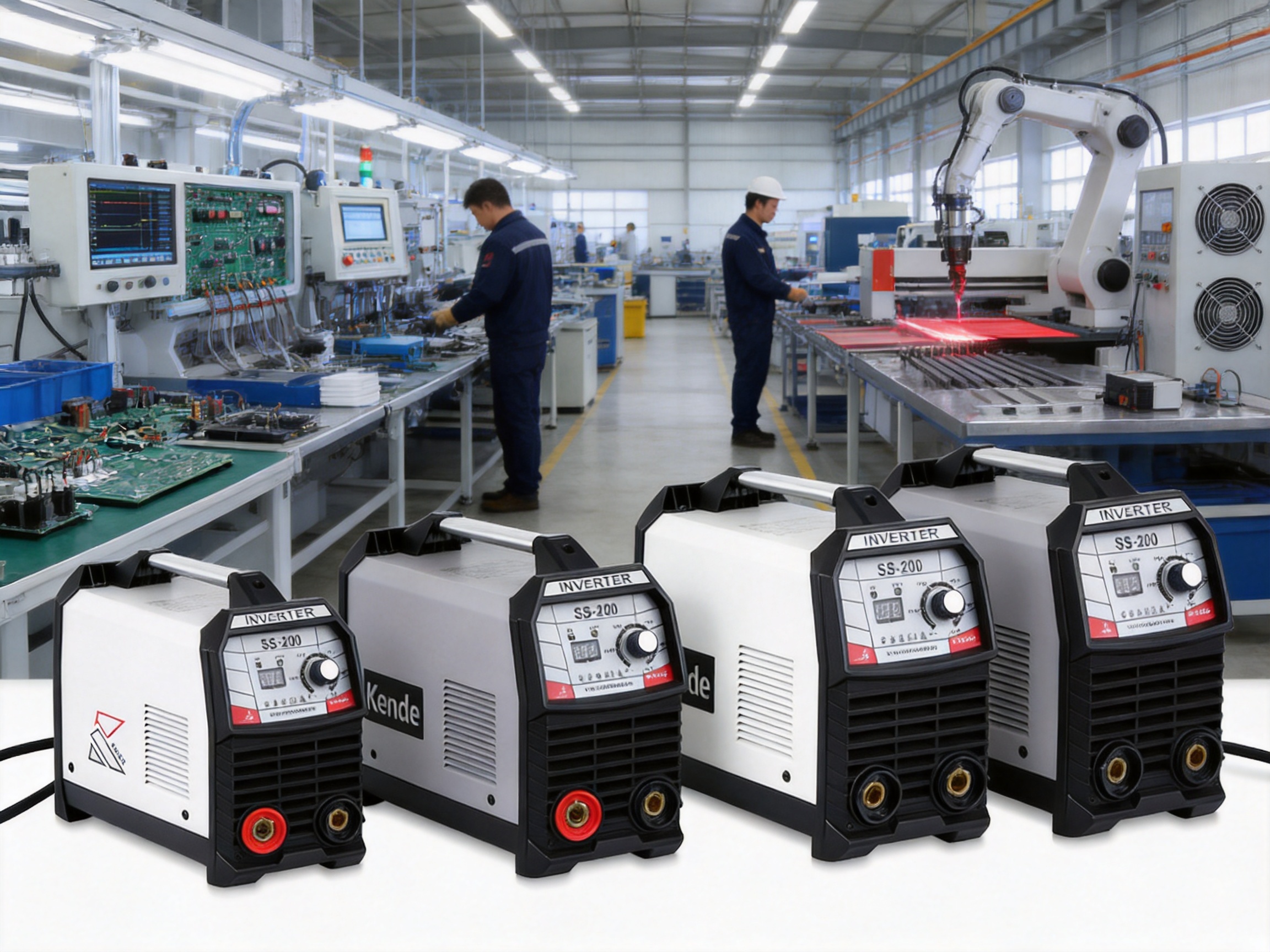
Modern welding work requires equipment that is compact enough for mobile use, powerful enough for demanding metal fabrication, and stable enough to produce consistent welds across different working conditions. The SS series IGBT inverter MMA welding machines are designed to meet these requirements through a combination of inverter technology, intelligent arc control, protective functions, and a practical portable construction. Available in nominal current classes from 120A to 200A, this series is suitable for maintenance, installation, construction, agricultural equipment repair, workshop fabrication, and many other manual metal arc welding applications.
The machines use direct-current output and are designed for single-phase 220V or 230V electrical supplies. Their metal case with a plastic frame provides a useful balance between mechanical protection and reduced weight. Compared with many traditional transformer-based welding machines, the inverter design offers a smaller body, lower energy consumption, more responsive arc control, and easier transportation. These characteristics make the series particularly suitable for professionals who regularly move equipment between job sites, as well as for workshops that need flexible welding power without dedicating large floor areas to heavy equipment.
The product range includes the SS-120, SS-140, SS-160, SS-180, and SS-200-class models. The supplied technical information identifies the highest-current model as SS-1200 in the specification table, while the product title identifies the range as including a 200A machine. In practical product documentation, this model can be understood as the 200A version of the family. Optional Voltage Reduction Device, or VRD, protection is also available for applications that require reduced open-circuit voltage for improved operator safety.
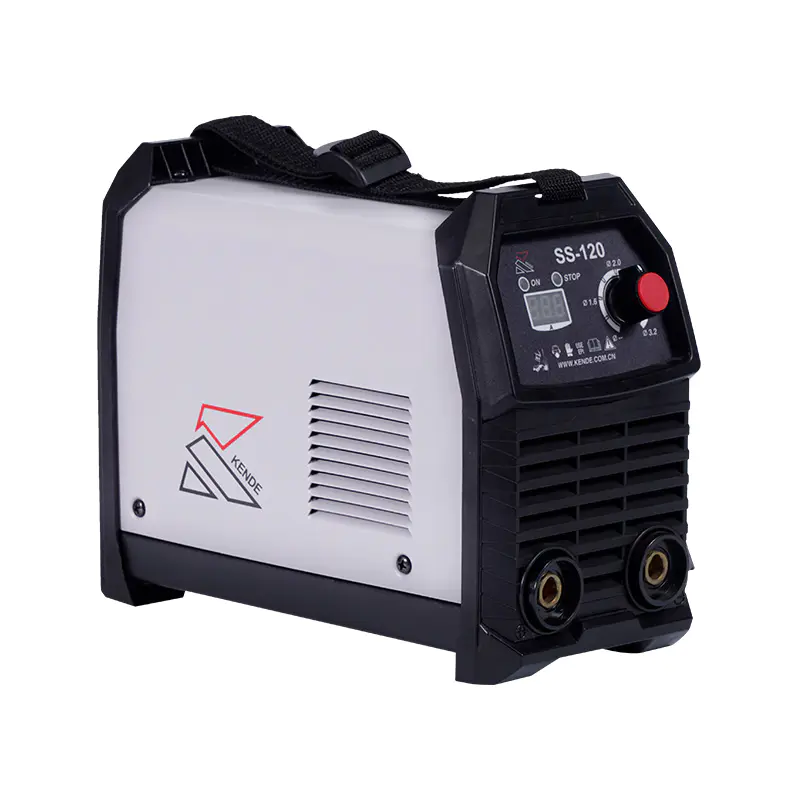
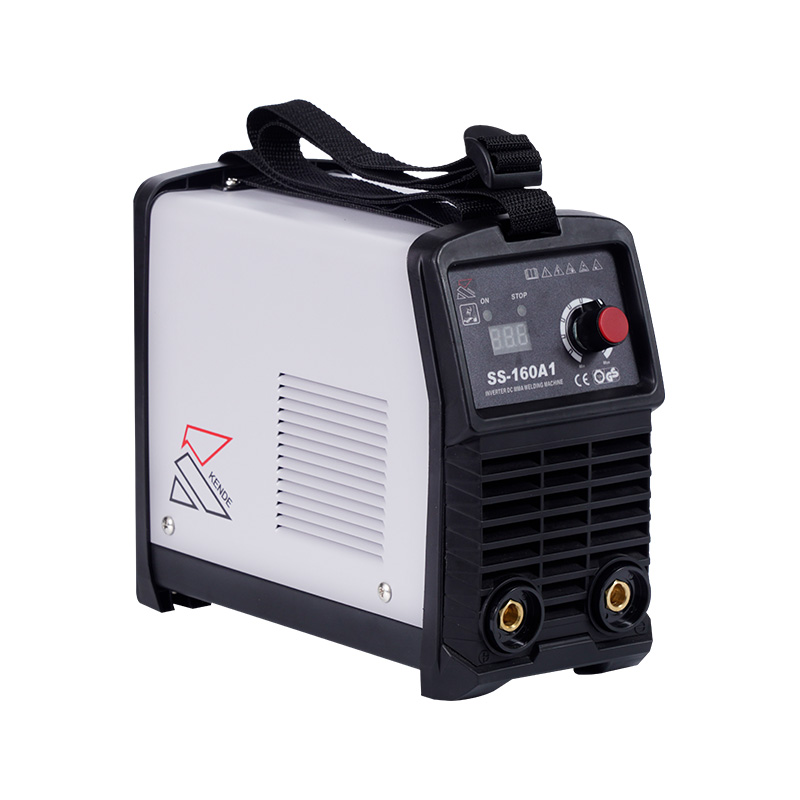
SS- 80A 100A 120A 140A 160A 180A 200A IGBT Inverter Welding machine (MMA),Metal case with plastic frame Portable DC Single Phase 230V ,optional:VRD
The SS series is an inverter-based manual metal arc welding solution. It is commonly described as an MMA, stick, or shielded metal arc welding machine. Instead of feeding solid wire continuously through a torch, the operator uses a coated consumable electrode held in an electrode holder. When the electrode touches the workpiece and is lifted to establish an arc, the machine supplies a controlled direct current that melts both the electrode and the base metal. The coating on the electrode produces shielding gas and slag, protecting the molten weld pool from atmospheric contamination.
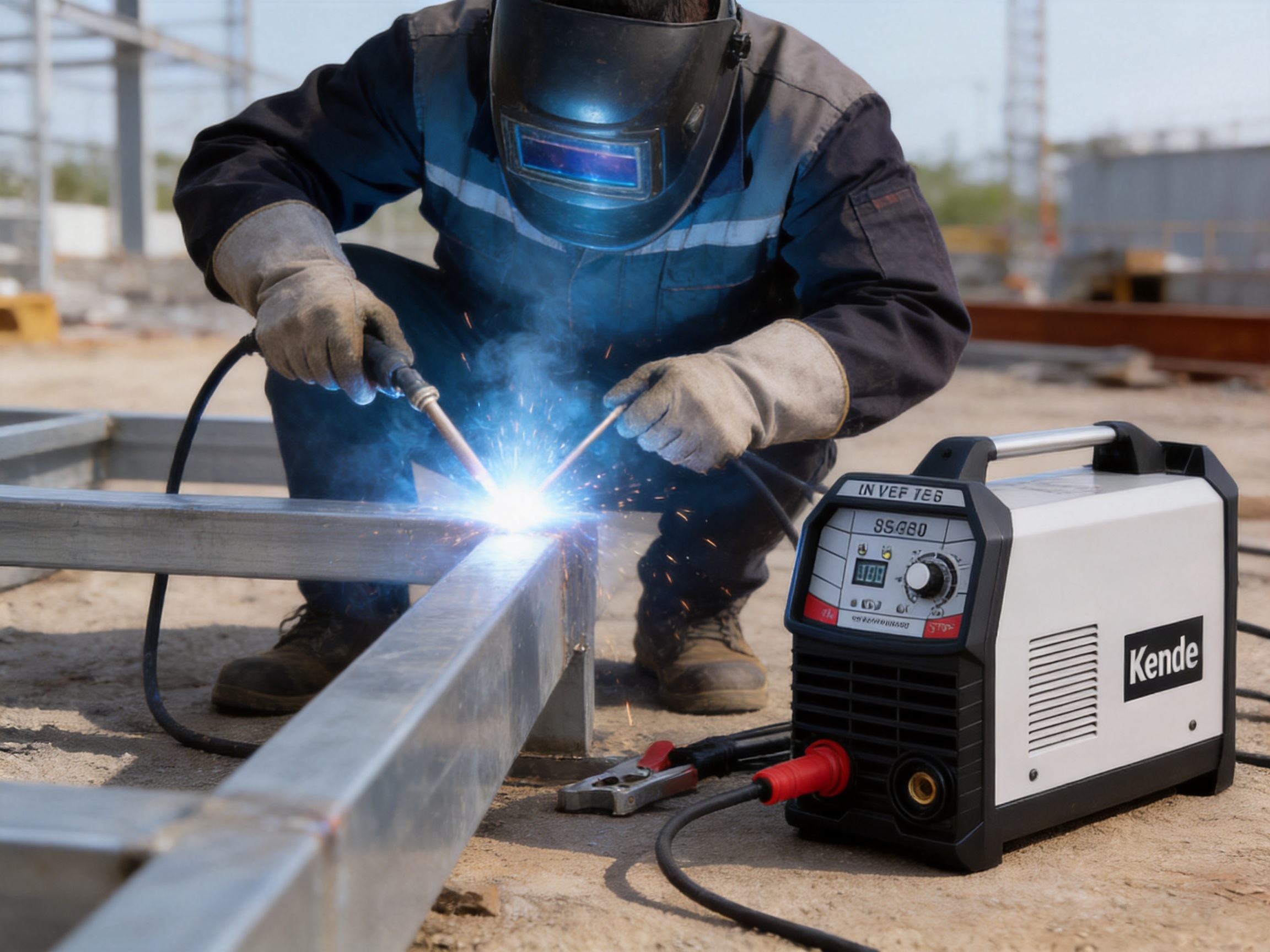
This process is valued for its versatility. It does not require an external shielding gas cylinder, making it convenient for outdoor repair, construction sites, agricultural work, structural maintenance, and locations where wind would disturb a gas shield. The same machine can be used with different electrode types and sizes, allowing the operator to weld carbon steel, alloy steel, cast iron, stainless steel, and other compatible metals when the correct electrode and procedure are selected.
The SS series is especially appropriate for:
• General repair and maintenance work.
• Light and medium fabrication in workshops.
• Gate, railing, frame, and bracket production.
• Construction and installation work.
• Agricultural machinery repair.
• Vehicle and trailer maintenance.
• Welding in outdoor or remote locations.
• Training environments and technical schools.
• Household and small-business metalworking.
Although the machines are compact, their performance is not limited to occasional household repairs. The higher-current models accept electrodes up to 5.0 mm according to the supplied specifications, making them useful for heavier repair and fabrication tasks. The correct model should be selected according to material thickness, electrode size, duty cycle, supply capacity, and the expected length of continuous welding.
The main technological advantage of the product is its use of powerful insulated-gate bipolar transistor, or IGBT, switches combined with advanced inverter control. An inverter welding machine first converts incoming alternating current into a controlled electrical form, switches it at high frequency, transforms it efficiently, and then provides a regulated welding output. High-frequency switching allows the internal transformer and other magnetic components to be much smaller than those used in conventional low-frequency transformer machines.
This design contributes to several practical benefits. The machine can deliver a controlled welding current from a relatively small housing. The output responds quickly when the arc length changes. Current adjustment can be made continuously over a broad range, and the control system can react to changes in the welding arc more rapidly than a basic traditional transformer design.
IGBT technology also supports high power density. More welding capability can be packaged into a lighter machine, which is important for service technicians and installers who carry the equipment up stairs, across construction sites, or between multiple workstations. The reduction in size also simplifies storage and transportation, while the lower energy requirement can reduce the electrical load on the worksite.
The product information states that the machines use pulse-width modulation, or PWM, control and constant-current output control. PWM allows the control circuit to regulate the switching operation accurately, while constant-current control helps maintain a stable welding current as arc conditions change. In practical terms, this helps the operator maintain a more predictable arc and reduces the tendency for the weld to become erratic when the electrode position varies slightly.
Traditional transformer welding machines can be dependable, but they are often heavy, bulky, and less convenient to transport. Their output may also be less responsive to rapid changes in the arc. The SS series addresses these limitations through a compact inverter architecture.
Compared with a conventional transformer machine of similar nominal output, the SS series offers:
• Lower overall weight and easier portability.
• Smaller dimensions for storage and transportation.
• More precise electronic adjustment of welding current.
• Faster response to changes in arc conditions.
• Lower power consumption and improved energy efficiency.
• Integrated electronic protection functions.
• Practical support for hot start, arc force, and anti-stick operation.
The supplied information indicates energy savings of up to 30 percent compared with less efficient designs. Actual savings depend on the welding current, duty cycle, supply conditions, electrode type, and the performance of the competing equipment. Nevertheless, the inverter structure is well suited to users who want a more efficient machine without sacrificing useful manual welding capability.
The SS series provides direct-current output. DC welding is widely used because it gives the operator a stable arc and can provide good penetration with suitable electrode polarity and settings. Direct current can also make arc starting and maintenance easier for many common electrode types. The selected polarity should always follow the electrode manufacturer’s instructions and the welding procedure being used.
High welding-current stability is one of the most important features of a portable MMA machine. If current fluctuates excessively, the arc may extinguish, the electrode may stick, penetration may become inconsistent, and the final weld may contain defects. The electronic control system in these machines is designed to maintain a steady output, supporting a smooth arc and consistent bead formation.
The current adjustment range begins at approximately 20A on the listed models. This gives the operator the ability to work with smaller electrodes and thinner materials, provided the application is appropriate. The upper current depends on the model: the SS-120 is listed with a 20–120A range, the SS-140 with 20–140A, the SS-160 with 20–160A, the SS-180 with 20–180A, and the 200A-class version with 20–200A. This graded range allows buyers to select a machine according to the required workload rather than purchasing a single oversized unit.
Users should remember that maximum current is not the same as continuous welding capacity. Duty cycle specifies how long the machine can weld during a standard test period before it must cool. For example, a 60 percent duty cycle generally means that the machine may weld for six minutes during a ten-minute period at the stated test condition, followed by four minutes of cooling. Ambient temperature, ventilation, electrode diameter, extension-cable length, and actual welding current can all affect real operating time.
Starting an MMA weld can be difficult when the electrode coating is cold, the workpiece surface is imperfect, or the operator is working with a low current setting. The hot-start function provides a temporary increase in current at the moment the arc is initiated. This helps the electrode ignite more readily and reduces the need for repeated striking.
Reliable starting is beneficial in both professional and training environments. It reduces wasted electrodes and helps prevent rough, oversized starts at the beginning of a weld. It can also make the machine easier to use for less experienced operators. A stable start helps the user establish the correct arc length sooner, improving the transition into the main welding pass.
Hot start does not eliminate the need for proper technique. The workpiece should still be clean enough for the selected process, the electrode must be stored correctly, and the operator should use the current recommended for the electrode diameter. However, the function provides valuable assistance when normal starting conditions are less than ideal.
Arc force monitors the welding voltage and provides additional current when necessary. In manual welding, the distance between the electrode and the workpiece is constantly changing. If the arc becomes too short, the voltage falls and the electrode may begin to stick. Arc force helps compensate for this condition by briefly increasing current, supporting arc stability and helping the electrode remain usable.
This function is particularly useful when welding in difficult positions, using electrodes that require controlled arc behavior, or working with operators whose arc length is not perfectly consistent. It can also support better penetration and a more stable transfer of molten metal. Because arc force is integrated into the machine’s control system, the response occurs electronically and rapidly rather than relying only on the operator’s reaction.
Different materials and electrodes may respond better to different arc-force behavior. Experienced welders can take advantage of the machine’s stable output while adapting electrode angle, travel speed, and arc length to the specific joint. The goal is not simply maximum current, but controlled energy input and a weld pool that remains manageable.
Electrode sticking is a common problem in MMA welding. It can happen when the operator holds too short an arc, uses an unsuitable current, or starts on a contaminated surface. If the electrode remains stuck, it can become overheated, the coating may be damaged, and the welding arc may be difficult to re-establish.
The anti-stick function reduces welding current when the electrode remains in contact with the workpiece. This allows the operator to separate the electrode more easily and helps prevent unnecessary overheating. The feature is useful for new welders, but it also saves time for experienced users who work with different electrode types and welding positions throughout the day.
Anti-stick technology is an example of how electronic control can improve the overall user experience without making the machine complicated to operate. The operator still sets the desired welding current manually, while the machine automatically provides assistance during abnormal contact conditions.
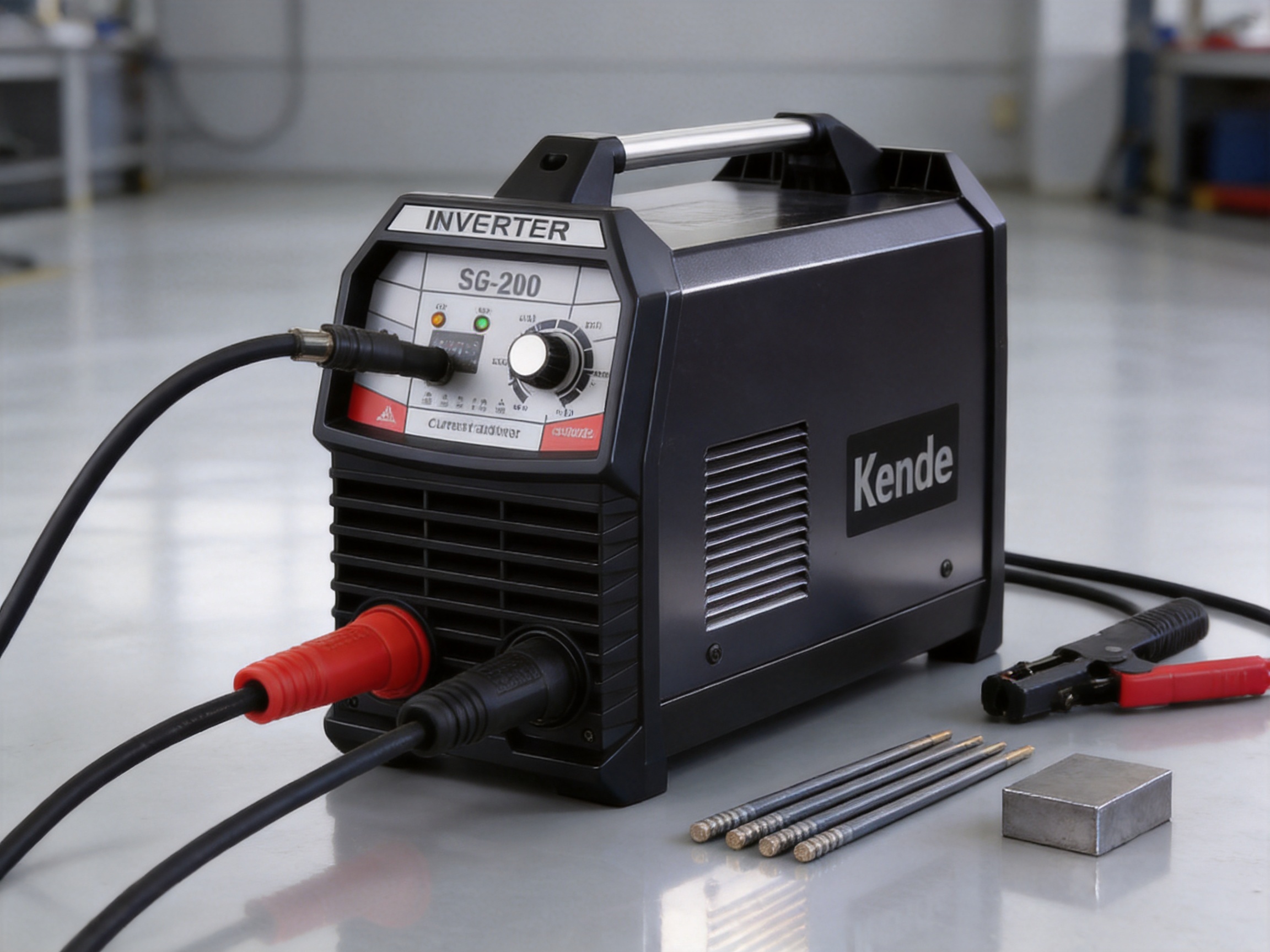
The product is built with a metal case and plastic frame. The metal enclosure provides a durable outer structure for the internal electrical components and offers protection during normal workshop and job-site use. The plastic frame helps reduce weight and can provide insulated handling areas and practical support for controls, cables, and ventilation features.
The listed dimensions range from approximately 260 × 125 × 205 mm for the smaller models to approximately 330 × 150 × 260 mm for the higher-current versions. Net weights range from about 3.6 kg to 4.3 kg in the provided specifications. These dimensions make the machines easy to place on a workbench, carry in a service vehicle, or transport with other tools.
A compact enclosure is especially valuable when welding is performed in restricted spaces. The operator can bring the machine close to the workpiece rather than using long welding leads from a distant power source. The product is also described as capable of welding with long welding cables, which can be useful when the machine must remain in a safer or more convenient location. Cable size and length should still be selected correctly to limit voltage drop and avoid overheating.
The machines are rated IP21S according to the supplied information. This rating indicates protection against solid objects of a specified size and protection against vertically falling water under the applicable test conditions. It does not mean that the machine is waterproof or suitable for operation in rain. Users should keep the equipment dry, provide adequate ventilation, and protect it from direct water spray, condensation, metal dust accumulation, and corrosive environments.
The listed insulation class is H. This indicates that the electrical insulation system is designed for a higher temperature class than many basic consumer electrical products. Proper ventilation remains essential. The cooling openings should not be blocked, and the machine should not be operated inside an enclosed container where heat cannot escape.
Portable welding machines are exposed to demanding conditions, including voltage variation, dust, vibration, heat, and frequent transportation. The SS series is described as moisture-resistant, anti-corrosion, anti-vibration, and resistant to conductive dust. These design goals support more reliable operation in workshops and field environments, although they do not remove the need for appropriate care and maintenance.
The machines are specified to operate properly under a supply range of approximately 170–260V. This broad operating range helps accommodate variations that may occur in practical electrical systems. It is particularly valuable in regions where supply voltage is not always perfectly stable. The operator must nevertheless confirm that the local supply, plug, protective device, grounding arrangement, and extension cable are suitable for the selected model.
Thermal overload protection monitors internal temperature and activates when the machine becomes too hot. A thermal indicator light alerts the user that the protection system has operated. The machine should then remain powered as instructed by the operating manual so that the cooling fan can reduce internal temperature. Welding should resume only after the indicator has returned to the normal condition.
Over-current and over-heat protection are also identified among the automatic protection functions. Over-current protection can help protect switching components and other internal circuits during abnormal operating conditions. Over-heat protection helps prevent damage caused by excessive load, restricted ventilation, high ambient temperature, or operation beyond the rated duty cycle.
These protective systems provide an important advantage over very basic welding power sources that depend heavily on the operator to avoid damaging conditions. They do not replace safe electrical practices, but they add a layer of automatic supervision that improves equipment durability and reduces the chance of avoidable failure.
The supplied configuration includes a 2-meter welding cable with a dual-angle electrode holder. The holder is designed to grip the coated electrode securely while allowing the user to work at practical angles. A 1.5-meter ground cable with clamp is also included. The grounding clamp creates the electrical return path between the workpiece and the welding machine.
Before welding, the clamp should be attached to a clean, mechanically sound location on the workpiece or welding table. Paint, rust, oil, and scale can increase electrical resistance and cause unstable welding. The cable connections should be inspected regularly for looseness, heat damage, fraying, or contamination. Worn accessories should be replaced with components of suitable current capacity.
The standard cable lengths provide a convenient starting configuration for general work. In larger work areas, users may require longer cables, additional work clamps, different electrode holders, or specialized leads. When extending cables, the conductor cross-section must be adequate for the welding current and total distance. Excessively long or undersized cables can reduce arc performance and create unnecessary heating.
The following table summarizes the principal specifications supplied for the SS series. Values should be confirmed against the final model label, user manual, and regional product configuration before purchase or installation.
| Model | Supply | Frequency | Rated Input Capacity | Rated Supply Current | Welding Current Range | Maximum Welding Current | Rated Duty Cycle | Electrode Range | Net Weight | Dimensions |
|---|---|---|---|---|---|---|---|---|---|---|
| SS-120 | 1~220/230V | 50/60Hz | 4.0kVA | 22A | 20–120A | 140A | 60% | 1.6–2.5mm | 3.6kg | 260 × 125 × 205mm |
| SS-140 | 1~220/230V | 50/60Hz | 4.6kVA | 26.5A | 20–140A | 160A | 50% | 1.6–3.2mm | 3.7kg | 260 × 125 × 205mm |
| SS-160 | 1~220/230V | 50/60Hz | 5.0kVA | 31A | 20–160A | 200A | 40% | 1.6–4.0mm | 4.1kg | 330 × 140 × 260mm |
| SS-180 | 1~220/230V | 50/60Hz | 6.0kVA | 36.3A | 20–180A | 220A | 60% | 1.6–5.0mm | 4.2kg | 330 × 150 × 260mm |
| SS-200-class | 1~220/230V | 50/60Hz | 7.0kVA | 41.5A | 20–200A | 250A | 35% | 1.6–5.0mm | 4.3kg | 330 × 150 × 260mm |
The table shows the principal trade-off within the product family. Smaller models are lighter and require less input capacity, while higher-current models support larger electrodes and more demanding welding tasks. A buyer should consider the normal working current rather than selecting a model solely by its maximum advertised amperage. For frequent work with 3.2mm or 4.0mm electrodes, the SS-160 or SS-180 may provide a more appropriate operating margin. For occasional light repair, the SS-120 or SS-140 can offer easier handling and lower electrical demand.
The rated no-load voltage is listed as 60V for the SS-120, SS-140, and SS-160, and 86V for the SS-180 and 200A-class model. No-load voltage can influence arc initiation and electrode behavior. Where reduced open-circuit voltage is required for a particular workplace or safety policy, the optional VRD configuration should be considered. VRD operation must be understood in relation to the electrode type and welding procedure, because some applications may require different starting characteristics.
All listed models have an efficiency of approximately 85 percent and a power factor of approximately 0.9. These figures indicate effective use of supplied electrical power, although actual site consumption will vary with welding current, duty cycle, idle time, and power supply conditions.
The machines are described as suitable for carbon steel, alloy steel, cast iron, stainless steel, and other compatible metals. The machine supplies the welding power, but successful results also depend on the electrode classification, polarity, joint preparation, preheating, interpass temperature, and operator technique.
For carbon steel, common rutile or basic-coated electrodes can be selected according to the required mechanical properties and welding position. For stainless steel, a compatible stainless electrode and suitable current range are required. Cast iron often requires special electrodes, careful heat control, and sometimes preheating or controlled cooling to reduce cracking risk. Alloy steel applications may require electrodes that match the base-metal composition and service requirements.
Before welding, the operator should remove excessive rust, oil, paint, moisture, and scale from the joint area. Joint fit-up should be checked, and the workpiece should be supported securely. The electrode diameter should correspond to material thickness and welding position. Smaller electrodes are often useful for root passes and thin material, while larger electrodes can deposit metal more quickly on heavier sections.
Good penetration is supported by stable DC output, correct polarity, suitable amperage, proper travel speed, and the correct arc length. Excessive current can cause undercutting, burn-through, or an overly fluid weld pool. Too little current can lead to poor fusion, sticking, and excessive slag inclusions. The SS series provides the adjustment range needed for controlled setup, but the operator remains responsible for choosing the correct procedure.
The manufacturer, Zhejiang Kende Mechanical & Electrical Co., Ltd., operates as a specialized producer and exporter of welding machines, battery chargers, and heaters. The supplied company information states that its facility covers approximately 120,000 square meters and employs around 600 people. The company reports annual exports of nearly 1.5 million units and an annual production capacity of approximately 2 million units.
These figures indicate the ability to support high-volume production while maintaining a broad product portfolio. A large-scale manufacturing organization can provide advantages in component sourcing, production planning, quality control, tooling, assembly efficiency, and after-sales support. For distributors and original equipment customers, production capacity is particularly important because it supports repeat orders and helps reduce the risk of supply interruptions.
The company’s product development scope includes MMA and stick welding machines, MIG/MAG welding machines, flux-cored welding systems, TIG welding machines, plasma cutters, stud welding machines, submerged arc welding equipment, battery chargers, and electric, gas, and oil heaters. This broad technical range allows engineering teams to share knowledge across power electronics, thermal management, control systems, sheet-metal processing, and product safety.
The manufacturer also states that it can develop new products according to the requirements of different regions, countries, and customers. This capability is useful when customers require specific input voltages, plugs, labels, packaging, certification marks, current ranges, accessories, or enclosure designs. Product customization should be confirmed during technical and commercial discussions, including minimum order quantities, certification scope, tooling requirements, and delivery schedules.
The supplied information identifies a Zhejiang Provincial R&D Center, an Enterprise Technology Center, and an Intelligent Welding Technology Research Institute. It also reports approximately 98 R&D personnel and a portfolio of invention patents, utility model patents, appearance patents, and software copyrights.
Research capability is important for inverter welding equipment because performance depends on the coordinated design of power switches, magnetic components, control software, cooling systems, sensors, protection circuits, and mechanical structures. A welding machine may look simple from the outside, but its arc behavior is influenced by fast electrical responses that require careful engineering and testing.
The SS series is described as having a special design welding power source with a unique circuit and structure, together with an authorized China patent. Patent ownership should not be confused with a guarantee of performance in every application, but it demonstrates that the manufacturer has invested in proprietary design and product development rather than relying only on generic equipment architecture.
The company reports the use of advanced automatic patching, plug-in, and welding systems for electronic assembly. Automated placement can improve component positioning and repeatability on printed circuit boards. Automated plug-in and soldering processes can help maintain consistent assembly quality, particularly when products are manufactured in large quantities.
Robot processing is used in the manufacturing system described by the company. Robotic operations can improve repeatability in selected mechanical and assembly processes while reducing variation between production batches. Laser cutting is also identified as part of the manufacturing capability. Precise laser cutting supports accurate sheet-metal preparation, clean openings, consistent ventilation features, and efficient production of enclosure components.
The combination of electronic automation, robotic processing, and laser cutting is relevant to inverter welding machines. The electronics require reliable soldering and assembly, while the metal case must protect internal components and maintain correct airflow. Consistent mechanical dimensions help ensure that fans, control panels, cable terminals, and protective covers fit correctly during final assembly.
Manufacturing management systems listed by the company include office automation, Toyota Production System management, ERP K3, and MES management systems. These systems can support production scheduling, material traceability, process control, inventory coordination, work-order management, and manufacturing data collection. When properly implemented, such systems help connect engineering, purchasing, assembly, testing, warehousing, and shipment operations.
The manufacturer states that it holds or supports multiple international product certifications, including GS, CE, EMC, ERP, US ETL, UKCA, and China CCC. Certification requirements vary according to the product, market, voltage, version, and applicable standard. Buyers should request the certificate and test-report details for the exact model and configuration being purchased.
CE-related conformity, for example, may involve applicable electrical safety and electromagnetic compatibility requirements. EMC performance is important because welding machines are high-power switching devices that can generate electrical noise. A well-designed inverter must control conducted and radiated emissions while maintaining stable operation in the presence of normal electrical disturbances.
Energy-related requirements may apply in certain markets, while UKCA, ETL, GS, and CCC markings involve their own regional conditions and documentation. Certification is most valuable when it is supported by traceable testing, controlled production, and accurate product labeling. Customers should verify input voltage, frequency, rated current, protection class, insulation class, duty cycle, and accessory configuration before placing an order.
The company is also described as one of the national standard drafting units of the National Welding Machine Standardization Committee. According to the supplied information, it has participated in the drafting, formulation, and revision of 20 national standards and has led the drafting of one group standard. Participation in standardization work can give an engineering organization broader knowledge of safety, performance, testing, and terminology requirements across the welding-machine industry.
For distributors, the SS series offers a clear and understandable product structure. The models are differentiated by current capacity, physical size, electrode range, and duty cycle. This makes it easier to create a product ladder for entry-level, professional, and higher-output customers. The compact design also reduces shipping volume compared with heavy conventional machines, which can help simplify warehouse handling and retail presentation.
The range is suitable for multiple sales channels. Hardware stores can offer the smaller units for repair and household use. Welding-supply distributors can position the middle models for workshops and maintenance contractors. Professional tool suppliers can offer the higher-current models to construction, fabrication, and agricultural customers. Optional VRD configurations and customized packaging may also support regional requirements.
For OEM and private-label customers, the manufacturer’s reported engineering and production resources may support changes to appearance, labels, accessories, documentation, input plugs, and packaging. Any private-label program should include written specifications, sample approval, production inspection criteria, and confirmation of applicable certifications. The ability to manufacture several related product categories may also help customers consolidate sourcing.
Another advantage is product-family continuity. Users who become familiar with the controls and operating principles of one model can more easily move to another model in the same range. Distributors can also use common training materials for hot start, arc force, anti-stick, safety, and maintenance, while adjusting the model-specific electrical data.
The welding machine should be installed in a clean, dry, and adequately ventilated location. It should be positioned so that the cooling-air inlet and outlet are not blocked. The machine should not be placed directly on wet ground, near standing water, or in an area where conductive dust can enter the enclosure continuously.
Before connection, verify that the power supply matches the rating plate. The electrical circuit should include appropriate over-current protection and a reliable protective earth connection where required by local regulations. Extension leads should have sufficient conductor size for the rated input current and total length. Undersized extension cables can cause voltage drop, reduced welding performance, and excessive cable heating.
The electrode holder and ground clamp should be connected firmly. The workpiece should be positioned securely, and nearby flammable materials should be removed or protected. Welding produces ultraviolet radiation, sparks, hot metal, and fumes. Operators should use a suitable welding helmet, protective clothing, gloves, safety footwear, and appropriate ventilation or respiratory protection according to the material and workplace conditions.
At the beginning of a job, the operator should select the electrode diameter and approximate current recommended by the electrode manufacturer. A test weld on similar material can help confirm current, polarity, arc length, travel speed, and bead appearance. The hot-start, arc-force, and anti-stick functions assist the process, but correct preparation and technique remain essential.
After welding, the slag should be removed using suitable tools, and the weld should be inspected visually for cracks, undercut, porosity, lack of fusion, excessive spatter, and other defects. Critical structures may require additional non-destructive or destructive testing according to the applicable welding procedure and standard.
Regular maintenance helps preserve inverter performance. The exterior should be kept free from excessive dust, oil, and metal particles. Cooling openings should be inspected periodically, and compressed air should be used carefully according to the manufacturer’s service instructions. Excessive air pressure or improper cleaning can force contamination deeper into sensitive components.
Cables, plugs, electrode holders, and ground clamps should be inspected before use. Damaged insulation, loose terminals, cracked holders, or overheated connectors can create electrical hazards and unstable welding. The fan should be able to operate freely, and unusual noise or repeated thermal shutdown should be investigated rather than ignored.
If the thermal protection indicator activates frequently during normal work, the operator should check the duty cycle, ambient temperature, ventilation, input voltage, cable condition, and electrode size. Repeated overload can shorten the service life of power switches and other components. Repairs involving internal high-voltage circuits should be performed only by trained service personnel after the machine has been disconnected and safely discharged.
Because the product uses electronic controls and IGBT power switches, service centers should use approved replacement components and follow the appropriate test procedure. Substituting unsuitable components may change switching behavior, insulation clearances, thermal performance, or electromagnetic compatibility.
Portable MMA machines on the market vary widely in design quality, control behavior, component selection, enclosure construction, and documentation. A low purchase price does not necessarily indicate low operating cost if the machine has unstable output, poor thermal management, limited protection, or difficult access to service parts.
The SS series distinguishes itself through the combination of a compact inverter platform and several operator-assistance features. Hot start supports ignition, arc force helps stabilize a short arc, and anti-stick makes electrode separation easier. Together, these functions can reduce interruptions and make the machine more forgiving than a basic manual current source.
The broad input tolerance of approximately 170–260V is another practical strength for regions with variable supply conditions. The metal case and plastic frame provide a balance between durability and portability, while the listed weights of approximately 3.6–4.3kg make the machines competitive for mobile use. The inclusion of welding and grounding cables also allows the user to begin work without purchasing every basic accessory separately.
Compared with larger transformer machines, the SS series has a clear advantage in weight, size, and transportability. Compared with very small low-cost inverters, the series is supported by a manufacturer with reported large-scale production, dedicated R&D resources, automated manufacturing systems, and a broad international certification portfolio. The final purchasing decision should still be based on the exact application, local service availability, verified certification, and the technical requirements of the welding procedure.
The SS-120 is a practical choice for light repair, thin-to-medium carbon-steel work, maintenance, and users who prioritize minimum weight. Its listed 20–120A range and 1.6–2.5mm electrode capacity are suitable for many general tasks.
The SS-140 provides additional current capacity while retaining the compact dimensions of the smaller model. It may be appropriate for workshops and contractors who use 2.5mm or 3.2mm electrodes but still need a highly portable machine.
The SS-160 is suited to users who need a larger electrode range and more output capability. Its listed 20–160A adjustment range and support for electrodes up to 4.0mm provide greater flexibility for heavier fabrication and repair.
The SS-180 supports up to 180A of listed welding current and electrodes up to 5.0mm. It is a suitable option for demanding field repair and workshop applications where a compact machine must support larger electrodes.
The 200A-class model is the highest-output version in the supplied range. It offers a listed 20–200A welding range and a maximum current of 250A, although its rated duty cycle is listed as 35 percent. This model is appropriate when high peak output is important, but buyers should carefully evaluate the expected continuous welding time and electrical supply capacity.
It is an IGBT inverter MMA welding machine for manual metal arc, stick, or shielded metal arc welding. It provides DC welding output and uses coated consumable electrodes.
Yes, the product information states that the machines can weld carbon steel, alloy steel, cast iron, stainless steel, and other compatible metals. The correct electrode, polarity, current, joint preparation, and heat-control procedure must be selected for each material.
IGBT inverter technology enables compact construction, lower weight, efficient power conversion, rapid electronic control, and stable welding-current adjustment. It also allows functions such as hot start, arc force, anti-stick, over-current protection, and thermal protection to be integrated into the machine.
Hot start provides a temporary current increase when the electrode is first struck. This helps initiate the arc more easily and reduces failed starts or electrode sticking during ignition.
Arc force monitors the welding voltage and supplies additional current when the arc becomes short or unstable. It helps maintain the arc and can reduce sticking during manual welding.
Anti-stick reduces welding current if the electrode remains in contact with the workpiece. This makes the electrode easier to remove and helps limit overheating of the electrode and workpiece.
VRD means Voltage Reduction Device. It reduces the no-load output voltage under appropriate conditions to support improved operator safety. The availability and behavior of VRD depend on the selected configuration and should be confirmed before ordering.
The product information states that it can weld with a long welding cable. The cable length and conductor size must be selected correctly to limit voltage drop and heating. Long cables should be inspected regularly for damage.
The listed models use a single-phase 220V or 230V supply at 50/60Hz. The stated operating range is approximately 170–260V. The exact supply requirement should be checked on the rating plate of the selected model.
It is suitable for many outdoor and mobile applications because MMA welding does not require external shielding gas. However, the machine should be protected from rain, standing water, excessive moisture, conductive dust, and direct weather exposure. Outdoor work must also follow electrical and fire-safety requirements.
Choose the model according to the usual electrode diameter, material thickness, required welding current, expected duty cycle, available electrical supply, and portability requirements. Do not select only by the maximum current value; continuous operating needs and duty cycle are equally important.
The listed package includes a 2-meter welding cable with a dual-angle electrode holder and a 1.5-meter ground cable with clamp. Package contents may vary by market or customer order and should be confirmed before shipment.
Routine cleaning and inspection can be performed by trained users, but internal repairs should be handled by qualified service personnel. The machine contains high-voltage electrical circuits even after it has been switched off, so safe disconnection and discharge procedures are essential.
The company reports product certifications and market approvals including GS, CE, EMC, ERP, US ETL, UKCA, and China CCC across its product portfolio. Buyers should request documentation for the exact model and market configuration because certification scope can vary.
The SS series IGBT inverter MMA welding machines combine portability, stable DC output, intelligent arc assistance, and practical protection functions in a compact product family. Hot start improves ignition, arc force supports stable welding, and anti-stick simplifies electrode separation. The broad current range allows users to select a model for light maintenance, workshop fabrication, construction repair, or higher-output field work.
The metal case and plastic frame provide a useful balance of durability and reduced weight. The machines are designed for 220V or 230V single-phase supplies, support a wide operating-voltage range, and include basic welding and grounding accessories. Their inverter architecture offers significant advantages over traditional heavy transformer machines in size, portability, efficiency, and electronic control.
The manufacturer’s reported production capacity, R&D facilities, engineering staff, patents, automated electronic assembly, robotic processing, laser cutting, and manufacturing-management systems further strengthen the product’s industrial foundation. Its broad experience across welding equipment, battery chargers, heaters, and related electrical products supports a substantial technical and manufacturing ecosystem.
For buyers seeking a portable MMA machine, the most important evaluation points are the required electrode size, normal welding current, duty cycle, local supply conditions, certification needs, accessory configuration, and service support. When these factors are matched correctly, the SS series provides a flexible and efficient welding solution for professional, industrial, commercial, and general repair applications.
1. Product specification sheet for the SS series IGBT inverter MMA welding machines.
2. Manufacturer-provided technical information concerning hot start, arc force, anti-stick, thermal protection, and inverter control.
3. Manufacturer-provided company profile covering production capacity, R&D resources, manufacturing systems, and certification portfolio.
4. General principles of manual metal arc welding, electrode selection, polarity, duty cycle, and welding safety.
5. General technical guidance for inverter welding-machine installation, ventilation, electrical protection, and maintenance.
6. Manufacturer-provided information concerning automated electronic assembly, robotic processing, laser cutting, ERP, MES, and production management.
Recommended Products

Contact Us
No.2299, Luqiao Section, Shugang Avenue, Luqiao District, Taizhou, 318057 Zhejiang, PR China.
+86-576-82431568
 Privacy
China Welding Machine Factory
 English
 中文简体
 русский
 Español
 عربى
 Français
 Português
 Deutsch
 Український