Email: [email protected]
Email: [email protected]

Industry News
 2026.08.14
 Industry News
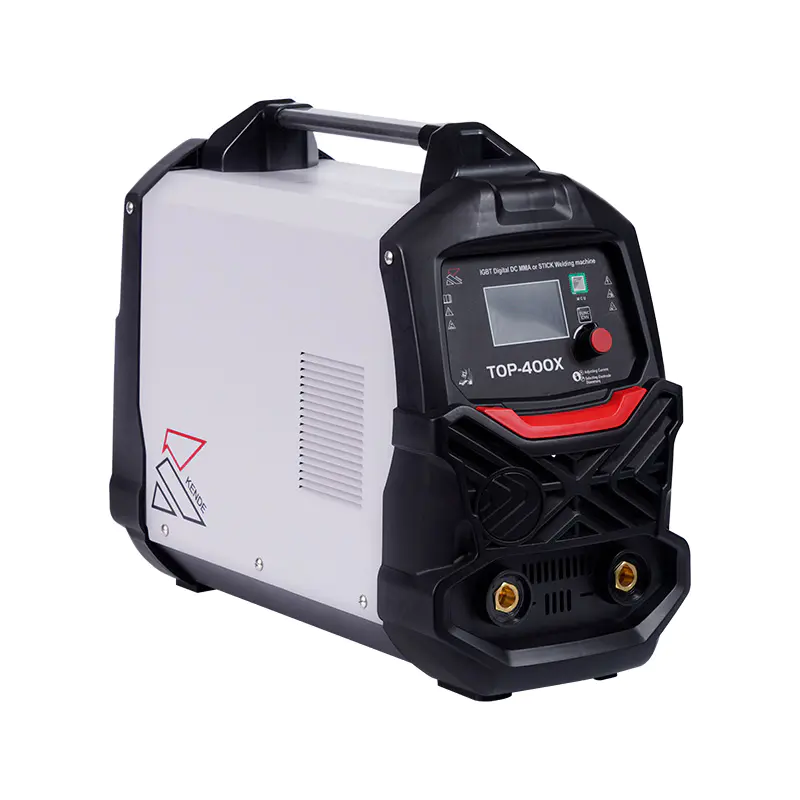
A welding arc runs on electricity. The machine that supplies it converts wall power or generator power into the exact current and voltage the weld needs. A welding machine factory builds these power sources for stick welding, MIG welding, TIG welding, and multi-process machines. The factory welds frames, winds transformers, assembles circuit boards, and tests every machine before it ships. For welding distributors, fabrication shops, and construction companies, the factory is the source of the tool that joins metal.
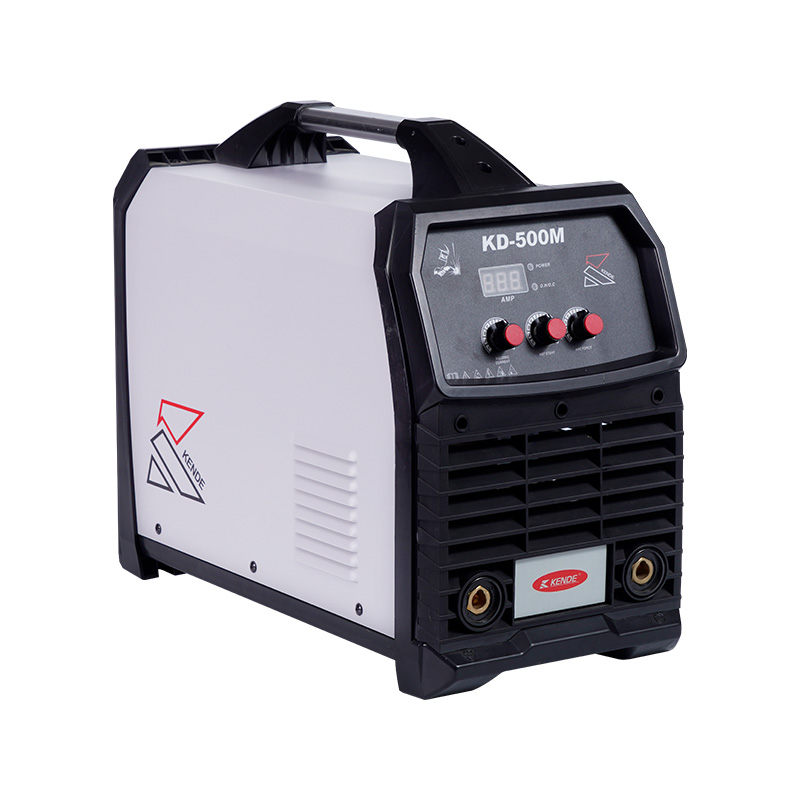
A welding machine takes input voltage and transforms it into usable welding current. Older transformer machines are heavy and simple. Modern inverter machines use power electronics to switch current at high frequency, cutting weight and size by more than half. A welding machine factory producing inverter units builds portable machines that a welder can carry onto a job site.
The arc characteristics depend on the process. Stick welding uses constant current. MIG uses constant voltage. TIG uses constant current with high-frequency start. A welding machine factory builds multi-process machines that combine these modes into one unit. The welder switches processes without changing power sources.
The duty cycle tells how long the machine can run before it overheats. A machine rated at 200 amps with a 60 percent duty cycle welds for six minutes out of every ten, then cools for four. A welding machine factory that publishes honest duty cycle ratings lets the buyer match the machine to the production pace.
The transformer or inverter is the heart. It steps voltage down and current up. A welding machine factory winds transformers from copper or aluminum wire on laminated steel cores. Inverter machines replace the heavy transformer with small ferrite cores and high-speed switching circuits.
The control board manages the output. It sets the amperage, adjusts the arc force, and controls the pulse parameters on advanced machines. A welding machine factory that designs its own control boards can customize the arc characteristics for specific welding wires and electrodes.
The cooling system keeps the electronics alive. Fans pull air through the chassis. Heat sinks carry heat away from the power semiconductors. A welding machine factory with proper thermal design builds machines that run at full duty cycle without thermal shutdown.
MIG welding uses a motor-driven wire feed. The motor pushes welding wire through a liner to the torch. A welding machine factory builds the wire drive with adjustable tension and speed control. The wire feed has to be consistent, or the arc stutters.
The drive rollers grip the wire. They are hardened steel with grooves matched to the wire diameter. A welding machine factory that uses quality drive rollers and metal gear cases builds wire feeds that last. Plastic gears strip under the constant start-stop of production welding.
The machine case is steel or heavy-duty plastic. It protects the internal components from the dust, spatter, and bumps of a welding environment. A welding machine factory that coats the circuit boards with conformal coating protects them from conductive metal dust.
The output terminals accept welding cables. The input connections handle wall power or generator power. A welding machine factory that includes input voltage tolerance and generator compatibility builds machines that run on job site power without fault codes.
Here is what a welding machine factory needs to deliver:
Stick welders are the simplest and most portable. They run on 110V or 220V input and handle most repair and farm welding. A welding machine factory builds stick welders in sizes from 130 amps to 250 amps and up.
MIG welders are the production tools. They run wire from spools and weld faster than stick. A welding machine factory builds MIG machines from compact 110V units to industrial 400-amp three-phase systems.
TIG welders are the precision tools. They weld thin material, stainless steel, and aluminum. A welding machine factory builds TIG machines with high-frequency start, AC/DC output, and pulse control.
The circuit board fails from conductive dust. Conformal coating prevents this. The wire feed motor burns out from continuous use. A welding machine factory that uses quality motors and metal gears builds feeds that last. The output terminals loosen and arc. Proper terminal design and secure fastening prevent this.
A welding machine factory builds the power source that makes welding possible. The transformer or inverter converts the power. The controls set the arc. The wire feed delivers the filler. Choose a manufacturer that builds for the environment, rates the duty cycle honestly, and controls the quality of the electronics. The welder will strike an arc every time. That is what the machine is for.
Recommended Products

Contact Us
No.2299, Luqiao Section, Shugang Avenue, Luqiao District, Taizhou, 318057 Zhejiang, PR China.
+86-576-82431568
 Privacy
China Welding Machine Factory
 English
 中文简体
中文简体
 русский
 Español
 عربى
عربى
 Français
 Português
 Deutsch
 Український